
MEDIA FOR CHANGE NETWORK
Artisanal miners’ agonizing tales at the hands of mineral police

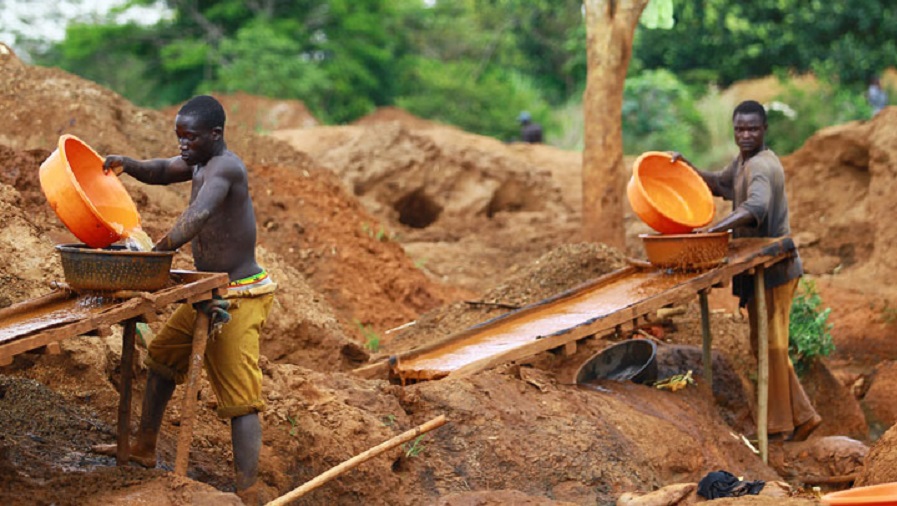
A police officer hit me with a baton, I became unconscious, only to wake in hospital,” narrates Fred Ssentamu as he displays scars from beatings when The Observer visited his home in Lugingi, Kitumbi sub-county, Kassanda.
Ssentamu is one of the hundreds of artisanal and small-scale gold miners who have suffered human rights violations at the hands of the Police Minerals Protection Unit (PMPU). These violations include intimidation, extortion, confiscation of ores, physical abuse as well as displacement from villages.
These allegations of brutal harassment and human rights violations of artisanal miners at the hands of PMPU are common in many gold, tin, tantalum and tungsten mining areas mainly in central and western Uganda. “These police officers are to too brutal,” Ssentamu says.
Indeed, his testimony is not an isolated case as The Observer found out. His neighbour shares a similar harrowing tale, “A police officer ordered me to kneel on piercing stones as his colleague handcuffed me. Then, another afande [police officer] was beating me in front of my children,” she narrates.
To foot the medical bill, Ssentamu says, his family sold his motorcycle for Shs 3 million. Artisanal gold miners in many parts of the country accuse the PMPU of hiding under the cover of cleansing the minerals sector of illegal mining to harass, torture and even maim artisanal miners, among other human rights violations.
Miners say, instead of offering local protection, the PMPU officers have turned their guns against civilians and artisanal miners. “It is a whip and a gun that rule in these mines,” another miner narrates, before asking the police leadership to rein in errant PMPU officers.
BACKGROUND
The PMPU was created in 2017 by the then Inspector General of Police (IGP) Gen Kale Kayihura. It is charged with, among others, inspection, monitoring and surveillance to detect and prevent illegal mining as well as to sensitize mining communities on safe mining practices. Gen Kahiyura appointed Superintendent of Police (SP) Jessica Keigomba to head the unit.
However, three years after its creation, PMPU is on the spotlight again over human rights violations and involving itself in illegal mining. Simon Alibariho, artisanal miner at Katenga goldmine in Buhweju district, remembers when PMPU violently evicted them from the mines which left some miners nursing injuries.
“When they [police] came, they started beating us without any explanation. Some people were injured in the process. We are Ugandans; why is police beating us when we are here to eke out a living, even cows are no longer beaten,” Alibariho wonders. He says though artisanal miners mine without licences, it shouldn’t be a ground for beating and treating them violently.
EXTORTION AND SHOOTINGS
In an ugly incident of human rights violations, a police officer attached to PMPU shot and injured an artisanal miner following a simple verbal exchange in Lugingi mine recently.
“We failed to agree with the officer; so, he told me “I promised to shoot you in the head.” Those are the last words I heard; the next thing I woke up in hospital in pain nursing injuries from gunshots,” one of the miners in Kassanda district narrates.
In a clear manifestation of impunity, the officer has never been reprimanded, arrested or prosecuted for the shooting. In June, 2020, John Mufumbira, one of the artisanal miners and a member of Kassanda Miners Association, complained to the police Professional Standards Unit (PSU) against Superintendent of Police Sarah Mwesigwa, who is the administration and finance officer of PMPU, over the unit’s harassment and human rights violations against artisanal miners.
However, Mufumbira says to date he has not received any response. Francis Mwijukye, the Buhweju MP, concurs with artisanal miners on the brutality of PMPU officers. “These police officers are extorting money. If you don’t give them money, they will chase you away and the process of chasing is dehumanizing,” he notes.
Carolyne Nakajubi, the extractive governance officer at ActionAid International Uganda, says it is unfortunate that PMPU has misused its mandate to stamp out illegal mining and instead turned its guns on the civilian mining population. She urges PMPU to respect and uphold human rights in enforcing the law.
Henry Nickson Ogwal, the director, Programs and Policy at ActionAid Uganda, calls for the probe into PMPU. “Those who have evidence on human rights violations shouldn’t be intimidated when they talk. Such violation is unacceptable in a democratic Uganda and must be probed. Meanwhile, the PMPU command structure and mandate should be reviewed,” Ogwal says.
MINING POLICE!
In addition to human rights violations, PMPU has also been accused of engaging in gold-mining after evicting artisanal miners. “The PMPU has become a mining police. They are the ones now doing the mining,” says Deusdedit Beinomugisha, an artisanal miner from Buhweju.
However, Moses Karakire Musinguzi, the PMPU head of operations, denies the allegation that the unit is engaged in illegal mining activities. “If there is a police officer involved in mining, then he or she should be reported to PSU. You can also take them to court and prosecute them individually if you have evidence,” Musinguzi said recently. “Some of these mistakes are individual, but not institutionalized.”

In a recent interview with NTV Uganda, Sarah Opendi, the minister of state for Energy and Mineral Development, confirmed that some security officials are indeed engaged in illegal mining. “I know some people within the security circles have also gotten involved in mining but I want to tell them that what they are doing is actually wrong. You don’t go and mine simply because you have a gun, which I [artisanal miners] don’t have,” she said, before pledging that offices who have deviated from their cardinal responsibility to switch to mining will be brought to book.
ENTER UHRC
It is on the background of these human rights violations that civil society organizations (CSOs) have asked the Uganda Human Rights Commission (UHRC) to do an investigation into the allegations and bring the culprits to book. In a press statement recently, the CSOs further accuse police of illegal gold mining under the cover of law enforcement.
Don Binyina Bwesigye, the executive director, Africa Centre for Energy and Mineral Policy (ACEMP), says PMPU has overstepped its mandate. “This has exposed artisanal miners to cruel treatment from security organizations such as police and the army,” Bwesigye said in a statement.
Bwesigye argues that without any law, the PMPU has taken over many of the supervisory and regulatory roles that the Mining Act vests in the Directorate of Geological Survey and Mines (DGSM).
“The UHRC should investigate, document and address allegations of human rights abuses meted out on artisanal and small-scale miners and landowners in different regions by PMPU and other security agencies,” the statement reads in part.
Amidst the advocacy, it remains to be seen whether there will be any tangible steps by state institutions to investigate the PMPU, which seems to enjoy impunity in carrying out its operations.
**The Observer
Related posts:
 Uganda government ignores its directive on COVID evictions, evicts thousands of smallholder farmers, artisanal miners.
 Police Flying Squad Commander Dies in a Fatal Accident
 Community petitions the Police Professional Standards Unit over the unprofessional conduct of Kiryandongo DPC for abetting land grabs…
 The Innocent and Invisible Victims of Njuba’s Violent Eviction of 120,000 Families Off 12-Square Mile Mineral-Rich Land


MEDIA FOR CHANGE NETWORK
World Food Day 2026: Building healthy diets means reimagining how we grow, share, and enjoy our food.

Related posts:

 Global hunger falls, but millions in Africa still go without food, says UN
 While hunger continues to grip the world, a new report highlights forests and forest foods as a hidden treasure trove of nourishment.
 Agroecological Entrepreneurship: African farmers are redefining agriculture by building agroecological businesses that challenge industrial models.
 Wars are disrupting food systems, and ending world hunger requires urgent global action, experts say.
MEDIA FOR CHANGE NETWORK
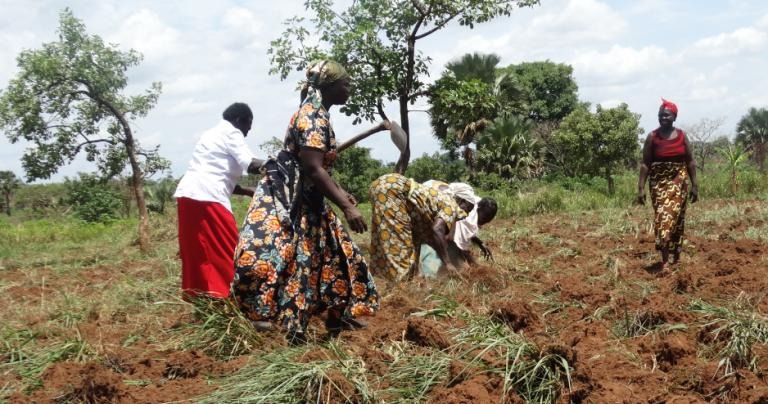
International Day of Rural Women : Rural women farmers deserve not only equal rights and access to resources, but also the strength and voice to safeguard Mother Nature.
Related posts:

 How unequal access to land by women endangers Uganda’s food security
 Women’s groups demand equality in land tenure security to boost food production.
 Rights and Resources Initiative (RRI) launched a new report looking at 80 legal frameworks
 Smallholder Farmers Can Now Access Agricultural Credit Facility Without Collateral
MEDIA FOR CHANGE NETWORK
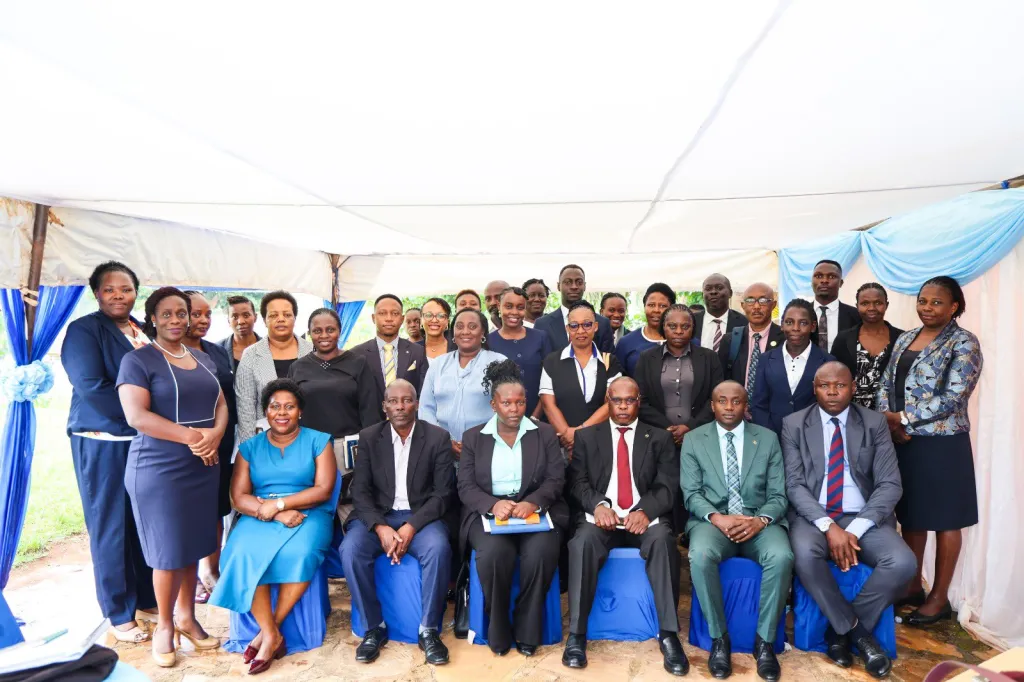
ODPP Staff Equipped With New Skills on Land Crimes, Witness Protection and Victims Rights
Related posts:

 Witness Radio Petitions ODPP urgently to review and withdraw criminal charges against Buvuma Community Land Defenders.
 Witness Radio petitions chief prosecutor: Want 34 community land rights defenders and activists released from prison.
 Mubende district police are aiding land grabbing and committing crimes against locals they are obliged to protect.
 Uganda: the number of community environmental and land rights defenders targeted for challenging irresponsible business practices has reached more than 1500 victims as of June 31st, 2023.

Uganda Leads Africa in Certified Organic Farmland Ahead of First Organic, Nature Expo

World Food Day 2026: Building healthy diets means reimagining how we grow, share, and enjoy our food.

International Day of Rural Women : Rural women farmers deserve not only equal rights and access to resources, but also the strength and voice to safeguard Mother Nature.

ODPP Staff Equipped With New Skills on Land Crimes, Witness Protection and Victims Rights

Lango ex-combatants count losses after dry spell destroys maize harvest

Five years after Uganda’s National Action Plan on Business and Human Rights, are local communities hosting land-based investment projects seeing change?

Alert: Land degradation is emerging as a pressing threat to global security.

The global race for clean energy minerals is leaving communities grappling with conflicts and human rights abuses, a new report reveals.

Innovative Finance from Canada projects positive impact on local communities.

Over 5000 Indigenous Communities evicted in Kiryandongo District

Petition To Land Inquiry Commission Over Human Rights In Kiryandongo District

Invisible victims of Uganda Land Grabs
-
 NGO WORK1 week ago
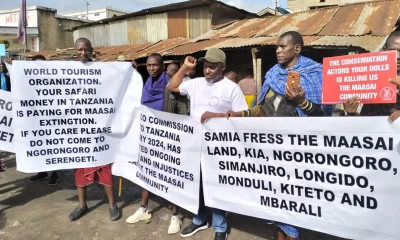
Tanzanian Government Abducts Maasai Villagers in an Unconscionable Attack on Indigenous Land Defenders
-

 MEDIA FOR CHANGE NETWORK2 weeks ago
Sweeping investments are fueling widespread land grabbing and deepening rights violations across Uganda – Report.
-

 MEDIA FOR CHANGE NETWORK2 weeks ago
Across Africa, the push for a greener future is putting new pressure on local communities, as recent ILC case studies highlight.
-

 MEDIA FOR CHANGE NETWORK1 week ago
Court remands 10 anti-oil activists as suspect collapses in dock
-
 MEDIA FOR CHANGE NETWORK4 days ago
World Food Day 2026: Building healthy diets means reimagining how we grow, share, and enjoy our food.
-

 MEDIA FOR CHANGE NETWORK2 weeks ago
Who will shape the future of East Africa’s seeds? Youth and civil society are sounding the alarm over a proposed regional law.
-

 FARM NEWS2 weeks ago
Can Agroecology Improve the Resilience of African Smallholder Farmers?
-

 MEDIA FOR CHANGE NETWORK6 days ago
As waves of investment sweep across Uganda, countless women rise to defend their land, safeguard their traditions, and claim their right to be heard.