Connect with us

MEDIA FOR CHANGE NETWORK

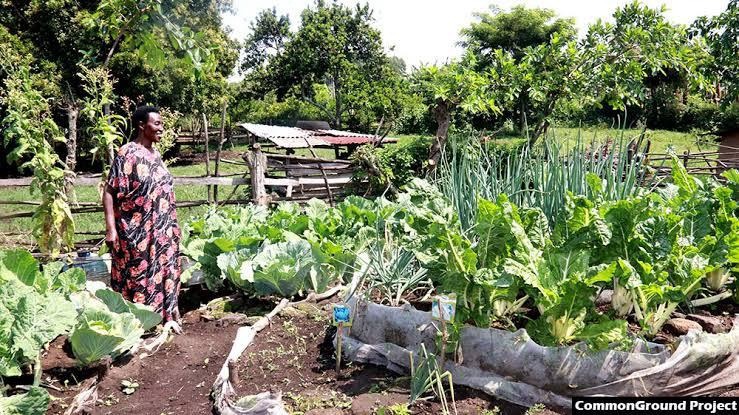
Agroecological Entrepreneurship: African farmers are redefining agriculture by building agroecological businesses that challenge industrial models.

Published

on

By the Witness Radio team.

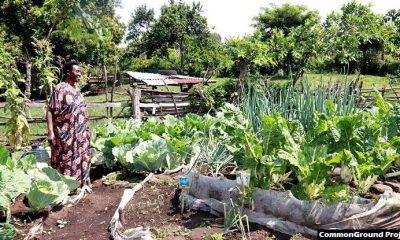
In rural Senegal, women’s groups use roasting, grinding, and mixing equipment to turn local beans, spices, and traditional ingredients into a natural product called Sumpak. This product is offered as an alternative to the industrial bouillon cubes common in West African kitchens. Sumpak is marketed as a locally sourced option rooted in agroecological farming and traditional food knowledge.

For its creators, Sumpak symbolizes a continent-wide movement where small-scale farmers and grassroots groups create businesses that embody self-reliance, sustainability, and a shift away from dependence on industrial agribusiness.

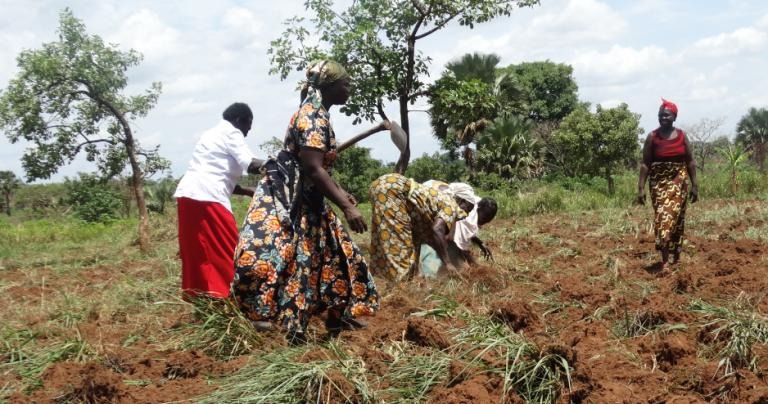
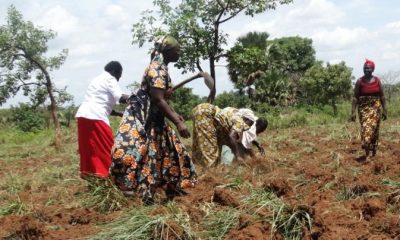
In Uganda, Senegal, Cameroon, and other African countries, farmer groups are trying local food processing, seed systems, ecological farming, and direct markets. They want to change how healthy food is produced, processed, and sold. Their efforts are not just for the environment. They are also driven by economic survival, food sovereignty, and frustration with systems that depend on imported inputs, foreign-controlled supply chains, and industrial food products.

Highlighting these grassroots efforts, the initiatives were recently discussed during a webinar organized by the Agroecology Fund to launch a report documenting grassroots agroecological enterprises across the continent.

“We asked ourselves what would happen if we combined the creativity and power of social movements. This was an effort to provide support to networks and organizations within the Agroecology movements that are also working to support the agroecology enterprises,” Daniel Moss, co-director of the fund, said during the online report launch.

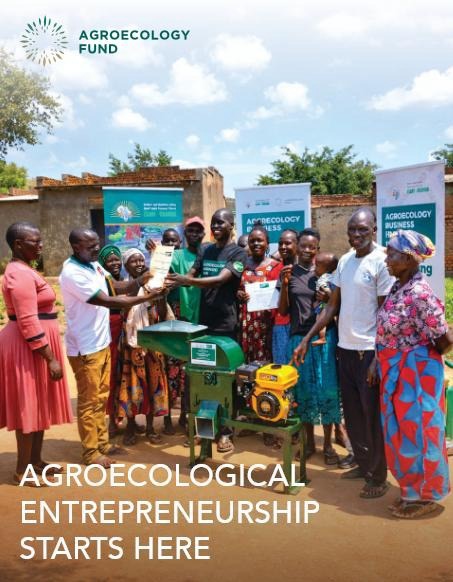
The report, Agroecological Entrepreneurship Starts Here, draws from business planning grants awarded to 15 organizations across Africa. The projects supported by the grants ranged from cassava flour processing in Uganda to local bread-making flour initiatives in Cameroon and women-led food processing enterprises in Senegal, among others.

The report contends that agroecology represents both an environmental practice and a strategic pathway for building locally controlled, sustainable economies.

For decades, the agricultural industry in Africa and globally has favored industrial systems. These rely on hybrid seeds, chemical fertilizers, and export crops. Big agribusinesses and commercial farms often get grants, subsidies, financing, and policy support. Meanwhile, small-scale agroecological enterprises struggle to access even modest capital.

The report launch noted that many grassroots agricultural businesses need $10,000 to $250,000. They require funds to expand production, improve packaging, or buy processing equipment. However, the findings show that most lenders and investors focus on much larger commercial projects.

“There’s a huge finance gap,” Jennifer Astone, a co-author of the report, revealed, adding that “Smallholder farmers, cooperatives and agroecological entrepreneurs are systematically excluded from finance and policy support that fuels conventional industrial agribusiness.”

In Uganda, the Eastern and Southern Africa Small Scale Farmers Forum (ESAFF) worked with farmer groups producing okra powder, cassava flour, pineapple products, and biomass briquettes.

According to ESAFF, some groups received grinding machines and value-addition equipment, while others were trained in packaging, branding, and marketing. Several enterprises, with the support of the grant, later registered formally as businesses after seeing growth opportunities emerge.

Nancy Mugimba, coordinator of ESAFF, said the grants helped transform loosely organized farmer activities into more structured enterprises.

“One of the things we discovered is that these businesses can actually work. The farmers became more organized and innovative.” Nancy said.

According to Nancy, one women’s group producing cassava flour improved its drying and processing methods to target health-conscious consumers, including people managing diabetes, while another youth group shifted from chemically grown pineapples to organic production after discovering growing demand for sweeter agroecological fruit.

“Farmers were trained on how to handle their products for their target markets. As a result, they are now producing higher-quality products than before and have successfully introduced them to the market,” she added.

In Senegal, the women-led movement, Nous Sommes la Solution, focused on replacing industrial bouillon cubes with natural products made from local ingredients.

The movement joins more than 500 rural women’s associations and 175,000 members across West Africa. It claims that more processed food additives have raised health concerns such as hypertension and kidney disease.

This bouillon uses low-cost beans and several prep steps: pre-cook, peel, wash, then ferment the beans. The beans are then processed into a powder. We rely on local skills and local produce. We also aim to promote high-nutritive value products, said Mariama Sonko during the report launch. She added that women can make something local, providing income to support a healthy lifestyle.

Their product, Sumpak, uses fermented local beans, spices, and traditional knowledge. With support from the grants, the women obtained food safety certification, trademark registration, and improved packaging.

This grant lets us focus on administrative tasks for production and sales. We received Food Safety Certification in Senegal. We can now produce and sell Sumpak, Sonko said. She noted that demand has grown faster than expected, making producers consider expanding storage and processing.

In Cameroon, another agroecological initiative focused on the problem of dependence on imported wheat, which has affected many African countries. The West African country imports significant amounts of wheat for bread production, exposing local food systems to global market disruptions and price shocks.

Global disruptions, such as the Russia-Ukraine war and COVID-19, worsened these vulnerabilities. This led to soaring prices. Data from the National Shippers’ Council of Cameroon shows that the country imported 278,408 tons of wheat in Q2 2025, at a cost of over CFA45 billion.

According to the report, the Cameroonian organization Service d’Appui aux Initiatives Locales de Développement (SAILD) responded by promoting bread and pastries made partly from locally produced cassava and sweet potato flour.

The project brought together flour processors, bakers, regulators, and financial institutions to explore how local alternatives could replace imported wheat.

“We realized that dependence on imports weakens local economies. We need local production and local consumption systems.” Mr.  Rodrigue Kouang, Coordinator of SAILD’s agroecology program, mentioned.

The report urges policies and networks that empower agroecological entrepreneurship and recommends practical support for farmer organizations.

Continue Reading

MEDIA FOR CHANGE NETWORK

More than 17,000 people in the Philippines face eviction from their ancestral land for a multimillion-dollar energy project.

Published

on

By Witness Radio Team,

In the Visayas and Mindanao regions, in the Iloilo municipality on Panay Island in the central Philippines, thousands of Indigenous Tumandok people face forced displacement as a major energy project advances through their ancestral territories.

The Jalaur River Multi-Purpose Project, a state-backed dam and hydropower initiative, has triggered fears of forced evictions affecting more than 17,000 people and has already submerged ancestral land belonging to Indigenous communities.

The Tumandok have relied on the river basin as burial grounds, fishing sites supporting their livelihoods, and sacred landscapes preserved through oral history and cultural tradition for decades.

In 2012, the Korean Export-Import Bank provided a USD 260 million loan to the Philippine government for a multi-purpose project on the Jalaur River. Authorities present the project as a long-term solution for irrigation, flood control, and hydropower generation, designed to benefit agricultural production across thousands of hectares of farmland. However, host communities say the development has come at a high human cost.

The dam project, which began in the 1960s, entered a new construction phase in 2012, triggering new waves of human rights violations, from attacks and killings to arrests, and is expected to reach full completion in 2027.

As construction progresses, Indigenous ancestral domains within the project-affected watershed—covering approximately 16,780 hectares in the Calinog component—are being impacted by the Jalaur River Multi-Purpose Project Stage II. Community leaders say this is displacing Indigenous families from their homes amid concerns over inadequate consultation and potential violations of Indigenous land rights and free, prior, and informed consent standards.

Article 19 of the Declaration on the Rights of Indigenous Peoples requires states to consult and cooperate in good faith with the Indigenous peoples concerned, through their own representative institutions, to obtain their free, prior, and informed consent before adopting and implementing legislative or administrative measures that may affect them.

Article 32(b) of the same declaration urges states to make consent the objective of consultation before any projects that affect Indigenous peoples’ rights to land, territory, and resources, including mining and other uses or exploitations of resources.

John Ian Alecianga, coordinator of the Jalaur River People’s Movement, says opposition to the project has drawn allegations of intimidation, killings, arrests, and a heavy security presence in affected communities.

“Mobilizing these indigenous communities to fight for their rights has come at a cost. Indigenous leaders and activists have been subjected to surveillance, harassment, and red-tagging due to their resistance to the dam,” John said in an exclusive interview with our team.

According to John, tensions escalated in December 2020 when a police attack in Tumandok communities killed at least nine Indigenous leaders and elders and led to the arrest of 16 others.

“The military was deployed, human rights were violated, many elders were killed, and others were arrested, escalating into what we call a massacre. A fake search warrant was used in a staged operation to enter the houses of the Tumandok leaders. This is how much the government has ignored the rights of the indigenous peoples from the project conception until the project implementation,” he said. “The event remains one of the most traumatic moments in the ongoing conflict around the project,” John added.

Despite pressure, Indigenous communities continue to resist eviction through local and international advocacy networks, calling for justice for those killed in 2020, recognition of their land rights, and immediate protection from further displacement.

“The people are resisting because land is their life. Without it, there will be no community. There will be no identity,” he said.

The Jalaur River People’s Movement also seeks accountability through international mechanisms, including engagement with South Korean institutions linked to project financing.

Continue Reading

MEDIA FOR CHANGE NETWORK

Peruvian communities have launched a global petition to halt a mining project they say threatens the water supply of over 10 million people.

Published

on

By the Witness Radio team

Communities and environmental organizations in Peru have launched an international petition urging people around the world to pressure financiers to withdraw support for the Ariana copper-zinc mining project, which they say could jeopardize the water supply of more than 10 million people in Lima and Callao.

The campaign, led by international advocacy group EKO Movement and backed by the Peruvian environmental organization CooperAcción, targets Banco Santander, which campaigners say provided a US$100 million refinancing facility to Alpayana S.A.C., the Peruvian company that owns the Ariana mining project.

The Ariana project is an underground copper and zinc mine located in the Marcapomacocha district, Peru’s Junín region. Alpayana acquired the project from its previous owner, Southern Peaks Mining, in 2025. That same year, the company secured a US$100 million refinancing facility from Banco Santander Perú S.A. and Banco Santander S.A. (Spain).

“Banco Santander has enormous leverage over the company. We want Santander to understand that the environmental and reputational costs of supporting this project are greater than any economic benefits,” Paul Maquet, a campaigner with CooperAcción, told Witness Radio Uganda.

The petition is the latest chapter in a campaign that has lasted more than six years. Environmental organizations first challenged the project in court in 2019, arguing that its location within the Marcapomacocha water system poses unacceptable risks that the project’s Environmental Impact Assessment (EIA) failed to address.

“The mining project is located in the heart of the Marcapomacocha water system, a natural and artificial infrastructure network that is the main source of water for Peru’s capital, Lima, and the city of Callao, which together have more than 10 million inhabitants,” Maquet added.

He said campaigners’ concerns are echoed by SEDAPAL, which has identified significant risks in its own technical assessments.

According to the petitioners, Lima’s public water utility, SEDAPAL, warned that the project could reduce both the quantity and quality of water reaching the capital by disrupting groundwater flows and exposing water sources to heavy metals from mining operations. The utility also raised concerns that vibrations from underground mining could affect the structural integrity of the Trans-Andean Tunnel, an essential component of Lima’s water supply system, and that the proposed tailings storage facility, located about 100 meters from the tunnel, could collapse.

The Ariana project received environmental approval in 2016 and was expected to begin operations in 2019. However, legal challenges have delayed its development.

In 2025, Peru’s Constitutional Chamber of Lima, ruling on a constitutional appeal filed by a group of Lima citizens, found that the project poses an imminent threat to the fundamental rights to water and to a healthy environment. The court ordered additional studies to better assess the mine’s potential impacts on Lima’s water supply before the project can proceed.

Campaigners argue that while Ariana is promoted as a source of copper needed for the global energy transition, the race for critical minerals should not come at the expense of environmental protection and fundamental human rights.

“This is an example of the global rush for strategic minerals. If the water supply for a country’s capital is not a limit, then where are the limits?” Maquet asked.

Rather than focusing solely on the mining company, campaigners are directing their efforts toward its financiers, calling on banks to use their leverage and responsibility to ensure investments do not contribute to environmental harm or human rights violations.

The international petition calls on Banco Santander to withdraw financial support for the project and use its influence to encourage Alpayana to abandon the mine.

Witness Radio Uganda contacted Alpayana S.A.C. and Banco Santander for comment on the concerns raised by campaigners and the international petition. Neither company had responded by publication time.

But Alpayana, on its website, says it is committed to being a responsible and sustainable mining company with deep respect for the environment, social responsibility, and people at the core of its values.

Continue Reading

MEDIA FOR CHANGE NETWORK

NEMA says it is restoring wetlands, but poor urban families say it is using the exercise to grab their land for new infrastructure projects – now they demand compensation and resettlement.

Published

on

By Witness Radio Team.

Hundreds of residents of Kawaala Zone II in Kampala accuse the National Environment Management Authority (NEMA) of double standards and of targeting their land for upcoming mega projects. They say they have lawfully occupied it since the 1940s.

NEMA has already evicted dozens of urban poor families, but the operation was halted after engagement with the Kampala Capital City Authority (KCCA) until a district environmental community is established.

NEMA is using the 1995 NEMA Act to carry out what it calls a “wetland restoration exercise,” but victim families call it an institutional failure to verify who lawfully occupies the land, conduct a feasibility study, and establish the cause of flooding before designating the area as wetlands.

The urban poor families, many of whom possess legally recognized land ownership documents, argue that earlier government projects such as the Uganda National Road Authority’s Northern By-Pass Road in 2004, the National Water and Sewerage Corporation’s sewage plant in 2010, and the Second Kampala Institutional and Infrastructural Development Project (KIIDP2) in 2020 compensated them, with the matter ending in World Bank-led mediation in 2024.

NEMA, which participated in the KIIIDP2 mediation as an expert agency and agreed that Kawaala is not part of the designated wetlands in Kampala, is now carrying out an eviction against the Kawaala families without due process, including sensitization, consultation, or resettlement.

“We have lived on this land for decades. We did not find a wetland here; the flooding has been caused by infrastructure projects, and we found ourselves in floods, but this is not a wetland,” Mrs. Namala Christine, who occupied the said land in 1968, told Witness Radio.

According to the residents, NEMA neither verified their ownership records nor afforded them an opportunity to be heard before issuing eviction notices.

“We only received notices ordering us to vacate. We don’t even know where the wetland is found because NEMA has never indicated that to us and sensitized us about what a wetland is,” said Abbas Ssegujja.

Kasozi says the infrastructure projects that compensated residents also changed the area’s natural landscape. He explained that the construction of the Northern Bypass, the Lubigi Sewerage Treatment Plant, commissioned in 2010, and drainage works under the first Kampala Institutional and Infrastructure Development Project (KIIDP I) altered water flows and gradually turned formerly dry land into waterlogged areas by diverting drainage water.

The second phase of the Kampala Institutional and Infrastructure Development Project (KIIDP II), financed by the World Bank, further affected residents as water flooded their homesteads.

In 2020, the Kampala Capital City Authority (KCCA), supported by government agencies including the Uganda Police Force, the Uganda People’s Defense Forces (UPDF), and NEMA, moved to evict residents to facilitate the expansion of the Lubigi Drainage Channel. The operation was carried out without prior consultation or compensation, while KCCA alleged that the affected residents had illegally settled in a protected wetland.

Following advocacy by Witness Radio and Accountability Counsel through the World Bank’s accountability mechanism, residents were eventually compensated for losses from that project.

“Every project that took our land compensated us. But the environmental impacts they left behind have been devastating. What was once dry land has gradually become waterlogged, making life increasingly difficult,” Kasozi said.

Asked about the recent Kawaala evictions, NEMA Public Relations Officer William Lubuulwa said the Authority is carrying out environmental restoration under the National Environment Act, Cap. 181.

“It may be true that some people in Kawaala have land records or title deeds. NEMA is not saying they do not own land. What concerns us is how that land is used. Wetlands are not supposed to accommodate residential developments. Our role is to guide and sensitize these people on how to use this land. We therefore required them to vacate,” Lubuulwa told Witness Radio through WhatsApp.

However, when asked whether NEMA had previously guided the community on lawful land use or undertaken public sensitization before issuing eviction notices, he did not respond.

Regarding residents’ demands for compensation, Lubuulwa said the law does not allow compensating individuals responsible for degrading wetlands, and the residents are asking the Authority to reconsider its position.

“The Act does not work that way. A person who destroys a wetland may face a fine of up to Shs600 million or up to 12 years’ imprisonment. Government cannot compensate people for degrading wetlands,” he said.

The residents dispute NEMA’s characterization of them as wetland encroachers, saying many settled on the land decades before Uganda enacted the National Environment Statute in 1995, and when their land was not flooding.

The Buganda Land Board (BLB), which administers the land on behalf of the Buganda Kingdom, has acknowledged NEMA’s mandate to regulate environmentally sensitive areas while urging authorities to respect landowners’ rights.

It should be remembered that the evictees are bibanja holders on Buganda Kingdom mailo land in Uganda. According to documents our team has seen, they have paid busuulu, or ground rent, which they say legitimizes their land ownership.

Uganda has four tenure systems: Mailo, Freehold, customary, and leasehold. Mailo is categorized into two: private Mailo and official Mailo. In Kawaala Zone II, residents have been settling on official Mailo owned by the Buganda Kingdom.

Under Ugandan law, a Kibanja holder is a tenant who uses land without an official, registered title. Under the 1995 Constitution of Uganda and the Land Act (Cap 236), Kibanja holders are legally recognized as lawful or bona fide occupants. This gives them security of tenure and protects them from arbitrary or illegal evictions.

In a 2024 statement, the Kingdom’s Minister for Information and spokesperson, Israel Kazibwe Kitooke, cited Section 44 of the Land Act, noting that although NEMA regulates land use in wetlands and forest reserves, enforcement should follow proper procedures that protect people’s property rightThe Kingdom further urged NEMA to ensure that affected residents are not deprived of their property without due process and proper consideration, and to act accordingly.gly.

Speaking to Witness Radio, BLB Land Relations Officer Fred Kibuuka explained that paying busuulu, or ground rent, to the Buganda Land Board does not determine how land may be used.

“BLB does not regulate land use. NEMA has the responsibility to ensure environmental protection while also respecting landowners’ rights,” he said.

It should also be noted that both the Buganda Land Board and bibanja holders in Kawaala Zone II received compensation during the World Bank-funded Lubigi drainage project, KIIDP II. According to Kibuuka, this happened because each held legally recognized interests in the land, which appears inconsistent with NEMA’s current position that compensation should not be paid in wetland cases.

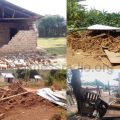
Victim families alleged that NEMA is targeting their land for a mega project and that their eviction is not about wetland encroachment. They said officials had earlier leaked information that several projects were being considered for their land before NEMA demolished their homes.

NEMA’s nationwide wetland restoration campaign intensified in 2024 as the government stepped up efforts to reclaim degraded wetlands. Restoration operations have since been carried out in some parts of the country before some of the Kawaala families were evicted and left homeless.

Continue Reading

Resource Center

Legal Framework

READ BY CATEGORY

Facebook

Newsletter

Subscribe to Witness Radio's news and report updates


Trending

Subscribe to Witness Radio's news and report updates