Connect with us

MEDIA FOR CHANGE NETWORK

Rising fertilizer dependence sparks debate over Africa’s agricultural future; experts call for urgent critical review process.

Published

on

By Witness Radio Team.

In March this year, the United Nations World Food Program (WFP) warned that the number of people facing acute hunger globally could rise sharply if escalating conflict in the Middle East continues to destabilize the global economy, projecting that nearly 45 million additional people could slide into acute food insecurity.

Since 28 February 2026, the United States and Israel have been engaged in a war with Iran and its regional allies. The conflict began when the US and Israel launched airstrikes on Iran, targeting military and government sites and assassinating several Iranian officials, including Supreme Leader Ali Khamenei. Iran responded with missile and drone strikes on Israel, US bases, and US-allied Arab countries in West Asia, and the temporary closure of the Strait of Hormuz, disrupting global trade.

As global tensions continue, experts have revealed that they are disrupting fertilizer supply chains and driving up prices, an issue likely to threaten food security and make policymakers feel responsible for safeguarding Africa’s future.

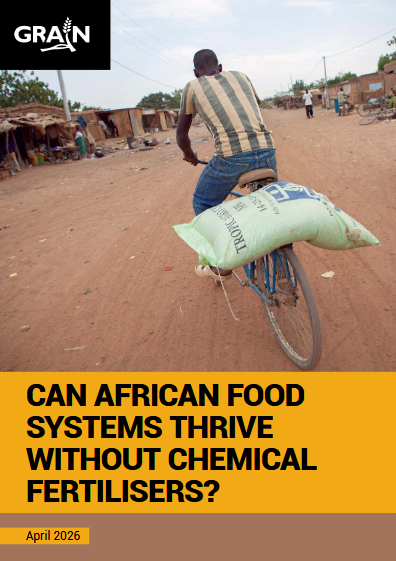
A recent report by GRAIN, an international Non-Governmental Organization (NGO), argues that Africa’s increasing reliance on imported chemical fertilizers is exposing farmers and food systems to economic, political, and environmental risks.

Titled “Can African Food Systems Thrive Without Chemical Fertilizers?”, the report links recent fertilizer price spikes to conflicts such as the Russia-Ukraine war and the recent escalation involving Iran, Israel, and the United States. According to the report, these crises have disrupted the movement of fertilizers and raw materials, such as natural gas and sulfur, pushing prices beyond the reach of many African farmers.

According to the report, the African fertilizer market is currently worth around US$10–15 billion and is projected to grow to US$20 billion over the next four years. It adds that the largest fertilizer manufacturers — including Yara of Norway, OCP of Morocco, PhosAgro of Russia, Nutrien of Canada, and Mosaic of the United States — are seeking to expand their presence in this fast-growing, highly profitable market.

GRAIN researcher Ange David Baimey told the Witness Radio team that growing concerns about the ongoing impact of global conflicts on African agriculture drove the investigation.

“As you can see, the recent crisis involving Iran, the USA, and the Middle East created a lot of uncertainty concerning how fertilizers can continue reaching African countries. Before this, we also had the Ukraine crisis and COVID-19. If you look at the last six years, these crises have seriously affected agriculture in Africa.” Ange, who participated in the research, told Witness Radio.

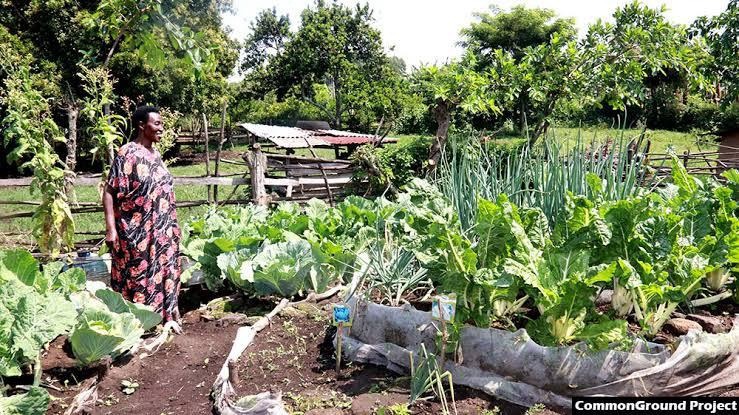
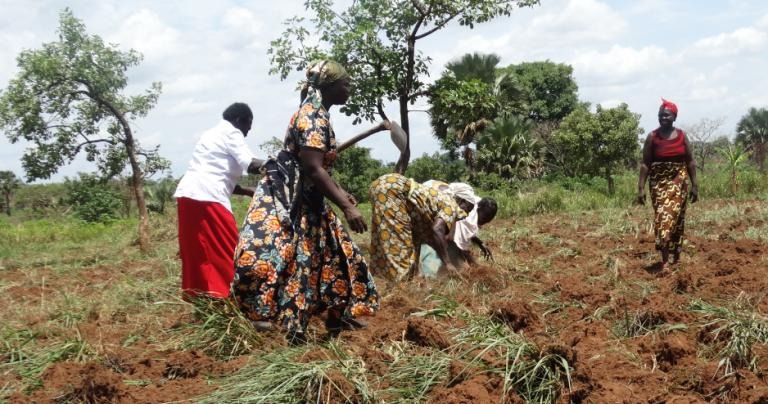
For decades, many African governments, donors, and agribusinesses have promoted chemical fertilizers as essential for increasing food production. However, the report highlights that relying on organic and sustainable practices-such as indigenous knowledge, crop diversity, and soil fertility methods-can be safer and more resilient. Showcasing successful case studies can help policymakers see practical alternatives to dependency.

“The only solution to the best agricultural practices is not chemical fertilizers. Farmers have tested and agreed that organic fertilizers are the answer. Ange further mentioned.

According to the report, the push for chemical fertilizers accelerated during the Green Revolution period, driven largely by multinational agribusiness interests seeking profits from agricultural inputs.

“The Green Revolution is not the beginning of agriculture in Africa. Our systems existed before chemical fertilizers. What we see now is a system where companies are making profits while creating dependency.” He said.

The report notes that many African countries import significant quantities of fertilizers from Gulf countries, including Saudi Arabia, Qatar, and Oman. Countries including Sudan, Tanzania, Kenya, and Mozambique remain highly dependent on these imports, making them vulnerable to supply disruptions and rising global prices.

Although African governments spend billions of dollars on fertilizer subsidy programs, many small-scale farmers still struggle to afford the products. In some countries, fertilizer prices are significantly higher than global averages due to import dependency, market concentration, and the dominance of multinational corporations in the supply chain.

“In our research, we also discovered that African farmers often pay more for the same fertilizers than farmers in Europe or the United States. The market is controlled by powerful companies whose goal is profit.” Ange explained.

The report identifies major corporations such as Yara International, OCP Group, and Dangote Group as key players shaping Africa’s fertilizer markets.

“These companies have huge influence and power in African agriculture. Governments must examine even discussions around continental trade agreements carefully because the same multinational companies may continue dominating the market.” Ange observed.

Beyond economic concerns, the report also highlights environmental and health impacts associated with chemical fertilizers, including soil degradation, water pollution, and increased pesticide use. The report advises African countries to adopt organic approaches to improve their yields, human and soil health, and to avoid environmental shocks.

“A change of course off the chemical fertilizer treadmill and towards agroecology is even more urgent in the face of the climate crisis. Climate scientists are calling today for a 42% global reduction in fertilizer use by 2050, to keep the planet livable.” The report noted.

Experts urge African leaders to use these global shocks as an opportunity to rethink Africa’s agricultural direction. “If you are dependent upon another person for your food, what happens when that person cuts off access? That is the situation Africa is in. The COVID crisis, the Ukraine war, and now the Gulf crisis all prove that reliance on imported fertilizers is dangerous. Africa can feed itself. The question is whether governments are willing to assist with that transition.” He concluded.

Continue Reading

MEDIA FOR CHANGE NETWORK

World Environment Day 2026: Environmental Advocates warn of rising ecological costs arising from Uganda’s land-based investments.

Published

on

By the Witness Radio team

As Uganda faces mounting environmental pressures, environmental advocates warn that the country’s rapid surge in land-based investments is driving ecological destruction and increasing rural communities’ vulnerability.

Among the most controversial of these investments is the East African Crude Oil Pipeline (EACOP), which environmentalists, human rights defenders, and affected communities say is intensifying ecological risks while triggering a wave of repression against those who oppose it.

The $5 billion EACOP project, led by TotalEnergies and partners, spans 1,444 kilometers from Hoima to Tanga. It passes through diverse ecosystems and has affected thousands through land acquisition. Experts warn that the pipeline threatens sensitive environments and may increase carbon emissions.

There has been a price to pay for opposing the project. More than 150 environmental and human rights activists have reportedly been arrested and charged in Uganda for protesting EACOP and related oil developments for their negative impacts. Michel Forst, the United Nations Special Rapporteur on Environmental Defenders, last year criticizedcriticized TotalEnergies for “continually failing to protect environmental defenders adequately” and expressed concern about the project.

For many advocates, EACOP is more than just a controversial oil pipeline. This represents a new development model in Uganda in which large-scale land investments are being prioritized over environmental protection, community rights, and long-term climate resilience.

As Uganda joins the rest of the world to mark World Environment Day 2026, organizations such as Witness Radio Uganda warn that poorly planned and poorly regulated land-based investments threaten to worsen the country’s ongoing ecological crisis.

From commercial agriculture and industrial tree plantations to carbon offset projects, mining operations, and large-scale infrastructure developments, forests, wetlands, and customary lands are being transformed into investment zones at unprecedented rates. While these projects are often promoted as engines of economic growth or climate solutions, environmental defenders argue that they are accelerating deforestation, biodiversity loss, land dispossession, and climate vulnerability.

According to the Land Matrix Initiative, more than 370,000 hectares of land in Uganda have been acquired through large-scale land deals in recent years, reflecting a broader trend of intensifying pressure on land and natural resources. Although these investments are often framed as pathways to modernization, critics argue that they are reshaping land use in ways that undermine ecological stability and local food systems.

The organization cited several examples of investments whose activities raise environmental concerns. In districts such as Mubende, the Namwasa Forest Reserve has been converted into industrial tree plantations dominated by eucalyptus and pine species. Communities and environmental researchers warn that such monoculture plantations reduce biodiversity, alter water cycles, and degrade soil quality over time.

Similar patterns are emerging in other parts of the country. In Kiryandongo District, for instance, commercial agriculture has expanded into previously forested and communal lands, accelerating land degradation and restricting community access to resources on which many households depend for survival.

At the same time, carbon offset and so-called “climate-smart” agriculture projects have proliferated in Uganda in recent years. They are often promoted as the solution to climate change. However, critics say they are changing land use from food production to monoculture plantations or to carbon markets controlled from outside. Smallholder farmers often sign contracts without understanding the long-term implications, sparking concerns about land control, benefit sharing, and food sovereignty.

Witness Radio Uganda warns that unless urgent action is taken, the country risks locking itself into a development pathway that deepens both ecological breakdown and social inequality.

“Uganda is facing a silent but accelerating ecological emergency,” says Jeff Wokulira Ssebaggala, Executive Director of Witness Radio Uganda, adding that “What is being promoted as development is too often the systematic conversion of forests, wetlands, and community lands into investment zones that weaken both people and nature. If we continue on this path, we are not just losing biodiversity but also undermining the very foundation of rural survival and climate resilience.”

On World Environment Day 2026, Witness Radio is calling for urgent structural reforms, including an immediate halt to the allocation of forests, wetlands, and ecologically sensitive ecosystems to private investors; stronger independent environmental governance; recognition and enforcement of customary land rights; full implementation of Free, Prior and Informed Consent (FPIC); and an end to the criminalization of environmental and land rights defenders.

Continue Reading

MEDIA FOR CHANGE NETWORK

EU delegation praises Uganda’s oil and gas progress amid mounting land and human rights challenges in the Albertine Region.

Published

on

By the Witness Radio Team

Hoima, Uganda — On May 7, the European Union marked 50 years of partnership with the Government of Uganda during the Europe Day 2026 celebrations in Kampala, attended by EU members, Ugandan officials, development partners, and diplomats.

It’s reported that over the past five decades, the EU has invested EUR 5 billion in development support, alongside a similar amount of European private investment. This partnership progressed to engagements in trade, investment, energy, climate action, education, health, and humanitarian support.

Focusing on sustainable growth of the EU’s support, part of the celebrations involved a visit to the Albertine oil graben by the EU delegation, with several ambassadors from EU countries, to reflect on the ongoing transformations in oil and gas projects in the Albertine region and on the EU’s commitments to its development ambitions.

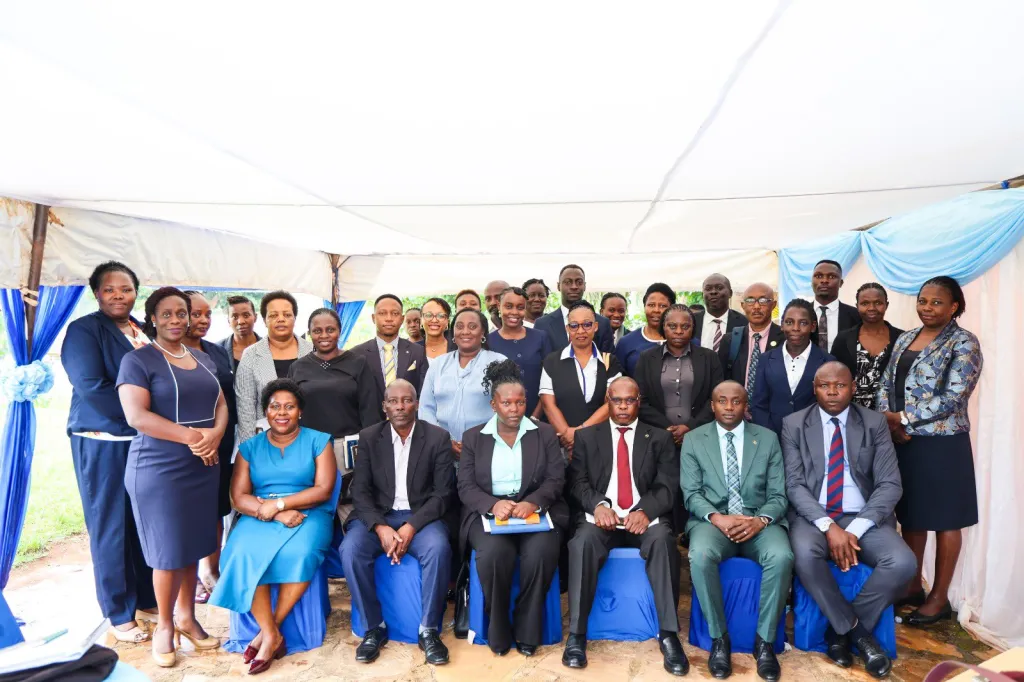
During the visit on May 19 2026, the EU delegation engaged selected Land and Environmental Defenders (LEDs) from Uganda’s oil-rich Albertine region who are beneficiaries of the Monitoring, Documentation and Advocacy for Human Rights in Uganda (MDA-HRU) project. The project is being implemented by Witness Radio Uganda and the National Coalition of Human Rights Defenders Uganda (NCHRD-U), in partnership with DanChurchAid and funded by the European Union. Besides, the Delegation visited several oil and gas projects and surrounding communities.

The visit concluded on May 20 2026, with a dinner at Hoima City Stadium, attended by Several EU country ambassadors, Hoima Local Government authorities, Hoima City officials, development partners, and Civil society organizations. Addressing the guests, H.E. Jan Sadek, European Union Ambassador to Uganda, noted the large-scale and importance of the oil and gas developments in the mid-western region of Uganda, but also acknowledged the complex social, environmental, and human rights issues that come with such investments.

“The future is already unfolding quickly. Today we were in Buliisa with TotalEnergies and its partners, learning more about one of the largest industrial energy projects in East Africa,” Sadek said.

He thanked TotalEnergies, its General Manager Philippe Groueix, and the company’s staff, praising what he described as their openness and hospitality during the visit.

“What we saw was very impressive in scale and ambition. We visited the Tilenga Central Processing Facility and oil rigs both inside and outside Murchison Falls National Park, and saw efforts to reduce the project’s footprint in the area. These developments are very significant for Hoima and Buliisa, and for Uganda and the wider region.” He added.

Sadek also pointed to Europe’s growing economic ties with Uganda, noting that European firms remain among the country’s largest foreign investors.

“TotalEnergies is not just a major investment in Uganda, but also part of the broader economic relationship between Europe and Uganda. The European Union remains one of Uganda’s biggest export markets outside the region and a long-standing development partner,” he further said.

Challenges amidst oil and gas developments

However, alongside the praise for the sector’s economic potential, land and environmental defenders raised concerns over escalating land pressure, delayed compensation, environmental degradation, and shrinking civic space linked to large-scale oil investments.

The concerns were raised during a European Union feedback and engagement meeting held on May 19 at Miika Eco Resort Hotel in Hoima District. The session brought together land and environmental rights defenders, project partners including Witness Radio Uganda, and European Union representatives to review project progress and assess emerging human rights concerns.

Defenders told the EU delegation that oil-related developments have intensified land pressure in the Albertine region through projects associated with Uganda’s petroleum sector, including the East African Crude Oil Pipeline (EACOP), Tilenga, and Kingfisher projects.

Participants reported prolonged delays in compensation for households whose land has been acquired or earmarked for oil-related projects, leaving many families facing prolonged uncertainty and livelihood insecurity.

“People are being affected by delayed compensation processes. Some have even rejected the compensation, saying it is too low, even though their land has already been taken. When people raise complaints, they face intimidation,” Gloria Mugonzebwa, one of the defenders, told the Delegation.

Beyond land concerns, defenders raised alarm over increasing human-wildlife conflict, which they linked to ongoing oil exploration and infrastructure development in and around protected ecosystems, including national parks.

They said disturbances associated with construction activities, industrial lighting, forest encroachment, and vibrations have contributed to wildlife displacement into neighboring communities.

Environmental organizations such as the Africa Institute for Energy Governance (AFIEGO) have previously raised similar concerns, warning that oil activities, climate change, and poaching are reshaping ecosystems in Murchison Falls National Park.

In its 2024 report, How Oil Activities, Climate Change, and Poaching Are Negatively Reshaping Murchison Park, AFIEGO documented that between 2023 and 2024, more than five people were killed in elephant-related incidents, highlighting growing human-wildlife tensions around the park.

Participants also raised concerns over environmental degradation linked to oil development, including deforestation, forest encroachment, and alleged risks of water contamination in affected communities.

“These developments are changing the natural balance. Communities are now living with increased risks from displaced wildlife and environmental disruption,” Nyakato Hellen said.

Uganda has also witnessed the shrinking of civic space for community land and environmental defenders, particularly those questioning the impacts of mega-development projects.

Defenders who attended the meeting said it has become increasingly difficult to document and raise concerns about land and environmental abuses linked to oil investments.

“As activists, the biggest issue has been intimidation, and some defenders have been arrested in the course of their work,” Mr. Biira Kiwanuka Nassa revealed.

Global Witness reported in 2024 that more than 96 arrests linked to environmental activism against oil development activities in Uganda were recorded within only nine months, illustrating the scale of restrictions faced by activists.

“We used to be arrested when we spoke about violations. We had to demonstrate for companies to listen,” one defender said.

Need for sustained dialogue.

In response, the European Union delegation emphasized the importance of sustained dialogue among governments, companies, civil society, and affected communities.

The Delegation acknowledged that large-scale projects, such as oil development, inevitably raise complex questions regarding land rights, compensation, environmental protection, biodiversity, and human rights.

“These issues deserve serious attention and continued dialogue,” the Delegation said.

The Delegation further stressed that inclusive development depends on communities being informed, respected, and meaningfully involved in decisions that affect them.

“Development works best when communities feel included, respected, and heard. That is why our program has included not only meetings with authorities and investors, but also discussions with civil society, community representatives, and local stakeholders,” the Delegation added.

About the MDA-HRU project

DanChurchAid coordinates the project in partnership with Witness Radio. It was designed to promote the protection and respect of human rights and strengthen access to remedy in Uganda’s Mid-Western and Karamoja sub-regions, where private sector actors are increasingly involved in land-based investments.

Speaking at the meeting, Mr. Christopher Kiwanuka, Director of Programs at Witness Radio, welcomed the EU delegation’s assessment mission, noting that it reflects growing recognition of the documentation work undertaken under the MDA-HRU project.

He said the project has strengthened the capacity of land and environmental defenders to document violations and engage duty bearers more effectively.

Uganda’s Mid-Western region remains among the areas most affected by land conflicts linked to large-scale investments, particularly oil development.

Since the discovery of oil in 2006, the sector has generated expectations of economic transformation alongside persistent concerns over displacement, environmental degradation, and unresolved human rights impacts in affected communities.

Continue Reading

MEDIA FOR CHANGE NETWORK

Court Ruling: RDCs and police cannot stop lawful land evictions.

Published

on

By Witness Radio Team.

Uganda’s Constitutional Court has ruled that Resident District Commissioners (RDCs), police, and other executive actors have no authority to stop, suspend, delay, or require additional approvals for lawful court eviction orders, in a landmark judgment that reinforces judicial independence.

The ruling comes amid escalating land conflicts and follows presidential directives that require all evictions to be scrutinized by the District Security Committees, chaired by Resident District Commissioners (RDCs), in consultation with the Ministry of Lands. An RDC is a constitutional representative of the President at the district and local government levels.

Under Uganda’s 2021 Land Eviction Guidelines and Practice Directions, court agents may carry out evictions after strict legal requirements are fulfilled. These include a valid court order or decree authorizing the eviction, an eviction order clearly identifying affected persons or structures, a notice of eviction or demolition issued to affected parties, and a warrant of eviction or demolition.

However, many evictions in Uganda have been criticized as forceful or unlawful, carried out without a proper due process.

In a presidential communication in 2022, President Museveni directed that no eviction should occur in any district without a District Security Committee meeting chaired by RDCs and conducted in consultation with the Ministry of Lands.

But court Bailiffs under the umbrella body, Uganda Court Bailiffs Association, challenged the President’s directive and petitioned the Constitutional Court of Uganda, arguing that even where valid court orders exist, RDC-led security committees have frequently interfered with lawful enforcement.

Court records listed the petition as Uganda Court Bailiffs Association Ltd vs Attorney General (Constitutional Petition No. 0001 of 2023),

The Constitutional Court addressed that tension, holding that enforcement of court orders is not an executive function but an integral component of judicial power.

“The court therefore reiterates that enforcement of judicial decisions remains a core judicial function. Any participation by non-judicial actors must be facilitative only, and not supervisory or controlling,” The ruling, which Witness Radio has seen a copy of, states.

The 2023 petition further challenged what it described as persistent interference by the executive arm of government, including RDCs, police, District Internal Security Officers (DISOs), and local councils in the enforcement of court orders.

According to the petitioners, security agencies had, over time, imposed unauthorized “clearances,” halted executions, confiscated court documents, and frustrated lawful enforcement of judicial decisions.

In its decision, the Constitutional Court distinguished facilitating and controlling court executions.

“Any conduct by executive officials that purports to halt execution, confiscate court process, subject judicial warrants to extra-judicial “clearance” or ‘approval,’ or otherwise frustrate lawful execution amounts to a direct encroachment upon judicial authority and is inconsistent with Articles 2, 126, and 128 of the Constitution of the Republic of Uganda.” The judgment stated.

The judgment, concurred in by Deputy Chief Justice Flavian Zeija and Constitutional Court judges Frederick Egonda Ntende, Florence Nakachwa, and Ketrah Katunguka, acknowledged that security agencies may lawfully participate during sensitive enforcement exercises, including land evictions, particularly where there is risk of violence or public disorder. However, the judges stressed that such involvement must be strictly limited.

“Where the execution of a court order is likely to provoke violence, resistance, or a breach of the peace, security agencies are lawfully entitled to intervene for the limited purpose of maintaining peace, protecting life and property, and ensuring that the process does not descend into disorder,” the judgment reads.

But the court warned that this supportive role has “clear constitutional limits.” “Security agencies do not possess authority to review, vary, suspend, veto, or otherwise sit in judgment over court orders. The direction and supervision of execution remain the exclusive preserve of the courts.”

The court further clarified that security agencies may verify the authenticity of court orders where necessary, particularly in cases involving forged, irregularly issued, or improperly extracted court documents.

“Such verification, however, must remain strictly confined to confirming authenticity. It must not be turned into a process for questioning the legal validity, correctness, propriety, or enforceability of the order itself, for those are matters reserved exclusively for the courts. Nor must it become a device for delay, obstruction, refusal, or abuse. Verification is legitimate only where it is undertaken promptly, in good faith, and solely for the purpose of ascertaining that the order sought to be enforced is genuine. Once authenticity is confirmed, security agencies are bound to act in aid of, and not in derogation from, the authority of the court,” the ruling states.

The ruling raises new legal questions about the implementation of recent presidential directives on land evictions.

In a presidential communication in 2022, President Museveni directed that no eviction should occur in any district without a District Security Committee meeting chaired by RDCs and conducted in consultation with the Ministry of Lands. He further warned that members of District Security Committees would face consequences if evictions occurred outside this framework.

The President also warned magistrates and judges against facilitating illegal evictions in collusion with land grabbers and tasked the Minister of Lands with reporting judicial abuses to the Attorney General for possible legal action.

However, the Constitutional Court ruling appears to place constitutional limits on the role of executive actors in enforcing lawful court orders.

The judgment arrives against a backdrop of increasing land conflicts across Uganda, where forced evictions, land-grabbing allegations, and court-enforced removals remain a major source of tension.

It is unclear whether the President’s office will appeal the ruling.

Continue Reading

Resource Center

Legal Framework

READ BY CATEGORY

Facebook

Newsletter

Subscribe to Witness Radio's newsletter


Trending

Subscribe to Witness Radio's newsletter