MEDIA FOR CHANGE NETWORK
Govt targets land grabbers with first national public-land register
Published
4 weeks agoon

Officials say a nationwide inventory will finally let the state prove what it owns — from school compounds to road reserves — but the exercise is beginning on a shoestring.
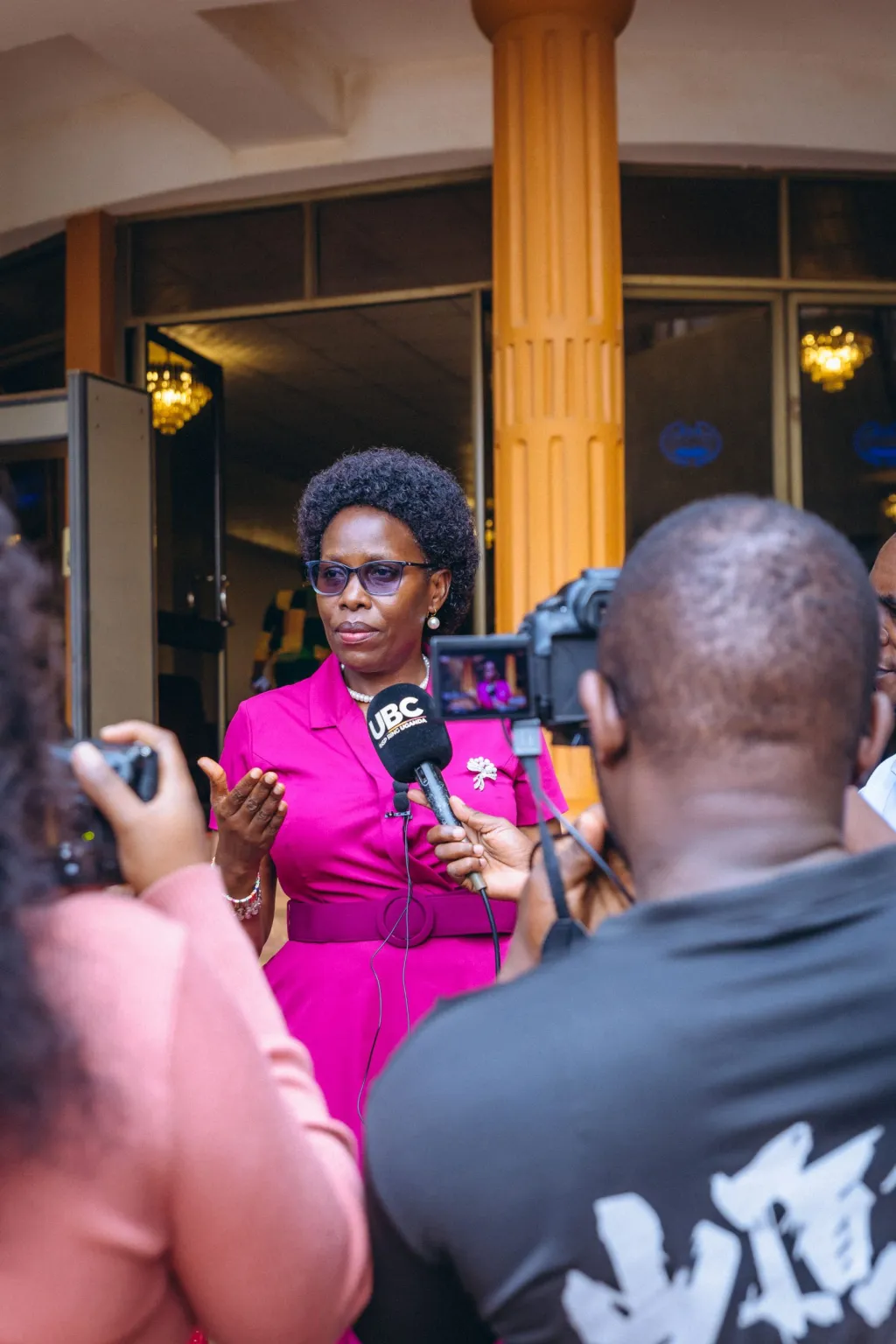
Mukono, Uganda — Uganda has begun building its first comprehensive national register of government land, an undertaking officials say is aimed squarely at land grabbers who for years have carved up public property the state often cannot prove it owns.
The five-year exercise, the Comprehensive Government Land Inventory, will document every identifiable state plot — schools, hospitals, police stations, road reserves, wetlands and forests among them — and record who owns each, how it is used and whether it is under threat.
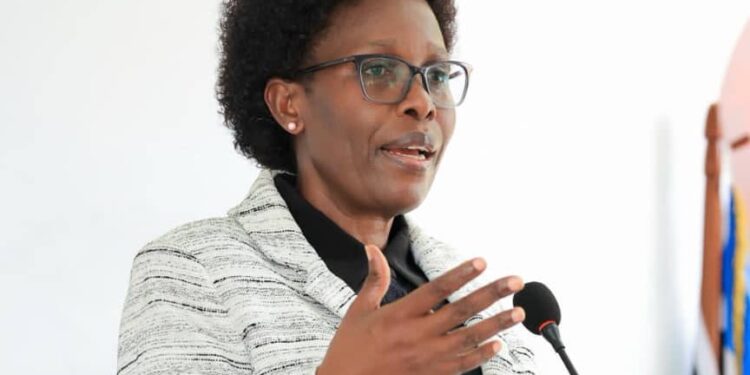
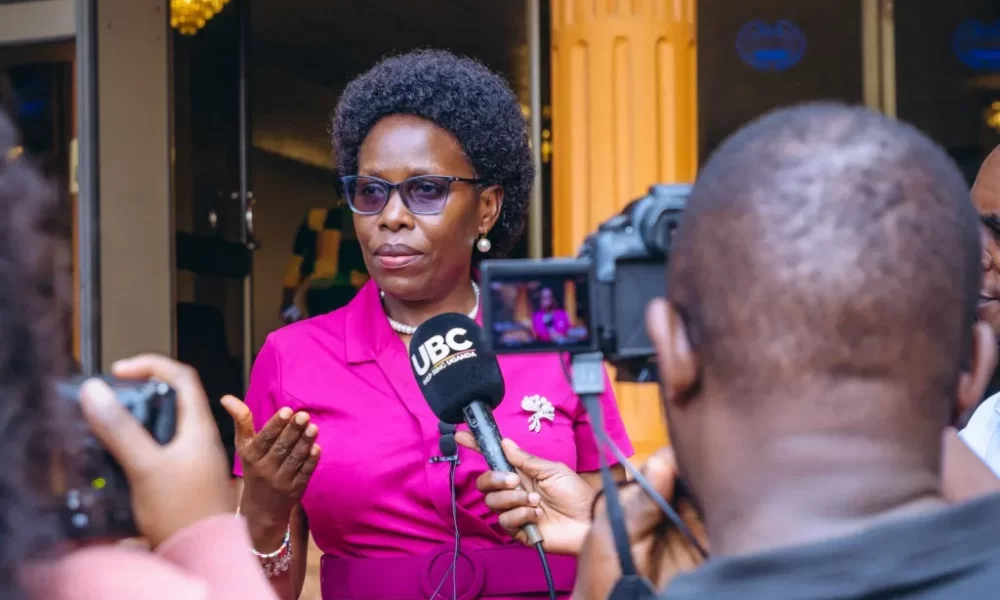
“If we don’t do that, then we may never have land to protect,” Lands Minister Judith Nabakooba told a regional workshop at Rider Hotel in Mukono, east of the capital Kampala, on Thursday.
The vulnerability is considerable. Government land makes up about 23 percent of Uganda’s territory, but only roughly a quarter of it has been formally titled, according to the Uganda Land Commission — leaving the majority undocumented and, officials concede, easy to grab.
Nabakooba said Uganda’s rapid transformation was making the problem worse. Towns are spreading, infrastructure and industry are expanding, and land that was rural only a few years ago is now valuable real estate. She warned that population growth — which she said could push Uganda towards 70 million people by 2050 — would only sharpen the competition for a fixed supply of land.
The minister urged local authorities to enforce physical development plans and to build upwards rather than outwards. “Can we now begin thinking of going vertical when you are building offices and spaces for accommodation… then the rest of the land is used for agricultural purposes?” she asked. She singled out Wakiso district, on Kampala’s fringes, where development pressure is most intense, and cautioned officials against surrendering government plots simply because they appeared vacant.
Local knowledge, national record
The Mukono meeting, billed as the “Buganda 1” engagement and the second after the programme’s national launch in July, gathered district chairpersons, resident district commissioners, land board members and civil society from central-region districts including Wakiso, Mukono, Buikwe, Kayunga, Luweero, Nakasongola and Buvuma.
Uganda Land Commission chairperson Prof Pen Mogi Nyeko told them their local knowledge was central to the exercise. “You all virtually know what land belongs to government,” he said, appealing to them to help identify and title state plots — and warning land boards not to hand public land to individuals.
He said the state was the country’s biggest developer, and that consolidated, protected land could anchor major projects. Nyeko pointed to the Amuru sugar scheme in northern Uganda, where the government compensated landowners across some 10,000 hectares for a plantation and factory, as an example of what public land could enable, describing the local opposition it once faced as “negative politics”. The project in fact has a long and contested history, resisted for years by Acholi communities and their leaders and fought through the courts over customary ownership before compensation was settled.
Nyeko also raised the grabbing of institutional land, including plots belonging to church-founded schools. “Many of you were students in these lands, in these schools. So it is you to help us get those lands protected,” he said. He stressed the commission was not after private property: “The constitution is very clear: land belongs to the people. For us, we are only interested in land which belongs to government.” A reliable inventory, he added, would let the state direct investors to suitable sites — “if we know that there is 2, 3 square miles of land belonging to government in Nakasongola… we recommend that area for industrialisation.”
A reform on a tight budget
For all its ambition, the programme is starting with little money. The commission has said it was costed at about 100 billion shillings (roughly $27m), but only 6 billion shillings was released this financial year, even after a parliamentary committee recommended more. Implementation will be phased, beginning with cities and municipalities where land values — and the incentive to grab — are highest.
Emmanuel Kaganzi, representing the ministry’s permanent secretary, said the register had to capture more than ownership. It should show whether each parcel was surveyed, titled and free of encroachment or competing claims, he said, giving government the chance “to intervene early” rather than react to disputes after the fact.
But a register was only as good as its upkeep, he cautioned. “A government land inventory completed today but not updated tomorrow will gradually lose its usefulness.” He said responsibility for keeping records current would fall across the commission, the ministry, local governments and the agencies that occupy state land, and pressed repeatedly for coordination between them. The inventory, he added, should build on systems already in place — the Uganda Land Information System, the National Land Information Centre and the ministry’s zonal offices, which have moved land services closer to citizens — rather than create new silos.
Kaganzi was blunt about the human element. “An accurate system will achieve little if public officers knowingly allow government land to be encroached, to be taken, to be grabbed, and irregularly allocated,” he said, adding that officials entrusted with public land must treat it as belonging to the people of Uganda.
Cross-checking a fragmented record
The commission’s secretary, Andrew Nyumba, said the state’s own records were part of the problem, scattered across the commission, ministries, local governments and district land boards and never fully reconciled. The existing records, he said, did not amount to a comprehensive picture of government land.
For each holding, he said, the inventory should answer a set of basic questions — what the parcel is, where it lies, its size and boundaries, the evidence of state ownership, which institution is responsible, how it is used, whether it is documented and whether it is occupied, encroached upon or disputed. The commission would draw on registry and cadastral data, ministry and local-government records, survey and planning information, asset registers, historical archives, community knowledge and, where needed, physical checks on the ground.
Those sources would be cross-checked against one another, and disagreements, Nyumba argued, were useful rather than a setback. “A discrepancy in information is not necessarily a failure of the exercise. It is also information,” he said, describing conflicting records as a signal of where further verification was required. The goal, he said, was to move “from fragmented information toward a more reliable, integrated and continuously maintained picture of government land in Uganda”.
The drive follows years of criticism over the commission’s record-keeping. The Auditor General has previously flagged the absence of a comprehensive government land database, and the body has been drawn into numerous court cases over contested public plots — the very gaps the inventory is meant to close.
Source: www.ugstandard.com/
Related posts:

Government urges Ugandans to register their land interests to reduce land evictions.
Govt moves to register surveyors to curb land conflicts
Land commission starts updating govt land countrywide.
Kasese district land bosses ordered to cancel land titles of gov’t land grabbers
You may like
MEDIA FOR CHANGE NETWORK
New revelations: TotalEnergies is investing in countries facing political and economic risks, raising fresh questions about the company’s investment strategy.
Published
1 day agoon
September 8, 2026
By the Witness Radio Team
Oil may not yet flow from Uganda’s wells, but for people near the oil fields in midwestern Uganda and along the pipeline corridor, the oil saga has been shaping their lives for years.
They have felt its impact through land they claim is no longer theirs, homes uprooted, roads and infrastructure cutting through fields they once cultivated, and lingering uncertainty after the announcement that their land was needed for a project promising to reshape Uganda’s future.
Uganda stands on the brink of a moment waited for nearly twenty years. The nation is set to produce its first commercial oil this September, and the government touts’ oil as a gateway to new revenue, jobs, infrastructure, and a path toward middle-income status.
Yet as Uganda readies itself for its first barrels, new findings about the French oil giant at the industry’s heart raise a broader question: beyond profits, what is at stake?
These revelations also shed light on TotalEnergies’ broader investment strategy and its growing presence in countries marked by deep political, economic, and human-rights challenges.
TotalEnergies is the operator of the Tilenga oil project in western Uganda and a major shareholder in the East African Crude Oil Pipeline (EACOP), which is intended to transport crude from Uganda’s oil fields to the Tanzanian coast.
A 2026 analysis by German environmental organization Urgewald, based on its Global Oil & Gas Exit List (GOGEL), found that more than half of TotalEnergies’ planned short-term oil and gas development is located in countries classified as autocracies or hybrid regimes.
Of the 7,829 million barrels of oil equivalent identified by Urgewald as part of the company’s planned short-term development, 4,178 million barrels are in those countries. More than 3,700 million barrels are also in countries classified as having high or extreme political and economic risks.
Uganda is among the countries listed in the analysis. Together, Uganda and Mozambique account for about 40 percent of TotalEnergies’ planned short-term upstream expansion. When Iraq is included, the three countries account for more than half of the company’s planned expansion.
The findings do not suggest that Uganda, Mozambique and Iraq share the same political systems or social circumstances. Instead, the three countries stand out in Urgewald’s analysis because of the scale of TotalEnergies’ planned upstream expansion there.
In Uganda, the company is involved in the Tilenga oil project and EACOP. In Mozambique, TotalEnergies is involved in the Mozambique LNG project, while Iraq is another major destination for the company’s planned upstream expansion.
Taken together, these findings position Uganda’s inaugural oil production as a key piece in TotalEnergies’ sweeping global ambitions.
For communities touched by Uganda’s oil ventures, the promise of economic transformation has often arrived as land disputes, compensation battles, and resettlement struggles—realities woven into the fabric of these projects.
The EACOP pipeline carves its way through ten Ugandan districts, demanding land for its path and the infrastructure that follows.
While officials insist that land acquisition and compensation have been handled justly, many in affected communities voice grievances over what they see as insufficient payment for their land, homes, crops, and possessions.
Among them is Bwowe Ismail, a resident of Bethlehem village in Kyotera District. Bwowe told Witness Radio that his land was taken for the project after he demanded compensation he believed matched the value of his land and property.
He says that instead of receiving the compensation he sought, authorities intimidated him and later arrested him.
“Instead of compensating me fairly as I wanted, state authorities intimidated [me], enabled my arrest and accused [me] of sabotaging a government initiative,” Bwowe said.
Bwowe says that on one occasion he was arrested and accused of stealing money from a wealthy man in his village, an allegation he denies.
“They arrested me [and said] that I stole money from someone. I am a respected man in the society and could not do this. They just did it to shame me,” he said.
According to Bwowe, TotalEnergies offered to support his legal representation if he agreed to sit with the company and accept the compensation, but he refused.
He says that after he continued to reject the compensation and resisted what he described as intimidation, the government sued him and others who refused compensation. It asked the court to allow the money to be deposited into court accounts. The court ruled for the government.
Bwowe’s ordeal mirrors a broader struggle over land acquisition and compensation faced by communities in Uganda’s oil regions. More broadly, his story reveals how these conflicts can spiral far beyond the loss of land itself.
In its report, Our Trust is Broken: Loss of Land and Livelihoods for Oil Development in Uganda, Human Rights Watch reported that EACOP and other oil developments have affected more than 100,000 people in Uganda and Tanzania. The report also raised concerns about compensation, resettlement, and the effects of oil development on communities and biodiversity.
For many affected communities, seeking justice remains an uphill battle. Their worries about Uganda’s oil projects extend well beyond land.
Environmental activists and organizations challenging Uganda’s oil expansion have found themselves facing arrests and criminal charges.
In August, 20 youth activists associated with Rooted in Resistance were arrested while delivering petitions to TotalEnergies and Parliament calling for an end to fossil-fuel expansion.
These arrests are part of a growing pattern of detentions and prosecutions targeting activists who oppose EACOP and other oil projects.
Brighton Aryampa, team lead at Youth for Green Communities, an organization that provides legal representation to environmental activists, says the treatment of protesters raises questions about Uganda’s civic space.
“The government is deliberately using legal action against Stop EACOP activists to suppress dissent, free speech, the right to peaceful protest, and public participation. This taints Uganda as a country that undermines democratic principles of free expression and open discourse, as hundreds of Stop EACOP activists have been arrested and charged,” Aryampa said. Concerns about civic space arise as Uganda faces mounting criticism for its record on political freedoms, free expression, treatment of human-rights defenders, and access to justice.
The country ranks 125th out of 142 countries in the World Justice Project’s Rule of Law Index. Freedom House classifies Uganda as “Not Free”, while CIVICUS gives the country a “Repressed” civic-space rating of 28 out of 100.
All these conditions shape the complex landscape in which Uganda’s oil projects are taking root.
Urgewald describes TotalEnergies as one of the world’s most aggressive oil and gas expanders.
Its 2026 analysis found that TotalEnergies has the largest short-term expansion plans among its major oil and gas peers in authoritarian states and countries classified as high-risk for business.
Sonja Meister, an energy campaigner at Urgewald and author of the analysis, says the company is taking significant risks through its expansion strategy.
“TotalEnergies is taking a huge risk with its fossil fuel expansion and disregarding the repercussions for communities on the ground. This game of roulette has serious consequences for civil society, ecosystems, and the climate alike,” Meister said in an email exchange with Witness Radio.
For Uganda, the significance of the findings lies not just in the amount of oil expected to be produced but in where the country’s projects sit within TotalEnergies’ wider portfolio and what that suggests about the company’s approach. This matter because Uganda is one of several countries where the company pursues major upstream investments despite political, economic, and governance risks identified by organizations such as Urgewald.
Uganda is one of several countries where the company is pursuing major upstream investments despite political, economic, and governance risks identified by organizations such as Urgewald.
This does not mean TotalEnergies’ investments will have identical impacts everywhere or that Uganda’s oil sector will mirror outcomes seen in other countries. Still, it raises pressing questions about how the company weighs political and economic risks, safeguards communities, and responds to human-rights issues as they emerge.
It also sparks important questions about how the company evaluates political and economic risks, shields communities during major developments, and handles human-rights concerns as they surface.
TotalEnergies’ expansion also depends on access to financial markets and investors. According to Urgewald’s analysis, bonds have become an increasingly important source of financing for TotalEnergies compared with loans.
Among the company’s major investors are French financial institutions including Crédit Agricole and Amundi. Deutsche Bank, primarily through DWS, is also a major investor, while German DZ Bank, primarily through Union Investment, is another significant investor.
Urgewald notes that these investors have yet to pledge to stop buying new TotalEnergies bonds, urging financial institutions to rethink their ties to the company and its fossil-fuel ambitions. This financing dilemma is pivotal because TotalEnergies’ expansion hinges on continued access to capital and investors.
Meister says continued expansion depends heavily on access to finance. “TotalEnergies relies on the financial industry’s continuous support. Without new bonds, it would be much harder for the group to finance its destructive expansion projects such as ‘Mozambique LNG’ or ‘EACOP’,” she said.
She said banks and investors financing the company should reconsider their role.
“The banks and investors involved must recognize their responsibility and not sink further funds into these risky endeavors,” Meister said.
The government has hailed Uganda’s first oil production as a landmark economic achievement.
For communities living in the shadow of oil developments, however, the road to first oil has already meant land seizures, compensation wrangles, forced relocations, and at times, direct clashes with authorities and oil firms.
Meanwhile, Urgewald’s research situates Uganda within a sweeping trend of TotalEnergies’ global fossil-fuel expansion, especially in countries flagged for serious political, economic, or governance risks.
Witness Radio sought a response from TotalEnergies Uganda to the concerns raised in this story, including issues relating to land acquisition, compensation, treatment of protesters and the company’s wider expansion strategy. We contacted the company’s Corporate Affairs Manager, Anita Kayongo, by email and telephone but had not received a response by the time of publication.
Related posts:

StopEACOP Coalition warns TotalEnergies and CNOOC investors of escalating ‘financial and reputational’ Risks
As TotalEnergies’ profits soar, calls are growing for the company to answer for the human rights abuses and environmental damage linked to EACOP.
StopEACOP raises alarm over €1.5bn back door funding for TotalEnergies
Ugandan farmers take TotalEnergies’ pipeline to UK court
MEDIA FOR CHANGE NETWORK
Hunger Soars in AGRA Countries Despite Decades of Green Revolution Push
Published
1 day agoon
September 8, 2026
By Milliam Murigi
Two decades after the Alliance for a Green Revolution in Africa (AGRA) promised to transform African agriculture through improved seeds, synthetic fertilisers and better market access, a new report says hunger has instead increased across the countries targeted by the initiative.
The report dubbed, The Green Revolution Has Failed Africa: Twenty Years of Evidence and What Works Instead, finds that the number of chronically undernourished people across AGRA’s 13 priority countries increased by 58 per cent between 2006 and the latest available data. This is nearly twice the 31 per cent increase identified in an earlier assessment published in 2020.
These countries include Kenya, Tanzania, Uganda, Rwanda, Ethiopia, Nigeria, Ghana, Mali, Burkina Faso, Niger, Malawi, Mozambique and Zambia.
“The issue is larger than whether AGRA met the targets it announced in 2006. It is whether two decades of increased fertiliser use, public subsidy, commercial seed promotion and policy reform accelerated productivity, used land more efficiently, strengthened resilience and improved food security,” reads part of the report prepared by the Alliance for Food Sovereignty in Africa (AFSA).
Further, the fertiliser use more than doubled across the countries during the period, while the area under cultivation expanded by 46 per cent. Despite this expansion, growth in staple-crop yields slowed compared with the 12 years before AGRA was established.
Much of the increase in food production therefore came from bringing more land under cultivation rather than significantly increasing productivity on existing farmland.
“This is not an argument against improved seeds, fertiliser or new technology. Farmers need science, finance, infrastructure and strong public support. The question is what kind of food system these investments are building, who controls it and who benefits,” reads another part of the report
The expansion also came with a shift towards maize monocultures, while traditional drought-resilient crops such as millet and sorghum lost ground. Malawi provides what the report describes as a striking example of the disconnect between agricultural productivity and food security. The country recorded the strongest yield growth among the countries studied, yet the number of people facing hunger increased by 61 per cent.
The findings suggest that producing more of a single crop does not necessarily make households more food secure, particularly when farming systems are vulnerable to drought, high input costs and other shocks.
“The shift displaced crops important to nutrition, local food cultures and resilience under dry conditions, while increasing dependence on maize, commercial seed and purchased inputs,” reveals the report.
AFSA identifies Senegal as a contrasting example. The country was not among AGRA’s priority countries but reduced hunger by about half over the same period, bringing the prevalence of undernourishment below five per cent of the population.
At the same time, millet production increased by 85 per cent and sorghum production by 75 per cent. The report attributes Senegal’s progress partly to maintaining diversified farming systems rather than relying heavily on a single crop and an input-intensive production model. It also notes that Senegal used substantially less fertiliser than countries such as Zambia.
“The agroecological alternative isn’t theoretical. Farmers are already building it. Restoring soils, protecting their seeds, diversifying their farms and reducing dependence on expensive external inputs. It’s time to fund what works,” said Dr. Million Belay, AFSA General Coordinator.
The report argues that agroecology including farmer-managed seed systems, soil restoration and diversified farming offers an alternative to approaches that make farmers increasingly dependent on purchased seeds, fertilisers and other external inputs.
The findings are particularly relevant for Zambia, where agricultural policy has heavily prioritised subsidised inputs and maize production.
Mutinta Nketani, National Coordinator of the Zambia Alliance for Agroecology and Biodiversity, said Zambia allocates up to 72 per cent of its agriculture budget to subsidising a single input package. Yet maize yields increased by only 14 per cent while the amount of land under cultivation nearly doubled.
“After billions poured into AGRA-aligned policies, farmers have only grown hungrier and more in debt,” Nketani said.
The AFSA report comes as African governments prepare a new 10-year agricultural strategy under the Kampala CAADP framework. The strategy is expected to guide billions of dollars in agricultural, development and climate financing across the continent.
AFSA is cautioning governments and development partners against repeating what it describes as the shortcomings of the previous agricultural development model.
The organization says there is now an opportunity to redirect agricultural financing towards approaches that strengthen farmers’ resilience rather than increasing dependence on external inputs.
“Africa does not need another Green Revolution. We need a food systems transformation rooted in our people, our biodiversity, our knowledge and our right to determine our own agricultural future,” adds Belay.
The organisation recommends shifting 10 per cent of existing agricultural financing towards farmer-managed seed systems, soil health and diversified production by 2028. It proposes increasing this to 25 per cent by 2030 and 33 per cent by 2035.
Six African countries already have national agroecology laws, while another five are developing similar legislation, according to the report.
For AFSA, the issue is therefore not whether Africa needs to invest more in agriculture, but where that investment should go.
“African farmers must stop being treated as beneficiaries of someone else’s transformation,” Belay writes in the report’s foreword. “They must be its authors.”
Source: news.scienceafrica.co.ke/
Related posts:

AGRA’s Silent Takeover: The Hidden Impact on Africa’s Agricultural Policies.
African Faith Leaders are to demand Reparations from the Gates Foundation this Wednesday.
Wars are disrupting food systems, and ending world hunger requires urgent global action, experts say.
MEDIA FOR CHANGE NETWORK
Smallholder farmers were excluded from the consultative process for the East African Community Seed and Plant Varieties Bill, 2025: CSOs across the EAC call for a time extension and greater inclusion of smallholder farmers in shaping the bill.
Published
3 days agoon
September 7, 2026
By the Witness Radio team.
Civil society organizations throughout the East African Community are raising their voices, urging that smallholder farmers and farmer-managed seed systems practitioners receive the recognition they deserve in the upcoming East African Community Seed and Plant Varieties Bill, 2025.
This call to action follows public hearings held across EAC partner states from August 26 to 28, 2026. Diverse voices gathered to shape the future of regional seed legislation. However, participation by smallholder farmers and farmer-managed seed systems practitioners was limited.
These hearings united government officials, farmers, civil society groups, researchers, seed regulators, commercial seed sector representatives, and other stakeholders, all eager to share their perspectives and recommendations on the Bill.
The proposed legislation aims to create a unified approach to seed and plant variety regulation across the region. It covers seed certification, variety release, and the movement and trade of seeds across borders.
Civil society organizations from several countries argue that the proposed framework overlooks the vital role of smallholder farmers and farmer-managed seed systems practitioners who have sustained farming communities for generations.
They emphasize that although the formal and commercial seed sector is important, farmers must retain the freedom to save, exchange, multiply, and replant seeds within their communities.
In Kenya, civil society organizations participated in the public hearings, advocating for recognition of farmers, farmer-managed seed systems, traditional landraces, and community seed banks.
Tabby Munyiri of Seed Savers Network said the concern was not about rejecting the formal seed sector, but ensuring that farmers have a choice.
“We recognize the importance of the formal seed system, and we believe that farmers should be able to have an option; farmers should be able to have a choice, and that is why we are calling for an inclusive law,” Munyiri said.
She highlighted that traditional and indigenous seed varieties are crucial for preserving biodiversity and equipping farmers with more options as they adapt to shifting climate conditions.
In Uganda, civil society organizations echoed these concerns, stressing the need to explicitly recognize farmer-managed seed systems rather than relying on vague references to farmers in the proposed regional framework.
During the consultations, Dr. David Kabanda of the Center for Food and Adequate Resources Rights Africa (CEFROHT) urged lawmakers to safeguard farmers’ rights and ensure that commercial interests do not undermine farmer-managed systems.
“We need to critically and deeply think about this issue as East Africans. We can wake up to a very sad reality, and it has started happening, when a few corporate companies take over everything,” Kabanda said.
Kabanda also questioned whether the proposed Bill aligns with the international and African commitments that EAC partner states have pledged to uphold.
He cited the International Treaty on Plant Genetic Resources for Food and Agriculture, particularly Article 9, which addresses farmers’ rights. Kabanda argued that the regional legislation should reflect these commitments and criticized the Bill for what he described as inadequate attention to farmers’ rights.
In Tanzania, civil society representatives described a consultation process that brought together a wide range of stakeholders. David Manongi of the Tanzania Alliance for Biodiversity (TABIO) noted that farmers, women, youth, civil society organizations, government officials, researchers, and seed regulators all took part in the discussions.
He added that civil society organizations held preparatory meetings before the public hearing to review the Bill and consolidate concerns and recommendations.
“The meeting provided us with an opportunity to review the Bill and consolidate the concerns and recommendations,” Manongi said.
According to Manongi, stakeholders advocated measures to safeguard farmer seed systems. They focused on ensuring that farmer-managed seed systems and community seed banks are recognized within the regional framework.
In Rwanda, civil society representatives voiced worries about the lack of awareness among organizations that work directly with smallholder farmers regarding the consultations.
Dieudonne Sindikubwabo, who works with the Rwanda Organic Agriculture Movement (ROAM), said many organizations working closely with farmers were unaware that the public hearings were taking place until the process had begun.
“I work with smallholder farmers daily. But when you look at how the Bill is designed, I feel very little involvement of smallholder farmers was done,” Sindikubwabo said.
He explained that his concerns went beyond participation to the substance of the proposed legislation.
Sindikubwabo pointed out that the Bill favors commercialization but falls short in clearly outlining farmers’ rights to keep, exchange, and multiply seeds.
“The Bill is not in favor of smallholder farmers, because they are just focusing on commercialization,” he said.
In Burundi, civil society representatives questioned the inclusiveness of the consultation process, noting they were not formally invited and that farmers were missing from the discussions.
Tusiime Pauline, a legal adviser assisting Burundian civil society organizations, stressed that the absence of farmers was especially troubling since the proposed legislation will directly impact them.
“We didn’t have the farmers there because farmers were not invited,” Pauline said.
She noted that civil society representatives still attended and presented recommendations after preparing submissions and proposed amendments to the Bill. However, she lamented that the discussions largely ignored concerns about farmers’ absence.
“We managed to attend the hearings despite lacking a formal invitation. Leaving out civil society and farmers without inviting them makes the process unfair,” she said.
In Somalia, civil society representatives voiced broader worries about whether rural communities have the awareness and capacity to understand and participate in policy discussions that directly affect them.
Mohammed Hassan from the Center for Dryland Development & Resilience Systems (CDDRS) emphasized the need to share information about the proposed legislation with rural communities, especially those relying on farming and traditional production systems.
“We need to make sure information about these policies reaches rural communities, so the people directly affected can understand what is being discussed and have an opportunity to participate.”
Hassan pointed out that public awareness is crucial because many rural communities may lack sufficient information about policy debates at national and regional levels.
The stories shared by civil society representatives from six of the eight EAC partner states reveal a patchwork of experiences with the consultations, bringing a range of perspectives into the ongoing debate over seed and plant variety regulation in East Africa.
Although the proposed law aims to establish a unified regulatory framework for the region, civil society organizations are urging lawmakers to ensure it also reflects the lived realities of farmers who rely on seed systems beyond the formal commercial market.
Their submissions raise broader questions about how the regional seed system can balance commercial interests, farmers’ rights, biodiversity, and the ongoing use of indigenous and farmer-managed seed systems.
The organizations are also calling for the concerns voiced during the consultations to be genuinely considered before the Bill moves forward in the legislative process.
For farmers, the outcome of this process could determine how they access, save, exchange, and use seeds for years to come. As the EAC weighs the recommendations from the consultations, all eyes are now on how these competing perspectives will shape the next version of the proposed law.
Related posts:

The EAC Seed & Plant Varieties Bill, 2025, is a potential threat to smallholder farmers, as it aims to disengage them from the agriculture business, according to experts.
Civil society organizations across East Africa have revived their campaign against the EAC Seed and Plant Varieties Bill 2025, just as the regional parliament opens the floor to public consultations.
East African Community member states launched public hearings this week for the Seed and Plant Variety Bill 2025, marking a significant step in shaping the region’s agricultural future.
The EAC Seed and Plant Varieties Bill 2025 targets organic seeds, aiming to replace them with modified seeds, say smallholder farmers.
New revelations: TotalEnergies is investing in countries facing political and economic risks, raising fresh questions about the company’s investment strategy.
Hunger Soars in AGRA Countries Despite Decades of Green Revolution Push
Smallholder farmers were excluded from the consultative process for the East African Community Seed and Plant Varieties Bill, 2025: CSOs across the EAC call for a time extension and greater inclusion of smallholder farmers in shaping the bill.
Six other Anti-EACOP Activists remanded to Luzira over alleged unlawful assembly.
Breaking: Sixteen Rooted in Resistance activists arrested and detained as they boldly protested Uganda’s oil ambitions.
Minister Nabakooba wants special land title issuance halted
Thirteen years after the Karuma Hydropower Project broke ground, countless people forced from their homes are still waiting for the compensation and resettlement they were promised.
Civil society organizations across East Africa have revived their campaign against the EAC Seed and Plant Varieties Bill 2025, just as the regional parliament opens the floor to public consultations.
Innovative Finance from Canada projects positive impact on local communities.

Over 5000 Indigenous Communities evicted in Kiryandongo District

Petition To Land Inquiry Commission Over Human Rights In Kiryandongo District

Invisible victims of Uganda Land Grabs
Resource Center
- CAN AFRICAN FOOD SYSTEMS THRIVE WITHOUT CHEMICAL FERTILISERS
- Land And Environment Rights In Uganda Experiences From Karamoja And Mid Western Sub Regions
- REPARATORY AND CLIMATE JUSTICE MUST BE AT THE CORE OF COP30, SAY GLOBAL LEADERS AND MOVEMENTS
- LAND GRABS AT GUNPOINT REPORT IN KIRYANDONGO DISTRICT
- THOSE OIL LIARS! THEY DESTROYED MY BUSINESS!
- RESEARCH BRIEF -TOURISM POTENTIAL OF GREATER MASAKA -MARCH 2025
- The Mouila Declaration of the Informal Alliance against the Expansion of Industrial Monocultures
- FORCED LAND EVICTIONS IN UGANDA TRENDS RIGHTS OF DEFENDERS IMPACT AND CALL FOR ACTION
Legal Framework
READ BY CATEGORY
Newsletter
Trending
-
MEDIA FOR CHANGE NETWORK1 week agoBreaking: Sixteen Rooted in Resistance activists arrested and detained as they boldly protested Uganda’s oil ambitions.
-
MEDIA FOR CHANGE NETWORK2 weeks agoThirteen years after the Karuma Hydropower Project broke ground, countless people forced from their homes are still waiting for the compensation and resettlement they were promised.
-
MEDIA FOR CHANGE NETWORK1 week agoTanzania’s surge in conservation investments is under the UN spotlight, as allegations of indigenous land rights violations prompt an urgent call for the government to stop the evictions at once.
-
WITNESS RADIO MILESTONES2 weeks agoMPs recover hundreds of land files hidden near Mukono land office
-
MEDIA FOR CHANGE NETWORK2 weeks agoEast African Community member states launched public hearings this week for the Seed and Plant Variety Bill 2025, marking a significant step in shaping the region’s agricultural future.
-
MEDIA FOR CHANGE NETWORK2 weeks agoAGRA at 20: New report reignites debate over Africa’s farm model
-
MEDIA FOR CHANGE NETWORK1 week agoTen out of sixteen Rooted in Resistance activists now face charges and have been sent to Luzira Prison after standing up against Uganda’s oil development.
-
FARM NEWS2 weeks agoGovt moves to set up food and agriculture regulatory authority