Connect with us

MEDIA FOR CHANGE NETWORK

Breaking: Sixteen Rooted in Resistance activists arrested and detained as they boldly protested Uganda’s oil ambitions.


Published

on

By the Witness Radio team

In Kampala, police detained 16 young environmental activists from the Rooted in Resistance Movement as they attempted to deliver petitions to Parliament and TotalEnergies, challenging Uganda’s ongoing push for oil production and infrastructure.

The arrests unfolded on Monday morning, August 31, 2026, as the activists split into two determined groups: ten were apprehended near Parliament, while six others were arrested near the TotalEnergies offices in Kampala.

Six activists now sit in Wandegeya Police Station, while the remaining ten are held at Central Police Station (CPS) Kampala, according to group leader Maktum Kajubi.

With these latest arrests, nearly 20 Rooted in Resistance activists have been detained in under a month, the group reports.

On August 10, authorities arrested four other members of the group and charged them with being a public nuisance.

The young protesters carried bright orange banners and placards, their messages ringing out: “No to Oil,” “Oil is temporary, nature is permanent,” and “Uganda deserves an oil-free future.”

Those arrested include Mukiibi Isaac, Mawanda Arafat, Mugerwa Nicholas, Opio Innocent, Friday John and Onyango Ronald, among others.

Rooted in Resistance, once called Students Against EACOP, is a Ugandan youth-led movement fiercely opposing fossil fuel projects like the East African Crude Oil Pipeline—their vision: a sustainable, oil-free, people-first economy.

These latest arrests come as activists ramp up their campaign, challenging Uganda’s deepening reliance on petroleum extraction.

In a press statement seen by Witness Radio, the group called on Parliament to reconsider what it described as Uganda’s petroleum-dependent development model.

“Rooted in Resistance calls upon Parliament to exercise its constitutional responsibility to protect the national interest and reconsider Uganda’s petroleum-dependent development model,” the statement reads.

The activists emphasized that their petition rests on citizens’ constitutional rights to participate in governance, express themselves, and assemble peacefully, as outlined in Article 38.

They urge Parliament to freeze any further oil infrastructure expansion and transparently review Uganda’s petroleum policies and agreements.

The group also calls for national investment to be channeled into agriculture, manufacturing, renewable energy, tourism, technology, education, innovation, and homegrown enterprises.

Activists insist Uganda’s economic future should break free from petroleum, pointing to other sectors that promise broader and longer-lasting opportunities for all citizens.

They urge TotalEnergies to rethink its role in oil projects and instead invest its resources and expertise in sectors that could deliver lasting benefits for Ugandans.

“We urge TotalEnergies to redirect meaningful investment and expertise towards renewable energy, sustainable agriculture, agro-processing, local manufacturing, tourism conservation, technology, skills development and youth enterprise which support livelihoods,” the group said.

The activists are pressing Parliament to put long-term national interests and intergenerational justice at the heart of Uganda’s economic planning.

“The future of Uganda must not be determined by what lies beneath our soil when the country’s greatest resource is the people who live upon it,” the statement says.

EACOP is a 1,443-kilometer heated crude oil pipeline being developed to transport crude oil from Uganda’s oil fields in the Albertine region to the port of Tanga on Tanzania’s Indian Ocean coast.

The pipeline will transport crude produced from Uganda’s upstream oil projects, including TotalEnergies’ Tilenga project in the Lake Albert region.

To the activists, the pipeline is far more than just infrastructure. They warn that ongoing oil investment could trap Uganda in fossil fuel dependency and expose communities and ecosystems to grave environmental and social dangers.

Now, the movement is urging both Parliament and TotalEnergies to rethink Uganda’s current path.

“Rooted in Resistance therefore calls upon Parliament and TotalEnergies to listen, engage and reconsider the current direction of petroleum expansion. Our demand is clear: an oil-free economy, economic freedom, environmental protection and development that leaves Uganda stronger, not more dependent, for generations to come,” the movement adds in their petition.

Continue Reading

MEDIA FOR CHANGE NETWORK

Tanzania’s surge in conservation investments is under the UN spotlight, as allegations of indigenous land rights violations prompt an urgent call for the government to stop the evictions at once.

Published

on

By the Witness Radio team

GENEVA- Tanzania’s ambitious effort to attract billions into conservation and nature-based tourism is under renewed scrutiny as reports emerge of inhuman and degrading treatment of local communities whose ancestral lands lie at the heart of the nation’s prized conservation zones.

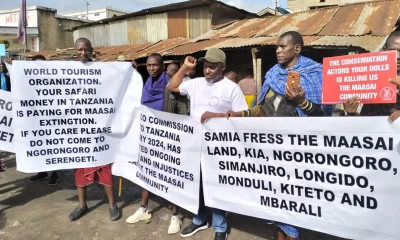
The United Nations Committee on the Elimination of Racial Discrimination (CERD) has called on Tanzania to immediately halt forced evictions of Maasai Indigenous Peoples from their ancestral lands in Ngorongoro and Loliondo, citing allegations of displacement, restrictions on access to land and natural resources, arbitrary arrests, intimidation and excessive use of force.

The Committee on the Elimination of Racial Discrimination (CERD) is the body of independent experts that monitors implementation of the Convention on the Elimination of All Forms of Racial Discrimination by its States parties.

This warning comes as Tanzania increases efforts to expand its role in conservation and tourism investment.

A 2026 Tanzania Investment Growth Facility deal book highlights 68 high-priority public-sector projects worth about US$6.57 billion, many focused-on nature-based tourism and conservation. These projects offer opportunities for investors, developers, financial institutions, and private-sector partners eager to tap into Tanzania’s growing tourism and economy.

The portfolio offers major opportunities for investors and partners, with institutions like the Ngorongoro Conservation Area Authority (NCAA) and Tanzania National Parks (TANAPA) at the center of these ambitious projects.

While CERD’s latest intervention does not directly link the US$6.57 billion investment portfolio to the alleged abuses, it highlights the growing tension between Tanzania’s aggressive conservation push and the rights of communities who have lived on these lands for generations.

The Ngorongoro Conservation Area stands as one of Tanzania’s crown jewels for conservation and tourism. Yet it is also the ancestral home of Maasai communities, who have long relied on its land and resources for their livestock, culture, and way of life.

CERD expressed alarm at reports that significant numbers of Maasai have been uprooted from their ancestral lands in Ngorongoro and Loliondo, all in the name of conservation and tourism.

The Committee said the reported relocations occurred without adequate and meaningful consultation and without obtaining the communities’ free, prior and informed consent.

CERD notes that cutting off access to vital social services has increased pressure on Maasai communities to abandon their ancestral homes.

“Restrictions on access to grazing areas, water sources and cultural sites, together with the reduction or deterioration in the provision of health care, education, water and other essential services in the Ngorongoro Conservation Area, have adversely affected their enjoyment of economic, social and cultural rights and pressured them to relocate from their ancestral lands,” the Committee said.

CERD also pointed to troubling allegations of arbitrary arrests, detentions, reprisals, and harassment targeting Maasai people who resist evictions and relocations.

The Committee voiced further concern over reports of racial profiling and the excessive use of force by law enforcement officials.

These allegations arise as Tanzania positions conservation and nature-based tourism as pillars of its investment strategy.

The country’s investment portfolio features projects aimed at building tourism infrastructure and unlocking new conservation opportunities.

CERD said Tanzania must ensure that conservation, tourism, infrastructure and development initiatives affecting Maasai communities are undertaken only after meaningful consultation, with a view to obtaining their free, prior and informed consent.

The Committee also called for recognition and protection of the collective rights of Maasai Indigenous Peoples to own, develop, control and use lands, territories and resources traditionally occupied or used by them.

The UN’s intervention highlights the lack of transparency in government decisions affecting Ngorongoro.

In February 2025, Tanzania established two presidential commissions to examine land use, relocation, and conservation policies in the Ngorongoro Conservation Area. CERD said the commissions’ findings and recommendations have not been made public.

The Committee has called on Tanzania to publish the findings without delay and ensure that Maasai Indigenous Peoples meaningfully participate in decisions concerning the future of the conservation area.

This is far from the first international warning about the treatment of Maasai communities in Ngorongoro and Loliondo. Despite CERD raising concerns as early as 2016 and again in 2023, the same issues remain at the heart of the Committee’s latest intervention.

CERD’s concerns are not new. In April 2023, the Committee warned that plans to expand safari tourism and trophy hunting areas in northern Tanzania could force nearly 150,000 Maasai from their traditional lands in Ngorongoro and Loliondo. It also raised concerns over the lack of consultation, shrinking grazing areas, reduced access to water and the withdrawal of basic social services.

“These plans have been designed without consultation and without the free,

prior and informed consent of the affected Maasai communities and basic social services have been suspended or cut off in these areas allegedly as a way to coerce the Maasai to leave,” part of the April 2023 letter said.

In April 2026, UNESCO also said forced evictions were unacceptable and that any voluntary resettlement in the Ngorongoro Conservation Area should respect human rights and be based on free, prior and informed consent.

Continue Reading

MEDIA FOR CHANGE NETWORK

Youth, Women, Indigenous People: Yaounde Declaration Pledges 50% Leadership Roles

Published

on

The 2nd Congo Basin Convening ended in Yaounde, Cameroon on August 27, 2026 with stakeholders demanding 30% public budget allocation for agro-ecology.

The Second Congo Basin Convening on Agroecology for Inclusion, Sustainable Food Systems, Biodiversity, and Climate Justice officially concluded on Thursday, August 27, 2026, following three days of intensive deliberations in Yaounde, Cameroon. The high-level regional event drew to a close with a ceremony.

It was presided by the Inspector General in the Cameroon Ministry of Youth Affairs and Civic Education, MINJEC, Dr. Akedeh Metougue Eric, representing the Minister, Mounouna Foutsou. Speaking on behalf of the government alongside delegates from 16 African nations, regional bodies, civil society, and grassroots producers.

Bridging Policy, Action For Youth

Addressing distinguished delegates – including representatives of the African Parliament, the Economic Community of Central African States, ECCAS, traditional rulers, and civil society networks – Dr Akedeh emphasized the necessity of interministerial collaboration between MINJEC and the Ministry of Agriculture and Rural Development, MINADER.

Active Innovators, Solution-Providers

Highlighting the central role of young people in ecological transformation, the Minister’s statement rejected the view of youth as mere passive beneficiaries of environmental policy. Instead, the speech framed youth as active innovators and solution-providers capable of driving the green economy across Central Africa.

National support frameworks – including the Special Triennial Youth Plan, the National Guarantee Fund for Young Entrepreneurs, FOGAJEUN, and YouthConnekt Cameroon – were highlighted. As key vehicles to back green entrepreneurship, sustainable value chains, and rural employment.

The Yaounde Declaration 2026

The centerpiece of the conference’s outcome is the newly adopted Yaounde Declaration 2026. Which is jointly backed by the Alliance for Food Sovereignty in Africa, AFSA and the National Concertation of Farmer Organizations of Cameroon, CNOP-CAM. Building upon the 2023 Kinshasa Declaration, the document outlines key demands and commitments to transform regional food systems.

The Commitments

Dedicated Budgetary Support: Calls on member states and the African Union Commission to explicitly integrate agroecology into national CAADP implementation, reserving at least 30% of public food systems budgets for agroecological initiatives.

Policy Alignment By 2027: Demands that governments adopt agroecology to fulfill Target 10 of the Global Biodiversity Framework, embedding it within Nationally Determined Contributions, NDCs and National Adaptation Plans by the end of 2027.

Access To Climate Finance: Urges major international funders – including the Green Climate Fund, GEF, CAFI, and the African Development Bank – to establish simplified, direct-access funding streams, ensuring at least 20% of climate and conservation resources directly reach local farmers, women, and indigenous communities.

Land Rights, Seed Sovereignty: Reaffirms the necessity of Free, Prior, and Informed Consent (FPIC) in all development projects, while calling for legal protections for farmer-managed seed systems against restrictive or criminalizing regulatory regimes.

Inclusive Leadership: Pledges that civil society and farmer organizations will entrust women, youth, and indigenous representatives with at least 50% of leadership positions.

With Gratitude

Dr Akedeh expressed deep gratitude for the trust placed in him to represent the Ministry at such a prestigious gathering. He conveyed Minister Mounouna Foutsou’s heartfelt appreciation to his colleague, Mr. Gabriel Mbairobe, Minister of Agriculture and Rural Development, MINADER, for actively involving MINJEC in the conference’s proceedings.

Invaluable Values

“This initiative once again illustrates the relevance and strength of interministerial synergy, not only when it comes to promoting the aspirations and interests of young people. But also to fostering the values of solidarity, social cohesion, and harmonious living together that should guide relations between people sharing the same space, the same heritage, and common challenges,” the representative stated.

Joint Success

Paying tribute to the organizers, financial partners, and delegates, the representative praised the collaborative spirit demonstrated throughout the three days of dialogue: “Through your involvement, your dedication, and your commitment, you have helped to bring this initiative to fruition and, beyond that, to advance a shared vision of a society that is more united in the face of environmental challenges, most just, mindful of the common good, and resolutely committed to the path of sustainable development.”

True Force For Proposals

Addressing the core theme of youth participation, the MINJEC delegate noted that young people can no longer be viewed merely as passive recipients of environmental interventions. Reaffirming a key point raised earlier in the proceedings, he emphasized: “Youth cannot be considered merely as beneficiaries of environmental and climate policies. They must be recognized as a true force for proposals, innovation, and action, called upon to contribute fully to the transformation of our societies and to the preservation of the natural heritage that we will pass on to future generations.”

Cameroon’s Youth-led Initiatives

To translate this vision into reality, Dr Akedeh highlighted several existing government schemes designed to support youth entrepreneurship and capacity building in Cameroon. Including the Special Triennial Youth Plan ordered by the Head of State, H.E. Paul Biya, the National Guarantee Fund for Young Entrepreneurs, FOGAJEUN, the National Volunteer Program, PAJER-U, PEPEJ, PIFMAS, and YouthConnekt Cameroon. He urged that these platforms be increasingly oriented toward green jobs, sustainable natural resource management, and agroecological value chains.

Between Commitments, Action

A recurring motif throughout the closing address was the urgent imperative to move beyond rhetoric to concrete implementation. Citing insights shared during the conference by the Secretary General of the Alliance for Food Sovereignty in Africa, AFSA and the President of the National Concertation of Farmer Organizations of Cameroon, CNOP-CAM, Dr. Metougue warned against the proliferation of unexecuted declarations. While ecosystems continue to degrade and food insecurity persists.

Targeted Major Obstacles

He outlined three major obstacles identified during the conference discussions that must be overcome:

Source: cameroon-tribune.cm/

Continue Reading

MEDIA FOR CHANGE NETWORK

East African Community member states launched public hearings this week for the Seed and Plant Variety Bill 2025, marking a significant step in shaping the region’s agricultural future.

Published

on

By the Witness Radio team

Starting August 24th, the East African member states opened a five-day window for researchers, policymakers, civil society organizations, and small-scale farmers to share their insights and concerns on the East African Community Seed and Plant Variety Bill 2025 as it moves toward its second reading in the East African Legislative Assembly.

Countries including Uganda, Kenya, Tanzania, Rwanda, and Burundi have been actively consulting citizens, inviting people from all walks of life to share their experiences and perspectives openly.

This follows the bill’s introduction in 2025 and its passage through legislative procedures, including tabling and the first reading in EALA in mid-2025.

According to EALA, the public hearings provide a critical opportunity for stakeholders to examine the Bill from multiple perspectives and contribute practical recommendations before the Assembly’s final consideration.

From farmers and seed companies to researchers, civil society, regulators, parliamentarians, women and youth in agribusiness, development partners, and private sector leaders, every voice brings experience that can shape stronger legislation and pave the way for successful implementation.

Following the high-level openings, partner states are rolling out national and regional consultations guided by the East African Legislative Assembly Committee on Agriculture, Tourism and Natural Resources. Uganda began its hearings on the 26th, while Rwanda and Kenya launched theirs on August 27, 2026. Other partner countries are also conducting the hearings.

During the launch in Uganda, East African Legislative Assembly Member, Hon. Rose Akol, said the Bill is intended to ease access to seed across the region by reducing barriers created by differing national requirements.

“The preamble of the Bill is meant to ease access to plant and seed varieties by farmers in the Community, so as not to make it difficult for them to access seeds because of non-tariff barriers where countries have their own standards and requirements in terms of registration, certification and laboratory testing,” Akol said on Wednesday.

She said harmonizing standards across Partner States would make it easier for farmers to obtain seed from other countries within the region.

“Once the member states have a harmonized law applying the same standards, it will be easier for farmers to access seeds from across borders,” she added.

In Kenya, the EALA parliamentary committee on Agriculture, Tourism and Natural Resources held key consultative meetings with bodies such as the Kenya Plant Health Inspectorate Service (KEPHIS) and the Ministry of Agriculture on the regional seed variety framework, as well as researchers and farmer organizations.

Kenyan member of the East African Legislative Assembly (EALA) Committee on Agriculture, Tourism and Natural Resources, Sankok Ole David, urged participants at every level to champion inclusivity and help craft agricultural regulations grounded in real evidence.

He warned that overreliance on seeds farmers cannot replant could create vulnerabilities if commercial supply chains are disrupted.

“Every season you have to go to the market. Suppose that market closes, what will happen to our food sovereignty and our food security?” Sankok asked.

The Kenyan discussions come against the backdrop of a broader legal debate over farmers’ rights to save, exchange and share seed.

In November 2025, Kenya’s High Court declared several provisions of the country’s Seeds and Plant Varieties Act unconstitutional after 15 smallholder farmers challenged restrictions on the sharing, exchange and sale of unregistered and uncertified seed.

Justice Rhoda Rutto found that seed saving, sharing and exchange form part of the cultural practices of Kenyan farming communities and that restrictions on indigenous seeds violated constitutional protections.

The court also found that some of the restrictions undermined the right to adequate food and could create economic dependency on commercial breeders.

The Kenyan ruling does not determine the outcome of the EAC Bill, which is a separate regional legislative process. However, it provides a recent example of the legal questions that can arise when formal seed regulation intersects with farmer-managed seed systems.

In Uganda, Civil society organizations (CSOs), Center for Food and Adequate Living Rights (CEFROHT), Participatory Ecological Land Use Management (PELUM), Eastern and Southern Africa Small Scale Farmers’ Forum (ESAFF), smallholder farmer groups, and regional trade stakeholders presented divergent positions on seed sovereignty versus commercial seed harmonization through discussions and position papers on the bill.

The Executive Director for CEFROHT, Dr. David Kabanda, who also led CSOs in Uganda in the consultation process, called for improved, further considered, and scrutinized provisions.

Kabanda says the proposed law should recognize the role farmers already play in maintaining and developing seed systems.

“We want the Bill to recognize that the formal seed sector is not the only seed system. Farmer-managed seed systems are already supporting millions of smallholder farmers, conserving agricultural biodiversity and contributing to food security,” he said.

Kabanda notes that the bill’s memorandum is silent on farmer-managed seed systems, which supply 70% to 80% of all seed planted by smallholder farmers in East Africa.

“The memorandum is silent on Farmer Managed Seed Systems, yet these systems supply between 70 and 80 percent of the seed planted by smallholder farmers in East Africa,” Kabanda said.

The organizations are proposing an amendment to the memorandum to explicitly recognize farmer rights and Farmer Managed Seed Systems as complementary to the formal seed sector, alongside issues including conservation of agrobiodiversity, biosafety, food security and food sovereignty.

If passed into law, the Act would establish common approaches to plant variety evaluation, testing, release, registration and marketing, while creating a regional framework for protecting plant breeders’ rights.

Supporters say harmonization could reduce regulatory barriers between Partner States, facilitate cross-border seed trade and make it easier for farmers to access quality seed. Critics, however, say common standards should not prevent farmers from continuing to preserve, exchange and select seed according to local environmental conditions and farming needs.

Protecting smallholder farmers is particularly significant in a region where smallholder farming accounts for about 75 percent of agricultural production.

For farmers who depend on locally managed seed, the outcome of the legislative process could determine how much space remains for traditional seed-saving, exchange and selection alongside the formal commercial seed sector.

But the committee emphasized that these hearings are designed as an inclusive platform, empowering stakeholders to shape the legislative process and drive evidence-based recommendations to strengthen agricultural regulation across East Africa.

These hearings are collecting vital feedback on a unified regional approach to plant variety evaluation, seed certification, testing, marketing, and plant breeders’ rights. The committee will weave these insights into a formal report, shaping recommendations before the Bill’s second reading in the East African Legislative Assembly.

Continue Reading

Resource Center

Legal Framework

READ BY CATEGORY

Facebook

Newsletter

Subscribe to Witness Radio's news and report updates


Trending

Subscribe to Witness Radio's news and report updates