Connect with us

MEDIA FOR CHANGE NETWORK

Global hunger falls, but millions in Africa still go without food, says UN

Published

on

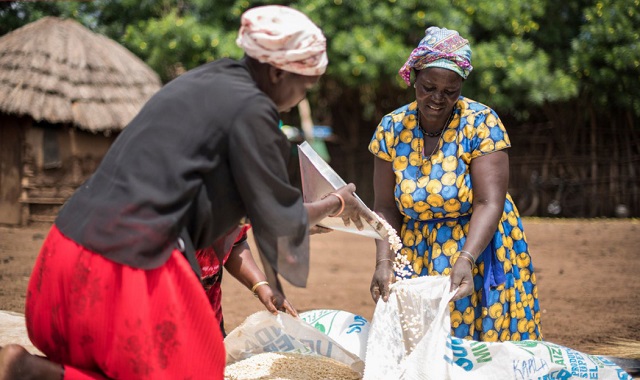
Geneva | Global hunger has declined for the third consecutive year, offering renewed hope that progress against food insecurity is possible. Yet for Uganda and the rest of Africa, the latest United Nations findings are a reminder that the continent continues to carry the heaviest burden of hunger despite improvements in many parts of the world.

The State of Food Security and Nutrition in the World 2026 (SOFI 2026) report, released jointly by five UN agencies, estimates that 645 million people experienced hunger in 2025, down from 659 million in 2024 and 688 million in 2022.

The figures indicate that global efforts to improve food security are beginning to bear fruit, but not fast enough to achieve the Sustainable Development Goal of ending hunger by 2030.

For Uganda, the report presents a mixed picture. While global hunger is declining, Africa has overtaken Asia as the region with the highest number of hungry people. Approximately 309 million Africans experienced hunger in 2025, compared to 292 million in Asia.

One in every five Africans remains undernourished, and more than half of the continent’s population continues to face moderate or severe food insecurity. These findings come at a time when Uganda is striving to transform agriculture from subsistence farming into a commercial, climate-resilient sector.

Agriculture remains the backbone of Uganda’s economy, employing the majority of the population and contributing significantly to export earnings. Yet erratic rainfall, prolonged droughts in some regions, flooding in others, crop pests, high post-harvest losses and fluctuating food prices continue to threaten food security for many households.

The UN report notes that while 2.1 billion people worldwide still experience moderate or severe food insecurity, Africa accounts for the highest share, with 56.6 per cent of its population unable to consistently access sufficient, safe and nutritious food. This means many families are forced to reduce meal sizes, skip meals altogether or settle for less nutritious diets. For Uganda, where rural communities depend heavily on rain-fed agriculture, climate change remains one of the biggest threats to food production.

Recent seasons have demonstrated how prolonged dry spells and unpredictable weather patterns can reduce harvests, increase food prices and place vulnerable households at greater risk of hunger.

The report also highlights another growing concern that resonates with Uganda’s public health priorities: malnutrition is no longer only about hunger. While millions still lack enough food, obesity and poor-quality diets are increasing across the world.

Globally, the prevalence of adult obesity rose from 12.1 per cent in 2012 to 16.2 per cent in 2024. At the same time, nearly 150 million children under five remain stunted due to chronic undernutrition, while only about one-third of children aged between six and 23 months consume sufficiently diverse diets.

Uganda has made progress in reducing child stunting over the past decade, but nutrition experts continue to warn that poor infant feeding practices, limited dietary diversity and food insecurity remain major contributors to child malnutrition. The challenge is compounded by rising food costs, making nutritious foods such as fruits, vegetables, dairy products and animal proteins increasingly difficult for many households to afford.

The report reveals that the average global cost of a healthy diet has risen sharply to 4.28 purchasing power parity dollars per person per day in 2025, compared to 2.94 dollars in 2017. Although fewer people globally are unable to afford healthy diets than four years ago, Africa is moving in the opposite direction.

More than two-thirds of Africans, 66.6 per cent of the population, could not afford a healthy diet in 2025. This is more than double the proportion recorded in Asia and Latin America.

For Uganda, where inflation in food prices periodically affects household purchasing power, the findings reinforce the importance of investing across the agricultural value chain rather than focusing solely on increasing production. According to the report, between 70 and 75 per cent of the price consumers pay for food is determined after it leaves the farm, through transport, storage, processing, wholesale and retail costs.

This suggests that investments in rural roads, irrigation, cold storage facilities, food processing, market infrastructure and efficient transport systems could significantly reduce food costs while increasing farmers’ incomes.

Reducing post-harvest losses, estimated to claim a substantial share of agricultural produce in Uganda each year, would also improve food availability without requiring additional land for cultivation. The report further warns that progress made globally could easily be reversed.

Ongoing conflict in the Middle East, rising energy and fertiliser prices, declining humanitarian funding and increasingly frequent climate shocks all threaten future food security. Even under optimistic projections, between 510 million and 520 million people could still be hungry by 2030, well above the level required to meet the global Zero Hunger target.

For Uganda, these global developments matter because the country remains connected to international food, fuel and fertiliser markets. Higher import costs translate into more expensive agricultural inputs and higher food prices, placing additional pressure on both farmers and consumers.

The UN agencies argue that reducing the cost of healthy diets will require targeted investments in agriculture, stronger food value chains, research and innovation, improved irrigation, climate-smart farming practices, better trade policies and social protection programmes that support vulnerable households.

Ultimately, the report offers both hope and caution. It demonstrates that hunger can be reduced through sustained investment and sound policies, but it also makes clear that progress is uneven and fragile.

Strengthening agricultural resilience, improving nutrition, expanding food processing and ensuring affordable access to healthy diets will be essential for countries in Sub-Saharan Africa in order to contribute meaningfully to the global ambition of ending hunger by 2030.

As the report concludes, a world where healthy food is affordable and accessible to everyone remains within reach, but only if governments, development partners, the private sector and communities work together to build food systems that are more resilient, inclusive and sustainable.

Source: independent.co.ug

Continue Reading

MEDIA FOR CHANGE NETWORK

Govt targets land grabbers with first national public-land register

Published

on

Officials say a nationwide inventory will finally let the state prove what it owns — from school compounds to road reserves — but the exercise is beginning on a shoestring.

Continue Reading

MEDIA FOR CHANGE NETWORK

Experts rally the region to unite behind East Africa’s transformative Agroecology Bill.

Published

on

By the Witness Radio team.

Across East Africa, experts and agricultural advocates are urging a united front for the proposed East African Community (EAC) Agroecology Bill, believing its passage could revolutionize food systems, empower food sovereignty, and uplift millions of farmers’ lives.

In mid-April 2026, the East African Legislative Assembly (EALA) officially began the legislative process for the EAC Agroecology Bill, 2026, after the Agriculture, Tourism and Natural Resources Committee chairperson, Hon. Gideon Gaptan Thoar, received parliamentary leave to draft and introduce it. The drafting committee is now in the final stages of tabling the bill before parliament.

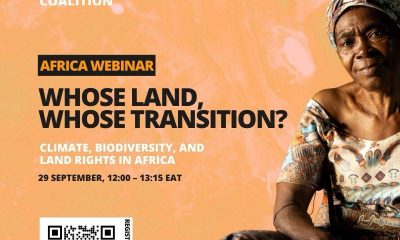
This rallying cry echoed through an online webinar hosted by the Center for Food and Adequate Living Rights and broadcast live on Witness Radio. The event gathered agricultural experts, food sovereignty champions, and regional legislators to explore the bill’s promise and the hurdles it may face.

If passed, it would lay the foundation for a unified regional legal framework championing agroecological farming throughout the East African Community. Supporters believe this could be a powerful tool to combat food insecurity, protect farmers’ rights and indigenous seeds, address climate change and biodiversity loss, and tackle challenges faced by smallholder farmers.

Mr. Andrew Adem, Program Coordinator for Food Systems at the Alliance for Food Sovereignty in Africa (AFSA), said the region must learn from the shortcomings of the Green Revolution model, which prioritized increased yields and external agricultural inputs.

He pointed out that although the model aimed to boost yields and farmers’ incomes, it left them vulnerable when harvests fell short.

Adem noted that in tough seasons, farmers often bear the high costs of expensive inputs, while intensive farming erodes agricultural diversity and time-honored knowledge.

To address these challenges, he said, agroecology flips the script by putting farmers and their wisdom at the heart of agricultural progress.

“In Africa, food is more important than yields because it carries a lot of things. Therefore, the Green Revolution failed, and hence the Agroecology Bill presents an opportunity for us to stand up and protect the sovereignty of food in Africa,” Adem said during the Webinar meeting.

He explained that agroecology inspires farmers to break free from expensive external inputs, nurture healthier soils, diversify their crops, and tap into the wealth of local knowledge and resources.

Unlike systems fixated on monocultures and quotas, advocates say agroecology embraces nutrition, culture, biodiversity, and the enduring wellbeing of farming communities.

This legislative push arrives as hunger casts a long shadow over Africa. Jean Leonard from the Food and Agriculture Organization (FAO) highlighted that the continent bears the World’s largest hungry population, with around 309 million people affected.

He described agroecology as a holistic approach, weaving together ecological and social principles to shape and guide agricultural systems.

“Agroecology seeks to optimize interaction between people, markets, agriculture and ecosystems while addressing environmental, social and economic systems simultaneously rather than focusing on single technologies,” Leonard said.

Leonard outlined key ingredients for the success of the Bill: dedicated lawmakers, appropriate budgets, robust funding, supportive laws, and genuine involvement from farmers. She urged greater investment in youth, believing that empowering young people with resources and opportunities could open fresh paths into agriculture and speed the shift to agroecological farming.

Hon. Jackline Amongin, a Ugandan member of the East African Legislative Assembly (EALA), said the proposed legislation is intended to create a common framework for agroecological farming across the EAC.

She emphasized that the East African Community’s unique character calls for unity, not fragmented efforts, in transforming agriculture.

“We shall have the best, but all efforts must be put on enacting the Bill into law. Once the law is put in place, all the desired issues of implementation and execution will be agreed on. Other factors will follow,” she added.

Advocates stress that agroecology is more than a farming method. They see it as a philosophy that links agriculture to environmental care, social justice, cultural heritage, nutrition, and economic vitality.

This approach inspires farmers to exchange wisdom, broaden their crops, and craft solutions tailored to their unique landscapes.

According to the Bill memorandum, the purpose of the EAC Agroecology Bill, 2026, is to mainstream agroecological farming by promoting agroecology principles across agri-food systems. It seeks to integrate ecological, social and participatory approaches while combining scientific and traditional knowledge to enhance biodiversity, ecosystem services, resilience, livelihoods and food sovereignty.

“The Bill will therefore be tabled and gazetted before being subjected to public consultations, hearings and participation by members of the public. It will then proceed to a second reading before being referred to the whole House Committee for detailed consideration. Once all these processes are duly followed, the Bill will be presented for a third reading and passage by EALA. It will then go through the EAC process before ultimately becoming an Act.” She concluded.

Continue Reading

MEDIA FOR CHANGE NETWORK

Four youth activists now face public nuisance charges after their arrest during a bold march toward Parliament.

Published

on

By the Witness Radio team.

At Buganda Road court, four youth activists from the Rooted in Resistance Movement were charged with public nuisance after their arrest during a passionate plea to Parliament for an oil-free Uganda.

Activists Ssembalirwa Aniwally, Mugoya Hassan, Aron Patrick Ariong, and Okanya Ivan were detained by parliamentary police as they marched with determination toward Parliament, urging the Ugandan government to abandon oil dependency in favor of an ‘oil-free economy’ built on economic freedom, sustainability, and citizen involvement.

According to the charge sheet seen by Witness Radio, the prosecution alleges that on August 10, 2026, at about 9:00 am, the four activists, along with others still at large, were at King George Way Street in Kampala Central. They wore orange T-shirts bearing the words “Rooted in Resistance” and carried placards with messages including “Prioritize Other Sectors of the Economy,” “Oil Is Temporary, Nature Is Permanent,” and “Oil Today, Problems Tomorrow.”

Prosecutors claim the activists stood on the road, disrupting traffic and creating hazards.

The activists appeared before Grade One Magistrate Her Worship Rophine Achayo at Buganda Road court yesterday, where they were charged with being a nuisance on the public road, contrary to Section 67(1) of the Road Act, Cap. 346.

Section 160(1) of the Penal Code Act, which defines a common nuisance, provides that any person who does an act not authorized by law or fails to discharge a legal duty and thereby causes “any common injury, or danger or annoyance,” or obstructs or causes inconvenience to the public in the exercise of common rights, commits the misdemeanor of common nuisance and is liable to imprisonment for one year.

The four pleaded not guilty and now await their fate in Luzira Prison, remanded until August 28, 2026.

The group’s mission was to urge Parliament to rethink Uganda’s reliance on petroleum, warning that true prosperity cannot be built on a resource that will one day run out.

The activists contend that despite years of promises—jobs, industry, infrastructure, and poverty relief—oil’s benefits have reached only a privileged few, while many others remain trapped in poverty.

“Our demand for an oil-free economy is not a rejection of development, but a demand for a different development model, one that places Ugandan citizens, productive sectors and sustainable wealth creation at the center of national planning,” the group said.

They call for bold investment in other sectors, insisting Uganda should chart a path toward sustainable wealth, citizen empowerment, and true economic independence instead of clinging to petroleum.

These arrests are part of a troubling pattern as more Ugandans face criminal charges for protesting oil projects or demanding accountability for their social and environmental costs.

12 environmental activists were arrested in Kampala in August 2025 during a protest against the East African Crude Oil Pipeline (EACOP). Eight out of the 12 activists were later convicted and sent to prison to serve an eleven (11) month sentence. They were released from Luzira Prison on April 21, 2026, as time spent on remand had effectively covered their 11-month sentences.

The other four, including Ivan Wamboga, Baker Tamale and Habibu Nalungu, pleaded guilty and were released on November 19, 2025, after being ordered to perform community service. Mark Makoba also pleaded guilty and was released on November 6, 2025, without any additional penalty.

These cases reveal the risks faced by those who challenge Uganda’s oil agenda. Even after release, the activists’ ordeals have intensified fears for freedom of expression and assembly across civil society.

Continue Reading

Resource Center

Legal Framework

READ BY CATEGORY

Facebook

Newsletter

Subscribe to Witness Radio's news and report updates


Trending

Subscribe to Witness Radio's news and report updates