Connect with us

MEDIA FOR CHANGE NETWORK

Smallholder farmers and civil society organizations have launched a dynamic media campaign for the inaugural Eastern Africa Indigenous Seed Conference, inviting more smallholder farmers to join the agroecology movement.


Published

on

By the Witness Radio team

NAIROBI, Kenya: Seed sovereignty champions, farmers, researchers, and civil society groups from across East Africa have united to launch a media campaign for the first Eastern Africa Indigenous Seed Conference. Their call is urgent: recognize and protect farmer-managed seed systems as seed regulations, commercialization, and the loss of indigenous diversity threaten the region. The campaign aims to rally smallholder farmers for the conference, highlighting how indigenous seeds and ancestral wisdom can revive biodiversity, combat climate change, and secure food sovereignty.

Set for 17 to 20 November 2026 at the Catholic University of Eastern Africa in Nairobi, the four-day conference will gather farmers, pastoralists, researchers, policymakers, seed guardians, civil society, and development partners to shape the future of indigenous seeds and food systems in the region.

The conference will be held under the theme “Realizing the Right to Food through Seed Sovereignty.”

This launch comes as farmers and seed sovereignty advocates question whether East Africa’s seed laws and regulations truly honor the farmer-managed systems that for generations have allowed communities to select, conserve, exchange, and replant their own seeds.

Activists warn that the growing focus on certified and commercial seed systems threatens traditional knowledge, reduces local seed diversity, and undermines farmers’ freedom to save, exchange, and reproduce varieties adapted to their land.

Daniel Wanjama, Executive Director of Seed Savers Network, said farmer-managed seed systems remain central to food production across the region, arguing that commercial seed systems cannot provide the seed diversity farmers need in different environments.

Wanjama added that about 80 percent of the seeds farmers use in the region come from farmer-managed seed systems, underscoring the importance of supporting farmers in conserving and developing their own varieties.

“There is no commercial seed system that can provide the seeds that farmers need because diversity is part of a resilient mechanism,” he said.

He emphasized that preserving a wide variety of locally adapted seed varieties is crucial as farmers face mounting challenges from climate change.

Wanjama also pointed out a troubling disconnect between current seed policies and the realities faced by smallholder farmers across face across “The policies across the region are not aligned, and just to give you an example, recently last year in Kenya, the high court found the act that is governing the seed sector in Kenya was unconstitutional because it is limiting the farmers’ rights in being able to access seeds,” he said.

He argued that some African seed laws borrow regulatory models from highly commercialized agricultural systems abroad, making them ill-suited for local contexts.

“The laws are cut and paste from the global north where farming is largely commercial and large-scale; they don’t fit our circumstances. That’s why we need to come together and discuss what we can do about it,” he added.

Amid the seed sovereignty debate, African farmers and civil society organizations are championing Farmer-Managed Seed Systems, building community seed banks, and pushing for greater recognition of farmers as stewards of seed conservation and exchange.

In Uganda, farmers and civil society groups are increasingly turning to community-driven seed conservation, offering a grassroots alternative or complement to formal seed supply systems.

Nancy Mugimba, National Coordinator of the Eastern and Southern Africa Smallholder Farmers Forum (ESAFF) Uganda, said farmers sometimes face planting delays because existing support systems provide inadequate access to seed.

She said some of the seeds provided to farmers are also not necessarily suited to the conditions of particular communities.

Mugimba noted that efforts are now focused on strengthening community seed banks, empowering farmers to cultivate and safeguard the varieties they know and trust.

“We have introduced seed banking in communities, which is not new because farmers were already doing it at home. We have just increased capacity to ensure it works effectively,” she said.

She observed that farmers are more motivated to protect indigenous varieties when they see their vital role in sustaining food supplies and ensuring seed access within their communities.

Panelists urged governments to boost support for farmer-managed seed systems, advocating for multiplying indigenous varieties beyond research and breeding. They stressed that empowering community seed banks and local seed multiplication would expand access to diverse, locally adapted varieties.

The discussions also showcased the diverse strategies emerging across East Africa to revitalize and improve seed systems.

In Tanzania, the seed sector is undergoing reforms to expand access to and use of improved seed while strengthening seed production, quality assurance, and commercial distribution. The Tanzania Seed Sector Development Strategy (TSSDS), approved in May 2026 and covering up to 2030, aims to double the area under improved seed from about 3 million to 6 million hectares and expand the agro-dealer network from around 3,000 to 12,000 to improve farmers’ access to quality seed.

Daud Manongi, Program Lead for the Biodiversity Conservation Program at Tanzanian organization TABIO, said farmers still face restrictions on selling seed within the country’s formal regulatory framework.

“Our farmers are currently not allowed to sell their seeds within the developed framework, but so far we have approved seeds,” Manongi said.

He said the Tanzanian government has approved 13 local varieties for wider production and use. At the same time, discussions are ongoing with the Tanzania Seed Certification Agency (TASC) on how to make registration and market processes more accessible to smallholder farmers.

Manongi noted that farmers and organizations championing local varieties still face hurdles like taxation and limited dialogue with policymakers.

“There is inconsistent engagement with policymakers, and sometimes it is difficult for them to cooperate with farmers on accessing locally adapted varieties because of tax issues,” he said.

He also said agricultural extension services often prioritize commercial seed production, leaving farmers with little support for indigenous varieties.

According to Manongi, farmers urgently need access to knowledge about indigenous seed production and conservation to boost the availability of locally adapted varieties.

Activists insist that farmers’ power to conserve, exchange, and reproduce seeds is deeply tied to food security, biodiversity, cultural heritage, and the resilience of communities facing climate change.

The inaugural Eastern Africa Indigenous Seed Conference, organized by Seed Savers Network with partners like Witness Radio, promises to be a vital regional platform for these urgent issues.

This November, the conference will spotlight the defense of farmer-managed seed systems against corporate and legal pressures, while also strengthening climate resilience, safeguarding biodiversity, and weaving stronger regional networks among farmers, researchers, policymakers, and civil society.

The event comes as climate change, biodiversity loss, commercial agriculture, and shifting policies intensify strain on traditional farming systems across the region.

For smallholder farmers, seed sovereignty is about more than where seeds come from. Advocates say it is a question of who holds the power over food production, and whether farmers will retain the freedom and ability to save, share, and reproduce the seeds that sustain their communities.

Continue Reading

MEDIA FOR CHANGE NETWORK

Nimule residents raise alarm over alleged land grabbing

Published

on

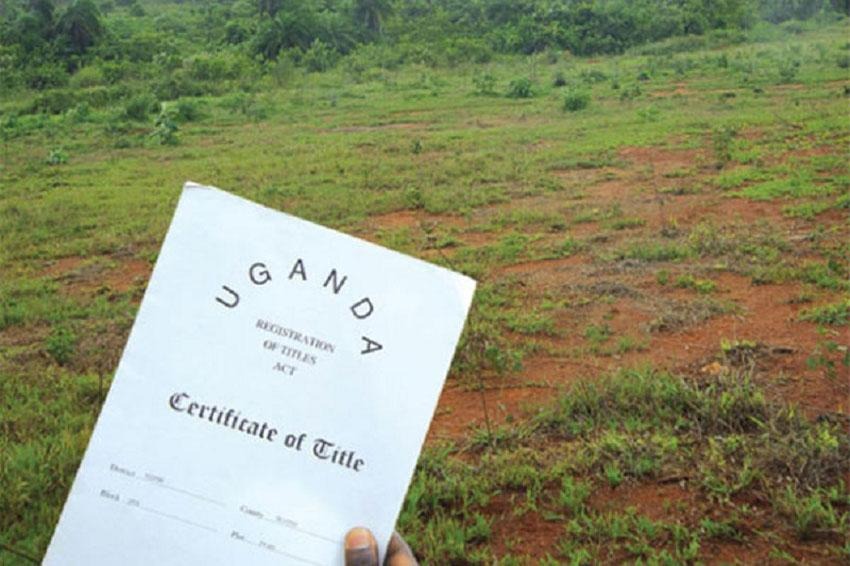
Residents of the border town of Nimule in South Sudan’s Eastern Equatoria state have raised concerns over alleged land grabbing, accusing some members of the South Sudan People’s Defence Forces (SSPDF) of occupying ancestral land and forcing local residents from their property.

The concerns were raised on Tuesday during a monthly forum on women’s rights to land and property organised by the Women’s Foundation for Humanity.

Andua Florence, a Nimule resident, told Radio Tamazuj that some army personnel had allegedly occupied her family’s land. She said her case was before the High Court in Nimule but that she was still waiting for a ruling.

“My case started from the B-court, then went to the county court, and finally the county court directed me to transfer it to the High Court,” Florence said. “When my case was transferred to the High Court, I had to get a lawyer.”

Florence said she had spent about 6 million South Sudanese pounds pursuing the case and was waiting for the court to deliver its ruling.

“This is my grandfather’s place, and we are the landowners of this place,” she said. “We are currently the seventh generation on that piece of land.”

Florence alleged that the people occupying the land are soldiers who claimed to have settled there in the 1990s.

She said the land was occupied while she was in Uganda as a refugee and that she had struggled to reclaim it since returning.

Florence said several land disputes in Nimule had reached the High Court, with some cases remaining there for nearly a year without a ruling. She said the lengthy legal process had imposed a financial burden on families pursuing their claims.

Grace Juan, a female chief in Nimule, echoed the concerns, saying many residents are being forced from their land.

Dorothy Drabuga, founder and executive director of the Women’s Foundation for Humanity, said land grabbing and inheritance rights were among the issues discussed during the monthly forum.

“We had a meeting with a women’s group. It is a monthly forum where we look at the challenges affecting women in Nimule, especially land rights and the right of inheritance,” Drabuga said.

Drabuga said some land disputes had moved through several levels of the court system and were now before the High Court, where the parties had hired lawyers.

“These cases have been going on for almost a year,” she said, adding that some people summoned to court had failed to appear.

Drabuga said some of the disputes involved ancestral land where generations of families had lived and buried relatives.

“This is ancestral land where the parents and grandparents have been buried, but somebody from another state is claiming that this land belongs to him or to them,” she said.

Drabuga said she is aware of at least five such cases before the High Court.

“There are many. So far, the ones I am aware of are five,” she said.

She said the failure of some parties to attend court had contributed to delays, but expressed hope that they would appear at upcoming hearings.

South Sudan has struggled with land disputes and competing claims over property, particularly in urban and border areas, where population movements and displacement have complicated land ownership.

Continue Reading

MEDIA FOR CHANGE NETWORK

New revelations: TotalEnergies is investing in countries facing political and economic risks, raising fresh questions about the company’s investment strategy.

Published

on

By the Witness Radio Team

Oil may not yet flow from Uganda’s wells, but for people near the oil fields in midwestern Uganda and along the pipeline corridor, the oil saga has been shaping their lives for years.

They have felt its impact through land they claim is no longer theirs, homes uprooted, roads and infrastructure cutting through fields they once cultivated, and lingering uncertainty after the announcement that their land was needed for a project promising to reshape Uganda’s future.

Uganda stands on the brink of a moment waited for nearly twenty years. The nation is set to produce its first commercial oil this September, and the government touts’ oil as a gateway to new revenue, jobs, infrastructure, and a path toward middle-income status.

Yet as Uganda readies itself for its first barrels, new findings about the French oil giant at the industry’s heart raise a broader question: beyond profits, what is at stake?

These revelations also shed light on TotalEnergies’ broader investment strategy and its growing presence in countries marked by deep political, economic, and human-rights challenges.

TotalEnergies is the operator of the Tilenga oil project in western Uganda and a major shareholder in the East African Crude Oil Pipeline (EACOP), which is intended to transport crude from Uganda’s oil fields to the Tanzanian coast.

A 2026 analysis by German environmental organization Urgewald, based on its Global Oil & Gas Exit List (GOGEL), found that more than half of TotalEnergies’ planned short-term oil and gas development is located in countries classified as autocracies or hybrid regimes.

Of the 7,829 million barrels of oil equivalent identified by Urgewald as part of the company’s planned short-term development, 4,178 million barrels are in those countries. More than 3,700 million barrels are also in countries classified as having high or extreme political and economic risks.

Uganda is among the countries listed in the analysis. Together, Uganda and Mozambique account for about 40 percent of TotalEnergies’ planned short-term upstream expansion. When Iraq is included, the three countries account for more than half of the company’s planned expansion.

The findings do not suggest that Uganda, Mozambique and Iraq share the same political systems or social circumstances. Instead, the three countries stand out in Urgewald’s analysis because of the scale of TotalEnergies’ planned upstream expansion there.

In Uganda, the company is involved in the Tilenga oil project and EACOP. In Mozambique, TotalEnergies is involved in the Mozambique LNG project, while Iraq is another major destination for the company’s planned upstream expansion.

Taken together, these findings position Uganda’s inaugural oil production as a key piece in TotalEnergies’ sweeping global ambitions.

For communities touched by Uganda’s oil ventures, the promise of economic transformation has often arrived as land disputes, compensation battles, and resettlement struggles—realities woven into the fabric of these projects.

The EACOP pipeline carves its way through ten Ugandan districts, demanding land for its path and the infrastructure that follows.

While officials insist that land acquisition and compensation have been handled justly, many in affected communities voice grievances over what they see as insufficient payment for their land, homes, crops, and possessions.

Among them is Bwowe Ismail, a resident of Bethlehem village in Kyotera District. Bwowe told Witness Radio that his land was taken for the project after he demanded compensation he believed matched the value of his land and property.

He says that instead of receiving the compensation he sought, authorities intimidated him and later arrested him.

“Instead of compensating me fairly as I wanted, state authorities intimidated [me], enabled my arrest and accused [me] of sabotaging a government initiative,” Bwowe said.

Bwowe says that on one occasion he was arrested and accused of stealing money from a wealthy man in his village, an allegation he denies.

“They arrested me [and said] that I stole money from someone. I am a respected man in the society and could not do this. They just did it to shame me,” he said.

According to Bwowe, TotalEnergies offered to support his legal representation if he agreed to sit with the company and accept the compensation, but he refused.

He says that after he continued to reject the compensation and resisted what he described as intimidation, the government sued him and others who refused compensation. It asked the court to allow the money to be deposited into court accounts. The court ruled for the government.

Bwowe’s ordeal mirrors a broader struggle over land acquisition and compensation faced by communities in Uganda’s oil regions. More broadly, his story reveals how these conflicts can spiral far beyond the loss of land itself.

In its report, Our Trust is Broken: Loss of Land and Livelihoods for Oil Development in Uganda, Human Rights Watch reported that EACOP and other oil developments have affected more than 100,000 people in Uganda and Tanzania. The report also raised concerns about compensation, resettlement, and the effects of oil development on communities and biodiversity.

For many affected communities, seeking justice remains an uphill battle. Their worries about Uganda’s oil projects extend well beyond land.

Environmental activists and organizations challenging Uganda’s oil expansion have found themselves facing arrests and criminal charges.

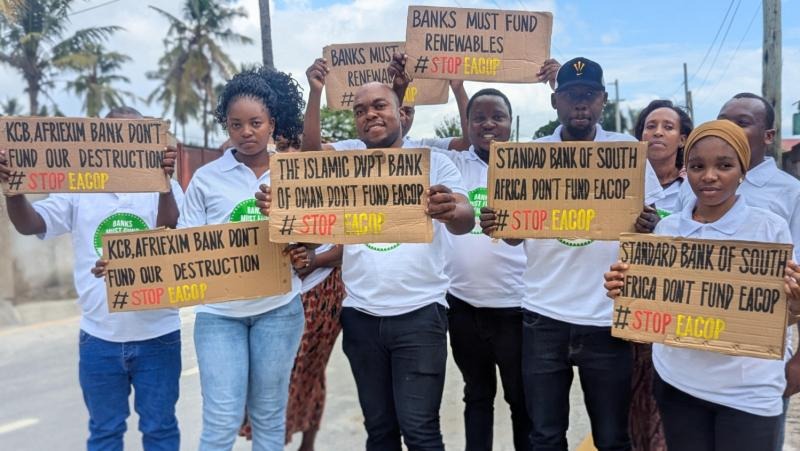
In August, 20 youth activists associated with Rooted in Resistance were arrested while delivering petitions to TotalEnergies and Parliament calling for an end to fossil-fuel expansion.

These arrests are part of a growing pattern of detentions and prosecutions targeting activists who oppose EACOP and other oil projects.

Brighton Aryampa, team lead at Youth for Green Communities, an organization that provides legal representation to environmental activists, says the treatment of protesters raises questions about Uganda’s civic space.

“The government is deliberately using legal action against Stop EACOP activists to suppress dissent, free speech, the right to peaceful protest, and public participation. This taints Uganda as a country that undermines democratic principles of free expression and open discourse, as hundreds of Stop EACOP activists have been arrested and charged,” Aryampa said. Concerns about civic space arise as Uganda faces mounting criticism for its record on political freedoms, free expression, treatment of human-rights defenders, and access to justice.

The country ranks 125th out of 142 countries in the World Justice Project’s Rule of Law Index. Freedom House classifies Uganda as “Not Free”, while CIVICUS gives the country a “Repressed” civic-space rating of 28 out of 100.

All these conditions shape the complex landscape in which Uganda’s oil projects are taking root.

Urgewald describes TotalEnergies as one of the world’s most aggressive oil and gas expanders.

Its 2026 analysis found that TotalEnergies has the largest short-term expansion plans among its major oil and gas peers in authoritarian states and countries classified as high-risk for business.

Sonja Meister, an energy campaigner at Urgewald and author of the analysis, says the company is taking significant risks through its expansion strategy.

“TotalEnergies is taking a huge risk with its fossil fuel expansion and disregarding the repercussions for communities on the ground. This game of roulette has serious consequences for civil society, ecosystems, and the climate alike,” Meister said in an email exchange with Witness Radio.

For Uganda, the significance of the findings lies not just in the amount of oil expected to be produced but in where the country’s projects sit within TotalEnergies’ wider portfolio and what that suggests about the company’s approach. This matter because Uganda is one of several countries where the company pursues major upstream investments despite political, economic, and governance risks identified by organizations such as Urgewald.

Uganda is one of several countries where the company is pursuing major upstream investments despite political, economic, and governance risks identified by organizations such as Urgewald.

This does not mean TotalEnergies’ investments will have identical impacts everywhere or that Uganda’s oil sector will mirror outcomes seen in other countries. Still, it raises pressing questions about how the company weighs political and economic risks, safeguards communities, and responds to human-rights issues as they emerge.

It also sparks important questions about how the company evaluates political and economic risks, shields communities during major developments, and handles human-rights concerns as they surface.

TotalEnergies’ expansion also depends on access to financial markets and investors. According to Urgewald’s analysis, bonds have become an increasingly important source of financing for TotalEnergies compared with loans.

Among the company’s major investors are French financial institutions including Crédit Agricole and Amundi. Deutsche Bank, primarily through DWS, is also a major investor, while German DZ Bank, primarily through Union Investment, is another significant investor.

Urgewald notes that these investors have yet to pledge to stop buying new TotalEnergies bonds, urging financial institutions to rethink their ties to the company and its fossil-fuel ambitions. This financing dilemma is pivotal because TotalEnergies’ expansion hinges on continued access to capital and investors.

Meister says continued expansion depends heavily on access to finance. “TotalEnergies relies on the financial industry’s continuous support. Without new bonds, it would be much harder for the group to finance its destructive expansion projects such as ‘Mozambique LNG’ or ‘EACOP’,” she said.

She said banks and investors financing the company should reconsider their role.

“The banks and investors involved must recognize their responsibility and not sink further funds into these risky endeavors,” Meister said.

The government has hailed Uganda’s first oil production as a landmark economic achievement.

For communities living in the shadow of oil developments, however, the road to first oil has already meant land seizures, compensation wrangles, forced relocations, and at times, direct clashes with authorities and oil firms.

Meanwhile, Urgewald’s research situates Uganda within a sweeping trend of TotalEnergies’ global fossil-fuel expansion, especially in countries flagged for serious political, economic, or governance risks.

Witness Radio sought a response from TotalEnergies Uganda to the concerns raised in this story, including issues relating to land acquisition, compensation, treatment of protesters and the company’s wider expansion strategy. We contacted the company’s Corporate Affairs Manager, Anita Kayongo, by email and telephone but had not received a response by the time of publication.

Continue Reading

MEDIA FOR CHANGE NETWORK

Hunger Soars in AGRA Countries Despite Decades of Green Revolution Push

Published

on

By Milliam Murigi

Two decades after the Alliance for a Green Revolution in Africa (AGRA) promised to transform African agriculture through improved seeds, synthetic fertilisers and better market access, a new report says hunger has instead increased across the countries targeted by the initiative.

The report dubbed, The Green Revolution Has Failed Africa: Twenty Years of Evidence and What Works Instead, finds that the number of chronically undernourished people across AGRA’s 13 priority countries increased by 58 per cent between 2006 and the latest available data. This is nearly twice the 31 per cent increase identified in an earlier assessment published in 2020.

These countries include Kenya, Tanzania, Uganda, Rwanda, Ethiopia, Nigeria, Ghana, Mali, Burkina Faso, Niger, Malawi, Mozambique and Zambia.

“The issue is larger than whether AGRA met the targets it announced in 2006. It is whether two decades of increased fertiliser use, public subsidy, commercial seed promotion and policy reform accelerated productivity, used land more efficiently, strengthened resilience and improved food security,” reads part of the report prepared by the Alliance for Food Sovereignty in Africa (AFSA).

Further, the fertiliser use more than doubled across the countries during the period, while the area under cultivation expanded by 46 per cent. Despite this expansion, growth in staple-crop yields slowed compared with the 12 years before AGRA was established.

Much of the increase in food production therefore came from bringing more land under cultivation rather than significantly increasing productivity on existing farmland.

“This is not an argument against improved seeds, fertiliser or new technology. Farmers need science, finance, infrastructure and strong public support. The question is what kind of food system these investments are building, who controls it and who benefits,” reads another part of the report

The expansion also came with a shift towards maize monocultures, while traditional drought-resilient crops such as millet and sorghum lost ground. Malawi provides what the report describes as a striking example of the disconnect between agricultural productivity and food security. The country recorded the strongest yield growth among the countries studied, yet the number of people facing hunger increased by 61 per cent.

The findings suggest that producing more of a single crop does not necessarily make households more food secure, particularly when farming systems are vulnerable to drought, high input costs and other shocks.

“The shift displaced crops important to nutrition, local food cultures and resilience under dry conditions, while increasing dependence on maize, commercial seed and purchased inputs,” reveals the report.

AFSA identifies Senegal as a contrasting example. The country was not among AGRA’s priority countries but reduced hunger by about half over the same period, bringing the prevalence of undernourishment below five per cent of the population.

At the same time, millet production increased by 85 per cent and sorghum production by 75 per cent. The report attributes Senegal’s progress partly to maintaining diversified farming systems rather than relying heavily on a single crop and an input-intensive production model. It also notes that Senegal used substantially less fertiliser than countries such as Zambia.

“The agroecological alternative isn’t theoretical. Farmers are already building it. Restoring soils, protecting their seeds, diversifying their farms and reducing dependence on expensive external inputs. It’s time to fund what works,” said Dr. Million Belay, AFSA General Coordinator.

The report argues that agroecology including farmer-managed seed systems, soil restoration and diversified farming offers an alternative to approaches that make farmers increasingly dependent on purchased seeds, fertilisers and other external inputs.

The findings are particularly relevant for Zambia, where agricultural policy has heavily prioritised subsidised inputs and maize production.

Mutinta Nketani, National Coordinator of the Zambia Alliance for Agroecology and Biodiversity, said Zambia allocates up to 72 per cent of its agriculture budget to subsidising a single input package. Yet maize yields increased by only 14 per cent while the amount of land under cultivation nearly doubled.

“After billions poured into AGRA-aligned policies, farmers have only grown hungrier and more in debt,” Nketani said.

The AFSA report comes as African governments prepare a new 10-year agricultural strategy under the Kampala CAADP framework. The strategy is expected to guide billions of dollars in agricultural, development and climate financing across the continent.

AFSA is cautioning governments and development partners against repeating what it describes as the shortcomings of the previous agricultural development model.

The organization says there is now an opportunity to redirect agricultural financing towards approaches that strengthen farmers’ resilience rather than increasing dependence on external inputs.

“Africa does not need another Green Revolution. We need a food systems transformation rooted in our people, our biodiversity, our knowledge and our right to determine our own agricultural future,” adds Belay.

The organisation recommends shifting 10 per cent of existing agricultural financing towards farmer-managed seed systems, soil health and diversified production by 2028. It proposes increasing this to 25 per cent by 2030 and 33 per cent by 2035.

Six African countries already have national agroecology laws, while another five are developing similar legislation, according to the report.

For AFSA, the issue is therefore not whether Africa needs to invest more in agriculture, but where that investment should go.

“African farmers must stop being treated as beneficiaries of someone else’s transformation,” Belay writes in the report’s foreword. “They must be its authors.”

Source: news.scienceafrica.co.ke/

Continue Reading

Resource Center

Legal Framework

READ BY CATEGORY

Facebook

Newsletter

Subscribe to Witness Radio's news and report updates


Trending

Subscribe to Witness Radio's news and report updates