Connect with us

MEDIA FOR CHANGE NETWORK

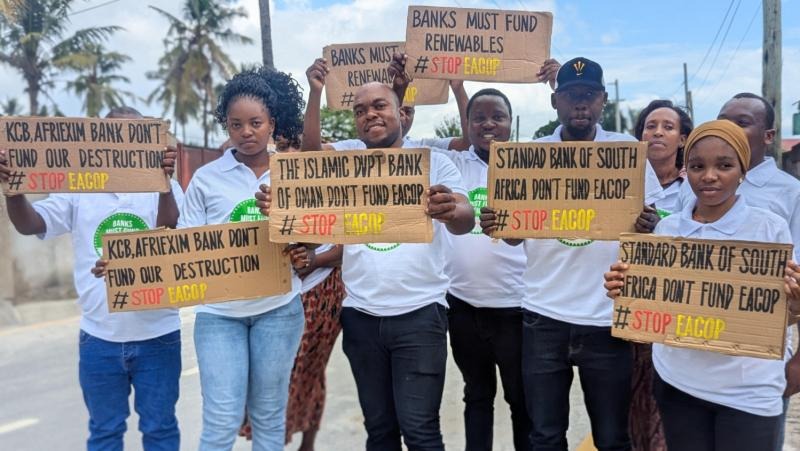
Environmental and human rights advocates are urging the world to hold global investors accountable for their actions.

Published

on

By the Witness Radio Team

Communities and organizations defending their land, livelihoods, and environment demand that global investors and development finance institutions take responsibility for projects they believe harm people and the planet.

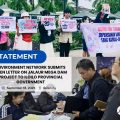
Environmental and human rights defenders from Thailand, the Philippines, Indonesia, and India gathered at the World Bank Group Annual Meetings to share stories of communities fighting to be heard and seeking justice for harm caused by development projects.

Ms. Ueangfa Chamket, representing Chachoengsao Re: Power in Thailand, described her community’s long battle to defend the land that sustains their way of life. For over twenty years, residents have stood firm against the Burapa power plant, first proposed as a coal-fired facility and later changed to a gas-fired plant.

She explained that this region is a lifeline for farming communities, whose fields not only ensure local food security but also supply Bangkok markets with fresh produce.

“Our communities are agricultural communities which practice organic farming and later sell some of our produce in Bangkok,” she said.

Chamket voiced concerns about the power plant’s environmental impact and its effects on local livelihoods, citing air pollution, dust, and strain on water resources. She warned these threats endanger both people’s health and the biodiversity that sustains the community.

The Burapa Power Plant Project is a proposed 540 MW fossil gas-fired combined cycle power plant under construction in Khao Hin Son, Phanom Sarakham, Chachoengsao Province, Thailand. The project began in 2007 as a 600 MW coal-fired power plant awarded to Advance Agro (now Double A Power/National Power Supply, NPS), according to research from Bank Track, an international organization that tracks private-sector commercial banks and their financed activities.

Despite strong opposition from local communities and four rejections of its Environmental and Health Impact Assessments, most recently in 2016, the project remains in Thailand’s National Power Development Plans.al-fired proposal was replaced by plans for the 540-megawatt Burapa natural gas-fired power plant at the same location. The developers subsequently signed a 25-year Power Purchase Agreement with the Electricity Generating Authority of Thailand (EGAT), alongside a long-term gas supply agreement with PTT PCL.

Chamket says residents refuse more industrial development unless their concerns are addressed, stressing their determination to resist the power plant and what they see as the taking of their local resources.

Beyond environmental worries, Chamket said the community felt shut out of key decisions, from consultations to public hearings. She questioned why residents’ voices mattered less than those of powerful financiers.

“They do not hear our comments and only listen to the funders and financiers of the project. We want to share in public hearing forums, but they block us by saying there is limited time, creating a situation where we cannot report the actual situation in the area,” she said.

Similar worries have surfaced in Prachinburi province, where communities are pushing back against industrial waste incineration projects promoted under the banner of a circular economy.

The Gulf Waste-to-Energy (GWTE) Circular Economy Project aims to build and operate 12 waste-to-energy power plants across five Thai provinces: Saraburi, Ayutthaya, Prachinburi, Rayong, and Chonburi.

Mr. Ridtidat Boonyaburanakit, of the Strong Prachinburi Community Network, described how the project area supports rice, cassava, maize, and poultry farming. He said residents struggle to be heard at public hearings.

“We do not have the opportunities for public hearings,” he said.

“We do not have opportunities for public hearings,” he said. AIIB, along with other lenders, backs the project. In February 2026, the ADB announced loan agreements totaling 16.6 billion Thai baht (approximately US$511.9 million) with 12 companies indirectly owned by Gulf Waste to Energy Holdings Company Limited, a subsidiary of Gulf Development Public Company Limited (GULF), with the intention of supporting energy generation from nonhazardous industrial waste, promoting diversion from landfills, and reducing illegal waste disposal activities in Thailand.

On the ground, community leaders say the project has failed to meet its promises. Boonyaburanakit also reported security personnel intimidated residents who tried to join project discussions. Counsel Aaron Pedrosa, of the Philippine Movement for Climate Justice, highlighted the uphill battle communities face in holding investors accountable for environmental and social harm.

The Philippine Movement for Climate Justice is a coalition of more than 150 grassroots, sectoral, and other organizations working nationwide to advance climate justice.

Pedrosa said the coalition filed a case in 2017 against the International Finance Corporation (IFC), the private-sector arm of the World Bank Group, over financing linked to 19 coal power projects in the Philippines through a financial intermediary, Rizal Commercial Banking Corporation.

He explained this financing fueled the spread of coal power in the country, with 16 of 19 proposed projects ultimately built.

“This is happening in a country where for 13 years now, according to the recent Global Witness Report, we remain the deadliest place for land and defenders,” Pedrosa said, highlighting the dangers people face when defending their land and environment.

Despite the challenge of confronting powerful financial institutions, Pedrosa emphasized the need to keep fighting for accountability, vowing to persist even when justice seems out of reach in Bangkok also sparked debate over who ultimately shoulders the burden of environmental damage and climate disasters.

Sutharee WannasiSutharee Wannasiri, a senior community associate with Accountability Counsel and one of the event’s moderators, referred to recent flooding in Thailand and questioned who pays the price of such farmers cries, vendors, and families seeking shelter as those most vulnerable to the fallout, even as powerful institutions make decisions that shape their futures.

Her remarks linked communities’ opposition to individual projects to a broader concern, suggesting people facing environmental risks may have little influence over investment decisions that affect them.

Advocates demanded stronger accountability for harmful projects, insisting that affected communities must be heard and that investors and operators take responsibility for the outcomes of their choices.

Margaux Day, the policy director at Accountability Counsel, said investors could make better decisions by listening to communities with direct knowledge of their environments and livelihoods.

“Local communities are the experts in their own lives and environments, and if investors were to listen to them, then those projects would be more sustainable and successful because they would be more informed by the actual experts,” Day said.

Yet advocates argue that complaint mechanisms alone are not enough. Communities need a real voice before projects are approved, protection from intimidation when they speak up, and access to remedies when their rights and livelihoods are threatened.

“The polluter and the financier should fix it and pay for it and stop silencing the people for speaking the truth,” said Margaux Day, policy director at Accountability Counsel.


Continue Reading

MEDIA FOR CHANGE NETWORK

Farmers’ seed systems take centre stage as the first Eastern African Indigenous Seed Conference opens in Kenya.
Published

on

By Witness Radio team.

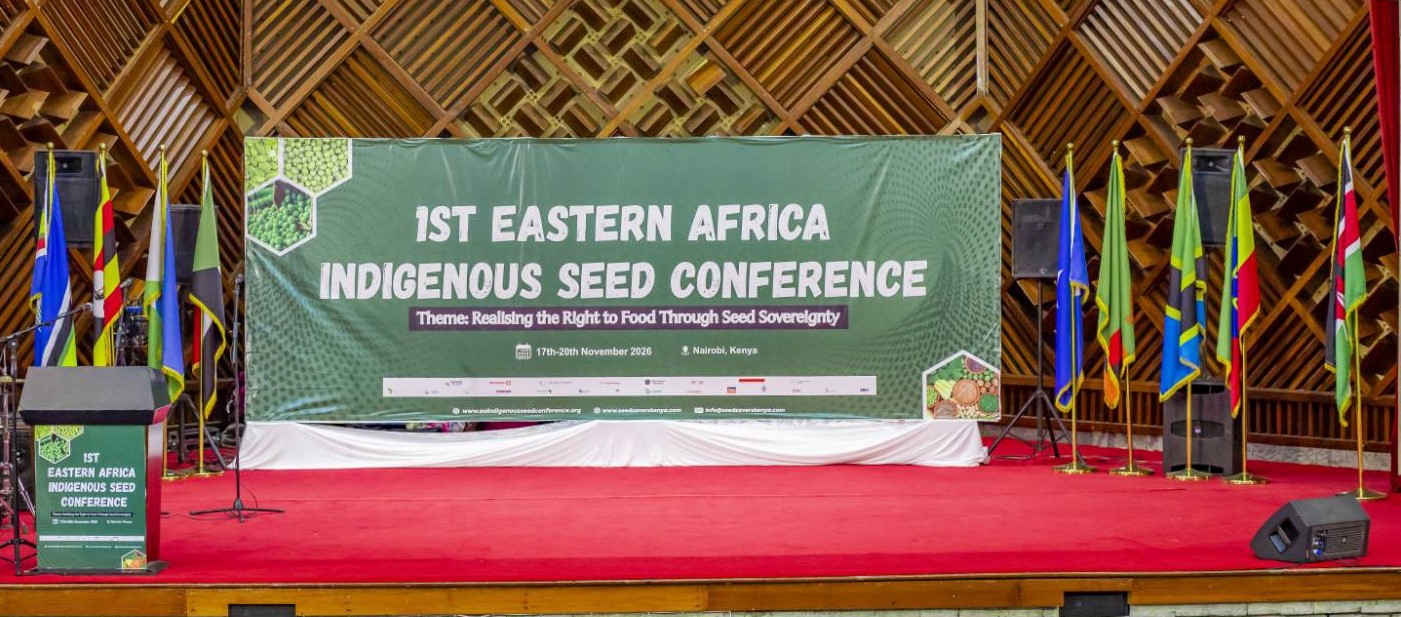
Nairobi, Kenya: Farmers, indigenous communities, researchers, policymakers, and seed-saving practitioners from across Africa and beyond have gathered in Nairobi for the first Eastern African Indigenous Seed Conference, calling for greater recognition and support for farmer-managed seed systems.

The four-day conference, which opened today, November 17, at the Catholic University of Eastern Africa, seeks to strengthen indigenous seed systems, promote seed sovereignty and create space for farmers to influence policies governing seeds and agriculture.

Organized by Seed Savers Network (SSN) and its partners, the gathering comes amid growing concerns over the future of indigenous seeds, local livestock breeds and traditional knowledge systems that communities have relied on for generations.

Opening the conference, Mr. Daniel Wanjama, the Executive Director of Seed Savers Network, said farmers remain central to the region’s seed systems, despite receiving limited recognition in agricultural policies and government support programs.

He said an estimated 80 per cent of the seeds used in the region come from farmers themselves, a contribution he said should be reflected in agricultural policies and investment priorities.

“80 per cent. It means if we cannot have indigenous seeds as we use, it means we cannot have food security. We cannot feed ourselves unless we have indigenous seeds,” Wanjama said.

He argued that governments and development organizations have concentrated much of their attention on the commercial seed sector while overlooking the contribution of farmers who save, exchange and replant seeds within their communities.

According to Wanjama, this has created a disconnect between agricultural policies, government support and the actual practices through which farmers access planting materials.

He also warned that agricultural biodiversity in Africa faces significant threats, arguing that protecting farmer-managed seed systems is important for maintaining the diversity needed to respond to climate change.

“We are facing climate change, and the only way we can survive climate change is through this agricultural biodiversity. Therefore, we cannot afford to lose it because if we lose it, we also lose our life,” he said.

Mr. Wanjama said the conference should provide an opportunity for farmers and organizations across the continent to strengthen their cooperation, exchange knowledge and jointly advocate for policies that recognize indigenous seeds.

He also called for greater farmer participation in policy discussions, saying previous conferences and discussions have not adequately reflected farmers’ experiences and concerns.

He said organizers wanted farmers to form a significant part of the conference and take an active role in discussions, rather than simply attend sessions led by experts and policymakers.

The conference is also taking place against the backdrop of ongoing debates over seed laws and farmers’ rights in Kenya, and East Africa as a region.

Mr. Francis Ngiri, a Kenyan farmer attending the conference, said restrictions on the sharing, exchange and sale of indigenous seeds remain a major concern for smallholder farmers.

In 2025, Ngiri and other farmers won a court case challenging provisions of Kenya’s 2012 Seed and Plant Varieties Act, which restrict farmers from saving, exchanging and sharing seeds. However, the government announced plans to appeal the ruling, arguing that it weakened key provisions of the law.

“We have formally launched an appeal in the Court of Appeal to contest this judgment and restore the legal backing required for strict enforcement of seed quality,” Simon Maina, head of Seed Certification and Plant Variety Protection at the Kenya Plant Health Inspectorate Service (KEPHIS), told The Star in an article published on November 4.

But Ngiri hopes the conference will help strengthen farmers’ efforts to defend their seed-saving practices and push for greater government recognition of community seed banks.

“The government does not support indigenous seed saving. They don’t recognize the seed banks, and we want the conference to tackle that,” he said.

He argued that farmers should be allowed to sell seeds they have saved, provided they receive appropriate training in seed selection and quality management.

“Unless farmers can sell seeds, that is the only time farmers will have seed access. And when they have seed access, they can now have biodiversity. From that, we can have food security,” he said.

Beyond the policy discussions, the conference is also bringing together organizations working on agricultural biodiversity, landscape restoration, agroecology and community-led seed conservation.

Mrs. Catherine Muturi, the Kenya Country Director at Landscape Alliance and Regional Convener for East Africa, said farmers and local communities play an important role in conserving biodiversity, maintaining traditional knowledge and ensuring access to planting materials.

She said efforts to restore landscapes should also recognize the importance of native tree seeds and the communities that conserve them.

“Farmers and local communities are not just beneficiaries of restoration efforts. They are important actors in conserving, managing, and supplying tree seed sources. Their knowledge, participation and leadership must be recognised and strengthened,” Muturi said.

Continue Reading

MEDIA FOR CHANGE NETWORK

Nearly 90 mln displaced people face severe climate risks

Published

on

According to UNHCR’s latest report, No Escape III: Displaced Voices on the Frontlines of the Climate Crisis, three in four forcibly displaced people globally face high to extreme exposure to climate-related hazards. Many have already fled conflict, violence and persecution, only to encounter further threats in places where resources to adapt are limited.

The report features the experiences of eight members of displaced communities, highlighting their resilience and the importance of including their voices in climate-related decisions.

“Refugees face a double injustice. Forced to flee conflicts they did not cause, they are now on the frontlines of a climate crisis they have contributed least to,” said Antón Leis García, UNHCR’s Assistant High Commissioner for Operations.

Climate change is also undermining the prospects for lasting solutions. More than two-thirds of refugees who returned home in the first half of 2026 did so to countries highly vulnerable to climate hazards, raising concerns about the sustainability of their return.

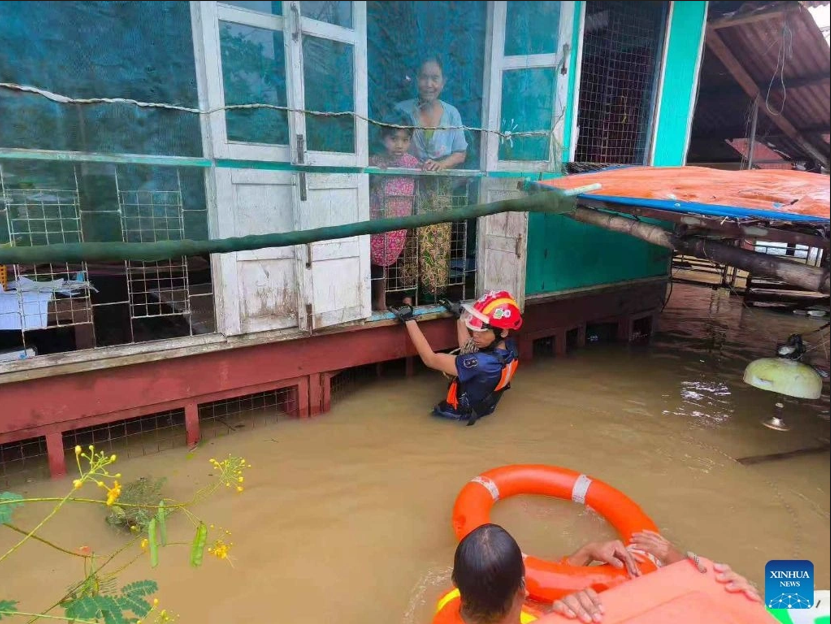
In Syria, where nearly 4 million displaced people have recently returned, declining groundwater levels and severe climate shocks are threatening recovery. Flooding along the Euphrates River in May 2026 damaged homes and forced thousands more people to flee.

Extreme heat poses another growing challenge. By 2050, one in three refugee settlements in sub-Saharan Africa could face at least 100 days of dangerous heat annually. In some settlements in Ethiopia, including Helaweyn, dangerous heat could persist for more than 200 days a year, threatening residents’ health and livelihoods.

Weather-related disasters have triggered more than 255 million internal displacements worldwide over the past decade, equivalent to approximately 70,000 movements a day. In East Africa, severe flooding associated with a very strong El Niño could displace up to 3 million people in Somalia, Kenya, South Sudan and Uganda by the end of 2026, depending on the severity of the floods.

Climate hazards also increase the risk of statelessness. Nearly 90% of the world’s 4.7 million reported stateless people live in countries facing high to extreme exposure to climate risks. Without legal recognition, many struggle to access disaster relief and adaptation support.

Despite these growing threats, fragile and conflict-affected countries receive only around 10% of global climate finance, even though many host large displaced populations and face severe climate impacts. UNHCR says greater investment in adaptation, particularly in areas of return, is essential to support reintegration and make returns safe, voluntary and sustainable.

Displaced people and host communities are already developing climate solutions, including solar-powered water systems in the Sahel, climate-resilient agriculture in Uganda, and land and mangrove restoration in Colombia.

At COP31, UNHCR will urge governments and climate finance institutions to include displaced people in national climate plans, increase long-term adaptation funding for fragile and displacement-affected areas, and support locally led solutions beyond short-term humanitarian assistance.

The agency says the conference, hosted by Türkiye, one of the world’s largest refugee-hosting countries, offers an opportunity to ensure that displaced people and host communities are included in global climate action.

Earlier, Qazinform News Agency reported that the year 2026 could become one of the four warmest years on record, as ocean temperatures continue to rise, glaciers lose ice and global sea levels reach new highs.

Source: europesays.com

Continue Reading

MEDIA FOR CHANGE NETWORK

Negotiations are in motion to forge new international principles that will finally hold oil companies accountable for the scars they leave on people and the planet.
Published

on

By the Witness Radio team

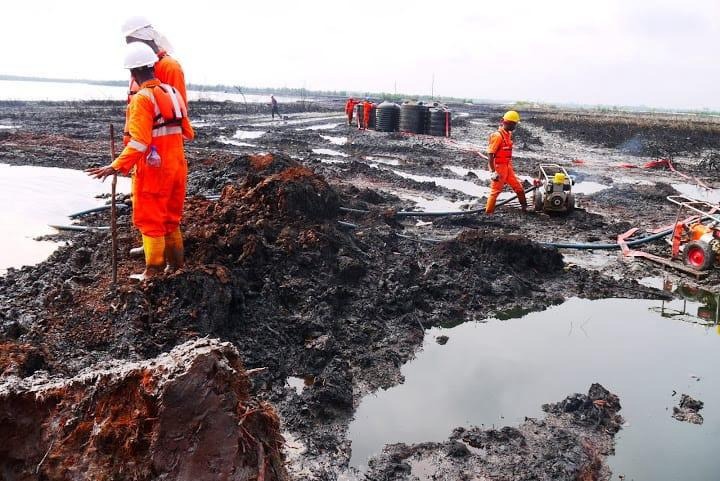
When oil companies pack up after years of drilling, the pollution, scarred landscapes, and shattered livelihoods often linger long after the last rig is gone.

Communities in oil-producing regions are often left to grapple with poisoned water, rusting skeletons of abandoned infrastructure, and lost income from farming, fishing, and other ways of life. Meanwhile, the question of who will foot the bill for restoring the environment hangs in the air.

Now, three international civil society organizations are raising their voices, demanding that oil and gas companies take real responsibility when they shut down operations or hand over their assets to new investors.

The Stakeholder Democracy Network (SDN), the Interamerican Association for Environmental Defense (AIDA) and the Center for Research on Multinational Corporations (SOMO) have submitted the International Principles for Responsible Divestment from Fossil Fuels to the United Nations Working Group on Business and Human Rights.

These principles arrive at a time when countries are under mounting pressure to break free from coal, oil, and gas in the fight against climate change. Yet the organizations warn that companies must not use this transition as an excuse to abandon communities or leave their mess behind.

“Rapid closure and responsible closure of the fossil fuel industry are not mutually incompatible agendas. Both are vital to achieve climate and environmental justice and a just energy transition,” the principles state.

The proposed standards lay out a clear roadmap for what companies must do before walking away from fossil fuel projects, and what governments should demand in return.

According to the principles, companies are expected to inform communities about plans to close operations or sell assets, including when the changes will happen and what environmental and financial obligations remain outstanding.

They should also involve affected people in decisions about their own future, rather than making choices in secret boardrooms.

“This information must include divestment timelines and modalities, as well as full disclosure of all outstanding environmental and financial liabilities. Companies should proactively create spaces for participation and dialogue, so that affected people, regulators and government authorities receive relevant information and can meaningfully influence corporate decision-making.” The principles further state.

Another key demand is that companies must pay for the harm they have caused, from cleaning up polluted lands and waters to safely dismantling infrastructure and restoring damaged ecosystems.

The organizations are also pushing for companies to compensate those whose livelihoods, health, culture, and communities have suffered. This could mean financial payments, restoring sacred cultural sites, and publicly admitting the harm they have done.

When companies sell off their assets, the principles insist they must ensure that new owners have both the resources and expertise to run operations safely and cover all future closure and restoration costs.

The principles also highlight the fate of workers and communities whose lives depend on oil. They call for new livelihood opportunities, job transition programs, and social safety nets for those facing job loss when the wells run dry.

The principles also place the onus on governments, urging them to ensure oil companies do not walk away from environmental damage or leave obligations unresolved when they shut down or sell off their assets.

They urge states to craft clear, transparent plans for phasing out fossil fuel extraction, with affected communities and workers at the table for every decision that could reshape their lives.

Governments are also expected to overhaul their laws and regulations, closing loopholes that let companies slip away from projects without cleaning up pollution, restoring ecosystems, or compensating those harmed.

“States should ensure that their existing legal and regulatory frameworks related to fossil fuel divestment, including investment laws and treaties, are aligned with these Principles and that these Principles are made obligatory for companies by enshrining them in law and effectively enforcing them.” The 4-page document reads

Before any asset sale or project closure gets the green light, the principles say governments should demand independent environmental and social assessments, plus thorough reviews of infrastructure and decommissioning costs.

They also urge states to ensure companies set aside enough money for environmental clean-up and infrastructure dismantling before approving any closure plans.

When assets change hands, governments should scrutinize whether the new buyers have the money, know-how, and management skills to run the facilities safely and meet all environmental obligations left on the table.

The principles sound the alarm against letting companies hand over assets to brand-new businesses or operators with no track record of safe management, which could leave governments and communities footing the bill when disaster strikes.

They also tackle cases where previous owners have already left a trail of environmental damage. Here, governments should ensure new owners handle the clean-up while protecting affected communities’ right to seek compensation and justice from those who caused the original harm.

The organizations are also pressing governments to publish yearly updates on all proposed, approved, and rejected oil and gas asset sales and project closures, including whether companies have kept their environmental and social promises.

These concerns are painfully clear in Nigeria’s Niger Delta, where decades of oil extraction have left communities battling pollution and the collapse of their livelihoods.

Oil spills have poisoned water sources, ruined farmland, and shattered fishing livelihoods, forcing many residents to bear the high cost of an industry that has reaped enormous profits.

A United Nations Environment Program (UNEP) assessment of Ogoniland in 2017 documented extensive oil contamination and recommended a long-term environmental clean-up.

Meanwhile, some international oil companies that once operated in the region are selling off their stakes to new investors, sparking urgent questions about who will shoulder responsibility for pollution and other lingering obligations.

In March 2025, Shell completed the sale of its Nigerian onshore subsidiary, the Shell Petroleum Development Company (SPDC), to Renaissance Africa Energy.

TotalEnergies followed with an agreement announced in January 2026 to sell its 10 percent non-operated interest in the Renaissance joint venture’s licenses to the Nigerian consortium Vaaris.

On October 27, 2026, TotalEnergies announced that it had completed the sale for US$800 million.

The company said it would retain its full economic interest in three gas licenses – OML 23, OML 28 and OML 77 – which currently account for 50 percent of Nigeria LNG’s gas supply. The transaction therefore covers its interest in the joint venture’s oil assets, rather than a complete withdrawal from its Nigerian operations.

Civil society organizations are raising doubts about whether these deals offer enough transparency on outstanding environmental damage, clean-up plans, and compensation for the communities left in the wake.

Dr Isaac ‘Asume’ Osuoka, Director of Social Action, said the people living in oil-producing areas should not be forgotten when companies negotiate the sale of their assets.

“This case is about people, not just oil assets. It is about children growing up with poisoned water, families breathing polluted air, and communities losing their health and livelihoods while international oil companies walk away with decades of profits,” Osuoka said.

He insisted that affected communities must not become corporate sacrifice zones and urged TotalEnergies to prove that its exit will not deepen existing human rights abuses.

Mr. Simon Taylor, co-founder of Hawkmoth, also questioned the transparency surrounding the transaction.

Taylor pointed to TotalEnergies’ previous involvement in the Extractive Industries Transparency Initiative, arguing that the company should be transparent about the public-interest implications of its asset sale.

Continue Reading

Resource Center

Legal Framework

READ BY CATEGORY

Facebook

Newsletter

Subscribe to Witness Radio's news and report updates


Trending

Subscribe to Witness Radio's news and report updates