Connect with us

MEDIA FOR CHANGE NETWORK

Breaking: El Niño looms over East Africa and Asia, bringing the specter of floods and disease outbreaks.

Published

on

By Witness Radio team.

A leading humanitarian aid group has sounded the alarm over a strengthening El Niño, poised to unleash extreme weather across East Africa and parts of Asia. Millions of vulnerable people now stand on the frontlines, facing mounting threats of floods, disease, food shortages, and shattered livelihoods.

The International Rescue Committee (IRC) warns that the brewing El Niño could unleash severe floods, disease outbreaks, scorching heatwaves, and punishing droughts in the months ahead, threatening countries like Uganda, Kenya, Somalia, Bangladesh, Pakistan, and Afghanistan.

The IRC cautions that communities battered by past floods, droughts, displacement, and dwindling aid now stand to endure yet another major climate blow unless swift action is taken.

“We are watching several emergencies converge at once, and the places least equipped to absorb another shock are the ones in the crosshairs. Acting now, before the rain falls, is far cheaper and far more humane than responding after people have lost everything,” said Bob Kitchen, IRC Vice President for Emergencies.

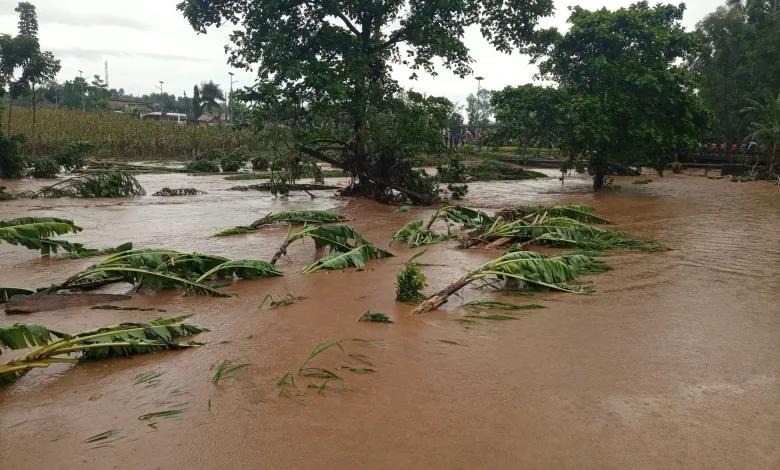
This warning comes as forecasts predict East Africa could be drenched by unusually heavy rains from October to December, heightening the dangers of flooding, landslides, ruined crops, and surging disease outbreaks.

In Uganda, authorities and aid agencies fear that relentless rainfall could wash away hard-won progress made by communities still recovering from earlier climate disasters, such as drought.

The IRC reports that Uganda may swing from parched conditions to a flood-prone final quarter, sparking fresh worries about displacement.

During the previous El Niño cycle, the IRC states that more than 413,000 people in Uganda were affected by climate-related impacts.

Kenya, too, stands on high alert, as forecasts point to persistent El Niño conditions that could unleash torrents of rain, floods, and landslides before the year ends.

“Kenya faces an 80–82% chance of El Niño persisting through 2026, with dry conditions this summer giving way to a high risk of flooding and landslides,” Humanitarian Aid stated in its press conference.

In Somalia, where millions already grapple with drought and humanitarian crises, aid agencies warn that relentless rains could deepen existing hardships. The IRC notes that over 4.8 million Somalis urgently need help, as floods threaten to wipe out crops, taint water supplies, and fuel the spread of diseases like cholera and acute watery diarrhea.

The organization recalls that earlier floods in Somalia wiped out nearly 13,000 tonnes of crops and battered towns and villages, leaving families with even fewer resources to weather another disaster.

Agricultural experts warn that El Niño could plunge East Africa deeper into food insecurity by upending farming, ravaging crops, and driving up production costs.

Because the region depends so heavily on climate-sensitive agriculture, extreme weather can swiftly trigger food shortages and send prices for essentials soaring.

Dr. Joseph W. Glauber, a senior research fellow at the International Food Policy Research Institute (IFPRI), previously told Witness Radio that Africa remains highly vulnerable to global shocks affecting food systems, including disruptions in fertilizer supply and rising agricultural input costs.

“Africa is quite vulnerable largely because shipment sizes to Africa tend to be smaller, so the unit costs for energy and other components and fertilizer tend to be a little higher than those from bigger countries,” Dr. Glauber said.

The IRC cautions that although rain is vital for farming, relentless downpours could drown fields, devastate crops, and deal a heavy blow to rural livelihoods.

“If rains destroy agricultural production, communities could face reduced food availability, increased food prices, and greater dependence on humanitarian assistance,” experts warn.

As East Africa braces for deluges, parts of Asia are set to feel El Niño’s impact in very different ways.

The IRC reports that El Niño may bring scant rainfall and soaring temperatures to Pakistan, while the northern mountains face the looming threat of sudden glacier-melt floods.

Bangladesh is already reeling from deadly monsoon disasters, as floods and landslides upend the lives of thousands, including Rohingya refugees in the Cox’s Bazar camps.

“Bangladesh’s monsoon season has already turned deadly this year. Landslides and flooding have killed at least 15 Rohingya refugees living in the Cox’s Bazar camps and displaced more than 10,000 people since the start of July,” the organization added.

El Niño is a natural climate phenomenon sparked by unusually warm sea surface temperatures in the equatorial Pacific. It disrupts global weather, drenching some regions with rain while parching others with drought and heat.

The International Rescue Committee calls on governments, donors, and aid groups to boost funding for anticipatory action programs, empowering communities to brace for disasters before they strike.

Continue Reading

MEDIA FOR CHANGE NETWORK

Govt targets land grabbers with first national public-land register

Published

on

Officials say a nationwide inventory will finally let the state prove what it owns — from school compounds to road reserves — but the exercise is beginning on a shoestring.

Continue Reading

MEDIA FOR CHANGE NETWORK

Experts rally the region to unite behind East Africa’s transformative Agroecology Bill.

Published

on

By the Witness Radio team.

Across East Africa, experts and agricultural advocates are urging a united front for the proposed East African Community (EAC) Agroecology Bill, believing its passage could revolutionize food systems, empower food sovereignty, and uplift millions of farmers’ lives.

In mid-April 2026, the East African Legislative Assembly (EALA) officially began the legislative process for the EAC Agroecology Bill, 2026, after the Agriculture, Tourism and Natural Resources Committee chairperson, Hon. Gideon Gaptan Thoar, received parliamentary leave to draft and introduce it. The drafting committee is now in the final stages of tabling the bill before parliament.

This rallying cry echoed through an online webinar hosted by the Center for Food and Adequate Living Rights and broadcast live on Witness Radio. The event gathered agricultural experts, food sovereignty champions, and regional legislators to explore the bill’s promise and the hurdles it may face.

If passed, it would lay the foundation for a unified regional legal framework championing agroecological farming throughout the East African Community. Supporters believe this could be a powerful tool to combat food insecurity, protect farmers’ rights and indigenous seeds, address climate change and biodiversity loss, and tackle challenges faced by smallholder farmers.

Mr. Andrew Adem, Program Coordinator for Food Systems at the Alliance for Food Sovereignty in Africa (AFSA), said the region must learn from the shortcomings of the Green Revolution model, which prioritized increased yields and external agricultural inputs.

He pointed out that although the model aimed to boost yields and farmers’ incomes, it left them vulnerable when harvests fell short.

Adem noted that in tough seasons, farmers often bear the high costs of expensive inputs, while intensive farming erodes agricultural diversity and time-honored knowledge.

To address these challenges, he said, agroecology flips the script by putting farmers and their wisdom at the heart of agricultural progress.

“In Africa, food is more important than yields because it carries a lot of things. Therefore, the Green Revolution failed, and hence the Agroecology Bill presents an opportunity for us to stand up and protect the sovereignty of food in Africa,” Adem said during the Webinar meeting.

He explained that agroecology inspires farmers to break free from expensive external inputs, nurture healthier soils, diversify their crops, and tap into the wealth of local knowledge and resources.

Unlike systems fixated on monocultures and quotas, advocates say agroecology embraces nutrition, culture, biodiversity, and the enduring wellbeing of farming communities.

This legislative push arrives as hunger casts a long shadow over Africa. Jean Leonard from the Food and Agriculture Organization (FAO) highlighted that the continent bears the World’s largest hungry population, with around 309 million people affected.

He described agroecology as a holistic approach, weaving together ecological and social principles to shape and guide agricultural systems.

“Agroecology seeks to optimize interaction between people, markets, agriculture and ecosystems while addressing environmental, social and economic systems simultaneously rather than focusing on single technologies,” Leonard said.

Leonard outlined key ingredients for the success of the Bill: dedicated lawmakers, appropriate budgets, robust funding, supportive laws, and genuine involvement from farmers. She urged greater investment in youth, believing that empowering young people with resources and opportunities could open fresh paths into agriculture and speed the shift to agroecological farming.

Hon. Jackline Amongin, a Ugandan member of the East African Legislative Assembly (EALA), said the proposed legislation is intended to create a common framework for agroecological farming across the EAC.

She emphasized that the East African Community’s unique character calls for unity, not fragmented efforts, in transforming agriculture.

“We shall have the best, but all efforts must be put on enacting the Bill into law. Once the law is put in place, all the desired issues of implementation and execution will be agreed on. Other factors will follow,” she added.

Advocates stress that agroecology is more than a farming method. They see it as a philosophy that links agriculture to environmental care, social justice, cultural heritage, nutrition, and economic vitality.

This approach inspires farmers to exchange wisdom, broaden their crops, and craft solutions tailored to their unique landscapes.

According to the Bill memorandum, the purpose of the EAC Agroecology Bill, 2026, is to mainstream agroecological farming by promoting agroecology principles across agri-food systems. It seeks to integrate ecological, social and participatory approaches while combining scientific and traditional knowledge to enhance biodiversity, ecosystem services, resilience, livelihoods and food sovereignty.

“The Bill will therefore be tabled and gazetted before being subjected to public consultations, hearings and participation by members of the public. It will then proceed to a second reading before being referred to the whole House Committee for detailed consideration. Once all these processes are duly followed, the Bill will be presented for a third reading and passage by EALA. It will then go through the EAC process before ultimately becoming an Act.” She concluded.

Continue Reading

MEDIA FOR CHANGE NETWORK

Four youth activists now face public nuisance charges after their arrest during a bold march toward Parliament.

Published

on

By the Witness Radio team.

At Buganda Road court, four youth activists from the Rooted in Resistance Movement were charged with public nuisance after their arrest during a passionate plea to Parliament for an oil-free Uganda.

Activists Ssembalirwa Aniwally, Mugoya Hassan, Aron Patrick Ariong, and Okanya Ivan were detained by parliamentary police as they marched with determination toward Parliament, urging the Ugandan government to abandon oil dependency in favor of an ‘oil-free economy’ built on economic freedom, sustainability, and citizen involvement.

According to the charge sheet seen by Witness Radio, the prosecution alleges that on August 10, 2026, at about 9:00 am, the four activists, along with others still at large, were at King George Way Street in Kampala Central. They wore orange T-shirts bearing the words “Rooted in Resistance” and carried placards with messages including “Prioritize Other Sectors of the Economy,” “Oil Is Temporary, Nature Is Permanent,” and “Oil Today, Problems Tomorrow.”

Prosecutors claim the activists stood on the road, disrupting traffic and creating hazards.

The activists appeared before Grade One Magistrate Her Worship Rophine Achayo at Buganda Road court yesterday, where they were charged with being a nuisance on the public road, contrary to Section 67(1) of the Road Act, Cap. 346.

Section 160(1) of the Penal Code Act, which defines a common nuisance, provides that any person who does an act not authorized by law or fails to discharge a legal duty and thereby causes “any common injury, or danger or annoyance,” or obstructs or causes inconvenience to the public in the exercise of common rights, commits the misdemeanor of common nuisance and is liable to imprisonment for one year.

The four pleaded not guilty and now await their fate in Luzira Prison, remanded until August 28, 2026.

The group’s mission was to urge Parliament to rethink Uganda’s reliance on petroleum, warning that true prosperity cannot be built on a resource that will one day run out.

The activists contend that despite years of promises—jobs, industry, infrastructure, and poverty relief—oil’s benefits have reached only a privileged few, while many others remain trapped in poverty.

“Our demand for an oil-free economy is not a rejection of development, but a demand for a different development model, one that places Ugandan citizens, productive sectors and sustainable wealth creation at the center of national planning,” the group said.

They call for bold investment in other sectors, insisting Uganda should chart a path toward sustainable wealth, citizen empowerment, and true economic independence instead of clinging to petroleum.

These arrests are part of a troubling pattern as more Ugandans face criminal charges for protesting oil projects or demanding accountability for their social and environmental costs.

12 environmental activists were arrested in Kampala in August 2025 during a protest against the East African Crude Oil Pipeline (EACOP). Eight out of the 12 activists were later convicted and sent to prison to serve an eleven (11) month sentence. They were released from Luzira Prison on April 21, 2026, as time spent on remand had effectively covered their 11-month sentences.

The other four, including Ivan Wamboga, Baker Tamale and Habibu Nalungu, pleaded guilty and were released on November 19, 2025, after being ordered to perform community service. Mark Makoba also pleaded guilty and was released on November 6, 2025, without any additional penalty.

These cases reveal the risks faced by those who challenge Uganda’s oil agenda. Even after release, the activists’ ordeals have intensified fears for freedom of expression and assembly across civil society.

Continue Reading

Resource Center

Legal Framework

READ BY CATEGORY

Facebook

Newsletter

Subscribe to Witness Radio's news and report updates


Trending

Subscribe to Witness Radio's news and report updates