
MEDIA FOR CHANGE NETWORK
Who buys Rwanda’s smuggled coltan? The global journey of conflict coltan from DRC to the world’s electronics

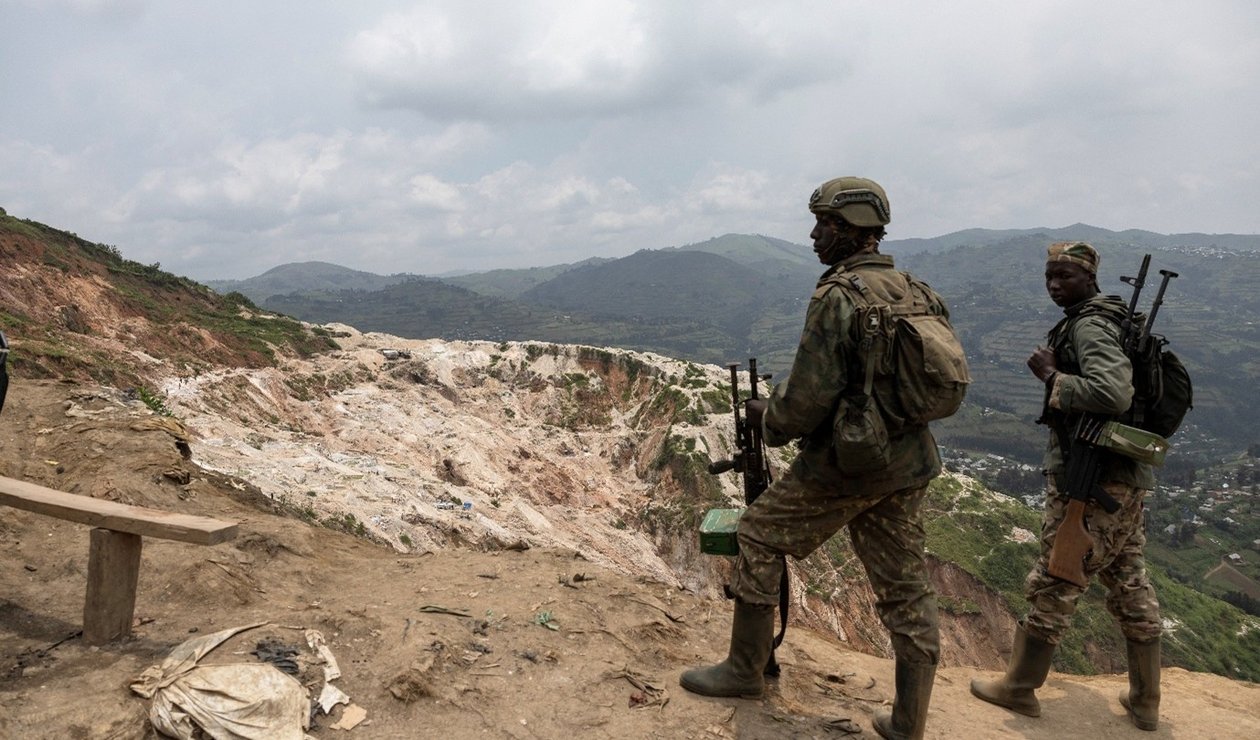
Conflict coltan smuggled from the war-torn Democratic Republic of the Congo (DRC) is finding its way into global markets and popular consumer products, despite due diligence systems
Where have over 2,000 tonnes of smuggled conflict coltan gone?
These looted minerals come from mines in Rubaya in the Democratic Republic of the Congo (DRC), which produce 15% of the world’s tantalum, a key ingredient for electronic products found in smartphones, laptops and cars around the world.
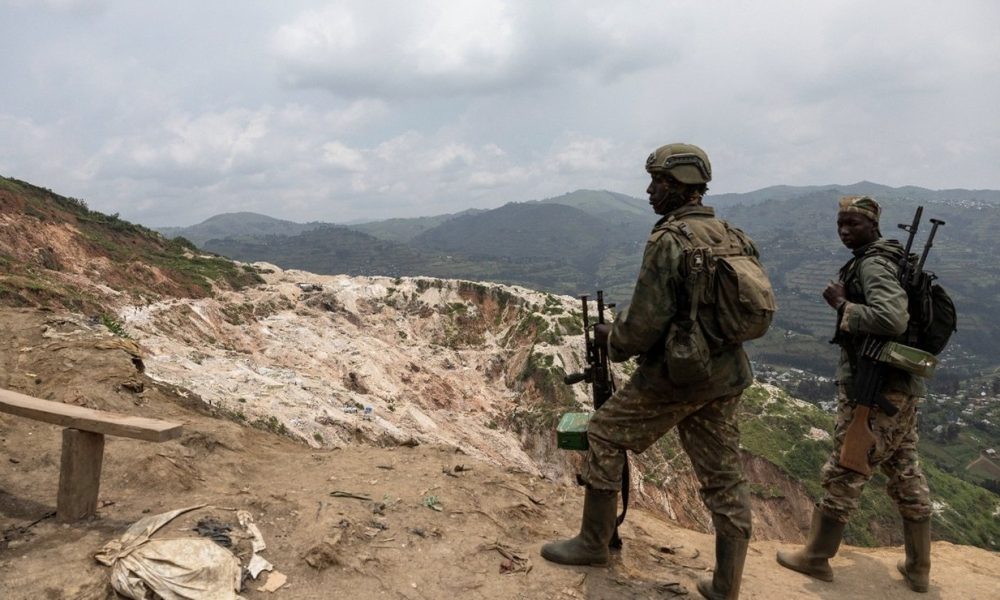
The Rubaya mines have become a main revenue source for M23’s brutal warfare in DRC. Seizing vast areas of territory, the armed group backed by Rwanda’s military has killed thousands and displaced hundreds of thousands of civilians, abducting and torturing with impunity.
But once the coltan is smuggled to Rwanda, little is known about who buys it or where it goes.
In a year-long investigation, Global Witness followed the DRC’s conflict coltan from the mines across the border and into global supply chains. We established the complicity of Rwandan officials, as smuggling reached “unprecedented” levels.
With Rwanda’s coltan exports more than doubling over the past three years, we identified the seven companies that exported 85% of the coltan.
Through interviews with coltan smugglers, we found that at least five of these seven companies buy conflict coltan from DRC, selling it on through middlemen to smelters in China and Kazakhstan.
In the smelters, the coltan is processed into tantalum. From there, it is used to manufacture the capacitors that are essential components in electronic devices.
We found that conflict coltan may have unwittingly found its way to global brands including Microsoft, Vodafone, Sony, Amazon, Nvidia, LG Display, Ericsson, Toyota and Apple – and into products we use every day.

Conflict coltan from eastern DRC may ultimately end up in everyday devices and global brands’ supply chains such as Microsoft. Icva2 / iStock
Around 15 years ago, a system took shape in the African Great Lakes Region that was designed to put an end to minerals financing conflict.
The recent war in DRC is a test case. Our investigation reveals that the due diligence and traceability systems have failed to break the link between conflict and natural resources.
Instead, the traceability system known as ITSCI that many international companies rely on to keep their supply chains conflict-free is being used to launder a large share of smuggled coltan. Coltan connected to the conflict has also likely been introduced into an alternative system called Better Mining.
The Responsible Minerals Initiative’s audits have failed to detect conflict coltan in smelters’ supply chains.
Meanwhile, as the war in eastern DRC continues, the international community is failing to take significant action.
Coltan financing the conflict
Since 2023, the lucrative Rubaya mines have become a war prize for various armed groups, as they have in previous phases of the wars in DRC. The UN reported incursions in the mines throughout 2023.
In late 2023, the M23 rebel group seized control of main transport routes around Rubaya. By April 2024, it had captured the Rubaya mines, monopolising coltan exports.
Since then, coltan has become a major – if not the main – source of funding for M23.
M23’s parallel administration in North Kivu has selected M23-friendly traders to smuggle minerals to Rwanda and has run a taxation system at mining and trading sites.
Traders pay “taxes” on coltan which includes US$4 per kilo to M23 and US$3 per kilo to the Rwandan government.
By collecting taxes on coltan production and trade, M23 has generated US$800,000 every month since May 2024 according to a UN estimate.

“Taxes” requested by M23 as displayed in Mubambiro. Global Witness
Coltan smuggle to Rwanda
Rwanda is not only supporting M23’s military operations in DRC with between 7,000 and 12,000 Rwandan troops and advanced weaponry but Rwandan officials also facilitate the smuggling.
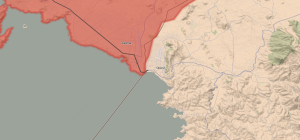
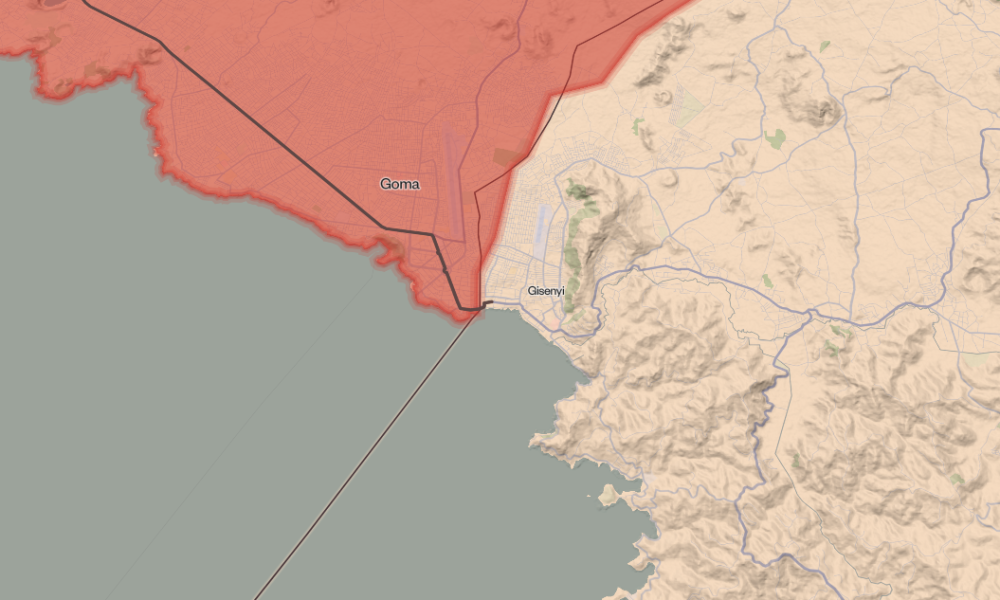
Previously, much of the coltan was smuggled through lightly monitored border areas. But since M23’s takeover of Goma, much of it now crosses there in plain sight of Rwandan border officials. Global Witness has even observed officials recording coltan coming from the DRC.

UN experts estimate that between May and October 2024 over 120 tonnes a month were trafficked to Rwanda, creating the “largest contamination of mineral supply chains” in the Great Lakes Region in a decade.
Smuggling has likely grown even further in 2025. Within a year of M23’s takeover, at least 1,400 tonnes of coltan – and probably much more – have been smuggled from DRC to Rwanda.
Global Witness found no evidence that Rwandan officials had confiscated any smuggled coltan in the last two years.
Rwandan official figures show that coltan exports have increased more than 2.5 times between 2021 and 2025, reflecting the smuggling boom.
Coltan is an important revenue stream for Rwanda, which levies a 5% tax on exports. Since 2023, it has become the country’s second-largest export earner, after gold.
The UN, mineral experts and NGOs have continuously pointed out that Rwanda’s mineral export figures do not correspond with its actual production, even before the latest surge in exports. The Rwandan government doesn’t publish production figures at the mine level that would allow experts to check its claims.
Rwanda has repeatedly refused to apply the analytical fingerprint (AFP), a tool developed by Germany to check the origin of minerals based on their geochemical composition, according to a natural resources expert involved in the matter. This means that the tool, which cost millions of dollars to develop, has never been applied for its purpose.

Failed due diligence and traceability
There is a legal requirement for Rwandan minerals to be traced before being exported.
ITSCI is the dominant due diligence and traceability system in Rwanda and until early 2025 all major coltan exporters were members.
The scheme works by assigning tags with unique numbers to bags of coltan and other 3T minerals that are supposedly free from conflict and human rights abuses. ITSCI also reports and manages incidents along supply chains. (3T minerals are coltan, cassiterite and wolframite, named after the metals tantalum, tin and tungsten which are derived from them.)

Yet our investigation has found that ITSCI is instead undermined and used to launder a large share of smuggled coltan into supposedly legitimate supply chains. Global Witness revealed in a 2022 report that, ever since the scheme was set up in 2010, it has been used by major Rwandan exporters to launder large volumes of smuggled minerals from the DRC.
Four traders who sell smuggled coltan from Rubaya to exporters who are ITSCI members told Global Witness that that coltan is tagged by the scheme, indicating it has no conflict links.
The [exporting] company in Kigali comes and puts the tags on the coltan from Masisi and thus it becomes Rwandan coltan
A coltan smuggler explained that when he has smuggled minerals he can just call the Rwandan mining authorities and they bring as many tags as he needs.
ITSCI-tagged coltan exports increased almost precisely as much as Rwandan coltan exports between 2023 and 2024 and made up almost 100% of total Rwandan coltan exports.
Yet, coltan imports reported by other countries from Rwanda appear to have increased even more than Rwanda’s official coltan exports in 2024, suggesting that a share of the coltan may have been smuggled out of Rwanda.
Analysis of ITSCI’s data shows that the tantalite share of ITSCI-tagged 3T minerals exports increased from 21% in 2020 to 31% in 2024. The surge is difficult to explain without taking the increased coltan smuggling from Rubaya to Rwanda into account.
ITSCI’s incident reporting also indicates that its members may source smuggled material. In 2025, ITSCI reported 70 incidents related to plausibility concerns and misuse of tags.
All exporters for which Global Witness has found evidence of buying conflict coltan have been ITSCI members, although three have been suspended since by ITSCI. In early 2026, ITSCI told Global Witness that three additional exporters were under review and at risk of expulsion and suspension.
In total, ITSCI has suspended or expelled six coltan exporters since 2024.
SLR Consulting’s Better Mining increased its foothold as an alternative traceability system in Rwanda in 2025. At least two companies Better Mining works with, and a further one that is going through its onboarding process, are former ITSCI members that have been suspended by ITSCI.
Two of them, Space Mining and Philbert Trading Minerals, have sourced conflict coltan during the time they worked with Better Mining, according to traders we spoke to. We also suspect Sunrise Metal Company, which is going through Better Mining’s onboarding process, to have bought conflict minerals.
Unlike ITSCI, Better Mining doesn’t publish the names of its members nor any risks it has identified in supply chains.
Better Mining has tried to establish itself as an alternative traceability and due diligence system to ITSCI for over a decade, and Global Witness has reported about how ITSCI has used unfair means to keep its near monopoly position.
An alternative traceability provider could play a positive role, if it helped to push the bar higher. Yet, if Better Mining takes on board companies that source conflict material and have been suspended from ITSCI, it has the opposite effect.
Who sells and buys Rwandan coltan?
From January 2023 to September 2025, just seven Rwandan companies exported almost 85% of coltan from Rwanda, according to customs data seen by Global Witness.
From Rwanda, coltan is brought to the ports of Dar es Salaam in Tanzania or Mombasa in Kenya from where it is shipped. Since the start of 2023 until September 2025, seven companies have been the direct buyers of almost 80% of the coltan exported from Rwanda.
Which companies are buying conflict coltan?
Global Witness has found direct evidence that at least five of the seven largest Rwandan coltan exporters have bought conflict coltan from DRC’s Rubaya mines: African Panther Resources, Sunrise Metal Company, Boss Mining Solution, Kanzamin and Philbert Trading Minerals
We found that smaller exporters Space Mining and Rani Mining also bought conflict coltan from Rubaya.
There are indications that other companies may also have sold conflict coltan to international markets. ITSCI has reported incidents indicating fraudulent practices about several exporters. Furthermore, a few companies have in the past been involved in smuggling minerals.

In the chart below, we set out evidence of the connections between these Rwandan coltan exporters and the Rubaya mines in the DRC and show the relations with the companies buying the coltan.
Tonnes of coltan traded from Rwanda between January 2023 – September 2025
Due diligence requirements
The OECD Due Diligence Guidance for Responsible Supply Chains of Minerals from Conflict-Affected and High-Risk Areas is the internationally recognised standard for responsible sourcing, which has been developed in the context of the wars in DRC.
The Guidance sets out a five-step process that companies are supposed to follow when sourcing minerals from conflict and high-risk areas. Companies need to immediately disengage from suppliers that have a reasonable risk of being connected to conflict and/or serious human rights abuses.

The smelters processing the coltan
The buyers of coltan directly from Rwanda that we profiled in the previous section are mainly based in the United Arab Emirates (UAE), China, Hong Kong and Luxembourg.
But all these locations, with the exception of China, are transit hubs, where traders sell coltan on to smelters and refiners elsewhere.
These processors extract the metal tantalum from coltan by removing impurities with high heat and acid, and refiners purify the tantalum. Smelters and refiners turn coltan into products like tantalum powder, wire or ingots, which are used for manufacturing heat-resistant capacitors, surgical implants and alloys used in jet engines.
Global Witness has identified eight smelters that processed the bulk of the coltan exported from Rwanda from 2023 to September 2025:
- Ningxia Orient Tantalum Industry Co. (OTIC) (China)
- Jiujiang Jinxin Nonferrous Metals Co. (China)
- Jiujiang Tanbre Co. (China)
- Jiujiang Zhongao Tantalum & Niobium Co. (China)
- Ximei Resources (Guangdong) Limited (China)
- Hengyang King Xing Lifeng New Materials Co. (China)
- Ulba Metallurgical Plant (Ulba) (Kazakhstan)
- Taniobis (Thailand)
China is the top destination for processing coltan from Rwanda, both in terms of volume and the number of smelters. Every major Rwandan exporter sends at least part of its coltan there.

Rwanda became China’s second-largest coltan supplier after Nigeria in 2023. China imported 1,571 tonnes of coltan from Rwanda in 2023, which jumped to 2,286 tonnes in 2024.
Customs data suggests that Ulba Metallurgical Plant (Ulba) in Kazakhstan also received coltan exported from Rwanda between 2023 and 2025.
Taniobis, a tantalum smelter based in Thailand, also imported coltan from Rwanda until the end of 2023.
Smelters are considered the pinch point in the supply chain as their number is limited and traceability is lost in the smelting process.
The OECD Due Diligence Guidance recommends that 3T smelters and refiners should collect detailed information about the upstream supply chain and use their leverage to mitigate risks. All 3T smelters and refiners are expected to regularly undertake audits of their due diligence on minerals from conflict-affected and high-risk areas.

How smelter audits whitewash supply chains
Our investigation has found that the leading audit for smelters and refiners is failing to identify conflict links in coltan supply chains.
The Responsible Minerals Assurance Process (RMAP) run by the Responsible Minerals Initiative (RMI) is a key part of the due diligence system for sourcing minerals from conflict-affected and high-risk areas. It audits smelters’ and refiners’ due diligence systems and processes.
In 2024 and 2025, all eight smelters sourcing Rwandan coltan were assessed under RMAP. Each audit apart from the one on Hengyang King Xing Lifeng New Materials Co. covered at least part of the period when the M23 armed group occupied the Rubaya mines from the end of April 2024.
By the time of the assessment, the high risks of sourcing coltan from Rwanda were already well known. The UN reported in 2023 about incursions by armed groups into the Rubaya mines and minerals being smuggled to Rwanda, while ITSCI halted tagging in Rubaya from December 2023.
All eight smelters were found compliant. Yet, Global Witness and the UN have uncovered evidence linking some of them to conflict coltan. At least four smelters have likely processed coltan from Rubaya that is connected to the war in DRC, evidence suggests:
- Jiujiang Tanbre Co. has sourced conflict coltan from African Panther Resources shipped by Traxys and likely also from Sunrise Metal Company
- Ningxia Orient Tantalum Industry Co. has sourced conflict coltan from Sunrise Metal Company
- Jiujiang Jinxin Nonferrous Metals Co. may have sourced conflict coltan from Boss Mining Solution through Novacore and from Sunrise Metal Company
- Ulba has processed coltan from East Rise Corporation which, according to the US, sourced conflict coltan in DRC
If processors source from high-risk sources, RMAP requires them to assess the plausibility of the production from mines to verify the origin of minerals. Auditors review such assessments along with trading links between the mining company and processors.
Yet, processors and auditors usually don’t know which other processors source from the same mines and in what quantities. As Rwandan mining companies often supply many companies, RMI’s audits are not able to carry out effective plausibility assessments that would compare all sold minerals from a mine with the mine’s estimated production.
In its assessments, RMI can’t rely on the analytical fingerprint either, as it is not applied, nor can it rely on traceability as at least the main system has been widely used to launder minerals. Therefore, RMI’s audits can’t verify if minerals are smuggled and its audits can’t ensure that smelters are conflict-free.
Yet, despite the apparent weaknesses, companies often treat RMAP certification as evidence of a conflict-free supply chain.
In 2025, the EU has recognised RMAP under its conflict minerals regulation. This means that mineral importers into the EU can claim that they meet their due diligence obligations if they rely on the scheme.

Capacitors for electronics: From smelters to global manufacturers
Tantalum is mainly used in capacitors, which are widely used in electronics applications, including smartphones, laptops and car electronics. Tantalum is also used for aerospace and defence industries, medical implants and metallurgical additives.
The tantalum capacitor market is highly concentrated, dominated by around five major players: Kemet, Kyocera AVX, Vishay, Panasonic and Hongda Electronics Corp.
The US, followed by El Salvador, Israel and the Philippines, have been the largest importers of tantalum from China, where most of Rwanda’s coltan is processed.

Various capacitor manufacturers operate in the US, including Vishay, Kyocera AVX, Global Advanced Metals and Kemet. Kyocera AVX is likely the main receiver of China’s tantalum exports to El Salvador, where the company has a production site that it claims is the largest in the world. Vishay has an important production site in Israel.
Global Witness has found evidence of shipments from OTIC to Samsung’s subsidiaries in the Philippines, where Samsung has a capacitor manufacturing plant, as well as Panasonic’s subsidiary in the Philippines. This tantalum was likely affected by conflict.
Downstream companies
Companies using tantalum are mainly in the electronics, tech, car and aviation industries. Many international brands all over the world use products containing tantalum from smelters which, according to our research, have sourced coltan linked to the conflict in DRC.
Amazon, Microsoft, Vodafone, Toyota, Sony, Nvidia, Honda, LG Display and Ericsson all report having products from smelters in their supply chains that, according to our research, have sourced conflict coltan from Rubaya. Conflict coltan ends up in goods that consumers use every day such as mobile phones, laptops and cars.

Apple reports Ulba as a processor in its supply chain in 2023. In that year Ulba sourced coltan from East Rise Corporation likely connected to the conflict.
Along with other companies, Apple, once seen as a leader on responsible sourcing from conflict areas, stopped listing its suppliers in its report to the US Securities and Exchange Commission in 2024.

Recommendations
Rwandan government:
- Withdraw all troops from the territory of DRC.
- Stop all support to M23 in violation of the UN arms embargo and sanctions regime.
- Intercept smuggled minerals and repatriate them to the country of origin.
- Support the use of the analytical fingerprint.
- Make mine-level production data public.
Government of the DRC:
- Strengthen control over national armed forces and ensure that violations committed by the army and affiliated armed combatants are investigated and violations are prosecuted.
- Stop support for non-state armed groups.
International community:
- Suspend export of military equipment to Rwanda.
- Make any official development assistance conditional on Rwanda stopping its support to M23.
- Sanction of commanders of M23 and senior Rwandan officials responsible for abuses as well as companies profiteering from conflict resources.
EU (additionally to the recommendations above):
- Enforce the EU conflict minerals regulation and the Corporate Sustainability Due Diligence Directive (CSDDD) so EU companies effectively stop buying, processing or trading conflict minerals.
- The EU should broaden the scope of the CSDDD to include all downstream activities of business partners, as well as EU companies with 1,000 or more employees and €450 million or more in global net turnover, and non-EU companies with €450 million or more in EU turnover.
- Rescind the strategic partnership with Rwanda on strategic raw materials.
US (additionally to the recommendations above):
- Strengthen and enforce section 1502 of the Dodd-Frank Act.
- Avoid agreements that tie resource extraction to security guarantees.
ITSCI:
- Thoroughly scrutinise Rwandan members regarding smuggled minerals from DRC.
- Set up a multistakeholder governance structure that avoids conflicts of interest between ITSCI’s members and its due diligence function.
- Publish detailed mine-level production data for minerals tagged by ITSCI.
Better Mining:
- Thoroughly scrutinise Rwandan members regarding smuggled minerals from DRC.
- Publish names of member companies and incidents related to their supply chains.
- Publish detailed mine-level production data for minerals tagged by Better Mining.
RMI:
- Thoroughly scrutinise tantalum smelters sourcing minerals from the African Great Lakes Region.
- Strengthen the RMAP audits by including data that allows plausibility assessments of mines and fingerprinting.
- Clearly communicate that RMAP audits are not able to confirm the origin of minerals.
Rwandan exporters:
- Stop buying conflict-affected minerals.
- Carry out proper due diligence on supply chains including close monitoring of Rwandan mines from which minerals allegedly come.
- Follow the OECD Due Diligence Guidance for Responsible Supply Chains of Minerals from Conflict-Affected and High-Risk Areas.
Traders and processors:
- Stop buying coltan from Rwanda until M23 has withdrawn troops from the Rubaya mines unless they have scrutinised the coltan before export by directly checking its origin and grading.
- Follow the OECD Due Diligence Guidance for Responsible Supply Chains of Minerals from Conflict-Affected and High-Risk Areas.
Downstream companies, capacitor manufacturers:
- Directly communicate with processors and check their due diligence as well as consult with affected groups.
- Demand high-quality reports from suppliers, engage with and follow up on the risks identified and report on these in their own annual due diligence reports.
- Stop sourcing tantalum or products including tantalum from Rwanda until M23 has withdrawn from the Rubaya mines unless they have thoroughly scrutinised the coltan before export by directly checking its origin and grading.
- Follow the OECD Due Diligence Guidance for Responsible Supply Chains of Minerals from Conflict-Affected and High-Risk Areas.
Companies and industry schemes respond
Exporters and traders:
Halcyon confirmed to Global Witness that it has bought coltan from Kanzamin but denied that the coltan came from Rubaya. It referred to KYC reviews, supply chain documentation, its announced and unannounced site visits in DRC and Rwanda in 2025 and risk mitigation measures, which included disengagement from Kanzamin until receiving evidence that its due diligence mechanisms have been strengthened. Halcyon wrote that Global Witness hasn’t provided transaction-level evidence demonstrating that material purchased by Halcyon originated from Rubaya.
Halcyon denied it has had any contractual or commercial relationship with Boss Mining Solution and denied having sourced material from African Panther Resources in 2024.
It also told Global Witness that it permanently disengaged from Philbert Trading Minerals in 2025.
Furthermore, Halcyon denied having purchased any material from Rubaya in 2023, referring to geo-fingerprinting for coltan bought from North Kivu.
SOGECOM strongly denied that the Kotecha family has profited from conflict minerals for three decades. It wrote that no evidence has been presented supporting the allegations against Ramnik O. Kotecha or against SOCOMI and that there are no disciplinary or legal rulings against SOGECOM or against any Kotecha family member for buying conflict minerals from the DRC or any related offence.
It told Global Witness that Ketankumar Kotecha has been a stakeholder of SOGECOM and its predecessor SOCOMI but has not been operationally involved.
SOGECOM denied having sourced conflict minerals from the Rubaya mines, referring to its active monitoring of the area, site visits and “geo finger printing”, a technique involving chemical and mineralogical signatures of minerals.
SOGECOM denied having bought coltan coming from the two main concessions in Rubaya after late 2021 but confirmed having sold coltan to Halcyon in 2023.
Novacore replied to Global Witness’s request for comment to say that after a visit in Kigali “to familiarise … with the activities of Boss Mining Solution” it “found no anomalies” in Boss Mining Solution’s export volumes and that “shipments originated in Rwanda and comply with ITSCI program requirements.”
African Panther Resources has previously denied having sourced conflict coltan from Rwanda, referring to its due diligence procedures, but did not reply to Global Witness’s request to comment on allegations that it continues to buy conflict coltan.
Traxys confirms having bought coltan from African Panther Resources, Rani Mining and Hillside Mining, but strongly denies that the coltan was from DRC and connected to conflict.
Traxys wrote to Global Witness that the mineralogy of the bought coltan was different from that in DRC, that the minerals it bought were traced back to specific mine sites in Rwanda and that a Traxys representative regularly monitored the operations at the premises of African Panther Resources.
Traxys also wrote that it signed contracts with Hillside and Rani before the temporary suspension of African Panther Resources, that both companies have been active in the local market for some time and that Traxys has not ignored red flags but instead enhanced its due diligence by sourcing from specific mines instead of aggregators in Rwanda.
Traxys wrote that it is swift to disengage from problematic suppliers and said it had ceased sourcing tantalum from Rwanda in May 2025.
Minterra wrote to Global Witness that it found no indications of sourcing or trading of smuggled or conflict minerals by East Group Minerals, referring to its ITSCI membership and monitoring. It also mentioned that all ITSCI incidents were resolved.
Minterra wrote that “increases in exported quantities should be viewed in the context of starting from relatively low base” export volumes. Minterra did not disclose specific mines and the quantities it sourced from each of them, as requested by Global Witness.
Tawotin denied having sourced conflict material from DRC in recent years and previously denied having done so in the 2010s. It told Global Witness that its coltan exports increased in 2024 because in 2023 it was not active during half of the year.
Tawotin also wrote that it follows sanctions regimes and therefore had to find another buyer after East Rise Corporation was sanctioned by the US.
Tawotin and Chris Huber both deny being connected to each other and Huber denies that he is or has ever been a beneficial owner or member of Tawotin.
CDMC denies having traded conflict minerals from the Rubaya mines, referring to “verification and control measures” and temporary suspension after alerts. CDMC and Crawley both deny being connected to each other.
Kanzamin, Boss Mining Solution, Rani Mining, Sunrise Metal Company, Better Off Equipment & Solutions, Philbert Trading Minerals, Space Mining, East Group Minerals and East Rise Corporation have not replied to Global Witness’s request to comment.
Processors:
OTIC, Jiujiang Tanbre Co. and Jiujiang Jinxin Nonferrous Metals Co. denied having sourced material connected to conflict, referring to their due diligence which they told Global Witness is in line with the OECD Due Diligence Guidance.
Ulba confirmed to Global Witness that it has bought coltan from East Rise Corporation but denies that the coltan is connected to conflict, referring to its risk monitoring through RMAP and its policy to suspend suppliers if they are linked to conflict. It also wrote that it stopped buying “from the region” in May 2024 including from East Rise Corporation.
Taniobis told Global Witness it stopped sourcing coltan from DRC or Rwanda at the end of 2023.
Downstream companies and capacitor manufacturers:
Toyota told Global Witness that it does not tolerate human rights abuses and aims to procure conflict-free minerals, referring to due diligence checks on suppliers and promptly addressing identified abuses.
Sony wrote that it is committed to building a responsible supply chain and that it expects all suppliers to comply with its supply chain code of conduct and policy, which it enforces with corrective actions.
Ericsson wrote that it collaborates with the RMI, that the smelters Global Witness refers to are RMI-conformant and that it will review the specific cases.
Apple wrote to Global Witness that as the conflict in the region escalated, it notified its suppliers that their smelters and refiners must suspend 3T and gold purchases from the DRC and Rwanda, as it was concerned that industry certification mechanisms could no longer perform the required due diligence and that it has increased its support to organisations that help communities.
Apple did not reply to Global Witness’s questions about why it stopped reporting processors in its supply chains in its 2024 report to the SEC, nor how it can avoid sourcing coltan from DRC and Rwanda given the importance of DRC as a coltan-producing country and the fact that smelters and refiners usually mix minerals from different origins.
Samsung told Global Witness that, after reviewing, it had no concerns in its transactions with OTIC, referring to OTIC’s RMI audit.
Amazon did not reply to Global Witness’s request for comments but wrote to the Guardian that it is committed to providing products and services that are produced or supplied in a way that respects human rights and the environment, that it continues engaging with suppliers and upstream partners and that it requests additional due diligence from its suppliers associated with the smelters identified in this report.
Vodafone did not reply to Global Witness’s request for comments but replied to the Guardian that it does manufacture electronic products and that it relies on organisations like the RMI to verify the source of products.
Nvidia, Microsoft, Panasonic and LG Display have not replied to Global Witness’s requests for comment.
Industry schemes:
ITSCI replied to Global Witness’s request for comment that its system is active and functioning, referring to its incident reporting, suspensions, letters it wrote to ITSCI members alerting them to high risks and requesting explanations about due diligence measures, collecting additional data at mines for plausibility checks, and directly addressing exporters when it had concerns, as well as organising trainings.
Regarding the increased tantalite share in ITSCI exported minerals, ITSCI told Global Witness that such aggregated data offers limited insight and that, instead, ITSCI conducts more effective plausibility assessments at the level of a mine or of single transaction of minerals.
Global Witness has requested granular data on mine production and supplier transactions from ITSCI, but ITSCI has not shared it, citing confidentiality.
ITSCI also told Global Witness that it is no longer the dominant traceability system, seemingly referring to 2025 particularly and has previously denied having a monopoly status. ITSCI has previously denied that its scheme was used to launder massive volumes of minerals in the past and that it has used unfair means against Better Mining.
Global Witness asked ITSCI why African Panther Resources’ suspension had been lifted but has not received a response.
Better Mining denies having tagged conflict-affected coltan. Better Mining wrote that its due diligence and traceability approach is based on an onboarding processes, a supply chain evaluation, field-based monitoring, controlled tag issuance, traceability documentation and ongoing risk identification within a defined operational framework as well as audits by a third party.
It denies that Global Witness has provided evidence that conflict-affected material entered the Better Mining traceability system and requested more granular data.
Better Mining also wrote to Global Witness that no decision whether to take Sunrise Metal Company on board has yet been taken and the company has not yet received any tags from Better Mining.
RMI replied to Global Witness’s request to comment that the claim that RMAP audits can’t ensure smelters are conflict-free is unfounded. RMI wrote that Global Witness’s trade data has deficiencies such as ignoring “the often-significant interval between mining and international trade.”
RMI mentioned “at least one case” of “extended (12+ months) warehousing of a shipment prior to receipt by the smelter.” “As such, shipment dates from 2025 and 2024 may still be in the process of an active assessment or may not be reviewed until 2026.”
RMI also wrote that “many of the data points referenced in the Global Witness research to support allegations of potential conflict financing pre-date the escalation of the conflict in eastern DRC.”
RMI didn’t answer Global Witness’s question about which shipment was received after an extended warehouse period, citing confidentiality.
RMI said it had made significant efforts to clarify the scope and limitations of RMAP assessments to its members and other stakeholders.
T.I.C. wrote that its members’ “compliance with its legal obligations remains their sole individual responsibility” and that a manual for enhanced due diligence guides its members in complying with their obligations.
Government:
The Rwanda Mines, Petroleum and Gas Board (RMB), the agency governing Rwanda’s mining sector, did not reply to questions from Global Witness.
Methodology
Global Witness’s investigation is based on extensive field and desk research over one year, reviewing trade data and interviews with over 70 actors from governments, the private sector, civil society and academia, cross-referencing our findings with UN and NGO investigations and other sources.
To identify exporters and buyers of coltan, Global Witness analysed and cross-checked customs and trade data from multiple sources including also data compiled by C4ADS and SOMO (The Counter).
We isolated coltan exports from Rwanda using relevant HS codes and product descriptions, identifying records where the cargo origin was recorded as Rwanda.
We standardised company names to account for alternate spellings and apparent misspellings across datasets, and deduplicated records where the same shipment appeared to have been recorded more than once, including at Rwanda’s border and again at export ports when cargo was loaded onto ships.
Source: globalwitness.org
Related posts:

 Food systems in conflict areas: Architectures of armed conflict are turning food and hunger into weapons of war.
 U.S. Peace Efforts in the DRC: Protecting Communities or Minerals?
 Peruvian communities have launched a global petition to halt a mining project they say threatens the water supply of over 10 million people.
 Failed US-Brokered “Peace” Deal Was Never About Peace in DRC



MEDIA FOR CHANGE NETWORK
From grassroots action to policy transformation: How local environmental solutions spark enduring change.
Related posts:

 Uganda moves toward a Bamboo Policy to boost environmental conservation and green growth.
 Witness Radio, private companies, CSOs and local government officials are meeting to discuss alternative remedies to salvage the appalling land and environmental rights situation in Kiryandongo district.
 Joint CSO Statement Calls on IFC and MIGA to Strengthen its New Approach to Remedial Action Policy
 Experts push for a National Bamboo Policy to strengthen climate mitigation efforts.
MEDIA FOR CHANGE NETWORK
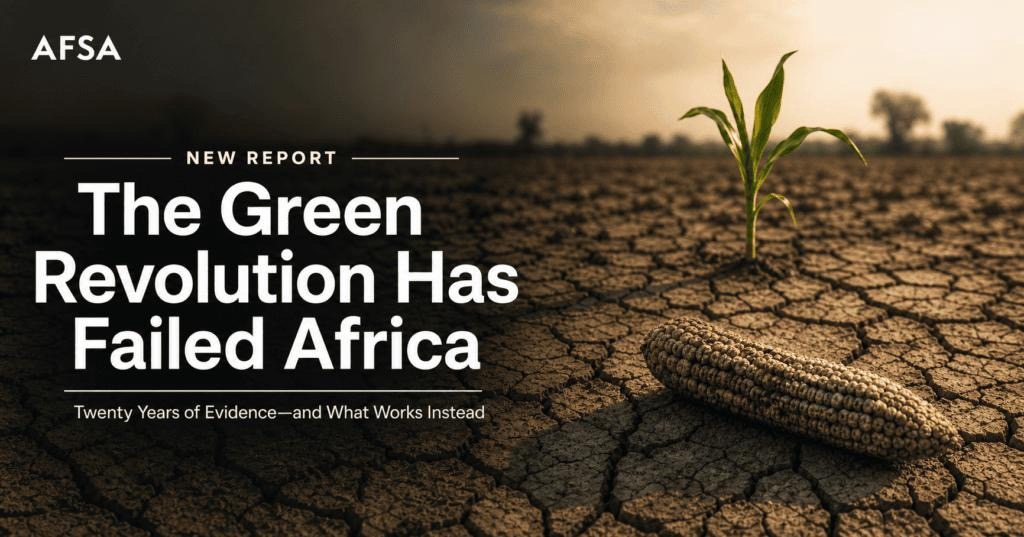
A coalition of 625 African faith leaders will gather, united in their call for reparations in response to what they describe as the failure of a Gates-backed agricultural model.
Related posts:

 Failed Green Revolution: African Leaders Demand Reparations from Gates Foundation.
 African Food Systems Summit 2024: Do not use it to promote failed agricultural models – African Faith Leaders.
 African Faith Communities Tell Gates Foundation, “Big Farming is No Solution for Africa
 East African lawmakers and CSO leaders are meeting in Uganda to draw up plans to promote Agroecology as an alternative to climate change mitigation.
MEDIA FOR CHANGE NETWORK
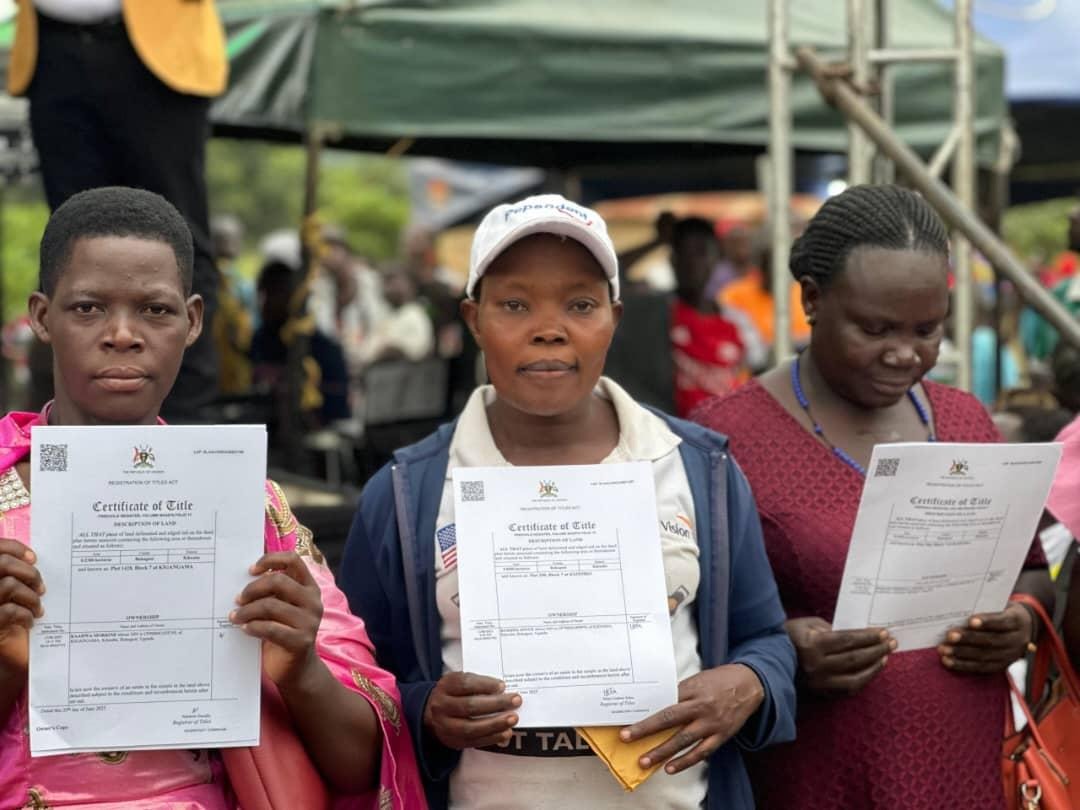
High land title costs, bureaucracy, and distance leave women struggling to secure land rights in Africa.
Related posts:
 Land Grabbing Crisis Escalates in Uganda: Mayiga Urges Citizens to Secure Land Documents
 Women’s Climate Assembly, 2024: African women vow to protect human and environmental rights amidst an influx of destructive land-based investments on the continent.
 “No Land, No Life” – Women at the East Africa Convergence Refuse to Move out Quietly
 Kibaale Residents Raise Corruption Concerns Over Delayed Land Title Processing

From grassroots action to policy transformation: How local environmental solutions spark enduring change.

A coalition of 625 African faith leaders will gather, united in their call for reparations in response to what they describe as the failure of a Gates-backed agricultural model.

High land title costs, bureaucracy, and distance leave women struggling to secure land rights in Africa.

Environmental and human rights advocates are urging the world to hold global investors accountable for their actions.

Tanzanian Government Abducts Maasai Villagers in an Unconscionable Attack on Indigenous Land Defenders

World Food Day 2026: Building healthy diets means reimagining how we grow, share, and enjoy our food.

The global race for clean energy minerals is leaving communities grappling with conflicts and human rights abuses, a new report reveals.
Environmental and human rights advocates are urging the world to hold global investors accountable for their actions.

Innovative Finance from Canada projects positive impact on local communities.

Over 5000 Indigenous Communities evicted in Kiryandongo District

Petition To Land Inquiry Commission Over Human Rights In Kiryandongo District

Invisible victims of Uganda Land Grabs
-
 NGO WORK2 weeks ago
Tanzanian Government Abducts Maasai Villagers in an Unconscionable Attack on Indigenous Land Defenders
-
 MEDIA FOR CHANGE NETWORK2 weeks ago
World Food Day 2026: Building healthy diets means reimagining how we grow, share, and enjoy our food.
-
 MEDIA FOR CHANGE NETWORK5 days ago
Environmental and human rights advocates are urging the world to hold global investors accountable for their actions.
-

 MEDIA FOR CHANGE NETWORK2 weeks ago
Court remands 10 anti-oil activists as suspect collapses in dock
-
 MEDIA FOR CHANGE NETWORK2 weeks ago
International Day of Rural Women : Rural women farmers deserve not only equal rights and access to resources, but also the strength and voice to safeguard Mother Nature.
-

 NGO WORK2 weeks ago
As World Bank Holds Annual Meetings, 84,000 Tanzanians Call for Justice
-

 MEDIA FOR CHANGE NETWORK2 weeks ago
Defending ancestral land comes at a steep price as Maasai communities in Tanzania face relentless, mounting pressure.
-

 MEDIA FOR CHANGE NETWORK2 weeks ago
As waves of investment sweep across Uganda, countless women rise to defend their land, safeguard their traditions, and claim their right to be heard.