Connect with us

MEDIA FOR CHANGE NETWORK

Uganda urged to drop charges against 11 environmental defenders after 17 months without witnesses

Published

on

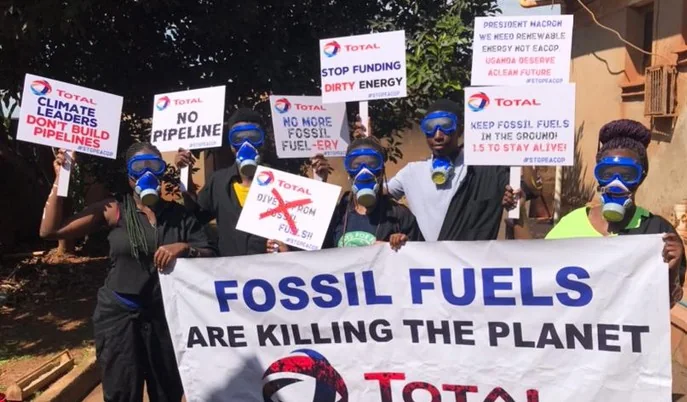
Climate Rights International says the 11 defenders have faced repeated court delays since their arrest over a peaceful petition to KCB concerning EACOP financing.

Eleven Ugandan environmental defenders have spent more than 17 months facing criminal trespass charges without a single prosecution witness testifying, prompting calls for the case to be dropped.

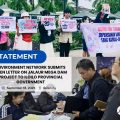
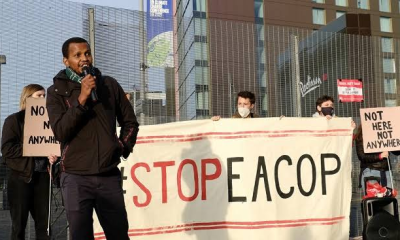
According to Climate Rights International, the group, known as the KCB11, was arrested on April 23, 2025, after going to the Kenya Commercial Bank (KCB) headquarters in Kampala to peacefully deliver a letter urging the bank to end its financial support for the East African Crude Oil Pipeline (EACOP).

The organisation said the defenders were instead taken to the bank’s basement by a KCB official under the pretext of arranging a meeting, where police and security personnel were waiting for them.

Climate Rights International has urged Ugandan authorities to immediately withdraw the charges, saying the case has been repeatedly delayed since the 11 were arrested.

“The case has dragged on for more than 17 months with repeated delays, without a single prosecution witness testifying,” the organisation said in a statement on Monday.

At a hearing on September 8, the court adjourned the case until September 29 and gave prosecutors what it described as a final opportunity to present their witnesses. The court indicated that it could dismiss the case if the prosecution failed to proceed again.

The 11 were charged with criminal trespass on April 25, 2025, and taken to Luzira prison, which Climate Rights International said has a history of torture and poor detention conditions.

The organisation first called for their immediate release and dismissal of the charges on June 30, 2025. The KCB11 were eventually granted bail on July 17 after spending 85 days in prison and were released the following day.

Since then, they have repeatedly returned to court while the charges have remained pending.

“The fact that 11 people were arrested and held for 85 days in a horrible prison for delivering a letter is a travesty,” Brad Adams, Executive Director at Climate Rights International said.

“The government has compounded this by holding a ridiculous prosecution over their heads for the past 17 months. This is punishment by process, and the charges should be dropped immediately.”

Climate Rights International said KCB Group had been identified as one of five financial institutions providing an initial tranche of financing for EACOP.

On September 14, the organisation wrote to KCB Group seeking information about the role of its personnel in the arrests and whether the bank had asked Ugandan authorities to withdraw the charges.

No response had been received from KCB Group at the time of publication.

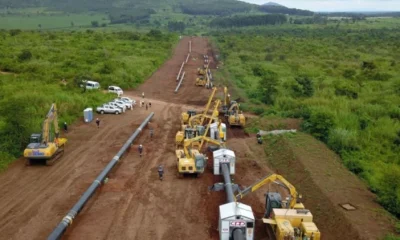
EACOP is a 1,443-kilometre heated pipeline designed to transport oil from the Tilenga and Kingfisher oilfields in western Uganda to the port of Tanga on Tanzania’s coast.

Climate Rights International said more than 100,000 people in Uganda and Tanzania will permanently lose land for the pipeline and the Tilenga development.

Families affected by the projects have reported inadequate compensation, food insecurity, lost income and difficulties paying school fees.

The wider project is estimated to generate 379 million tonnes of carbon dioxide-equivalent emissions over 25 years.

In August 2026, EACOP Ltd.’s deputy managing director said construction of the pipeline was 91 per cent complete, bringing the project closer to operation despite continued human rights, environmental and climate concerns.

Climate Rights International also raised concerns about the effects of the oilfields that will supply the pipeline.

Research into the TotalEnergies-operated Tilenga project found that delays in compensation, inadequate payments and the loss of productive land had left many families poorer and harmed their livelihoods.

At the CNOOC-operated Kingfisher project, a Climate Rights International investigation documented forced evictions, violence and intimidation by the military, destruction of fishing boats, sexual and gender-based violence and labour abuses.

The organisation said the lengthy KCB11 proceedings form part of a wider pattern involving people who oppose EACOP and other oil projects.

A May 2026 review by the American Bar Association of more than 25 criminal cases involving opponents of EACOP and other oil projects found what it described as systematic repression, including mass arrests, vague charges linked to peaceful activities, prolonged pretrial detention and cases that were repeatedly adjourned before being dismissed for lack of prosecution.

A 2023 investigation by Human Rights Watch also documented arbitrary arrests, threats, office raids and intimidation against environmental defenders raising concerns about Uganda’s oil developments.

Climate Rights International further raised concerns over judicial independence following remarks reportedly made by Uganda’s Chief Justice Flavian Zeija on August 7.

According to the organisation, Zeija stated, “It would be equivalent to treason for a judicial officer to put an injunction stopping the progress of an oil project because of any dispute,” and urged judicial officers to “be an aid to oil development rather than stepping on it.”

The organisation said the remarks by Uganda’s highest-ranking judicial officer warning judges against particular outcomes raise concerns about pressure on judges and interference with judicial independence.

“The Chief Justice should be defending the independence of judges, not warning them against decisions that could affect favoured oil projects,” Adams said.

“His remarks could reasonably make environmental defenders fear that courts will treat opposition to oil development as disloyal or criminal before their cases are even heard.”

Uganda’s Constitution protects freedom of expression and peaceful assembly and guarantees every person a “fair, speedy and public hearing” within a reasonable time before an independent and impartial court.

The International Covenant on Civil and Political Rights and the African Charter on Human and Peoples’ Rights also provide similar protections, including the right to be tried without undue delay.

Climate Rights International said peacefully approaching a bank to deliver a letter concerning a project of major public importance amounts to protected civic participation and should not lead to criminal prosecution.

The organisation also said pressure on independent civil society in Uganda has increased.

On May 17, President Yoweri Museveni signed the Protection of Sovereignty Act, which Climate Rights International said uses broad and unclear language to criminalise promoting foreign interests over Uganda’s interests and restrict certain activities supported by foreign organisations.

Advertisement

The organisation said the new law, together with repeated prosecutions and statements portraying opposition to oil development as a threat to the state, risks further limiting independent voices.

Climate Rights International has called on Ugandan prosecutors to immediately withdraw the charges against all 11 defenders.

It also wants courts to review other pending protest-related cases and dismiss charges based solely on peaceful expression or assembly.

KCB Bank Uganda has been urged to clarify its role in the arrests and publicly call for the charges to be dropped, while KCB Group has been asked to commit to receiving peaceful petitions without retaliation or criminalisation.

The organisation has also called on TotalEnergies, CNOOC, EACOP Ltd., the Uganda National Oil Company and the Tanzania Petroleum Development Corporation to use their influence to oppose reprisals against peaceful critics of the projects.

“The KCB11 and other environmental defenders are doing what responsible citizens should do: raise concerns about decisions that will shape their communities and country for decades,” Adams said.

“Uganda should listen to them, not imprison them or keep them trapped in an endless court case.”

Source: eastleighvoice.co.ke

Continue Reading

MEDIA FOR CHANGE NETWORK

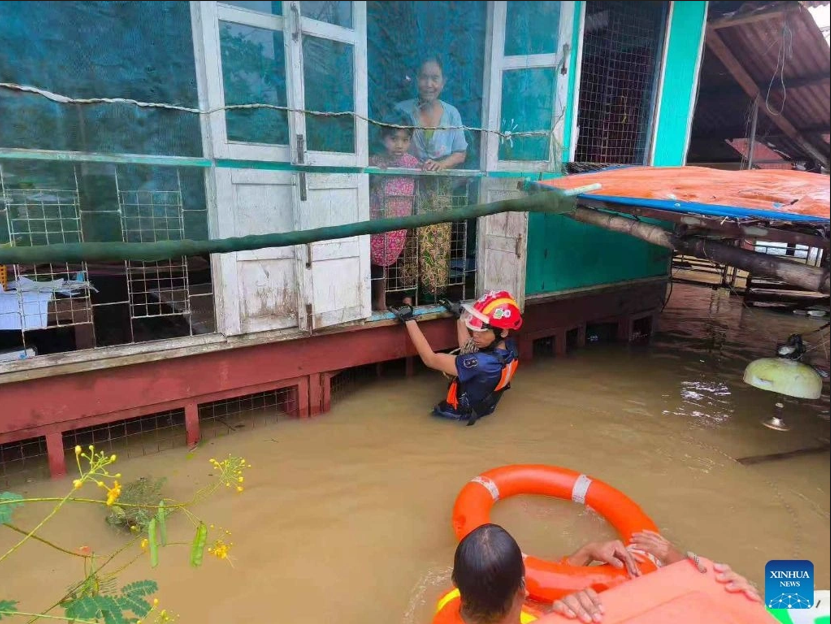
Nearly 90 mln displaced people face severe climate risks

Published

on

According to UNHCR’s latest report, No Escape III: Displaced Voices on the Frontlines of the Climate Crisis, three in four forcibly displaced people globally face high to extreme exposure to climate-related hazards. Many have already fled conflict, violence and persecution, only to encounter further threats in places where resources to adapt are limited.

The report features the experiences of eight members of displaced communities, highlighting their resilience and the importance of including their voices in climate-related decisions.

“Refugees face a double injustice. Forced to flee conflicts they did not cause, they are now on the frontlines of a climate crisis they have contributed least to,” said Antón Leis García, UNHCR’s Assistant High Commissioner for Operations.

Climate change is also undermining the prospects for lasting solutions. More than two-thirds of refugees who returned home in the first half of 2026 did so to countries highly vulnerable to climate hazards, raising concerns about the sustainability of their return.

In Syria, where nearly 4 million displaced people have recently returned, declining groundwater levels and severe climate shocks are threatening recovery. Flooding along the Euphrates River in May 2026 damaged homes and forced thousands more people to flee.

Extreme heat poses another growing challenge. By 2050, one in three refugee settlements in sub-Saharan Africa could face at least 100 days of dangerous heat annually. In some settlements in Ethiopia, including Helaweyn, dangerous heat could persist for more than 200 days a year, threatening residents’ health and livelihoods.

Weather-related disasters have triggered more than 255 million internal displacements worldwide over the past decade, equivalent to approximately 70,000 movements a day. In East Africa, severe flooding associated with a very strong El Niño could displace up to 3 million people in Somalia, Kenya, South Sudan and Uganda by the end of 2026, depending on the severity of the floods.

Climate hazards also increase the risk of statelessness. Nearly 90% of the world’s 4.7 million reported stateless people live in countries facing high to extreme exposure to climate risks. Without legal recognition, many struggle to access disaster relief and adaptation support.

Despite these growing threats, fragile and conflict-affected countries receive only around 10% of global climate finance, even though many host large displaced populations and face severe climate impacts. UNHCR says greater investment in adaptation, particularly in areas of return, is essential to support reintegration and make returns safe, voluntary and sustainable.

Displaced people and host communities are already developing climate solutions, including solar-powered water systems in the Sahel, climate-resilient agriculture in Uganda, and land and mangrove restoration in Colombia.

At COP31, UNHCR will urge governments and climate finance institutions to include displaced people in national climate plans, increase long-term adaptation funding for fragile and displacement-affected areas, and support locally led solutions beyond short-term humanitarian assistance.

The agency says the conference, hosted by Türkiye, one of the world’s largest refugee-hosting countries, offers an opportunity to ensure that displaced people and host communities are included in global climate action.

Earlier, Qazinform News Agency reported that the year 2026 could become one of the four warmest years on record, as ocean temperatures continue to rise, glaciers lose ice and global sea levels reach new highs.

Source: europesays.com

Continue Reading

MEDIA FOR CHANGE NETWORK

Negotiations are in motion to forge new international principles that will finally hold oil companies accountable for the scars they leave on people and the planet.
Published

on

By the Witness Radio team

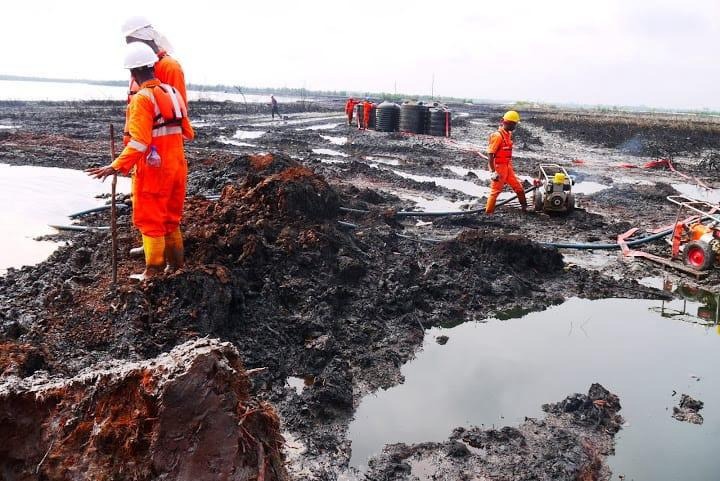
When oil companies pack up after years of drilling, the pollution, scarred landscapes, and shattered livelihoods often linger long after the last rig is gone.

Communities in oil-producing regions are often left to grapple with poisoned water, rusting skeletons of abandoned infrastructure, and lost income from farming, fishing, and other ways of life. Meanwhile, the question of who will foot the bill for restoring the environment hangs in the air.

Now, three international civil society organizations are raising their voices, demanding that oil and gas companies take real responsibility when they shut down operations or hand over their assets to new investors.

The Stakeholder Democracy Network (SDN), the Interamerican Association for Environmental Defense (AIDA) and the Center for Research on Multinational Corporations (SOMO) have submitted the International Principles for Responsible Divestment from Fossil Fuels to the United Nations Working Group on Business and Human Rights.

These principles arrive at a time when countries are under mounting pressure to break free from coal, oil, and gas in the fight against climate change. Yet the organizations warn that companies must not use this transition as an excuse to abandon communities or leave their mess behind.

“Rapid closure and responsible closure of the fossil fuel industry are not mutually incompatible agendas. Both are vital to achieve climate and environmental justice and a just energy transition,” the principles state.

The proposed standards lay out a clear roadmap for what companies must do before walking away from fossil fuel projects, and what governments should demand in return.

According to the principles, companies are expected to inform communities about plans to close operations or sell assets, including when the changes will happen and what environmental and financial obligations remain outstanding.

They should also involve affected people in decisions about their own future, rather than making choices in secret boardrooms.

“This information must include divestment timelines and modalities, as well as full disclosure of all outstanding environmental and financial liabilities. Companies should proactively create spaces for participation and dialogue, so that affected people, regulators and government authorities receive relevant information and can meaningfully influence corporate decision-making.” The principles further state.

Another key demand is that companies must pay for the harm they have caused, from cleaning up polluted lands and waters to safely dismantling infrastructure and restoring damaged ecosystems.

The organizations are also pushing for companies to compensate those whose livelihoods, health, culture, and communities have suffered. This could mean financial payments, restoring sacred cultural sites, and publicly admitting the harm they have done.

When companies sell off their assets, the principles insist they must ensure that new owners have both the resources and expertise to run operations safely and cover all future closure and restoration costs.

The principles also highlight the fate of workers and communities whose lives depend on oil. They call for new livelihood opportunities, job transition programs, and social safety nets for those facing job loss when the wells run dry.

The principles also place the onus on governments, urging them to ensure oil companies do not walk away from environmental damage or leave obligations unresolved when they shut down or sell off their assets.

They urge states to craft clear, transparent plans for phasing out fossil fuel extraction, with affected communities and workers at the table for every decision that could reshape their lives.

Governments are also expected to overhaul their laws and regulations, closing loopholes that let companies slip away from projects without cleaning up pollution, restoring ecosystems, or compensating those harmed.

“States should ensure that their existing legal and regulatory frameworks related to fossil fuel divestment, including investment laws and treaties, are aligned with these Principles and that these Principles are made obligatory for companies by enshrining them in law and effectively enforcing them.” The 4-page document reads

Before any asset sale or project closure gets the green light, the principles say governments should demand independent environmental and social assessments, plus thorough reviews of infrastructure and decommissioning costs.

They also urge states to ensure companies set aside enough money for environmental clean-up and infrastructure dismantling before approving any closure plans.

When assets change hands, governments should scrutinize whether the new buyers have the money, know-how, and management skills to run the facilities safely and meet all environmental obligations left on the table.

The principles sound the alarm against letting companies hand over assets to brand-new businesses or operators with no track record of safe management, which could leave governments and communities footing the bill when disaster strikes.

They also tackle cases where previous owners have already left a trail of environmental damage. Here, governments should ensure new owners handle the clean-up while protecting affected communities’ right to seek compensation and justice from those who caused the original harm.

The organizations are also pressing governments to publish yearly updates on all proposed, approved, and rejected oil and gas asset sales and project closures, including whether companies have kept their environmental and social promises.

These concerns are painfully clear in Nigeria’s Niger Delta, where decades of oil extraction have left communities battling pollution and the collapse of their livelihoods.

Oil spills have poisoned water sources, ruined farmland, and shattered fishing livelihoods, forcing many residents to bear the high cost of an industry that has reaped enormous profits.

A United Nations Environment Program (UNEP) assessment of Ogoniland in 2017 documented extensive oil contamination and recommended a long-term environmental clean-up.

Meanwhile, some international oil companies that once operated in the region are selling off their stakes to new investors, sparking urgent questions about who will shoulder responsibility for pollution and other lingering obligations.

In March 2025, Shell completed the sale of its Nigerian onshore subsidiary, the Shell Petroleum Development Company (SPDC), to Renaissance Africa Energy.

TotalEnergies followed with an agreement announced in January 2026 to sell its 10 percent non-operated interest in the Renaissance joint venture’s licenses to the Nigerian consortium Vaaris.

On October 27, 2026, TotalEnergies announced that it had completed the sale for US$800 million.

The company said it would retain its full economic interest in three gas licenses – OML 23, OML 28 and OML 77 – which currently account for 50 percent of Nigeria LNG’s gas supply. The transaction therefore covers its interest in the joint venture’s oil assets, rather than a complete withdrawal from its Nigerian operations.

Civil society organizations are raising doubts about whether these deals offer enough transparency on outstanding environmental damage, clean-up plans, and compensation for the communities left in the wake.

Dr Isaac ‘Asume’ Osuoka, Director of Social Action, said the people living in oil-producing areas should not be forgotten when companies negotiate the sale of their assets.

“This case is about people, not just oil assets. It is about children growing up with poisoned water, families breathing polluted air, and communities losing their health and livelihoods while international oil companies walk away with decades of profits,” Osuoka said.

He insisted that affected communities must not become corporate sacrifice zones and urged TotalEnergies to prove that its exit will not deepen existing human rights abuses.

Mr. Simon Taylor, co-founder of Hawkmoth, also questioned the transparency surrounding the transaction.

Taylor pointed to TotalEnergies’ previous involvement in the Extractive Industries Transparency Initiative, arguing that the company should be transparent about the public-interest implications of its asset sale.

Continue Reading

MEDIA FOR CHANGE NETWORK

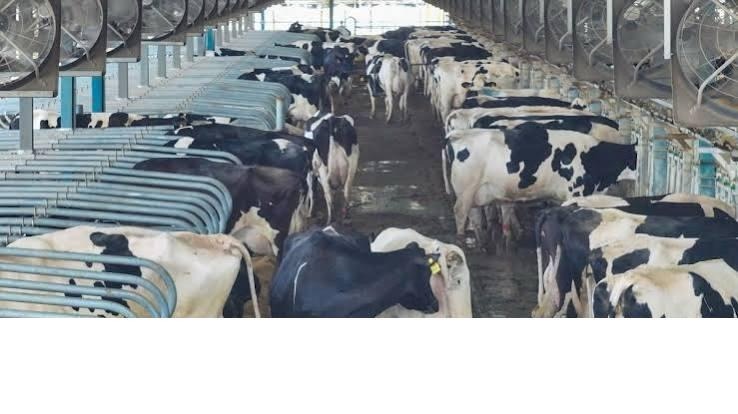
Development finance faces growing scrutiny as industrial livestock farming rapidly spreads across Africa.
Published

on

By the Witness Radio team.

As investment in large-scale agricultural enterprises surges across Africa, the spotlight is turning to development finance institutions and their power to determine which farming systems thrive and which are left behind.

Multilateral development banks and other financial institutions are playing a bigger role in shaping Africa’s agricultural landscape, funding everything from business models to infrastructure and production systems. Industrial livestock farming stands at the center of heated debate, with experts warning that its rise could sideline smallholder farmers, pastoralist communities, and agroecological food systems.

These pressing concerns took center stage during a webinar hosted by the Stop Financing Factory Farming (S3F) coalition, where participants explored how financing industrial livestock farming in Africa impacts farmers, the environment, climate, and public health.

The S3F Africa Regional Coordinator, Mariann Bassey-Olsson, said financial decisions made by development institutions have consequences beyond the businesses receiving the money.

“Since public money shapes food futures, what banks fund today decides what people eat and their livelihoods,” she said.

She pointed out that Africa’s livestock production is a tapestry of pastoralism, mixed crop-livestock farming, and commercial ventures. She urged that agricultural investment should honor this diversity instead of pushing industrial production as the default path.

“We must strengthen our diverse, locally appropriate and sustainable livestock systems, not replace them with industrial models,” she said.

Miriann also challenged the surge in support for agribusinesses, highlighting the stark contrast with the limited financing that reaches agroecological and community-led food systems.

“Factory farming is a finance story that depends on capital, infrastructure and policies that enable its expansion, yet public and private finance increasingly support agribusinesses while far less reaches agroecological community-led food systems,” she said.

Ms. Lizah Makombore of the University of Vermont said existing patterns of industrial production and consumption are pressuring ecosystems and making it difficult to achieve sustainable development goals.

“Because our food systems play such a monumental role in this crisis, they are now undeniably a growing cause for deep transformation,” she said.

Makombore called for a stronger embrace of agroecological farming, emphasizing that agricultural approaches must be rooted in local cultures, wisdom, and environmental realities.

She also highlighted the alarming decline in soil health and stressed the importance of weaving indigenous knowledge and cultural values into sustainable food systems.

“We therefore need to think about how we can shape the context using our cultural values and how we can reclaim our cosmovision, such as Ubuntu,” she said.

Citing an assessment by the Convention on the Elimination of All Forms of Discrimination Against Women (CEDAW) on financing for agroecology through the Green Climate Fund, Makombore said 79% of the funding assessed supported factory farming and other non-agroecological agricultural systems.

She added that agroecological systems received 10.3%, while agroecology received 10.6%.

Mr. Michael Farrelly of the Alliance for Food Sovereignty in Africa (AFSA) cautioned that investment figures alone cannot reveal whether farmers are truly gaining control over their production or reaping the rewards of funded businesses and programs.

“More finance doesn’t automatically mean more power or better incomes for farmers,” he

said.

Farrelly pointed to the Comprehensive Africa Agriculture Development Program (CAADP), the African Union framework guiding agricultural development across member states, as an important influence on investment priorities.

He said the program’s 2026–2035 implementation period has a $100 billion investment target combining public and private financing.

He also referred to regional agricultural policy platforms and summits where governments are seeking to attract private investment into the sector.

Farrelly urged closer scrutiny of the fine print of these investments, especially when they fuel the growth of large commercial agricultural enterprises.

He warned that as corporate agribusinesses gain ground, small-scale producers risk becoming more dependent on commercial buyers, facing mounting debt, and losing their grip on livestock production and marketing.

“The World Bank is helping shape both the businesses and the rules under which they operate. The authors of the report warn that farmers can become more dependent on corporate buyers and debt with less control over their livestock. Some programs aim to reduce the share of people working in agriculture.” He said.

Ms. Nne Nelly Umoren of the Green Leaf Advocacy and Empowerment Center voiced concerns about the hidden social and environmental costs that often accompany large industrial investments, such as fertilizer production.

Citing the Nduruma fertilizer industry, she questioned whether the economic promises of industrial projects truly reflect the realities faced by surrounding communities.

She noted that while such investments are often touted as engines of job creation, increased production, and economic growth, it is crucial to weigh these benefits against the environmental and social burdens local communities’ shoulder.

“They make us believe that investment is for production and for economic growth, food security, and also for the future food of Africa, especially the Nduruma fertilizer,” she said.

“The question behind this is: does industrial growth genuinely improve people’s lives and strengthen food systems? Does it really create economic benefit for investors while transferring environmental and social costs to the local communities?” she asked.

Umoren called for a sharper focus on the lived experiences of communities impacted by industrial projects and a closer look at how the benefits and costs of these investments are shared.

The experts urged that agricultural and development finance should prioritize approaches that empower local food systems and uplift small-scale producers.

They argued that Africa’s food security cannot be achieved through a one-size-fits-all model. Still, they must instead honor the continent’s rich tapestry of farming systems and ecological landscapes.

Continue Reading

Resource Center

Legal Framework

READ BY CATEGORY

Facebook

Newsletter

Subscribe to Witness Radio's news and report updates


Trending

Subscribe to Witness Radio's news and report updates