Connect with us

MEDIA FOR CHANGE NETWORK

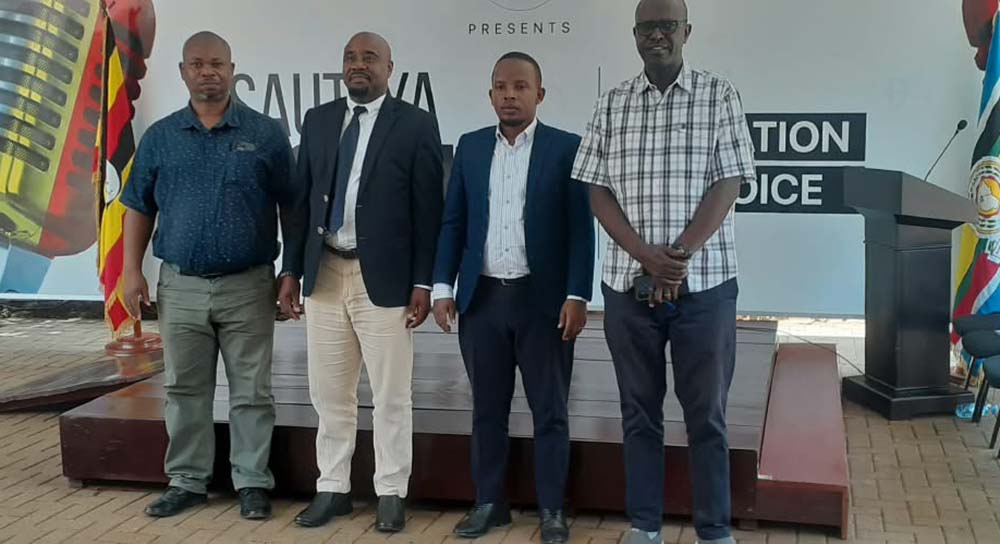
Govt tightens human rights protections in extractive industry

Published

on

The proposed mechanism is expected to provide a formal and accessible avenue for individuals and communities to seek redress when their rights are violated by business operations, including corruption, gender-based violence, child labour, labour rights violations, unfair compensation and other business-related grievances.

Bernard Mujuni, the commissioner for equity and rights at the Ministry of Gender, Labour and Social Development, said the initiative is intended to bridge existing gaps in access to justice, particularly for vulnerable communities affected by large-scale investments in oil and gas and mineral extraction in many parts of the country.

The Ugandan government is developing a national grievance redress and accountability mechanism to enable communities affected by business activities to report human rights violations, unfair compensation, corruption and other abuses, in the extractives sector.

The proposed mechanism is expected to provide a formal and accessible avenue for individuals and communities to seek redress when their rights are violated by business operations, including corruption, gender-based violence, child labour, labour rights violations, unfair compensation and other business-related grievances.

Bernard Mujuni, the commissioner for equity and rights at the Ministry of Gender, Labour and Social Development, said the initiative is intended to bridge existing gaps in access to justice, particularly for vulnerable communities affected by large-scale investments in oil and gas and mineral extraction in many parts of the country.

He made ​the remarks on Friday (October 23) at the Uganda Media Centre while announcing the Seventh National Forum on Business and Human Rights, which will take place from October 26 to 28 at the Sheraton Kampala Hotel.

The ​Government is encouraging businesses to integrate human rights considerations into their operations, especially in sectors involving land acquisition, natural resources, large-scale infrastructure projects and extractive industries

“An individual should be able to access remedies when a violation takes place in business operations,” said Mujuni.

He said some communities affected by development projects often lose out during compensation processes, with intermediaries allegedly taking substantial portions of money intended for project-affected persons, leaving them with little recourse.

It is hoped the​ ​new grievance mechanism will strengthen accountability by providing a recognised platform through which such concerns can be reported, investigated and resolved.

Oil pipeline

Mujuni pointed to Uganda’s oil pipeline project as an example of growing efforts to integrate human rights considerations into major investments, particularly in relation to land rights, compensation and community engagement

He said the project had embraced principles contained in Uganda’s National Action Plan on Business and Human Rights, describing the compensation framework adopted along the project corridor in Uganda and Tanzania as a significant step forward.

“This is a milestone for this country,” he said, while commending President Yoweri Museveni for supporting Uganda’s business and human rights agenda.

Mujuni stressed that investors must engage meaningfully with affected communities and respect their rights to land, livelihoods and other resources.

He cautioned against the appropriation of community-owned resources without adequate consultation and compensation, warning that failure to address legitimate grievances could spark disputes, delay projects and increase operational costs.

“Human rights concerns should be dealt with before they escalate into conflict, litigation or disruptions that can ultimately affect investment outcomes.”

The extractives sector will be a key area of discussion at the upcoming forum, with participants expected to examine the human rights implications of resource exploitation, protection of affected communities and the role of environmental and human rights defenders.

Abuses in sugar plantations

Beyond the extractives sector, concerns were raised about persistent labour rights violations in large-scale agricultural enterprises, particularly sugarcane plantations.

Child labour, sexual harassment, workplace exploitation and violence against women and girls were cited as some of the challenges identified during inspections conducted by the gender ministry in districts such as Mayuge and Hoima

Working alongside labour officers, community development officers and other stakeholders, the ministry has undertaken a series of human rights inspections aimed at ensuring compliance with labour standards.

Mujuni said such abuses not only undermine workers’ dignity and wellbeing but can also disrupt business operations and damage investor reputations.

He said the Government has introduced employment regulations aimed at addressing sexual harassment in the workplace and strengthening protections for workers.

The initiative, dubbed Advancing Respect for Human Rights by Businesses in Uganda, is being implemented by the ministry in partnership with Enabel, the Belgian Agency for International Cooperation, with support from the European Union.

Sector-based minimum wage

It is understood the Government is reviewing several labour-related issues, including minimum wages, workers’ compensation and protections for domestic workers

Ongoing research and consultations are intended to guide future policy proposals following a directive from President Museveni that a comprehensive study be undertaken before the Government adopts a minimum wage framework.

Rather than introducing a blanket minimum wage across all sectors, the Government is exploring the possibility of sector-specific wage structures that consider the unique circumstances of different industries.

Human rights forum

The Seventh National Forum on Business and Human Rights will be held under the theme: “Reflecting on Progress and Strengthening Commitment: The Journey of Uganda’s National Action Plan on Business and Human Rights.”

Discussions will focus on labour rights and decent work, land and natural resources, environmental protection and climate justice, access to remedies, consumer protection, corporate accountability, as well as technology, digital rights and data protection.

Mujuni urged workers to report cases of intimidation, mistreatment and sexual harassment through established workplace channels, including human resource departments and sexual harassment committees.

He revealed that the SAUTI reporting mechanism receives about 200 cases daily, which are processed and referred to relevant authorities for action

The SAUTI 116 toll-free platform brings together multiple institutions capable of investigating complaints and ensuring victims receive appropriate support and justice.

Continue Reading

MEDIA FOR CHANGE NETWORK

Seed Sovereignty: East African Farmers Push for Laws to Protect Indigenous Seeds and Biodiversity
Published

on

Nairobi-Stakeholders in farmer-managed systems across Africa meeting in Nairobi are pushing for strict legislation to protect indigenous seeds and safeguard traditional farming knowledge.

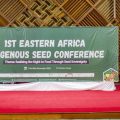
At the 1st Eastern Africa Indigenous Seeds Conference, farmers, researchers, policymakers, and civil society organisations from across Eastern Africa are calling for greater recognition and protection of farmer-managed seed systems against agricultural practices they say threaten traditional farming systems and biodiversity.

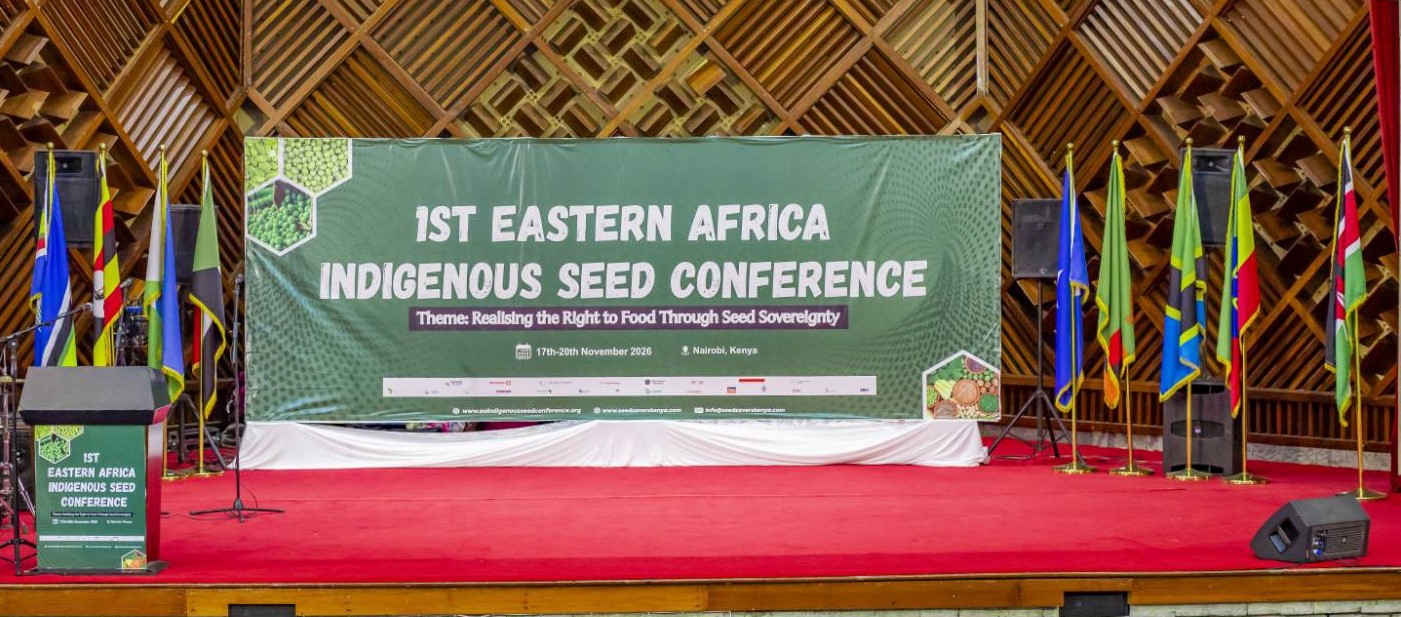
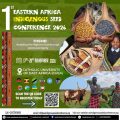
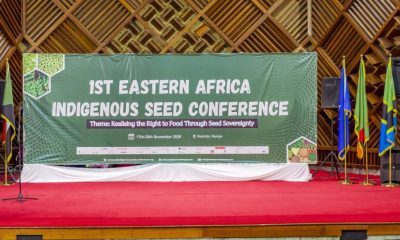
The four-day Conference, convened by Seed Savers Network, runs from November 17th to 20th, 2026, under the theme “Realising the Right to Food through Seed Sovereignty.”

The conference seeks to strengthen farmer-managed seed systems, promote agricultural biodiversity and advance farmers’ rights to save, exchange, use and improve indigenous seeds.

Speaking at the opening of the conference, Seed Savers Network Director Dr Daniel Wanjama warned that the lack of farmer-managed system-friendly laws not only exposes the farmer but also puts nations at risk of hunger.

“When we have 80% of food consumed being produced by millions of smallholder farmers, we cannot afford to have laws and policies that fail to protect such a critical group of people within the food value chain,” said Wanjama.

Wanjama cited Kenya, where he said a lack of farmer-managed system policies has seen the country lose 30% of its indigenous seed and plant varieties in the past 20 years.

Beatrice Wangui, a smallholder farmer and indigenous seed custodian, said protecting traditional seed varieties was essential to preserving Africa’s agricultural heritage and ensuring farmers retained control over what they grow.

She noted that indigenous seeds, passed down through generations, were adapted to local environmental conditions and offered farmers an important alternative as climate change increasingly disrupted agricultural production.

“These seeds are part of our heritage. Our parents and grandparents preserved them, not because they had no alternatives, but because they understood their value. Today, we are being pushed towards commercial seeds, yet we must not lose the freedom to save, replant and share the seeds that have sustained our communities for generations,” she said.

Katrin Voss-Rosa, Director of Luxemburg Foundation East Africa, argued that industrial agriculture was not benefiting the smallholder farmer.

She called on the donor community to shift focus from industrial food production funding and instead channel it to organic farming, which she says produces healthier food.

Van-Rosa warned that over-reliance on seeds susceptible to pest attacks and on fertilisers that affect soil health was not helping Africa’s food situation.

“We cannot be food secure and sovereign when we keep the indigenous farmer out of the equation,’’ she said.

The conference comes at a critical time, as the East African Legislative Assembly is expected to debate the East African Community Seed and Plant Varieties Bill, 2025, which seeks to harmonise seed registration, certification, marketing, and plant breeders’ rights across the region.

However, farmer organisations and civil society groups have raised concerns that the proposed regional legislation could undermine farmer-managed seed systems if it fails to recognise indigenous varieties and traditional seed-sharing practices adequately.

EALA MP David Ole Sankok said the regional legislature was committed to passing the proposed Bill to protect local seed varieties.

He warned that East Africa cannot afford to continue relying on exotic seeds, which he says has turned Africa into a net importer of food.

“We have four seed companies controlling almost 50% of the global seed market. This exposes the continent to the threat of biological warfare’’ said Sankok.

The conference is also expected to discuss the role of community seed banks in ensuring access to locally adapted varieties, preserving indigenous knowledge and helping communities recover from climate-related shocks.

Beyond food security, the conference will explore the conservation of indigenous livestock breeds, tree seeds and underutilised crops as important components of agricultural biodiversity.

Another expected outcome of the conference will be the establishment of a regional community of practice bringing together farmers, researchers, seed custodians, civil society organisations and policymakers to share evidence, strengthen partnerships and coordinate action beyond the conference.

According to the organisers, the initiative will provide a sustained platform for regional collaboration and ensure that the concerns and experiences of farming communities inform future agricultural policies.

Source: panafricanvisions.com

Continue Reading

MEDIA FOR CHANGE NETWORK

African women will present research findings on indigenous seeds, nutrition, and climate resilience in Nairobi, Kenya.

Published

on

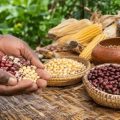
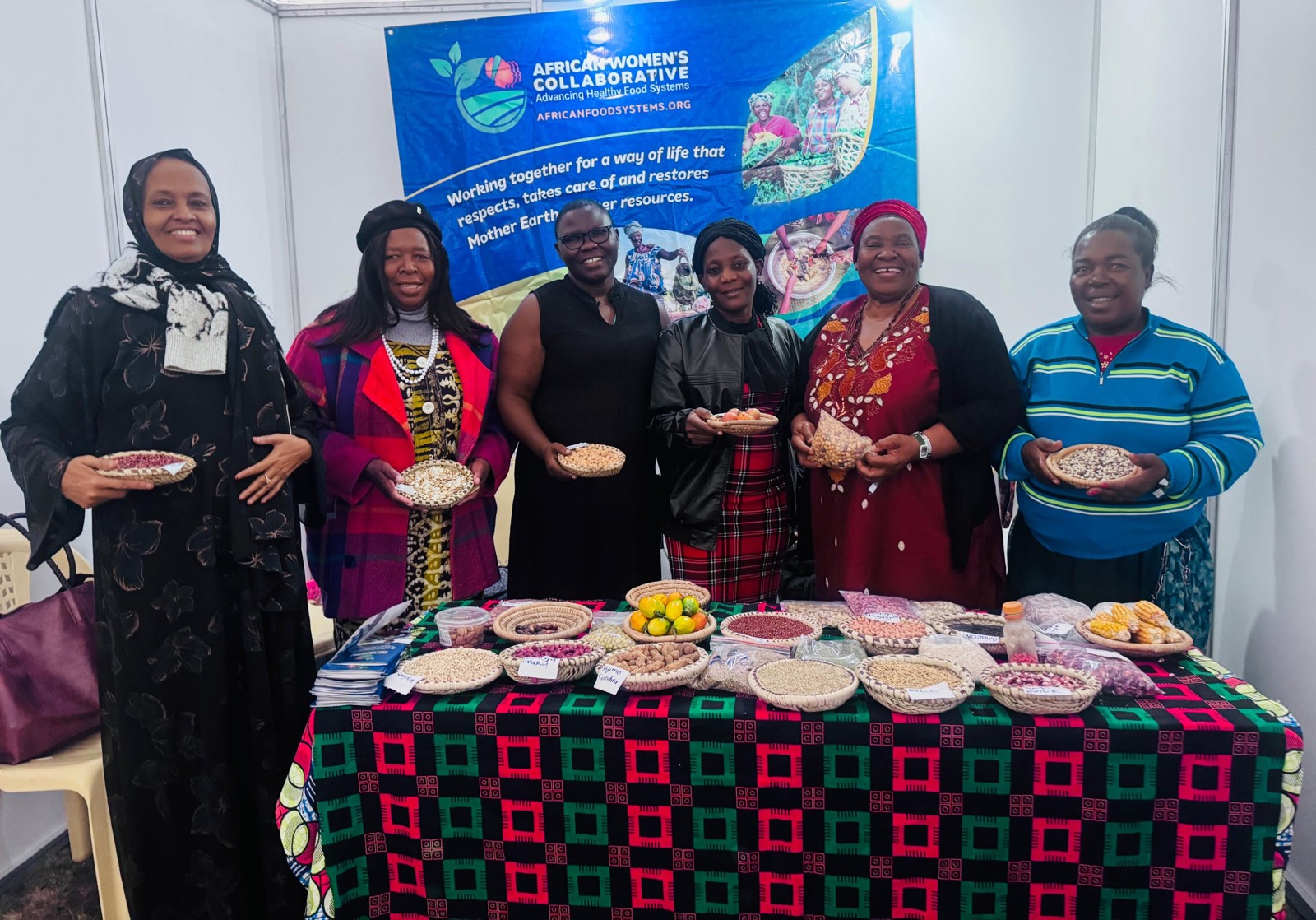
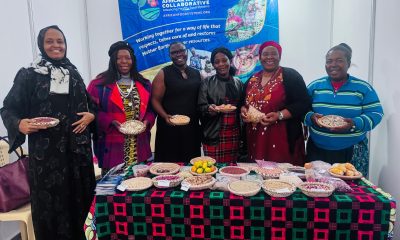
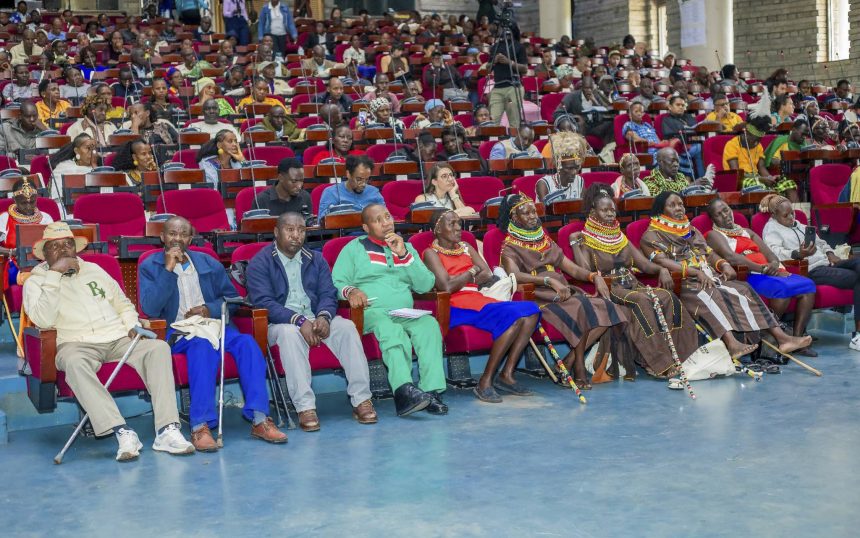
Farmers from 9 African countries who have champiioned the conversation on food and nutrition explain the nutritional benefits of the crops that they grow in their communities at their exhibition stall in Nairobi

By the Witness Radio Team.

Today, Thursday, November 19, the African Women’s Collaborative for Healthy Food Systems will present findings from its farmer-led research on indigenous seeds, African foods, and climate-resilient crops. This will take place during a side event at the First Eastern Africa Indigenous Seed Conference in Nairobi, Kenya.

The event, titled Indigenous Seeds, Nutrition and Resilience: Findings and Recommendations from Farmer-Led Research, will take place from 11:00 am to 12:30 pm at the Catholic University of Eastern Africa in Nairobi.

For those unable to attend in person, Witness Radio will broadcast the event live on its radio platform and social media channels, including YouTube.

The side event will present key findings and recommendations from two research reports: Empirical Study on Nutritional African Foods and Nutritional Assessment of Ten Climate-Resilient Food Crops.

This research documents the nutritional, cultural, economic, and agroecological value of local African foods. It shows how these foods support communities, preserve cultural knowledge, sustain rural livelihoods, and strengthen farming systems suited to their environments.

The event will facilitate discussion on how indigenous foods and climate-resilient crops can strengthen diverse food systems while recognizing the knowledge and practices of farming communities, particularly women who are key stewards of local foods and seeds.

Participants will review the research findings, examine the reports, and collaborate on strategies to support diverse and nutritious food systems resilient to climate challenges.

The African Women’s Collaborative for Healthy Food Systems is a Pan-African initiative that brings together peasant and indigenous women leaders and their organizations. Since 2017, the Collaborative has supported rural and indigenous women in shaping Africa’s food systems.

The Collaborative advocates for women’s rights and recognizes their contributions to food production, seed conservation, agroecology, and promoting nutritious local foods. It acknowledges women farmers as both producers and guardians of indigenous seeds and ancestral knowledge.

Through its Nutritional African Foods Initiative, the Collaborative promotes knowledge about foods grown by African rural women, who use agroecological methods and local resources to feed their communities.

The Nairobi side event brings together farmers, researchers, seed custodians, policymakers, and civil society organizations from Eastern Africa for the inaugural Eastern Africa Indigenous Seed Conference, held from November 17 to 20.

With the theme Realizing the Right to Food through Seed Sovereignty, the conference aims to empower farmer-managed seed systems and highlight farmers’ role in conserving, selecting, saving, exchanging, and using indigenous seeds.

Seed Savers Network organizes this gathering, providing a regional platform to share experiences, address policy challenges, and build alliances to protect indigenous seeds and agricultural biodiversity.

The Collaborative’s side event will contribute to these discussions by highlighting the connections between indigenous seeds, women’s knowledge, nutrition, and the resilience of local food systems.

The event will be broadcast live on Witness Radio and social media platforms on Thursday, November 19, from 11:00 am to 12:30 pm (East Africa Time).

Continue Reading

MEDIA FOR CHANGE NETWORK

Farmers’ seed systems take centre stage as the first Eastern African Indigenous Seed Conference opens in Kenya.

Published

on

By Witness Radio team.

Nairobi, Kenya: Farmers, indigenous communities, researchers, policymakers, and seed-saving practitioners from across Africa and beyond have gathered in Nairobi for the first Eastern African Indigenous Seed Conference, calling for greater recognition and support for farmer-managed seed systems.

The four-day conference, which opened today, November 17, at the Catholic University of Eastern Africa, seeks to strengthen indigenous seed systems, promote seed sovereignty and create space for farmers to influence policies governing seeds and agriculture.

Organized by Seed Savers Network (SSN) and its partners, the gathering comes amid growing concerns over the future of indigenous seeds, local livestock breeds and traditional knowledge systems that communities have relied on for generations.

Opening the conference, Mr. Daniel Wanjama, the Executive Director of Seed Savers Network, said farmers remain central to the region’s seed systems, despite receiving limited recognition in agricultural policies and government support programs.

He said an estimated 80 per cent of the seeds used in the region come from farmers themselves, a contribution he said should be reflected in agricultural policies and investment priorities.

“80 per cent. It means if we cannot have indigenous seeds as we use, it means we cannot have food security. We cannot feed ourselves unless we have indigenous seeds,” Wanjama said.

He argued that governments and development organizations have concentrated much of their attention on the commercial seed sector while overlooking the contribution of farmers who save, exchange and replant seeds within their communities.

According to Wanjama, this has created a disconnect between agricultural policies, government support and the actual practices through which farmers access planting materials.

He also warned that agricultural biodiversity in Africa faces significant threats, arguing that protecting farmer-managed seed systems is important for maintaining the diversity needed to respond to climate change.

“We are facing climate change, and the only way we can survive climate change is through this agricultural biodiversity. Therefore, we cannot afford to lose it because if we lose it, we also lose our life,” he said.

Mr. Wanjama said the conference should provide an opportunity for farmers and organizations across the continent to strengthen their cooperation, exchange knowledge and jointly advocate for policies that recognize indigenous seeds.

He also called for greater farmer participation in policy discussions, saying previous conferences and discussions have not adequately reflected farmers’ experiences and concerns.

He said organizers wanted farmers to form a significant part of the conference and take an active role in discussions, rather than simply attend sessions led by experts and policymakers.

The conference is also taking place against the backdrop of ongoing debates over seed laws and farmers’ rights in Kenya, and East Africa as a region.

Mr. Francis Ngiri, a Kenyan farmer attending the conference, said restrictions on the sharing, exchange and sale of indigenous seeds remain a major concern for smallholder farmers.

In 2025, Ngiri and other farmers won a court case challenging provisions of Kenya’s 2012 Seed and Plant Varieties Act, which restrict farmers from saving, exchanging and sharing seeds. However, the government announced plans to appeal the ruling, arguing that it weakened key provisions of the law.

“We have formally launched an appeal in the Court of Appeal to contest this judgment and restore the legal backing required for strict enforcement of seed quality,” Simon Maina, head of Seed Certification and Plant Variety Protection at the Kenya Plant Health Inspectorate Service (KEPHIS), told The Star in an article published on November 4.

But Ngiri hopes the conference will help strengthen farmers’ efforts to defend their seed-saving practices and push for greater government recognition of community seed banks.

“The government does not support indigenous seed saving. They don’t recognize the seed banks, and we want the conference to tackle that,” he said.

He argued that farmers should be allowed to sell seeds they have saved, provided they receive appropriate training in seed selection and quality management.

“Unless farmers can sell seeds, that is the only time farmers will have seed access. And when they have seed access, they can now have biodiversity. From that, we can have food security,” he said.

Beyond the policy discussions, the conference is also bringing together organizations working on agricultural biodiversity, landscape restoration, agroecology and community-led seed conservation.

Mrs. Catherine Muturi, the Kenya Country Director at Landscape Alliance and Regional Convener for East Africa, said farmers and local communities play an important role in conserving biodiversity, maintaining traditional knowledge and ensuring access to planting materials.

She said efforts to restore landscapes should also recognize the importance of native tree seeds and the communities that conserve them.

“Farmers and local communities are not just beneficiaries of restoration efforts. They are important actors in conserving, managing, and supplying tree seed sources. Their knowledge, participation and leadership must be recognised and strengthened,” Muturi said.

Continue Reading

Resource Center

Legal Framework

READ BY CATEGORY

Facebook

Newsletter

Subscribe to Witness Radio's news and report updates


Trending

Subscribe to Witness Radio's news and report updates