Connect with us

MEDIA FOR CHANGE NETWORK

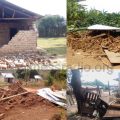
The pain and anguish in the Albertine Part II

Published

on

The rural village of Kapaapi, Bugahya county, Hoima district has turned into a crucible of violence after 1,000 families live under the constant threat of being evicted.

They are scared of cartels that often hire rogue UPDF, police, and private security firms to evict communities from their lands in the oil-rich Albertine Graben. In this second and last part, EMMANUEL MUTAIZIBWA spent six months conducting an investigation and discovered several disturbing issues.

A GORY HORROR

Brig Peter Nabasa grazes his cattle on 700 acres of land, which he claims he leased out of 1,235 hectares belonging to the Byangire family. The Byangire family parcelled out another 1,050 acres to kibanja holders who have occupancy rights but do not hold a registered title.

They are protected by the Constitution and the Land Act and cannot be evicted without a court order, and they possess the right to use, sell, inherit, or formalise their occupancy on registered land. Minister Mayanja’s order to resettle the families has been supported by the commander of the UPDF Field Artillery Division, Maj Gen Dan Kakono, whose soldiers are offering protection to families that were previously evicted.

Women in this area, subjected to horrendous torture and sexual abuse during the eviction raids, carry invisible scars. While speaking on condition of anonymity, the doctor who treated these women confirmed that they were still experiencing trauma when he examined them in 2025.

Five women are willing to testify in court, but others choose to remain silent as a result of the stigma associated with rape and threats from the perpetrators of this crime. The deputy Inspector General of Government, Patricia Achan Okiria, on January 15, 2024, filed a petition before the Uganda Police Professional Standards Unit (PSU) calling for the investigation of the former Hoima District Police Commander, Patrick Bogere, on allegations of abuse and improper misconduct.

The letter states that “In February, 2023, the District Police Commander [DPC], together with the assistance of armed goons, invaded seven villages located in Kapaapi, Hoima, at night, tied up several women, and gang-raped them before evicting them from the land.

Consequently, the affected women reported the matter at Hoima rural police station, where Bogere Jackson is the DPC. When the victims followed up the matter, the DPC threatened them with arrest and blocked them from making further appearances at the police station.”

Some of the women who encountered violence during the evictions, including two rape victims, provided these testimonies. Unknown thugs came together in large numbers with police and Magnum security guards.

I was two months pregnant, I fell on a stone and started bleeding, and I had a miscarriage and lower abdominal pain. I am a mother of nine, and we often sleep in the bushes with the children. There is no honour in that if a family member passes away, their corpses are thrown into the bushes,” revealed one of the women who was examined and whose identity was concealed for fear of reprisals.

INCIDENTS OF RAPE

Another victim and mother of eight, whose house was torched and livestock stolen, claimed that her husband was imprisoned and her children are out of school.

“I was raped by two people who covered my eyes with a cloth. I fell while running, and currently I suffer from severe back pain. My oldest son, who was 17 years old, was shot in the shoulder. We now live like destitutes in [the neighbouring] Buliisa district,” she lamented without disclosing her identity.

“I was five months pregnant, and I am a mother of five. I was spared from being raped, but they took my livestock, including a cow, which was roasted and eaten,” revealed another victim who was attacked on February 10, 2024, after her husband fled to hide in the bushes. Another victim, who was three months pregnant, was awoken by noises and silhouettes of soldiers.

“She lost the pregnancy and got retained products of conception, leading to a dilation and curettage [a minor surgical procedure used to open the cervix and remove tissue from the inner lining of the uterus],” reads the summary of a medical report. She claims that her children were beaten and hospitalised, and “one of the attackers was identified as the LC-I chairperson Michael Oketta, Ndahura Gafayo, who was dressed in a camouflage uniform and was armed with pangas and guns.”

Her children’s identity cards, academic records, and a motorcycle were incinerated in the fire. The victim, according to a medical report, “developed peptic ulcers, insomnia, high blood pressure and paranoid delusions”.

On February 10, 2023, at about midnight, while asleep, soldiers and police entered another woman’s house. She was assaulted and taken to the back of the house, and while pregnant, she was raped, and her house was torched. A medical report reveals that “she developed a urinary tract infection and experiences pain in the pelvic area and back and suffers from bouts of insomnia.”

At 1 am, the young woman noticed that their houses were ablaze. “The door was hit, and it fell in and injured a baby. My mother-in-law was in the house and was severely beaten. I was seven months pregnant. I was pushed out of the house naked; I got severe lower abdominal pain and vaginal bleeding, and I was abducted and taken to an unknown place with my four children. All my livestock were stolen, and my children are out of school while my husband was imprisoned for five months.”

Several incidents of rape have been chronicled during evictions in the Albertine Graben. About four women claimed that they were raped in 2014 during evictions in Rwamutonga, Hoima district, when 200 families were evicted to pave the way for the construction of an oil waste treatment plant by McAlester, a US-based firm.

Arinaitwe and Company Advocates, a law firm based in Kampala, has, between 2023 and 2026, filed three separate suits in Hoima High court on behalf of the evicted families. One of the lawsuits is a public interest litigation which is seeking to hold TotalEnergies and the government of Uganda vicariously liable for the abuses the victims suffered during the eviction.

Peter Arinaitwe, the lawyer for the evicted communities in the seven villages of Kapapi, says that “our legal representation of the victims has also come at a high personal cost. We have experienced what we believe to be attempts on our lives, persistent surveillance of our movements, raids on our homes, and intimidation by unidentified individuals in suspicious vehicles. These incidents have created a climate of fear and insecurity for us and our families.”

He said the case has been deeply traumatising.

A HALL OF MIRRORS

The land that Asiimwe Byangire leased to Brig Nabasa was the subject of a legal dispute filed in 2021 before the Masindi District High Court at the time the senior army officer acquired it. Asimwe Byangire, as the plaintiff, had sued the local community in Kapaapi for trespass.

The petitioners claimed that, “As the court process is still ongoing, Asiimwe Byangire, who is the plaintiff, and Brig. Nabasa have decided to come and force the residents to agree and sign a [consent agreement] document to divide the land of the four villages into two parts without any written document from the court allowing them to do so.”

The locals claim that Asiimwe Byangire sought to present a forged document purporting that the defendants had entered into a consent agreement with him. It reads further, “The second part, i.e., the western part [Waaki North and Kiryatete Rukola], will be given to Brigadier Nabasa to pay back his loan, so the residents of the western part will be chased immediately without any compensation.”

The locals claim that Brig. Nabasa acquired the 700- acre leasehold after Asiimwe Byangire failed to pay a loan he acquired from the army officer. The director for complaints, investigations & legal services at the Uganda Human Rights Commission (UHRC), Pauline Nansamba Mutumba, told Vox Populi that UHRC’s officers in Hoima district met the complainants, but they were not willing to cooperate and preferred to wait for the decision of courts of law.

“We agreed that the office of the resident district commissioner would take the lead. I consider it ongoing. We could not interfere because of the sub judice rule, but we did offer to mediate.”

This article was produced as part of the Bertha Challenge Fellowship.

Source: The Observer

Continue Reading

MEDIA FOR CHANGE NETWORK

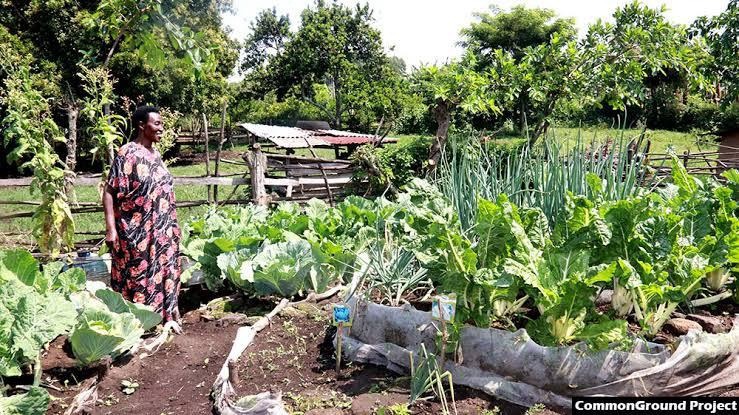
World Food Day 2026: Building healthy diets means reimagining how we grow, share, and enjoy our food.
Published

on

By the Witness Radio team.

In 2024, hunger affected an estimated 673 million people worldwide, the 2025 State of Food Security and Nutrition in the World report reveals, underscoring the urgent need to ensure everyone can access enough nutritious food.

Africa bears a heavy share of this crisis. Hunger affects about 307 million people, more than one in five on the continent. If nothing changes, experts warn that by 2030, as many as 512 million people could face chronic undernourishment, with nearly 60 percent living in Africa.

These numbers make it clear: we must transform our food systems now. It is not just about growing more food; it’s about ensuring everyone can enjoy diets that are diverse, safe, nourishing, and rooted in culture.

On World Food Day 2026, celebrated under the banner “Innovate Today, Nourish Tomorrow,” leaders urged the world to invest boldly in healthy eating, indigenous food traditions and agricultural breakthroughs that truly serve people’s needs.

Italy’s Minister for Agriculture, Food Sovereignty and Forestry, Francesco Lollobrigida, called for greater attention to healthy, balanced and sustainable diets, linking food consumption to human health, cultural heritage and environmental protection.

“To nourish tomorrow, it isn’t enough to invest in innovation and research and in waste reduction. We must also promote dietary habits that are healthy, balanced and sustainable, capitalizing on the deep link between food, health, culture and territory,” Lollobrigida said.

He highlighted Italy’s food culture as a living example of how what we eat can weave together nutrition, environmental care, and the fabric of social life.

“Food isn’t just nutrition; it’s a way of spending time together defending and protecting our environment and our health,” he said.

The minister also urged everyone to unite to tackle food waste, a challenge that stretches from farm fields to family tables. He stressed that governments, businesses, researchers and consumers must join forces through smart policies, new technologies and better food education to end waste.

While Italy’s minister focused on eating habits, King Letsie III of Lesotho, David Mohato Bereng Seeiso, called on African nations to embrace their indigenous foods, crops and traditional wisdom to boost nutrition.

The King noted Africa’s rich tapestry of traditional foods, livestock and aquatic resources, many perfectly suited to local environments and packed with nutrition. Yet he observed researchers, markets and public campaigns too often overlook these treasures.

“Countries must be assisted to promote indigenous traditional and underutilized foods as part of healthier diets, biodiversity conservation, climate adaptation and local economic development,” he said.

He added that building value chains around locally adapted foods could open doors for smallholder farmers, women and young entrepreneurs, all while helping communities safeguard their food heritage.

“While restoring pride in Africa’s food heritage, innovation does not mean abandoning tradition; it means combining the best of modern science with the knowledge and experience of our communities. Nourishing tomorrow should also begin with investing in children today,” King Letsie III added.

His words highlight the need to help farmers preserve locally adapted crops and seeds while harnessing science to boost harvests and nutrition.

FAO Director-General Qu Dongyu said scientific innovation should be judged by its contribution to people’s lives rather than by technological advances alone.

“Innovation is not only about the technology, but it’s also about people. It is about enabling people to turn knowledge into opportunity, science into solutions and hope into action,” he said.

He cited satellite monitoring, early-warning systems, improved irrigation, and digital technologies as tools that can help farmers protect harvests, manage resources, and access markets and financial services.

Today, science provides farmers with tools previous generations could hardly have imagined. Satellites monitor crops from space, helping detect threats before harvests are lost. Early warning systems give farming families time to prepare for droughts, floods and other risks. Smarter irrigation lets farmers produce more food while using less water. Digital technologies connect rural communities to markets, financial services, and networks once out of reach, especially for smallholder farmers. These innovations can strengthen food security, stabilize incomes and create better opportunities for future generations.

Yet innovation alone is not enough. Its true value lies in reaching those who need it most and ensuring successful solutions can be shared and scaled up. The most effective innovations are those developed with farmers and rural communities, considering their needs, knowledge and local conditions, he said.

King Letsie III said transforming food systems requires political leadership, stronger institutions, and adequate nutrition financing.

“Our parOur parliamentarians approve budgets, enact laws, oversee government action and represent citizens’ priorities. I therefore welcome FAO’s engagement with the Pan-African Parliament and national and sub-regional parliamentary alliances on food security and nutrition. Through parliamentary capacity development, FAO is helping legislators create stronger enabling environments. Parliamentarians can and should champion adequate financing for nutrition, protect school meal budgets, promote healthy food environments, improve food safety laws, support women and youth and hold institutions accountable for the commitments made to our people.” He said.

He highlighted school feeding programs as one way to improve children’s diets while creating markets for locally produced food.

Nutritious school meals are a strategic investment that can improve diets, attendance, and learning; strengthen social protection; and create steady demand for locally produced food. Homegrown school meals connect agriculture, nutrition, education and local economic development. School meals should do more than relieve short-term hunger. They should support physical and cognitive development, encourage lifelong healthy habits, strengthen local economies and provide practical learning on nutrition, food safety, hygiene, biodiversity and respect for food. Safe water, sanitation and hygiene are also essential to ensure every meal advances health, dignity and learning, he added.

These leaders’ voices send a clear message: we must bridge the gap between what is grown in fields and what nourishes people’s bodies and lives.

Africa needs stronger links among farmers, researchers, universities, policymakers, entrepreneurs and investors. Solutions that show promise must move beyond pilots and laboratories, be adapted to local realities and scaled through effective institutions and sustainable financing,” the King said.

He emphasized that young people must be at the heart of this movement, with skills, funding, land, digital tools, mentors, and access to markets.

Continue Reading

MEDIA FOR CHANGE NETWORK

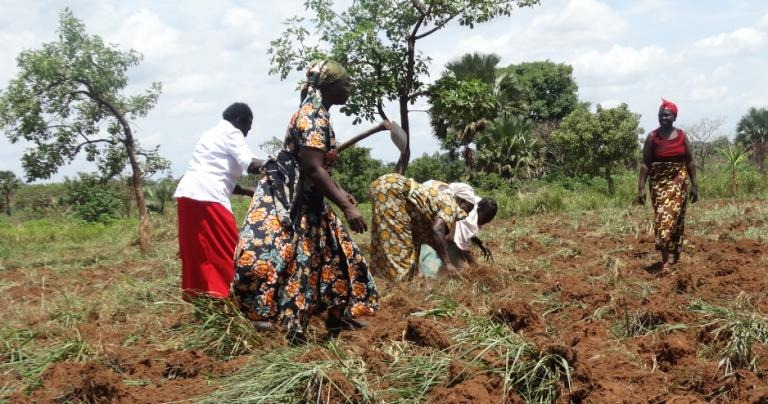
International Day of Rural Women : Rural women farmers deserve not only equal rights and access to resources, but also the strength and voice to safeguard Mother Nature.
Published

on

By the Witness Radio Team.

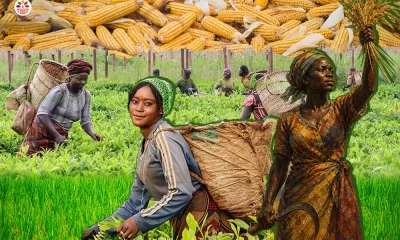
As the world marks the International Day of Rural Women on 15 October 2026, with the theme “Rural Women Farmers Caring for Mother Nature,” the spotlight shines on women whose tireless efforts nourish food systems, shield biodiversity, and safeguard the natural resources that sustain entire communities.

This year’s celebration carries special weight as the United Nations declares 2026 the International Year of the Woman Farmer, spotlighting women’s vital roles across agri-food systems, from planting seeds to driving trade. This recognition opens the door to challenge the persistent inequalities that threaten women’s livelihoods and silence their voices in decisions about agriculture, land, and the environment.

In its statement marking the day, UN Women called for rural women’s rights, resources and decision-making power to match their contributions to food systems and environmental protection.

“On this day, we celebrate their knowledge and leadership in building a more resilient future. Yet their rights, resources and decision-making power too often fall short of their contributions,” UN Women said.

The agency called on governments and other groups to ensure women have enforceable rights to land, water, and natural resources. It also asked for better access to finance, markets, technology, and agricultural services, as well as decent work, social protection, and strong infrastructure. The agency highlighted the need to recognize, reduce, and share women’s unpaid care work.

These calls to action highlight the stark inequalities rural women endure. They are the backbone of community nourishment and environmental stewardship, yet too often they lack the resources and influence needed to improve their lives and shape the future.

Ambassador Ada Francisca de Asis Hernández Rivera, the Permanent Representative of the Dominican Republic to the Food and Agriculture Organization (FAO), the International Fund for Agricultural Development (IFAD) and the World Food Program (WFP), underscored rural women’s importance in eradicating poverty, ending hunger and transforming agri-food systems into more inclusive, resilient and sustainable systems.

She noted that women contribute to food production, biodiversity conservation, sustainable ecosystem management and the resilience of families and communities. Yet many still face barriers to accessing land, financial services, technology, information, markets, and technical assistance, as well as opportunities to participate in decision-making.

“These inequalities, of course, will reduce their opportunities and limit the potential of family farming to contribute completely to sustainable development,” she said.

Karina David, a representative of the Intercontinental Network of Organic Farmers Organizations (INFO) and the Rural Women in Action Network, also highlighted the gap between recognizing women’s contributions and addressing the inequalities they face.

David cited findings indicating that 75 percent of agricultural policy documents across 68 countries recognize women’s roles and challenges, but only 19 percent contain clear gender equality goals.

She argued that closing this gap is not only a matter of equality but also essential to improving food security, household incomes, resilience and rural development.

“Gender inequality has a real cost, and if I were to close the gap between women and men in the agri-food system, it could add almost $1 trillion to the global economy and reduce food insecurity for 45 million people,” she said.

The findings make it clear: governments must move beyond words and turn promises into real policies, funding, and programs that break down the barriers holding women farmers back.

The scale of women’s participation in agri-food systems further underscores why empowering them must be a priority. Tako Ndiaye, a team leader on gender issues in FAO’s Division for Rural Transformation and Gender Equality, cited findings from a report on the status of women in agri-food systems showing that 41 percent of working women globally are employed in these systems.

She noted that agri-food systems are particularly important sources of livelihoods for women in sub-Saharan Africa and Southern Asia, where 70 percent of working women in each region are employed in the sector.

Ndiaye also emphasized the importance of empowering women farmers, their organizations, and networks to participate effectively in family farming policymaking. She called for stronger roles for gender experts and women’s organizations in monitoring the implementation of policy commitments.

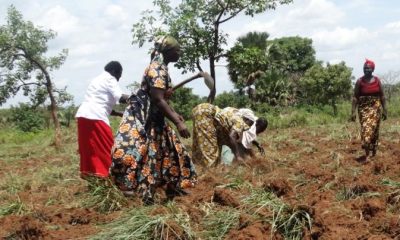
Women farmers do more than feed rural economies; they champion environmental sustainability. They conserve seeds, nurture biodiversity, manage precious water, and heal degraded land, using wisdom and practices that keep ecosystems thriving and help communities withstand the challenges of climate change.

Yet their ability to continue this vital work depends on access to land, financial support, modern technologies, and other resources that let them farm sustainably and adapt to a changing environment.

UN Women has called on governments, financial institutions, businesses, and development partners to invest directly in rural women and remove barriers that limit their economic independence and environmental leadership.

The agency also stressed that rural women must have a meaningful role in shaping agricultural policies and decisions on funding allocation for climate action, biodiversity conservation, and land restoration.


Continue Reading

MEDIA FOR CHANGE NETWORK

ODPP Staff Equipped With New Skills on Land Crimes, Witness Protection and Victims Rights
Published

on

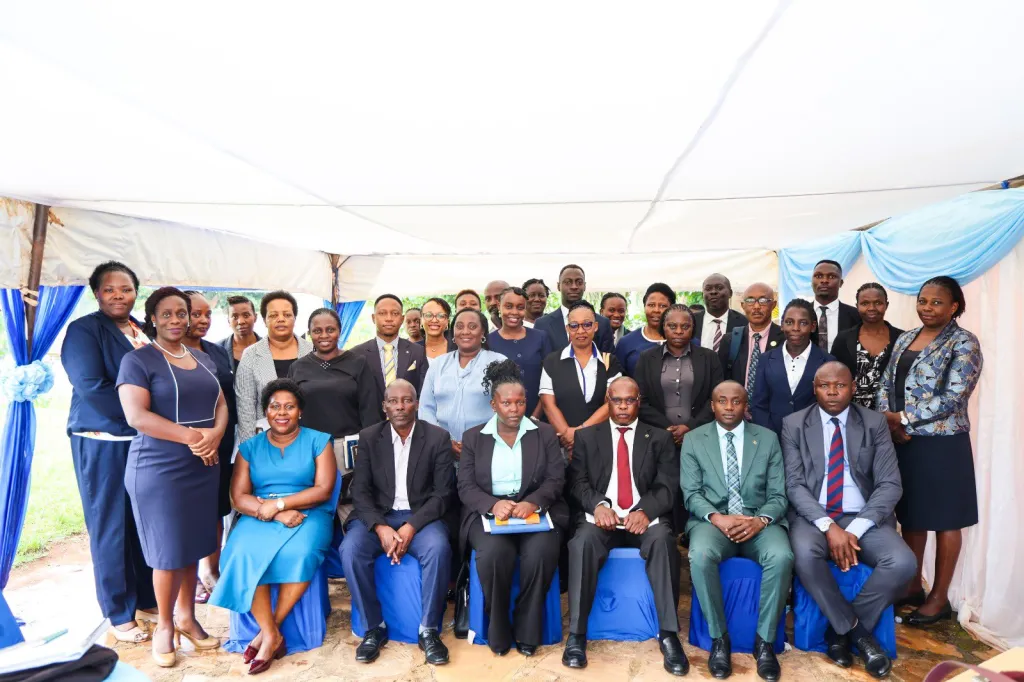
Mpigi – The Office of the Director of Public Prosecutions (ODPP), through the Department of Land Crimes and the Department of Witness Protection and Victim Empowerment, early this week, held a stakeholders’ engagement at the Mpigi Regional Office to enhance the capacity of prosecutors and investigators in the management of land crimes, witness protection and victims’ rights and empowerment.

The engagement brought together prosecutors and investigators from the region to share knowledge, exchange experiences and explore practical solutions to challenges affecting the effective investigation and prosecution of land-related offences, while strengthening the protection of witnesses and the empowerment of victims within the criminal justice system.

In her welcome remarks, the Regional Officer, Assistant Director of Public Prosecutions (DPP) Ms. Rachel Bikhole, welcomed the participants and facilitators to the Mpigi Regional Office. She appreciated the Departments of Land Crimes and Witness Protection and Victim Empowerment for collaborating with the Regional Office to equip prosecutors and investigators with the knowledge and skills necessary to improve service delivery.

The Head of the Department of Land Crimes, Mr. Andrew Odiit, noted that the engagement was timely, given that the region has the highest number of registered land cases in Central Uganda. He expressed optimism that the engagement would provide a valuable platform for sharing experiences, addressing existing challenges and identifying practical solutions to improve the management of land crimes.

Participants received presentations from Mr. Atuhaire Godwin, the Registrar of Titles at Mpigi Zonal Office, who took them through land transfers and registration in Uganda. He explained the procedures and requirements for effective land registration, equipping participants with a better understanding of the processes involved in land transactions and documentation.

Assistant Director of Public Prosecutions Dr. Daisy Nabasitu and Deputy Assistant Superintendent of Police (D/ASP) Bernice Aine respectively made presentations on the prosecution and investigation of land crimes. They highlighted the challenges encountered in handling land-related offences and shared best practices to strengthen investigations and prosecutions.

The Head of the Department of Witness Protection and Victim Empowerment, Mr. Charles Kaamuli, sensitised participants on the legal framework governing witness protection, including the circumstances under which a person may qualify for protection under the law. He also emphasised the importance of empowering victims by guiding them through court processes, explaining what is expected of them and keeping them informed about developments in their cases.

Mr. Kaamuli urged prosecutors to make greater use of the Department of Witness Protection and Victim Empowerment, particularly in cases involving vulnerable witnesses who may require protection and support throughout the criminal justice process.

The engagement underscored the importance of collaboration among prosecutors, investigators and other stakeholders in addressing land crimes, protecting vulnerable witnesses and upholding victims’ rights.

Source: ugstandard.com

Continue Reading

Resource Center

Legal Framework

READ BY CATEGORY

Facebook

Newsletter

Subscribe to Witness Radio's news and report updates


Trending

Subscribe to Witness Radio's news and report updates