Connect with us

MEDIA FOR CHANGE NETWORK

Court issues fresh criminal summonses against army general, police chief and presidential representative and others in a private criminal case.

Published

on

By Witness Radio team.

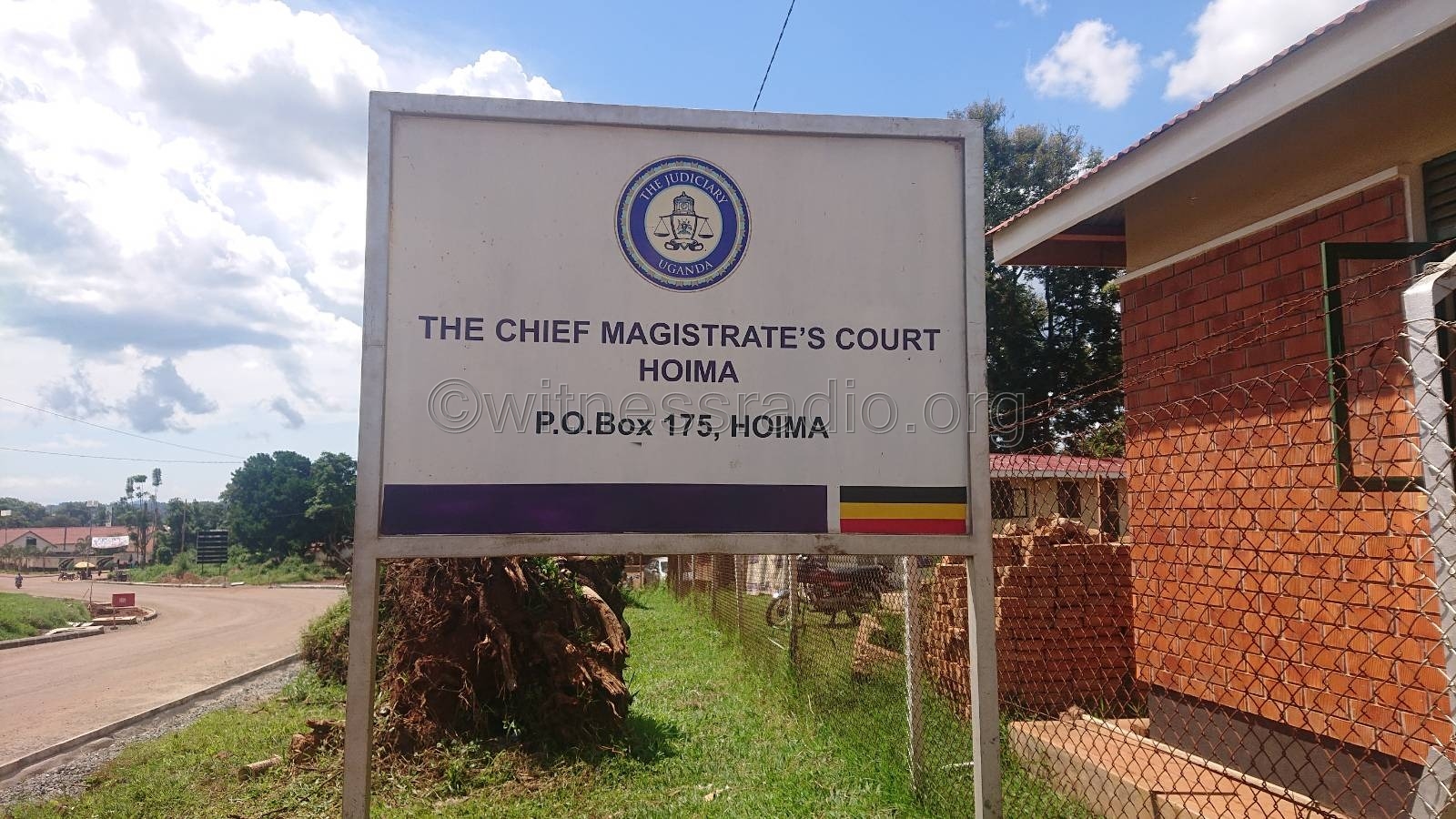
A Chief Magistrate Court sitting in Hoima City in Hoima district has issued new criminal summonses against the thirteen (13) suspects including a Ugandan Army General, Hoima Rural District Police Commander, a Presidential representative among others to appear in Court on the 13th of November 2023 and be charged with several criminal and human rights violation offenses committed while forcefully evicting over 2500 local families to give way for an East African Crude Oil pipeline (EACOP) project.

Brig. Gen. Peter Akankunda Nabasa,  Gafayo Ndawula William, Kyakashari Micheal a Deputy Resident District Commissioner in Hoima, one Oketcha Micheal, Bogere Patrick,a Hoima Rural District Police Commander, one Kiiza Nathan Byarugonjo, one Oromo Luzira, a Local Council One Secreatary for Runga, one Mukindo Bosco, Okethi Bosco, Oming Jacob, Muswa Micheal, Kawiya Henry, Ningaling Joseph, and others still at large accused of raping women, defilement, arson and criminal trespass among other offences.

The 1st accused person is the Deputy Commander of Uganda Peoples Defense Forces, First Division Kakiri in Wakiso District; The 2nd accused person is a Businessman with Businesses in Hoima District; the 3rd Accused is Deputy RDC Hoima District. The 4th accused is the Hoima Rural District Police Commander. The 5th, 6th, 7th, 8th, 9th, 10th, 11th, 12th & and 13th accused persons are residents of Kapapi Village and were agents of the evictors.

On Thursday, the 12th of October 2023, the 13 suspects had been scheduled to appear before the Hoima Magistrates Court to take pleas in Criminal Case File No. 877 of 2023. However, the proceedings did not commence as the trial magistrate was absent while other suspects had not turned up in court.

In the courtroom, only four of the thirteen suspects, namely Gafayo William Ndawula, Oketcha Micheal, Oromo Luzira, lawyers for Brig. Gen. Peter Akankunda Nabasa were present as required by the court summons. Notably, suspects like Kyakashari Micheal, the Deputy Resident District Commissioner of Hoima district, and Bogere Patrick, a Hoima Rural District Police Commander, among others defied the court summons.

On 11th/09//2023, the East African Crude Oil Pipeline (EACOP) Project-Affected Persons (PAPs), through their lawyers Arinaitwe Peter and Company Advocates started a private criminal proceeding against the thirteen suspects in an effort to hold suspects accountable for their criminality and human rights violations.

Each charge attracts different punishments on conviction, as shown below;

Section 124 of the Penal Code states that the punishment for rape on conviction is liable to suffer death; the punishment for assault on court conviction is five years; the punishment threatening violence on court conviction does not exceed four years; the punishment for arson on court conviction is fourteen years; and Punishment for robbery, one has to suffer life imprisonment among others.

According to the charge sheet, the accused persons and their agents in the wee hours (1:00 AM) local time on February 10th, 2023, raided people’s homes without a court order with dozens of unidentified armed individuals, donning Uganda Police Force (UPF) and Uganda People’s Defense Force (UPDF) uniforms.

Acting under the orders of DPC Bogere and Brigadier Nabasa, along with armed guards from Magnum, a private security company, the suspects and their agents fired live bullets and tear gas into their houses, sexually abused women, set people’s houses ablaze, caused physical assaults and kidnaps, looted livestock, and food items and forcefully evicted project affected families off their land.

The actions of the accused led to the grabbing of 1294.99 hectares that were being lawfully occupied and cultivated by thousands of locals in the villages of Waaki North, Kapapi Central, Waaki South, Runga, and Kiryatete within Kapapi and Kiganja sub-counties in Hoima district.

According to research findings by Witness Radio, the individuals involved in the Kapapi land grab are targeting to benefit from the potential compensation intended for community members, given that their land was identified to be impacted by the Tilenga Resettlement Action Plan 4, an EACOP project.

In one of the Resettlement Action Plan (RAP) reports, Total Energies Uganda identified Kapapi, Runga, Waaki, and Kiryatete villages as areas that will be affected by the proposed Tilenga Feeder Pipeline Component (RAP 4).

On the 13th of November, 2023,  all suspects are expected to enter their pleas regarding the charges filed against them.

Continue Reading

MEDIA FOR CHANGE NETWORK

Nabakooba orders probe into 1,500-acre land dispute

Published

on

Lands minister Judith Nabakooba has ordered an investigation into people suspected of illegally converting nearly 1,500 acres of customary land in Nakapiripirit District into freehold land and obtaining a title without the consent of the local community.

Located in Kawach Sub-county, the disputed land is claimed by residents, who say it was given to them by government after part of the former Pian Upe Game Reserve was degazetted to resettle communities which had been displaced.

Local leaders say more than 12,000 households are affected by the dispute. Residents are against Nakapiripirit District Council speaker Richard Lochoto, who is alleged to have claimed ownership of part of the land and subsequently obtained a freehold title.

The dispute escalated after residents accused Mr Lochoto of working with members of the area land committee to process the land without consulting the community.
The minister, who visited the area to hear their grievances on September 7, handed the matter to the district security committee, headed by Resident District Commissioner Bessie Modesta Ajirong for investigation.

She directed the security team to collect all relevant information and submit a report within two weeks.
Ms Nabakooba said those found to have participated in the alleged conversion of the customary land into freehold should be arrested. She also ordered investigations into claims that signatures of local leaders were forged during the transactions.

“If there are people whose signatures were forged, we shall get a handwriting expert to establish whether they actually signed the transfer documents,” she said.
Ms Nabakooba said if investigations establish that the title was obtained fraudulently, the title will be cancelled and the land will be returned to the community.

She further directed the Ministry of Lands officials to assist residents in forming a Communal Land Association (CLA), to enable them to collectively register and manage the land.
“This will keep your land safe from grabbers. You will be in a position to decide on different land uses,” Ms Nabakooba said.

According to documents accessed by the Monitor, an approved land file for registration of a freehold title was forwarded to the commissioner land registration on November 4, 2021.
Another document of a freehold offer dated October 25, 2021, showed that the district land board had approved a grant of freehold to Mr Lochoto, following an application dated October 2, 2018.

The offer indicated that the land was intended for farming and required the applicant to meet costs related to surveying, registration and issuance of the certificate of title, as well as compensation of any sitting tenants.
The documents further show that Mr Lochoto stated that the land was vacant. The form also contained names and signatures of members of the Area Land Committee, who recommended the applicant to the District Land Board.

However, residents disputed the claim that the land was vacant, saying the community had been using and laying plans for the land before the freehold application was processed.
Mr Paul Longok Lochio, the Okudud Village chairperson, said the land was important to the community because residents had increasingly turned to farming, following improvements in security in Karamoja.

He said many residents previously depended largely on cattle and guns for their livelihoods, but the restoration of peace had enabled communities to embrace agriculture.
“Farming is a source of food for many families here. That is why land is very important to us,” Mr Longok said.
He accused land grabbers of taking advantage of illiteracy among residents to process land documents.

The Kawach Sub-county chairperson, Ms Angella Gabriel Aroor, who served as the chairperson of the area land committee at the time of the transaction, said the local leadership was not informed when the land was being surveyed.
“How can you survey land without our signatures? How can you go behind our backs and approve things which we were not informed about?” he asked.

The community now seeks a fresh survey by the Ministry of Lands to establish the actual size and boundaries of the disputed land.
Residents say they want to use part of the land to establish a community market, specifically for cattle traders.
Ms Esther Anyakun, the Nakapiripirit Woman MP and State minister for Karamoja Affairs, said government should protect this land because it was intended to benefit communities that had previously been displaced from other areas.

She said residents had petitioned the government over lack of land after people were evicted from areas occupied by government institutions, including prison land and other protected areas.
“This particular land was given to communities by government because many people were found to be squatters on prison land and had no where to go,” Ms Anyakun said.
Ms Anyakun warned that the land dispute had become tense, with rival groups allegedly threatening one another.

She urged the District Land Board to conduct physical verification before approving applications involving large chunks of land.
She advised the board to conduct ground checks whenever applications for 10 or more acres are submitted, to establish whether the land exists, whether it is occupied and whether there are competing claims.

The Nakapiripirit District Land Board secretary, Mr Jobs Ilukol, said the board had followed procedures required in processing Mr Lochoto’s application.
He said the board relied on records and minutes submitted by the Area Land Committee before considering the application.

Mr Ilukol said the District Land Board does not own or sell land and only processes applications based on documents submitted to it.
“The board’s job ends after approving or rejecting an application. The applicant is responsible for pursuing registration and obtaining a certificate of title,” he said.

Source: monitor.co.ug

Continue Reading

MEDIA FOR CHANGE NETWORK

Lira siblings reclaim father’s land after bitter family dispute

Published

on

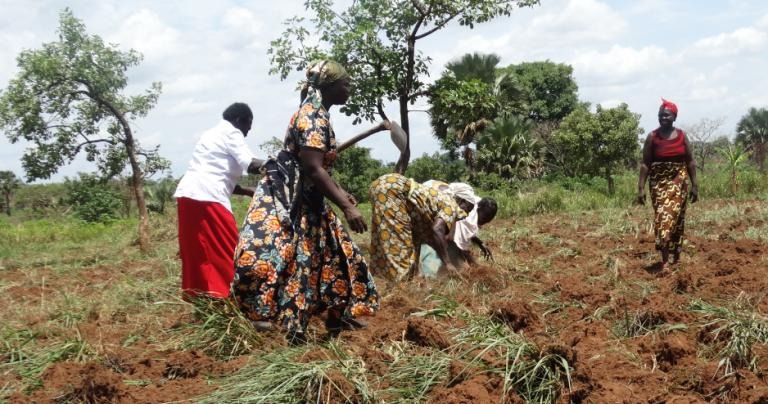
Krispus Adula and his aunt, Betty Akello, plant maize in their garden in Teyao Village, Ogur Sub-county, Lira District, on September 15, 2026. PHOTO/BILL OKETCH.

On a sunny Tuesday afternoon, Crispus Adula dug into the soil with a hand hoe in Teyao Village, Alwala Parish, Ogur Sub-county in Lira District. Behind him, his aunt, Betty Akello, followed slowly, planting maize seeds in a garden the family had spent months fighting to reclaim.

The land is part of 12 gardens that once belonged to Adula’s late father, Sylvesto Obile, and was formally restored to Adula and his two sisters, Jacklyn Anam and Immaculate Auma, on September 15, 2026.

Mr Obile died in 2019, leaving his children still young. Their mother, Silvia Amony, left the family home shortly afterwards and died in 2022.

Following their father’s burial, members of the Abwor Bako Omorikidi Clan met and agreed to place the children in the custody of their cousin, Oyugi. He was also entrusted with the family’s property, including the 12 gardens, four cattle, chickens and household belongings.

“After being handed over to our cousin, I dropped out of school in Primary Three because he was not taking good care of us,” Adula told Monitor.

He said that after turning 17 in 2025, he asked clan members to allow him and his siblings to return to their former homestead and begin living independently.

“So, when I reached 17 years of age in 2025, I demanded that clan members allow my siblings and me to go back to our former homestead, where our father died and left us, to start living on our own,” he said.

The siblings left Oyugi’s home in January 2025, prompting clan leaders to convene a meeting to formally return the family’s property.

By then, however, the cattle and chickens had disappeared, while Oyugi had reportedly hired out most of the 12 gardens to tenants and collected payments from them.

“It was only the gardens remaining,” Adula said. “But out of the 12 pieces, our cousin had hired out most of them, and he had taken money from those people.”

Clan members ordered Oyugi to return the land, and he agreed, except for two gardens which he claimed he had sold to raise money for the children’s school fees.

The dispute escalated when the siblings went to reclaim the two gardens.

“Our cousin came with his wife and found us digging the land, and they threatened to kill one of my sisters with a panga (machete) he was holding,” Adula recalled.

“We overpowered them, took the panga, and ran to the clan leader, and eventually to the LC1 chairman of Teyao Village, who referred us to the police,” he added.

According to Prossy Akello, an attorney with Redeem International, Oyugi and his wife later returned and began digging the same garden despite the children having reported the matter to police.

Police at Ogur Central Police Station charged the couple with criminal trespass and threatening violence before referring the case to Redeem International.

The organisation, a nonprofit that works with local law enforcement to combat violence and exploitation against widows and orphans in developing countries, supported the investigation and prosecution through its Lira City Field Office.

“We supported the police to conclude the investigation they had initiated, and then we supported the complainants to follow up the case — ensuring they were always present in court, and that their witnesses were always transported to attend,” Ms Akello said.

Redeem International also helped Adula return to school.

“We usually don’t pay school fees or give scholarships,” Ms Akello said, “but in this case our social worker did a needs assessment, and we looked out for other partners within Lira. We were able to secure a scholarship for Crispus, and right now he’s studying at one of the technical schools in Lira.”

Police completed their investigation, and Oyugi and his wife were summoned, recorded statements and were later arraigned before Lira Magistrate’s Court.

“The accused pleaded not guilty, and we had to go for a full trial,” Ms Akello said. “Judgment was delivered in June.”

Because both sides claimed ownership of the two disputed gardens, Magistrate Jonathan William Wamimbi ruled that either party could pursue a civil claim in court to determine ownership.

In the meantime, the magistrate ordered that the children, who were already in possession of the land, continue using it.

“That is why the children are still using the land,” Ms Akello said. “We’ve come back [today, September 15, 2026] to officially inform the public that these children will remain in possession until any other person moves to court by way of a civil suit to claim ownership.”

Bosco Adwale, clan chief of Abwor Bako Omorikidi, called for reconciliation between the relatives.

“Now that the matter has been resolved, we’re asking the children to forgive their cousin brother and his wife, for peace to prevail,” he said.

Bosco Otim, LC2 chairman of Alwala Parish and a member of the Area Land Committee, said the dispute also exposed a wider challenge of undocumented land ownership in the area.

“In the entire Teyao Village, there is only one person who has processed a land title,” he said.

John Kalisto Apita, a clan leader, said the dispute had been complicated but called on residents to learn from the case.

“This was a very complicated case, but I thank God it has been put to rest. I ask members of the community to pick a lesson from this land dispute,” he said.

Lira Assistant Resident District Commissioner Richard Okello [centre] hands over a package donated by Redeem International to Krispus Adula after he was officially restored to his land in Ogur Sub-county on September 15, 2026. PHOTO/COURTESY.

Michael Odongo, LC3 chairman of Ogur Sub-county, urged families to follow the law when distributing property left behind by deceased relatives.

Oyugi, for his part, said he no longer holds a grudge against his cousins and attributed his actions to being misled by “the devil”.

Jane Acola of Redeem International’s Lira Field Office said the case reflected a wider challenge facing widows and orphans in northern Uganda, where many households depend on land for their livelihoods.

“The majority of our people in northern Uganda derive their livelihood mainly from agriculture, but for production to take place there must be land. When there is a land conflict, you cannot do anything,” she said.

Source: monitor.co.ug

Continue Reading

MEDIA FOR CHANGE NETWORK

After weeks behind bars, six anti-oil activists have been granted cash bail by the LDC Court.

Published

on

By the Witness Radio team.

After more than two weeks in detention, six young activists challenging Uganda’s oil projects have secured cash bail, facing unlawful assembly charges.

All six belong to the Rooted in Resistance movement. On Thursday, September 17, they appeared before the LDC Magistrate’s Court in Kampala, where the court granted each cash bail of Shs300,000.

The activists granted bail are Isaac Mukiibi, Alphat Mawanda, Nicholas Mugezi, Innocent Opio, John Friday and Ronald Onyango.

Rooted in Resistance, formerly known as Students Against EACOP, has emerged as a steadfast force challenging the spread of fossil fuels in Uganda.

The activists were held in Luzira Maximum Security Prison after being arrested during demonstrations in Kampala against Uganda’s ongoing fossil fuel projects.

The activists were charged with unlawful assembly under the Penal Code Act.

Section 65(1) of the Act defines an unlawful assembly as a gathering of three or more people who intend to commit an offense, behave in a way that creates reasonable fear, or gather without a legitimate reason in circumstances likely to provoke others to breach the peace.

Under Section 66, taking part in an unlawful assembly is a misdemeanor and, upon conviction, carries a maximum sentence of one year in prison.

On August 31, 2026, police arrested the six during Kampala demonstrations, as Rooted in Resistance rallied against Uganda’s oil development.

Determined to be heard, the activists tried to deliver petitions to Parliament and TotalEnergies offices in Kampala, urging closer examination of oil projects and rejecting further fossil fuel investment.

During the demonstrations, police detained a total of 16 activists.

Police arrested ten at Parliament and charged them with public nuisance, while arresting six more at RR Pearl Tower One on Yusuf Lule Road, where TotalEnergies’ offices are located.

The six soon appeared before the LDC Magistrate’s Court, where they were remanded to Luzira Prison.

The activists say their resistance stems from concerns about the environmental and social fallout of oil development, especially its impact on communities, livelihoods, and the natural world.

They are urging a shift toward investing in renewable energy, rather than pouring more resources into fossil fuel infrastructure.

After the court granted bail, Rooted in Resistance celebrated the release of its members but condemned what it sees as ongoing attempts to silence their movement through arrests and charges.

“We will never be intimidated by the continued trumped-up charges and the brutal arrests being subjected to us,” the group said in a statement following the release on its X handle.

The group pledged to keep rallying for an oil-free economy and what it calls true economic freedom.

Continue Reading

Resource Center

Legal Framework

READ BY CATEGORY

Facebook

Newsletter

Subscribe to Witness Radio's news and report updates


Trending

Subscribe to Witness Radio's news and report updates