Connect with us

MEDIA FOR CHANGE NETWORK

New revelations: TotalEnergies is investing in countries facing political and economic risks, raising fresh questions about the company’s investment strategy.

Published

on

By the Witness Radio Team

Oil may not yet flow from Uganda’s wells, but for people near the oil fields in midwestern Uganda and along the pipeline corridor, the oil saga has been shaping their lives for years.

They have felt its impact through land they claim is no longer theirs, homes uprooted, roads and infrastructure cutting through fields they once cultivated, and lingering uncertainty after the announcement that their land was needed for a project promising to reshape Uganda’s future.

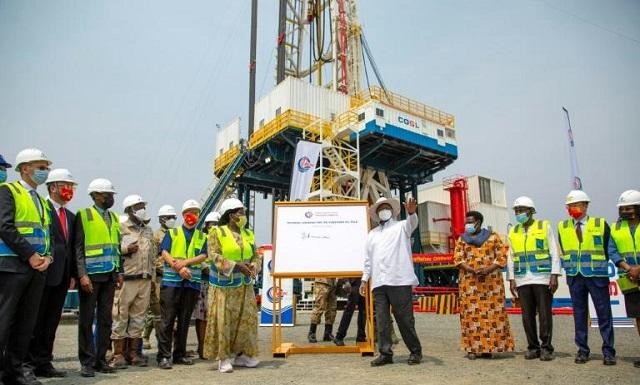
Uganda stands on the brink of a moment waited for nearly twenty years. The nation is set to produce its first commercial oil this September, and the government touts’ oil as a gateway to new revenue, jobs, infrastructure, and a path toward middle-income status.

Yet as Uganda readies itself for its first barrels, new findings about the French oil giant at the industry’s heart raise a broader question: beyond profits, what is at stake?

These revelations also shed light on TotalEnergies’ broader investment strategy and its growing presence in countries marked by deep political, economic, and human-rights challenges.

TotalEnergies is the operator of the Tilenga oil project in western Uganda and a major shareholder in the East African Crude Oil Pipeline (EACOP), which is intended to transport crude from Uganda’s oil fields to the Tanzanian coast.

A 2026 analysis by German environmental organization Urgewald, based on its Global Oil & Gas Exit List (GOGEL), found that more than half of TotalEnergies’ planned short-term oil and gas development is located in countries classified as autocracies or hybrid regimes.

Of the 7,829 million barrels of oil equivalent identified by Urgewald as part of the company’s planned short-term development, 4,178 million barrels are in those countries. More than 3,700 million barrels are also in countries classified as having high or extreme political and economic risks.

Uganda is among the countries listed in the analysis. Together, Uganda and Mozambique account for about 40 percent of TotalEnergies’ planned short-term upstream expansion. When Iraq is included, the three countries account for more than half of the company’s planned expansion.

The findings do not suggest that Uganda, Mozambique and Iraq share the same political systems or social circumstances. Instead, the three countries stand out in Urgewald’s analysis because of the scale of TotalEnergies’ planned upstream expansion there.

In Uganda, the company is involved in the Tilenga oil project and EACOP. In Mozambique, TotalEnergies is involved in the Mozambique LNG project, while Iraq is another major destination for the company’s planned upstream expansion.

Taken together, these findings position Uganda’s inaugural oil production as a key piece in TotalEnergies’ sweeping global ambitions.

For communities touched by Uganda’s oil ventures, the promise of economic transformation has often arrived as land disputes, compensation battles, and resettlement struggles—realities woven into the fabric of these projects.

The EACOP pipeline carves its way through ten Ugandan districts, demanding land for its path and the infrastructure that follows.

While officials insist that land acquisition and compensation have been handled justly, many in affected communities voice grievances over what they see as insufficient payment for their land, homes, crops, and possessions.

Among them is Bwowe Ismail, a resident of Bethlehem village in Kyotera District. Bwowe told Witness Radio that his land was taken for the project after he demanded compensation he believed matched the value of his land and property.

He says that instead of receiving the compensation he sought, authorities intimidated him and later arrested him.

“Instead of compensating me fairly as I wanted, state authorities intimidated [me], enabled my arrest and accused [me] of sabotaging a government initiative,” Bwowe said.

Bwowe says that on one occasion he was arrested and accused of stealing money from a wealthy man in his village, an allegation he denies.

“They arrested me [and said] that I stole money from someone. I am a respected man in the society and could not do this. They just did it to shame me,” he said.

According to Bwowe, TotalEnergies offered to support his legal representation if he agreed to sit with the company and accept the compensation, but he refused.

He says that after he continued to reject the compensation and resisted what he described as intimidation, the government sued him and others who refused compensation. It asked the court to allow the money to be deposited into court accounts. The court ruled for the government.

Bwowe’s ordeal mirrors a broader struggle over land acquisition and compensation faced by communities in Uganda’s oil regions. More broadly, his story reveals how these conflicts can spiral far beyond the loss of land itself.

In its report, Our Trust is Broken: Loss of Land and Livelihoods for Oil Development in Uganda, Human Rights Watch reported that EACOP and other oil developments have affected more than 100,000 people in Uganda and Tanzania. The report also raised concerns about compensation, resettlement, and the effects of oil development on communities and biodiversity.

For many affected communities, seeking justice remains an uphill battle. Their worries about Uganda’s oil projects extend well beyond land.

Environmental activists and organizations challenging Uganda’s oil expansion have found themselves facing arrests and criminal charges.

In August, 20 youth activists associated with Rooted in Resistance were arrested while delivering petitions to TotalEnergies and Parliament calling for an end to fossil-fuel expansion.

These arrests are part of a growing pattern of detentions and prosecutions targeting activists who oppose EACOP and other oil projects.

Brighton Aryampa, team lead at Youth for Green Communities, an organization that provides legal representation to environmental activists, says the treatment of protesters raises questions about Uganda’s civic space.

“The government is deliberately using legal action against Stop EACOP activists to suppress dissent, free speech, the right to peaceful protest, and public participation. This taints Uganda as a country that undermines democratic principles of free expression and open discourse, as hundreds of Stop EACOP activists have been arrested and charged,” Aryampa said. Concerns about civic space arise as Uganda faces mounting criticism for its record on political freedoms, free expression, treatment of human-rights defenders, and access to justice.

The country ranks 125th out of 142 countries in the World Justice Project’s Rule of Law Index. Freedom House classifies Uganda as “Not Free”, while CIVICUS gives the country a “Repressed” civic-space rating of 28 out of 100.

All these conditions shape the complex landscape in which Uganda’s oil projects are taking root.

Urgewald describes TotalEnergies as one of the world’s most aggressive oil and gas expanders.

Its 2026 analysis found that TotalEnergies has the largest short-term expansion plans among its major oil and gas peers in authoritarian states and countries classified as high-risk for business.

Sonja Meister, an energy campaigner at Urgewald and author of the analysis, says the company is taking significant risks through its expansion strategy.

“TotalEnergies is taking a huge risk with its fossil fuel expansion and disregarding the repercussions for communities on the ground. This game of roulette has serious consequences for civil society, ecosystems, and the climate alike,” Meister said in an email exchange with Witness Radio.

For Uganda, the significance of the findings lies not just in the amount of oil expected to be produced but in where the country’s projects sit within TotalEnergies’ wider portfolio and what that suggests about the company’s approach. This matter because Uganda is one of several countries where the company pursues major upstream investments despite political, economic, and governance risks identified by organizations such as Urgewald.

Uganda is one of several countries where the company is pursuing major upstream investments despite political, economic, and governance risks identified by organizations such as Urgewald.

This does not mean TotalEnergies’ investments will have identical impacts everywhere or that Uganda’s oil sector will mirror outcomes seen in other countries. Still, it raises pressing questions about how the company weighs political and economic risks, safeguards communities, and responds to human-rights issues as they emerge.

It also sparks important questions about how the company evaluates political and economic risks, shields communities during major developments, and handles human-rights concerns as they surface.

TotalEnergies’ expansion also depends on access to financial markets and investors. According to Urgewald’s analysis, bonds have become an increasingly important source of financing for TotalEnergies compared with loans.

Among the company’s major investors are French financial institutions including Crédit Agricole and Amundi. Deutsche Bank, primarily through DWS, is also a major investor, while German DZ Bank, primarily through Union Investment, is another significant investor.

Urgewald notes that these investors have yet to pledge to stop buying new TotalEnergies bonds, urging financial institutions to rethink their ties to the company and its fossil-fuel ambitions. This financing dilemma is pivotal because TotalEnergies’ expansion hinges on continued access to capital and investors.

Meister says continued expansion depends heavily on access to finance. “TotalEnergies relies on the financial industry’s continuous support. Without new bonds, it would be much harder for the group to finance its destructive expansion projects such as ‘Mozambique LNG’ or ‘EACOP’,” she said.

She said banks and investors financing the company should reconsider their role.

“The banks and investors involved must recognize their responsibility and not sink further funds into these risky endeavors,” Meister said.

The government has hailed Uganda’s first oil production as a landmark economic achievement.

For communities living in the shadow of oil developments, however, the road to first oil has already meant land seizures, compensation wrangles, forced relocations, and at times, direct clashes with authorities and oil firms.

Meanwhile, Urgewald’s research situates Uganda within a sweeping trend of TotalEnergies’ global fossil-fuel expansion, especially in countries flagged for serious political, economic, or governance risks.

Witness Radio sought a response from TotalEnergies Uganda to the concerns raised in this story, including issues relating to land acquisition, compensation, treatment of protesters and the company’s wider expansion strategy. We contacted the company’s Corporate Affairs Manager, Anita Kayongo, by email and telephone but had not received a response by the time of publication.

Continue Reading

MEDIA FOR CHANGE NETWORK

The pain and anguish in the Albertine Part II

Published

on

The rural village of Kapaapi, Bugahya county, Hoima district has turned into a crucible of violence after 1,000 families live under the constant threat of being evicted.

They are scared of cartels that often hire rogue UPDF, police, and private security firms to evict communities from their lands in the oil-rich Albertine Graben. In this second and last part, EMMANUEL MUTAIZIBWA spent six months conducting an investigation and discovered several disturbing issues.

A GORY HORROR

Brig Peter Nabasa grazes his cattle on 700 acres of land, which he claims he leased out of 1,235 hectares belonging to the Byangire family. The Byangire family parcelled out another 1,050 acres to kibanja holders who have occupancy rights but do not hold a registered title.

They are protected by the Constitution and the Land Act and cannot be evicted without a court order, and they possess the right to use, sell, inherit, or formalise their occupancy on registered land. Minister Mayanja’s order to resettle the families has been supported by the commander of the UPDF Field Artillery Division, Maj Gen Dan Kakono, whose soldiers are offering protection to families that were previously evicted.

Women in this area, subjected to horrendous torture and sexual abuse during the eviction raids, carry invisible scars. While speaking on condition of anonymity, the doctor who treated these women confirmed that they were still experiencing trauma when he examined them in 2025.

Five women are willing to testify in court, but others choose to remain silent as a result of the stigma associated with rape and threats from the perpetrators of this crime. The deputy Inspector General of Government, Patricia Achan Okiria, on January 15, 2024, filed a petition before the Uganda Police Professional Standards Unit (PSU) calling for the investigation of the former Hoima District Police Commander, Patrick Bogere, on allegations of abuse and improper misconduct.

The letter states that “In February, 2023, the District Police Commander [DPC], together with the assistance of armed goons, invaded seven villages located in Kapaapi, Hoima, at night, tied up several women, and gang-raped them before evicting them from the land.

Consequently, the affected women reported the matter at Hoima rural police station, where Bogere Jackson is the DPC. When the victims followed up the matter, the DPC threatened them with arrest and blocked them from making further appearances at the police station.”

Some of the women who encountered violence during the evictions, including two rape victims, provided these testimonies. Unknown thugs came together in large numbers with police and Magnum security guards.

I was two months pregnant, I fell on a stone and started bleeding, and I had a miscarriage and lower abdominal pain. I am a mother of nine, and we often sleep in the bushes with the children. There is no honour in that if a family member passes away, their corpses are thrown into the bushes,” revealed one of the women who was examined and whose identity was concealed for fear of reprisals.

INCIDENTS OF RAPE

Another victim and mother of eight, whose house was torched and livestock stolen, claimed that her husband was imprisoned and her children are out of school.

“I was raped by two people who covered my eyes with a cloth. I fell while running, and currently I suffer from severe back pain. My oldest son, who was 17 years old, was shot in the shoulder. We now live like destitutes in [the neighbouring] Buliisa district,” she lamented without disclosing her identity.

“I was five months pregnant, and I am a mother of five. I was spared from being raped, but they took my livestock, including a cow, which was roasted and eaten,” revealed another victim who was attacked on February 10, 2024, after her husband fled to hide in the bushes. Another victim, who was three months pregnant, was awoken by noises and silhouettes of soldiers.

“She lost the pregnancy and got retained products of conception, leading to a dilation and curettage [a minor surgical procedure used to open the cervix and remove tissue from the inner lining of the uterus],” reads the summary of a medical report. She claims that her children were beaten and hospitalised, and “one of the attackers was identified as the LC-I chairperson Michael Oketta, Ndahura Gafayo, who was dressed in a camouflage uniform and was armed with pangas and guns.”

Her children’s identity cards, academic records, and a motorcycle were incinerated in the fire. The victim, according to a medical report, “developed peptic ulcers, insomnia, high blood pressure and paranoid delusions”.

On February 10, 2023, at about midnight, while asleep, soldiers and police entered another woman’s house. She was assaulted and taken to the back of the house, and while pregnant, she was raped, and her house was torched. A medical report reveals that “she developed a urinary tract infection and experiences pain in the pelvic area and back and suffers from bouts of insomnia.”

At 1 am, the young woman noticed that their houses were ablaze. “The door was hit, and it fell in and injured a baby. My mother-in-law was in the house and was severely beaten. I was seven months pregnant. I was pushed out of the house naked; I got severe lower abdominal pain and vaginal bleeding, and I was abducted and taken to an unknown place with my four children. All my livestock were stolen, and my children are out of school while my husband was imprisoned for five months.”

Several incidents of rape have been chronicled during evictions in the Albertine Graben. About four women claimed that they were raped in 2014 during evictions in Rwamutonga, Hoima district, when 200 families were evicted to pave the way for the construction of an oil waste treatment plant by McAlester, a US-based firm.

Arinaitwe and Company Advocates, a law firm based in Kampala, has, between 2023 and 2026, filed three separate suits in Hoima High court on behalf of the evicted families. One of the lawsuits is a public interest litigation which is seeking to hold TotalEnergies and the government of Uganda vicariously liable for the abuses the victims suffered during the eviction.

Peter Arinaitwe, the lawyer for the evicted communities in the seven villages of Kapapi, says that “our legal representation of the victims has also come at a high personal cost. We have experienced what we believe to be attempts on our lives, persistent surveillance of our movements, raids on our homes, and intimidation by unidentified individuals in suspicious vehicles. These incidents have created a climate of fear and insecurity for us and our families.”

He said the case has been deeply traumatising.

A HALL OF MIRRORS

The land that Asiimwe Byangire leased to Brig Nabasa was the subject of a legal dispute filed in 2021 before the Masindi District High Court at the time the senior army officer acquired it. Asimwe Byangire, as the plaintiff, had sued the local community in Kapaapi for trespass.

The petitioners claimed that, “As the court process is still ongoing, Asiimwe Byangire, who is the plaintiff, and Brig. Nabasa have decided to come and force the residents to agree and sign a [consent agreement] document to divide the land of the four villages into two parts without any written document from the court allowing them to do so.”

The locals claim that Asiimwe Byangire sought to present a forged document purporting that the defendants had entered into a consent agreement with him. It reads further, “The second part, i.e., the western part [Waaki North and Kiryatete Rukola], will be given to Brigadier Nabasa to pay back his loan, so the residents of the western part will be chased immediately without any compensation.”

The locals claim that Brig. Nabasa acquired the 700- acre leasehold after Asiimwe Byangire failed to pay a loan he acquired from the army officer. The director for complaints, investigations & legal services at the Uganda Human Rights Commission (UHRC), Pauline Nansamba Mutumba, told Vox Populi that UHRC’s officers in Hoima district met the complainants, but they were not willing to cooperate and preferred to wait for the decision of courts of law.

“We agreed that the office of the resident district commissioner would take the lead. I consider it ongoing. We could not interfere because of the sub judice rule, but we did offer to mediate.”

This article was produced as part of the Bertha Challenge Fellowship.

Source: The Observer

Continue Reading

MEDIA FOR CHANGE NETWORK

Five years after Uganda’s National Action Plan on Business and Human Rights, are local communities hosting land-based investment projects seeing change?

Published

on

By the Witness Radio team.

Five years after Uganda embraced its National Action Plan on Business and Human Rights, uncertainty remains about whether the policy has brought meaningful change to communities affected by business and development projects.

The plan’s final assessment spotlights some progress, such as rising human rights awareness among both communities and businesses. However, it also uncovers stubborn obstacles: inconsistent implementation, limited funding, fragile monitoring, and businesses lagging in embracing human rights practices.

Communities affected by land, agribusiness, mining, infrastructure, and other development projects continue to report being uprooted, excluded from consultations, and pushed to the margins of decisions that shape their land, livelihoods, and rights.

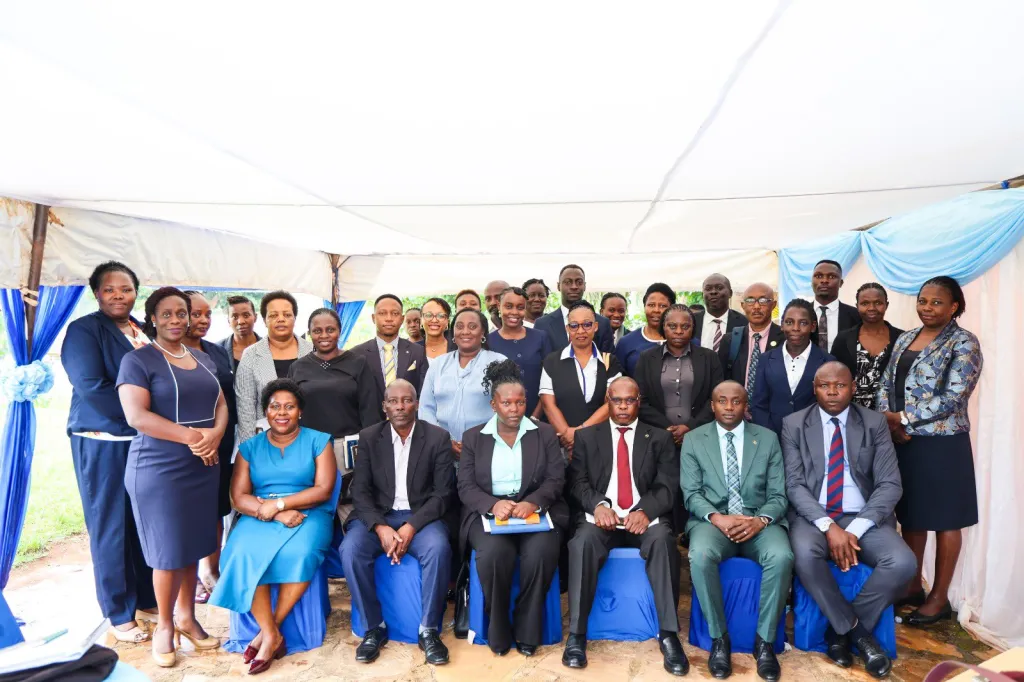
These clashing realities became the focus of a national stakeholder dialogue in Kampala on September 23, 2026, where government officials, civil society, development partners, and local voices gathered to take stock of Uganda’s National Action Plan on Business and Human Rights.

The Ministry of Gender, Labor and Social Development (MGLSD), alongside Witness Radio, convened stakeholders to reflect on five years of action, celebrate milestones, and spotlight the gaps demanding attention as Uganda prepares for the next chapter in its business and human rights story.

Uganda’s National Action Plan on Business and Human Rights is a national framework designed to address human rights concerns arising from business activities and strengthen the responsibilities of government and businesses to protect human rights and provide access to remedy. It was adopted in 2021 and is anchored in the United Nations Guiding Principles on Business and Human Rights and their “Protect, Respect and Remedy” framework.

Yet as stakeholders looked back on five years of implementation and progress, grassroots stories kept bubbling up, raising doubts about how much life has really changed for those whose land, livelihoods, and rights hang in the balance.

For 43-year-old Samuel Ssenkinga of Kiyinja Village in Kiruuma Sub-county, Kasolokamponye Parish, Mubende District, the National Action Plan’s impact is not a distant policy debate—it is deeply personal.

Ssenkinga recounts how, in March 2017, he was attacked after being called by a manager from Formosa Farms, a tree-planting project in the area. He had lived on that land for over thirty years.

“I was born on the land and had spent over 30 years on it before being evicted. On 17th March of 2017, their [Formosa] manager called me asking where I was and requested that we meet up because he had something to tell me, which I agreed to,” he said.

On his way to the meeting, he says, workers from the company allegedly ambushed him.

“Before I could reach where I was going, I was attacked by 17 men; they all had knives, and they stopped me, and they beat me, which has caused injuries up to date,” he said.

Nearly a decade on, Ssenkinga still bears the scars of the conflict. Seventeen acres of his land have vanished, and justice remains a distant hope.

“We didn’t know about the project and were not consulted. Seventeen acres of my land were taken, and I was left with nothing,” he said.

Ssenkinga is just one among many Mubende residents raising alarms over land seized for Formosa Farms’ vast eucalyptus, pine, and macadamia plantations. The company has been accused by communities and civil society of evictions, aggressive land grabs, and violence. Formosa Farms is a subsidiary of Quality Parts, both owned by Taiwanese investor Martin Chang and Ugandan Anna Kyoheirwe.

His experience is just one of many that Witness Radio has chronicled while monitoring land evictions and human rights struggles across Uganda. The organization observes that concerns about consultation, participation, land rights, and access to remedy continue to echo through communities touched by development projects.

At the dialogue, Witness Radio’s Executive Director Jeff Wokulira Ssebaggala painted a picture of a nation wrestling with sweeping displacement and land loss linked to development projects, with smallholder farmers shouldering the heaviest burden.

He emphasized that many of these hardships stem from shallow consultations and the failure to genuinely involve communities in shaping the projects that transform their lives.

“The aspect of development tends to be lost along the way. Instead of bringing development, people see these projects as a curse. They do not speak well about these projects, which threatens their sustainability.” He added.

Mr. Ssebaggala added that this issue cuts across sectors such as agribusiness, mining, and infrastructure, where smallholder farmers’ voices are often faint and seldom heard in decision-making.

“Their voices are difficult to hear because they are remote and, as you know, we are NGOs and cannot reach everybody,” he said.

The government’s own assessment, however, highlights areas of progress. At the dialogue, Dekura Caroline, Principal Social Development Officer in the Ministry of Gender, shared findings from five years of the National Action Plan’s implementation. She noted that communities are now more aware of their rights when dealing with businesses.

She explained that communities increasingly understand their rights deserve protection, while businesses are beginning to recognize their duty to respect human rights in their operations and services.

During her presentation, she cited examples from different regions where communities were beginning to see results from efforts to strengthen their rights and access to remedies.

In the Busoga region, she observed that more people are growing sugarcane after earlier worries about fair payment discouraged them. She also highlighted the Albertine region, where workers and communities once faced frequent accidents and poor working conditions.

“In the Albertine region in Kikuube District, people used to get involved in accidents, and the work environment was unfriendly. But today, the community advocates for their rights, and business owners know they must protect people’s rights even while advancing businesses.” She added.

“We have built the capacity of existing structures at local governments. When cases arise, they are reported to local governments or our partners on the ground who report to the Uganda Human Rights Commission. The Equal Opportunities Commission also helps follow up when remedies are not concluded.” She further added.

Mr. Ssebaggala points to a major barrier: genuine participation. He notes some project implementers present agreements and documents in English, even when the intended signatories may not understand the language.

“We have experience where partnerships and MOUs are signed between out-growers and project implementers, but they are in English. When asked if they understand what they signed, they say they were told whatever is there is okay with them.”

He described this language barrier as a major spark for land disputes between communities and project implementers.

“The issue of language is very important because when communities do not understand these projects, they cannot support them or understand how the projects will benefit them,” he said.

The ministry insists it is working to boost community participation and accountability. Mr. Benard Mujuni, Commissioner for Equity and Rights at the MGLSD, said the ministry is crafting a national framework to ensure communities have a real voice in decision-making and that all actors can be held accountable.

He addedHe added that the government has created a community stakeholder engagement guideline to ensure communities move beyond token consultation and truly participate in development processes. The government has developed a community stakeholder engagement guideline to help ensure people aren’t just consulted. But they are effectively consulted to participate in the development process.” He mentioned.

Continue Reading

MEDIA FOR CHANGE NETWORK

The Fight for Climate Justice: African Women at the Forefront

Published

on

By the Witness Radio Team.

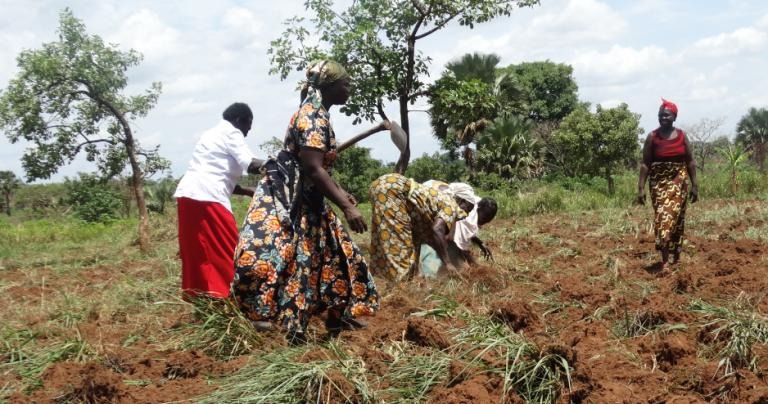
Across Africa, women are the backbone of food systems, households, and rural economies. Yet the land, water, and natural resources they rely on face growing threats from climate change and relentless development.

According to the Food and Agriculture Organization (FAO), 76 percent of working women in sub-Saharan Africa are employed in agrifood systems, the largest share of any region in the world. In rural areas, women are four times more likely than men to engage in off-farm work. Their contribution goes beyond paid employment to unpaid activities like fetching water, caring for children and older people, and supporting household food security.

As development projects multiply and droughts, floods, land degradation, rising temperatures, and shifting rainfall patterns worsen, the foundations of these livelihoods are becoming alarmingly fragile.

For millions across Africa, climate change is not just an environmental concern. It is a daily struggle for food, land, water, income, health, and survival.

Yet women are not simply bearing the brunt of these impacts. Across the continent, they are mobilizing, crafting their own solutions, and demanding a seat at the table where decisions are made.

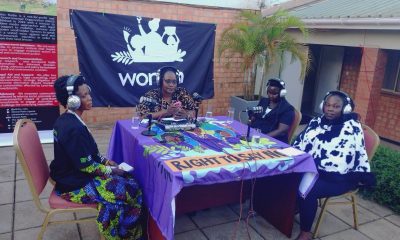
From 5–8 October 2026, more than 75 women community leaders, activists, civil society organizations and allies from across West and Central Africa will gather in Yaoundé, Cameroon, for the fourth regional Women’s Climate Assembly (WCA).

Co-hosted by Green Development Advocates, WoMin African Alliance, and partners, the event will unite women in their fight against exploitative industries and misleading climate solutions. Under the banner “Our lands, our voices: African women united for climate justice and reparations,” the Assembly aims to connect struggles over land, forests, water, seeds, food, and natural resources into a powerful movement for climate justice.

This gathering seeks to fortify a Pan-African ecofeminist movement, nurture women’s leadership, forge collective strategies for climate justice, defend food sovereignty and sustainable resource management, and amplify demands for climate reparations.

It will also open space for women to share grassroots solutions, from seed conservation and mangrove stewardship to processing natural products and safeguarding traditional ecological wisdom.

Bela Marie Victorine, a participant from Cameroon, says the Assembly offers women from different countries an opportunity to learn from the experiences of communities affected by major development projects.

“The Women’s Climate Assembly taking place in Cameroon will allow women from other countries to experience firsthand the realities of Cameroonian women’s lives impacted by major projects and how they overcome these challenges.”

The Assembly takes place in Cameroon, where communities have long faced the pressures of large-scale land grabs and sprawling industrial oil palm plantations.

Since the late 2000s, the Cameroonian government has supported the expansion of industrial oil palm cultivation as part of efforts to promote investment, employment and economic growth.

For rural communities where most arable land has been handed over to agricultural industries, these developments bring profound consequences. The loss of land threatens livelihoods and the cultural, social, and political bonds tied to their territories, while raising serious environmental concerns.

Several petitions to the Cameroonian government have reported concerns about the effects of industrial oil palm expansion on women, including abuse, sexual harassment, persecution, and destruction of livelihoods. These effects reach far beyond plantations. Across Africa, communities are grappling with large-scale mining, oil and gas projects, and other forms of resource extraction. For those whose lives depend on land, forests, and water, these projects add new burdens to communities already struggling with climate upheaval.

In Africa, climate impacts are already being felt. The World Meteorological Organization’s State of the Climate in Africa 2025 reported that climate- and weather-related hazards affected at least 13 million people. It caused more than 3,000 reported deaths across Africa in 2025.

The Assembly’s organizers challenge who should bear the financial and social burdens of the climate crisis. They insist African communities must not pay for a disaster they did little to cause. They call for climate finance that delivers real resources for loss and damage, adaptation, ecosystem restoration, and community-driven alternatives. This builds on the legacy of previous gatherings in Nigeria and Senegal. Organizers now envision transforming this platform into a lasting space for action at local, national, subregional, and Pan-African levels.

The goal is to ensure women on the front lines of climate and environmental struggles have a lasting space to organize, share experiences, and shape the climate conversation. The Assembly will feature discussions on the climate crisis and women’s resistance, food sovereignty and seed protection, defending the Congo Basin forests, feminist advocacy, climate debt and reparations, and the expansion of oil and gas.

The Assembly will also feature hands-on education and practical exchanges on seed conservation, mangrove management, processing natural products, and preserving traditional ecological wisdom.

According to Abbie Freeman from Liberia, bringing these lived experiences into climate decision-making is central to the Assembly.

“Participating in the Women’s Climate Assembly gives me a platform to share my community’s experiences and learn from other African women. I believe our voices and lived experiences must be part of climate decisions.” She added.

The Yaoundé gathering is not just about recording the impacts of climate change. It is about building connections among women facing diverse environmental and economic pressures and creating collective strategies for land, livelihoods, and natural resources.

Continue Reading

Resource Center

Legal Framework

READ BY CATEGORY

Facebook

Newsletter

Subscribe to Witness Radio's news and report updates


Trending

Subscribe to Witness Radio's news and report updates