Connect with us

MEDIA FOR CHANGE NETWORK

Experts warn that without Africa’s control over resources and climate financing, the continent faces the risk of entering a new era of “green colonialism”.

Published

on

By Witness Radio Team

As the global push for clean energy accelerates, African governments are under mounting pressure to move away from fossil fuels and embrace renewable energy. But economists, political leaders, and climate justice advocates are warning that Africa’s transition could reproduce the same unequal economic structures established during colonialism unless the continent gains greater control over its resources, industries, and financing systems, inspiring a sense of agency and possibility.

Although Africa contributes less than 4 percent of global greenhouse gas emissions, it is among the regions most vulnerable to climate change. The continent continues to suffer disproportionately from a crisis largely caused by industrialized nations, including prolonged droughts and devastating floods, which greatly affect its people.

Governments across Africa are increasingly adopting renewable energy policies promoted as pathways toward sustainable development. Despite being promoted, a growing number of experts argue that the transition risks becoming another extractive project in which African resources fuel foreign industries while local communities remain impoverished.

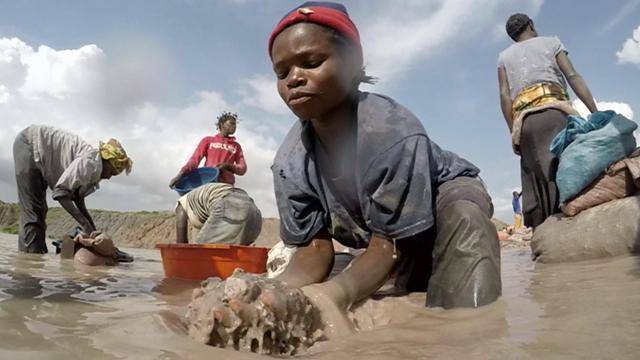
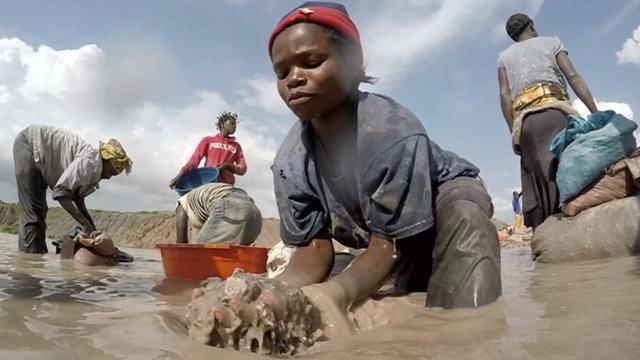
The global transition to clean energy has sharply increased demand for minerals such as cobalt, lithium, graphite, manganese, and copper, which are abundant across Africa and critical for batteries, electric vehicles, and renewable energy technologies.

At the same time, the continent possesses vast renewable energy potential. According to the International Renewable Energy Agency (IRENA), Africa could generate significantly more renewable energy than it currently consumes.

In an interview with Witness Radio, Tunisian economist and President of the Global Institute for Sustainable Prosperity, Fadhel Kaboub, said Africa’s role in the global transition should go beyond merely supplying raw materials to industrialized countries.

“We cannot decarbonize a system that hasn’t been structurally economically decolonized yet. Africa has the potential to become an energy powerhouse globally, an industrial powerhouse, and as a result, an economic and geopolitical powerhouse.” Kaboub reveals.

Kaboub argued that the current global economic system continues to place African countries at the bottom of supply chains, echoing colonial patterns. This pattern is vital for economists and global citizens to understand.

“Africa was assigned the role of supplying cheap raw materials while importing finished products and technologies. The danger is that the green transition is reinforcing the same model instead of transforming it,” he added.

Across the continent, activists and researchers are increasingly raising concerns about what they describe as “green colonialism,” where climate and environmental projects dispossess communities while benefiting foreign governments and corporations.

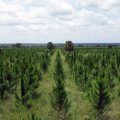
In several African countries, including Uganda, large-scale carbon offset projects have been linked to land conflicts and forced displacement. Critics say some carbon markets allow polluting corporations in the Global North to continue emitting greenhouse gases while using African land and forests to offset their emissions.

Environmental advocates warn that unless African governments ensure local ownership and value addition in mining linked to renewable energy, the continent risks repeating the history of raw material extraction, which is key for informed policy decisions.

Africa’s green transition discussions also focused on climate financing as a key point of debate. African leaders have repeatedly criticized rich countries for not sufficiently financing adaptation and renewable energy projects, despite their historic role in spewing the bulk of the World’s carbon emissions.

At the COP29 climate Summit in November 2024 in Azerbaijan, His Excellency Bola Ahmed Tinubu, the president of the Federal Republic of Nigeria, warned that many African countries are trapped between debt repayment obligations and climate adaptation needs.

“Africa did little to cause the climate crisis, yet the debt climate trap has saddled many of its nations with a tragic choice: Eschew repayments to fund adaptation to climate shocks and risk default- a financial purgatory where development indicators plummet; or honor obligations and compromise on resilience, thus entrenching vulnerability to development-shuttering climate events,” he added.

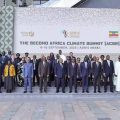
Speaking during the Africa Climate Summit 2025, former Ethiopian Prime Minister Hailemariam Desalegn said debt restructuring must become part of global climate discussions.

“Unless we confront the debt crisis head-on, efforts to finance Africa’s climate ambitions will continue to fall short,” Desalegn said.

Kaboub believes the financing crisis reflects a broader historical injustice. “The industrialized world has consumed most of the global carbon budget that creates a climate debt owed to Africa and the Global South.” He revealed.

Some African economists and climate justice groups are calling for climate reparations, not more loans that deepen dependency, to address historical injustices and support equitable development.

“The future of Africa’s green transition depends on who controls it. If Africa controls its resources, industries, and development path, the transition could become a tool for liberation. If not, it risks becoming another phase of exploitation under a green banner.” Kaboub concluded.

Continue Reading

MEDIA FOR CHANGE NETWORK

Global hunger falls, but millions in Africa still go without food, says UN
Published

on

Geneva | Global hunger has declined for the third consecutive year, offering renewed hope that progress against food insecurity is possible. Yet for Uganda and the rest of Africa, the latest United Nations findings are a reminder that the continent continues to carry the heaviest burden of hunger despite improvements in many parts of the world.

The State of Food Security and Nutrition in the World 2026 (SOFI 2026) report, released jointly by five UN agencies, estimates that 645 million people experienced hunger in 2025, down from 659 million in 2024 and 688 million in 2022.

The figures indicate that global efforts to improve food security are beginning to bear fruit, but not fast enough to achieve the Sustainable Development Goal of ending hunger by 2030.

For Uganda, the report presents a mixed picture. While global hunger is declining, Africa has overtaken Asia as the region with the highest number of hungry people. Approximately 309 million Africans experienced hunger in 2025, compared to 292 million in Asia.

One in every five Africans remains undernourished, and more than half of the continent’s population continues to face moderate or severe food insecurity. These findings come at a time when Uganda is striving to transform agriculture from subsistence farming into a commercial, climate-resilient sector.

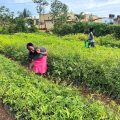
Agriculture remains the backbone of Uganda’s economy, employing the majority of the population and contributing significantly to export earnings. Yet erratic rainfall, prolonged droughts in some regions, flooding in others, crop pests, high post-harvest losses and fluctuating food prices continue to threaten food security for many households.

The UN report notes that while 2.1 billion people worldwide still experience moderate or severe food insecurity, Africa accounts for the highest share, with 56.6 per cent of its population unable to consistently access sufficient, safe and nutritious food. This means many families are forced to reduce meal sizes, skip meals altogether or settle for less nutritious diets. For Uganda, where rural communities depend heavily on rain-fed agriculture, climate change remains one of the biggest threats to food production.

Recent seasons have demonstrated how prolonged dry spells and unpredictable weather patterns can reduce harvests, increase food prices and place vulnerable households at greater risk of hunger.

The report also highlights another growing concern that resonates with Uganda’s public health priorities: malnutrition is no longer only about hunger. While millions still lack enough food, obesity and poor-quality diets are increasing across the world.

Globally, the prevalence of adult obesity rose from 12.1 per cent in 2012 to 16.2 per cent in 2024. At the same time, nearly 150 million children under five remain stunted due to chronic undernutrition, while only about one-third of children aged between six and 23 months consume sufficiently diverse diets.

Uganda has made progress in reducing child stunting over the past decade, but nutrition experts continue to warn that poor infant feeding practices, limited dietary diversity and food insecurity remain major contributors to child malnutrition. The challenge is compounded by rising food costs, making nutritious foods such as fruits, vegetables, dairy products and animal proteins increasingly difficult for many households to afford.

The report reveals that the average global cost of a healthy diet has risen sharply to 4.28 purchasing power parity dollars per person per day in 2025, compared to 2.94 dollars in 2017. Although fewer people globally are unable to afford healthy diets than four years ago, Africa is moving in the opposite direction.

More than two-thirds of Africans, 66.6 per cent of the population, could not afford a healthy diet in 2025. This is more than double the proportion recorded in Asia and Latin America.

For Uganda, where inflation in food prices periodically affects household purchasing power, the findings reinforce the importance of investing across the agricultural value chain rather than focusing solely on increasing production. According to the report, between 70 and 75 per cent of the price consumers pay for food is determined after it leaves the farm, through transport, storage, processing, wholesale and retail costs.

This suggests that investments in rural roads, irrigation, cold storage facilities, food processing, market infrastructure and efficient transport systems could significantly reduce food costs while increasing farmers’ incomes.

Reducing post-harvest losses, estimated to claim a substantial share of agricultural produce in Uganda each year, would also improve food availability without requiring additional land for cultivation. The report further warns that progress made globally could easily be reversed.

Ongoing conflict in the Middle East, rising energy and fertiliser prices, declining humanitarian funding and increasingly frequent climate shocks all threaten future food security. Even under optimistic projections, between 510 million and 520 million people could still be hungry by 2030, well above the level required to meet the global Zero Hunger target.

For Uganda, these global developments matter because the country remains connected to international food, fuel and fertiliser markets. Higher import costs translate into more expensive agricultural inputs and higher food prices, placing additional pressure on both farmers and consumers.

The UN agencies argue that reducing the cost of healthy diets will require targeted investments in agriculture, stronger food value chains, research and innovation, improved irrigation, climate-smart farming practices, better trade policies and social protection programmes that support vulnerable households.

Ultimately, the report offers both hope and caution. It demonstrates that hunger can be reduced through sustained investment and sound policies, but it also makes clear that progress is uneven and fragile.

Strengthening agricultural resilience, improving nutrition, expanding food processing and ensuring affordable access to healthy diets will be essential for countries in Sub-Saharan Africa in order to contribute meaningfully to the global ambition of ending hunger by 2030.

As the report concludes, a world where healthy food is affordable and accessible to everyone remains within reach, but only if governments, development partners, the private sector and communities work together to build food systems that are more resilient, inclusive and sustainable.

Source: independent.co.ug

Continue Reading

MEDIA FOR CHANGE NETWORK

Wars are disrupting food systems, and ending world hunger requires urgent global action, experts say.

Published

on

By the Witness Radio team.

Conflicts far from the world’s farms are reshaping how food is produced, traded, and accessed. Rising energy costs, fertilizer disruptions, and threatened trade routes expose the fragility of global food systems, increasing production costs and leaving millions vulnerable to hunger.

The global food crisis is deepening as multiple shocks put increasing pressure on food systems worldwide. According to the World Food Program (WFP), hundreds of millions of people face crisis-level hunger, with conflict, climate change, economic instability, and displacement driving food insecurity. Countries already struggling with poverty and fragile economies remain the hardest hit.

More than 295 million people across 53 countries and territories faced acute hunger in 2024, according to the Global Report on Food Crises. This was an increase of nearly 14 million compared with 2023, driven mainly by conflict, economic shocks, climate extremes, and displacement.

The war in Ukraine showed how conflict in one region can disrupt food supplies worldwide. Ukraine is one of the world’s leading exporters of wheat, maize, and sunflower oil, while Russia remains a major supplier of fertilizers and agricultural inputs. Disruption of Black Sea trade routes and uncertainty over exports triggered sharp increases in food and fertilizer prices, affecting farmers and consumers thousands of kilometers away.

Although global grain markets have gradually stabilized since the initial shock, experts say the structural vulnerabilities exposed by war remain unresolved. Many countries still rely heavily on a handful of exporters for staple foods and farm inputs, leaving them exposed whenever geopolitical tensions escalate.

Similar concerns are emerging from the Middle East. Disruptions surrounding the Strait of Hormuz, one of the world’s busiest shipping corridors, have raised fears over global supplies of oil, natural gas, and fertilizers. Because modern agriculture depends heavily on fuel and fertilizer, a prolonged interruption in these supplies has immediate consequences for food production.

During a ministerial meeting of the MED 9++ countries on “Supporting Food Security and Access to Fertilizers”, United Nations Director-General of the Food and Agriculture Organization (FAO) Q.U. Dongyu warned that the current crisis extends far beyond geopolitics, affecting food production, trade, agricultural inputs, and access to food worldwide.

“This is not only a geopolitical crisis, but also a disruption at the core of the global agrifood system,” he said.

He explained that agriculture follows fixed seasonal calendars and that fertilizers must be applied at precise stages of crop development.

“Agriculture operates on a crop calendar that cannot be postponed. Fertilizers must be applied at specific moments in the crop cycle. If they do not arrive on time, yields are reduced, regardless of what happens later.” He added.

According to QU Dongyu, even delays of a few weeks could reduce harvests, tighten food supplies through 2026 and 2027, and raise food prices worldwide, particularly in import-dependent countries across Africa and Asia.

Agricultural economist Dr. Joseph Glauber, a senior research fellow at the International Food Policy Research Institute (IFPRI) and former Chief Economist at the United States Department of Agriculture (USDA), says today’s food crisis is increasingly driven by rising production costs rather than shortages alone.

In an interview with Witness Radio, Dr. Glauber said energy prices are now one of the biggest factors pushing up food costs.

“The biggest link has been through energy. Higher energy prices mean higher shipping, transport, and processing costs. Consumers don’t eat wheat; they eat bread and processed foods that require energy throughout the production chain,” he added.

Dr. Glauber noted that while global prices for crops such as wheat and maize have risen only modestly, fertilizer and energy costs have risen much faster, leaving many farmers with shrinking profit margins.

“For farmers, profits have declined because input costs have risen faster than the prices they receive for their produce,” he said.

According to Dr. Glauber, African countries face unique challenges because they depend heavily on imported fertilizers and face higher transport costs than larger importing economies.

“Africa is quite vulnerable because shipment sizes tend to be smaller and transport costs are relatively higher,” he explained.

He noted that although fertilizer use varies significantly between African countries, higher prices are already putting enormous pressure on farmers across the continent.

Beyond these immediate impacts of war, experts say the world faces a broader systemic crisis. The Club of Rome has also warned that shocks from the COVID-19 pandemic and the war in Ukraine, to disruptions around the Strait of Hormuz and increasing geopolitical instability, have exposed profound weaknesses in global food systems.

The organization says food security can no longer be viewed apart from peace, climate resilience, and energy security. Governments should instead pursue integrated approaches that strengthen local food production and reduce dependence on vulnerable international supply chains.

Experts are calling for an end to armed conflicts that threaten food production, investment in regenerative agriculture, stronger land rights for smallholder farmers, diversification of food crops beyond the world’s heavy dependence on wheat, maize, rice, and soybeans, expanded regional trade, and a faster transition away from fossil fuel-dependent agriculture.

Hunter Lovins, President of Natural Capitalism Solutions and a member of the Club of Rome, says the world already knows many needed solutions.

“This is not a warning about some distant future. It is a warning about next year’s harvest. We know what works. What we lack is not solutions, but the political will to invest in them before the crisis, rather than after,” she said.

Continue Reading

MEDIA FOR CHANGE NETWORK

Campaigning LC I Chairpersons Barred from Land Transactions Until Polls End.

Published

on

The Ministry of Lands has restricted LC I chairpersons seeking re-election from handling land transactions until after the July 28 village elections to prevent fraud, disputes and irregularities during the campaign period.

The Ministry of Lands, Housing and Urban Development has temporarily barred Local Council I (LC I) chairpersons seeking re-election from participating in land-related transactions, citing concerns over possible fraud and disputes during the election period.

In a public notice issued on Thursday, the ministry directed all campaigning LC I chairpersons to stop witnessing, endorsing, recommending or overseeing land transactions until the electoral process is concluded.

The directive comes as campaigns for village chairperson elections enter the final days ahead of polling on July 28.

“The advisory has been issued as a precautionary measure to safeguard the integrity of land transactions during this transition period and to minimise the risk of disputes, fraud, or other irregularities that may arise,” the ministry said in the notice.

The ministry advised members of the public against relying on LC I chairpersons who are actively campaigning for services involving the witnessing of land sale agreements, verification of ownership, handling of boundary disputes or any other transaction requiring local administrative involvement.

Individuals with urgent land matters were encouraged to seek assistance from qualified legal practitioners or use other lawful channels until the elections are completed.

“The Ministry urges the public to exercise patience until the election process is concluded. This precaution will help prevent costly mistakes and safeguard the interests of all parties,” the notice added.

The temporary restriction comes amid continued concerns over land disputes, which remain among the leading sources of conflict in Uganda, with local leaders often playing a key role in verifying ownership and facilitating village-level transactions.

Although LC I chairpersons do not have the legal mandate to transfer land ownership or issue titles, they are commonly relied upon during land transactions because of their knowledge of residents and local land histories.

They often help confirm the identity of sellers, identify boundaries and witness sale agreements alongside members of their executive committees, providing community-level verification before transactions are completed.

Legal experts have previously cautioned that LC I endorsements only provide local credibility and do not replace formal requirements under Uganda’s land laws. Buyers are still required to conduct proper due diligence before purchasing land.

According to the Electoral Commission roadmap, elections for Village (LC I) chairpersons will be held on July 28 across Uganda’s 71,214 villages. Elections for Parish (LC II) chairpersons will follow on August 10.

The Ministry of Lands said LC I chairpersons will resume their normal involvement in land-related matters after the conclusion of the electoral process.

Source: nilepost.co.ug

Continue Reading

Resource Center

Legal Framework

READ BY CATEGORY

Facebook

Newsletter

Subscribe to Witness Radio's news and report updates


Trending

Subscribe to Witness Radio's news and report updates