Connect with us

FARM NEWS

Africa’s El Niño Economic Impact: $20B at Risk in 2026

Published

on

The Hidden Cost of a Pacific Ocean Anomaly: Why Africa Bears a Disproportionate Climate Burden

Every decade or so, a warming of the central and eastern Pacific Ocean quietly reshapes weather systems across the entire planet. For most advanced economies, the resulting shifts in rainfall and temperature are inconvenient at worst. For large parts of Africa, the same atmospheric disruption can unravel years of economic progress, push tens of millions of people into food insecurity, and force governments into a fiscal spiral that proves far harder to escape than the weather event itself.

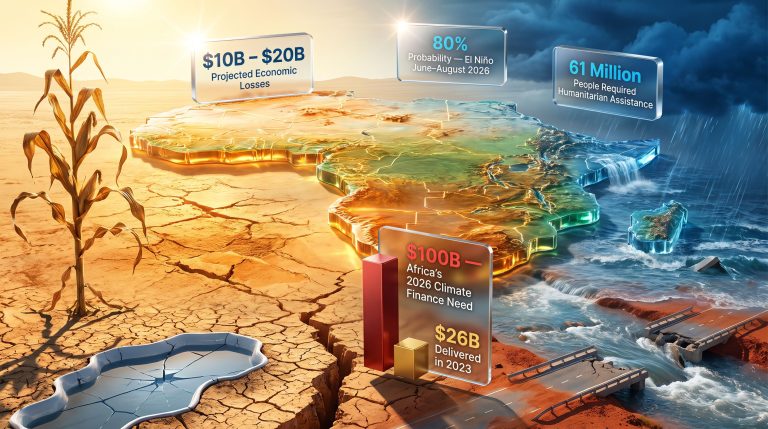
This is the structural reality that makes the El Niño economic impact in Africa so consequential, and so poorly understood outside development finance circles. The 2026 episode now taking shape is not a distant weather forecast. It is a measurable, quantifiable economic risk that the African Development Bank (AfDB) has placed at the centre of its near-term policy warnings, with loss estimates ranging from $10 billion to $20 billion across the continent and GDP contractions of 1% to 2% in the hardest-hit nations.

To understand why those numbers carry such outsized consequences, it helps to first understand what makes African economies structurally different from other regions facing the same climatic event.

Why African Economies Convert Weather Into Economic Crises

The Architecture of Vulnerability

Rain-fed agriculture remains the foundation of food production across most of Sub-Saharan Africa. Unlike irrigated farming systems common in parts of Asia and the Americas, rain-fed systems carry no mechanical buffer against rainfall deficits. When rainfall fails, yields collapse almost immediately, and the effects radiate outward through household income, rural consumption, and national output.

The energy dimension adds a second layer of fragility that is often underappreciated. Several of Africa’s largest economies depend on hydropower for the majority of their electricity generation. Zambia, Zimbabwe, Mozambique, Ethiopia, and the Democratic Republic of the Congo each rely heavily on reservoir-based hydroelectric capacity. When drought drains those reservoirs, electricity generation falls, load-shedding intensifies, manufacturing slows, and mining productivity drops.

A rainfall deficit in the Zambezi basin is not simply an agricultural problem. It is an industrial problem, an investment climate problem, and ultimately a fiscal problem. Furthermore, the energy transition challenges facing resource-dependent economies compound these vulnerabilities significantly.

Infrastructure deficits compound both dynamics. Roads, drainage systems, and irrigation networks in many African countries remain inadequate to absorb either prolonged drought or acute flooding. The same infrastructure gap that amplifies drought damage also amplifies flood damage, meaning El Niño’s geographically inverted impacts across the continent both translate into disproportionate economic harm.

El Niño’s Asymmetric Geography Across Africa

A critical but underappreciated feature of El Niño is that it does not impose a uniform shock across Africa. Its effects are almost geographically inverted between the continent’s sub-regions, which complicates both economic forecasting and policy response.

  • Southern Africa experiences drought, harvest contraction, livestock stress, and hydropower shortfalls during El Niño years
  • East Africa typically faces excess rainfall, flooding, infrastructure destruction, and population displacement
  • West Africa and the Sahel face secondary but real exposure through rainfall variability and commodity market disruptions
  • Fragile and conflict-affected states experience the same physical shocks but with far less institutional and fiscal capacity to absorb them

The 2023-2024 El Niño episode illustrated this geographic divergence with unusual severity. Southern African countries reported harvest losses exceeding 50% of annual production in the worst-affected areas, while East Africa simultaneously faced destructive flooding that damaged transport corridors and urban markets. According to the UN’s Office for the Coordination of Humanitarian Affairs, the Southern African impact was characterised as among the most severe in over a century.

Quantifying the 2026 Threat: What the Numbers Actually Mean

AfDB Loss Projections in Context

The AfDB’s estimate of $10 billion to $20 billion in aggregate economic losses deserves careful interpretation rather than simple citation. African economic growth is projected at 4.2% in 2026 and 4.4% in 2027, representing one of the continent’s more promising growth windows in recent years. A climate shock that strips 1% to 2% from the GDP of multiple countries simultaneously does not merely slow growth; it disrupts the compounding dynamic that allows development gains to build on each other over time.

A 2% GDP loss in a high-exposure economy is not a one-year setback. It triggers chain reactions across fiscal balances, debt servicing capacity, and social spending programmes that compress development gains accumulated over several years.

The AfDB has estimated that African agricultural producers could lose approximately $327 million to $330 million in income from the anticipated disruptions. The fisheries sector faces additional pressure, with rising sea temperatures and storm events projected to reduce productivity by 1% to 4%.

Sector Estimated Economic Impact Primary Driver
Agricultural producer income ~$327-$330 million in losses Drought-driven crop failure and flood damage
Maize prices 2%-20% increase in strong El Niño years Supply contraction in Southern Africa
Fisheries productivity 1%-4% reduction Sea temperature rise and storm disruption
GDP contraction (worst-affected countries) 1%-2% Multiple transmission channels
Aggregate continental losses $10B-$20B Combined agricultural, energy, and fiscal impacts

The 2026 Probability Assessment

The World Meteorological Organization (WMO) has assigned an 80% probability to El Niño developing between June and August 2026, with the likelihood of the event persisting through November approaching or exceeding 90%. The anticipated intensity is classified as moderate-to-strong. The WMO has explicitly noted that the term super El Niño, which circulates widely in public discourse, does not represent an official scientific classification and should not be used as a technical benchmark.

A moderate-to-strong event is sufficient to activate the full range of agricultural, hydrological, and fiscal transmission channels documented in previous episodes. The 2023-2024 episode, which serves as the most recent empirical reference point, demonstrated that even a single El Niño cycle can push 61 million people across Southern Africa alone into requiring humanitarian assistance.

The AfDB has scheduled a formal portfolio impact assessment for September 2026 to evaluate exposure across its active investment operations and identify necessary adjustments.

Five Transmission Channels: How Weather Becomes a Fiscal Crisis

Channel 1: Agricultural Output Collapse

Rain-fed farming systems that dominate food production across Sub-Saharan Africa have no mechanical buffer against rainfall deficits. Drought reduces yields, destroys livestock, and eliminates the seasonal income that rural households rely on for a significant portion of their annual consumption. Flooding in East Africa simultaneously destroys standing crops, degrades soil quality, and disrupts planting cycles for subsequent growing seasons.

Channel 2: Food Price Inflation and Urban Purchasing Power Erosion

As agricultural supply contracts, staple food prices rise. This dynamic disproportionately affects urban low-income households that spend the highest share of their income on food. Maize price increases of 2% to 20% in strong El Niño years have been documented across Southern African markets. Food inflation reduces real household incomes, suppresses consumer spending, and can contribute to social instability in urban centres already under economic pressure.

Channel 3: Hydropower Shortages and Industrial Disruption

Drought reduces reservoir levels, cutting electricity generation capacity and forcing load-shedding that affects manufacturing, mining, and services simultaneously. Businesses dependent on continuous power face higher operating costs as they switch to backup generation. The energy transition in mining and related industries is consequently further complicated by climate-driven energy instability. Persistent power instability deters investment and reduces the competitiveness of export-oriented industries.

Channel 4: Infrastructure Damage and Emergency Fiscal Pressure

Flooding in East Africa and storm events along coastal regions damage roads, bridges, drainage infrastructure, and urban markets. Reconstruction costs divert government capital budgets away from planned development expenditure. Emergency response requirements force fiscal reallocation that crowds out health, education, and productive infrastructure investment.

Channel 5: The Climate Finance Trap

Anthony Nyong, Director of the AfDB’s Climate Change and Green Growth Department, has identified a structural dynamic that explains why El Niño’s fiscal consequences often exceed its direct physical damage. When governments are forced to redirect pre-allocated development budgets toward disaster response, they erode the long-term fiscal architecture of planned growth.

Countries without adequate insurance instruments or contingency reserves face the hardest trade-offs between immediate relief and sustained development investment. This pattern compounds across multiple El Niño cycles, progressively narrowing fiscal space.

The Countries Facing the Greatest Exposure

A Regional Risk Framework

Southern Africa: Drought, Harvest Collapse, and Energy Shortfalls

Zambia, Zimbabwe, Mozambique, Malawi, and Madagascar face the most consistent drought exposure during El Niño years. Hydropower dependency amplifies the economic impact beyond agriculture into energy and industrial sectors. The 2023-2024 episode produced harvest losses exceeding 50% of annual production in the worst-affected areas.

East Africa: Flooding, Infrastructure Destruction, and MSME Disruption

Kenya, Tanzania, Ethiopia, Somalia, and Uganda face elevated flood risk during El Niño years. Flooding damages transport networks, disrupts urban commerce, and creates displacement that reduces labour market participation. Micro, small, and medium enterprises, which form the backbone of urban economic activity across East Africa, face acute disruption from flooding and market closures.

Fragile and Conflict-Affected States: Compounded Vulnerability

The AfDB has specifically identified Sudan, South Sudan, the Democratic Republic of the Congo, Mali, Burundi, and Nigeria as among the countries most exposed to the anticipated impacts. In fragile states, climate shocks interact with pre-existing governance deficits, displacement crises, and food insecurity to produce disproportionately severe outcomes. These countries also have the least fiscal capacity to self-finance recovery and the most constrained access to international capital markets.

Africa’s Climate Finance Gap: A Structural Inequity

The Numbers That Reveal a Systemic Failure

Financing Metric Figure
UN estimated annual climate finance need for developing countries by 2035 ~$365 billion
International public climate adaptation finance delivered in 2023 ~$26 billion
AfDB estimate of Africa’s climate financing need in 2026 ~$100 billion
Previous AfDB climate financing estimates for Africa ~$50 billion
UN CERF preventive mobilisation for highest-risk countries Up to $100 million

The gap between what is needed and what is being delivered is not a marginal shortfall. International public adaptation finance of $26 billion delivered in 2023 represents less than 7% of the $365 billion annual requirement projected for 2035. Africa’s estimated 2026 climate financing need of $100 billion represents a doubling of previous estimates, reflecting both escalating climate risk and the accumulated deficit of underinvestment in adaptation infrastructure.

Why Adaptation Financing Consistently Lags Behind Mitigation

A less commonly understood dynamic within climate finance is the persistent structural imbalance between mitigation spending and adaptation spending. Global climate finance flows have historically favoured mitigation projects, which reduce greenhouse gas emissions, over adaptation projects, which build resilience to the climate change already locked in.

The reasons are partly financial. Mitigation projects such as solar farms and wind energy installations generate revenue streams, attract private co-investment, and can be structured for commercial returns. Adaptation investments such as flood barriers, drought-resistant crop varieties, and early warning systems generate economic value by preventing losses rather than creating new income streams.

This distinction makes adaptation harder to monetise and less attractive to private capital. However, the El Niño economic impact in Africa demonstrates precisely why sustained adaptation investment is essential. For a continent that contributes a small fraction of global emissions yet absorbs a disproportionate share of climate impacts, this imbalance represents a fundamental equity failure in the international climate finance architecture.

In addition, the growing importance of critical minerals and energy security means that climate disruptions increasingly threaten strategic supply chains that extend well beyond Africa’s own borders. Furthermore, renewable energy solutions designed to reduce hydropower dependency are increasingly being considered as a structural hedge against El Niño-driven energy instability.

Mechanisms Being Mobilised Ahead of the 2026 Peak

The AfDB is facilitating access to several international financing instruments for affected member states:

  1. Green Climate Fund targeting both adaptation and mitigation in vulnerable developing nations
  2. Adaptation Fund focused specifically on countries with the least capacity to self-finance resilience building
  3. Climate Investment Funds providing multi-donor capital for low-carbon and climate-resilient development
  4. Loss and Damage Mechanisms offering compensation for climate impacts beyond adaptive capacity
  5. UN Central Emergency Response Fund (CERF) mobilising up to $100 million for preventive measures in the highest-risk countries

Embedding Climate Risk Into African Development Planning

The Case for Treating El Niño as a Fiscal Variable, Not an Exceptional Event

One of the least-discussed but most consequential shifts in African public finance management concerns how climate risk is categorised within government planning frameworks. Treating El Niño as a recurring fiscal variable rather than an unpredictable exceptional event changes everything from budget reserve requirements to debt sustainability assessments.

Countries that establish contingency reserves, parametric insurance instruments, and pre-arranged emergency credit lines are measurably better positioned to absorb climate shocks without derailing multi-year development trajectories. Parametric insurance, which triggers automatic payouts when pre-defined weather thresholds are crossed rather than requiring lengthy loss assessments, is particularly relevant for African economies because it delivers capital precisely when it is needed most.

Preparedness Investment as a Fiscal Efficiency Measure

Evidence from disaster risk economics consistently demonstrates that pre-event investment in preparedness generates substantially higher returns than post-event reconstruction spending. Irrigation infrastructure, drought-resistant crop varieties, early warning systems, and flood-resilient road construction each reduce the economic cost of El Niño events in ways that reconstruction spending cannot replicate after the fact.

For African governments, the structural challenge is financing preparedness during periods of fiscal constraint. This is precisely the window before an El Niño peak when investment would generate the greatest returns. Bridging this timing gap requires concessional pre-event financing that existing multilateral instruments have not consistently delivered at scale.

Research on El Niño’s economic devastation further confirms that the El Niño economic impact in Africa is not simply a humanitarian concern but a macroeconomic one, with effects that reverberate through fiscal systems for years after the weather event subsides. Consequently, the critical minerals demand picture is also affected, as climate disruptions to mining and energy infrastructure interrupt the supply of materials essential to the global clean energy transition.

The AfDB’s planned September 2026 portfolio review signals an institutional shift toward treating climate risk as a standing variable in development finance planning, rather than a one-off emergency to be managed after impact.

Key Statistics at a Glance

  • $10B-$20B in projected aggregate economic losses across Africa
  • 1%-2% GDP contraction in the hardest-hit countries, against a continental growth projection of 4.2% for 2026
  • $327-$330 million in estimated agricultural income losses for African producers
  • 61 million people required humanitarian assistance during the 2023-2024 El Niño across Southern Africa
  • 80% probability assigned by the WMO to El Niño developing between June and August 2026
  • $26 billion in international public adaptation finance delivered in 2023, against a $365 billion annual need by 2035
  • $100 billion in climate financing estimated as Africa’s requirement for 2026, double previous estimates
  • Up to $100 million being mobilised through the UN CERF for preventive measures in the highest-risk countries

Disclaimer: All loss projections, GDP impact estimates, and probability assessments referenced in this article reflect forward-looking forecasts from multilateral institutions including the AfDB and WMO. Actual outcomes will depend on the intensity, duration, and geographic distribution of any El Niño event, as well as the policy and financing responses mobilised before and during the episode. This article does not constitute financial or investment advice.

Want to Identify the ASX Mineral Discoveries Most Exposed to Shifting Commodity Dynamics?

Climate disruptions like El Niño directly affect the supply of critical minerals and energy resources that underpin global markets, making real-time discovery intelligence more valuable than ever. Discovery Alert’s proprietary Discovery IQ model instantly identifies significant ASX mineral discoveries, translating complex data into actionable insights — explore the historic returns major discoveries have generated and begin your 14-day free trial to stay ahead of market-moving announcements.

Source: discoveryalert.com.au

Continue Reading

FARM NEWS

Can Agroecology Improve the Resilience of African Smallholder Farmers?

Published

on

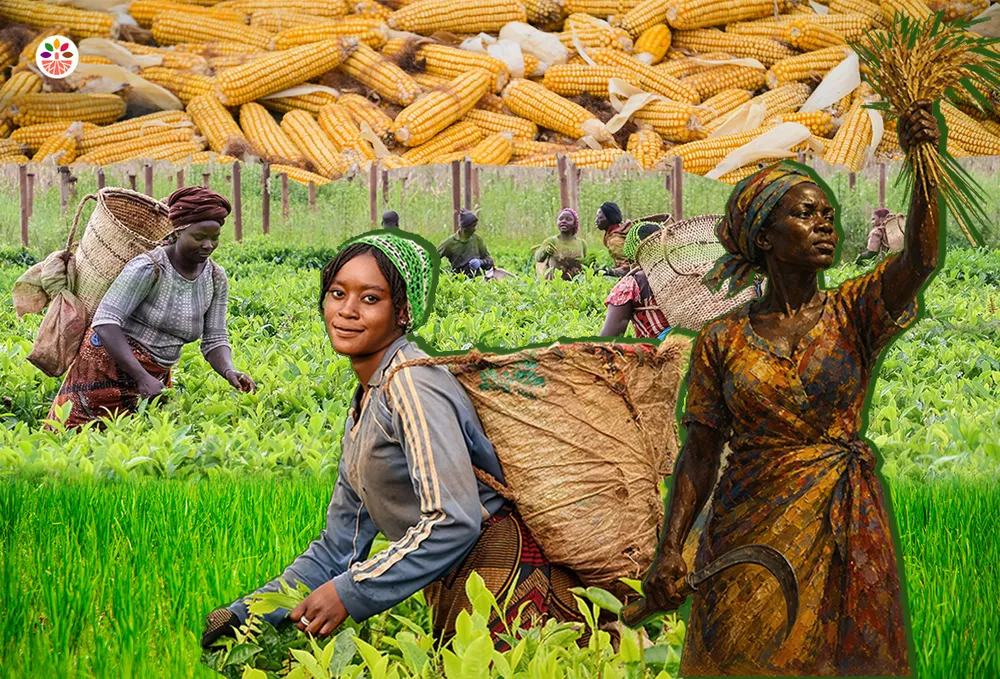
Smallholder farmers across Africa feed hundreds of millions of people; they produce most of the continent’s food, yet they are often the first to go hungry. For decades, governments, international agencies, and corporate capital have sold them various “solutions”: improved seeds, chemical fertilisers, pesticide packages, promising that adoption of these technologies would raise yields and end poverty.

More than half a century later, Africa’s soils are not more fertile; farmers’ debts are deeper. Seed is monopolised, fertiliser is priced in dollars, and agrotoxics soak into the land, bodies of farmers and consumers of agricultural produce. Against this backdrop, an ancient practice that is at the heart of agriculture and this conversation is “Agroecology”. It is not a new technology, but the integration of generational peasant and indigenous knowledge with ecological science. This article asks: can Agroecology strengthen the resilience of African smallholder farmers? Can it help them stand firmer in the face of soil degradation, climate crisis, and market coercion?

The Systemic Crisis Facing African Smallholder Farmers

The crisis African smallholder farmers  face is not a set of isolated technical problems; it is systemic [1].

Export-oriented monocultures, such as cotton in West Africa and cocoa in Ghana and Côte d’Ivoire, continuously extract nutrients from the soil, shipping them abroad as crops whose nutrients are rarely returned to the fields from which they were taken. Marx described this process as a disruption of the “metabolic interaction between man and the earth”, whereby capitalist production interferes with the return of nutrients to the soil and undermines its long-term fertility [2]. The term “metabolic rift” was later developed by sociologist John Bellamy Foster to conceptualise this ecological contradiction within Marx’s broader analysis of capitalism and nature [3]. Imported mineral fertiliser, priced in dollars, is then presented as the remedy for a depletion that the export economy itself has helped create [4]. This dependence on external inputs extends beyond fertiliser to seeds and agrochemicals, further embedding farmers in commercially controlled production systems. Transnational seed and agrichemical corporations use patents, proprietary varieties and hybrid technologies to strengthen control over seed systems, increasingly shifting farmers from saving and exchanging seed to purchasing commercial varieties. Fertiliser, pesticides and commercial seed are also increasingly brought together through integrated input packages, requiring farmers to purchase multiple external inputs with cash each season and potentially increasing their exposure to debt. For example, Bayer’s FoodWings initiative in Côte d’Ivoire offers smallholder farmers an “all-in-one” production package built around DEKALB hybrid maize seed, herbicides and insecticides, while franchisee partners procure additional fertiliser and provide financing [5]. Such arrangements demonstrate how seed, crop protection chemicals, fertiliser and credit can become interconnected within a single production system, deepening farmers’ dependence on purchased inputs and external suppliers. These economic and ecological pressures are further compounded by climate change. Africa contributes relatively little to global greenhouse gas emissions. In 2023, the 55 countries of the African Union accounted for approximately 6% of global greenhouse gas emissions, with average per-capita emissions of about 2.2 tonnes of CO₂ equivalent, compared with a global average of 6.6 tonnes [6]. Yet the continent remains highly vulnerable to the impacts of climate change, including rising temperatures, changing rainfall patterns and increasing risks to agriculture and food security [7]. For smallholder farmers, irregular rainfall, prolonged droughts and rising temperatures are not distant projections but increasingly immediate realities that affect agricultural production, yields and livelihoods. Taken together, soil depletion, dependence on purchased agricultural inputs and climate instability reinforce one another, deepening the structural vulnerability of African smallholder farmers and constraining their ability to exercise control over the resources and means of production.

Agroecology: Peasant Knowledge, Ecological Science and Autonomy

Before discussing resilience, it is important to clarify what Agroecology entails and how it differs from approaches that seek to make industrial agriculture more environmentally efficient. Approaches such as regenerative agriculture and climate-smart agriculture can incorporate practices such as reduced tillage, precision fertilisation and improved resource-use efficiency while remaining embedded in production systems that depend heavily on purchased seed, fertilisers and chemical inputs [8]. Agroecology, by contrast, places greater emphasis on the ecological relationships within the farming system and on the knowledge and autonomy of those who produce [9].

Agroecology is grounded in principles of diversity, synergy, recycling and efficiency. Diversity means maintaining polycultures and integrating different crops, livestock, trees and other elements rather than organising production around monocultures. Synergy refers to the relationships between these components, whereby they complement and reinforce one another. Recycling means keeping nutrients and organic matter within the production system through practices such as composting and the use of locally produced bioinputs, thereby reducing dependence on external inputs. Efficiency places emphasis on ecological and biological processes that sustain production while reducing reliance on chemically intensive interventions. Compost, bioinputs, native and locally adapted seed, and agroforestry are therefore not isolated “green technologies”. They form part of an integrated logic of production built around ecological relationships, local knowledge and the productive capacities of the farming community.

This is also why Agroecology cannot be understood simply as a technical package. It has important political and economic dimensions because it raises questions about control over the productive resources on which farming depends: who owns the land, who controls seed, who produces fertiliser, and who determines the technologies available to farmers? When a farmer cooperative produces its own biofertiliser, saves and exchanges its own seed, and produces its own compost, it strengthens its control over essential elements of production and reduces dependence on external input suppliers. In this sense, agroecology can contribute not only to ecological resilience but also to greater peasant autonomy and food sovereignty.

The Four Dimensions of Resilience

Agroecology strengthens smallholder resilience across four dimensions.

  1. Ecological resilience: Agroecology strengthens ecological resilience by using compost and organic matter management to raise soil organic matter within a single cropping cycle, making it one of the soil fractions that peasants can rebuild relatively quickly. Diverse planting reduces pest and disease risks, while agroforestry systems improve water retention and microclimate regulation. In Tanzania, MVIWATA (Mtandao wa Vikundi vya Wakulima Tanzania, the National Network of Small Scale Farmers’ Groups) runs soil biology training, teaching farmers to “read” their soil with their own eyes and hands, without a laboratory or outside expert.
  2. Economic resilience: Agroecology strengthens economic resilience by enabling cooperatives to produce biofertilisers and compost collectively, reducing dependence on external inputs. This can mean lower cash expenditure, less exposure to debt, and reduced vulnerability to currency fluctuations. The popular biofactory, owned not by an entrepreneur but by a settlement, a union, or a cooperative, produces fertility that cannot be patented. Its by-product is the collective capacity of the peasants who operate it.
  3. Social resilience: Agroecology builds social resilience by strengthening farmer-to-farmer knowledge exchange, community seed banks, and cooperative organisation, which together form part of the social fabric of rural resilience. The MST (Movimento dos Trabalhadores Rurais Sem Terra, the Landless Workers’ Movement in Brazil) and its itinerant schools, alongside MVIWATA’s training programmes in Tanzania, demonstrate how the horizontal circulation of agroecological knowledge can simultaneously strengthen collective organisation and action.
  4. Political resilience: Agroecology advances political resilience by strengthening farmers’ control over seed, fertility and soil, thereby increasing their bargaining power. Food sovereignty, understood as the right of peoples to define and control their own food systems, is therefore not simply a slogan but a political dimension of agroecological practice.

Evidence and Cases from Across Africa

Agroecology is not  a new practice introduced to African farmers. Long before the term Agroecology entered contemporary scientific discourse, indigenous and rural communities across Africa, Asia and Latin America had developed and practised diverse systems based on principles that are today associated with Agroecology. Across the African continent, farmers have long relied on practices such as crop diversification, intercropping, agroforestry, soil and water conservation, nutrient recycling and the use of locally available resources, adapting these practices to the distinct ecological and social conditions of the continent.

In West Africa, agroecology is being tested against some of the continent’s most degraded soils and most deeply entrenched export crop economies. Decades of cotton, cocoa and groundnut monocropping have mined soils of their organic matter, leaving smallholders dependent on imported fertiliser priced in dollars.

Yet the same landscape is generating some of the most creative responses. In Ghana, the West Africa Agroecology Foundation (WAAF) has worked extensively with cocoa farmers in the Ahafo, Bono and Western North regions, supporting transitions away from chemical-dependent monoculture towards diversified, shade-managed cocoa systems. These systems rebuild soil fertility through composting, mulching and intercropping with food crops.

In the country’s north, where Sahelian conditions meet the savannah, farmer groups have established community compost sites and biofactory initiatives using local materials, including crop residues, animal manure and household waste. These initiatives rebuild soil organic matter without purchased inputs, demonstrating that mined land can be restored through collective labour.

Elsewhere in West Africa, similar principles are being applied to the restoration of degraded landscapes. In Niger, Farmer Managed Natural Regeneration (FMNR) has restored millions of hectares of degraded Sahelian land by regenerating indigenous trees from seemingly dead stumps at almost no cost.

In Burkina Faso, the zai pits and half-moon water-harvesting techniques of the central plateau have enabled Sahelian peasant farmers to produce food on land that had been written off as lost.

Meanwhile, in Senegal and Mali, peasant platforms, namely the Conseil National de Concertation et de Cooperation des Ruraux (CNCR), the National Council for Rural Consultation and Cooperation, and the Coordination Nationale des Organisations Paysannes (CNOP), the National Coordination of Peasant Organisations, connect agroecological practice with food-sovereignty policy advocacy. They demonstrate that technical practice and political mobilisation can advance together.

Across these West African experiences, the transition does not depend primarily on capital-intensive technology. Rather, it depends on organisation, collective labour and the recovery and development of local knowledge systems that colonial and post-colonial export economies sought to marginalise.

Building on these experiences, East Africa offers some of the continent’s structured examples of how agroecological knowledge can be organised through farmer networks. In Tanzania, Mtandao wa Vikundi vya Wakulima Tanzania (MVIWATA) has integrated soil biology, bioinput production and seed saving into its farmer training programmes. Remineraliser work, which involves applying rock dust to rebuild soil minerals, has also been field-tested in Tanzanian contexts, adapting elements of Ana Primavesi’s tropical soil science to African savannah conditions. In Kenya, push-pull intercropping demonstrates how diversified planting can simultaneously contribute to pest management, soil fertility and crop production while reducing reliance on chemical inputs. These experiences extend the West African lesson: when agroecological knowledge is generated, adapted and shared through farmer networks rather than delivered solely through hierarchical extension systems, it can strengthen not only ecological capacity but also collective agency.

This relationship between ecological transformation and political organisation becomes even more explicit in Southern Africa. In Zimbabwe, the Zimbabwe Smallholder Organic Farmers’ Forum (ZIMSOFF) has promoted agroecological conversion in the context of land reform, demonstrating how changes in land ownership and control can create greater space for changes in farming practice. The Zimbabwean experience therefore reinforces a broader principle emerging across the continent: control over land is an important foundation for agroecological transformation. Where farmers have greater control over the land and productive resources on which their livelihoods depend, ecological resilience can be pursued alongside economic and political autonomy. Resilience without sovereignty is therefore incomplete.

The same relationship between ecological pressure, local knowledge and collective adaptation is evident in North Africa, although under markedly different climatic conditions. North Africa faces severe ecological pressures, particularly water scarcity, recurrent drought and increasing aridity [8]. Morocco, for example, has experienced drought approximately every three years since the beginning of the twentieth century, placing sustained pressure on agricultural production and rural livelihoods [9].

Yet these pressures have not erased the region’s long history of agroecological adaptation. Across the Maghreb, communities have maintained knowledge systems for managing scarce water and cultivating difficult landscapes.

Likewise, in Morocco’s argan forests, the Union des Cooperatives des Femmes de l’Arganeraie (UCFA), the Union of Cooperatives of Women of the Argan Forest, comprising 22 cooperatives, demonstrates how community-managed agroforestry can support both ecological conservation and rural livelihoods.

These practices show that agroecological knowledge in North Africa is not an imported response to climate change but part of a much longer history of collective adaptation to environmental constraints.

At the same time, however, the survival of this knowledge is increasingly challenged by the political and economic organisation of natural resources. Egypt’s Nile Delta faces serious salinisation pressures, while the Great Green Wall initiative has struggled to meet its restoration ambitions. Across the region, centralised water control, export-oriented agriculture and policy neglect can weaken the institutions through which communities have historically managed land, water and ecological resources. North Africa therefore reinforces the broader continental pattern: the knowledge and practices necessary for ecological resilience already exist in many rural communities, but their continued development depends on whether farmers and communities retain meaningful control over the resources, institutions and productive systems on which that knowledge depends.

From Resilience to Sovereignty

Resilience is necessary, but resilience alone is insufficient. A farmer who can absorb shocks but cannot decide what to plant, what to save, or at what price to sell remains systemically constrained. True resilience must extend into sovereignty, specifically food sovereignty. This means not only producing food but having the right to decide how to produce, for whom, and on what terms. The technical practice of Agroecology and the political demand for food sovereignty are two sides of the same coin.

Challenges

This article does not present agroecology as a panacea. The constraints facing African smallholders are real: land fragmentation, water scarcity, labour shortages, state policies still biased towards industrial agriculture, and continuous corporate lobbying. The transition from chemical inputs to agroecological management requires time, and yields may dip during the conversion period. Not every region has an existing community organisation to support collective action.

These limitations are not reasons to abandon the path, but they demand honest engagement rather than slogans.

Conclusion

Can agroecology strengthen the resilience of African smallholder farmers? The evidence says: yes. But this “yes” is not automatic. It depends on whether farmers can organise collectively to reclaim seed, fertility, and soil; whether policy shifts from subsidising chemical inputs to supporting cooperative biofactories, compost sites, and farmer schools; and whether grassroots movements can weld technical practice to political demand.

For farmer organisations: build community seed banks, produce bioinputs collectively, and run farmer to farmer knowledge exchanges. For policymakers: stop using public money to subsidise imported fertiliser and commercial seed, and invest instead in cooperative biofactories, compost stations, and peasant schools. For everyone who cares about Africa’s future: support food sovereignty, not merely “food security”.

Land, seed, soil, and food belong to those who work them. This is not an ideal; it is a reality being built.

References:

[1] Jayne, T. S., Mather, D., & Mghenyi, E. (2010). Principal challenges confronting smallholder agriculture in sub-Saharan Africa. World development, 38(10), 1384-1398. https://www.sciencedirect.com/science/article/abs/pii/S0305750X10001014

[2] Marx, K. (1976). Capital: A critique of political economy (Vol. 1, B. Fowkes, Trans.). Penguin Books. Karl Marx, Capital, Volume I — Marxists Internet Archive

[3] Foster, J. B. (1999). Marx’s theory of metabolic rift: Classical foundations for environmental sociology. American Journal of Sociology, 105(2), 366–405. https://doi.org/10.1086/210315.

[4] Grote, U., Craswell, E., & Vlek, P. (2005). Nutrient flows in international trade: Ecology and policy issues. Environmental Science & Policy, 8(5), 439-451. https://doi.org/10.1016/j.envsci.2005.05.001

[5] Bayer AG. (2023). FoodWings franchise model enrolls over 200 acres. Bayer Côte d’Ivoire.

[6] United Nations Environment Programme. (2024). Emissions gap report 2024: No more hot air … please! With a massive gap between rhetoric and reality, countries draft new climate pledges. United Nations Environment Programme.

[7  Intergovernmental Panel on Climate Change. (2022). Africa. In Climate change 2022: Impacts, adaptation and vulnerability. Cambridge University Press.

[8] Dabalen, A., Goyal, A., & Song, R. (2024). Regenerative agriculture in practice. World Bank.

[9] Ceddia, M. G., Boillat, S., & Jacobi, J. (2024). Transforming food systems through agroecology: enhancing farmers’ autonomy for a safe and just transition. The Lancet Planetary Health, 8(11), e958-e965. https://doi.org/10.1016/S2542-5196(24)00234-1Get rights and content

[10] Food and Agriculture Organization of the United Nations. (2018). Drought characteristics and management in North Africa and the Near East. FAO.

[11] Food and Agriculture Organization of the United Nations. (2006). Morocco: National report on the state of the world’s plant genetic resources for food and agriculture. FAO

Source: roots-iapc.org

Continue Reading

FARM NEWS

Govt pushes natural regeneration to restore 8.4 million hectares

Published

on

The government through the Ministry of Water and Environment is promoting natural regeneration as a low-cost way of restoring degraded land, with an assessment identifying about 8.4 million hectares with restoration potential.

Uganda has lost nearly half its forest since 1990, even as the world records a slowdown in deforestation, according to the Global Forest Resource Assessment 2025 (FRA 2025) released by the Food and Agriculture Organization. The data indicate Uganda’s forest area declined from 4.55 million hectares in 1990 to 2.37 million in 2025, representing 48 percent over 35 years.

The approach, known as Farmer Managed Natural Regeneration (FMNR), involves farmers protecting and managing naturally growing trees and shrubs, including those sprouting from existing stumps and root systems, instead of relying entirely on planting new seedlings.

Assistant Commissioner for Forestry Monitoring at the Ministry, Mr Bob Kazungu, said the improvement in forest cover should not create complacency because restoration is still falling behind the rate of loss.

“We are not happy with the current situation. Restoration efforts in the sense that we are not gaining as much as we are losing,” Mr Kazungu said.

He was speaking in Kampala on Wednesday during the opening of the two-day Annual National FMNR Conference held under the theme: “Scaling up Community-led Landscape Restoration using FMNR.”

He said the approach could reduce cost at a time of high demand for seedlings.

“Not all restoration interventions require procurement of seed, seedlings and vegetative planting materials. We could also use existing materials, the roots that require farmers to excite a little to be able to re-sprout,” he said.

FMNR allows communities to identify, protect and manage trees that naturally emerge on degraded farmland and grazing areas. It is recognised in Uganda’s forestry standards as a technically simple and inexpensive restoration method.

Despite recent gains, Uganda’s forest cover remains well below the 24 percent recorded in 1990. Cover has increased from about 10 percent in 2015 to 12.7 percent in 2024, but officials warn loss still outpaces restoration.

Mr Kazungu attributed continued loss to expansion of agriculture, demand for firewood and charcoal, illegal logging, population growth, settlement and weaknesses in governance.

He said the recent increase has been driven largely by monoculture plantations, particularly eucalyptus and pine.

While such plantations have raised overall tree cover, Mr Kazungu said the government wants better balance between exotic and indigenous species.

“We have to create a balance between our indigenous tree species and our exotics that we also promote,” he said.

The Restoration Opportunities Assessment Methodology (ROAM) assessment identified about 8.4 million hectares of land with restoration potential.

FMNR Network Uganda chairperson Ms Gusta Kiyingi said the movement has grown considerably since the first national FMNR conference was convened by World Vision Uganda in 2014.

She described FMNR as low-cost, with potential benefits including improved soil fertility, biodiversity, food security and climate resilience. However, she acknowledged challenges including limited resources, coordination difficulties, competing land uses, climate variability and gaps in data.

World Vision Uganda’s Programme Development and Impact Director, Mr Richard Ramsey, said the organisation is working towards restoring 2.3 million hectares in Uganda, including a direct target of 570,000 hectares.

He said natural regeneration had shown potential globally and should be expanded as Uganda works towards 2030 ecosystem restoration targets.

“This is not a new practice. This is the simplest practice on the earth in many ways. And yet these things happen out in communities quietly. But I think what we need to do now is accelerate that progress,” Mr Ramsey said.

He said taking the approach from individual projects to national scale would be important to ensure restoration continues after projects end.

Source: monitor.co.ug

Continue Reading

FARM NEWS

Lango ex-combatants count losses after dry spell destroys maize harvest

Published

on

Ex-combatants in Lango Sub-region are counting losses after prolonged dry spells destroyed much of their maize crop during the first planting season, threatening a government-backed project aimed at improving food and feed security.

The project, funded by the Ministry of Defence and Veterans Affairs and the Ministry of Agriculture, Animal Industry and Fisheries (MAAIF), supports army veterans to engage in commercial maize and animal feed production.

Under the programme, veterans receive agricultural inputs including seed, fertiliser and pesticides, while the National Enterprise Corporation (NEC) buys their produce after harvest.

In 2025, ex-combatants in Lango supplied NEC with more than 1,200 tonnes of maize grain, generating income for members and supporting their household livelihoods.

However, unreliable rainfall in 2026 affected both the first and second planting seasons, leaving farmers struggling to recover their investments.

Julius Peter Odur, chairperson of Apac District Veterans Sacco, said the dry spell affected farmers who planted late during the first season.

“We planted our crops and along the way sunshine came and most of us who planted a little late didn’t harvest anything after investing heavily in it,” Odur said.

He was speaking during an inspection of the veterans’ farm on September 24 by Defence and Veterans Affairs Minister Huda Oleru.

Odur appealed for additional government support, particularly tractors, to reduce the cost of land preparation and improve production.

“Currently the cost of labour is too high, we are requesting for the tractors to help our members in reducing the cost of cultivating land and increasing production,” he said.

Margret Aguma, the wife of an army veteran, said her family spent heavily on maize production during the first season but lost the crop because of unreliable rainfall.

“We spent over Shs 2 million but at the end our maize dried out and we harvested nothing then we prepare the land for the second season harvest but rainfall disappeared and it has just rained yesterday yet the season is about to end,” she said.

Minister proposes irrigation

Oleru said the government would explore irrigation as a way of reducing veterans’ dependence on increasingly unreliable rainfall.

She asked local governments to help identify large blocks of land where irrigation infrastructure could be installed in partnership with the Ministry of Water and Environment and MAAIF.

“The local government must help these veterans they must get big land at least 100 acres and above so that we work with the ministry of water and ministry of agriculture to install them irrigation system and you can’t just put irrigation in small pieces of land,” Oleru said.

She also urged the veterans to adopt recommended agricultural practices and use improved seed varieties that can withstand diseases.

“We shall continue to train them with better agricultural practicing methods and we shall also encourage them to buy good seeds which are resistance to diseases so that they can do better and all their problems we have noted them and we shall continue to help them,” she said.

The minister’s proposal comes as farmers in Lango face growing uncertainty over the reliability of rainfall, with veterans seeking mechanisation and irrigation to protect their investments and sustain commercial production.

Source: monitor.co.ug

Continue Reading

Resource Center

Legal Framework

READ BY CATEGORY

Facebook

Newsletter

Subscribe to Witness Radio's news and report updates


Trending

Subscribe to Witness Radio's news and report updates