Connect with us

MEDIA FOR CHANGE NETWORK

Happening shortly! Kenya’s upcoming court ruling on the Seed Law could have a significant impact on farmers’ rights, food sovereignty, and the country’s food system.

Published

on

By Witness Radio Team.

Machakos, Kenya — Kenya’s High Court in Machakos will deliver a landmark ruling today, Thursday, November 27, 2025, at 9 EAT, in a case that could redefine seed rights, food sovereignty, and the survival of millions of smallholder farmers who depend on indigenous seed systems in Kenya.

The ruling comes after 15 smallholder farmers from the Seed Savers Network filed a constitutional petition in 2022, claiming that the Seeds and Plant Varieties Act (SPVA) and the Seeds and Plant Varieties (Seeds) Regulations, 2016, have restrictive provisions that violate fundamental rights protected by Kenya’s Constitution.

The ruling could determine whether smallholder farmers can save, trade, and sell indigenous seeds, directly affecting their livelihoods and cultural food practices, which should resonate with the audience’s sense of justice and support for farmers.

The petitioners claim that sharing or selling farm-saved seed that is not registered or certified by the Kenya Plant Health Inspectorate Service (KEPHIS) puts smallholder farmers, who provide the majority of Kenya’s food, at risk of being criminalized.

They claim that existing legislation compels farmers to use a costly, exclusive, and incompatible formal seed system, conflicting with the varied, adaptable, and culturally significant varieties protected under farmer-managed seed systems (FMSS).

The petitioners claimed that the SPVA and related regulations violate Article 11(3)(b) of the Kenyan constitution by failing to acknowledge and safeguard indigenous seed systems and cultural heritage, Article 2(6) by violating international treaties on the protection of genetic resources that Kenya has ratified, Article 43(1)(c) by violating the right to sufficient food and freedom from hunger, and Article 27 by discriminating against smallholder farmers by favoring corporate seed breeders.

The SPVA was first passed in 1972, but significant revisions in 2012 and 2016 brought Kenya’s legal system into compliance with the UPOV 1991 convention, enhancing commercial breeders’ intellectual property rights and extending KEPHIS’s regulatory requirements.

All seeds, whether native or not, must be certified before being sold or traded under these reforms. The petitioners contend that these prices farmers out of the seed system and render traditional seed practices unlawful.

The case comes amid rising concern about seed laws, particularly in East Africa. Recently, the EAC Seed and Plant Varieties draft Bill, 2025, which was formally introduced to the East African Legislative Assembly (EALA) for its consideration in June 2025 and aims to harmonize seed regulations across the East African Community, has been criticized for favoring commercial seed companies.

The draft Bill, according to its supporters, intends to establish standard procedures for seed certification and the protection of plant varieties within the Community; to provide for related matters; and to coordinate the evaluation, release, and registration of plant varieties among Partner States.

Such bills aim to commercialize seeds, which is likely to disenfranchise smallholder farmers, and the local farmers claim that the standards are difficult to meet.

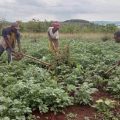
Despite the push toward commercial seed regulation, smallholder farmers produce over 70% of Kenya’s food and more than 80% of the World’s food, according to the Food and Agriculture Organization (FAO). Experts warn that laws restricting FMSS will erode agrobiodiversity, increase dependence on commercial seed corporations, and diminish community resilience in the face of climate change.

Farmers, lawyers, and civil society organizations believe that the outcome of this court case is crucial because it will protect indigenous seeds, support food sovereignty, and ensure farmers can save, share, and sell seeds, safeguarding their future and rights.

The ruling is expected to be delivered at 9 EAT. Witness Radio will keep you posted on the case update.

Continue Reading

MEDIA FOR CHANGE NETWORK

Hidden iceberg: A new report identifies large scale industrial agriculture, livestock, and mining sectors as leading sources of attacks against land and environmental defenders worldwide.

Published

on

By Witness Radio team


A new global analysis report highlights a concerning rise in attacks against land and environmental defenders, aiming to inspire urgent policy and advocacy responses to this escalating violence.


The 2025 Hidden Iceberg Report reveals that nearly 2,500 non-lethal attacks against land and environmental defenders were documented across 75 countries in just two years. These attacks range from threats and surveillance to arbitrary arrests and online harassment.


The report findings by the Alliance for Land, Indigenous and Environmental Defenders (ALLIED), a global network of civil society actors that supports and protects Indigenous, Land, and Environmental Defenders, cover the period 2023-24, with Indigenous communities targeted in 1 out of every 3 cases.


According to the report, these attacks rarely make the news, yet they are often early warnings of lethal violence. Studies define lethal attacks as attacks designed to kill or cause serious harm, while non-lethal attacks aim to incapacitate or control a target temporarily.


As civic space continues to shrink worldwide, defenders and communities affected by development projects are increasingly silenced when defending their community rights or territorial land rights, which are often infringed upon by governments or project implementers.

“Every killing we document is preceded by multiple threats, intimidation attempts, and harassment, but states rarely report these cases. What we see publicly is only the tip of the iceberg.” The report mentions.


“We also saw in 2023 and 2024 that attacks against environmental concern groups expanded. Representing 10.7% of all attacks, the largest number of such attacks were registered in the United States, followed by Mexico, Uganda, and the United Kingdom.” Eva Hershaw, Global Data Lead at the International Land Coalition and Co-Chair of the ALLIED Data Working Group, revealed during the report launch.


The findings paint a stark picture where Latin America accounts for 58% of all documented non-lethal attacks, with Colombia, Guatemala, Brazil, Honduras, and Mexico emerging as persistent hotspots.


“Indigenous communities are attacked not because they are weak, but because they are powerful,” said Carla García, a legal expert from Guatemala. “They protect forests, rivers, and territories that governments and corporations want to exploit. Intimidation becomes a deliberate strategy to silence them.”


In Africa, violence against defenders takes gendered forms, with women facing online abuse, sexual violence, and social stigmatization.


“When women stand up against land grabbing or destructive projects, the attacks go beyond

threats. They target women’s dignity, their families, and their bodies. Many cases are never reported because the fear of retaliation is overwhelming,” Tawonga explained.


She adds that Environmental defenders in Africa are often brutalized by the very systems meant to protect them, making the reporting of attacks both risky and rare.


Across many African countries, environmental defenders operate in contexts characterized by state surveillance, intimidation, and harassment, with security legislation and cyber laws often used to silence them. On top of that, defenders are frequently stigmatized as anti-development or anti-investment. And this harmful narrative, usually pushed by governments and private actors, paints defenders as enemies of national progress.” She added.


One primary concern is the lack of reliable data on attacks, which should motivate policymakers and institutions to improve reporting mechanisms and foster accountability.


“This data gap is not accidental. It is the result of deep structural and systemic limitations that conceal the true scale of violence against environmental defenders here in Africa,” Tawonga explained.


The analysis identifies large‑scale industrial agriculture, livestock, and mining as the sectors most frequently targeted, guiding advocacy efforts toward these high-risk areas to enhance protective measures.


The defenders raising concerns about industrial agriculture and livestock operations were most consistently targeted. They faced the highest number of attacks, representing 29% of the total. We see that three out of every four attacks raising concerns about these business sectors were concentrated in Honduras, Colombia, Brazil, and Guatemala. After industrial agriculture and livestock, mining was the next most common sector connected with attacks.” Eva added

As the climate crisis deepens and competition over land intensifies, the report warns that attacks on environmental defenders will likely worsen unless governments, corporations, and international institutions act decisively.


The report calls on states to strengthen and sustain mechanisms for collecting and reporting data, support national human rights institutions with mandates to monitor violations, and commit to transparency regarding violence against defenders. It also urges businesses to adopt and implement public policy commitments that recognize and protect the vital role of human rights defenders.

Continue Reading

MEDIA FOR CHANGE NETWORK

Women’s groups demand equality in land tenure security to boost food production.

Published

on

By Witness Radio team.

Women’s struggle for land rights is now a critical global issue that has garnered attention from civil society organisations, policymakers, and human rights activists. Many argue that women are often excluded from land governance, hindering economic growth.

Statistics reveal that women produce a massive amount of the world’s food, especially in developing nations, with estimates often citing 60-80% of food in developing countries and roughly half globally. Recognizing this can inspire policymakers and activists to believe in women’s vital role in food security.

Edith Nalwende, a small-scale farmer from Bugiri district, is one of the many affected by the exclusion of women from land ownership and governance.

“Somebody called me, he was desperate and needed some quick money in his land. He told me I should buy this land, and I can pay by instalments. I informed my husband that there is a good deal here. I want to pay part of that money since the person is ready to receive the instalment. The response was obvious. Why do you want to buy land? Leave that land and don’t buy it,” she revealed in an interview with a Witness Radio journalist.

Many women like Nalwende face significant barriers to land ownership and recognition. Gender stereotypes in many Ugandan and African communities often bar women from owning land.

“Because of being a woman, I was stopped by my husband from buying land. I gave up. I didn’t buy the land. So, I called the seller. But he also didn’t appreciate why I told my husband, he asked me why I had told him,” said Nalwende.

ESAFF gathered rural women to share their stories. Edith was one of them, and women farmers were empowered to secure their land rights, thereby increasing productivity and promoting economic development.

While women are pivotal to small-scale agriculture, farm labour, and daily family subsistence, they face greater difficulty than men in accessing land and productivity-enhancing inputs and services. They claim they have been sidelined in issues of land governance, land ownership, and economic development.

According to research by the Food and Agriculture Organisation (FAO), less than 15 per cent of agricultural landholders worldwide are women, and 85 per cent are men. The most significant gender inequalities in access to land are found in North Africa and the Near East, where only around 5 per cent of all landholders are women.

Organised by the Eastern and Southern Africa Small-Scale Farmers Forum in Uganda (ESSAFF Uganda) and partners, the conference, attended by more than 40 small-scale women farmers and officials from various ministries, highlighted the critical role of women small-scale farmers in Uganda’s agriculture.

“Statistics show that women contribute the majority of agricultural labour in Uganda. Yet their contributions often remain undervalued and unsupported. Despite their central role, women continue to face systematic barriers to land ownership and control. Insecure land tenure undermines their productivity, limits their access to credit, and erodes their dignity.” Said Ms Christine Okumu, a representative from the Ministry of Gender, Labour and Social Development

She adds that, “Without secure land rights, women cannot fully invest in sustainable farming practice. Nor can they pass assets to their children. This is a fact based on all the testimonies given before us here. Unless women have that right to land, they cannot fully invest in sustainable farming practice.”

It is estimated that if women small-scale farmers had the same resources as men, their yields could increase by 20–30%, significantly boosting food security.

“Closing this gender gap could add nearly $1 trillion to global GDP and lift 45 million people from hunger. Investing in women isn’t just about fairness – it’s key to Africa’s economic and agricultural future.” According to research by FAO.

Women’s land insecurity not only affects food sovereignty but also escalates gender-based violence, exposing women to rights violations and increased vulnerability.

“Insecure land tenure exposes women to heightened risk of gender-based violence. Dispossession, forced eviction, and land grabbing often come hand in hand with intimidation, harassment, and abuse. Such acts appear on social media platforms, accompanied by hurtful messages and embarrassing pictures. I’ve seen pictures of women being chased out of their homes. And I’ve seen also pictures of women who have invested in lands, and at the end of it all, because behind them, somebody took the land from them.” Added Ms Okumu.

Unlike other years, when the conference focused on topics like women in business and leadership, this year the focus has shifted to empowering women to own land, offering a hopeful path toward stronger agricultural independence.

“We are focusing on land so that we can support as many women as possible. And also, we would want to work together with the government, which has already rolled out a program of registration of land, and we think that this is something that women can take advantage of, so that they secure their land rights, and grow healthy food, and then also increase their income.” Says Ms Nancy Mugimba, the National Coordinator for ESSAFF Uganda.

She adds, “If you don’t have your own land, your ability to grow crops, generate income, and access financial services is limited. Securing land rights enables women to produce healthy food and invest in their communities.”

Ms Christine Okumu calls for the engagement of men and cultural and religious institutions in the fight for Women’s land rights, emphasizing that collective effort can lead to meaningful progress and social cohesion.

“The Ministry has also developed a strategy for male involvement. You know, this fight, we cannot do it alone. If we can get allies, it can help us. If we get a few men who can advocate for some of these issues and open the minds of other men to see that whatever they are doing is affecting their wives in a very negative way,” she said.

Continue Reading

MEDIA FOR CHANGE NETWORK

Tension as Project-Affected Persons demand to meet Uganda’s President over Oil Palm growing on their grabbed land.

Published

on

By Witness Radio team

Entebbe, Uganda: Over 250 families affected by the government’s oil palm project express deep frustration as ongoing issues highlight their sense of neglect and exclusion from the compensation process. Residents from Nairambi, Busamizi, Buvuma Town Council, and Buwooya Sub-counties are camping at the Entebbe Children’s Centre, demanding urgent attention from authorities, including a face-to-face meeting with President Yoweri Museveni.

The residents accuse government ministries of sidelining them despite a presidential directive ordering compensation for all affected households.

“We don’t know who is being compensated,” said Mr Katuntu David, chairman of the affected residents. Mr Katuntu led hundreds of people to seek a meeting with the President.

The affected households are part of the National Oil Palm Project (NOPP), a 10-year initiative to expand oil palm cultivation across Uganda. The project is implemented by the Government of Uganda (GoU), led by the Ministry of Agriculture, Animal Industry and Fisheries (MAAIF), with funding from the International Fund for Agricultural Development (IFAD). Private partners, including Bidco and Equity Bank’s, collaborate with farmer organisations to develop the sector.

Community members insist they have never received official communication on who will receive compensation, which underscores their confusion and sense of being left in the dark. Attempts to obtain the beneficiary lists from MAAIF and the Ministry of Lands have reportedly been unsuccessful, deepening their uncertainty and frustration.

“We don’t know which people on the list to be compensated. The President said we should be compensated, but we have not been contacted. Only two of us were claimed to have been paid, and even then, one person did not find the money in their account. The bank said it bounced back,” added Mr Katuntu.

Residents say the Ministry of Agriculture has refused to release compensation lists or schedules, often asking them to “give the ministry time.” At the same time, some officials claim to be unaware of any presidential directive. When contacted, the Ministry’s spokesperson, Mrs Connie Achayo, did not respond.

During a June 18th, 2025, Parish Development Model monitoring tour in Buvuma District, President Museveni was briefed by then Assistant Resident District Commissioner Patrick Mubiru about the community’s displacement, crop destruction, and land loss linked to the oil palm project. The President, after the briefing, directed that all affected households be compensated and allocated 28 billion shillings for this purpose, instructing that at least 14 billion shillings be released immediately to start payments, highlighting the government’s commitment.

Six months later, residents say the directive has yet to be implemented.

Six months later, residents say the President’s directive has yet to be implemented, leaving many in hardship and distress. “The President toured here, and he said he would help. But nothing has happened since because what he ordered was never implemented. People are suffering,” said Mr Waiswa Dan, another affected resident, emphasizing their ongoing hardship and need for action.

But earlier this month, many thought their questions had been answered when the State Minister of Agriculture, Mr Fred Kyakulaga, revealed that the government was set to compensate the affected people.

In the communication, MAAIF announced that the government had secured 24 billion shillings to compensate affected residents in Buvuma and Sango Bay in Kyotera District. According to the announcement, 14 billion shillings would go to Buvuma, while 10 billion shillings would compensate Sango Bay residents.

“Following a directive by H.E. the President, MAAIF, in collaboration with the Ministry of Lands, Housing and Urban Development (MoLHUD), undertook a verification exercise to identify and verify Project Affected Persons (PAPs) in Buvuma and Sango Bay. Their land was valued using the Government Valuer, with the knowledge and cooperation of the affected persons. An amount of 52 billion shillings was calculated as required for compensation,” the Ministry’s brief revealed. Providing more details on these procedures can reassure stakeholders about fairness and transparency.

It added, “Out of the required 52 billion, MAAIF has received 24 billion, of which 14 billion has been allocated to Buvuma and 10 billion to Sango Bay. Based on government valuers’ reports, full payments have been made to 301 PAPs in five villages: Bubembe, Bwaka, Buwanga, Mbekete, and Ndayiga in Buvuma District. The ministry expects to compensate a total of 1,405 PAPs across 11 villages, disclosing the list to PAPs before phased payments.”

However, Buvuma residents say the ministries have refused to confirm whether they are included in this allocation, despite the President’s directive.

“The people claimed to be compensated have never been revealed, and we don’t know them. Other areas they want to compensate are not yet disclosed to us, so who are they compensating if not us?” Mr Katuntu questioned.

The compensation dispute dates back to 2018, when over 100 residents sued the government and Bidco in Mukono High Court, accusing them of forced eviction, inadequate and delayed compensation, and failure to disclose compensation amounts. The case, which stalled for years, was transferred to the Lugazi High court in this April.

Protesters, who are also complainants, say that during the President’s June visit, he advised them to withdraw the case in favour of an out-of-court settlement, promising fast-tracked compensation. While they vowed to comply, the compensation has still not materialised.

“The President told us he is ready to compensate us, which is why we decided to follow up. But nothing has been done. When we received the communication about compensating victims of palm oil expansion, we approached the relevant ministries, who have since turned us down,” Mr Katuntu further revealed.

Community leaders say they provided proof of land ownership as requested. The Ministry of Agriculture, however, allegedly insisted on written confirmation from the Ministry of Lands. Even after residents provided the requested documentation, Agriculture did not respond.

“We gave them whatever they wanted, but they didn’t act. This has caused us doubt. That is why we want to meet their boss, the President,” said Waiswa.

The protestors, including elderly farmers, women, and youth, have vowed to stay at the Entebbe Children’s Park until the President meets them.

“We cannot leave here without meeting the President. We are sure he will hear us, and we shall be compensated. That is why we are here, and we are not ready to go,” they added.

Since its initial implementation, the oil palm project has affected thousands of people. For people in Buvuma, Mr Katuntu revealed that some affected families have endured more than a decade of suffering since the oil palm project began expanding, losing homes, land, and livelihoods. They are calling for the President’s intervention to ensure full compensation of all legitimate project-affected persons.

Continue Reading

Resource Center

Legal Framework

READ BY CATEGORY

Facebook

Newsletter

Subscribe to Witness Radio's newsletter


Trending

Subscribe to Witness Radio's newsletter