Connect with us

MEDIA FOR CHANGE NETWORK

The EAC Seed and Plant Varieties Bill 2025 targets organic seeds, aiming to replace them with modified seeds, say smallholder farmers.

Published

on

By Witness Radio team.

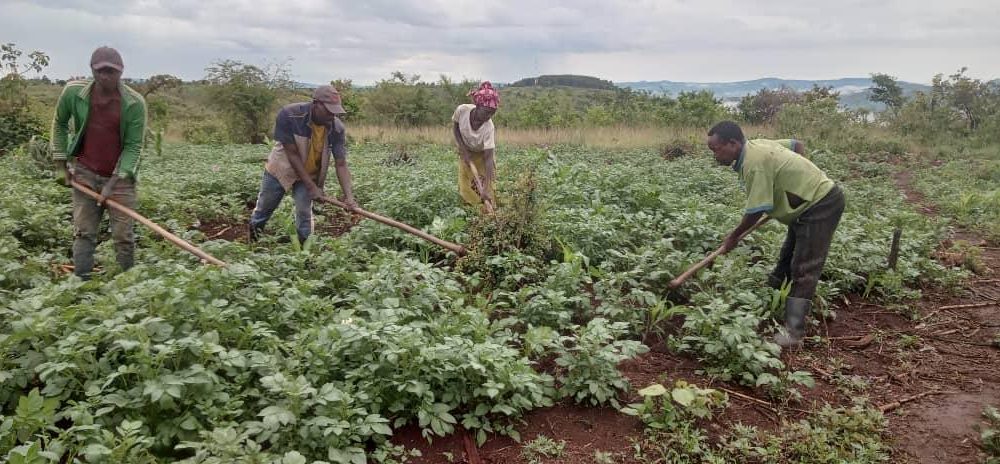
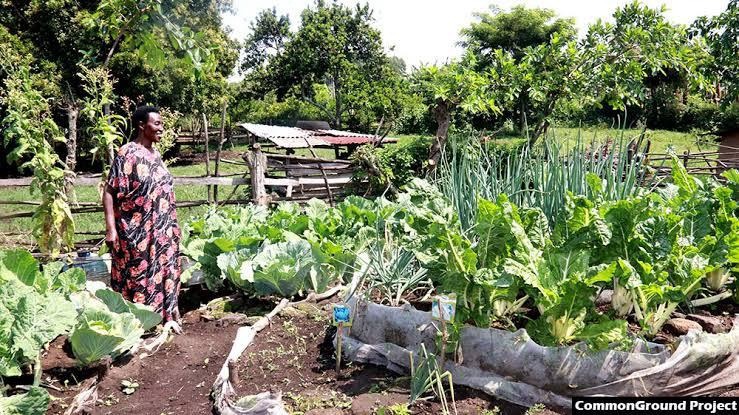
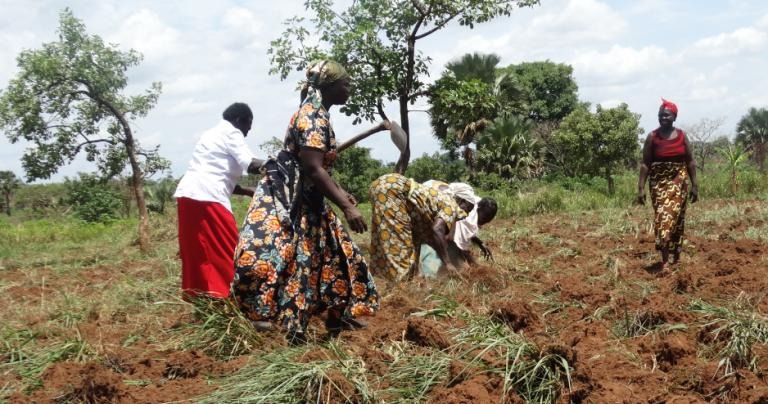
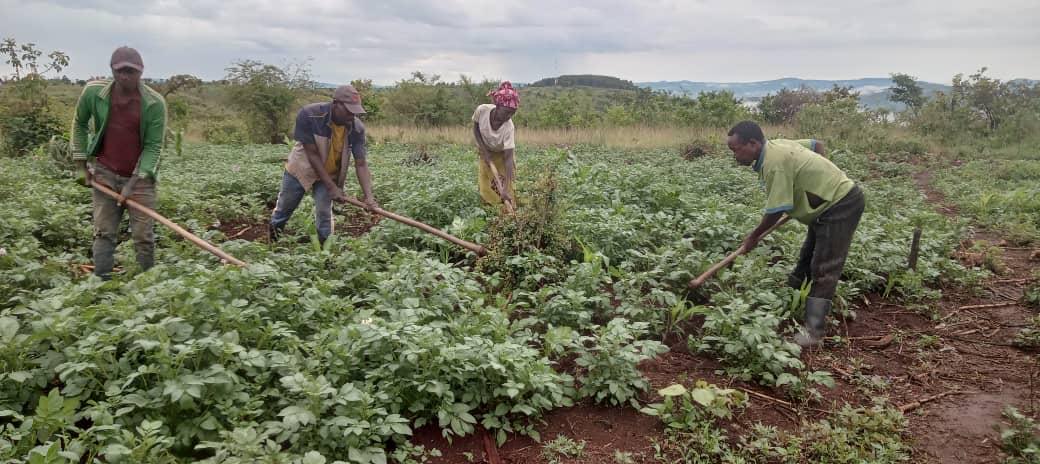
Ssetabi Rauben, a smallholder farmer from Kicuculo village in Mubende district, has a deep connection to farming that dates back to his youth. His personal journey into farming, driven by his family’s need for a livelihood, is a testament to the importance of smallholder farmers in our agricultural system. Ssetabi’s story is just one of many that highlight the potential impact of the EAC Seed and Plant Varieties Bill 2025 on individual farmers.

“With no chance for going further in education, my father gave me land to start a living, and I had to move on. I didn’t go far with my education, so the only resort was to do agriculture since it was my family’s source of living,” He said in an interview with the Witness Radio team.

At 26, Ssetabi, a father of one, dedicates most of his two-acre farm to maize and beans. However, his future in farming, a field he knows best, is under threat. The local seeds he relies on may be outlawed by the 2025 Seed and Plant Varieties Bill of the EAC, potentially dimming his hopes.

The Seeds and Plant Varieties Bill, 2025, recently introduced by the Council of Ministers of the East African Community (EAC), is part of a long-term drive to unify seed regulations across the region.

The draft Bill, as witnessed by Witness Radio, aims to provide for the coordination of evaluation, release, and registration of plant varieties among Partner States; to establish standard processes for seed certification and protection of plant varieties within the Community; and to provide for related matters. According to its promoters, the Bill, based on Article 106 of the Treaty, aims to provide for seed certification, testing, and marketing, thereby facilitating and creating an enabling environment for private sector seed multiplication and distribution.

However, the bill has sparked opposition from civil society organizations, farmer networks, and development partners across the EAC. They argue that it could consolidate corporate control over seeds, curtail the rights of smallholder farmers, and jeopardize agro-biodiversity.

Further, analysis by experts reveals that provisions that risk restricting farmers’ traditional practices of saving, exchanging, and selling seed could have far-reaching consequences for food security, agro-biodiversity, and the livelihoods of millions of rural households.

According to civil society organizations, the Bill threatens to criminalize or restrict traditional practices like breeding, saving, sharing, exchanging, and selling farm-saved seeds. It supports breeders’ rights instead of farmers’ rights. The Bill places a heavy focus on commercial and certified seeds, which could undermine the diverse, locally adapted varieties essential for resilience against climate change, pests, and diseases. This overlooks the importance of farmer-managed seed systems, which are not only central to rural livelihoods and food sovereignty but also an integral part of our cultural heritage.

Many voices warn of serious weaknesses of the bill, which lead to further marginalization of indigenous and smallholder farmers and offer no legal recognition or protection for local farmer-managed seed systems. Despite this, smallholder farmers who are likely to be affected produce the highest amounts of food in the world.

In a critical discussion about the draft bill by Civil Society Organisations and smallholder farmers across East Africa and beyond, several experts on the topic voiced their concerns. Their united front of opposition, a powerful force against the bill, underscores the collective voice’s strength in shaping the bill’s fate.

Dr Peter Munyi, a professional lawyer with extensive experience in agricultural law, explained that the draft stipulates strict testing procedures for seed varieties, with criteria such as distinctiveness, uniformity, and stability being decisive for seed approval. He, however, mentioned that indigenous or farmer-managed seed systems, which are crucial for biodiversity and local food security, are often unable to meet these criteria.

He added, “The testing takes place in laboratories and the value for use and cultivation entails multi-location trials, which is also very expensive, and the only people who can really afford these tests would be commercial seed breeders, perhaps research institutions that USDA and other agencies also fund.”

Mariam Mayet, Executive Director of the African Center for Biodiversity, revealed that the bill is discriminatory and inequitable in its approach because it doesn’t treat all farmers and seeds equally. Her insights add weight to the concerns raised by smallholder farmers and civil society organizations.

Considering the reality of the lives of small-holding farmers, such as Mr. Ssetabi, it is clear that the bill would place an unreasonable burden on the local small farming community.

“We plant and replant our seeds. Our system, inherited from our fathers, has always involved

harvesting, selecting the best breeds, and replanting them; now, if there is a shift as the bill proposes. It’s challenging for people like me because seeds can be expensive at times. Having to buy new seeds every planting season will deepen us into poverty, and people will soon abandon agriculture for those with money.” This financial burden is a stark reality for smallholder farmers like Ssetabi, and the bill only exacerbates their economic struggles.

Considering that smallholder farmers like Ssetabi contribute significantly to the World’s food production, the potential impact of the bill on food security is a cause for concern. Once this bill is passed, there will be a burden on food security and, hence, an increase in poverty levels. The bill’s potential impact on food security cannot be overstated, making it a critical issue for all stakeholders.

Smallholder farming accounts for approximately 75 percent of agricultural production and over 75 percent of employment in East Africa, with up to 70–80 % of seeds planted originating from farmer-managed seed systems. The bill must be reconsidered in light of these implications to prevent a potential crisis. The significant role of smallholder farmers in East Africa’s agricultural sector underscores the urgency of this issue.

“Yet, these systems are in no way recognized in the draft Bill, and the provisions of the bill would install new barriers for farmers’ seed systems and prohibit the saving, reuse, exchange, selling, and sharing in the seed system”. A civil society network raised the alarm.

Ssetabi says. “Some of us rent land, so this is another challenge. Such seeds also need fertilizers.

Now, look at the costs of renting land, seeds, and fertilizers. Don’t you think this is a ploy to remove us from the farming system?” He questioned.

The concern over the bill extends beyond Uganda to other countries where it is being introduced. In Kenya, for example, farmers and the Kenya Plant Health Inspectorate Service (KEPHIS)—a government parastatal mandated to ensure the quality of agricultural inputs and produce, thereby safeguarding the economy, the environment, and human health—rejected the bill. They warned that its enactment could weaken government oversight and expose farmers to substandard and counterfeit seeds.

“Giving seed producers the responsibility to determine the quality of their own seeds will erode government oversight and compromise seed quality,” The Managing Director of KEPHIS, Prof Theophilus Mutui, mentioned in an article published by the Eastleigh Voice.

Civil society organizations appeal that if the bill is to proceed, it must include strong, explicit protections for smallholder farmers, particularly around exceptions to breeders’ rights.

Additionally, stakeholders should advocate for a separate legal framework or policy that recognises and supports farmer-managed seed systems. Without such measures, the region risks enshrining a seed regime that deepens inequality, erodes biodiversity, and undermines the right to food.

Continue Reading

MEDIA FOR CHANGE NETWORK

StopEACOP Campaign challenges TotalEnergies assessment of Uganda land acquisition programme

Published

on

An elderly PAP in front of the Resettlement house in Buliisa (Inset: the house that was affected by the Tilenga project). Image credit: PAU

Civil society organisations under the StopEACOP Campaign have criticised an assessment commissioned by TotalEnergies on its land acquisition programme for the Tilenga oil project in Uganda, describing the report as lacking independence and credibility.

The Tilenga development will supply crude to the East African Crude Oil Pipeline which is designed to transport oil from western Uganda to international markets. The project has been widely contested by environmental groups and community advocates.

TotalEnergies commissioned Canadian consultancy Land and People Planning Ltd to conduct the assessment in the districts of Buliisa, Hoima and Kikuube. The report concluded that the company had addressed the core elements of the land acquisition programme and demonstrated commitment to transparency and continuous improvement.

However, the StopEACOP Campaign argues that the independence of the study is questionable. The coalition noted that TotalEnergies stated that an original assessor withdrew due to health reasons and that the Canadian firm was appointed as a replacement, without publicly explaining how key stakeholders were involved in the selection process.

Campaign coordinator Zaki Mamdoo said the report appeared to be designed to improve the company’s public image rather than provide a rigorous independent review. He added that the company’s suggestion that the Tilenga land process was ready for closure was difficult to reconcile with ongoing court cases filed by project affected people disputing compensation.

Activists also argue that the assessment does not address allegations of coercion, intimidation and pressure faced by communities asked to release land for the Tilenga project. Civil society groups have cited documented cases including the eviction of 42 families in Buliisa district following a court order issued before compensation payments were completed.

Diana Nabiruma of the Africa Institute for Energy Governance said communities have reported being warned that refusal to accept compensation offers could lead to court cases where they have little chance of success. She added that organisations supporting affected residents often observe bias and limited willingness by courts to address land disputes linked to oil developments.

In February 2026, the institute published research examining compliance with livelihood restoration commitments linked to the East African Crude Oil Pipeline. The report identified significant gaps in implementation and warned that many affected households risk failing to return to their pre displacement socio economic conditions if corrective action is not taken.

Campaigners also questioned the timing of the TotalEnergies assessment as the company faces an ongoing case in a civil court in Paris. The court recently ordered the company to release documents that had previously been withheld, including market studies on compensation rates prepared by subcontractors, minutes from a human rights steering committee and a report examining flooding linked to the Tilenga project.

According to Camille Grandperrin, legal officer at the Friends of the Earth France, analysis of the disclosed documents suggests multiple areas where the project may not comply with international standards, including the IFC Performance Standard 5.

The StopEACOP Campaign also highlighted discrepancies in the number of people included in the assessment. The action plan referenced 4954 project affected people, while civil society estimates suggest that more than 100000 people could be impacted across both the Tilenga project and the wider pipeline development.

Critics argue that evaluating Tilenga in isolation from the broader pipeline infrastructure creates a misleading picture of the scale of social impacts. They also note that the report does not address flooding allegedly linked to the construction of the Tilenga Central Processing Facility.

Campaign groups say the testimonies of affected communities, including claims of restricted land use prior to compensation and pressure faced by activists and land defenders, raise serious concerns that require independent scrutiny. They argue that a broader and fully independent review of Uganda’s oil sector impacts is needed to provide credible information to investors, lenders and insurers.

Author: Bryan Groenendaal

Source: greenbuildingafrica.co.za

Continue Reading

MEDIA FOR CHANGE NETWORK

More than 1.1 billion people worldwide face a risk of land eviction – Global report

Published

on

By Witness Radio team.

A global report released by the Food and Agriculture Organisation of the United Nations (FAO) in collaboration with other organizations has reported that more than 1.1 billion people worldwide— about 23 percent of the global adult population—live under the constant fear of losing their land or homes within the next five years, threatening their livelihoods, food security, and resilience to climate change. 

“Too many people still live with the fear of losing their land and homes, with women and young people remaining among the most excluded—a reality that undermines food security, climate action, and biodiversity protection, and shows why secure land rights are foundational to achieving all three,” says Marcy Vigoda, Director of the International Land Coalition. 

The report, titled “Status of Land Tenure and Governance” (SLTG), was authored by the Food and Agriculture Organization of the United Nations, the International Land Coalition (ILC), and the French Agricultural Research Organization CIRAD. The report states that, despite progress over the past two decades, only 35 percent of the world’s land has formally documented ownership, tenure, or use rights. 

The report notes that commercial interests constitute a major driver of land insecurity. In addition to large-scale land acquisitions, corporate investments, and financialized shareholding, the report identifies factors such as weak land governance, inadequate recognition of customary tenure systems, and increasing demands for agricultural commodities as contributing to intensified land concentration. These dynamics, particularly evident in the aftermath of the 2008–2009 food and financial crises, have accelerated the transfer of land from smallholders and local communities, exacerbating vulnerabilities among populations lacking secure tenure. 

Lands once considered marginal investment opportunities are now highly sought after for industrial farming, conservation, carbon storage, and other climate-related projects. In some cases, climate mitigation projects such as renewable energy, carbon offset schemes, and biofuel plantations are also increasing pressure on these lands, especially where tenure rights are not legally recognized.

The new report is the first comprehensive global stock take designed to track how land is owned, used, and governed. It complements decades of guidance on implementing the Voluntary Guidelines on the Responsible Governance of Tenure of Land, Fisheries, and Forests (VGGT). It responds to the growing demand to integrate land rights with climate action, gender equality, biodiversity protection, and more.

While international and national policies on land tenure have expanded, the report highlights that implementation remains slow and uneven. Although global frameworks have been widely adopted, the uptake and application of responsible land governance principles remain limited.

Worldwide, governments legally own more than 64 percent of land, including areas under customary systems that often lack formal documentation. A little over a quarter of land is privately owned, while about 10 percent of global land has an unknown tenure status.

The findings also reveal that the top 10 percent of the largest landholders operate about 89 percent of all agricultural land, showing the high concentration of land ownership globally. Secure land tenure enables people to invest in land, improve productivity, protect ecosystems, and strengthen food security.

“Land insecurity is one of the most damaging forms of inequality, paid for in lower productivity, weaker resilience, and poorer nutrition. Secure land tenure enables sustainable investment and is the difference between short-term survival and long-term food security,” FAO Chief Economist Maximo Torero Cullen reveals.

The report highlights persistent gender inequality in land ownership. Globally, women are significantly less likely than men to own or hold secure land rights. In 2024, across 108 countries, 48 percent of men reported owning homes individually or jointly, compared to 40 percent of women. “While rural residents are more likely than urban residents to report ownership, women remain consistently disadvantaged in both settings,” the report notes.

In agriculture, the gender gap is even more pronounced. In 43 out of 49 countries with available data, men in agricultural households are more likely to own or control land. In nearly half of these countries, the gap exceeds 20 percentage points. Evidence from several countries also shows that the gap is particularly large in sole land ownership, while joint ownership arrangements often improve women’s access to land.

Despite growing global attention to land governance, data on land tenure remains limited and politically sensitive. Methodological challenges, capacity limitations, and political sensitivities often reduce the availability and transparency of land tenure data.

According to Sélim Louafi, Deputy Director for Research and Strategy at CIRAD, stronger data systems are essential for better policy decisions. “When we generate evidence with and for all stakeholders, we create the foundation for stronger, more transparent, and more equitable public policies, both nationally and internationally.”

Experts say stronger policies and political commitment are needed to secure land rights for all. The report concludes: “Progress on land tenure and governance requires a stronger, more comprehensive, and better-coordinated approach to change, both within the land sector and in conjunction with global efforts on economic recovery, climate action, biodiversity conservation, and open societies.”

Continue Reading

MEDIA FOR CHANGE NETWORK

DR Congo crisis: Washington’s brokered peace agreement is rendered useless as fighting, forced land displacement, and mineral exploitation persist…

Published

on

By the Witness Radio team.

After the signing of the Washington Accords, a peace and prosperity deal between the Democratic Republic of the Congo and Rwanda brokered by the United States, many Congolese hoped the agreement would finally bring stability to the country’s long-troubled eastern region.

Instead, persistent violence has continued, raising questions among civil society groups and citizens about whether the agreements can truly deliver peace.

According to the US State Department, the Washington Accords were intended to reaffirm both countries’ commitment to implementing the peace agreement signed in Washington, D.C., on June 27, 2025. The deal was also intended to advance a vision of regional cooperation through a Regional Economic Integration Framework (REIF), which aims to promote peace, security, and economic growth in the Great Lakes region.

Fighting continues in eastern Congo, involving the March 23 Movement (M23) and Congolese government forces (FARDC), with Rwanda and the DRC government each accusing the other of supporting violations of existing agreements.

Authorities in the Democratic Republic of Congo (DRC) have long accused Rwanda of backing the March 23 Movement (M23) rebel group, allegations that Rwanda initially denied for decades. However, according to a January 24 article by The Rwandan, an online news platform based in Rwanda, a high-ranking Rwandan official later acknowledged security coordination with M23/AFC rebels.

Now, Congolese civil society organizations reveal that the Washington Accords are failing to address issues of justice or Rwanda’s responsibility in the war of aggression, invasion, and occupation of eastern DRC.

The Mobilization to Safeguard Congolese Sovereignty and Autonomy (MOSSAC), an ad hoc coalition of 81 Congolese civil society groups, formed to voice concerns about the occupation and to demand a lasting peace grounded in security, accountability, sovereignty, and justice in the DRC revealed in an interview with Witness Radio that these accords are taking Congolese back to the days of King Leopold, where a colonial resource grab is imposed, and might makes right.

“These agreements, pushed on the DRC by the Trump administration during the ongoing violent incursion, represent the results of a negotiation at gunpoint. It’s all about how they’re going to take the minerals and have all these business deals. There’s nothing in there that gives any detail on what they’re going to do to create peace.” MOSSAC International outreach coordinator, Dr. Deborah S. Rogers, told Witness Radio.

The Washington Accords consist of three separate agreements. The first is a peace agreement signed by both Congo and Rwanda, calling for a ceasefire and improved relations. The second establishes the Regional Economic Integration Framework, which promotes joint economic cooperation and allows for collaboration in exploiting regional resources. The third agreement, the Strategic Partnership Agreement, was signed by the Congolese government and the United States to strengthen cooperation on economic development and resource security.

But critics argue that, taken together, these agreements resemble what some observers have described as a “peace for minerals” arrangement, as both the United States and Rwanda see the DRC as a key hub for strategic minerals.

“Each of these three agreements has its own challenges. When viewed together, however, they are often framed as part of what is called the “Peace for Minerals” agreement. They are only targeting DRC’s resources, including land and minerals,” Dr. Deborah added.

Conflict in eastern Congo has persisted for decades and is deeply intertwined with regional politics and competition for natural resources.

The conflict dates back to the aftermath of the 1994 genocide in Rwanda, when nearly two million Hutu refugees fled into eastern Congo. Some extremist groups formed armed militias there, leading to escalating tensions with Tutsi groups and drawing neighboring countries into the conflict.

The resulting violence sparked the First Congo War (1996–1997) and subsequent conflicts that have devastated the region. Since 1996, the wars in eastern Congo are estimated to have contributed to the deaths of roughly six million people and the displacement of people.

Civil society groups say the violence has destroyed infrastructure, displaced millions, and caused widespread human rights abuses, including rape, targeting them to drive them off resource-rich land.

Eastern Congo is rich in natural resources, including gold, copper, diamonds, and coltan, minerals essential for global industries ranging from electronics to renewable energy.

Observers say the region’s mineral wealth has long fueled both local and international interests.

“We view this as a reward for Rwanda for having invaded and occupied these lands and seized the mine sites. They are being granted through an agreement what they initially took by force, effectively legalizing and normalizing the ongoing plundering of DRC’s minerals and their transfer to Rwanda. Rwanda seeks land because it is a small country with a growing population, and in the territories,  it controls, it uses terror to drive people out,” she added.

Shockingly, civil society officials say that lands belonging to displaced Congolese are being taken over by Rwandan settlers. Families returning to their homes after temporary lulls in the violence often find their land and houses already occupied.

“Meanwhile, the people from Rwanda are coming in and settling on those farms and in those homes. So, when people come back, they discover that their lands and their homes have been taken over.” Dr. Deborah further revealed

These deals have drawn a lot of criticism from both international and National organizations, including civil societies. The Oakland Institute described the deals as ‘the latest US maneuver to control Congolese critical minerals” in its report, shafted: The Scramble for Critical Minerals in the DRC, published last year.

“US involvement in Congolese affairs has always been unequivocally tied to the goal of securing access to critical minerals. “The ‘peace’ deal comes after decades of US training, advising, and sponsoring foreign armies and rebel movements, and at a time when Rwanda and its proxy M23 have expanded territorial control in eastern DRC. This is a win-lose deal that serves US mining interests and rewards Rwanda for decades of pillaging Congolese resources,” Mr. Frédéric Mousseau, report co-author and Policy Director at the Oakland Institute, revealed.

MOSSAC also observes that the agreements do not address issues of justice or the culpability of Rwanda in the war of aggression, invasion, and occupation of eastern DRC, but instead reward Rwanda by presenting it a pathway to normalize and make legal its pillaging of Congolese land and resources.

“How can this be a proper agreement when people are being killed during the negotiation process? There’s no justice, no accountability for decades of invasion and resource theft. Lasting peace cannot happen without justice first.” Another Mossac representative told Witness Radio.

Despite the promises of peace and economic integration, violence continues in eastern Congo.

Civil society groups say M23 forces have expanded their territorial control in several provinces, including North Kivu, South Kivu, Ituri, and Maniema. They argue that ongoing attacks undermine the credibility of the agreements. “Every day since the accords were signed, there have been violations,” Dr. Deborah maintained

Efforts by Witness Radio to obtain a comment from the Congolese government were unsuccessful. Officials from the Ministry responsible for internal affairs did not respond to our calls/emails.

Continue Reading

Resource Center

Legal Framework

READ BY CATEGORY

Facebook

Newsletter

Subscribe to Witness Radio's newsletter


Trending

Subscribe to Witness Radio's newsletter