Connect with us

MEDIA FOR CHANGE NETWORK

A Ugandan minister is in the hot seat over the grabbing of land from a peasant in Kiryandongo district.

Published

on

By Witness Radio Team.

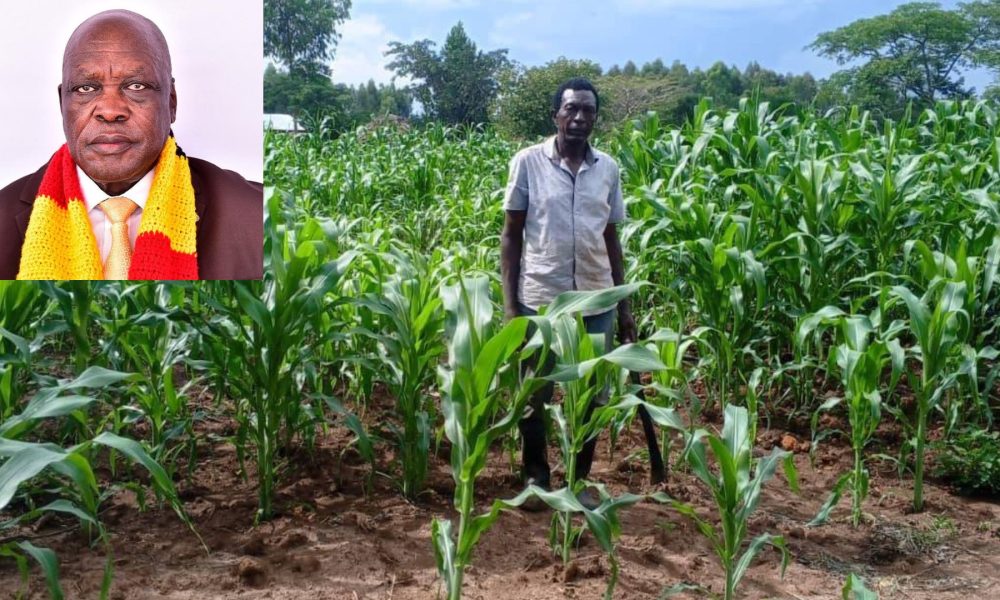
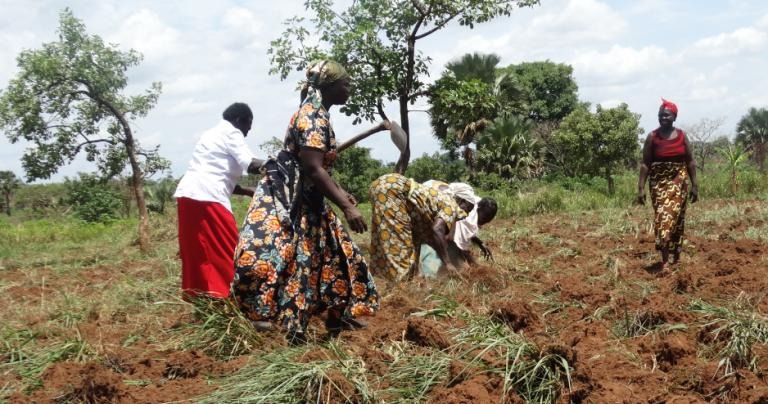
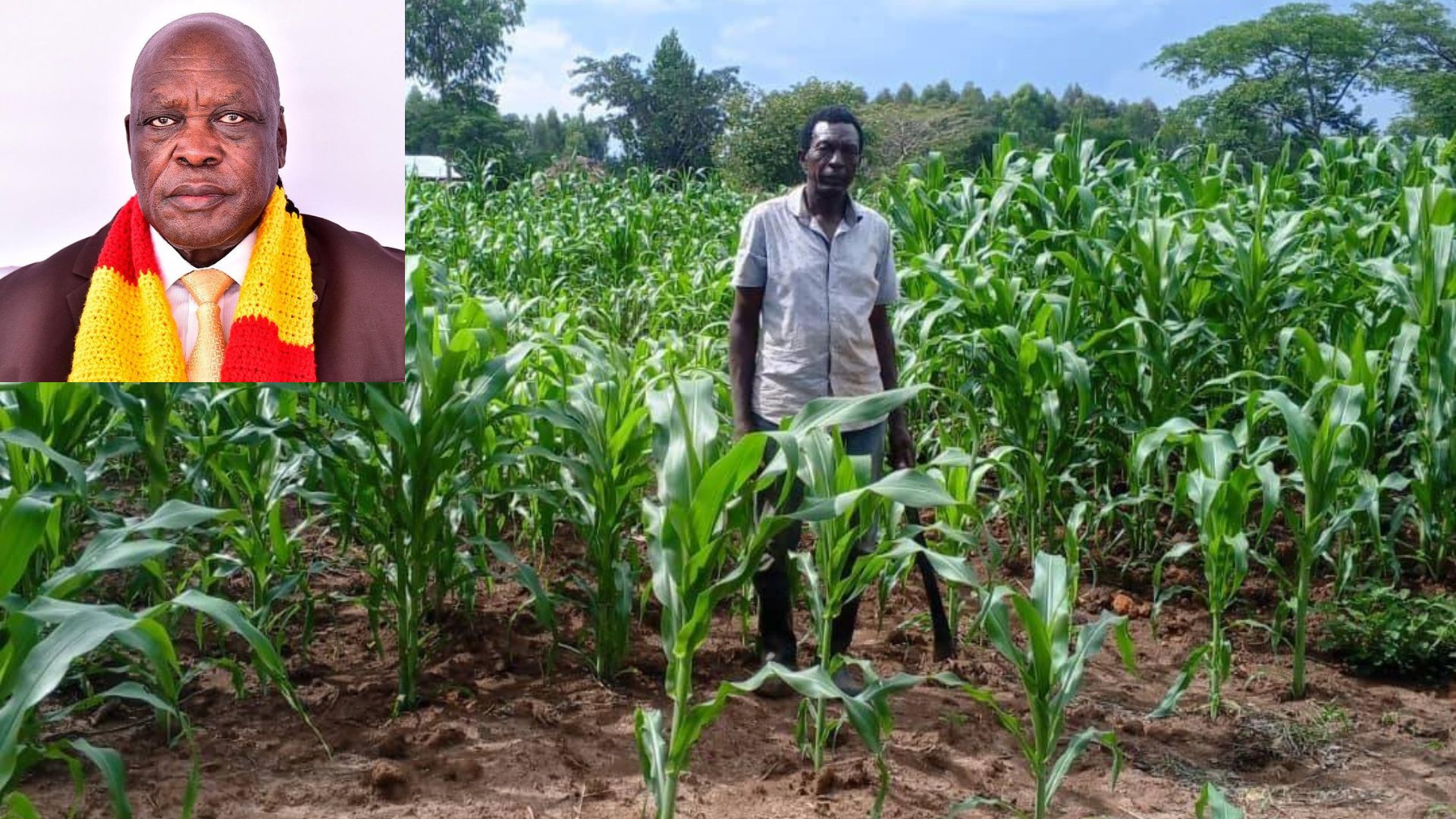
At 62, Edward Balikagira says he should be enjoying the fruits of his old age after working very hard to attain what he owns now. Instead, he finds himself trapped in a prolonged land dispute with a Ugandan minister, whom he accuses of forcibly seizing his land, which has devastated his livelihood and well-being.

“I have stress, which is even affecting my life. I can’t support or manage my extended family,” Mr. Balikagira told Witness Radio in an exclusive interview.

The land under contention is located in Kinyara 2 village, Kigumba subcounty in Kiryandongo district. Balikagira accuses the current minister in charge of Karamoja affairs of unlawfully seizing 100 acres of his land, raising questions about the legal validity of his claim, the land registration process, and the evidence supporting his ownership.

Balikagira, in an interview with Witness Radio, revealed that he obtained full authority over the land after successfully purchasing it from John Bitagassa on 10th February 1996.

“A friend of mine (George Bugumirwa) alerted me about this land, which was on sale in the mid-1990s. It was in a good location, and this prompted me to buy it.” He added.

According to the father of 19, the dispute began during the processing of land title documentation for land linked to Minister Peter Lokeris. At the time, Balikagira was serving as chairperson of the sub-county Area Land Committee overseeing the process.

“We informed residents about the day when boundaries for the minister’s land were to be opened. But during the exercise, the surveyors almost encroached on my land. Later, the minister proposed that I sell my land to him.” Balikagira explained.

Balikagira says he agreed to the arrangement and negotiated a price of 500,000 Ugandan shillings per acre, totaling 50 million shillings. Trusting that payment would eventually be made, he allowed the minister to use the land temporarily while awaiting compensation.

However, according to Balikagira, the promised payment never came. He says he made several trips to Kampala to meet the minister and demand the agreed-upon money, but all his efforts proved futile.

“I had an idea that if the minister pays me, I would then buy another piece of land. I then followed up on the verbal agreement that we had with the minister, but I have yielded nothing; he failed to fulfill his promises, and now he claims he is the rightful owner of the land.”  The victim stated.

Before losing his land, Balikagira says agriculture was the main source of his family’s livelihood.

“Maize was one of the major crops I used to grow, and it was very profitable in those days. Besides other crops, I cultivated maize on about 25 acres and, in a season, I could earn up to twenty million Ugandan shillings.” He revealed.

Nearly 19 years after allegedly losing his land, Balikagira says the emotional toll has been overwhelming, leaving him distressed and feeling abandoned by the system he trusted to protect his rights.

“The situation is very terrible. My family has fallen into deep economic distress, forcing me to sell remaining assets, including small plots of land, to meet basic needs such as school fees. This has disrupted my children’s education, with some dropping out of school,” he said.

He added that the prolonged struggle has also taken a heavy emotional and psychological toll, leaving him stressed, financially unstable, and unable to support his extended family adequately.  This situation highlights the need for greater awareness of land rights and the legal protections available to landowners like Balikagira who allege unlawful land seizures by powerful officials.

“I have gone to the RDC’s office and many other government offices seeking justice over this matter, but I have not received any help. Maybe it is because an ordinary person is fighting against a minister,” Balikagira said.

The minister, in an interview with a local Television station, denied these claims, asserting that he is the rightful owner of the land and dismissing Balikagira’s allegations as false.

Balikagira pleads with the government, and in particular the president of Uganda, to advise his minister to evacuate his land. He says, “Lokeris knows that he is an honorable minister, and since I am poor, I cannot do anything to him. I therefore request the president to help me so that the minister evacuates my land.”

The Deputy Resident District Commissioner (D/RDC) of Kiryandongo District, Jonathan Akweteireho, told Witness Radio that Balikagira has repeatedly reported the land dispute to his office over the years.

“He says the minister is his neighbor who grabbed his land. He maintains that the minister is not the rightful owner of the land,” Akweteireho said.

According to the deputy RDC, the RDC’s office has already written to the Ministry of the Presidency requesting intervention and investigations into the rightful ownership of the contested land.

“We wrote to our line ministry to take up the matter since we could not directly reach the minister involved. However, we have not yet received any response,” he explained. “We also wrote to the Kiryandongo District Land Board to follow up on the matter and establish the rightful owner of the land, but we have not yet received feedback from them either.”

Continue Reading

MEDIA FOR CHANGE NETWORK

Rights experts call for an inclusive transition as the East Africa region attracts renewable energy investments.

Published

on

By the Witness Radio team.

NAIROBI, Kenya: As governments across East and the Horn of Africa accelerate efforts to transition from fossil fuels to renewable energy, experts have warned that the shift could deepen inequality and further trigger human rights violations if affected communities are excluded from decision-making processes.

The warning came at the 5th East and Horn of Africa Business and Human Rights Conference in Nairobi, organized by Danchurch Aid and its partners. Climate justice advocates, business leaders, and human rights experts met to discuss how the increasing investments could better align with human rights standards and responsible business conduct.

Just transition was among the key issues discussed during the two-day conference held last week, with experts emphasizing the need for inclusive approaches as East Africa attracts growing investments in renewable energy.

While there is a need and an urgency to address climate change, experts argue that the global race toward clean energy is already producing unintended consequences elsewhere, offering important lessons for Africa.

“The transition to renewable energy is inevitable, whereas justice isn’t,” Mr. Andrew Byaruhanga, the Executive Director of Resource Rights Africa, said during a panel discussion on just transition pathways.

Byaruhanga said governments and investors risk prioritizing energy targets and financial returns over the rights and welfare of communities whose land and livelihoods are affected by transition-related projects.

“The finance sector must be mobilized, not just for returns, but also for impact. Public and private sectors must align their efforts, share risks, and invest in long-term partnerships. The success of this transition, therefore, depends on empowering those most affected. Governments have a role to play in making sure that the financing architecture takes cognizance of these realities,” he added.

His remarks reflected growing concerns that renewable energy projects, despite their climate benefits, can reproduce the same patterns of exclusion and dispossession that have historically accompanied large-scale development projects.

Across the world, communities are increasingly raising concerns about land acquisition, displacement, inadequate compensation, and restrictions on civic space linked to renewable energy infrastructure and critical mineral extraction.

A recent report by the Coalition for Human Rights in Development, Financing the Transition, Silencing Defenders, documented cases across Asia where communities and environmental defenders faced intimidation, arrests, displacement, and violence while opposing energy transition projects.

Among the cases highlighted was the Jalaur River Multipurpose Project in the Philippines, where Indigenous Tumandok communities reportedly faced inadequate consultations and displacement threats linked to the construction of a hydropower dam. In India’s Assam state, local communities opposed a major solar project over concerns that it would displace more than 20,000 Indigenous residents and threaten traditional livelihoods.

Although the cases occurred outside Africa, experts in Nairobi said similar risks are emerging across the continent as governments pursue investments in renewable energy, carbon markets, and climate-related infrastructure.

Florence Shako, Executive Director of the Center for Education Policy and Climate Justice, said the transition must not come at the expense of vulnerable communities.

“We can talk about decarbonization and the fact that it’s important to transition, but we must really think about what inclusivity means for the youth, for persons with disabilities, and for people in the Global South,” she said.

Shako noted that many affected communities lack access to information, legal representation, and affordable mechanisms for seeking justice when their rights are violated. She also warned that transition projects often fail to provide alternatives for people who lose land, jobs, or sources of income.

“We need to think about replacement livelihoods and access to remedies. Otherwise, communities will continue bearing the costs while others reap the benefits.” She added.

The conference also highlighted concerns about youth exclusion from transition discussions.

According to Eric Baeni, Coordinator of the Pan African Youth Alliance on Business and Human Rights (PAYA-BHR), unemployment remains one of the biggest barriers preventing young people from engaging with climate and transition agendas.

“We are the workforce of the continent, but we are unemployed. Unemployment is the key challenge that prevents many young people from understanding and participating in the just transition.” He said.

He called for deliberate efforts to involve young people in policy discussions and ensure they benefit from employment opportunities created by emerging green industries.

The concerns raised in Nairobi come at a time when African governments are under increasing pressure to pursue low-carbon development pathways while tackling poverty, unemployment, and climate vulnerability. African countries emit only a small fraction of global greenhouse gas emissions, but are among the most vulnerable to climate-related disasters such as droughts, floods, and food insecurity.

Experts further argued that this reality requires transition strategies that prioritize local development needs rather than simply replicating models designed elsewhere.

As the conference concluded, experts called for stronger protections for human rights defenders, meaningful community participation, accessible grievance mechanisms, and investment frameworks that place affected communities at the center of decision-making.

They also urged governments to strengthen safeguards around land rights, free, prior, and informed consent, and benefit-sharing arrangements before approving major transition-related projects.

Continue Reading

MEDIA FOR CHANGE NETWORK

Emotions run high as Uganda Land Commission mediates S

Published

on

The Uganda Land Commission (ULC) has intensified efforts to resolve a series of longstanding land disputes in Soroti city, with cultural institutions, private sector organisations and residents seeking intervention over contested properties.

During a stakeholder engagement in Soroti city, the proceedings took an emotional turn when Iteso Cultural Union founder, Pumprus Imodot, broke down while addressing commissioners over a disputed piece of cultural land in Kichinjaji ward.

Imodot told the commission that despite submitting ownership documents to several government offices, he has not received a satisfactory response. He expressed concern that construction activities are continuing on the disputed land while the matter remains unresolved.

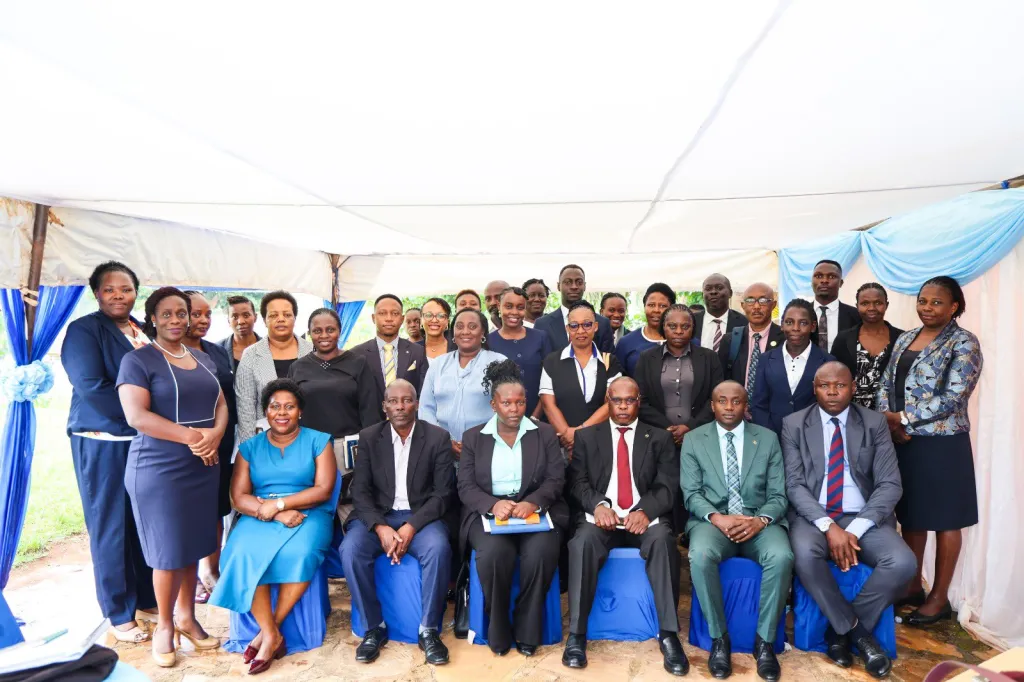
The meeting was attended by ULC commissioners Tom Kasenge and Christine Amongin Aporu, Soroti city leaders, and representatives from the aviation sector, who explained how they believe the land was legally allocated.

The commission later moved to the Yellow Flats area in Soroti city’s Western division to mediate another dispute involving 10 families and a claimant, Samuel Oyata, over ownership of Plot 25.

Commissioner Kasenge said attempts to reach an immediate settlement between the parties were unsuccessful, adding that further engagement would be required before a resolution could be reached.

Residents led by Allan Opolot and 81-year-old Stephen Enokikin rejected Oyata’s claim, insisting that their families possess legitimate ownership documents dating back several decades.

However, Oyata maintained that the plot was legally allocated to him through the district land board with the recommendation of the former Soroti Municipal Council.

Speaking on behalf of the affected families, Stephen Enokikin said they remain confident in their ownership documents and believe the truth will prevail.

Meanwhile, the commission also mediated a separate dispute involving property occupied by the Teso Private Sector Development Centre in Soroti city.

The contested property has attracted competing claims from the Teso Private Sector Development Centre and two individuals, Francis Omoding and George William Okwaput, who were granted a lease extension offer by the Uganda Land Commission.

During a stakeholders’ meeting attended by Soroti city mayor Francis Esudu, Soroti District Land Board chairperson Jorem Opian Obicho, opinion leaders and commission officials, Teso Private Sector chief executive officer Soyce Malinga challenged the lease offer, alleging that Omoding had a conflict of interest because he processed ownership documents while serving as treasurer of the institution’s Board of Governors.

Kasenge explained that the matter remains before the commission following applications by Omoding and Okwaput for lease extension on the property.

The discussions prompted strong reactions from stakeholders. Benson Ekue, director of Public Affairs Centre Uganda, urged the commission to revoke the lease offer granted to Omoding and Okwaput.

Ninety-five-year-old elder Mzee Amuriat appealed to the commission to reconsider its decision, arguing that the property has historically served various community and business organisations, including Teso African Traders, Uganda National Chamber of Commerce and later the Teso Private Sector Development Centre.

Following extensive deliberations, a majority of stakeholders voted in favour of recommending that the commission cancel the lease offer granted to Omoding and Okwaput and instead consider the application submitted by the Teso Private Sector Development Centre.

Commissioner Christine Amongin Aporu acknowledged concerns raised during the meeting and explained that the commission had identified procedural issues surrounding the lease allocation process that require further review.

Despite the recommendations, Okwaput rejected the resolutions reached during the engagement, insisting that all legal procedures were followed in obtaining the lease offer. He warned that any attempts to reverse the decision could result in court action and potential compensation claims exceeding Shs8 billion.

Aporu reaffirmed the commission’s commitment to peaceful dispute resolution, noting that the Uganda Land Commission will continue engaging all affected parties to find lasting solutions to the land conflicts affecting Soroti city.

The engagements underscore the growing challenge of land ownership disputes in Soroti city, where competing claims involving cultural institutions, private entities and residents continue to fuel tensions over valuable urban land.

Original Source:newvision.co.ug  Via : europesays.com

Continue Reading

MEDIA FOR CHANGE NETWORK

CSOs welcome the World Bank’s accountability reform and demand an influential role in selecting its new accountability leadership, underscoring the importance of genuine justice for communities.

Published

on

By the Witness Radio team.

Long criticized for the harms its projects cause to communities and the environment, the World Bank Group has now announced a sweeping overhaul of its accountability system, aiming to improve justice for those affected.

For years, communities and civil society groups have used the World Bank’s accountability mechanisms—including the IDA Inspection Panel, Dispute Resolution Service, and IFC/MIGA Compliance Advisor Ombudsman—to file complaints about funded projects. However, critics say these mechanisms often fail to provide effective remedies to those harmed by World Bank investments.

The Boards of IBRD, IDA, IFC, and MIGA have approved a single, integrated World Bank Group Independent Accountability Mechanism (IAM).

Approved on July 8, 2026, this decision will unify the World Bank Accountability Mechanism, the Inspection Panel, and the IFC/MIGA Compliance Advisor Ombudsman into one system.

A June 9 World Bank statement said the new mechanism will operate independently, report directly to the Boards, and be led by a Vice President/Director General.

“The integrated IAM will carry out three functions—compliance, dispute resolution, and advisory services—and is designed to make accountability simpler and clearer for complainants,” the World Bank said.

Furthermore, the reform aims to reduce fragmentation and strengthen coherence across World Bank Group operations.

The Bank said the new policy will build on current experience and maintain existing protections during the transition. The framework will be developed with Board oversight and stakeholder consultations.

The statement says transparent, competitive recruitment for the Vice President/Director General will begin immediately under Board leadership, while current mechanisms continue.

“In the interim, all three existing mechanisms will continue to function under their existing policies and mandates. No active or pending cases will be affected.” The statement says.

While supporting accountability efforts, civil society groups have raised concerns about the mechanism’s leadership selection.

In a letter to the Boards, seven civil society groups, joined by 38 others, called for a transparent, inclusive recruitment process for new IAM leadership.

“A strong hiring process for IAM leadership is crucial to the independence and legitimacy of an IAM,” the organizations wrote.

The participation of external stakeholders, especially civil society, is standard in IAM hiring. The CAO DG/VP process has included civil society on the selection committee for years,” they added.

The organizations warned that failing to meet CAO standards undermines the Bank’s commitment to non-regression.

“We will consider any selection process that falls below the standard set by the CAO DG/VP hiring process, as enshrined in the CAO’s policy and established through past practice, as a violation of your commitment to non-regression,” the letter states.

Under the CAO policy, independence requires a transparent, participatory selection with stakeholders from civil society and business.

The groups urge the Boards to guarantee civil society a formal role in recruitment.

“We strongly urge the Board to formally confirm that civil society representatives will have a structured role in the current recruitment process for the Vice President/Director General of the new IAM,” the letter adds.

This decision to integrate accountability mechanisms also follows recommendations from a World Bank Group Task Force that reviewed the effectiveness of the current system.

The Task Force found that while current mechanisms are broadly effective, they face major challenges with accessibility, consistency, and delivery of remedies.

As the World Bank Group advances these reforms, civil society engagement in recruitment will be pivotal to ensure accountability and justice are strengthened, not weakened. The coming months will be decisive in whether the new Independent Accountability Mechanism fulfills its promise and secures the lasting trust of the communities it serves.

Continue Reading

Resource Center

Legal Framework

READ BY CATEGORY

Facebook

Newsletter

Subscribe to Witness Radio's news and report updates


Trending

Subscribe to Witness Radio's news and report updates