Connect with us

MEDIA FOR CHANGE NETWORK

A community in Yumbe district has raised serious concerns about allegations of land-grabbing involving an aspirant for Uganda’s Parliamentary Speakership, affecting over 50 families.

Published

on

By Witness Radio Team.

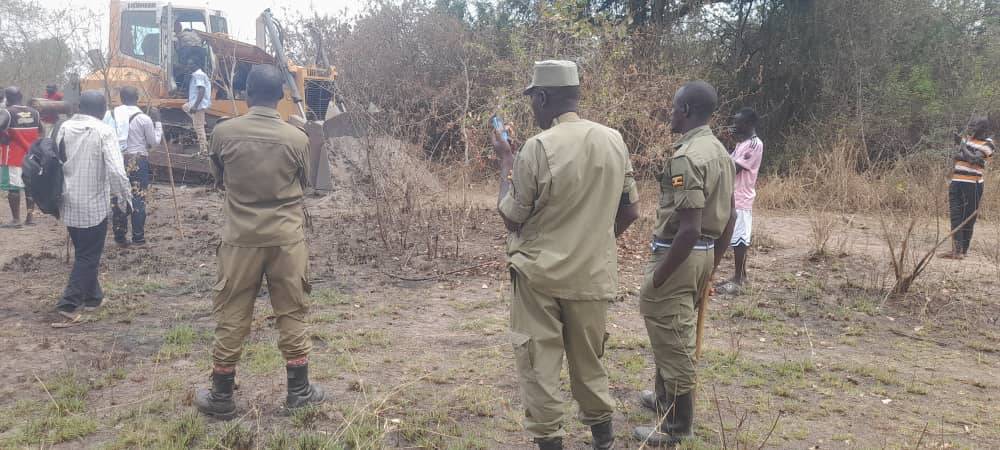
More than 50 families in Ochinga village, Aringa South Constituency in Yumbe district, are feeling vulnerable as they face eviction from the land they have lived on for decades.

The families accuse the area Member of Parliament, Alion Odria Yorke, of fraudulently acquiring their land with the support of a clan member, raising questions about transparency and abuse of power.

“He has started evicting us. And he has already started clearing part of the land. We hear he is preparing it for his cocoa farming business project,” one of the affected, Richard Ayimani, told Witness Radio.

Forty-six-year-old Asiku Victor Yada is among those facing eviction. A resident of Ochinga Village, he says he owns 21 acres of land he inherited from his parents, land that has been passed down through generations.

“I was born and raised on this land. After my father’s death, I inherited it, just as he had inherited it from his father. This has been our generational land,” Asiku told Witness Radio, sharing his deep connection and concern over the ongoing dispute.

He expressed frustration over the ongoing dispute, accusing the MP of abusing his position.

“He talks about corruption and abuse of office by others, yet he is also doing the same by using our nephew to grab our clan land. We cannot accept losing our land through what we believe is a fraudulent process,” he added.

The disputed land, estimated at 519 acres (210 ha), is part of the Kiranga clan, which the community uses for farming and cattle grazing, forming the backbone of their livelihoods.

However, Hon. Alion has dismissed the allegations, insisting that he legally purchased the land from members of the Kiranga clan on May 18, 2025, for UGX 25 million (approximately USD 6,667.91). Yet, the community disputes the transaction’s legality, raising questions about the transparency and proper consultation involved in the sale.

“I have evidence of ownership, including documents and witnesses,” The MP claimed in an interview with Witness Radio. However, affected residents strongly dispute this, insisting they were neither consulted nor aware of any such transaction, raising concerns about the authenticity of the evidence presented.

“He was duped. The person he talks to is our sister’s son, and he does not have the authority to sell clan land without our understanding. Yassin is not our clan leader or landlord as the MP alleges; he belongs to another clan called the Aupi clan,” Mr. Richard explained, highlighting the need for clarity on who has the authority to sell clan land.

Witness Radio was unable to obtain a comment from the alleged land seller, Yassin, as repeated calls to his known phone contacts went unanswered.

One of the complainants, Ayiman Richard, told Witness Radio that he is the rightful heir and custodian of the land. He argues that those who allegedly sold the land were only caretakers appointed after the death of his father.

“This land belonged to my late father, Peter Nakara Ondia. After his death, I inherited it as his heir. My nephews were only given the responsibility to look after the land while I was still young. That does not make them clan leaders or landowners,” he said.

Other residents say they were never informed or involved in the alleged sale and are now living in fear of eviction, feeling betrayed and powerless.

“How can a legislator use fraudulent means to acquire our land? We were not aware of any sale, and we cannot just surrender our land,” one resident added.

Local leaders have also raised concerns over the transaction. The LCIII Chairperson of Ariwa Sub-county, Mr. John Kale, said he was not consulted during the sale process and disputes claims that Yassin is the clan leader.

“It is very surprising that I, as the local council chairperson, did not know about the sale of this land. The Honorable Member of Parliament must have been duped,” he said, before calling on the minister to stop grabbing community land.

As tensions rise, affected families say they have nowhere to go, as the land is not only their ancestral home but also their primary source of livelihood.

Land conflicts have increased in Uganda, where politically connected individuals have found it easy to grab land belonging to poor and vulnerable communities with impunity.

Continue Reading

MEDIA FOR CHANGE NETWORK

Court Ruling: RDCs and police cannot stop lawful land evictions.

Published

on

By Witness Radio Team.

Uganda’s Constitutional Court has ruled that Resident District Commissioners (RDCs), police, and other executive actors have no authority to stop, suspend, delay, or require additional approvals for lawful court eviction orders, in a landmark judgment that reinforces judicial independence.

The ruling comes amid escalating land conflicts and follows presidential directives that require all evictions to be scrutinized by the District Security Committees, chaired by Resident District Commissioners (RDCs), in consultation with the Ministry of Lands. An RDC is a constitutional representative of the President at the district and local government levels.

Under Uganda’s 2021 Land Eviction Guidelines and Practice Directions, court agents may carry out evictions after strict legal requirements are fulfilled. These include a valid court order or decree authorizing the eviction, an eviction order clearly identifying affected persons or structures, a notice of eviction or demolition issued to affected parties, and a warrant of eviction or demolition.

However, many evictions in Uganda have been criticized as forceful or unlawful, carried out without a proper due process.

In a presidential communication in 2022, President Museveni directed that no eviction should occur in any district without a District Security Committee meeting chaired by RDCs and conducted in consultation with the Ministry of Lands.

But court Bailiffs under the umbrella body, Uganda Court Bailiffs Association, challenged the President’s directive and petitioned the Constitutional Court of Uganda, arguing that even where valid court orders exist, RDC-led security committees have frequently interfered with lawful enforcement.

Court records listed the petition as Uganda Court Bailiffs Association Ltd vs Attorney General (Constitutional Petition No. 0001 of 2023),

The Constitutional Court addressed that tension, holding that enforcement of court orders is not an executive function but an integral component of judicial power.

“The court therefore reiterates that enforcement of judicial decisions remains a core judicial function. Any participation by non-judicial actors must be facilitative only, and not supervisory or controlling,” The ruling, which Witness Radio has seen a copy of, states.

The 2023 petition further challenged what it described as persistent interference by the executive arm of government, including RDCs, police, District Internal Security Officers (DISOs), and local councils in the enforcement of court orders.

According to the petitioners, security agencies had, over time, imposed unauthorized “clearances,” halted executions, confiscated court documents, and frustrated lawful enforcement of judicial decisions.

In its decision, the Constitutional Court distinguished facilitating and controlling court executions.

“Any conduct by executive officials that purports to halt execution, confiscate court process, subject judicial warrants to extra-judicial “clearance” or ‘approval,’ or otherwise frustrate lawful execution amounts to a direct encroachment upon judicial authority and is inconsistent with Articles 2, 126, and 128 of the Constitution of the Republic of Uganda.” The judgment stated.

The judgment, concurred in by Deputy Chief Justice Flavian Zeija and Constitutional Court judges Frederick Egonda Ntende, Florence Nakachwa, and Ketrah Katunguka, acknowledged that security agencies may lawfully participate during sensitive enforcement exercises, including land evictions, particularly where there is risk of violence or public disorder. However, the judges stressed that such involvement must be strictly limited.

“Where the execution of a court order is likely to provoke violence, resistance, or a breach of the peace, security agencies are lawfully entitled to intervene for the limited purpose of maintaining peace, protecting life and property, and ensuring that the process does not descend into disorder,” the judgment reads.

But the court warned that this supportive role has “clear constitutional limits.” “Security agencies do not possess authority to review, vary, suspend, veto, or otherwise sit in judgment over court orders. The direction and supervision of execution remain the exclusive preserve of the courts.”

The court further clarified that security agencies may verify the authenticity of court orders where necessary, particularly in cases involving forged, irregularly issued, or improperly extracted court documents.

“Such verification, however, must remain strictly confined to confirming authenticity. It must not be turned into a process for questioning the legal validity, correctness, propriety, or enforceability of the order itself, for those are matters reserved exclusively for the courts. Nor must it become a device for delay, obstruction, refusal, or abuse. Verification is legitimate only where it is undertaken promptly, in good faith, and solely for the purpose of ascertaining that the order sought to be enforced is genuine. Once authenticity is confirmed, security agencies are bound to act in aid of, and not in derogation from, the authority of the court,” the ruling states.

The ruling raises new legal questions about the implementation of recent presidential directives on land evictions.

In a presidential communication in 2022, President Museveni directed that no eviction should occur in any district without a District Security Committee meeting chaired by RDCs and conducted in consultation with the Ministry of Lands. He further warned that members of District Security Committees would face consequences if evictions occurred outside this framework.

The President also warned magistrates and judges against facilitating illegal evictions in collusion with land grabbers and tasked the Minister of Lands with reporting judicial abuses to the Attorney General for possible legal action.

However, the Constitutional Court ruling appears to place constitutional limits on the role of executive actors in enforcing lawful court orders.

The judgment arrives against a backdrop of increasing land conflicts across Uganda, where forced evictions, land-grabbing allegations, and court-enforced removals remain a major source of tension.

It is unclear whether the President’s office will appeal the ruling.

Continue Reading

MEDIA FOR CHANGE NETWORK

The Indigenous Seeds movement in East Africa is convening in Kenya, with the potential to reshape the region’s food systems.

Published

on

By the Witness Radio team.

As climate change, commercial agriculture, and changing agricultural policies place growing pressure on farmer-managed seed systems, the first-ever Eastern Africa Indigenous Seeds Conference will be convened in Nairobi, Kenya, to discuss the future of indigenous seeds and food systems in the region.

The first-ever Eastern Africa Indigenous Seed Conference, convened by Seed Savers Network (SSN) in collaboration with other key partners, including Witness Radio, will bring together farmers’ organizations, researchers, policymakers, seed custodians, and food sovereignty advocates from 17th to 20th November 2026 in Nairobi, Kenya. This gathering offers a unique chance for regional stakeholders to influence the future of indigenous seed systems and amplify their collective voice.

According to Daniel Wanjama, Executive Director of Seed Savers Network, the conference will offer indigenous communities, seed-saving farmers, and practitioners worldwide an opportunity to exchange experiences, learn from one another, and strengthen collaboration on indigenous seed conservation.

“It’s a very important moment for all of us because it will be our moment to exchange our practices, to learn from each other, and also borrow whatever we can from each other.” Mr. Wanjama said.

He said the gathering would also provide space to recognize women’s crucial role in seed saving, agricultural biodiversity conservation, and the preservation of indigenous knowledge systems.

The four-day conference, set to take place at the Catholic University of Eastern Africa, occurs at a critical time when climate change, biodiversity loss, and repressive agricultural policies threaten traditional farming systems and local seed diversity.

For generations, indigenous seeds have helped communities adapt to changing weather patterns, preserve biodiversity, and maintain culturally rooted food systems. Recognizing their vital role can inspire stakeholders to value and protect local knowledge and seed diversity.

The conference, themed “Realizing the Right to Food through Seed Sovereignty,” highlights the importance of indigenous seeds in resilient food systems and seed sovereignty and encourages participation from a wide range of stakeholders.

Participants will engage in panel discussions, policy dialogues, side events, knowledge-sharing sessions, exhibitions, and regional networking to strengthen cooperation among farmers, farmer organizations, researchers, civil society actors, development partners, and government institutions.

Key discussions will examine how indigenous and local seed varieties contribute to climate adaptation and resilience, emergency seed responses during crises and disasters, conservation of agricultural biodiversity, and food and nutrition security, among others.

“The conference will create a lasting platform through which stakeholders can continue interacting, exchanging information and knowledge, and developing joint approaches to address shared challenges affecting indigenous seed systems,” Daniel added.

As global conversations on food systems and climate resilience intensify, the conference offers Eastern Africa a vital chance to reaffirm indigenous seeds as a cornerstone for sustainable agriculture and community resilience, inspiring collective action.

Continue Reading

MEDIA FOR CHANGE NETWORK

Stop favoring export-oriented production over strengthening local food systems – Food Sovereignty advocates to the African Development Bank officials.

Published

on

By the Witness Radio team.

Brazzaville: As the African Development Bank’s 2026 Annual Meetings drew to a close in Brazzaville on this Friday, policymakers, finance ministers, and development leaders renewed their demand for stronger economic reforms, expanded investment mobilization, and new approaches to financing Africa’s development ambitions in an increasingly fragmented global economy.

Held under the theme “Mobilizing Africa’s Development Financing at Scale in a Fragmented World,” the meetings brought together representatives from the Bank’s 81-member countries to debate debt pressures, climate financing, regional integration, private investment, and the future of Africa’s economic transformation. Discussions throughout the week stressed the urgency of strengthening domestic resource mobilization while attracting larger pools of development finance to address infrastructure gaps, food insecurity, and climate vulnerability.

The launch of the African Development Bank’s African Economic Outlook 2026 during the meeting, which started on Monday, the 25th, and ends today, the 29th of May 2026, reinforced both optimism and caution. While the report projected stronger continental growth prospects, it warned that rising debt burdens, shrinking concessional aid, and intensifying climate shocks continue to constrain African economies.

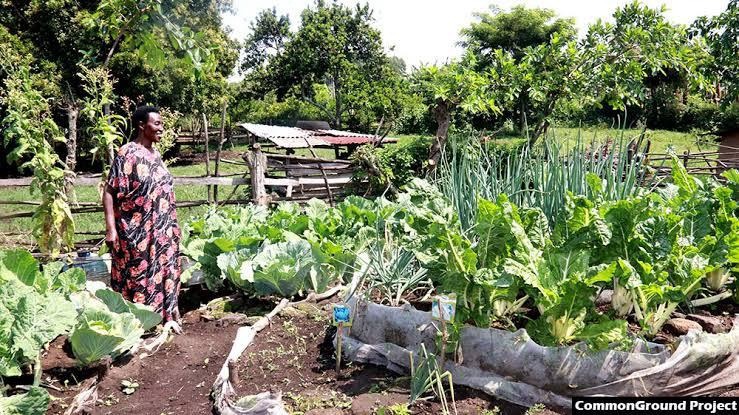
As discussions in Brazzaville focused on scaling development finance, food sovereignty advocates highlight that strengthening local food systems and supporting smallholder farmers are essential for inclusive growth and community resilience, and should be a priority for the African Development Bank.

The Alliance for Food Sovereignty in Africa (AFSA) has challenged the direction and accountability of the Bank’s agricultural financing, arguing that a significant share of development funding continues to favor industrial agribusiness approaches. At the same time, farmer-led food systems receive limited support.

AFSA’s review of African Development Bank agricultural financing between 2019 and 2025 found that Bank investments remain heavily concentrated in agro-industrial corridors, fertilizer and hybrid seed systems, mechanization, irrigation expansion, industrial processing, and corporate value chains.

Examining 20 Bank-funded agricultural projects, researchers concluded that none demonstrated strong alignment with agroecological principles such as crop diversification, soil health, ecological resilience, or community-led practices, highlighting a significant gap in sustainable practices and the need for more holistic approaches.

The findings also raise questions about the Bank’s climate financing claims. Although nearly half of its agricultural lending is classified as climate finance, researchers argue that many projects continue to reproduce input-intensive Green Revolution approaches that rely heavily on external seeds, fertilizers, and monoculture production systems.

“The real question is what this finance does once it reaches the ground. It is overwhelmingly funding an industrial model that sidelines smallholders and calls high-input monocultures ‘climate-smart.’ Africa’s farmers are not asking the Bank to stop investing — they are asking it to invest in systems that truly support local food sovereignty,” Said the Alliance for Food Sovereignty in Africa’s General Coordinator, Million Belay Ali.

The criticism by the agricultural organizations extends beyond financing patterns into questions of land and agricultural expansion. Research by the Institute for Poverty, Land and Agrarian Studies (PLAAS) at the University of the Western Cape disputes a core assumption underpinning the Bank’s Feed Africa agenda, “the idea that the African continent contains vast amounts of idle land available for large-scale agricultural development”.

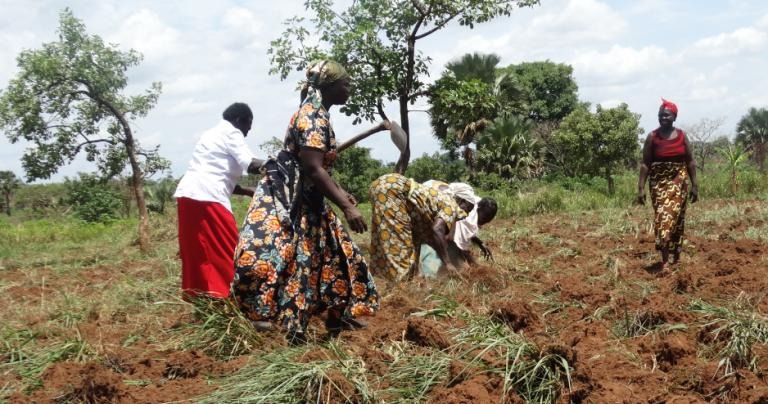
Researchers highlight that smallholder farmers manage roughly 80 percent of Africa’s farmland and produce most of the food consumed across sub-Saharan Africa, underscoring their vital role and deserving of stronger support from the continental bank.

AFSA consultant Michael Ferally said the Bank’s agricultural investments increasingly link farmers to commercial value chains but often fail to strengthen local food systems or ecological resilience.

“Most of the agriculture, it is financing still follows an industrial model,” Ferally said in an interview with Witness Radio. “It heavily supports fertilizers, hybrid seeds, mechanization, irrigation, and large-scale processing infrastructure. In many cases, the aim is to integrate farmers into commercial value chains rather than strengthen local food systems.”

He added that this model risks reshaping food systems around export-oriented agribusiness and supermarket supply chains, in which small-scale farmers are treated primarily as suppliers rather than as central actors in food system design.

According to Ferally, an assessment of 20 Bank-supported projects found weak alignment with agroecological principles, with none scoring highly on ecological farming approaches. He said climate-smart agriculture programs, while widely promoted, often fail to deliver meaningful ecological resilience.

“Nearly half of agricultural investments are labeled as climate-related, but only a small share actually supports soil regeneration, biodiversity, or diversified farming systems. Without those elements, climate finance risks becoming a label rather than a meaningful transformation of agricultural practice,” He explained, emphasizing the need for genuine ecological outcomes in climate-related investments.

AFSA says these findings reinforce concerns that current investment models risk reshaping land-use systems in ways that could marginalize smallholder farmers, particularly when industrial value chains and certified seed systems are promoted at scale.

The organization is calling for the establishment of an agroecology transition financing window within the Bank’s agricultural portfolio, offering a promising pathway to support smallholder farmers, promote ecological resilience, and align investments with sustainable, locally rooted food systems, inspiring confidence among advocates and policymakers.

It argues that sufficient resources already exist within current agricultural finance flows to support a transition toward more ecologically sustainable and locally rooted food systems, if priorities are adjusted.

Continue Reading

Resource Center

Legal Framework

READ BY CATEGORY

Facebook

Newsletter

Subscribe to Witness Radio's newsletter


Trending

Subscribe to Witness Radio's newsletter