Connect with us

MEDIA FOR CHANGE NETWORK

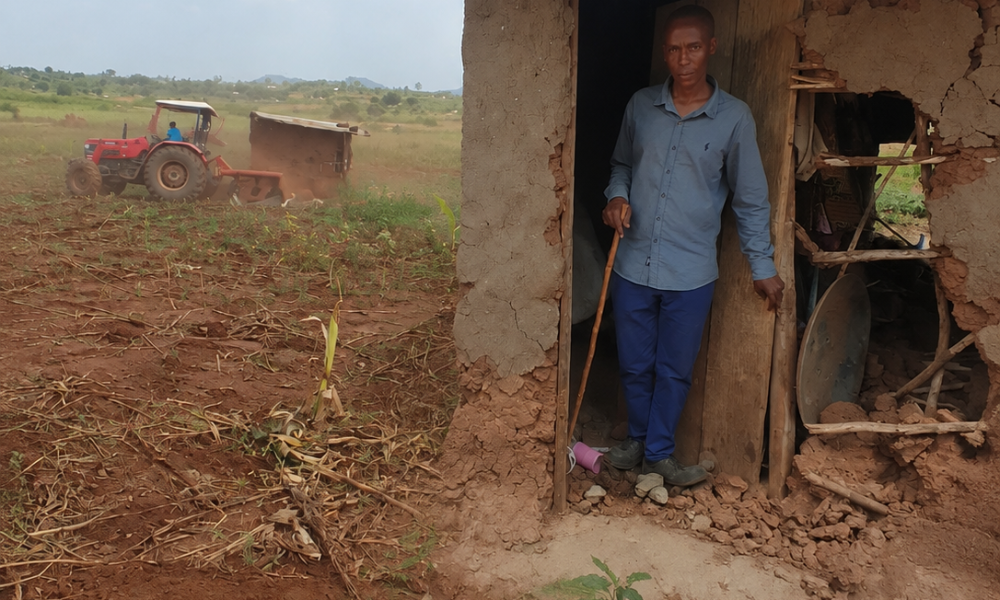
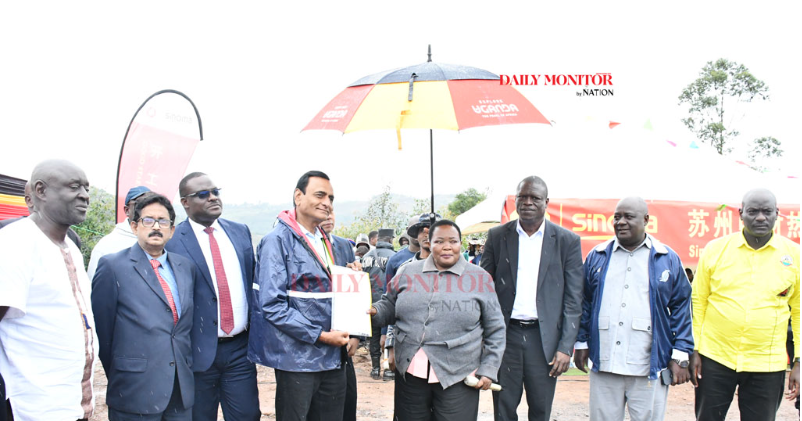
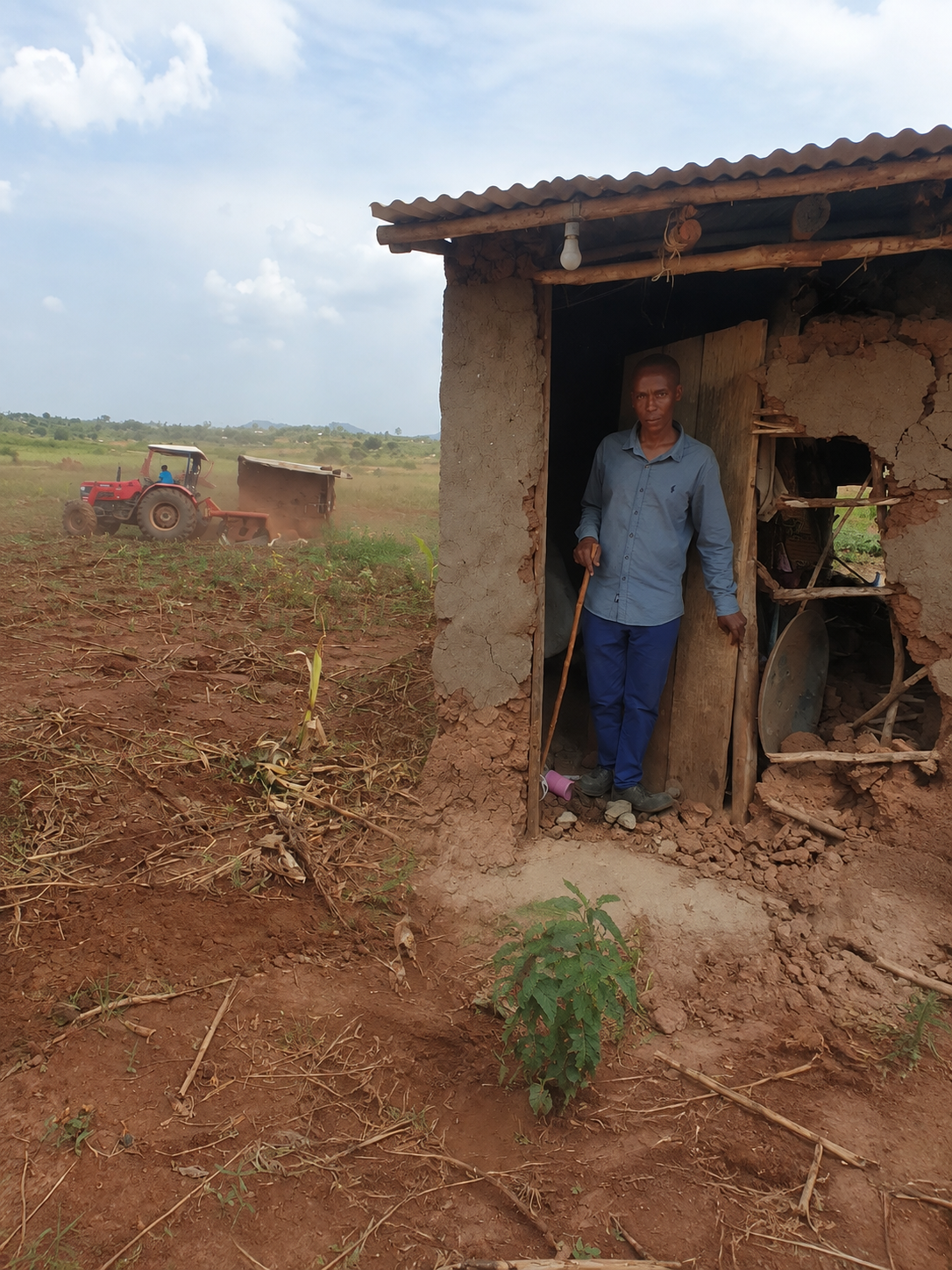
Communities once resettled by President Museveni in Kiryandongo now find themselves losing their land to a sugarcane investor, accusing the Uganda Land Commission of granting a leasehold behind their backs.

Published

on

By the Witness Radio team.

For over ten years, families in Ranch 11, Kiryandongo District, cherished the hope that they had at last found a true home.

Their path to Ranch 11 was paved with hardship and repeated displacement. Some families, as Witness Radio discovered, were forced out of conservation areas, while others lost their homes amid political turmoil. When the government finally allocated them land through the Office of the President, they dared to believe their long search for safety was over.

Yet now, the very land they say President Yoweri Kaguta Museveni gave them has become the heart of a fresh conflict, as a sugarcane company lays claim to it.

Residents now accuse the Uganda Land Commission of quietly leasing part of Ranch 11 to sugarcane investor M/S Muhazi Heritage, leaving out the very communities who had built lives there for over a decade.

For families like Fred Kangume’s, this so-called development feels like yet another eviction, carried out without the voices or consent of those who call the land home.

“We were resettled on this land on orders of the President. And now we are surprised that an investor was given the same land without our consent or being informed,” Kangume told Witness Radio.

A Witness Radio investigation reveals a troubling contradiction: while official documents show attempts to secure land for these communities, the Uganda Land Commission later handed over more than 1,000 hectares of that very land to Muhazi Heritage through a lease agreement.

This dispute now sparks a deeper question about land governance in Uganda: how can families settled by government order lose their land when another state body gives it away to a private investor?

Several correspondences reviewed by Witness Radio indicate that President Yoweri Kaguta Museveni directed the Ministry of Lands to allocate land in Kiryandongo to approximately 750 landless families, including the Nubian and Kibyama communities who had converged in Kigumba and were living in difficult conditions in makeshift settlements.

The affected groups included about 350 families who had been evicted from the Karuma Wildlife Reserve in 1999 and 404 Nubian families who had been displaced from different parts of Uganda during and after the 1978/79 political turmoil.

According to information obtained by Witness Radio from the office of the Minister of State for Lands, the history of displacement for some of these families dates back to the 1970s.

During the government of former President Idi Amin, authorities established the Palestinian Farm at Kiroko in Kiryandongo Sub-county, displacing hundreds of families from their land.

The documents indicate that the affected families were neither compensated nor resettled after losing their land. As a result, some moved to neighboring public land, which was later gazetted as part of the Karuma Forest Reserve.

Years later, these same families faced another displacement when the Uganda Wildlife Authority evicted them from the reserve, leaving many without homes, land for cultivation, or reliable sources of livelihood.

The second group comprised members of the Nubian community who, after returning from exile, found that their former homes and properties in places such as Gulu, Lira, Soroti, and other parts of Uganda had been taken over during insurgencies. They also faced a challenging social and political environment, forcing many to seek refuge among friends and relatives in Masindi District.

With both groups facing prolonged landlessness and uncertainty, they petitioned President Museveni in 2000, requesting government intervention and resettlement.

A 2001 correspondence from the Ministry of Lands to the Office of the President states that government officials identified Ranch 11, part of the former Bunyoro Ranching Scheme, as available land that could be used to resettle the landless families.

The document states: “Within Masindi District, currently Kiryandongo District, was a vacant Ranch No. 11… which according to the Ranches Restructuring exercise was allocated to the Office of the President and could in this circumstance be subdivided to settle the landless 750 families.”

In 2006, President Museveni directed that the communities be resettled on approximately 5.5 square miles of land in Ranch 11.

For these families, the directive represented a new beginning and what they hoped would be an end to decades of displacement. In 2013, with support from local leaders and officers from the Ministry of Lands, the affected communities were resettled on the land.

Over the years, residents had built homes, established trading centers, and invested in agriculture. But according to residents, the land was never fully surveyed, and individual ownership documents were never issued.

In 2023, the Chief Administrative Officer (CAO) of Kiryandongo District requested financial support from the Ministry of Finance to facilitate the resettlement process for these categories: “Nubian community and families displaced from Karuma Wildlife Reserve.”

A letter from Permanent Secretary Ramathan Ggoobi informed the district that Shs200 million (about $53,428 USD) would be provided for the exercise. The funds, according to the letter, were to be budgeted under the Transitional Development Grant for the 2023/24 financial year.

Yet as communities waited in hope for official land documents, a separate process was quietly granting the same land to an investor.

Documents obtained by Witness Radio show that the Uganda Land Commission, during the Commission’s meeting of 4 August 2023 under Minute 64/2023(a)(04), approved the allocation of 1,059.89 hectares of land, equivalent to four square miles, to Muhazi Heritage.

The company received a five-year lease, renewable up to 49 years. On 17 December 2024, the Uganda Land Commission issued a certificate of title to Muhazi Heritage.

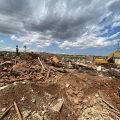
This turn of events stunned residents, who insist they were never consulted despite being the rightful occupants. Instead of security, the allocation sparked another wave of violent evictions as the company pressed for full control and communities fought back against what they called blatant land grabbing.

Charles Kalakire, the chairperson of Kimogola B village, told Witness Radio that local leaders were not involved in the allocation process.

“I was never consulted when the Uganda Land Commission awarded land to the company, which had legally known sitting tenants,” Kalakire said.

He added that he only learned about changes in land allocation after receiving information from district security officials.

“I got this information from the Resident District Commissioner (RDC), a president’s representative in the district, and the District Internal Security Officer (DISO) that land had now moved from the hands of the people to the investor,” he added.

Residents say the investor’s deal left just 1.5 square miles for over 750 families. For many, the conflict has spilled from paperwork into daily life.

“The situation is worse; people are beaten and forced to receive compensation, a level of impunity which forced the state minister of lands, Hon Sam Mayanja, to intervene and cause harmony in the area.” Mr. David Bakundaki, another resident, said.

During his visit to Kimogora in 2024, Mayanja revealed that the investor had requested the commission to allocate his company the entire Ranch 11 measuring over 5.5 square miles.

Based on his guidance, through a 2024 letter to the commission, he ordered the commission to allocate 4 square miles, and the remaining 1.5 square miles be used to resettle the affected people. The company was also directed to compensate residents, support relocation, and provide infrastructure including schools, health facilities, and roads as part of corporate social responsibility.

However, residents and leaders say the remaining land is already occupied, making relocation difficult.

“The people who have been occupying the four-square miles are now being packed into the 1.5 square miles. They are being allocated a quarter acre. On top of that, the allocations are now creating land tensions with those they found in.”

“Also, those who have received compensation have got peanuts, 200,000, 300,000 Uganda shillings, which can’t afford to cater for their families or buy land elsewhere, and the responsibility that had to come along with resettling people was never fulfilled.” Mr. Godfrey Kiviri, former chairperson of Mutunda A village, told Witness Radio.

Meanwhile, those refusing to leave their land face violence from company workers, supported by security forces.

The Ranch 11 saga lays bare a deep contradiction in Uganda’s land management: a government meant to restore dignity to the displaced later hands their land to a private sugarcane investor.

For these communities, the fight has become about more than land. It is now a struggle for trust, accountability, and the hope that government promises to its most vulnerable will be honored.

Continue Reading

MEDIA FOR CHANGE NETWORK

News: Kapapi Land dispute: Security investigate gunfire exch

Published

on

HOIMA — Security in Hoima district is investigating circumstances under which police personnel and Uganda People’s Defence Forces (UPDF) officers deployed at the disputed Kapapi land in Kapapi sub-county, Hoima district, exchanged gunfire and left two vehicles damaged.

The incident occurred last Sunday at night as UPDF officers deployed on the disputed land attempted to arrest Capt. Rogers Karamagi, the manager of Brig. Gen. Peter Akankunda Nabasa on the land.

Brig. Gen. Nabasa got involved in the Kapapi land dispute after Moses Byangire, the administrator of the late Tito Byangire’s estate leased 700 acres of land to the general for 10 years in Kigorobya, Hoima District.

The deployment of UPDF soldiers on the land was after the 2,000 residents who were evicted from the land measuring about three square miles petitioned the former lands state minister, Dr Sam Mayanja (now Attorney General), seeking his intervention.

When Mayanja visited the land in October last year, he ordered the Commander of the Field Artillery Division based in Masindi, Maj. Gen. Daniel Kakono, to deploy security on the disputed land to protect the evictees and to disarm private security personnel who had deployed there.

Since then, UPDF soldiers have been deployed on the land and have not been allowing any agent to step on the land covering over four villages, including Waki South, Waki North, Runga, Kapapi Central and Kiryateete, all within Kapapi sub-county.

How it startedAccording to Brig. Gen. Nabasa, on the fateful day, Karamagi was coming from Kapapi sub-county driving a Toyota Mark X registration number UBR 117L when soldiers started trailing him.

Nabasa explained that when Karamagi realised that some people were following him, he drove off the main road and hid the car at the home of a one Nyakahara Mudede in Kapapi 1 village.

While in his hideout, Karamagi reportedly called police officers from Kigorobya police station to intervene and rescue him from the group, which wanted to arrest him.

However, shortly after police arrived at the scene in a Toyota Corolla XS, UAK 227D, one of the UPDF officers also showed up and attempted to grab Karamagi.

The Toyota Corolla (UAK 227D) used by police officers from Kigorobya sub-county to rescue Karamagi was also damaged during the scuffle. (Photo by Peter Abaanabasazi)

The Toyota Corolla (UAK 227D) used by police officers from Kigorobya sub-county to rescue Karamagi was also damaged during the scuffle. (Photo by Peter Abaanabasazi)

According to eyewitness, a scuffle ensued during which police and the UPDF officers exchanged gunfire. In the process, Karamagi’s car and another used by police officers had their tyres flattened.

“Karamagi was my manager before they had blocked us from this land. All along, they have been tracking him; I do not know what they need from him,” Nabasa said.

Mudede said that several bullets that were fired left the residents in the area in panic.

Authorities speak out

When contacted for a comment, Christopher Ayine, the Hoima deputy resident district commissioner, confirmed the incident.

Ayine said they have instructed the Hoima district police commander and the Albertine regional police commander to investigate the matter. “Whoever will be found in the wrong will be arrested.”

The Albertine Regional Police Spokesperson, Julius Allan Hakiza, declined to comment on the matter and referred New Vision to the UPDF.

Maj. Flavia Terimulungi, the UPDF 1st division public information officer, said that the army was following up on the issue.

Source: newvision.co.ug/

Continue Reading

MEDIA FOR CHANGE NETWORK

Uganda is grappling with mounting land struggles as the needs of refugees collide with the rights and hopes of the communities that host them.

Published

on

By the Witness Radio team.

For more than ten years, hundreds of families in Kikuube District have fought to piece their lives back together after losing their land to the ever-expanding Kyangwali Refugee Settlement.

One such person is Mr. Ahumuza Busingye, a community leader who recalls how, in 2013, many families were uprooted when the government seized their land to make room for more refugees.

“We have been suffering since 2013 when we were evicted from our land to expand Kyangwali camp. “The problem is we are often displaced from fertile land which is given to refugees. That hurts us. Our families have grown, but we have no place to settle them. We now live in an informal settlement with no land to farm and sustain ourselves,” said Mr. Busingye.

Mr. Busingye’s experience mirrors a rising dilemma in Uganda, a nation celebrated worldwide for its welcoming approach to refugees. Unlike countries that restrict refugees to camps, Uganda offers land for settlement, freedom to move, opportunities to work and start businesses, and access to schools, healthcare, and public services. These progressive policies have transformed Uganda into Africa’s largest haven for refugees and one of the most significant hosts on the planet.

Yet, even as Uganda’s refugee policy draws global praise, tough questions linger about how the country can keep protecting refugees without sacrificing the land rights, livelihoods, and futures of its own people.

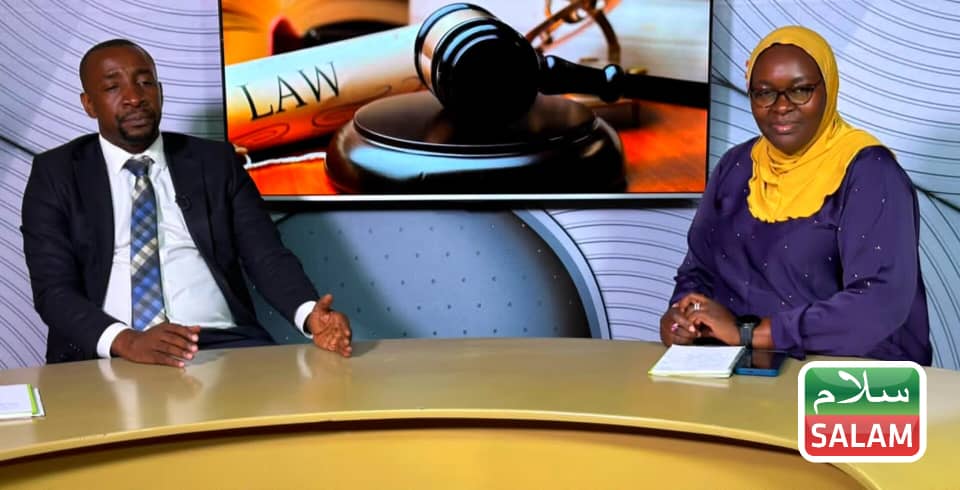
This challenge formed the central theme of an X Spaces discussion organized by UCOBAC (Uganda Community Based Association for Women and Children Welfare) in partnership with AWO International and co-hosted by NBS TV under the theme, “Understanding Land Governance: Issues Affecting Refugee and Host Communities in Uganda.”

The event brought together voices from government, academia, humanitarian groups, and the legal sector to tackle rising land governance issues in refugee-hosting districts and to seek ways for refugees and host communities to live together in harmony.

Uganda now shelters almost 1.9 million refugees and asylum seekers, most of them women and children escaping violence in South Sudan, the Democratic Republic of Congo, and nearby nations. As new arrivals pour in and families grow, the hunger for land intensifies, sparking fresh challenges for both refugees and the communities that welcome them.

Dr. Brian Makabayi, a lecturer in the Department of Geomatics and Land Management at Makerere University, argued that refugee settlements should no longer be viewed as temporary humanitarian interventions.

“The issue is not only humanitarian assistance where we are trying to solve the problem temporarily. These communities have stayed for long periods, and if these issues are not properly managed, they can become violent,” he said.

Citing research from districts like Adjumani, Makabayi pointed out that refugees now make up nearly half the population in some places. As families expand but land stays the same, the struggle for space grows ever more intense.

“Many refugees lease farmland from host communities to supplement the small plots allocated to them. However, conflicts often emerge when landowners decide to reclaim their land for personal use, sale, or lease to other people before previous agreements expire.” He further added.

Ms. Claire Birungi Agaba, the Information, Counseling and Legal Assistance Specialist at the Norwegian Refugee Council, said many of the land disputes her organization handles arise from informal and undocumented land agreements.

She explained that land transactions between refugees and host communities are frequently based on verbal agreements without written records specifying land size, duration of use, payment arrangements or responsibilities of each party. As a result, disputes over boundaries, crop destruction, unexpected evictions and changing rental terms have become increasingly common.

“Many host families themselves occupy customary land that has never been formally documented, making it difficult to prove ownership whenever disagreements arise.”  She said.

Responding to concerns about land acquisition, Agnes Baseera, Protection Officer (Legal) in the Office of the Prime Minister’s Department of Refugees, said the government does not allocate land for refugee settlements arbitrarily.

According to Baseera, establishing refugee settlements involves close collaboration between the Office of the Prime Minister, district local governments, line ministries, development partners and host communities.

She explained that before any land is designated, the government verifies ownership, assesses the suitability of the land and considers factors such as security, access to water, food availability and the capacity of social services.

“The host communities are always part of this process,” Baseera said, adding that consultation remains central to the government’s refugee settlement policy.

Eunice Nabakwa, Principal Land Officer at the Ministry of Lands, Housing and Urban Development, argued that securing customary land rights is essential to reducing future conflicts.

She noted that more than 75 percent of Uganda’s land is held under customary tenure, much of it without formal documentation. Since many refugee settlements are located on customary land, uncertainty over ownership and boundaries often fuels disputes.

To address this, the Ministry is implementing systematic land adjudication, demarcation, mapping and certification programs, including the issuance of Certificates of Customary

Ownership (CCOs).

These initiatives are intended to formally recognize customary land rights, strengthen tenure security, clarify boundaries and improve local land administration.

Continue Reading

MEDIA FOR CHANGE NETWORK

As TotalEnergies’ profits soar, calls are growing for the company to answer for the human rights abuses and environmental damage linked to EACOP.

Published

on

By the Witness Radio team.

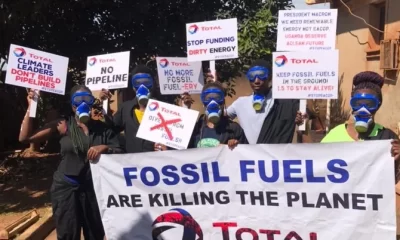
While French oil giant TotalEnergies boasts multi-billion-dollar profits, campaigners against the East African Crude Oil Pipeline (EACOP) are intensifying demands for the company to face up to the social, environmental, and human rights consequences of its oil ventures in Uganda and Tanzania.

These renewed demands come on the heels of TotalEnergies announcing a staggering US$5.4 billion net profit for the first quarter of 2026, a 29 percent jump from the previous year. While shareholders revel in record-breaking earnings, campaigners point out that communities along the EACOP route are left to shoulder the burdens of displacement, lost livelihoods, and environmental harm.

TotalEnergies is the largest shareholder and lead developer of the East African Crude Oil Pipeline (EACOP), holding a 62 percent stake in the pipeline company. Other shareholders include the Uganda National Oil company (15%), the Tanzania Petroleum Development Corporation (15%), and China National Offshore Oil Corporation (8%). As the majority shareholder, TotalEnergies oversees key decisions concerning the construction, financing, and management of the 1,443-kilometer heated crude oil pipeline that will transport oil from Uganda’s Albertine region to Tanzania’s Port Tanga.

Civil society groups across East Africa warn that TotalEnergies’ financial windfall has come at a steep price for the communities living in the shadow of the pipeline.

Environmental campaigners, including Sherelee Odayar of Greenpeace Africa, Zaki Mamdoo of Stop EACOP, Ziadah Kasimu of Green Conservers, Rukiya Khamis of 350Africa.org, and Balach Bakundane, an EACOP host community representative from Uganda, argue that local people continue to shoulder the social and economic burdens of fossil fuel extraction while corporations reap enormous profits.

Speaking during a discussion on fossil fuel accountability, Rukiya Khamis from 350 Africa- Kenya criticized governments for granting tax incentives to multinational oil companies. At the same time, ordinary citizens struggle with rising living costs.

“We were experiencing massive hikes in utility bills and retail prices. If you are in Kenya, you realize the price of milk was high, the price of bread was high, and the price of basic commodities became increasingly unaffordable. Yet, fossil fuel companies continued receiving subsidies and were free to raise prices.” Rukiya added.

She cautioned that pouring more investment into fossil fuels would only worsen the climate crisis, leaving vulnerable communities even more exposed to devastating climate disasters.

For those living along the EACOP pipeline, the promised benefits remain little more than empty words.

Balach Bakundane, who works with the EACOP Host communities in Uganda, said residents were promised employment opportunities, improved infrastructure, better healthcare services, and enhanced livelihoods. Instead, he says, many families have experienced land loss, declining incomes, and restrictions on fishing activities around affected water bodies.

“It is unbearable and very painful to see TotalEnergies announcing huge profits while our communities continue to lose their dignity, cultural values, and livelihoods. These profits are being made at our expense.” Balach revealed.

Bakundane also noted that fishing communities have been hit hard, losing access to vital parts of the lake due to oil operations.

“It is a very clear indicator that this is a neocolonial project that has no regard for our human rights, cultural values and our livelihood.” He further added.

Greenpeace Africa activist Sherelee Odayar called on African governments to rethink the generous tax breaks and investment perks handed to multinational fossil fuel giants.

She argued that governments should instead enforce the “polluter pays” principle, making companies behind greenhouse gas emissions pay their fair share for climate adaptation, disaster recovery, and compensation to affected communities.

“These companies should not be allowed to privatize the gains while socializing the costs. The extraordinary profits generated from fossil fuels should help finance climate adaptation, loss and damage, and support communities already suffering the impacts of climate change.” Odayar said, adding that accountability should accompany profits.

In Tanzania, activist Ziadah Kasimu of Green Conservers raised alarms about the lack of genuine community consultation and the displacement of thousands of residents uprooted by the pipeline.

She described how women, fishing communities in Tanga, pastoralists in Singida, and farming families have all seen their livelihoods upended by land grabs and new barriers to natural resources.

Kasimu insisted that affected communities deserve clear information, a real voice in decisions, and fair accountability for how the project’s benefits are shared.

“The profits belong only to them, but TotalEnergies and EACOP ignore the benefits for communities. We need transparent and timely information, and monitoring systems that communities themselves can access because this is our land.” She further said.

She emphasized that while communities value development, investments must respect human rights and follow just procedures. These calls for accountability grow louder as legal challenges against EACOP mount.

Earlier this year, four Ugandan farmers filed a case before the UK High Court seeking to have Ugandan constitutional, environmental, and climate laws applied to EACOP Ltd, the UK-registered company responsible for financing the pipeline.

According to Human Rights Watch, more than 100,000 people in Uganda and Tanzania are expected to lose land or access to land because of the pipeline and associated oil infrastructure.

Similarly, advocacy reports by Global Aktion have documented allegations of forced displacement, restrictions on civic space, and adverse impacts on communities affected by the project.

In 2025, BankTrack also urged financial institutions supporting EACOP to reconsider their involvement, citing concerns over environmental destruction and impacts on local livelihoods.

Campaigners point out that TotalEnergies keeps posting robust profits, even as criticism against the company intensifies.

Continue Reading

Resource Center

Legal Framework

READ BY CATEGORY

Facebook

Newsletter

Subscribe to Witness Radio's news and report updates


Trending

Subscribe to Witness Radio's news and report updates