Connect with us

MEDIA FOR CHANGE NETWORK

Sweeping investments are fueling widespread land grabbing and deepening rights violations across Uganda – Report.

Published

on

By the Witness Radio Team.

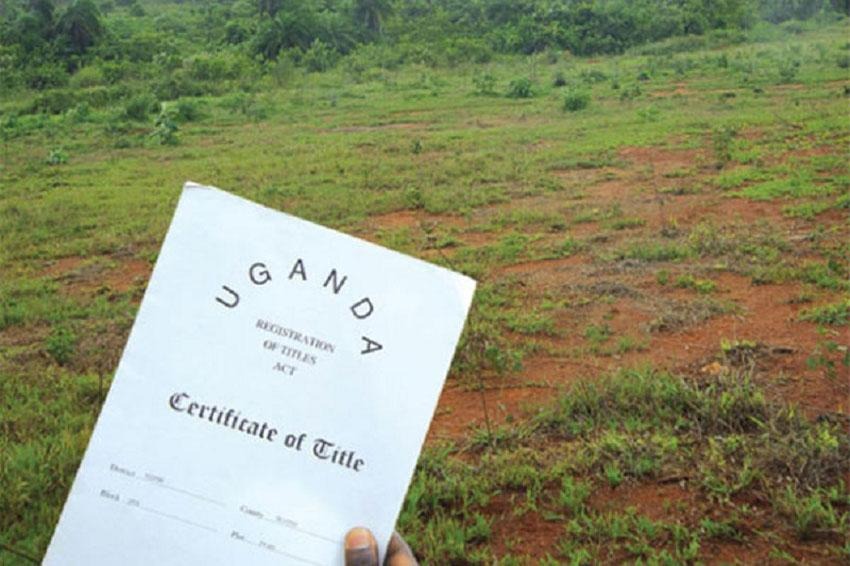
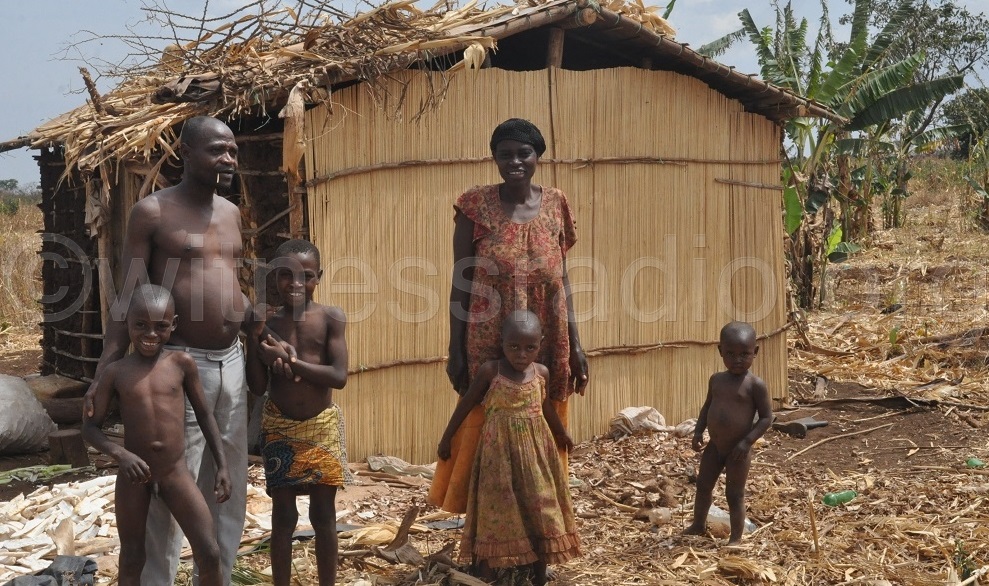
For 16 years, Sulait Behangana has fought to reclaim his land in Kassanda District, where he says he was forced out to make room for a tree plantation run by the UK-based New Forest Company (NFC). Once the proud owner of over 15 acres lush with coffee, bananas, and sugarcane, Behangana lost not just his fields but the foundation of his livelihood.

Now, Behangana survives by toiling on other people’s plantations, a stark contrast to the life he once knew.

“I was beaten during the eviction, and this caused lameness and weakness of my body. I have been reduced to a pauper; I have to dig in other people’s plantations to get what to eat,” Behangana told Witness Radio.

Behangana was one of 901 families uprooted to clear space for the Namwasa tree plantation, as detailed in a report chronicling seven cases of development-driven forced evictions in Uganda. In his community, families recount being pushed off their land without compensation or genuine resettlement. While a few received land, hundreds remain in limbo, still waiting for justice. Julius Ndagize, who leads the displaced households, says repeated mediation with New Forest Company has brought no resolution.

“We secured 500 acres of land in Kampindu Village, Kitumbi Sub-county after the first mediation to resettle those people. Of the 901 affected families, 453 were allocated land and resettled. However, 448 families haven’t been compensated to date,” Ndagize says.

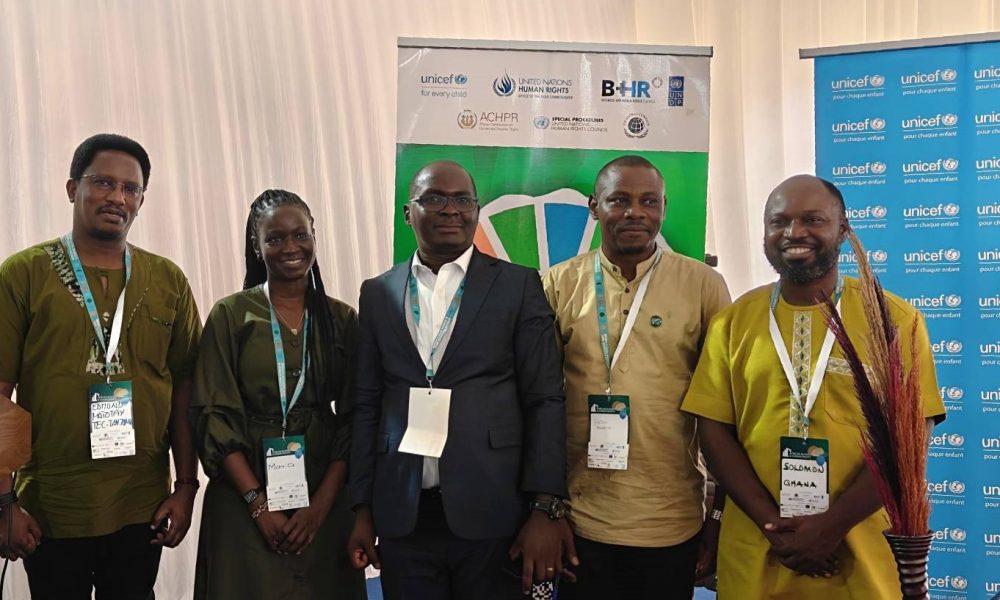
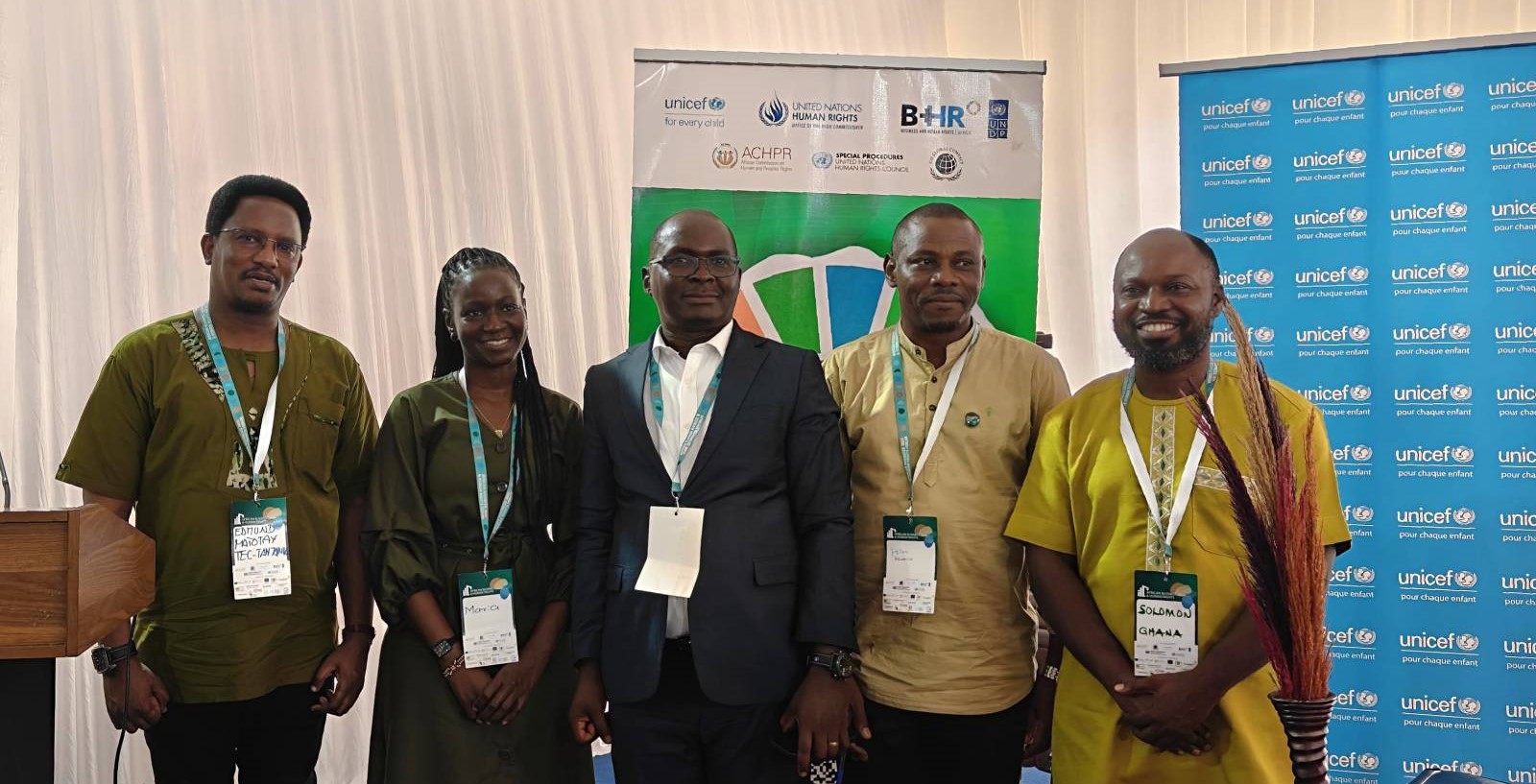
The ordeal faced by families in Mubende echoes a broader pattern uncovered in a report titled Foreign Investment Drives Systematic Forced Land Evictions in Violation of the UN Guiding Principles on Business and Human Rights, presented at the recent Africa Business and Human Rights Forum 2026.

The report details seven major cases where large-scale development projects and investments swept across Uganda, displacing communities. It examines the roles of government and security agencies, and the uphill battle victims face in seeking compensation and justice.

These cases span the Kaweri Coffee Plantation, Namwasa Forest Reserve, Formosa Three Planting Company, Agilis Partners, the Bunyoro Ranching Scheme in Kiryandongo, the Wadelai Irrigation Scheme, the Tilenga Project, the East African Crude Oil Pipeline, and conservation projects impacting the Batwa.

Witness Radio, ORRA, AFIEGO, FIAN-Uganda, BIRUDO, and BIDO, in collaboration with EDLC-NOVA, compiled the report. Drawing on community testimonies, court records, and grassroots documentation, the report claims these seven cases displaced 56,400 people. Even more striking, civil society monitoring suggests over 360,000 Ugandans may have been affected by forced evictions in the first half of 2024.

Mr. Jeff Wokulira Ssebaggala, Executive Director of Witness Radio, notes that while the cases span different investments and regions, affected communities’ stories share striking similarities. He points out that communities were frequently sidelined in decisions about their land, while those with political or financial clout often influenced the very processes that led to displacement.

“We noticed key agencies but also middlemen or government officials who are politically and financially connected,” Ssebaggala said, adding that such actors can be involved from the start, especially where communities live on land without formal tenure, making it easier to disregard their claims when the land is identified for investment or government use.

Ssebaggala explains that the roots of the problem stretch back to historical land decisions, when communities were left out of government planning and later discovered they were living on land earmarked for other uses.

“There are others whose land was gazetted to be a ranch by governments in the 1970s, but they were never consulted when the national exercise of planning was taking place,” he said.

He warns the stakes grow higher when communities resist these projects or question their removal.

“Those who stand against these projects are arrested, intimidated, or imprisoned. Communities regard land as everything because it defines their livelihood and heritage,” Ssebaggala said, adding that the report raised concerns about state institutions supporting investments rather than protecting affected communities.

The report reveals that women and young people were largely shut out of decision-making around land-based investments. Ssebaggala notes many projects moved forward without seeking communities’ voices or meaningful input, leaving those most reliant on the land excluded from choices shaping their destinies. As gender equality is concerned, the report shows an exclusion of women and youth in all these processes as projects really exist on their own without expressed opinion or contribution from the communities,” he said.

Examining these cases and the struggle for justice, lawyer Peter Arinaitwe, who represents land eviction victims, says affected communities face many obstacles: institutional backlogs, delays, and the heavy financial toll of legal battles that can drag on for years.

“We face judicial capture. Recently, we had the Chief Justice warning judges not to grant injunctions, stopping any investment project, and said that doing so amounts to prison,” Arinaitwe said.

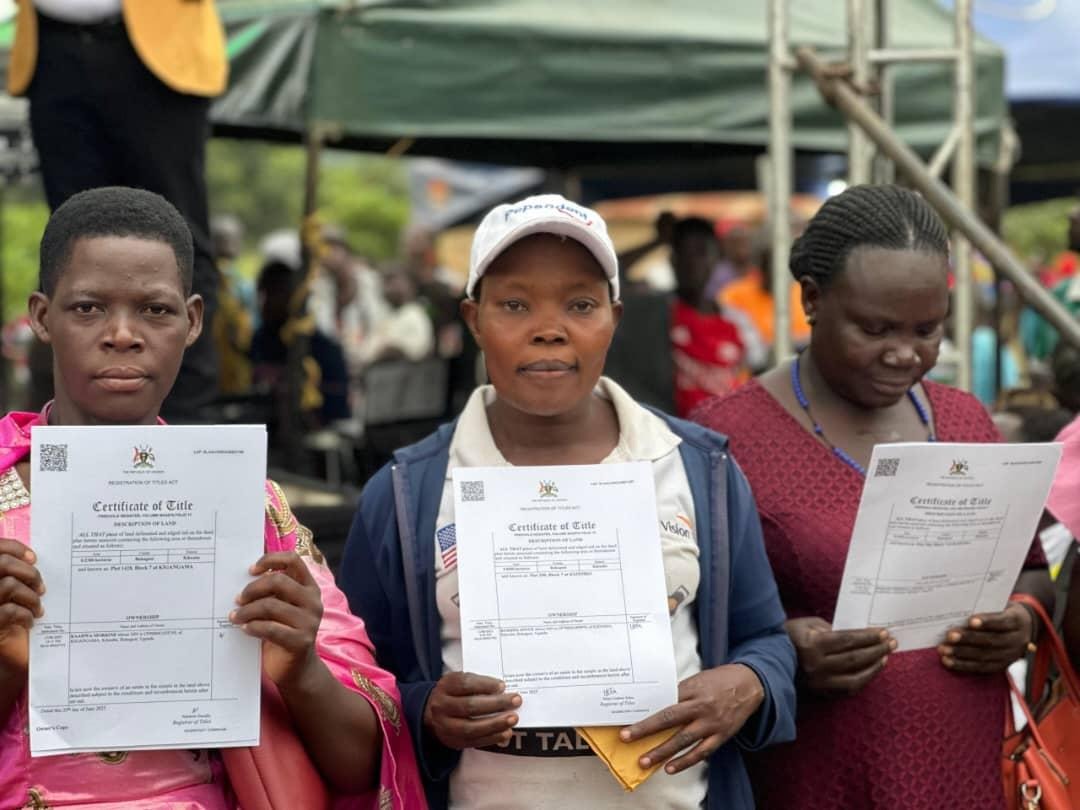
Arinaitwe says Uganda has constitutional and legal protections for land rights, but these have not always protected communities on the ground. He cited cases involving the oil refinery and Kaweri Coffee Plantation, where communities pursued claims in court. Even when cases were decided and compensation awarded, legal processes continued to prolong disputes.ws because the constitutional provisions and protections exist in the book. Still, it’s a different story when it comes to practice,” he said.

For those stripped of their land, drawn-out court battles add another burden, forcing them to spend time and money seeking justice while struggling to rebuild their lives. Arinaitwe adds that the scars of eviction run deep, with psychological and emotional wounds lingering long after the land is gone.

“They are traumatized by the atrocities committed in the course of the eviction which go beyond the land and instead cause mental and emotional drain,” he said.

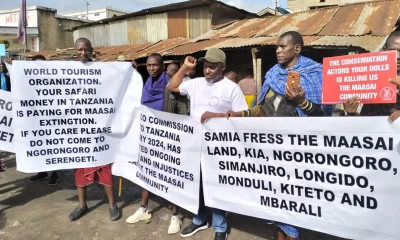
Participants from across Africa echoed Uganda’s concerns. Edmund Matotay described how Maasai communities in northern Tanzania now face mounting pressure as government interests in conservation, tourism, agriculture, and development clash with the pastoral way of life.

He said the Maasai depend on access to grazing land and that physical displacement therefore affects more than where people live. “The issue of physical displacement disrupts the way of life considering that Maasai people are typically nomads and pastoralists who depend on the grazing of the cows and cattle,” Matotai said.

He also reported intimidation of people supporting the communities, saying lawyers, faith leaders and others involved in defending land rights had faced threats and arrests. “There were a lot of intimidation issues, not only to the lawyers, to other actors, but also to the faith leaders who are leading some of the discussion around the area,” he said.

Back in Uganda, the report insists that stopping forced evictions is not the government’s burden alone. Companies profiting from land-based investments must also identify human rights risks before projects start, engage with affected communities, and create accessible ways to hear and resolve grievances.

Ssebaggala urges investors not to wait until communities are uprooted and legal battles erupt before tackling human rights issues. He calls for ongoing human rights due diligence throughout every stage of investment, and for companies to set up grievance mechanisms so affected people can voice concerns and seek solutions.

“Investors should integrate human rights due diligence across project cycles and also establish a grievance mechanism, policies, structures and awareness of these processes,” he said.

He also urges the government to put in place systems that verify free, prior, and informed consent, making human rights due diligence and environmental impact assessments mandatory before any land-based investment can proceed.

Continue Reading

MEDIA FOR CHANGE NETWORK

Across Africa, the push for a greener future is putting new pressure on local communities, as recent ILC case studies highlight.

Published

on

By the Witness Radio team.

Africa’s efforts to tackle climate change and biodiversity loss are fueling a surge in renewable energy, conservation, restoration, biofuels, and carbon projects. Researchers caution that these green solutions can dramatically alter who controls land and natural resources.

Stories from Uganda, Nigeria, and Burkina Faso, shared during the ILC’s “Whose Land, Whose Transition?” webinar, revealed how climate and environmental projects collide with land rights, livelihoods, and the deep bonds communities have with their land.

The regional webinar brought together organizations, researchers, donors, and other key players to explore new land conflicts sparked by the green transition and consider how land governance might address the climate and biodiversity crises.

Jeremy Bourgoin, Knowledge Management Lead at the International Land Coalition, said the urgency of addressing climate and biodiversity challenges should not obscure the consequences projects can have on people whose land is needed for those interventions.

“The climate and biodiversity crisis still demand urgent and far-reaching action,” Bourgoin said.

He pointed out that many of these promoted solutions—conservation, restoration, renewable energy, and carbon projects—require land, often clashing with the rights and livelihoods of those already living there.

“The question is not only on what kind of transition is needed but also on whose lands it relies upon,” he added.

He emphasized that the green transition is not a one-size-fits-all story across Africa. The unique land systems, institutions, and communities in each place shape its impact.

“These three streams asked us to examine the green transition without treating the region as a single uniform context. The case studies show how these dynamics unfold in particular places, through particular institutions, and for particular groups of people,” he said.

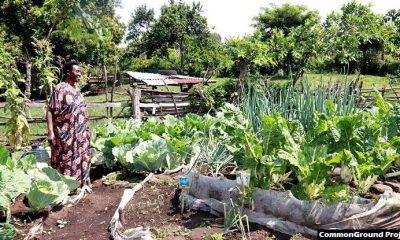
In northern Uganda, Dr Theresa E. Auma presented research on what she described as the exclusion and exploitation of communities around green energy activities linked to Bukona Agro Processing Factory in Koch-Goma Subcounty, Nwoya District.

Drawing on data from 2022 to 2025, the research examined how large-scale investments affect nearby communities and explored ways to prevent human rights abuses.

Auma described how communities worry about being pushed off their land, facing harsh labor conditions, and dealing with pollution that threatens their environment.

She She reported that workers often labored in hazardous conditions without proper safety gear, many lacking formal contracts and facing delayed or missing wages. The payment is either delayed, and people have to struggle, or in many cases, they did not receive the payments, like when they work on planting maize or things like that in the factory,” Auma said.

“The factory is Indian-owned, and so the racial question comes between the Indian and black workers in the factory, that the Indian workers are taken as a higher class of workers compared to the black workers, Ugandan workers,” she added.

In Nigeria, Chinwike Okereke from the African Law Foundation presented research on farmer-pastoralist land conflicts in Benue State, focusing on how the conflicts affect women differently.

The conflict is fueled by a mix of forces: growing populations, increasing resource pressures, fierce competition for land and water, cattle theft, armed groups, and uncertainty over land rights and pastoral movement.

Okereke explained that climate change adds another challenge, disrupting agriculture and making it even harder for people to access vital resources.

He noted that these hardships hit women hardest, since they are usually the ones tasked with gathering food, water, and other essentials for their families.

“It increased women’s workload and caused many hardships and poverty as women spend extra hours reaching land and water sources and often go into debt due to harsh economic conditions,” he said. In Burkina Faso, Saud Ata shared a case study from Darkwei Kelesuk, spotlighting how traditional knowledge helps communities protect biodiversity and steward their land.

She introduced participatory mapping, a tool that empowers communities to chart their territories and weave together diverse strands of knowledge.

“Different ways of knowledge can be combined without transferring the control of the territory far from the community,” Ata said.

Ata stressed that this approach is vital, since local people rely on their ecosystems for everything from breeding and gardening to crafting and managing forest resources.

She underscored how these ecosystems are lifelines, supporting both biodiversity and the daily realities of community life.

“The ecosystems in the area are key for biodiversity and the land conditions of the communities,” she said.

Continue Reading

MEDIA FOR CHANGE NETWORK

Who will shape the future of East Africa’s seeds? Youth and civil society are sounding the alarm over a proposed regional law.

Published

on

By the Witness Radio Team

For generations, East African farmers have chosen seeds from their harvests, saved them, swapped them with neighbors, and planted them each season. This tradition has helped communities nurture crops suited to their unique soils, climates, and food cultures, passing agricultural wisdom through generations.

Yet as East Africa edges closer to a unified set of rules for seeds and plant varieties, farmer groups and agroecology champions are asking: Will farmer-managed seed systems survive in tomorrow’s food landscape?

This concern surfaced during a virtual gathering hosted by the Center for Food and Adequate Living Rights (CEFROHT) and Greenpeace Africa, where youth and civil society from across East Africa united under the banner of “Youth Agroecology and the Fight for Seed Sovereignty in Food Systems Governance.”

The discussion came as the East African Community considers the East African Seed and Plant Varieties Bill, 2025, which seeks to establish common rules for regulating seeds and plant varieties across the region.

The Bill was introduced to the East African Legislative Assembly and then underwent stakeholder consultations and public hearings across EAC partner states in August.

Doreen Akware of CEFROHT said the proposed law could have far-reaching consequences because it will shape how the region regulates seed.

“This bill lacks the disclosure of origin, prior informed consent, and also benefit-sharing safeguards,” she said.

The organizations argue the issue goes beyond regulating commercial seed. At stake is whether the new rules will honor generations of farmers who have saved, shared, and multiplied their own seeds.

Abert Rwancwende, a food justice advocate and agroecology officer at CEFROHT, said the Bill focuses on seed testing, variety release, certification, cross-border movement of certified seed, and protection of plant breeders’ rights. But this raises concerns because farmers’ rights lack the same explicit recognition.

“The bill’s own memorandum says its purpose is to create a good environment for private companies to multiply and sell seed. In the whole bill, farmers are never mentioned as people with rights,” Rwancwende said.

Civil society groups insist that commercial and farmer-managed seed systems already coexist, and both deserve a place in the region’s legal framework.

Dieudonne Sindikubwabo, Head of Programs at the Rwanda Organic Agriculture Movement, said the proposed law has left questions about what will happen to smallholder farmers who depend on their own seed systems.

“It is uncertain what will happen to these small-scale farmers because they normally exchange, save, and multiply seeds. Since this law does not mention their work, their future is unclear,” he questions.

Sindikubwabo pointed out that farmers already possess the know-how to choose and preserve seeds that thrive in their own environments.

Tabby Munyiri, a communications specialist with Seed Savers Network Kenya, emphasized that farmer-managed seed systems are vital, granting communities true independence over what they plant.

She said Seed Savers Network works with 125 community seed banks and over 405,000 community members, promoting farmer-managed seed systems, traditional seeds, and traditional foods.

She added that community seed banks help farmers safeguard and share crop varieties that could otherwise vanish forever.

The conversation also spotlighted the role of women, who are deeply involved in choosing, saving, and storing seeds, yet often have little say in decisions about agricultural resources.

Asma Mohammed, Program Coordinator at AYUUB in Somalia, said gender cannot be separated from discussions about seed and agriculture.

“Gender intersects everything, and it also intersects with seeds and agroecology and agriculture at large,” Mohammed said.

She noted that women carry vital knowledge about seeds, such as which varieties flourish in certain conditions, but are too often left out of ownership and policy decisions.

“Women already are holding the seed and the knowledge, but still they are excluded from the ownership and decision-making table,” she said.

The organizations are calling for farmers to stay at the heart of the system, with the freedom to save, share, and multiply seeds. Akware believes there is still time to shape the proposed law before it is finalized.

“The bill still has some decision points ahead of us; therefore, this discussion is not just for awareness, but we see that we can still do something,” she said.

Continue Reading

MEDIA FOR CHANGE NETWORK

The global race for clean energy minerals is leaving communities grappling with conflicts and human rights abuses, a new report reveals.

Published

on

By the Witness Radio Team

The global rush to secure minerals for the clean-energy transition is exposing local and indigenous communities to land dispossession, conflicts, human rights abuses or violations, and attacks on those who challenge mining projects, according to a new report by the Business & Human Rights Resource Center (BHRRC).

The report, Mining for the Future, Undermining Trust: Participation Deficit at the Heart of the Energy Transition, warns that growing demand for minerals like copper, lithium, nickel, and other transition minerals is advancing faster than mechanisms to ensure affected communities have a meaningful say in decisions about mining projects on their land.

Tanzania is among the African countries positioning itself as a future supplier of minerals needed for the global energy transition. The country has significant potential for graphite, nickel and rare earth elements, while investor interest is growing in minerals used in batteries and renewable-energy technologies.

In Kandaskira, a village in Simanjiro District, the drive to extract these minerals raises deep worries about land loss, water scarcity, forced displacement, and exclusion from decisions shaping their future.

Indigenous rights organization PINGO’s Forum has documented land conflicts, fears of forced displacement, risks of water contamination, and exclusion of communities from negotiations with mining companies around graphite projects. It also recorded unfulfilled corporate social responsibility promises, violence against community members resisting mining projects, and gender-based violence.

Rombo Ole, chairman of Kandaskira, said communities need clear information about the opportunities and potential impacts of the energy transition. He also called for transparent laws, procedures, and fair compensation for people whose land, livelihoods, or resources are affected.

“A just energy transition is important because energy is about people and communities. The transition must put people at the center and ensure no community is left behind or unfairly affected,” Rombo said.

Kandaskira’s story echoes a broader struggle faced by communities living near transition-mineral projects worldwide.

According to the BHRRC report, the resulting “participation deficit” risks undermining public trust and could fuel conflicts, lawsuits, and delays to projects supporting the global transition away from fossil fuels.

“The energy transition cannot be built on the silencing or exclusion of the people and communities who bear its costs,” the report argues.

The findings come as demand for transition minerals is projected to rise sharply in coming decades. The report estimates that by 2040, the share of global mineral demand for the energy transition could rise from 20% to 45% for copper, 38% to 92% for lithium, and below 10% to 54% for nickel.

As demand surges, so do the dangers for those who challenge mining projects.

The report documents over 1,880 attacks against critics of the mining sector in 11 years, highlighting a shrinking civic space around mining activities.

It identifies 1,226 allegations of abuse connected to transition-mineral mining since 2010. About one in six involved attacks on human-rights defenders, while 25 cases involved strategic lawsuits against public participation, known as SLAPPs.

The report says more than a third of human-rights defenders murdered over the past decade were raising concerns about mining, while close to 40% were Indigenous defenders.

The findings come against a broader deterioration in civic space globally. According to the report, only seven percent of the world’s population currently live in countries where civic space is considered free or relatively open.

The report says restrictions on civic freedoms make it harder for communities, journalists, environmental defenders, and human-rights organizations to scrutinize mining projects or challenge decisions affecting their land and livelihoods.

The report recorded at least 173 cases in 2024 and 2025 where communities or workers pushed back against abuses linked to the energy transition.

It identified 125 legal cases brought by people affected by abusive energy-transition projects. Eighty-nine involved transition-mineral mining, while 71 lawsuits targeted states for authorizing business activities.

The report calls on governments to protect civic freedoms and human-rights defenders, strengthen Indigenous rights and free, prior and informed consent, improve transparency around mining contracts and licenses, and ensure that affected communities have meaningful influence over decisions.

It also calls on mining companies and investors to conduct human-rights due diligence, establish effective grievance mechanisms, disclose project information, provide fair compensation and benefit-sharing, and commit to zero tolerance for attacks against human-rights defenders.

The report warns that unless communities have a meaningful role in mining decisions, the rush to build a clean-energy future could deepen the very conflicts and inequalities the transition is meant to address.

Continue Reading

Resource Center

Legal Framework

READ BY CATEGORY

Facebook

Newsletter

Subscribe to Witness Radio's news and report updates


Trending

Subscribe to Witness Radio's news and report updates