Connect with us

MEDIA FOR CHANGE NETWORK

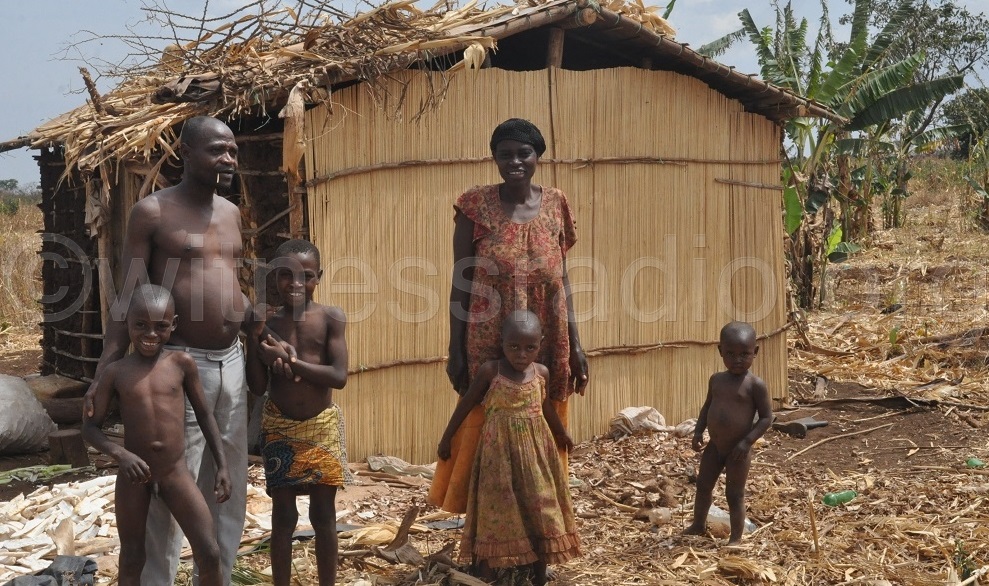
Tension as Project-Affected Persons demand to meet Uganda’s President over Oil Palm growing on their grabbed land.

Published

on

By Witness Radio team

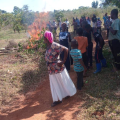
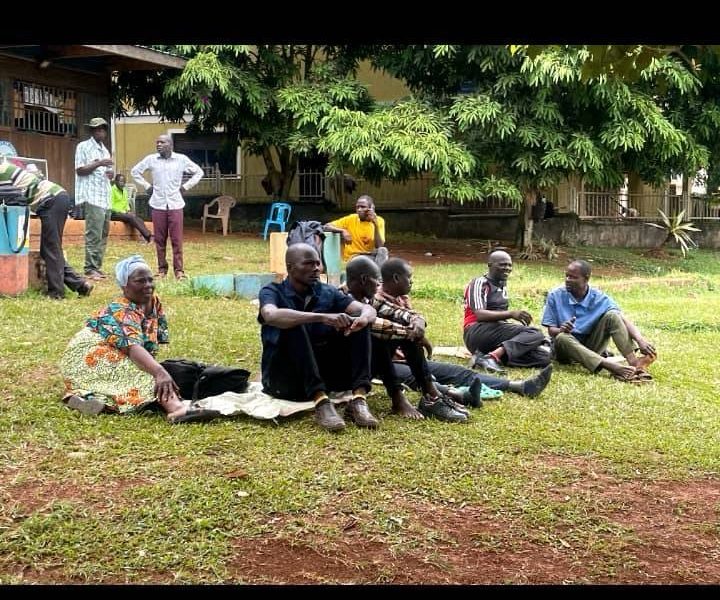
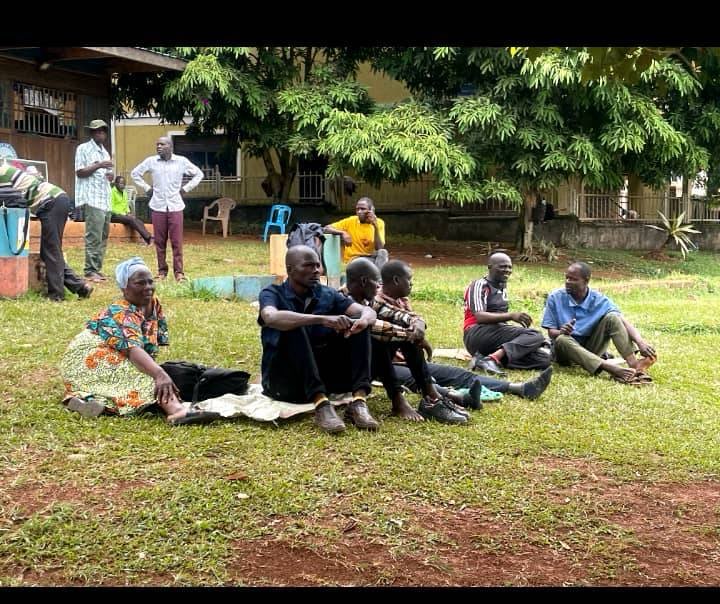
Entebbe, Uganda: Over 250 families affected by the government’s oil palm project express deep frustration as ongoing issues highlight their sense of neglect and exclusion from the compensation process. Residents from Nairambi, Busamizi, Buvuma Town Council, and Buwooya Sub-counties are camping at the Entebbe Children’s Centre, demanding urgent attention from authorities, including a face-to-face meeting with President Yoweri Museveni.

The residents accuse government ministries of sidelining them despite a presidential directive ordering compensation for all affected households.

“We don’t know who is being compensated,” said Mr Katuntu David, chairman of the affected residents. Mr Katuntu led hundreds of people to seek a meeting with the President.

The affected households are part of the National Oil Palm Project (NOPP), a 10-year initiative to expand oil palm cultivation across Uganda. The project is implemented by the Government of Uganda (GoU), led by the Ministry of Agriculture, Animal Industry and Fisheries (MAAIF), with funding from the International Fund for Agricultural Development (IFAD). Private partners, including Bidco and Equity Bank’s, collaborate with farmer organisations to develop the sector.

Community members insist they have never received official communication on who will receive compensation, which underscores their confusion and sense of being left in the dark. Attempts to obtain the beneficiary lists from MAAIF and the Ministry of Lands have reportedly been unsuccessful, deepening their uncertainty and frustration.

“We don’t know which people on the list to be compensated. The President said we should be compensated, but we have not been contacted. Only two of us were claimed to have been paid, and even then, one person did not find the money in their account. The bank said it bounced back,” added Mr Katuntu.

Residents say the Ministry of Agriculture has refused to release compensation lists or schedules, often asking them to “give the ministry time.” At the same time, some officials claim to be unaware of any presidential directive. When contacted, the Ministry’s spokesperson, Mrs Connie Achayo, did not respond.

During a June 18th, 2025, Parish Development Model monitoring tour in Buvuma District, President Museveni was briefed by then Assistant Resident District Commissioner Patrick Mubiru about the community’s displacement, crop destruction, and land loss linked to the oil palm project. The President, after the briefing, directed that all affected households be compensated and allocated 28 billion shillings for this purpose, instructing that at least 14 billion shillings be released immediately to start payments, highlighting the government’s commitment.

Six months later, residents say the directive has yet to be implemented.

Six months later, residents say the President’s directive has yet to be implemented, leaving many in hardship and distress. “The President toured here, and he said he would help. But nothing has happened since because what he ordered was never implemented. People are suffering,” said Mr Waiswa Dan, another affected resident, emphasizing their ongoing hardship and need for action.

But earlier this month, many thought their questions had been answered when the State Minister of Agriculture, Mr Fred Kyakulaga, revealed that the government was set to compensate the affected people.

In the communication, MAAIF announced that the government had secured 24 billion shillings to compensate affected residents in Buvuma and Sango Bay in Kyotera District. According to the announcement, 14 billion shillings would go to Buvuma, while 10 billion shillings would compensate Sango Bay residents.

“Following a directive by H.E. the President, MAAIF, in collaboration with the Ministry of Lands, Housing and Urban Development (MoLHUD), undertook a verification exercise to identify and verify Project Affected Persons (PAPs) in Buvuma and Sango Bay. Their land was valued using the Government Valuer, with the knowledge and cooperation of the affected persons. An amount of 52 billion shillings was calculated as required for compensation,” the Ministry’s brief revealed. Providing more details on these procedures can reassure stakeholders about fairness and transparency.

It added, “Out of the required 52 billion, MAAIF has received 24 billion, of which 14 billion has been allocated to Buvuma and 10 billion to Sango Bay. Based on government valuers’ reports, full payments have been made to 301 PAPs in five villages: Bubembe, Bwaka, Buwanga, Mbekete, and Ndayiga in Buvuma District. The ministry expects to compensate a total of 1,405 PAPs across 11 villages, disclosing the list to PAPs before phased payments.”

However, Buvuma residents say the ministries have refused to confirm whether they are included in this allocation, despite the President’s directive.

“The people claimed to be compensated have never been revealed, and we don’t know them. Other areas they want to compensate are not yet disclosed to us, so who are they compensating if not us?” Mr Katuntu questioned.

The compensation dispute dates back to 2018, when over 100 residents sued the government and Bidco in Mukono High Court, accusing them of forced eviction, inadequate and delayed compensation, and failure to disclose compensation amounts. The case, which stalled for years, was transferred to the Lugazi High court in this April.

Protesters, who are also complainants, say that during the President’s June visit, he advised them to withdraw the case in favour of an out-of-court settlement, promising fast-tracked compensation. While they vowed to comply, the compensation has still not materialised.

“The President told us he is ready to compensate us, which is why we decided to follow up. But nothing has been done. When we received the communication about compensating victims of palm oil expansion, we approached the relevant ministries, who have since turned us down,” Mr Katuntu further revealed.

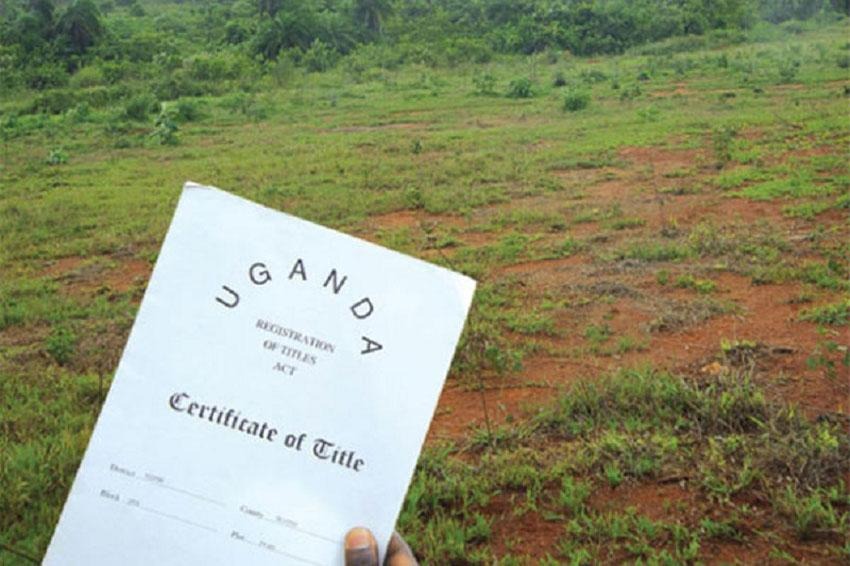
Community leaders say they provided proof of land ownership as requested. The Ministry of Agriculture, however, allegedly insisted on written confirmation from the Ministry of Lands. Even after residents provided the requested documentation, Agriculture did not respond.

“We gave them whatever they wanted, but they didn’t act. This has caused us doubt. That is why we want to meet their boss, the President,” said Waiswa.

The protestors, including elderly farmers, women, and youth, have vowed to stay at the Entebbe Children’s Park until the President meets them.

“We cannot leave here without meeting the President. We are sure he will hear us, and we shall be compensated. That is why we are here, and we are not ready to go,” they added.

Since its initial implementation, the oil palm project has affected thousands of people. For people in Buvuma, Mr Katuntu revealed that some affected families have endured more than a decade of suffering since the oil palm project began expanding, losing homes, land, and livelihoods. They are calling for the President’s intervention to ensure full compensation of all legitimate project-affected persons.

Continue Reading

MEDIA FOR CHANGE NETWORK

Accountability in Crisis: Development banks, while funding Asia’s energy transition, are accused of silencing Asian local and Indigenous communities, highlighting the central tension between a clean-energy push and the repression of those most affected.

Published

on

By the Witness Radio Team.

As the world races to abandon fossil fuels and embrace renewable energy to avert climate catastrophe, development banks, governments, and corporations promote this transition as a global priority. In Asia, this transition, presented as a path to a clean-energy future, is shadowed by serious concerns about who bears its costs.

However, for many Indigenous peoples, farmers, fisherfolk, and urban poor living on lands targeted by these projects, the energy transition has led to displacement, repression, and the loss of livelihoods.

This alternative reality is documented in a new regional report, Financing the Transition, Silencing Defenders. The report details how communities raising concerns about renewable energy projects across seven Asian countries have faced reprisals ranging from harassment and arrests to military occupation and killings.

The report challenges the region’s energy transition. It argues that renewable energy projects use vast resources, burdening Indigenous and local communities who have contributed little to the climate crisis. The report documents how these projects cause displacement, loss of cultural identity, ecological disruption, health risks, and increased debt.

Security forces were often reported to have carried out reprisals. Police and the military were frequently deployed to sites. Communities described beatings, arrests, and intimidation during consultations, compensation, and construction.

Rather than providing security, the report concludes that “in most contexts, their presence does not make communities feel secure, but rather threatened and silenced.”

The report goes on to describe how, in several documented cases, security personnel forcibly entered villages, dismantled community barricades, demolished homes, and stopped peaceful protests. According to the report, these confrontations often escalated tensions and contributed to the criminalization of local resistance.

The report underscores a central argument: when communities raise concerns, their voices are systematically silenced through SLAPPs, attacks, criminalization, intimidation, and discrimination—primarily by local authorities and security forces. These practices form a system of control involving governments, security forces, corporations, and development banks to repress dissent and maintain project momentum.

The 44-page report examined 12 renewable energy and energy-transition projects across seven Asian countries—India, Indonesia, Pakistan, the Philippines, Tajikistan, Thailand, and the Maldives. It was produced by the Coalition for Rights in Development, a global network representing over 100 social movements, civil society organizations, grassroots groups, and partners.

Despite variations in scale and technology among these projects, affected communities across these countries consistently reported being excluded from decision-making processes.

Many projects moved forward without real consultation or Free, Prior, and Informed Consent (FPIC) of Indigenous Peoples. Communities said they were told about decisions after the fact, kept from key project details, or pressured to accept compensation.

As the report notes, when projects exclude rights holders from decision-making, it often leads to protests, legal challenges, and revoked permits. These outcomes raise costs and cause delays. More importantly, leaving out affected communities creates mistrust toward specific projects and the broader energy transition narrative that justifies them.

In Assam, India, Indigenous Karbi, Naga, and Adivasi communities oppose a solar project projected to affect more than 20,000 people. Community representatives report that consultations were held in only 9 of the 23 impacted villages, leaving thousands excluded from the process. They claim the project threatens livelihoods, land rights, biodiversity, bamboo forests, and elephant habitats.

“The project was approved without ensuring the communities’ Free, Prior, and Informed Consent (FPIC). Consultations were held in only 9 out of 23 impacted villages, thus excluding thousands from the process,” the report states.

Researchers found that when communities attempt to challenge the harmful impacts of these projects, they are often labeled anti-development, extremists, or threats to national interests. In response, authorities, corporations, and local officials have reportedly targeted outspoken community leaders and sought to isolate them.

According to the report, “government authorities, private companies, and other actors who have a vested interest in the projects identify the most vocal community members and human rights defenders who are raising concerns and stigmatize them.”

In another case, in Pakistan, activists opposing hydropower projects reported receiving threats from authorities. They have also been accused of working against national development goals. The Madyan Hydropower Project is funded by the World Bank. The Torwali Indigenous community worries about their land, culture, and future.

Similarly, in the Philippines, environmental defenders and Indigenous leaders who oppose dam projects have faced “red-tagging.” This is a tactic that labels activists as communist sympathizers or security threats. The report says these tactics have created fear and deterred people from participating in public consultations.

Poorly planned projects imposed without meaningful consent harm communities, and those voicing concerns face intimidation and reprisals.

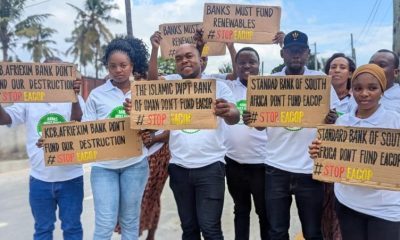
Many projects are led by major public development finance institutions. These include the Asian Development Bank, the World Bank, and the Asian Infrastructure Investment Bank. These institutions are directly implicated in reported abuses and the silencing of communities.

The findings directly challenge development banks: they must choose either to fund actors implicated in human rights violations or to actively leverage their influence to uphold community rights and genuine participation in Asia’s energy transition.

“Banks can either look the other way and continue funding government and corporate entities that have historically disregarded human rights and environmental sustainability, or they can use their influence to ensure that the highest standards and safeguards are upheld. The report states that development banks have responsibilities regarding both the prevention of and response to reprisals,” the report states.

The report calls on development banks to improve environmental and social safeguards. Banks should conduct thorough risk assessments and implement measures to ensure safe, meaningful engagement with affected communities. This should happen throughout the energy transition.

Development banks invoke the push to abandon fossil fuels to underscore urgency, but the report warns that this urgency is sometimes misused to accelerate approvals, rush assessments, and limit community consultation—thereby undermining both human rights and the legitimacy of the transition.

Continue Reading

MEDIA FOR CHANGE NETWORK

Agroecological Entrepreneurship: African farmers are redefining agriculture by building agroecological businesses that challenge industrial models.

Published

on

By the Witness Radio team.

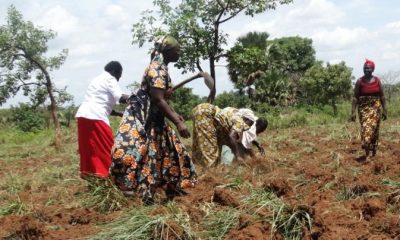
In rural Senegal, women’s groups use roasting, grinding, and mixing equipment to turn local beans, spices, and traditional ingredients into a natural product called Sumpak. This product is offered as an alternative to the industrial bouillon cubes common in West African kitchens. Sumpak is marketed as a locally sourced option rooted in agroecological farming and traditional food knowledge.

For its creators, Sumpak symbolizes a continent-wide movement where small-scale farmers and grassroots groups create businesses that embody self-reliance, sustainability, and a shift away from dependence on industrial agribusiness.

In Uganda, Senegal, Cameroon, and other African countries, farmer groups are trying local food processing, seed systems, ecological farming, and direct markets. They want to change how healthy food is produced, processed, and sold. Their efforts are not just for the environment. They are also driven by economic survival, food sovereignty, and frustration with systems that depend on imported inputs, foreign-controlled supply chains, and industrial food products.

Highlighting these grassroots efforts, the initiatives were recently discussed during a webinar organized by the Agroecology Fund to launch a report documenting grassroots agroecological enterprises across the continent.

“We asked ourselves what would happen if we combined the creativity and power of social movements. This was an effort to provide support to networks and organizations within the Agroecology movements that are also working to support the agroecology enterprises,” Daniel Moss, co-director of the fund, said during the online report launch.

The report, Agroecological Entrepreneurship Starts Here, draws from business planning grants awarded to 15 organizations across Africa. The projects supported by the grants ranged from cassava flour processing in Uganda to local bread-making flour initiatives in Cameroon and women-led food processing enterprises in Senegal, among others.

The report contends that agroecology represents both an environmental practice and a strategic pathway for building locally controlled, sustainable economies.

For decades, the agricultural industry in Africa and globally has favored industrial systems. These rely on hybrid seeds, chemical fertilizers, and export crops. Big agribusinesses and commercial farms often get grants, subsidies, financing, and policy support. Meanwhile, small-scale agroecological enterprises struggle to access even modest capital.

The report launch noted that many grassroots agricultural businesses need $10,000 to $250,000. They require funds to expand production, improve packaging, or buy processing equipment. However, the findings show that most lenders and investors focus on much larger commercial projects.

“There’s a huge finance gap,” Jennifer Astone, a co-author of the report, revealed, adding that “Smallholder farmers, cooperatives and agroecological entrepreneurs are systematically excluded from finance and policy support that fuels conventional industrial agribusiness.”

In Uganda, the Eastern and Southern Africa Small Scale Farmers Forum (ESAFF) worked with farmer groups producing okra powder, cassava flour, pineapple products, and biomass briquettes.

According to ESAFF, some groups received grinding machines and value-addition equipment, while others were trained in packaging, branding, and marketing. Several enterprises, with the support of the grant, later registered formally as businesses after seeing growth opportunities emerge.

Nancy Mugimba, coordinator of ESAFF, said the grants helped transform loosely organized farmer activities into more structured enterprises.

“One of the things we discovered is that these businesses can actually work. The farmers became more organized and innovative.” Nancy said.

According to Nancy, one women’s group producing cassava flour improved its drying and processing methods to target health-conscious consumers, including people managing diabetes, while another youth group shifted from chemically grown pineapples to organic production after discovering growing demand for sweeter agroecological fruit.

“Farmers were trained on how to handle their products for their target markets. As a result, they are now producing higher-quality products than before and have successfully introduced them to the market,” she added.

In Senegal, the women-led movement, Nous Sommes la Solution, focused on replacing industrial bouillon cubes with natural products made from local ingredients.

The movement joins more than 500 rural women’s associations and 175,000 members across West Africa. It claims that more processed food additives have raised health concerns such as hypertension and kidney disease.

This bouillon uses low-cost beans and several prep steps: pre-cook, peel, wash, then ferment the beans. The beans are then processed into a powder. We rely on local skills and local produce. We also aim to promote high-nutritive value products, said Mariama Sonko during the report launch. She added that women can make something local, providing income to support a healthy lifestyle.

Their product, Sumpak, uses fermented local beans, spices, and traditional knowledge. With support from the grants, the women obtained food safety certification, trademark registration, and improved packaging.

This grant lets us focus on administrative tasks for production and sales. We received Food Safety Certification in Senegal. We can now produce and sell Sumpak, Sonko said. She noted that demand has grown faster than expected, making producers consider expanding storage and processing.

In Cameroon, another agroecological initiative focused on the problem of dependence on imported wheat, which has affected many African countries. The West African country imports significant amounts of wheat for bread production, exposing local food systems to global market disruptions and price shocks.

Global disruptions, such as the Russia-Ukraine war and COVID-19, worsened these vulnerabilities. This led to soaring prices. Data from the National Shippers’ Council of Cameroon shows that the country imported 278,408 tons of wheat in Q2 2025, at a cost of over CFA45 billion.

According to the report, the Cameroonian organization Service d’Appui aux Initiatives Locales de Développement (SAILD) responded by promoting bread and pastries made partly from locally produced cassava and sweet potato flour.

The project brought together flour processors, bakers, regulators, and financial institutions to explore how local alternatives could replace imported wheat.

“We realized that dependence on imports weakens local economies. We need local production and local consumption systems.” Mr.  Rodrigue Kouang, Coordinator of SAILD’s agroecology program, mentioned.

The report urges policies and networks that empower agroecological entrepreneurship and recommends practical support for farmer organizations.

Continue Reading

MEDIA FOR CHANGE NETWORK

The 2nd edition of East Africa Business and Human Rights opens in Nairobi, highlighting the critical issue of African States’ limited participation in global treaty-making, which risks leaving the continent’s specific needs unaddressed.

Published

on

By the Witness Radio Team

Nairobi, Kenya: Prof. Damilola Olawuyi, Chairperson of the United Nations Working Group on Business and Human Rights, has urged African countries to take an active and leading role in international treaty negotiations to ensure that global treaties address the continent’s unique challenges, warning that passive participation could result in agreements that overlook Africa’s needs.

He said that in international law, you don’t get what you deserve; you get what you negotiate.

Delivering the Keynote at the Dialogue, Prof. Olawuyi stressed that African governments are not sufficiently engaged in negotiations to create a legally binding international treaty on business and human rights—a lack of involvement that could undermine African interests.

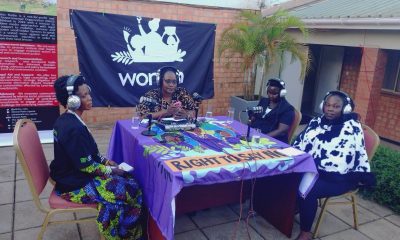
The two-day dialogue, convened by DCA and partners, has the theme: “Beyond Compliance: Strengthening Accountable and Rights-Centered Supply Chains in East and Horn of Africa.” It brings together governments, businesses, civil society organizations, development partners, and human rights defenders. Participants discuss how growing investments can better align with human rights standards and responsible business conduct.

Building on the momentum of the 2023 inaugural conference in Kampala, the event aims to shift discussions from commitments to implementation. It focuses on rapidly expanding investments in land-based sectors and their impact on communities.

He reiterated that the persistent absence of African states from these talks may result in global rules that ignore African priorities.

He warned the end result might be an instrument that does not reflect African priorities and interests. It could contain pre-packed solutions that impose higher environmental, sanitary, climate, and ESG standards on African products, limiting their competitiveness and market access.

He urged the EAC, AU, and member states to unite around a common position in negotiations, underscoring the importance of African leadership in ensuring investments support both economic growth and human rights.

Prof. Olawuyi argued that the absence of binding international standards continues to undermine efforts to hold corporations accountable for human rights abuses, particularly in sectors such as agribusiness, mining, and large-scale land-based investments.

He cited an upcoming report on agribusiness, food security, and human rights. He said investment-driven agricultural projects in several countries continue to be linked to child labor, sexual exploitation, modern slavery, gender injustice, forced displacement, land grabbing, and other rights violations.

He recommended that National Action Plans must be rigorously implemented across all sectors, including agribusiness, to effectively address human rights abuses.

The concerns voiced by the UN expert were also reflected in discussions throughout the forum. Karen Poore, Country Director for DanChurchAid Kenya (DCA), spoke on behalf of the event host. She called on governments, businesses, civil society organizations, and local communities to work together proactively, urging them to take concrete steps that ensure investments respect human rights and deliver equitable benefits for all involved.

Poore described DCA’s role as both a convener and bridge-builder, creating spaces where different actors can engage honestly on difficult issues surrounding business conduct and human rights.

She said spaces like this, where honesty and constructive challenge are possible, are important. More transparency and openness about root causes, and a willingness to move beyond appearances, are needed, as business and human rights are evolving quickly and new standards are shaping expectations.

She stressed that responsible business conduct is not only about accountability but also about creating fairer and more sustainable economic opportunities.

“Access alone is not enough if it does not come with dignity and rights,” Poore noted, adding that transparency and long-term thinking are increasingly linked to resilient and sustainable business models.

She called for immediate action to address structural barriers affecting women, youth, and marginalized communities, ensure equal access to grievance mechanisms, and actively promote participation in decision-making processes.

Matthew Brooke, Head of Governance, Digital and Macroeconomics at the European Union Delegation to Kenya, represented the European Union Delegation. He acknowledged that past investment projects have been linked to human rights violations, exploitation, and abuse.

“Human rights violations in investment projects, exploitation and abuse have all been seen and witnessed, and they need to continue to be documented,” Brooke said.

He argued that such practices are unsustainable investments. He also explained that the European Union is shifting away from purely voluntary approaches toward stronger due diligence requirements. These requirements aim to prevent human rights and environmental harm in global supply chains.

According to Brooke, the EU’s Corporate Sustainability Due Diligence Directive (CSDDD) requires large companies operating in the EU market to identify and address human rights and environmental risks throughout their operations and supply chains, engage affected stakeholders, and take measures to prevent or mitigate harm.

Continue Reading

Resource Center

Legal Framework

READ BY CATEGORY

Facebook

Newsletter

Subscribe to Witness Radio's newsletter


Trending

Subscribe to Witness Radio's newsletter