Connect with us

MEDIA FOR CHANGE NETWORK

“We are facing increased violent land dispossessions and climate injustices” – African women.

Published

on

By the Witness Radio Team


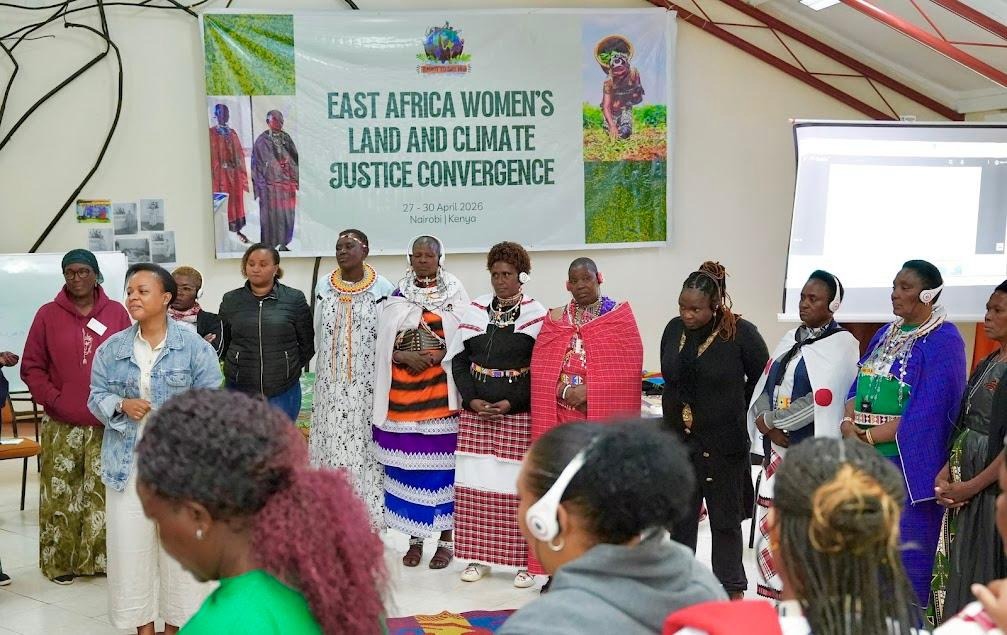
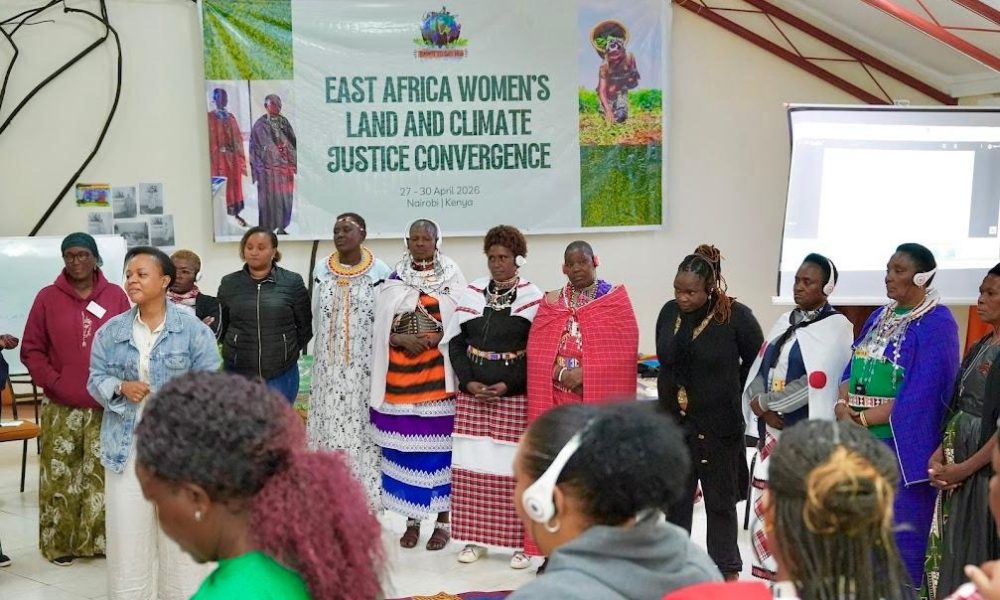
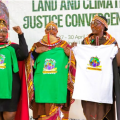
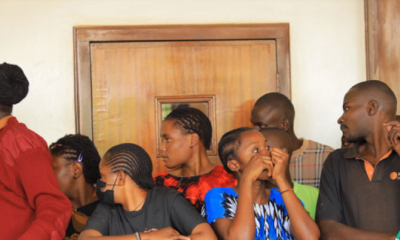
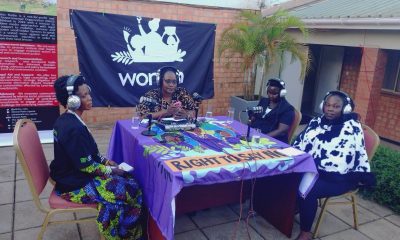
Stories of displacement, land loss, and resilience filled the room as 45 women from six African countries gathered for the East Africa Women’s Land and Climate Justice Convergence in Nairobi, organized to raise awareness and explore resistance strategies against land dispossession and climate injustice.


Representing communities from Kenya, Uganda, Tanzania, the Democratic Republic of Congo, Zimbabwe, and South Africa, the women came together not only to learn but also to speak, listen, heal, and feel the weight of their struggles, resisting destructive extractive projects and reclaiming what belongs to them, despite the immense impacts they have endured.


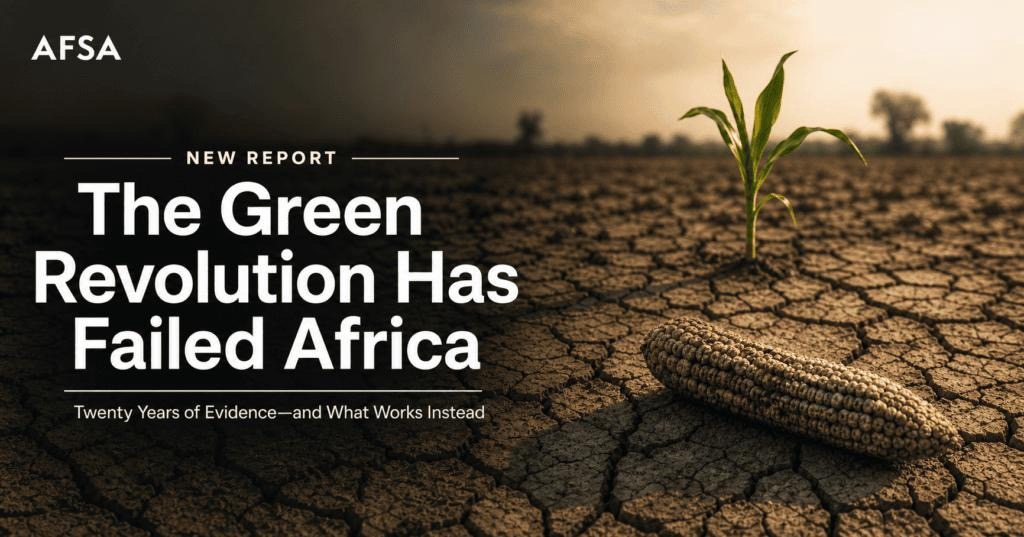
Africa is often described as having vast unused or underutilized land. This narrative has attracted investors, especially from the Global North, into large-scale industrial agriculture and other land-based investments. However, a 2025 report by the Alliance for Food Sovereignty in Africa (AFSA), PLAAS, and the Institute for Agriculture and Trade Policy challenged this claim, showing that such narratives have fueled large-scale land grabs, ecological destruction, and community dispossession across the continent.


In Uganda, the land eviction crisis has intensified due to increasing land-based investments that have dispossessed local communities with impunity, with oil development activities among them. According to human rights groups, this has led to more than 100,000 people in Uganda and Tanzania permanently losing their land to make way for the pipeline and related projects.


Jenniffer Kiiza, a resident of Hoima, is among those whose land was taken for oil development.


“The project has had severe negative impacts, especially on vulnerable groups like women,” she said, highlighting how delayed compensation, gender-based violence, and food insecurity disproportionately affect women and their families.


“We face dispossession, and sadly, we are paid very little money, which comes late and is no longer enough to buy land elsewhere. Hunger and malnutrition in adults and babies have increased, and this is affecting us as women and our families.” Kiiza added.


Kiiza has continued to speak out despite growing repression against dissent, advocating for justice for her community, especially women, even as opposing such mega-projects comes at a high cost.


“These developments have caused hunger, increased gender-based violence, family breakdowns, school dropouts, and early marriages. There has also been a rise in prostitution, as women struggle to provide for their children after losing their land.” She added.


Meanwhile, in Uganda alone, the Uganda Police’s Annual Crimes Report, 2025, released early April, recorded 663 cases of land fraud, an indicator of the country’s escalating land crisis.


In Zimbabwe’s Midlands province, particularly in Shurugwi, communities are facing similar challenges linked to mining activities, including land dispossession and environmental harm. Jecha Benenia a women’s rights defender from a community affected by Unki Mine, shared her experience during the convergence.


“We are facing many challenges from the miners. Chinese investors are coming into our area and evicting us. They tell us to leave, and if we refuse, they come with bulldozers and destroy everything, including our homes. We are left with no shelter and nowhere to go,” she said.

She added that abandoned open pits left by mining companies have become deadly hazards.


“When it rains, the pits fill with water. Our livestock fall into them, and even our children have fallen in. We are losing both animals and lives, and the danger is ever-present,” She added.


Communities in Zimbabwe also report water pollution from mining activities, which threatens their health and livelihoods. “The water we use is our source of livelihood, serving domestic needs, drinking, and our animals. However, after consuming it, we have experienced illnesses like cholera, and pregnant women face severe complications,” she added.


Her revelations echo concerns raised at the 2025 Zimbabwe Alternative Mining Indaba (ZAMI). The 14th edition of the Indaba, convened by the Zimbabwe Environmental Law Organization (ZELO) and partners in September 2025, highlighted multiple challenges within a sector that contributes about 12% to 13.3% of the country’s Gross Domestic Product (GDP).


In its December 2025 communiqué, ZAMI noted that unsustainable resource extraction is driving widespread environmental damage, including water pollution, habitat loss, soil degradation, and deforestation.


It further pointed to displacement, inadequate compensation, and the absence of Free, Prior, and Informed Consent (FPIC), particularly affecting marginalized communities whose exclusion from governance processes has resulted in violence, disempowerment, and the entrenchment of poverty in resource-rich areas, worsened by weak oversight that has enabled environmental violations and illicit financial flows.


Amid these challenges affecting their communities, the women shared, the convergence concluded with a renewed sense of solidarity, forming a network of resilient women committed to defending Africa’s commons—land, forests, water, and cultural systems—now under increasing threat.


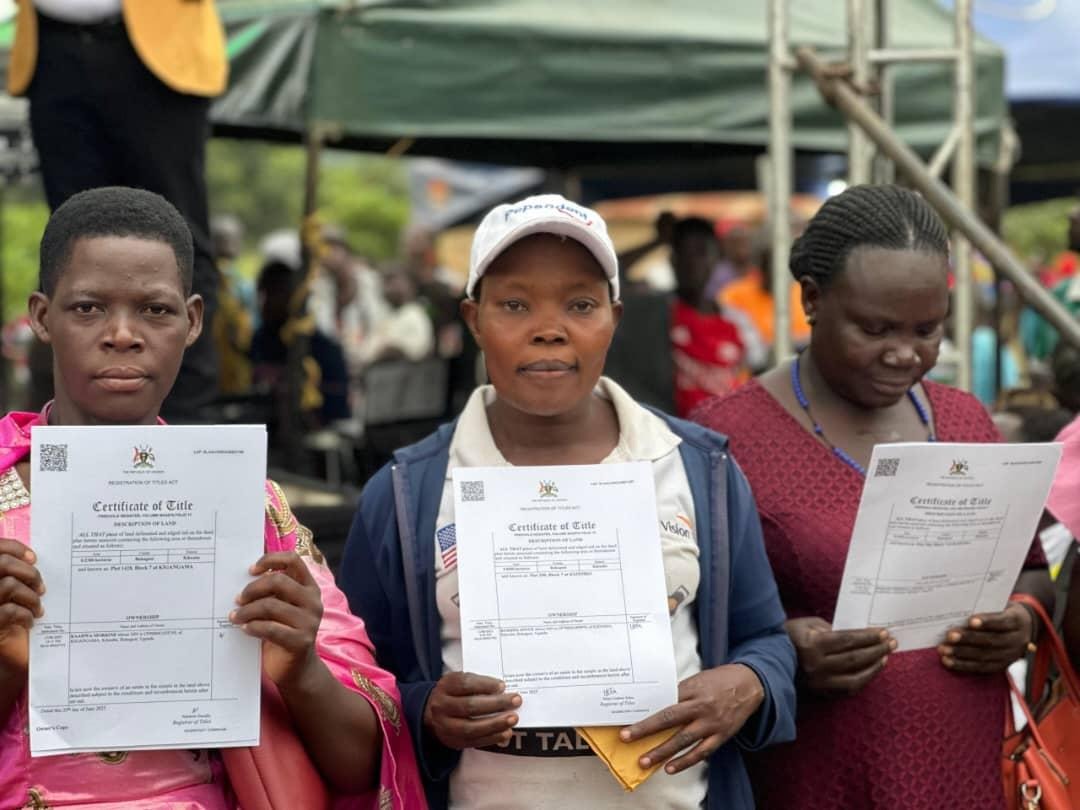
According to the organizers, the meeting was particularly significant in creating a platform for women to share lived realities that are often excluded from formal land governance discussions. Participants exchanged insights on the challenges they face and identified collective strategies to strengthen their land rights.


“The convergence brought together women to reflect on their experiences with customary and communal land tenure systems. We will continue to build on this knowledge and strengthen solidarity plans at both national and regional levels with the women,” WoMin’s Sizaltina Cutaia told Witness Radio.


Participants described the gathering as a transformative learning space that not only exposed shared struggles but also equipped them with the skills and knowledge to defend their rights collectively.


“And a message I can give to a woman in the struggle is to keep fighting for her goal. She should not give up, but continue until she achieves what she wants. This cuts across countries and brings us together through networking. When we unite as women, we realize we share one goal—as mothers in our communities and countries—because land is our motherland,” said Sarah Osas from Nakuru in Kenya.


Despite powerful companies taking over their land, women defenders say they are determined to continue resisting and reclaim what is rightfully theirs.


“We are fighting back so that we can reclaim our natural resources, including land and water. Many women are facing serious health challenges, including stress and stroke, as a result of these struggles. But we are not going back. We are fighting to reclaim our commons through demonstrations, cultural resistance, and petitions led by marginalized communities.” Jecha mentioned.

Continue Reading

MEDIA FOR CHANGE NETWORK

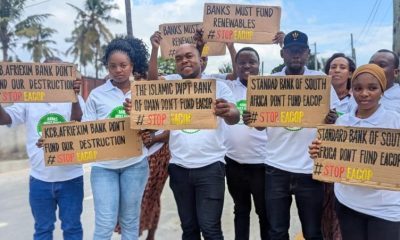
Experts warn that without Africa’s control over resources and climate financing, the continent faces the risk of entering a new era of “green colonialism”.

Published

on

By Witness Radio Team

As the global push for clean energy accelerates, African governments are under mounting pressure to move away from fossil fuels and embrace renewable energy. But economists, political leaders, and climate justice advocates are warning that Africa’s transition could reproduce the same unequal economic structures established during colonialism unless the continent gains greater control over its resources, industries, and financing systems, inspiring a sense of agency and possibility.

Although Africa contributes less than 4 percent of global greenhouse gas emissions, it is among the regions most vulnerable to climate change. The continent continues to suffer disproportionately from a crisis largely caused by industrialized nations, including prolonged droughts and devastating floods, which greatly affect its people.

Governments across Africa are increasingly adopting renewable energy policies promoted as pathways toward sustainable development. Despite being promoted, a growing number of experts argue that the transition risks becoming another extractive project in which African resources fuel foreign industries while local communities remain impoverished.

The global transition to clean energy has sharply increased demand for minerals such as cobalt, lithium, graphite, manganese, and copper, which are abundant across Africa and critical for batteries, electric vehicles, and renewable energy technologies.

At the same time, the continent possesses vast renewable energy potential. According to the International Renewable Energy Agency (IRENA), Africa could generate significantly more renewable energy than it currently consumes.

In an interview with Witness Radio, Tunisian economist and President of the Global Institute for Sustainable Prosperity, Fadhel Kaboub, said Africa’s role in the global transition should go beyond merely supplying raw materials to industrialized countries.

“We cannot decarbonize a system that hasn’t been structurally economically decolonized yet. Africa has the potential to become an energy powerhouse globally, an industrial powerhouse, and as a result, an economic and geopolitical powerhouse.” Kaboub reveals.

Kaboub argued that the current global economic system continues to place African countries at the bottom of supply chains, echoing colonial patterns. This pattern is vital for economists and global citizens to understand.

“Africa was assigned the role of supplying cheap raw materials while importing finished products and technologies. The danger is that the green transition is reinforcing the same model instead of transforming it,” he added.

Across the continent, activists and researchers are increasingly raising concerns about what they describe as “green colonialism,” where climate and environmental projects dispossess communities while benefiting foreign governments and corporations.

In several African countries, including Uganda, large-scale carbon offset projects have been linked to land conflicts and forced displacement. Critics say some carbon markets allow polluting corporations in the Global North to continue emitting greenhouse gases while using African land and forests to offset their emissions.

Environmental advocates warn that unless African governments ensure local ownership and value addition in mining linked to renewable energy, the continent risks repeating the history of raw material extraction, which is key for informed policy decisions.

Africa’s green transition discussions also focused on climate financing as a key point of debate. African leaders have repeatedly criticized rich countries for not sufficiently financing adaptation and renewable energy projects, despite their historic role in spewing the bulk of the World’s carbon emissions.

At the COP29 climate Summit in November 2024 in Azerbaijan, His Excellency Bola Ahmed Tinubu, the president of the Federal Republic of Nigeria, warned that many African countries are trapped between debt repayment obligations and climate adaptation needs.

“Africa did little to cause the climate crisis, yet the debt climate trap has saddled many of its nations with a tragic choice: Eschew repayments to fund adaptation to climate shocks and risk default- a financial purgatory where development indicators plummet; or honor obligations and compromise on resilience, thus entrenching vulnerability to development-shuttering climate events,” he added.

Speaking during the Africa Climate Summit 2025, former Ethiopian Prime Minister Hailemariam Desalegn said debt restructuring must become part of global climate discussions.

“Unless we confront the debt crisis head-on, efforts to finance Africa’s climate ambitions will continue to fall short,” Desalegn said.

Kaboub believes the financing crisis reflects a broader historical injustice. “The industrialized world has consumed most of the global carbon budget that creates a climate debt owed to Africa and the Global South.” He revealed.

Some African economists and climate justice groups are calling for climate reparations, not more loans that deepen dependency, to address historical injustices and support equitable development.

“The future of Africa’s green transition depends on who controls it. If Africa controls its resources, industries, and development path, the transition could become a tool for liberation. If not, it risks becoming another phase of exploitation under a green banner.” Kaboub concluded.

Continue Reading

MEDIA FOR CHANGE NETWORK

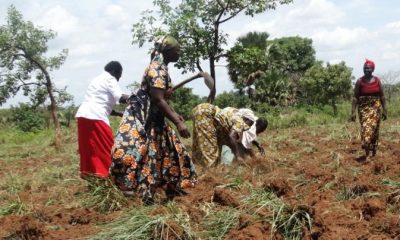
Rising fertilizer dependence sparks debate over Africa’s agricultural future; experts call for urgent critical review process.

Published

on

By Witness Radio Team.

In March this year, the United Nations World Food Program (WFP) warned that the number of people facing acute hunger globally could rise sharply if escalating conflict in the Middle East continues to destabilize the global economy, projecting that nearly 45 million additional people could slide into acute food insecurity.

Since 28 February 2026, the United States and Israel have been engaged in a war with Iran and its regional allies. The conflict began when the US and Israel launched airstrikes on Iran, targeting military and government sites and assassinating several Iranian officials, including Supreme Leader Ali Khamenei. Iran responded with missile and drone strikes on Israel, US bases, and US-allied Arab countries in West Asia, and the temporary closure of the Strait of Hormuz, disrupting global trade.

As global tensions continue, experts have revealed that they are disrupting fertilizer supply chains and driving up prices, an issue likely to threaten food security and make policymakers feel responsible for safeguarding Africa’s future.

A recent report by GRAIN, an international Non-Governmental Organization (NGO), argues that Africa’s increasing reliance on imported chemical fertilizers is exposing farmers and food systems to economic, political, and environmental risks.

Titled “Can African Food Systems Thrive Without Chemical Fertilizers?”, the report links recent fertilizer price spikes to conflicts such as the Russia-Ukraine war and the recent escalation involving Iran, Israel, and the United States. According to the report, these crises have disrupted the movement of fertilizers and raw materials, such as natural gas and sulfur, pushing prices beyond the reach of many African farmers.

According to the report, the African fertilizer market is currently worth around US$10–15 billion and is projected to grow to US$20 billion over the next four years. It adds that the largest fertilizer manufacturers — including Yara of Norway, OCP of Morocco, PhosAgro of Russia, Nutrien of Canada, and Mosaic of the United States — are seeking to expand their presence in this fast-growing, highly profitable market.

GRAIN researcher Ange David Baimey told the Witness Radio team that growing concerns about the ongoing impact of global conflicts on African agriculture drove the investigation.

“As you can see, the recent crisis involving Iran, the USA, and the Middle East created a lot of uncertainty concerning how fertilizers can continue reaching African countries. Before this, we also had the Ukraine crisis and COVID-19. If you look at the last six years, these crises have seriously affected agriculture in Africa.” Ange, who participated in the research, told Witness Radio.

For decades, many African governments, donors, and agribusinesses have promoted chemical fertilizers as essential for increasing food production. However, the report highlights that relying on organic and sustainable practices-such as indigenous knowledge, crop diversity, and soil fertility methods-can be safer and more resilient. Showcasing successful case studies can help policymakers see practical alternatives to dependency.

“The only solution to the best agricultural practices is not chemical fertilizers. Farmers have tested and agreed that organic fertilizers are the answer. Ange further mentioned.

According to the report, the push for chemical fertilizers accelerated during the Green Revolution period, driven largely by multinational agribusiness interests seeking profits from agricultural inputs.

“The Green Revolution is not the beginning of agriculture in Africa. Our systems existed before chemical fertilizers. What we see now is a system where companies are making profits while creating dependency.” He said.

The report notes that many African countries import significant quantities of fertilizers from Gulf countries, including Saudi Arabia, Qatar, and Oman. Countries including Sudan, Tanzania, Kenya, and Mozambique remain highly dependent on these imports, making them vulnerable to supply disruptions and rising global prices.

Although African governments spend billions of dollars on fertilizer subsidy programs, many small-scale farmers still struggle to afford the products. In some countries, fertilizer prices are significantly higher than global averages due to import dependency, market concentration, and the dominance of multinational corporations in the supply chain.

“In our research, we also discovered that African farmers often pay more for the same fertilizers than farmers in Europe or the United States. The market is controlled by powerful companies whose goal is profit.” Ange explained.

The report identifies major corporations such as Yara International, OCP Group, and Dangote Group as key players shaping Africa’s fertilizer markets.

“These companies have huge influence and power in African agriculture. Governments must examine even discussions around continental trade agreements carefully because the same multinational companies may continue dominating the market.” Ange observed.

Beyond economic concerns, the report also highlights environmental and health impacts associated with chemical fertilizers, including soil degradation, water pollution, and increased pesticide use. The report advises African countries to adopt organic approaches to improve their yields, human and soil health, and to avoid environmental shocks.

“A change of course off the chemical fertilizer treadmill and towards agroecology is even more urgent in the face of the climate crisis. Climate scientists are calling today for a 42% global reduction in fertilizer use by 2050, to keep the planet livable.” The report noted.

Experts urge African leaders to use these global shocks as an opportunity to rethink Africa’s agricultural direction. “If you are dependent upon another person for your food, what happens when that person cuts off access? That is the situation Africa is in. The COVID crisis, the Ukraine war, and now the Gulf crisis all prove that reliance on imported fertilizers is dangerous. Africa can feed itself. The question is whether governments are willing to assist with that transition.” He concluded.

Continue Reading

MEDIA FOR CHANGE NETWORK

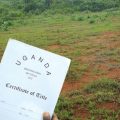
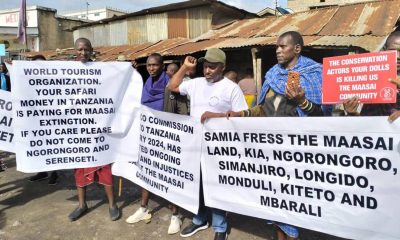
A community in Yumbe district has raised serious concerns about allegations of land-grabbing involving an aspirant for Uganda’s Parliamentary Speakership, affecting over 50 families.

Published

on

By Witness Radio Team.

More than 50 families in Ochinga village, Aringa South Constituency in Yumbe district, are feeling vulnerable as they face eviction from the land they have lived on for decades.

The families accuse the area Member of Parliament, Alion Odria Yorke, of fraudulently acquiring their land with the support of a clan member, raising questions about transparency and abuse of power.

“He has started evicting us. And he has already started clearing part of the land. We hear he is preparing it for his cocoa farming business project,” one of the affected, Richard Ayimani, told Witness Radio.

Forty-six-year-old Asiku Victor Yada is among those facing eviction. A resident of Ochinga Village, he says he owns 21 acres of land he inherited from his parents, land that has been passed down through generations.

“I was born and raised on this land. After my father’s death, I inherited it, just as he had inherited it from his father. This has been our generational land,” Asiku told Witness Radio, sharing his deep connection and concern over the ongoing dispute.

He expressed frustration over the ongoing dispute, accusing the MP of abusing his position.

“He talks about corruption and abuse of office by others, yet he is also doing the same by using our nephew to grab our clan land. We cannot accept losing our land through what we believe is a fraudulent process,” he added.

The disputed land, estimated at 519 acres (210 ha), is part of the Kiranga clan, which the community uses for farming and cattle grazing, forming the backbone of their livelihoods.

However, Hon. Alion has dismissed the allegations, insisting that he legally purchased the land from members of the Kiranga clan on May 18, 2025, for UGX 25 million (approximately USD 6,667.91). Yet, the community disputes the transaction’s legality, raising questions about the transparency and proper consultation involved in the sale.

“I have evidence of ownership, including documents and witnesses,” The MP claimed in an interview with Witness Radio. However, affected residents strongly dispute this, insisting they were neither consulted nor aware of any such transaction, raising concerns about the authenticity of the evidence presented.

“He was duped. The person he talks to is our sister’s son, and he does not have the authority to sell clan land without our understanding. Yassin is not our clan leader or landlord as the MP alleges; he belongs to another clan called the Aupi clan,” Mr. Richard explained, highlighting the need for clarity on who has the authority to sell clan land.

Witness Radio was unable to obtain a comment from the alleged land seller, Yassin, as repeated calls to his known phone contacts went unanswered.

One of the complainants, Ayiman Richard, told Witness Radio that he is the rightful heir and custodian of the land. He argues that those who allegedly sold the land were only caretakers appointed after the death of his father.

“This land belonged to my late father, Peter Nakara Ondia. After his death, I inherited it as his heir. My nephews were only given the responsibility to look after the land while I was still young. That does not make them clan leaders or landowners,” he said.

Other residents say they were never informed or involved in the alleged sale and are now living in fear of eviction, feeling betrayed and powerless.

“How can a legislator use fraudulent means to acquire our land? We were not aware of any sale, and we cannot just surrender our land,” one resident added.

Local leaders have also raised concerns over the transaction. The LCIII Chairperson of Ariwa Sub-county, Mr. John Kale, said he was not consulted during the sale process and disputes claims that Yassin is the clan leader.

“It is very surprising that I, as the local council chairperson, did not know about the sale of this land. The Honorable Member of Parliament must have been duped,” he said, before calling on the minister to stop grabbing community land.

As tensions rise, affected families say they have nowhere to go, as the land is not only their ancestral home but also their primary source of livelihood.

Land conflicts have increased in Uganda, where politically connected individuals have found it easy to grab land belonging to poor and vulnerable communities with impunity.

Continue Reading

Resource Center

Legal Framework

READ BY CATEGORY

Facebook

Newsletter

Subscribe to Witness Radio's newsletter


Trending

Subscribe to Witness Radio's newsletter