Criticism against Big Tech’s digital crusade is growing, along with demands for greater regulation. Yet, through underhand tactics such as trade deals, tech companies are blocking reform. Their recent focus on agriculture threatens our food systems. In order to rein in their growing power over them, it is crucial to expose what is happening behind the scenes and build movements to stop it.
It is not easy to evade the power and influence of Big Tech companies in everyday life, even for those living in rural communities in the global South where internet access is often limited.
Anyone searching for information on the internet, whether in Brazil, India or Kenya, will most likely use Google’s search engine.1 If they are in China, they will probably use Baidu’s. If they need to connect with their family or friends, they will probably use one of Meta’s social media or messaging platforms, like Facebook, which controls 75% of the global social media market, and 83% in Africa.2 When ordering food delivery in Brazil, they will most likely turn to the iFood platform (which holds 80% of the market), and if in Southeast Asia, they will almost certainly use Grab.3
Such digital monopolies enable tech companies to gather huge amounts of data from billions of people. This power is in turn being used to expand their control over developments in artificial intelligence (AI). Today, eight of the ten largest corporations in the world are tech companies. Each of them has a market value greater than the GDP of 93% of all countries.4
People around the world are waking up to the dangers of this corporate power. The Big Tech companies and their billionaire owners are taking over the media, backing far-right political parties, providing support to militaries committing war crimes, and collaborating with governments to curtail human rights.5 And they have an agenda for the food system too. Big Tech companies are converging with the largest agribusiness corporations, vacuuming up the data of small-scale food producers, workers and consumers with barely any oversight or limitations and then using that data against their interests.
Mass data grabbing across the food system
The world’s largest seed, pesticide and fertiliser companies have access to a constant stream of data from farms stretching across tens of millions of hectares– from Brazil to China– by way of digital apps installed on the smart phones and tractors of farmers. The information is stored on the clouds of Big Tech companies, like Microsoft’s Azure and Amazon’s AWS.
The clouds also store data from a growing number of government programmes collected to develop national digital databases and services for farmers. The Indian government’s new digital database, Agri Stack, for example, was developed with Microsoft and gives the company detailed information on 80 million Indian farmers, from land records to health histories.6 Agri Stack is the blueprint for other national digital farm registries that the Gates Foundation and the World Bank are pushing forward in several countries, beginning with Ethiopia and Kenya.7 Farmers increasingly have little choice but to hand over their data to corporations in order to access extension services, get loans and subsidies, or purchase inputs and machinery.
The UN Special Rapporteur on the Right to Food and others have been raising concerns about how this corporate control over data can harm farmers.8 Agribusiness companies, for example, can use their chatbots and digital apps to push farmers into buying their seeds, pesticides and fertilisers. When the chatbot advice fails, there is little farmers can do to get compensation, and even just switching to another platform can be difficult. The clear overall trend is that corporations are using their digital platforms to entrench a top-down flow of information that gives farmers less and less autonomy over how they farm.
Companies can also sell data they collect on farmers to third-parties who may use that information in ways that harms the interests of farmers. This is what happened with the Bayer-Microsoft collaboration in India, where farmer data was sold to food companies who then used the data to squeeze farmers on prices.9
And it is not just on the farm. Mass data harvesting is happening at all points of the food system, with ever more integration. China’s largest online retailer, Alibaba, for instance, connects its newly created digital agriculture division with its e-commerce and food delivery platforms that generate data on the preferences and behaviour of over 800 million consumers.10 Retailers can use online and in-store sales data to build profiles of their consumers and then encourage them to buy certain products or adjust prices to what they determine each customer will be willing to pay– a practice called surveillance pricing.11 Online food delivery platforms are also notorious for using their access and control over data on their drivers to coerce them into working long hours for low pay.12
There is growing criticism and resistance to these and other tactics used by tech companies. So, to fight back against any measures that might restrain their ambitions, tech companies are investing big time in influencing politicians. In 2025 alone, they spent US$170 million on lobbying in the European Union and US$109 million in the US.13 They also rely on another less visible but equally important tool to entrench their agendas and shield themselves from public accountability: digital trade deals.
Unpacking Big Tech’s digital trade agenda
Digital trade gets addressed in the e-commerce or digital chapters included in free trade agreements (FTA), or directly in bilateral or regional digital trade agreements. These texts are heavily influenced by tech corporations, especially where it comes to ensuring their control over data, restricting the access of others to their source codes and algorithms, and limiting the ability of governments to tax digital services.
The corporate agenda is heavily backed by the US government, which is home to the majority of Big Tech companies. The industry’s demands are included in the US-Mexico-Canada Agreement (USMCA) and all other agreements negotiated by the US. But they are also included in the Comprehensive and Progressive Agreement for Trans-Pacific Partnership (CPTPP) and the negotiations for the African Continental Free Trade Area (AfCFTA), in which the US is not a party. With some nuances, the Regional Comprehensive Economic Partnership (RCEP) and the European Union follow a similar path (see Box).
The tech company agenda embedded in these trade deals has important consequences for food systems. For instance, in order for governments to ensure farmers, consumers and food workers have rights and control over their data, it is necessary for that data to be stored in locations under their jurisdiction. This is key not only in terms of personal privacy, but also to prevent it from falling into the hands of those who could harm them. There have been some limited movements in this direction, such as laws to protect people’s privacy in the European Union, Argentina, Brazil, and Kenya.14 Unfortunately, data generated on farms (on land, seeds, plant and animal genetics, weather) is considered non-personal and not covered by the laws, even though personal information can be gathered when data on yields is combined with location, for example.
Such government initiatives, no matter how limited, are all being fiercely opposed by the industry, which wants to be able to exploit and sell data to third parties without restriction. Not having a local, physical presence in the countries where data is extracted is also a way for tech companies to evade liabilities for their workers, especially when it comes to delivery workers, where risks of work place injuries are high. These are some of the main reasons why tech companies are pushing for data to be able to move freely across borders. In digital trade jargon, this is known as “freedom for cross-border data flows” and aims to prevent “forced data localisation”.
Access to source codes (the lines of code written by programmers to instruct machines to perform a specific task) and algorithms (pieces of code that include the steps needed to solve a problem) is also an issue for food systems. Farmers around the world have always repaired their own tools. It is a traditional part of farming. But this has become much more difficult with the adoption of digital tools, such as agricultural drones and connected tractors. Repairing these requires access to the manufacturers’ source codes, which is strictly protected by intellectual property rights. In the US, farmers lose US$3 billion a year to tractor downtime and pay US$1.2 billion more in excess repair costs because of these restrictions.15 Food delivery workers also suffer because they are unable to access the opaque algorithms that decide how much they are paid or even if they’ve been terminated.16 Consumers also find algorithms that manipulate consumption to be a black box.
There are many important reasons why companies should have to make public their source codes and algorithms but digital trade agreements can pre-empt measures aimed at doing so. Most digital trade agreements restrict public or government access to company source codes and algorithms, and the few that include exceptions, tend to be weak and vague.17
Food systems are also impacted by Big Tech’s use of digital trade deals to avoid paying taxes.18 These corporations have long benefitted from a temporary moratorium on customs duties on electronic transmissions established in 1998 by the WTO. Under the moratorium, states are allowed to collect domestic taxes, but cannot use tariffs to tax products entering their territory. A study found that between 2017 and 2020 Global South countries, most of which are net importers of digital services, lost US$56 billion in tax they could not apply to those imports.19 It means governments have fewer resources with which to implement food and agriculture policies for the benefit of their populations and other essential services.
To reinforce tax avoidance, all digital trade deals signed to date have systematically prohibited taxes on electronic transmissions. Those pushed by the US with El Salvador and Guatemala have, more recently, included a commitment from both Central American countries to support the US’s push to make the WTO moratorium permanent. However, at the WTO, Brazil led an effort that succeeded in getting the moratorium dropped in March 2026.20 The big question now is whether governments will seize on this development to implement border taxes or bind themselves to similar restrictions under bilateral digital trade deals.
The need for a convergence of struggles
Fortunately, movements challenging the power of tech corporations are mushrooming around the world and starting to work together towards common objectives.
Some efforts are focused on digital justice and digital rights, such as the Just Net Coalition, the European network defending rights and freedoms online and the Global Digital Justice Forum, which includes digital rights networks, feminist groups, corporate watchdogs, communication rights campaigners, trade unions, and cooperatives.21 Groups such as Citizen Lab and AlgoRace are tackling digital surveillance and the impacts of AI on migrant and racialised communities. The People vs Big Tech movement aims to challenge the power of tech corporations on issues like digital policy, consumers’ rights, climate change, LGBTQ+ rights, and feminism.22
They are also many worker-led efforts to stop corporations from using digital platforms to exploit workers and violate their rights. These include actions by workers at Amazon warehouses in the US and India and food delivery drivers working for Ele.me (Ali Baba) in China.23 In both the European Union and the UK, 12 food delivery workers organisations have been speaking out against serious abuses on platforms such as Deliveroo, Just Eat and Uber Eats, and have called for a public register of the algorithms used.24 Facebook (Meta) content moderators in Colombia and Ghana have also been mobilising.25 And there is a growing movement fighting against the expansion of data centres because of their impacts on local communities and voracity for energy, water and critical minerals, which is causing an increasing number of social and environmental conflicts worldwide.26
People in the food sovereignty movement are also active on digital issues. For example, African farmers are speaking out against the privatisation and corporate capture of their data, arguing that data cannot be separated from its relationship to territories and communities.27 The European Coordination Via Campesina recently published a critique of corporate led digitalisation that calls for inclusive research and innovation to support the transition to agroecology.28 A growing farmers’ movement is also claiming the right to repair machinery and the right to build their own tools and share the information freely.29 During the pandemic, small farmers and vendors from Indonesia to Brazil showed their capacity to coordinate efforts with driver’s cooperatives and used their own digital tools to ensure people had access to food.
In order for the movements fighting Big Tech to challenge digital trade agreements, alliances are needed with those that have long been fighting against free trade agreements.
From their side, peasant movements such as La Via Campesina have been fighting free trade agreements across different regions.30 They have increasingly joined forces with other groups, including trade unions, environmentalists, women’s groups and indigenous peoples. A recent example of this is the broad coalition of sectors that fought intensely against the EU-Mercosur agreement. During the 3rd Nyeleni Forum, which brought together movements from a wide range of sectors (farmers, migrants, trade unions, healthcare workers, environmentalists and women), the digitalisation of food systems was identified as a new colonial frontier. Building on this, there could be greater convergence with groups to denounce the impacts of corporate digitalisation and to stop digital trade agreements that advance the interests of corporations.
The global advance of digital trade agreements
Academic and activist Jane Kelsey says the standard corporate demands in most digital trade negotiations can be traced back to the “Digital 2 Dozen” principles published by the US Trade Representative in 2014.31 These shaped the e-commerce chapters of the Trans-Pacific Partnership (later the Comprehensive and Progressive Agreement for Trans-Pacific Partnership -CPTPP), and became a model for later agreements.32 Even after leaving the CPTPP in 2017, the US pursued even stronger Big Tech protections in the US-Mexico-Canada Agreement (USMCA) in 2020.
The US Chamber of Commerce, whose members include large agribusiness and tech corporations, systematically promotes ‘high-standard’ digital trade agreements, particularly among the “Digital Dozen” countries (Australia, Canada, Chile, Colombia, Japan, South Korea, Mexico, New Zealand, Peru, Taiwan, the UK and ASEAN members).33 Several major deals have followed, including agreements involving the US, Japan, Singapore, Australia, Chile, the UK- and the EU.34 China, the UAE and India, are also advancing digital trade negotiations, but with different priorities.
The USMCA guarantees cross-border data flows, including personal information, and bans data localisation. Its provisions have influenced other agreements, even those without US participation such as the CPTPP and African Continental Free Trade Area (AfCFTA) negotiations, sometimes conflicting with national laws, including those in Kenya and Nigeria.35
The European Union also supports free data flows and bans data localisation but insists on protections for personal data. Its legislation is actually regarded as one of the strongest data privacy laws in the world, which has put it in the crosshairs of Big Tech and the Trump administration.36 But implementation has been tortuous, and safeguards in international deals are often unclear.37 The EU’s data privacy body has acknowledged this in reference to the EU-Singapore deal, where there are no regulations on what corporations can do with people’s data.38
The Regional Comprehensive Economic Partnership (RCEP), which includes ten ASEAN member states, as well as Australia, China, Japan, New Zealand and South Korea, includes similar provisions to CPTPP’s. 39 Its rules are not legally binding though, and allow more restrictions for national security interests. This is particularly relevant for China, who supports the freedom of cross-border trade in goods enabled by the internet rather than the freedom of all data flows. Some say this is a reflection of the interests of Chinese e-commerce platforms, like Alibaba.40
The USMCA, CPTPP and digital trade deals pushed by the European Union ban forced transfer of source codes and algorithms, while RCEP doesn’t include specific protection. Public-interest exceptions in these deals tend to be weak.41
In regards to taxes on electronic transmissions: the US continues pushing to make the WTO moratorium on custom duties on electronic transmissions permanent, while the EU, AfCFTA and RCEP allow room for internal taxation.42 Yet RCEP’s signatories are committed to adjusting their practices in line with any future changes at the WTO level.
3 See: José Soeiro, Kenzo Soares Seto and Víctor Riesgo Gómez, “Varieties and similarities of platform capitalisms: a comparative approach of labor regulation in Brazil, Portugal and Spain”, Frontiers in Sociology, Vol. 10, 28 March 2025,
https://doi.org/10.3389/fsoc.2025.1454324; and Dylan Loh, “Grab’s ASEAN food delivery share rises to 55% in 2025: survey”, 28 January 2026,
https://asia.nikkei.com/business/food-beverage/grab-s-asean-food-delivery-share-rises-to-55-in-2025-survey
7 See: World Bank, GF, and BCG, “Digital agriculture roadmap playbook”, 2025,
https://documents1.worldbank.org/curated/en/099053025063021993/pdf/P508004-f943a09b-c45f-4c93-b554-9dd1decd1e7c.pdf; Ethiopian Ministry of agriculture and ATI, “Digital agriculture roadmap 2032”, April 2025,
https://www.moa.gov.et/wp-content/uploads/2025/04/Digital-Agriculture-Roadmap-Ethiopia.pdf; and Data Driven Digital Agriculture, “Launch of the Digital Agriculture Roadmaps DARs Playbook and Lessons Learned”, 16 December 2025,
https://youtu.be/E4h_3fsT8So?si=d-S7fc6wYsMq1G9C
8 See: UN, “Report of the Special Rapporteur on the right to food, Michael Fakhri. Corporate power and human rights in food systems”, 21 July 2025,
https://docs.un.org/en/A/80/213; ETC Group, “Commons to code: how platforms rewire agriculture and reshape power”, 9 November 2025,
https://www.etcgroup.org/sites/www.etcgroup.org/files/files/commons_to_code_how_platforms_rewire_agriculture_and_reshape_power_0.pdf; IPES-Food, “Head in the cloud.”, February 2026,
https://ipes-food.org/report/head-in-the-cloud/; GRAIN, “When big tech came for the farm: A blueprint of resistance from Asia’s small farmers”, 16 January 2023,
https://grain.org/e/6940
26 See: Mariam Mayet, “Critical minerals, fertilisers, agrochemicals, digital power, and the erosion of food sovereignty”, 23 April 2026,
https://acbio.org.za/corporate-expansion/critical-minerals-fertilisers-agrochemicals-digital-power-and-the-erosion-of-food-sovereignty/; UNCTAD, “Digital economy report 2024”, 2024,
https://unctad.org/publication/digital-economy-report-2024; and Blake Montgomery, “Datacenters meet resistance over environmental concerns as AI boom spreads in Latin America”, 11 November 2025,
https://www.theguardian.com/technology/2025/nov/10/data-centers-latin-america
32 The current signatories of CPTPP are: Australia, Brunei, Canada, Chile, Japan, Malaysia, Mexico, New Zealand, Peru, Singapore, the United Kingdom and Vietnam. Other applicants are: Costa Rica, Taiwan, Ecuador, Uruguay, Ukraine, Indonesia, Philippines, UAE, and Cambodia. China’s application has been opposed by Japan and Australia. See:
https://www.bilaterals.org/?-tpp



 Happening shortly! Kenya’s upcoming court ruling on the Seed Law could have a significant impact on farmers’ rights, food sovereignty, and the country’s food system.
 New digital tool to empower farmers to access extension services
 The United Nations Food Systems Summit is a corporate food summit —not a “people’s” food summit
 Food systems in conflict areas: Architectures of armed conflict are turning food and hunger into weapons of war.

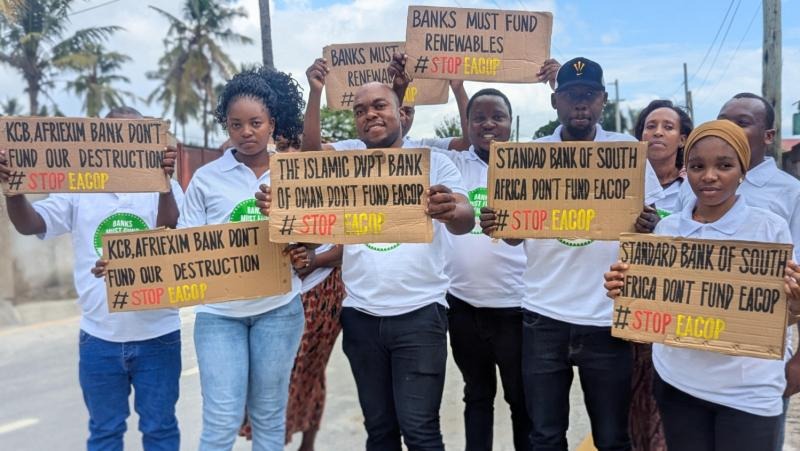

 The 4th African Forum on Business and Human Rights: The rapidly escalating investment in Africa is urgently eroding environmental conservation and disregarding the dignity, the land, and human rights of the African people.
 #COP27: HUMAN RIGHTS ADVOCATES URGE PARTIES TO INCREASE RECOGNITION AND PROTECTION OF ENVIRONMENTAL AND LAND DEFENDERS.
 Land and environmental rights defenders, CSOs, scholars, and government to meet in Kampala to assess Uganda’s performance on the implementation of the UN Guiding principles on Business and Human Rights in Uganda.
 Report reveals ongoing Human Rights Abuses and environmental destruction by the Chinese oil company CNOOC
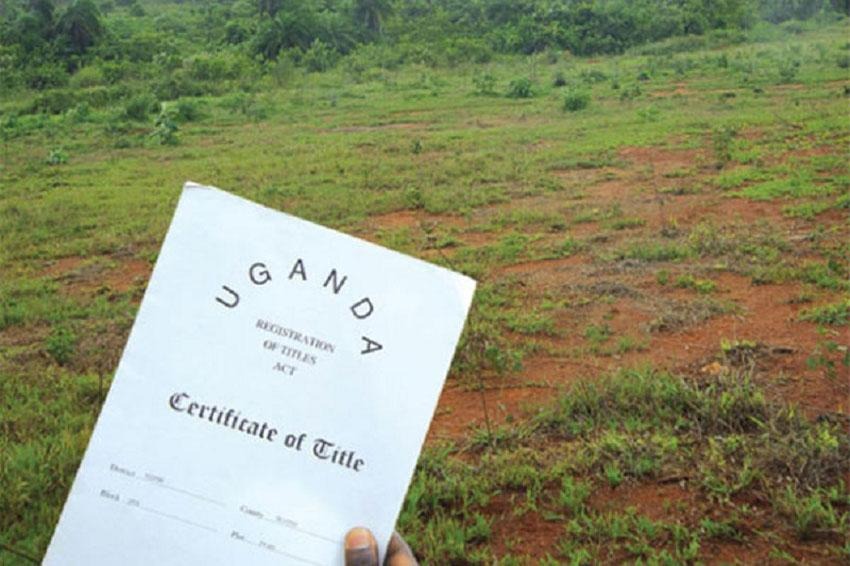

 Restoring Our Land: Tackling Degradation for Climate Resilience, Food Security, and Sustainable Development at COP16
 Africa’s responsible business agenda is facing challenges as more land is taken from local communities for investment, and landowners struggle to secure justice.
 Road to COP30: Climate justice is achievable if young people have secure land tenure as a mitigation measure against migration.
 Africa adopts the Africa Climate Innovation Compact (ACIC) Declaration to drive the continent towards innovative climate solutions.


 Conference of the Parties to the Convention on Biological Diversity (COP16): Solutions for companies, losses for communities and biodiversity
 Civil society groups at UNCCD COP17 are calling for urgent action on land rights, drought, and vital funding.
 New report: EACOP threatens tourism and biodiversity in Greater Masaka.
 COP16 in Riyadh: World Leaders Commit $12.15B to Combat Land Degradation and Drought







 MEDIA FOR CHANGE NETWORK7 days ago
 MEDIA FOR CHANGE NETWORK1 week ago
 MEDIA FOR CHANGE NETWORK7 days ago
 MEDIA FOR CHANGE NETWORK1 week ago
 MEDIA FOR CHANGE NETWORK1 week ago
 NGO WORK1 week ago
 MEDIA FOR CHANGE NETWORK1 week ago