Connect with us

MEDIA FOR CHANGE NETWORK

Govt moves to register surveyors to curb land conflicts

Published

on

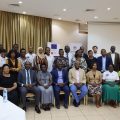
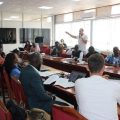
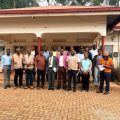
Ms Judith Nabakoba, Minister for Lands, Housing and Urban Development (C), and participants of the 8th Advances in Geomatics Research Conference (AGRC) and the 14th Eastern Africa Land Administration Network (EALAN) Conference 2025 organised by Makerere University, pose for a group photo, recently, Kampala. PHOTO | DAVID WALUGEMBE

Continue Reading

MEDIA FOR CHANGE NETWORK

13 years after the refugee host community was forcefully evicted to expand a refugee settlement, thousands remain unsettled.

Published

on

By the Witness Radio team.
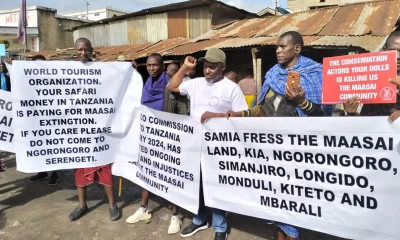
More than 60,000 people, evicted over a decade ago, remain landless, poverty-stricken, and without redress, highlighting the urgent need for authorities to be held accountable and address their concerns.

The violent evictions, which took place in September 2013, followed a controversial re-survey and boundary re-opening exercise linked to the expansion of the Kyangwali Refugee Settlement.

According to the 2021 report by the Committee on Presidential Affairs, a 2013 survey extended into land occupied by indigenous communities, an action believed to have directly triggered the violent land eviction.

Before being displaced, the local communities of Bukinda reportedly co-existed peacefully with refugees hosted in Kyangwali. Land boundaries were formally surveyed as early as 1998 by Makerere Technologies Consult, separating land designated for refugees from land belonging to host communities.

The survey allocated approximately 5000 hectares (50 square kilometers) to the refugee settlement, while 3600 hectares (36 square kilometers) to the more than 60,000 people who hitherto lived next to the refugee settlement camp.

Community leaders say the situation changed abruptly in August 2013, when officials from the Office of the Prime Minister (OPM), accompanied by police and Uganda People’s Defence Forces (UPDF) soldiers, arrived to enforce what residents describe as a sudden, violent land eviction that took place in September 013.

Ahumuza Busingye, Chairperson of the Internally Displaced Youth of Kikuube and a witness to the calamity, says they were given just hours to vacate the land they had occupied for generations.

“In 2013, it was an abrupt move when we saw OPM Officials coming to us and saying that we had been given 3 hours to leave this place. The group led by OPM official Bafaki Charles informed us that we had wrongly occupied our land and that we should leave immediately.” Ahumuza narrates.

28 villages, including Bukinda A and B, Bukinda II, Kavule, Bwizibwera A and B, Kyeya A and B, Nyaruhanga, Kabirizi, Nyamigisa A and B, Katoma, and others in Kasonga parish, Kyangwali sub-county, were forcefully evicted.

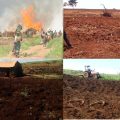
According to multiple accounts, security government forces arrived in pickup trucks, armed with guns and batons. People’s homes and gardens were destroyed, people were beaten, and people’s livestock scattered, as many fled to save their lives.

“They were using police and Army pickup vehicles and armed with guns, batons, and with threats, they paraded people, and one could think that there were rebels. And so, they started shooting and beating up people and breaking their houses, and the people dispersed.” Ahumuza said, adding that; Many families lost land titles, homes, food reserves, and livestock, which were their primary sources of livelihood.

Later, the displaced residents sought temporary refuge at the sub-county headquarters before a handful of victims were resettled at Kyeya Valley Farm in Kyangwali Sub-county around 2020. However, local leaders, including Kabulala and Ahumuza, say irregularities marred the resettlement process. They claim it sparked yet another violent eviction, as the land on which the government resettled the residents had itself been illegally acquired.

“The process was not fair at all. The government never settled many of us, which is why we are now camping in an internally displaced camp. Some people were settled on land belonging to private individuals.” Ahumuza added

“What is disheartening is that even the private individuals who had land titles on their land were evicted by the OPM to resettle evictees it had earlier evicted.”

Since then, families have lived in misery in IDP camps or as informal occupants on other people’s land, unable to farm or establish permanent homes, which continues to devastate their livelihoods and underscores the need for urgent intervention.

Several attempts to seek justice have yielded little progress, from government offices, such as presidential directives to investigate the matter, and promises of resettlement, yet, thirteen years later, they remain landless, destitute, and vulnerable.

Without access to land, they cannot engage in agriculture, their traditional means of survival, leaving households trapped in stinking poverty.

“The land was our life; without it, we are nothing.” Says Kabulala Oliver, one of the displaced persons.

Uganda continues to be praised internationally for its progressive refugee-hosting policies. However, the unresolved plight of Kyangwali’s displaced host communities shows the cost borne by citizens when land governance, accountability, and compensation mechanisms fail. Affected families say meaningful resettlement, restitution, or compensation remains long overdue.

Continue Reading

MEDIA FOR CHANGE NETWORK

Decades of land loss and chronic poverty: Salala Rubber Plantation prioritizes profit over the well-being of local Liberian communities.

Published

on

By Witness Radio team.

What began in 1959 as a promise of jobs and development has, according to affected communities and civil society advocates supporting these communities, evolved into a prolonged struggle marked by land loss, environmental destruction, and unfulfilled commitments.

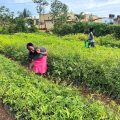
In 1959, the Liberian government granted the Salala Rubber Plantation (SRC) a 70-year lease on a 40,500-hectare land concession in District 5, Margibi County, and in District 6, Bong County, respectively, and developed a rubber plantation on 8,500 hectares.

According to the company’s objectives, it aimed to develop the community by creating job opportunities and providing fair compensation to landowners.

“When the company came to Liberia, it presented itself as supporting the government by creating jobs for Liberians. That message appealed both to the government and to the local communities.” John Brownell revealed in an interview with Witness Radio.

But the expected joy never materialized. The arrival of the rubber company brought consequences whose effects are still inherited to this day. For more than six decades, communities in central Liberia have endured hardship, misery, and persistent poverty passed from one generation to the next.

Some people, especially in Lango, Tartee Towns & Deedeta 1 & 2 areas, were evicted from their land to make way for a large-scale Rubber plantation. In contrast, others who have endured violence are still placed in the middle of the company plantations. According to reports, many others whose homesteads border the company plantations are still facing land grabbing as the company extends its expansions.

Salala Rubber Plantation was established in 1959, during a period when Liberia’s land governance system recognized only public land and private land tenures, excluding customary land tenure. Although the land was officially classified as public, community members in the area, including indigenous groups, had already been cultivating it for farming, burial grounds, water sources, and cultural practices.

“Whereas the land was given to the Company for a Rubber project, it was never an abandoned land. Liberians already occupied it from the Kpelle and Bassa, and other ethnic groups. The company didn’t honor their existence; instead, it forced them off their land,” John added.

At least 22 affected communities across Bong and Margibi Counties continue to demand justice, accountability for the damages caused, and redress, highlighting the need to advocate for change.

Although the SRC concession required that land be selected exclusively from unencumbered public lands and prohibited the evacuation of villages within the concession or development area, the land ultimately selected was heavily encumbered, resulting in the eviction of several villages.

According to the concession agreement, the Concessionaire had to  pay rental for public lands to be used for the project,   “If the Concessionaire cannot reach a satisfactory agreement with any private owner for any land which may be mentioned as aforementioned, the Concessionaire may bring the matter to the attention of the government which agrees to use its for good offices in obtaining for the Concessionaire the use of the land in a manner equitable to the Concessionaire and the respective private owner for just and reasonable compensation.” Part of the agreement, Witness Radio obtained a copy of it, mentioned.

This meant that the company had to compensate the communities whose land was to be used for the project; instead, the company forcefully took over the community lands.

Following Liberia’s civil war, which disrupted and damaged the plantations’ investments, the Socfin Group acquired the Salala Rubber Corporation (SRC) and invested to optimize the plantation and improve social infrastructure. SRC applied for a US$10 million loan from the International Finance Corporation (IFC), an arm of the World Bank, in 2007 to rehabilitate and expand project operations. According to the documents seen by Witness Radio, the 12-year loan investment from IFC was approved in 2008.

Community representatives say that despite the earlier injustices brought to the communities after the government allocated land that was occupied by people to the company, shortly after receiving the IFC loan, the company expanded beyond its concession boundaries, encroaching on the community’s land and deliberately causing other human rights violations.

“During the operations and expansions between 2007 and 2012, they destroyed community sacred sites, polluted water sources, and destroyed their crops without adequate compensation,” Paul added.

Some villages were forced to relocate again. Between 2012 and 2013, affected communities filed complaints with civil society organizations, triggering investigations that found the company liable for multiple allegations.

“And so, by 2012 and 2013, the community then decided to file a complaint with our office. Our office had to work with them to get the government and the company to restore the economic, cultural, and social benefits that the company had destroyed for them. An investigation was conducted and found the company liable for the allegations,” Paul added.

Despite supporting the communities, advocates found engaging with the company challenging. “The communities fought for dialogue with the company, but it failed. We tried to write several letters, but the company refused to honor the dialogue with the community,” he adds.

According to the Alliance for Rural Democracy, when their engagements with the company failed, they filed a complaint with the IFC against the company’s operation.

“When dialogue attempts failed, communities escalated the matter internationally. In May 2019, Green Advocates International, Natural Resource Women Platform, and the Alliance for Rural Democracy supported them in filing a formal complaint with the IFC’s Compliance Advisor Ombudsman (CAO). The complaint involved allegations of: Physical Displacement, Economic Displacement, and Loss of Livelihood; Historical Land Claims by extension, Land Grab; Grievance Handling; and Threats and Reprisals against Complainants—gender-based violence and Harassment, among others —violations that the communities believed infringed on their human rights.

In September 2020, following a compliance appraisal, CAO initiated an investigation into IFC’s environmental and social (E&S) performance concerning the issues raised in the complaint. However, the investigation stalled until June 2023, when the communities staged a peaceful mass action at the World Bank office in Monrovia, demanding redress to their complaint.

Under pressure from communities, CAO finalized its Investigation Report in December 2023 and submitted it to the World Bank’s Board. The CAO report found harm and indications of damage to the affected communities in relation to compensation, consultation, gender-based violence and harassment (GBVH), security threats, land acquisition, Indigenous Peoples, cultural heritage, water quality, and labor practices.

In addition, Socfinaf S.A, owner of SRC, commissioned its own independent investigation led by Earthworm Foundation. The final Earthworm report corroborated the communities’ allegations against the Salala Rubber Corporation.

In response to CAO’s investigations, on March 13, 2025, the World Bank Board approved and issued the Management Action Plan (MAP). The MAP commits IFC to implement a Community Development Program to support livelihood restoration, GBVH prevention, and support to survivors. IFC management was supposed to supervise SRC’s implementation of the MAP actions.

While grievances remain unresolved, Socfinaf S.A. put the plantation up for sale and, in 2024, officially announced the sale of its subsidiary, Salala Rubber Corporation (SRC), to Jetty Rubber LLC. And community advocates also report that IFC’s Management Action Plan (MAP) has never been implemented.

“Before the sale of SRC, the affected communities and supporting Civil Society and Human Rights organizations wrote an open letter to Socfin Management, the Government of Liberia, and Jetty Rubber regarding the liabilities and the active IFC complaint. However, these institutions ignored the content of the letter, thereby allowing Socfin to divest, and Jetty took over the plantation.” Said Windor B.K. Smith of the Alliance for Rural Democracy.

The new owner, Jetty Rubber LLC, has not committed to implementing the IFC’s Management Action Plan. The 22 affected communities are in limbo because they do not know where to turn for justice and redress to their plight.

Continue Reading

MEDIA FOR CHANGE NETWORK

Indigenous communities’ complaint against World Bank-linked Nepal Cable Car Project declared eligible for investigation.

Published

on

By Witness Radio team

Indigenous Yakthung (Limbu) communities in eastern Nepal have fought hard for recognition after the World Bank Group’s accountability mechanism acknowledged a complaint about rights violations, underscoring their ongoing struggle to protect their land and culture.

The Compliance Advisor Ombudsman (CAO), the independent watchdog of the World Bank Group, accepted the complaint for further assessment and formally registered the case in December 2025. The decision clears the way for a potential mediation process or a full compliance investigation into whether the project breached the IFC’s environmental and social safeguard standards.

In August 2025, Indigenous Yakthung leaders, supported by lawyers and civil society organizations, filed a complaint against the IFC’s advisory support to IME Group for the $22 million Pathivara (Mukkumlung) cable car project in Taplejung District. This filing marks a critical step in holding the project accountable for alleged rights violations and environmental harm.

The cable car is being constructed on Mukkumlung Mountain, a sacred ancestral landscape central to the Yakthung people’s spirituality and Identity, risking irreversible damage to their cultural heritage and Identity.

According to the complainants, construction has already resulted in the felling of more than 10,000 trees in and around the Kanchenjunga Conservation Area, threatening habitats of endangered species such as red pandas, snow leopards, and Himalayan musk deer, underscoring the project’s severe environmental consequences.

“The reason the Complainants and their advisors seek to engage with the CAO is because of the social and environmental harms caused by one of the cable car projects in particular, the Pathivara project. This cable car project has severe impacts on one of the most sacred sites of the Limbu (Yakthung) Indigenous Peoples, including their forests, flora, fauna, heritage (tangible and intangible), and Mukkumlung mountain. The Pathivara project has been imposed on the local Indigenous communities without their Free, Prior, and Informed Consent (FPIC), and has proceeded to destroy their lands, forests, sacred sites, and livelihoods. When the people protest, they have been met with extreme violence and repression by security forces.” The community complaint submitted to the Ombudsman in August 2025 read.

Between August 2022 and July 2024, the IFC provided advisory services to IME Group related to four cable car projects in Nepal, including the Pathivara project. The complainants allege that the IFC failed to ensure that its Environmental and Social Performance Standards, particularly those protecting Indigenous Peoples, were applied.

“The cable car project is tantamount to cultural genocide of the Limbu nation in violation of our rights guaranteed in Nepal’s constitution, the Treaty of 1774 with the Gorkha kingdom, and the UN Declaration on the Rights of Indigenous Peoples,” said Advocate Shankar Limbu, Vice-Chair of LAHURNIP.

Community members say they were unaware of IFC’s involvement until July 2024, nearly two years after construction began, due to the delayed public disclosure of the advisory support.

Accordingly, the complaints stated that the project did not meet the IFC Performance Standards, including failures to assess and manage project impacts, conduct land acquisition, and address involuntary resettlement, among others.

“The IFC’s inability to ensure its client integrated the Performance Standards into the implementation of its plan for delivering cable car projects around Nepal has led to severe breaches of the protections that were supposed to safeguard vulnerable and marginalized communities. Today, Indigenous Limbu communities are being beaten, shot at, arrested, and terrorized for trying to defend their land and way of life,” the community complaints read.

Although the IFC exited the advisory role in 2024, it continues to invest in Global IME Bank, Nepal’s largest commercial bank and a core company within the IME Group. Over the past decade, the IFC has provided more than $50 million in financing to the conglomerate, along with a $500 million trade finance guarantee, which critics say gives the institution ongoing leverage and responsibility.

In its eligibility determination, the CAO found that the complaint met the required criteria, including a plausible link between IFC-supported activities and the alleged environmental and human rights harms. The case has now entered a 90-day assessment phase, during which the CAO will consult with the affected communities, the IFC, and the company involved.

At the end of the assessment, the parties may choose to engage in dispute resolution through mediation or proceed to a full compliance investigation examining whether the IFC failed to follow its own safeguard policies.

The advocates representing the communities welcomed the CAO’s decision.

“We welcome the fact that the CAO has found this complaint eligible, and look forward to working with investigators to uncover how things went so badly wrong. The IFC is currently reviewing its Performance Standards and must learn lessons on consultation, safeguarding cultural heritage and biodiversity, respecting Indigenous Peoples’ rights, and protecting them against retaliation,” Kate Geary, Programme Director at Recourse, one of the organizations that supported the communities in the complaint, reveals.

Further, their appeal is for the CAO to handle the case with utmost urgency. “The CAO investigation into the complaint against the cable car project should move swiftly to remedy ongoing impacts of the project, including retaliations against the local communities,” added Advocate Shankar Limbu.

Indigenous leaders are demanding an immediate halt to construction, the withdrawal of security forces from the area, the release of all IFC-related project documents, and an independent investigation into alleged human rights abuses, urging urgent action to protect their rights and environment.

Continue Reading

Resource Center

Legal Framework

READ BY CATEGORY

Facebook

Newsletter

Subscribe to Witness Radio's newsletter


Trending

Subscribe to Witness Radio's newsletter