Connect with us

MEDIA FOR CHANGE NETWORK

CSOs push for reforms at the KFW Accountability Mechanism after experts discovered that it has weak remedies in addressing grievous harms caused by its investments.

Published

on

By Witness Radio Team

Germany’s state-owned development bank, KfW, is facing renewed scrutiny as Civil Society Organizations (CSOs) issue detailed recommendations to reform its Complaint Mechanism, citing systemic failures to prevent harm, address reprisals, and ensure accountability in projects it finances across developing countries.

The recommendations follow the release of “Irresponsible Banking”, a report by the Coalition for Human Rights in Development launched in September 2025, which documented alleged links between KfW-backed projects and land dispossession, environmental degradation, and threats against human rights defenders (HRDs).

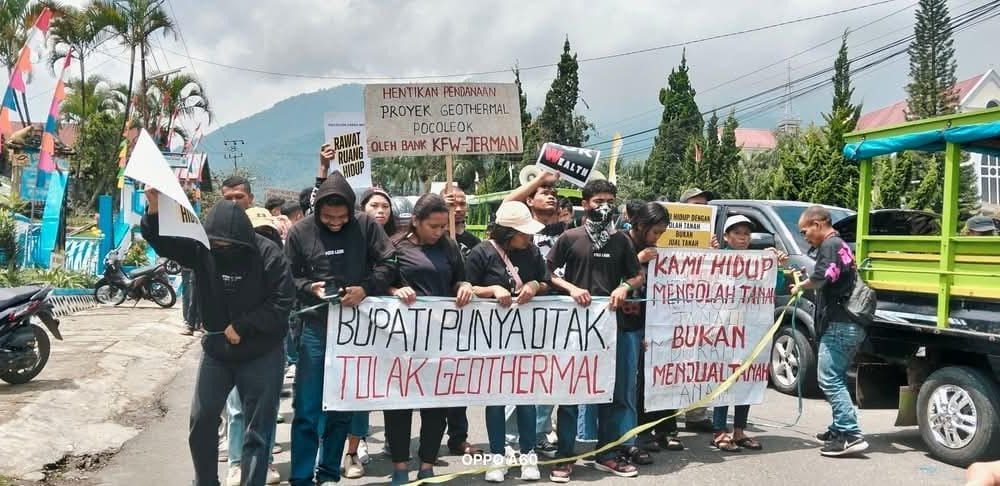
The report documented cases in Indonesia, Mexico, and Tanzania in which affected communities claimed to have faced intimidation, livelihood losses, and violations of their right to Free, Prior, and Informed Consent (FPIC) by KFW-backed projects.

In response, a coalition of organizations, including Asia Indigenous Peoples Network on Extractive Industries and Energy (AIPNEE), Community Empowerment and Social Justice Network (CEMSOJ), Defenders in Development Campaign (DiD), and Protection International, has submitted over 20 detailed recommendations aimed at fundamentally strengthening the independence, transparency, and effectiveness of KfW’s Complaint Mechanism.

Some of the key recommendations include a call for structural independence, a separate budget for the mechanism established and managed independently of the management of the KFW Bank, taking into consideration reprisals suffered by project-affected people, and mentioning that the Complaints Office will commit to implementing a more comprehensive approach, looking beyond individual complainants, among others.

These proposals stem from documented concerns that communities affected by KfW-funded projects struggle to access meaningful remedies.

According to the KFW irresponsible banking report, projects branded as sustainable and pro-development have, in several cases, been linked with forced displacement, inadequate consultation, and reprisals against those who speak out.

“KfW calls it ‘responsible banking’, but it’s using German taxpayers’ money to bankroll projects that displace Indigenous Peoples, destroy ecosystems, and endanger human rights defenders. If KfW wants to demonstrate real responsibility, it needs to listen to local communities and ensure their voices are not silenced.” Dalile Antunez, collaborative researcher at the Coalition for Human Rights in Development.

Being fully owned by the German government, CSOs emphasize that its operations must align with the United Nations Guiding Principles on Business and Human Rights and Germany’s Supply Chain Due Diligence Act.

According to the United Nations Guiding Principles on Business and Human Rights, business enterprises are expected to respect human rights, meaning they should avoid infringing on others’ human rights and address adverse human rights impacts with which they are involved. This is in addition to Germany’s Supply Chain Due Diligence Act, which requires enforcement of corporate accountability for human rights and environmental standards across global operations.

But such standards have never been adhered to by development projects such as KFW-funded projects.

KfW bank is further urged to adopt a comprehensive anti-reprisals framework, including concrete measures such as suspending project disbursements where threats persist, documenting all reported reprisals in a public registry, providing emergency assistance where needed, and communicating incidents to oversight bodies such as the German Institute for Human Rights.

Civil society groups argue that these recommendations demonstrate the need not only for stronger safeguards but also for genuine participation by affected communities in remedial processes.

The recommendations, therefore, propose that complainants have the authority to choose whether their case proceeds through dispute resolution, prior resolution, or compliance review.

They also call for guaranteed access to all information used in decision-making, publication of both admissible and inadmissible complaints, and extended deadlines for filing complaints to account for delayed discovery of harm.

Additionally, CSOs advocate for a simplified complaint process that allows grievances to be submitted orally or through accessible channels, recognizing the barriers faced by remote or marginalized communities.

“Many Indigenous communities in remote areas may face barriers such as limited access to technical support or a lack of experience in preparing formal written complaints, particularly in the absence of supporting NGOs. So, they should be able to file complaints verbally or in other forms and through various channels. The current system is overly complex, creating barriers for communities to submit grievances independently without supporting NGOs,” reads part of the recommendations.

CSOs argue that unless KfW Bank strengthens the independence of its Complaint Mechanism and adopts enforceable protections against reprisals, its sustainability commitments risk remaining utopian rather than realistic and transformative.

Continue Reading

MEDIA FOR CHANGE NETWORK

Food systems in conflict areas: Architectures of armed conflict are turning food and hunger into weapons of war.

Published

on

By the Witness Radio team.

War now extends beyond guns and bombs, with food systems becoming strategic tools in modern conflict, a crucial factor for understanding global security and the deliberate targeting of food as a weapon.

Fields are burned before harvest. Irrigation systems are destroyed. Fishing zones are blocked. Grain silos are bombed. Seeds are contaminated or confiscated. Entire communities are cut off from their ability to grow or buy food for months or years, deliberately harming people’s access to food.

The result is not only displacement or destruction, but a slower, more deliberate outcome: hunger. In many cases, it functions not as a side effect of war but as a method of weakening populations and reshaping control over land, resources, and survival itself.

A new position paper by La Via Campesina, representing over 200 million peasants, Indigenous peoples, farmers, and rural workers, argues that controlling land and food is a deliberate political act, and that defending these resources is vital to life itself. This underscores the critical need for collective action to safeguard food security.

The report frames war and hunger as interconnected forces within a global political order, highlighting the widespread implications of targeting food systems.

The document states that “war and hunger are two faces of the same system,” and adds that defending land and food systems is inseparable from defending life itself.

La Via Campesina describes the current global moment as one defined by overlapping conflicts across Gaza, Sudan, Ukraine, Yemen, the Sahel, Myanmar, the Democratic Republic of Congo, and other regions. Rather than isolated crises, the report suggests these wars reflect a broader global system shaped by intensifying geopolitical competition, expanding military industries, weakening international governance, and growing pressure on land, water, and food systems.

“Rare earth elements, fossil fuels, water, and agricultural land are the true stakes of most contemporary conflicts. The targeting of Ukrainian grain exports, the scramble for Congolese cobalt, and the siege of Gaza’s fishing grounds all reflect this logic,” the paper reveals.

The rural poor, who produce most of the World’s food, are bearing the heaviest burden. They face poverty, hunger, displacement, and vulnerability.

Modern conflicts target food infrastructure-irrigation, grain reserves, and seed banks-highlighting how warfare deliberately undermines food security and calls for increased vigilance.

“The use of starvation as a weapon of war is strategic. Throughout history, empires understood that destroying a people’s capacity to feed themselves is among the most effective tools of subjugation.” La Via Campesina describes.

Across the cases examined in the report, La Via Campesina argues that controlling food has long been a way of controlling populations. What is different today, it suggests, is the scale, coordination, and technological sophistication through which food systems are disrupted in modern warfare.

In Gaza, the report cites widespread destruction of agricultural land and severe restrictions on fishing areas, alongside repeated disruptions of food supply corridors. Humanitarian assessments referenced in the paper indicate that more than 80% of farmland has been damaged or rendered unusable, deepening already severe food insecurity and famine risk warnings.

In Yemen, years of restrictions on key ports, particularly Hudaydah, through which most food imports enter, have significantly limited access to essential supplies. Combined with ongoing conflict, this has contributed to one of the most severe and prolonged hunger crises in the world.

In eastern Democratic Republic of Congo, cycles of armed violence have repeatedly destroyed crops and forced farming communities from their land. In many areas, agricultural production has collapsed entirely due to insecurity and the presence of armed groups controlling rural territory. The result has been persistent and widespread food insecurity affecting millions of people.

In Sudan, the conflict has similarly disrupted food systems through the looting of grain stores, destruction of farms, and mass displacement of rural populations. Entire agricultural regions have been emptied, turning once-productive farmland into zones of acute hunger.

The environmental degradation in war zones, including soil contamination and deforestation, is linked directly to global climate and resource crises, calling for a heightened awareness of these interconnected issues.

The report also links these local environmental impacts to global ecological pressures. It argues that as climate instability, water scarcity, soil degradation, and biodiversity loss intensify, competition over natural resources is increasing. In this context, land, water, and fertile agricultural regions become strategic assets in broader geopolitical struggles.

What emerges from both the data and case studies is a picture of hunger that is not only humanitarian but deeply political. It is shaped by conflict, resource control, and global systems that determine who can produce food, who can access it, and who is excluded from both.

In this sense, the report suggests, war is no longer confined to battlefields. It extends into wheat fields, fishing waters, seed banks, and supply routes. Hunger becomes not just a consequence of war, but one of its most powerful instruments.

Continue Reading

MEDIA FOR CHANGE NETWORK

Experts warn that without Africa’s control over resources and climate financing, the continent faces the risk of entering a new era of “green colonialism”.

Published

on

By Witness Radio Team

As the global push for clean energy accelerates, African governments are under mounting pressure to move away from fossil fuels and embrace renewable energy. But economists, political leaders, and climate justice advocates are warning that Africa’s transition could reproduce the same unequal economic structures established during colonialism unless the continent gains greater control over its resources, industries, and financing systems, inspiring a sense of agency and possibility.

Although Africa contributes less than 4 percent of global greenhouse gas emissions, it is among the regions most vulnerable to climate change. The continent continues to suffer disproportionately from a crisis largely caused by industrialized nations, including prolonged droughts and devastating floods, which greatly affect its people.

Governments across Africa are increasingly adopting renewable energy policies promoted as pathways toward sustainable development. Despite being promoted, a growing number of experts argue that the transition risks becoming another extractive project in which African resources fuel foreign industries while local communities remain impoverished.

The global transition to clean energy has sharply increased demand for minerals such as cobalt, lithium, graphite, manganese, and copper, which are abundant across Africa and critical for batteries, electric vehicles, and renewable energy technologies.

At the same time, the continent possesses vast renewable energy potential. According to the International Renewable Energy Agency (IRENA), Africa could generate significantly more renewable energy than it currently consumes.

In an interview with Witness Radio, Tunisian economist and President of the Global Institute for Sustainable Prosperity, Fadhel Kaboub, said Africa’s role in the global transition should go beyond merely supplying raw materials to industrialized countries.

“We cannot decarbonize a system that hasn’t been structurally economically decolonized yet. Africa has the potential to become an energy powerhouse globally, an industrial powerhouse, and as a result, an economic and geopolitical powerhouse.” Kaboub reveals.

Kaboub argued that the current global economic system continues to place African countries at the bottom of supply chains, echoing colonial patterns. This pattern is vital for economists and global citizens to understand.

“Africa was assigned the role of supplying cheap raw materials while importing finished products and technologies. The danger is that the green transition is reinforcing the same model instead of transforming it,” he added.

Across the continent, activists and researchers are increasingly raising concerns about what they describe as “green colonialism,” where climate and environmental projects dispossess communities while benefiting foreign governments and corporations.

In several African countries, including Uganda, large-scale carbon offset projects have been linked to land conflicts and forced displacement. Critics say some carbon markets allow polluting corporations in the Global North to continue emitting greenhouse gases while using African land and forests to offset their emissions.

Environmental advocates warn that unless African governments ensure local ownership and value addition in mining linked to renewable energy, the continent risks repeating the history of raw material extraction, which is key for informed policy decisions.

Africa’s green transition discussions also focused on climate financing as a key point of debate. African leaders have repeatedly criticized rich countries for not sufficiently financing adaptation and renewable energy projects, despite their historic role in spewing the bulk of the World’s carbon emissions.

At the COP29 climate Summit in November 2024 in Azerbaijan, His Excellency Bola Ahmed Tinubu, the president of the Federal Republic of Nigeria, warned that many African countries are trapped between debt repayment obligations and climate adaptation needs.

“Africa did little to cause the climate crisis, yet the debt climate trap has saddled many of its nations with a tragic choice: Eschew repayments to fund adaptation to climate shocks and risk default- a financial purgatory where development indicators plummet; or honor obligations and compromise on resilience, thus entrenching vulnerability to development-shuttering climate events,” he added.

Speaking during the Africa Climate Summit 2025, former Ethiopian Prime Minister Hailemariam Desalegn said debt restructuring must become part of global climate discussions.

“Unless we confront the debt crisis head-on, efforts to finance Africa’s climate ambitions will continue to fall short,” Desalegn said.

Kaboub believes the financing crisis reflects a broader historical injustice. “The industrialized world has consumed most of the global carbon budget that creates a climate debt owed to Africa and the Global South.” He revealed.

Some African economists and climate justice groups are calling for climate reparations, not more loans that deepen dependency, to address historical injustices and support equitable development.

“The future of Africa’s green transition depends on who controls it. If Africa controls its resources, industries, and development path, the transition could become a tool for liberation. If not, it risks becoming another phase of exploitation under a green banner.” Kaboub concluded.

Continue Reading

MEDIA FOR CHANGE NETWORK

Rising fertilizer dependence sparks debate over Africa’s agricultural future; experts call for urgent critical review process.

Published

on

By Witness Radio Team.

In March this year, the United Nations World Food Program (WFP) warned that the number of people facing acute hunger globally could rise sharply if escalating conflict in the Middle East continues to destabilize the global economy, projecting that nearly 45 million additional people could slide into acute food insecurity.

Since 28 February 2026, the United States and Israel have been engaged in a war with Iran and its regional allies. The conflict began when the US and Israel launched airstrikes on Iran, targeting military and government sites and assassinating several Iranian officials, including Supreme Leader Ali Khamenei. Iran responded with missile and drone strikes on Israel, US bases, and US-allied Arab countries in West Asia, and the temporary closure of the Strait of Hormuz, disrupting global trade.

As global tensions continue, experts have revealed that they are disrupting fertilizer supply chains and driving up prices, an issue likely to threaten food security and make policymakers feel responsible for safeguarding Africa’s future.

A recent report by GRAIN, an international Non-Governmental Organization (NGO), argues that Africa’s increasing reliance on imported chemical fertilizers is exposing farmers and food systems to economic, political, and environmental risks.

Titled “Can African Food Systems Thrive Without Chemical Fertilizers?”, the report links recent fertilizer price spikes to conflicts such as the Russia-Ukraine war and the recent escalation involving Iran, Israel, and the United States. According to the report, these crises have disrupted the movement of fertilizers and raw materials, such as natural gas and sulfur, pushing prices beyond the reach of many African farmers.

According to the report, the African fertilizer market is currently worth around US$10–15 billion and is projected to grow to US$20 billion over the next four years. It adds that the largest fertilizer manufacturers — including Yara of Norway, OCP of Morocco, PhosAgro of Russia, Nutrien of Canada, and Mosaic of the United States — are seeking to expand their presence in this fast-growing, highly profitable market.

GRAIN researcher Ange David Baimey told the Witness Radio team that growing concerns about the ongoing impact of global conflicts on African agriculture drove the investigation.

“As you can see, the recent crisis involving Iran, the USA, and the Middle East created a lot of uncertainty concerning how fertilizers can continue reaching African countries. Before this, we also had the Ukraine crisis and COVID-19. If you look at the last six years, these crises have seriously affected agriculture in Africa.” Ange, who participated in the research, told Witness Radio.

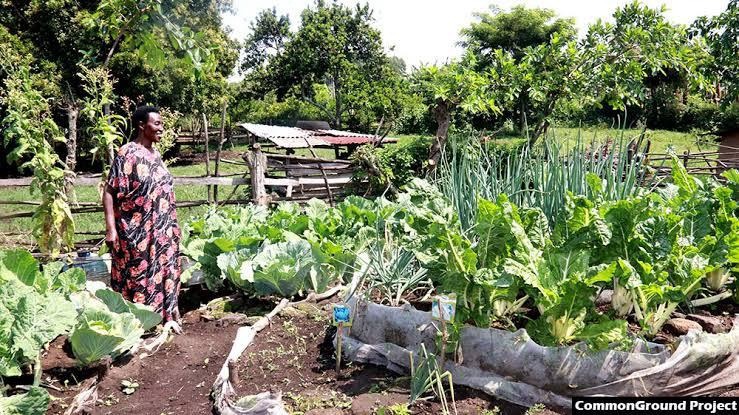
For decades, many African governments, donors, and agribusinesses have promoted chemical fertilizers as essential for increasing food production. However, the report highlights that relying on organic and sustainable practices-such as indigenous knowledge, crop diversity, and soil fertility methods-can be safer and more resilient. Showcasing successful case studies can help policymakers see practical alternatives to dependency.

“The only solution to the best agricultural practices is not chemical fertilizers. Farmers have tested and agreed that organic fertilizers are the answer. Ange further mentioned.

According to the report, the push for chemical fertilizers accelerated during the Green Revolution period, driven largely by multinational agribusiness interests seeking profits from agricultural inputs.

“The Green Revolution is not the beginning of agriculture in Africa. Our systems existed before chemical fertilizers. What we see now is a system where companies are making profits while creating dependency.” He said.

The report notes that many African countries import significant quantities of fertilizers from Gulf countries, including Saudi Arabia, Qatar, and Oman. Countries including Sudan, Tanzania, Kenya, and Mozambique remain highly dependent on these imports, making them vulnerable to supply disruptions and rising global prices.

Although African governments spend billions of dollars on fertilizer subsidy programs, many small-scale farmers still struggle to afford the products. In some countries, fertilizer prices are significantly higher than global averages due to import dependency, market concentration, and the dominance of multinational corporations in the supply chain.

“In our research, we also discovered that African farmers often pay more for the same fertilizers than farmers in Europe or the United States. The market is controlled by powerful companies whose goal is profit.” Ange explained.

The report identifies major corporations such as Yara International, OCP Group, and Dangote Group as key players shaping Africa’s fertilizer markets.

“These companies have huge influence and power in African agriculture. Governments must examine even discussions around continental trade agreements carefully because the same multinational companies may continue dominating the market.” Ange observed.

Beyond economic concerns, the report also highlights environmental and health impacts associated with chemical fertilizers, including soil degradation, water pollution, and increased pesticide use. The report advises African countries to adopt organic approaches to improve their yields, human and soil health, and to avoid environmental shocks.

“A change of course off the chemical fertilizer treadmill and towards agroecology is even more urgent in the face of the climate crisis. Climate scientists are calling today for a 42% global reduction in fertilizer use by 2050, to keep the planet livable.” The report noted.

Experts urge African leaders to use these global shocks as an opportunity to rethink Africa’s agricultural direction. “If you are dependent upon another person for your food, what happens when that person cuts off access? That is the situation Africa is in. The COVID crisis, the Ukraine war, and now the Gulf crisis all prove that reliance on imported fertilizers is dangerous. Africa can feed itself. The question is whether governments are willing to assist with that transition.” He concluded.

Continue Reading

Resource Center

Legal Framework

READ BY CATEGORY

Facebook

Newsletter

Subscribe to Witness Radio's newsletter


Trending

Subscribe to Witness Radio's newsletter