Connect with us

MEDIA FOR CHANGE NETWORK

EALA members renew push for unified sub-regional Agroecology Law during Mukono meeting.

Published

on

By Witness Radio Team.

The East African Legislative Assembly (EALA) has renewed its call for a unified regional agroecology policy and law, following a high-level capacity-building meeting held in Nakisunga Village, Mukono District, Uganda.

The gathering brought together more than 50 EALA members, over 100 participants, including civil society organizations (CSOs) representatives, agroecology experts, and officials from Mukono Local government, to discuss the gaps in existing regional frameworks and the urgent need for coherent legislation to support sustainable and climate-resilient farming systems.

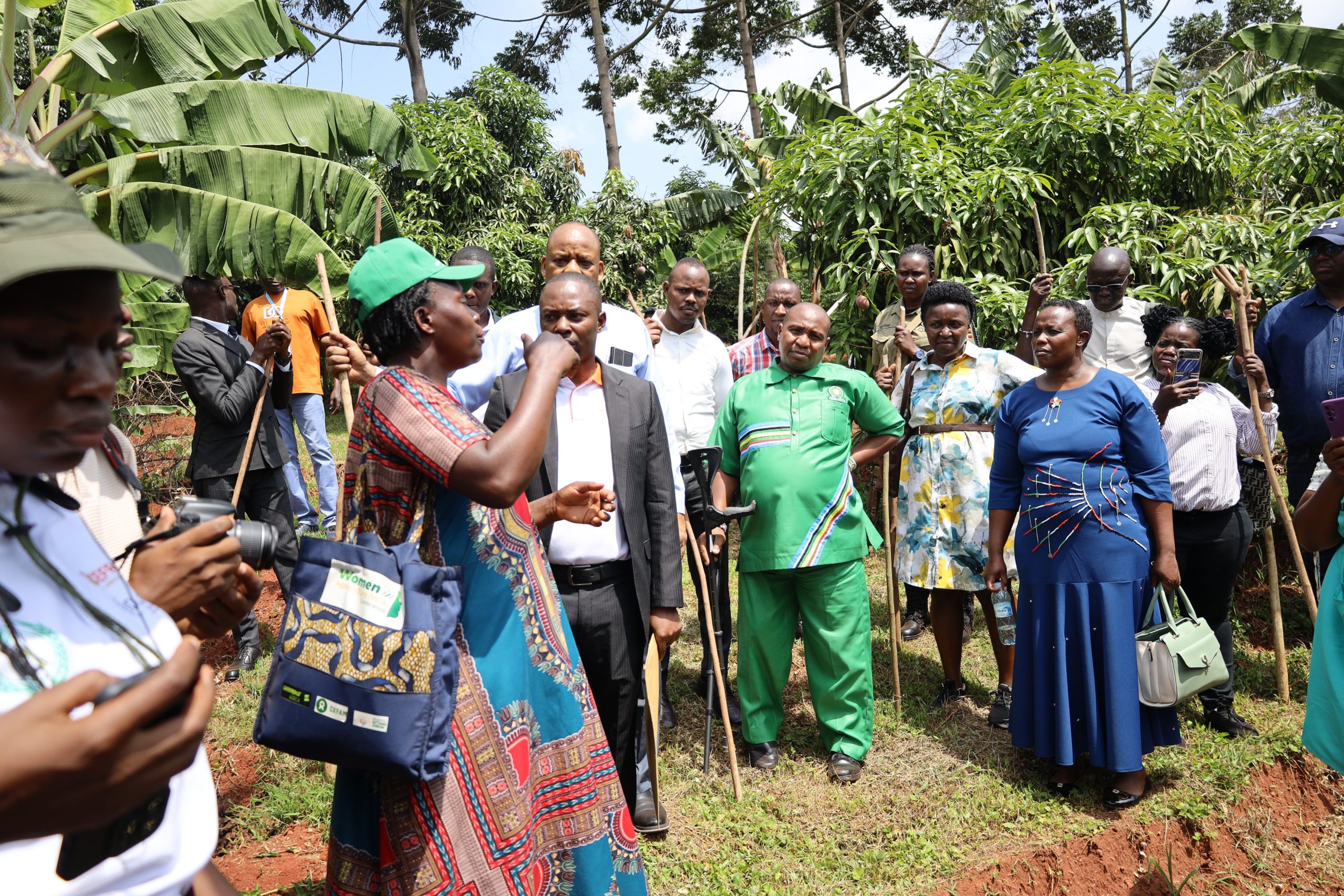
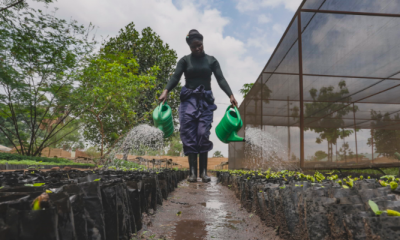
The field tour of Nansubuga CEFROHT Agroecology Training Farm showcased successful organic farming practices, illustrating the benefits of agroecology firsthand to lawmakers and stakeholders.

“I’m amazed at how a local female farmer can transform non-fertile land into a productive farm,” said Hon. Fatuma Ndangiza of the EALA delegation from Rwanda. “Agroecology is about access, safe food, resilient and equitable food systems, and environmental friendliness. What we see here is the right path for our small-scale farmers.”

The proposed regional agroecology law aims to protect smallholder farmers like Nansubuga by safeguarding their seeds, reducing reliance on costly chemical inputs, and shielding them from land grabs, thereby directly enhancing their resilience and livelihoods.

Representing EALA Speaker Rt. Hon. Joseph Ntakirutimana, Hon. Gideon Gatpan Thoar, Chair of the EALA Committee on Agriculture, Tourism and Natural Resources, emphasized the urgency to put the Agroecology policy and law in place:

“There is no law protecting agroecology farmers like Nansubuga. Their seeds are not protected, and they face intense competition from corporate-backed industrial systems. This deserves urgent attention.”

He added that lawmakers’ mandate requires them to legislate in the interest of East Africans, most of whom are smallholder farmers, and that firsthand field experience will strengthen the upcoming model law.

“So now, with this experience, we can push for a regional policy that empowers agroecology farmers and fosters resilient agriculture. Supporting them can lead to a brighter future for East African farming,” He added.

Hon. Fatuma Ndangiza revealed that the agroecology bill could be ready within a year, pending adequate funding, offering hope that smallholder farmers will have access to supportive legislation.

“East Africa cannot build resilient food systems without a unified agroecology policy and law. This meeting is a big step toward drafting a model law that reflects the needs of our farmers. At least by the end of our mandate in 2027, we want this bill in place,” she said. “Members of the agriculture committee have already been trained in agroecology, and thanks to CEFROHT and other partners, even more lawmakers now appreciate the importance of this legislation. It will move quickly.”

Experts at the meeting highlighted systemic biases that keep East African farmers impoverished. These include a longstanding emphasis on export-oriented industrial agriculture, corporate-controlled seeds, increasing pesticide and fertilizer use, and land grabs.

Dr. Million Belay, General Coordinator of the Alliance for Food Sovereignty in Africa (AFSA), warned that Africa is being pushed into an unsustainable corner.

“One of the legacies of colonialism is pushing us to export food instead of feeding our people. Chemicals, GMOs, and land grabs are increasing, and global actors now control food production.

A farm like this one shows the direction we should take.”

He went on to say that proper food security and environmental health depend on farmers’ control over their land, seeds, and output-what we call food sovereignty-empowering farmers to shape their future.

As part of the capacity-building process, EALA members visited the CEFROHT Agroecology Learning Center, where they witnessed demonstrations of intercropping and crop diversification, agroforestry systems, animal husbandry, water and pesticide trapping, among others.

Dr. David Kabanda, whose organization, the Center for Food and Adequate Living Rights (CEFROHT), hosted the delegation, noted that farmers are already successfully practicing agroecology, demonstrating the tangible benefits of this approach.

“We are pleased to support lawmakers with evidence and field-level experiences. Agroecology is not theoretical; farmers are already practicing it successfully. It is what we advocate for, the production of good food as well as environmental conservation,” he added.

Looking ahead, EALA announced a series of concrete steps to advance the regional agroecology agenda. The assembly plans to complete the Agroecology Bill process within a year, then conduct public hearings across all eight EAC Partner States to gather stakeholder input. The bill will be fast-tracked for debate and approval in the EALA plenary, with civil society expected to help secure the Heads of State’s assent. Once adopted, the law will become the EAC Agroecology Act, guiding and harmonizing agroecology efforts across the region.

As climate shocks intensify and millions of families depend on smallholder farming, the Mukono meeting marks a turning point in East Africa’s pursuit of sustainable, resilient food systems. The push for a unified agroecology law signals a growing regional recognition that the future of East African agriculture must be farmer-centered, biodiversity-based, and rooted in local knowledge.

Continue Reading

MEDIA FOR CHANGE NETWORK

Ugandan Farmers Sue EACOP in London in Last Minute Effort to Stop Crude Oil Pipeline

Published

on

Local farmer Okumu Weke next to an EACOP route beacon in Nyamtai village, Kikuube District in western region of Uganda. Credit: Maina Waruru/IPS

NYAMTAI, Uganda, Apr 3 2026 (IPS) – Environmental activists and farmer groups opposed to the construction of the East African Crude Oil Pipeline (EACOP), the world’s longest heated oil pipeline, are mounting a last-ditch legal effort meant to stop its construction in a suit they plan to have filed in London, UK,  believing that it stands a chance to stop the controversial project despite being at the 78 percent completion stage.

The groups have engaged the services of the London law firm of Leigh Day, one of the UK’s leading environmental and public interest litigation firms, which in the past has won landmark compensation cases for northern Kenyan communities affected by unexploded UK military munitions, among others.

With the pipeline construction said to be nearly 80 percent complete, the groups believe their petition stands a good chance of success since EACOP is owned by a company registered at the Companies House in London – the EACOP Ltd.

This is despite the controversial 1,443 km pipeline, principally owned by TotalEnergies with a 62 percent stake, meant to evacuate crude from Western Uganda oilfields to the Indian port of Tanga in Tanzania, which has survived several suits filed in the region and in France and, despite the withdrawal of several would-be financiers, looks all set for completion later in the year, with the first oil exports due in October 2026.

Other owners of the pipeline are the governments of Uganda and Tanzania via the Uganda National Oil Company (UNOC – 15 percent) and the Tanzania Petroleum Development Corporation (TPDC – 15 percent), and the Chinese multinational China National Offshore Oil Corporation (CNOOC – 8 percent).

The plaintiffs, who include project-affected persons (PAPs) from across Uganda, are buoyed by the support of the global campaign group Avaaz, which in February initiated a fundraising effort to help with costs of the suit, ahead of its expected commencement in May.

They claim that the pipeline will violate rights protected by the Ugandan Constitution, which gives every citizen the right to a clean and healthy environment.

The local farmers allege that the construction and operation of the pipeline will have a material impact on global temperatures with severe consequences both worldwide and in Uganda. Further, they alleged that the pipeline is in breach of EACOP Ltd’s own legal obligations under Uganda’s National Environment Act and National Climate Change Act.

Snaking through Uganda and Tanzania, it will tear through some of the planet’s “most wondrous ecosystems”, carving up elephant sanctuaries, protected forests, and more than 200 rivers.

In addition, the massive infrastructure, also the longest crude oil pipeline in Africa, will result in almost 400 million tonnes of emissions over its lifetime and have a major impact on climate change, they claim.

Besides, they argue that the emissions released by oil carried by the pipeline will ‘materially’ contribute to global warming and fear the impact this will have on them and their livelihoods, as well as on the environment and the health of Ugandans.

EACOP is expected to result in more than 372 million tonnes of CO₂e, or greenhouse gas, emissions—more than 58 times Uganda’s total annual emissions, they contend.

Uganda is particularly impacted by climate change, having already suffered from “record-breaking occurrences of floods, devastating and frequent droughts and erratic rainfall patterns”, according to a report sent by the Ugandan government to the UN, which will only increase as climate change worsens.

“The case is one of a growing number of legal claims seeking to hold global energy companies and infrastructure providers to account for the emissions resulting from their extraction of fossil fuels,” Leigh Day said in a statement.

“Our clients believe the EACOP pipeline will result in enormous damage to the global climate as well as severe damage to their local environment. The EACOP will lead to a huge amount of oil being burnt in a world where the UN has confirmed there are already far more fossil fuels slated for extraction than required if we are to meet the goals of the Paris Agreement, said Leigh Day solicitor Joe Snape, who will represent the group.

The fact that the pipeline is operated and financed by a UK-registered company highlights the role UK corporates often have in fossil fuel extraction projects in the Global South, he added

He further noted, “Our clients are already living on the frontline of the climate crisis and argue this pipeline will only exacerbate the impact they, and other vulnerable communities around the world, experience on their lives and livelihoods. They are calling for the pipeline construction and operations to be halted to stop this damaging impact on the climate in Uganda and elsewhere around the world.”

While around a third (460 km) of the pipeline will run through the basin of Lake Victoria, Africa’s largest lake, local environmentalists  warn that a spill or leak could potentially result in catastrophic effects for the lake, which is a vital water resource in the region and a significant source for the River Nile.

The pipeline will also run through and disturb important habitats and nature reserves, including Murchison Falls National Park, the Taala Forest Reserve, and the Bugoma Forest. The pipeline will reportedly disturb around 2,000 square kilometres of protected habitats, impacting rare and endangered species that inhabit them, such as Eastern Chimpanzees and African Elephants.

For its part, Avaaz said its fundraising effort will support the “groundbreaking” court helping expose the environmental abuses and climate devastation that this project will cause. Further, it will help to defend land rights for Indigenous and frontline communities and “continue the quest to protect life on Earth.”

“With help from Avaaz members, communities in East Africa have already fought this project through regional courts — but their case was dismissed on a technicality. This new lawsuit in the UK is the last remaining path to stopping this monster pipeline. Legal experts believe it offers a far better shot at a fair, independent hearing — with a real possibility of success,” the campaign noted.

The group promised to “stage an epic media stunt” around the launch of the court case, increasing pressure on insurance companies to walk away from the project, and support families in Uganda and Tanzania who are fighting evictions, providing cash assistance for food, medicine and other basic necessities.

The USD 5.6 billion project was initiated in 2016 amid delays, resistance, and scrutiny. Over the past two years, EACOP has accelerated, with infrastructure taking shape along its route and at its two key oil fields: Tilenga, awarded to TotalEnergies, and Kingfisher, awarded to CNOOC.

IPS UN Bureau Report

Source: Inter Press Service News Agency

Continue Reading

MEDIA FOR CHANGE NETWORK

Minister Cancels Contested 12-Square-Mile Land Title in Mubende

Published

on

Residents accuse local leaders and private actors of violent evictions and land grabbing, as the Lands minister intervenes, orders arrests, and revokes a disputed title he says was fraudulently acquired.

The State Minister for Lands, Sam Mayanja, has ordered the cancellation of a 12-square-mile land title in Buweekula South Constituency in Mubende District, declaring that the late Christopher Obeya illegally acquired the land.

The directive followed a stakeholders’ meeting and locus visit during which residents reported alleged impunity by a manager hired by Obeya’s estate, who is accused of overseeing violent evictions, including the shooting of a kibanja holder.

Hundreds of residents from Buweekula South told the minister they had lived on the land for decades but were forcefully evicted.

“We have lived on this land for decades, but we are being treated like strangers. Our homes were destroyed, and some of us were beaten when we resisted eviction,” said Frank Namanya, a resident.

The contested land, located at Block 375, Plot 3, measures 12 square miles and spans three villages—Kibuye Vuga, Njajaazi, and Gogonya. It was originally public land before the Uganda Land Commission issued a title to Erineo Kunobwa and Joseph Yumbe in 1987.

The title was later transferred in 1990 to Musose Mutabiingwa and Francis Katabalwa as tenants in common without being surrendered back to the commission, and was eventually transferred to Christopher Obeya in 2005.

Residents said that following Obeya’s death, his estate administrators hired Andrew Akandwanaho, who, together with private security personnel, allegedly carried out forceful evictions.

“The manager came with armed men and started evicting people violently. One of our people was shot dead for refusing to leave his land,” said Moses Kasumba, another resident.

Locals also accused Mubende District Chairperson Michael Muhereza Ntambi and Resident District Commissioner (RDC) Fred Nayebare Kyamuzigita of owning portions of the contested land, where they allegedly graze cattle, and of failing to address community concerns.

“Leaders who are supposed to protect us are instead using this land for their own benefit, and the district chairperson has cows on this land. They have ignored our cries for help,” Namanya added.

In response, Mayanja directed the District Police Commander in Mubende to arrest Andrew Akandwanaho over alleged unlawful evictions and the reported shooting.

“No one is above the law. I have directed the police to immediately arrest the manager responsible for these illegal evictions and the reported shooting,” Mayanja said.

He further ordered the cancellation of the land title held by the late Obeya, stating that it had been fraudulently obtained and that the land would revert to the Mubende District Land Board.

“This title was obtained fraudulently and cannot stand. The land reverts to the district for proper management in the interest of the rightful occupants,” he said.

The minister also expressed dissatisfaction with the district leadership, accusing them of possible involvement in land grabbing and warning of further action.

“If the district leadership is implicated in land grabbing, they must step aside. I will not hesitate to involve the State House Anti-Corruption Unit,” Mayanja warned.

He further claimed that the district chairperson had sought a private meeting with him under unclear circumstances.

“Why have you been calling me asking for a secret meeting with me?” Mayanja asked during the meeting, drawing reactions from residents.

RDC Kyamuzigita denied the allegations that he owns or grazes cattle on the disputed land.

“I have not even made five months in Mubende, and my cows are in Nyabushozi, so those are allegations,” he said.

He added that he would investigate claims regarding the district chairperson’s alleged involvement.

“Honourable Minister, I did not know whether the chairperson has cows on this land, and I am going to take action on that,” Kyamuzigita said.

Although the district chairperson was present at the meeting, Minister Mayanja denied him the opportunity to respond to the accusations before the residents.

Source: nilepost.co.ug

Continue Reading

MEDIA FOR CHANGE NETWORK

Global Peasant Movement calls for action against escalating land grabs and repression.

Published

on

By the Witness Radio team.

For more than eight years, the landscape of Kiryandongo district in western Uganda has undergone significant changes, shifting from being occupied by local farmers to a violent takeover by multinational companies.

What used to be small farms, homesteads, and community life is now dominated by endless stretches of sugarcane and grain plantations, disrupting local economies and social bonds. Families who once cultivated food and built futures now face displacement, dispossession, and uncertainty about their livelihoods and community cohesion.

“They found us living in peace. Now everything is broken: families, dreams, livelihoods. investors forcibly took away our land.” Benon Beryaija told Witness Radio, recalling the past.

Despite displacement, criminalization, and fear, some land defenders remain steadfast, inspiring the audience to value resilience and collective resistance.

Benon Beryaija, the chairperson of the Kiryandongo land eviction victims, is at the center of the resistance and continues to organize locals despite threats, arrests, and violence.

“The bigger group left, but we remain resolute. “We are defending what belongs to us; our land that was grabbed by multinationals. It is a very hard fight, and it is threatening my life. I have been arrested and tortured for defending my people.”

His experience reflects a broader pattern across Uganda and beyond, where land and environmental defenders increasingly face intimidation, legal harassment, and violence.

The situation in Kiryandongo mirrors a growing global crisis. A global coalition of small-scale farmers and rural movements has issued a strong call for international mobilization against land dispossession, state repression, and what it describes as a growing “neocolonial offensive” targeting rural communities worldwide.

In a statement released ahead of the International Day of Peasant Struggles on April 17, La Via Campesina warned that agribusiness expansion, militarisation, and restrictive trade policies are accelerating land grabs and undermining food sovereignty across continents.

Founded in 1993, La Via Campesina brings together millions of peasants, landless workers, Indigenous peoples, pastoralists, fishers, migrant farmworkers, and rural women and youth, all of whom advocate for food sovereignty and peasant agriculture.

The annual commemoration marks 30 years since the Eldorado do Carajás Massacre in Brazil, where military police killed 21 landless workers during a protest for agrarian reform. The movement says the anniversary is a reminder of “ongoing violence in our territories” and the continued impunity for crimes against land defenders.

Peasant movements warn that land grabbing is being accelerated by agribusiness expansion, extractive industries, and global financial interests often backed by foreign capital and state support.

“They do not come to restore democracy,” the statement reads. “They come to steal the land we cultivate,” accusing multinational corporations and governments of turning land and ecosystems into “speculative assets.”

Recent findings from the Food and Agriculture Organization, in collaboration with the International Land Coalition and CIRAD, reinforce these concerns. Their “Status of Land Tenure and Governance” report estimates that more than 1.1 billion people, about 23 percent of the global adult population, live under constant fear of losing their land or homes within the next five years.

The report identifies commercial pressures as a major driver of land insecurity, echoing concerns raised by peasant movements.

The statement also criticizes global trade systems, particularly agreements negotiated under the World Trade Organization, arguing that they favor multinational corporations at the expense of smallholder farmers.

La Via Campesina has called for agriculture to be removed entirely from WTO frameworks, saying free trade agreements undermine national sovereignty and expose local producers to unfair competition.

“We WARN that the capitalist and neocolonial offensive is not limited to direct violence: neoliberal trade policies are also deadly for rural life. Free Trade Agreements (FTAs), such as Mercosur’s with the European Union and others, are instruments of submission that dismantle national sovereignty to favor transnationals. We reject treating food as a commodity and trade as a weapon; we demand that tariffs be legitimate tools to protect small producers from dumping, not levers of geopolitical coercion wielded by empire.” The statement adds.

Beyond economic pressure, the group reveals what it calls the systematic criminalization of those defending land, water, and natural resources. Across Latin America, Africa, and Asia, activists are increasingly labeled as “terrorists,” arrested, or subjected to prolonged legal battles.

“The capitalist and colonial system that represses and dispossesses our peoples continues unabated to this day, enabling land grabbing, protecting the elites, and criminalizing those who fight for the land through laws and selective judicial processes and other forms of persecution.” The statement from the group mentioned

This trend is evident in many countries, including Uganda, where communities resisting land-based investments, including infrastructure, oil, and plantation projects, have faced arrests, intimidation, and shrinking civic space.

As April 17 approaches, La Via Campesina is calling for coordinated global action from protests and community dialogues to solidarity campaigns.

It is also urging governments to implement international frameworks such as the United Nations Declaration on the Rights of Peasants and the United Nations Declaration on the Rights of Indigenous Peoples to protect land rights and food sovereignty.

“There is no peace without justice. And no justice without resistance and collective action,” the movement sa

Continue Reading

Resource Center

Legal Framework

READ BY CATEGORY

Facebook

Newsletter

Subscribe to Witness Radio's newsletter


Trending

Subscribe to Witness Radio's newsletter