Connect with us

MEDIA FOR CHANGE NETWORK

Global Peasant Movement calls for action against escalating land grabs and repression.

Published

on

By the Witness Radio team.

For more than eight years, the landscape of Kiryandongo district in western Uganda has undergone significant changes, shifting from being occupied by local farmers to a violent takeover by multinational companies.

What used to be small farms, homesteads, and community life is now dominated by endless stretches of sugarcane and grain plantations, disrupting local economies and social bonds. Families who once cultivated food and built futures now face displacement, dispossession, and uncertainty about their livelihoods and community cohesion.

“They found us living in peace. Now everything is broken: families, dreams, livelihoods. investors forcibly took away our land.” Benon Beryaija told Witness Radio, recalling the past.

Despite displacement, criminalization, and fear, some land defenders remain steadfast, inspiring the audience to value resilience and collective resistance.

Benon Beryaija, the chairperson of the Kiryandongo land eviction victims, is at the center of the resistance and continues to organize locals despite threats, arrests, and violence.

“The bigger group left, but we remain resolute. “We are defending what belongs to us; our land that was grabbed by multinationals. It is a very hard fight, and it is threatening my life. I have been arrested and tortured for defending my people.”

His experience reflects a broader pattern across Uganda and beyond, where land and environmental defenders increasingly face intimidation, legal harassment, and violence.

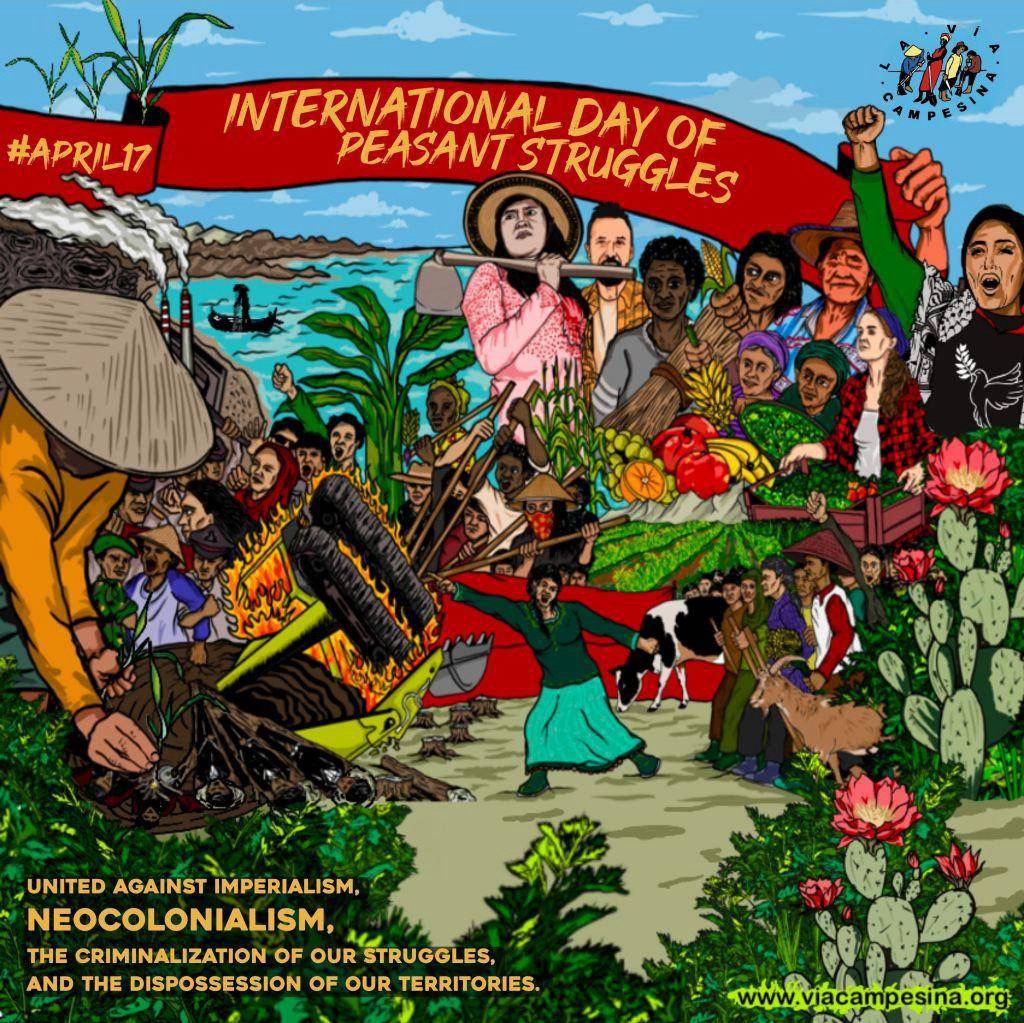
The situation in Kiryandongo mirrors a growing global crisis. A global coalition of small-scale farmers and rural movements has issued a strong call for international mobilization against land dispossession, state repression, and what it describes as a growing “neocolonial offensive” targeting rural communities worldwide.

In a statement released ahead of the International Day of Peasant Struggles on April 17, La Via Campesina warned that agribusiness expansion, militarisation, and restrictive trade policies are accelerating land grabs and undermining food sovereignty across continents.

Founded in 1993, La Via Campesina brings together millions of peasants, landless workers, Indigenous peoples, pastoralists, fishers, migrant farmworkers, and rural women and youth, all of whom advocate for food sovereignty and peasant agriculture.

The annual commemoration marks 30 years since the Eldorado do Carajás Massacre in Brazil, where military police killed 21 landless workers during a protest for agrarian reform. The movement says the anniversary is a reminder of “ongoing violence in our territories” and the continued impunity for crimes against land defenders.

Peasant movements warn that land grabbing is being accelerated by agribusiness expansion, extractive industries, and global financial interests often backed by foreign capital and state support.

“They do not come to restore democracy,” the statement reads. “They come to steal the land we cultivate,” accusing multinational corporations and governments of turning land and ecosystems into “speculative assets.”

Recent findings from the Food and Agriculture Organization, in collaboration with the International Land Coalition and CIRAD, reinforce these concerns. Their “Status of Land Tenure and Governance” report estimates that more than 1.1 billion people, about 23 percent of the global adult population, live under constant fear of losing their land or homes within the next five years.

The report identifies commercial pressures as a major driver of land insecurity, echoing concerns raised by peasant movements.

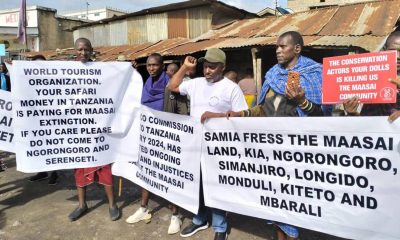
The statement also criticizes global trade systems, particularly agreements negotiated under the World Trade Organization, arguing that they favor multinational corporations at the expense of smallholder farmers.

La Via Campesina has called for agriculture to be removed entirely from WTO frameworks, saying free trade agreements undermine national sovereignty and expose local producers to unfair competition.

“We WARN that the capitalist and neocolonial offensive is not limited to direct violence: neoliberal trade policies are also deadly for rural life. Free Trade Agreements (FTAs), such as Mercosur’s with the European Union and others, are instruments of submission that dismantle national sovereignty to favor transnationals. We reject treating food as a commodity and trade as a weapon; we demand that tariffs be legitimate tools to protect small producers from dumping, not levers of geopolitical coercion wielded by empire.” The statement adds.

Beyond economic pressure, the group reveals what it calls the systematic criminalization of those defending land, water, and natural resources. Across Latin America, Africa, and Asia, activists are increasingly labeled as “terrorists,” arrested, or subjected to prolonged legal battles.

“The capitalist and colonial system that represses and dispossesses our peoples continues unabated to this day, enabling land grabbing, protecting the elites, and criminalizing those who fight for the land through laws and selective judicial processes and other forms of persecution.” The statement from the group mentioned

This trend is evident in many countries, including Uganda, where communities resisting land-based investments, including infrastructure, oil, and plantation projects, have faced arrests, intimidation, and shrinking civic space.

As April 17 approaches, La Via Campesina is calling for coordinated global action from protests and community dialogues to solidarity campaigns.

It is also urging governments to implement international frameworks such as the United Nations Declaration on the Rights of Peasants and the United Nations Declaration on the Rights of Indigenous Peoples to protect land rights and food sovereignty.

“There is no peace without justice. And no justice without resistance and collective action,” the movement said.

Continue Reading

MEDIA FOR CHANGE NETWORK

Uganda urged to drop charges against 11 environmental defenders after 17 months without witnesses

Published

on

Climate Rights International says the 11 defenders have faced repeated court delays since their arrest over a peaceful petition to KCB concerning EACOP financing.

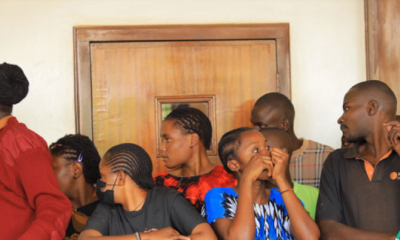
Eleven Ugandan environmental defenders have spent more than 17 months facing criminal trespass charges without a single prosecution witness testifying, prompting calls for the case to be dropped.

According to Climate Rights International, the group, known as the KCB11, was arrested on April 23, 2025, after going to the Kenya Commercial Bank (KCB) headquarters in Kampala to peacefully deliver a letter urging the bank to end its financial support for the East African Crude Oil Pipeline (EACOP).

The organisation said the defenders were instead taken to the bank’s basement by a KCB official under the pretext of arranging a meeting, where police and security personnel were waiting for them.

Climate Rights International has urged Ugandan authorities to immediately withdraw the charges, saying the case has been repeatedly delayed since the 11 were arrested.

“The case has dragged on for more than 17 months with repeated delays, without a single prosecution witness testifying,” the organisation said in a statement on Monday.

At a hearing on September 8, the court adjourned the case until September 29 and gave prosecutors what it described as a final opportunity to present their witnesses. The court indicated that it could dismiss the case if the prosecution failed to proceed again.

The 11 were charged with criminal trespass on April 25, 2025, and taken to Luzira prison, which Climate Rights International said has a history of torture and poor detention conditions.

The organisation first called for their immediate release and dismissal of the charges on June 30, 2025. The KCB11 were eventually granted bail on July 17 after spending 85 days in prison and were released the following day.

Since then, they have repeatedly returned to court while the charges have remained pending.

“The fact that 11 people were arrested and held for 85 days in a horrible prison for delivering a letter is a travesty,” Brad Adams, Executive Director at Climate Rights International said.

“The government has compounded this by holding a ridiculous prosecution over their heads for the past 17 months. This is punishment by process, and the charges should be dropped immediately.”

Climate Rights International said KCB Group had been identified as one of five financial institutions providing an initial tranche of financing for EACOP.

On September 14, the organisation wrote to KCB Group seeking information about the role of its personnel in the arrests and whether the bank had asked Ugandan authorities to withdraw the charges.

No response had been received from KCB Group at the time of publication.

EACOP is a 1,443-kilometre heated pipeline designed to transport oil from the Tilenga and Kingfisher oilfields in western Uganda to the port of Tanga on Tanzania’s coast.

Climate Rights International said more than 100,000 people in Uganda and Tanzania will permanently lose land for the pipeline and the Tilenga development.

Families affected by the projects have reported inadequate compensation, food insecurity, lost income and difficulties paying school fees.

The wider project is estimated to generate 379 million tonnes of carbon dioxide-equivalent emissions over 25 years.

In August 2026, EACOP Ltd.’s deputy managing director said construction of the pipeline was 91 per cent complete, bringing the project closer to operation despite continued human rights, environmental and climate concerns.

Climate Rights International also raised concerns about the effects of the oilfields that will supply the pipeline.

Research into the TotalEnergies-operated Tilenga project found that delays in compensation, inadequate payments and the loss of productive land had left many families poorer and harmed their livelihoods.

At the CNOOC-operated Kingfisher project, a Climate Rights International investigation documented forced evictions, violence and intimidation by the military, destruction of fishing boats, sexual and gender-based violence and labour abuses.

The organisation said the lengthy KCB11 proceedings form part of a wider pattern involving people who oppose EACOP and other oil projects.

A May 2026 review by the American Bar Association of more than 25 criminal cases involving opponents of EACOP and other oil projects found what it described as systematic repression, including mass arrests, vague charges linked to peaceful activities, prolonged pretrial detention and cases that were repeatedly adjourned before being dismissed for lack of prosecution.

A 2023 investigation by Human Rights Watch also documented arbitrary arrests, threats, office raids and intimidation against environmental defenders raising concerns about Uganda’s oil developments.

Climate Rights International further raised concerns over judicial independence following remarks reportedly made by Uganda’s Chief Justice Flavian Zeija on August 7.

According to the organisation, Zeija stated, “It would be equivalent to treason for a judicial officer to put an injunction stopping the progress of an oil project because of any dispute,” and urged judicial officers to “be an aid to oil development rather than stepping on it.”

The organisation said the remarks by Uganda’s highest-ranking judicial officer warning judges against particular outcomes raise concerns about pressure on judges and interference with judicial independence.

“The Chief Justice should be defending the independence of judges, not warning them against decisions that could affect favoured oil projects,” Adams said.

“His remarks could reasonably make environmental defenders fear that courts will treat opposition to oil development as disloyal or criminal before their cases are even heard.”

Uganda’s Constitution protects freedom of expression and peaceful assembly and guarantees every person a “fair, speedy and public hearing” within a reasonable time before an independent and impartial court.

The International Covenant on Civil and Political Rights and the African Charter on Human and Peoples’ Rights also provide similar protections, including the right to be tried without undue delay.

Climate Rights International said peacefully approaching a bank to deliver a letter concerning a project of major public importance amounts to protected civic participation and should not lead to criminal prosecution.

The organisation also said pressure on independent civil society in Uganda has increased.

On May 17, President Yoweri Museveni signed the Protection of Sovereignty Act, which Climate Rights International said uses broad and unclear language to criminalise promoting foreign interests over Uganda’s interests and restrict certain activities supported by foreign organisations.

Advertisement

The organisation said the new law, together with repeated prosecutions and statements portraying opposition to oil development as a threat to the state, risks further limiting independent voices.

Climate Rights International has called on Ugandan prosecutors to immediately withdraw the charges against all 11 defenders.

It also wants courts to review other pending protest-related cases and dismiss charges based solely on peaceful expression or assembly.

KCB Bank Uganda has been urged to clarify its role in the arrests and publicly call for the charges to be dropped, while KCB Group has been asked to commit to receiving peaceful petitions without retaliation or criminalisation.

The organisation has also called on TotalEnergies, CNOOC, EACOP Ltd., the Uganda National Oil Company and the Tanzania Petroleum Development Corporation to use their influence to oppose reprisals against peaceful critics of the projects.

“The KCB11 and other environmental defenders are doing what responsible citizens should do: raise concerns about decisions that will shape their communities and country for decades,” Adams said.

“Uganda should listen to them, not imprison them or keep them trapped in an endless court case.”

Source: eastleighvoice.co.ke

Continue Reading

MEDIA FOR CHANGE NETWORK

The pain and anguish in the Albertine Part II

Published

on

The rural village of Kapaapi, Bugahya county, Hoima district has turned into a crucible of violence after 1,000 families live under the constant threat of being evicted.

They are scared of cartels that often hire rogue UPDF, police, and private security firms to evict communities from their lands in the oil-rich Albertine Graben. In this second and last part, EMMANUEL MUTAIZIBWA spent six months conducting an investigation and discovered several disturbing issues.

A GORY HORROR

Brig Peter Nabasa grazes his cattle on 700 acres of land, which he claims he leased out of 1,235 hectares belonging to the Byangire family. The Byangire family parcelled out another 1,050 acres to kibanja holders who have occupancy rights but do not hold a registered title.

They are protected by the Constitution and the Land Act and cannot be evicted without a court order, and they possess the right to use, sell, inherit, or formalise their occupancy on registered land. Minister Mayanja’s order to resettle the families has been supported by the commander of the UPDF Field Artillery Division, Maj Gen Dan Kakono, whose soldiers are offering protection to families that were previously evicted.

Women in this area, subjected to horrendous torture and sexual abuse during the eviction raids, carry invisible scars. While speaking on condition of anonymity, the doctor who treated these women confirmed that they were still experiencing trauma when he examined them in 2025.

Five women are willing to testify in court, but others choose to remain silent as a result of the stigma associated with rape and threats from the perpetrators of this crime. The deputy Inspector General of Government, Patricia Achan Okiria, on January 15, 2024, filed a petition before the Uganda Police Professional Standards Unit (PSU) calling for the investigation of the former Hoima District Police Commander, Patrick Bogere, on allegations of abuse and improper misconduct.

The letter states that “In February, 2023, the District Police Commander [DPC], together with the assistance of armed goons, invaded seven villages located in Kapaapi, Hoima, at night, tied up several women, and gang-raped them before evicting them from the land.

Consequently, the affected women reported the matter at Hoima rural police station, where Bogere Jackson is the DPC. When the victims followed up the matter, the DPC threatened them with arrest and blocked them from making further appearances at the police station.”

Some of the women who encountered violence during the evictions, including two rape victims, provided these testimonies. Unknown thugs came together in large numbers with police and Magnum security guards.

I was two months pregnant, I fell on a stone and started bleeding, and I had a miscarriage and lower abdominal pain. I am a mother of nine, and we often sleep in the bushes with the children. There is no honour in that if a family member passes away, their corpses are thrown into the bushes,” revealed one of the women who was examined and whose identity was concealed for fear of reprisals.

INCIDENTS OF RAPE

Another victim and mother of eight, whose house was torched and livestock stolen, claimed that her husband was imprisoned and her children are out of school.

“I was raped by two people who covered my eyes with a cloth. I fell while running, and currently I suffer from severe back pain. My oldest son, who was 17 years old, was shot in the shoulder. We now live like destitutes in [the neighbouring] Buliisa district,” she lamented without disclosing her identity.

“I was five months pregnant, and I am a mother of five. I was spared from being raped, but they took my livestock, including a cow, which was roasted and eaten,” revealed another victim who was attacked on February 10, 2024, after her husband fled to hide in the bushes. Another victim, who was three months pregnant, was awoken by noises and silhouettes of soldiers.

“She lost the pregnancy and got retained products of conception, leading to a dilation and curettage [a minor surgical procedure used to open the cervix and remove tissue from the inner lining of the uterus],” reads the summary of a medical report. She claims that her children were beaten and hospitalised, and “one of the attackers was identified as the LC-I chairperson Michael Oketta, Ndahura Gafayo, who was dressed in a camouflage uniform and was armed with pangas and guns.”

Her children’s identity cards, academic records, and a motorcycle were incinerated in the fire. The victim, according to a medical report, “developed peptic ulcers, insomnia, high blood pressure and paranoid delusions”.

On February 10, 2023, at about midnight, while asleep, soldiers and police entered another woman’s house. She was assaulted and taken to the back of the house, and while pregnant, she was raped, and her house was torched. A medical report reveals that “she developed a urinary tract infection and experiences pain in the pelvic area and back and suffers from bouts of insomnia.”

At 1 am, the young woman noticed that their houses were ablaze. “The door was hit, and it fell in and injured a baby. My mother-in-law was in the house and was severely beaten. I was seven months pregnant. I was pushed out of the house naked; I got severe lower abdominal pain and vaginal bleeding, and I was abducted and taken to an unknown place with my four children. All my livestock were stolen, and my children are out of school while my husband was imprisoned for five months.”

Several incidents of rape have been chronicled during evictions in the Albertine Graben. About four women claimed that they were raped in 2014 during evictions in Rwamutonga, Hoima district, when 200 families were evicted to pave the way for the construction of an oil waste treatment plant by McAlester, a US-based firm.

Arinaitwe and Company Advocates, a law firm based in Kampala, has, between 2023 and 2026, filed three separate suits in Hoima High court on behalf of the evicted families. One of the lawsuits is a public interest litigation which is seeking to hold TotalEnergies and the government of Uganda vicariously liable for the abuses the victims suffered during the eviction.

Peter Arinaitwe, the lawyer for the evicted communities in the seven villages of Kapapi, says that “our legal representation of the victims has also come at a high personal cost. We have experienced what we believe to be attempts on our lives, persistent surveillance of our movements, raids on our homes, and intimidation by unidentified individuals in suspicious vehicles. These incidents have created a climate of fear and insecurity for us and our families.”

He said the case has been deeply traumatising.

A HALL OF MIRRORS

The land that Asiimwe Byangire leased to Brig Nabasa was the subject of a legal dispute filed in 2021 before the Masindi District High Court at the time the senior army officer acquired it. Asimwe Byangire, as the plaintiff, had sued the local community in Kapaapi for trespass.

The petitioners claimed that, “As the court process is still ongoing, Asiimwe Byangire, who is the plaintiff, and Brig. Nabasa have decided to come and force the residents to agree and sign a [consent agreement] document to divide the land of the four villages into two parts without any written document from the court allowing them to do so.”

The locals claim that Asiimwe Byangire sought to present a forged document purporting that the defendants had entered into a consent agreement with him. It reads further, “The second part, i.e., the western part [Waaki North and Kiryatete Rukola], will be given to Brigadier Nabasa to pay back his loan, so the residents of the western part will be chased immediately without any compensation.”

The locals claim that Brig. Nabasa acquired the 700- acre leasehold after Asiimwe Byangire failed to pay a loan he acquired from the army officer. The director for complaints, investigations & legal services at the Uganda Human Rights Commission (UHRC), Pauline Nansamba Mutumba, told Vox Populi that UHRC’s officers in Hoima district met the complainants, but they were not willing to cooperate and preferred to wait for the decision of courts of law.

“We agreed that the office of the resident district commissioner would take the lead. I consider it ongoing. We could not interfere because of the sub judice rule, but we did offer to mediate.”

This article was produced as part of the Bertha Challenge Fellowship.

Source: The Observer

Continue Reading

MEDIA FOR CHANGE NETWORK

Five years after Uganda’s National Action Plan on Business and Human Rights, are local communities hosting land-based investment projects seeing change?

Published

on

By the Witness Radio team.

Five years after Uganda embraced its National Action Plan on Business and Human Rights, uncertainty remains about whether the policy has brought meaningful change to communities affected by business and development projects.

The plan’s final assessment spotlights some progress, such as rising human rights awareness among both communities and businesses. However, it also uncovers stubborn obstacles: inconsistent implementation, limited funding, fragile monitoring, and businesses lagging in embracing human rights practices.

Communities affected by land, agribusiness, mining, infrastructure, and other development projects continue to report being uprooted, excluded from consultations, and pushed to the margins of decisions that shape their land, livelihoods, and rights.

These clashing realities became the focus of a national stakeholder dialogue in Kampala on September 23, 2026, where government officials, civil society, development partners, and local voices gathered to take stock of Uganda’s National Action Plan on Business and Human Rights.

The Ministry of Gender, Labor and Social Development (MGLSD), alongside Witness Radio, convened stakeholders to reflect on five years of action, celebrate milestones, and spotlight the gaps demanding attention as Uganda prepares for the next chapter in its business and human rights story.

Uganda’s National Action Plan on Business and Human Rights is a national framework designed to address human rights concerns arising from business activities and strengthen the responsibilities of government and businesses to protect human rights and provide access to remedy. It was adopted in 2021 and is anchored in the United Nations Guiding Principles on Business and Human Rights and their “Protect, Respect and Remedy” framework.

Yet as stakeholders looked back on five years of implementation and progress, grassroots stories kept bubbling up, raising doubts about how much life has really changed for those whose land, livelihoods, and rights hang in the balance.

For 43-year-old Samuel Ssenkinga of Kiyinja Village in Kiruuma Sub-county, Kasolokamponye Parish, Mubende District, the National Action Plan’s impact is not a distant policy debate—it is deeply personal.

Ssenkinga recounts how, in March 2017, he was attacked after being called by a manager from Formosa Farms, a tree-planting project in the area. He had lived on that land for over thirty years.

“I was born on the land and had spent over 30 years on it before being evicted. On 17th March of 2017, their [Formosa] manager called me asking where I was and requested that we meet up because he had something to tell me, which I agreed to,” he said.

On his way to the meeting, he says, workers from the company allegedly ambushed him.

“Before I could reach where I was going, I was attacked by 17 men; they all had knives, and they stopped me, and they beat me, which has caused injuries up to date,” he said.

Nearly a decade on, Ssenkinga still bears the scars of the conflict. Seventeen acres of his land have vanished, and justice remains a distant hope.

“We didn’t know about the project and were not consulted. Seventeen acres of my land were taken, and I was left with nothing,” he said.

Ssenkinga is just one among many Mubende residents raising alarms over land seized for Formosa Farms’ vast eucalyptus, pine, and macadamia plantations. The company has been accused by communities and civil society of evictions, aggressive land grabs, and violence. Formosa Farms is a subsidiary of Quality Parts, both owned by Taiwanese investor Martin Chang and Ugandan Anna Kyoheirwe.

His experience is just one of many that Witness Radio has chronicled while monitoring land evictions and human rights struggles across Uganda. The organization observes that concerns about consultation, participation, land rights, and access to remedy continue to echo through communities touched by development projects.

At the dialogue, Witness Radio’s Executive Director Jeff Wokulira Ssebaggala painted a picture of a nation wrestling with sweeping displacement and land loss linked to development projects, with smallholder farmers shouldering the heaviest burden.

He emphasized that many of these hardships stem from shallow consultations and the failure to genuinely involve communities in shaping the projects that transform their lives.

“The aspect of development tends to be lost along the way. Instead of bringing development, people see these projects as a curse. They do not speak well about these projects, which threatens their sustainability.” He added.

Mr. Ssebaggala added that this issue cuts across sectors such as agribusiness, mining, and infrastructure, where smallholder farmers’ voices are often faint and seldom heard in decision-making.

“Their voices are difficult to hear because they are remote and, as you know, we are NGOs and cannot reach everybody,” he said.

The government’s own assessment, however, highlights areas of progress. At the dialogue, Dekura Caroline, Principal Social Development Officer in the Ministry of Gender, shared findings from five years of the National Action Plan’s implementation. She noted that communities are now more aware of their rights when dealing with businesses.

She explained that communities increasingly understand their rights deserve protection, while businesses are beginning to recognize their duty to respect human rights in their operations and services.

During her presentation, she cited examples from different regions where communities were beginning to see results from efforts to strengthen their rights and access to remedies.

In the Busoga region, she observed that more people are growing sugarcane after earlier worries about fair payment discouraged them. She also highlighted the Albertine region, where workers and communities once faced frequent accidents and poor working conditions.

“In the Albertine region in Kikuube District, people used to get involved in accidents, and the work environment was unfriendly. But today, the community advocates for their rights, and business owners know they must protect people’s rights even while advancing businesses.” She added.

“We have built the capacity of existing structures at local governments. When cases arise, they are reported to local governments or our partners on the ground who report to the Uganda Human Rights Commission. The Equal Opportunities Commission also helps follow up when remedies are not concluded.” She further added.

Mr. Ssebaggala points to a major barrier: genuine participation. He notes some project implementers present agreements and documents in English, even when the intended signatories may not understand the language.

“We have experience where partnerships and MOUs are signed between out-growers and project implementers, but they are in English. When asked if they understand what they signed, they say they were told whatever is there is okay with them.”

He described this language barrier as a major spark for land disputes between communities and project implementers.

“The issue of language is very important because when communities do not understand these projects, they cannot support them or understand how the projects will benefit them,” he said.

The ministry insists it is working to boost community participation and accountability. Mr. Benard Mujuni, Commissioner for Equity and Rights at the MGLSD, said the ministry is crafting a national framework to ensure communities have a real voice in decision-making and that all actors can be held accountable.

He addedHe added that the government has created a community stakeholder engagement guideline to ensure communities move beyond token consultation and truly participate in development processes. The government has developed a community stakeholder engagement guideline to help ensure people aren’t just consulted. But they are effectively consulted to participate in the development process.” He mentioned.

Continue Reading

Resource Center

Legal Framework

READ BY CATEGORY

Facebook

Newsletter

Subscribe to Witness Radio's news and report updates


Trending

Subscribe to Witness Radio's news and report updates