MEDIA FOR CHANGE NETWORK
As waves of investment sweep across Uganda, countless women rise to defend their land, safeguard their traditions, and claim their right to be heard.
Published
3 weeks agoon

By the Witness Radio team.
“At times, I feel our oil is a curse. We blessed it, saying it is our oil. But today, they are not cooperating with us?” Gladys Birungi says.
Birungi, a community leader from Kasenyi village in Uganda’s oil-rich Albertine region, is challenging the grand promises that once drew the world’s gaze. For her, oil was meant to spark progress. Instead, she sees her community fighting to hold on to their land and future.
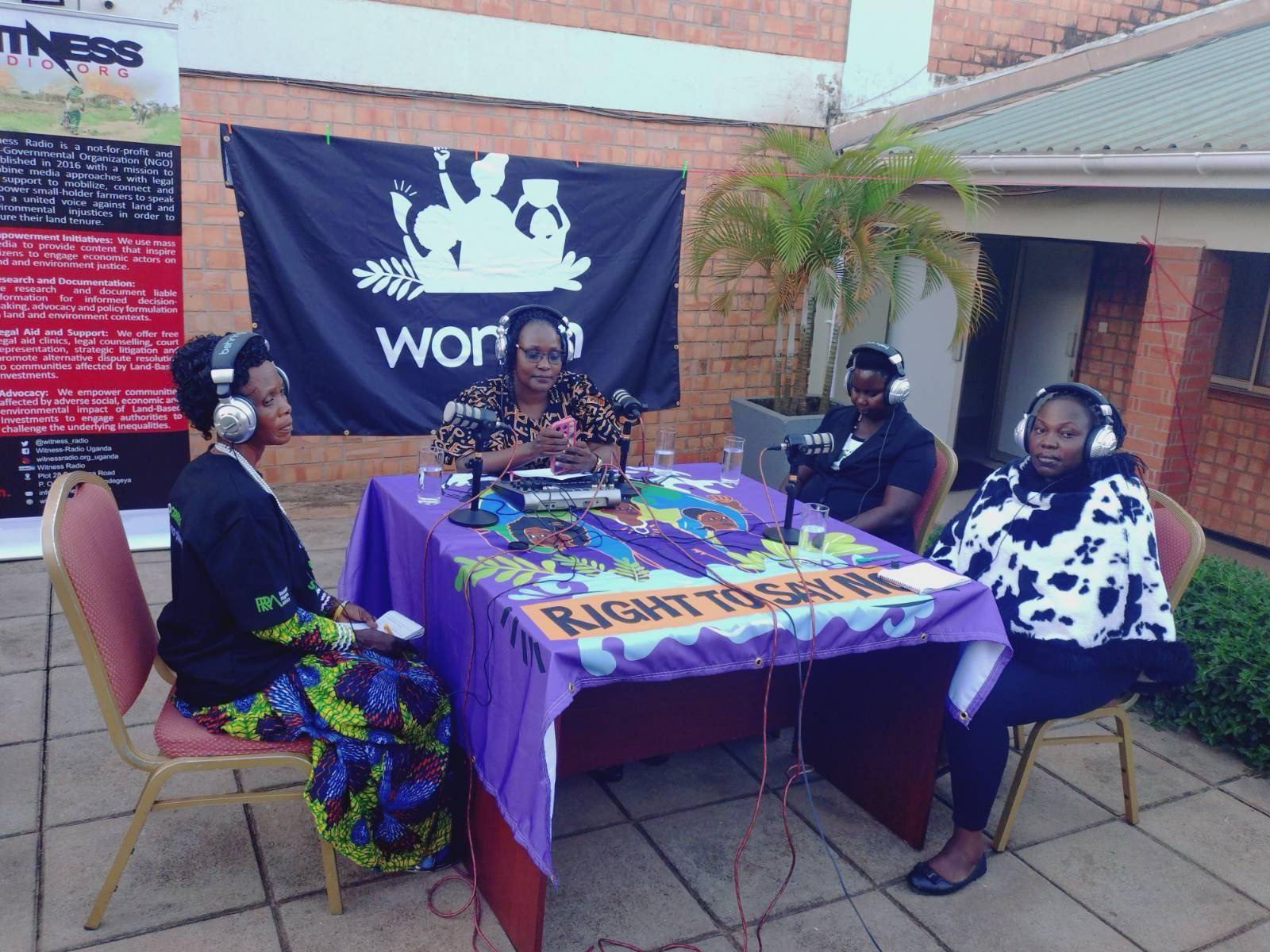
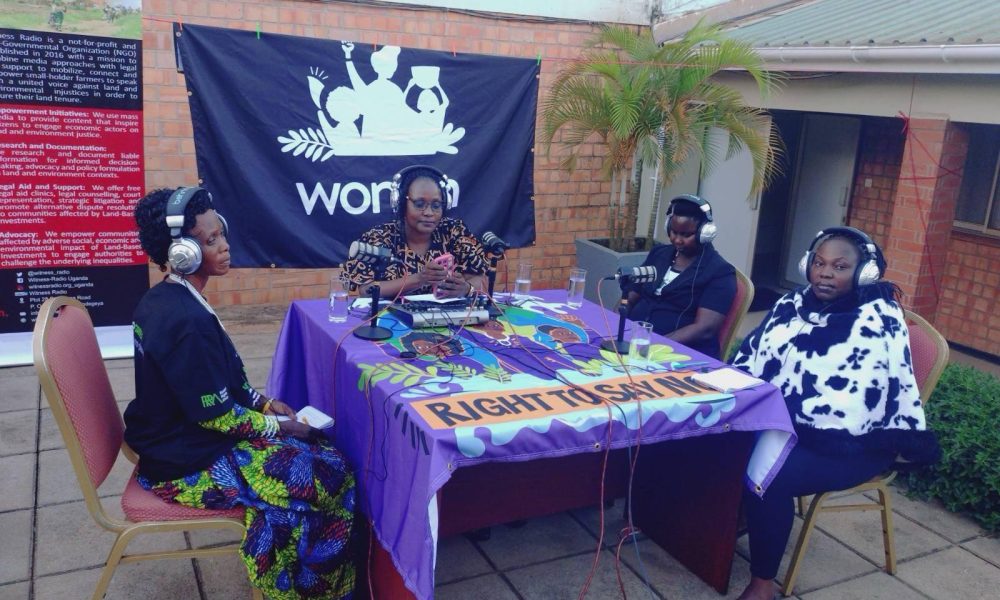
On a Witness Radio broadcast, Birungi likened land negotiations to marriage to show why communities deserve a voice in valuing their land before development takes it.
“If you admire my daughter, even if my family is poor, you have to bring the dowry I decide. Even if I am poor, I have prepared my daughter well. If you want to marry her, you should bring what I ask for. It is the same with land. If you want my land, you must pay an amount I consider fair,” she said.
She insisted that poverty must never diminish the worth of land or strip away the rights of those who depend on it.
“When government agencies came, they said the amount we asked for was too high because we were in a village. But this is my land. If it is too expensive, let them leave it,” she added.
For Birungi, the fight goes far beyond compensation. It is about whether those living in the shadow of major investments truly have a say in decisions that could transform their lives forever.
“We are not included in consultations, but when the consequences of oil production come, we will suffer. We could lose our lives, along with our children. Why is the government not thinking about us? We live near the industrial area and cannot sleep because of the noise.
Why are they silent about our suffering? Are they not thinking about us? Are we not Ugandans? Why are they leaving us to suffer?” she questioned.
Her questions echo a broader unease about Uganda’s investment boom across oil and gas, mining, infrastructure, forestry, and agribusiness. While these ventures promise jobs and growth, women from Kasenyi, Kassanda, and Makuutu urge us to count the true cost: land lost, livelihoods shattered, families strained, and futures clouded by uncertainty.
For women, the stakes are even higher. Land is more than wealth; it is the bedrock of food security and the survival of their families.
“If land is taken, we women shall be the ones to suffer tomorrow, not the men who are often invited to meetings,” Birungi said.
Birungi says she first learned in 2016 that her family’s land in Kasenyi village fell within an area earmarked for oil development. During a community meeting, she heard that aerial assessments had been conducted and that the area under consideration included her village.
As compensation talks began, she says community members proposed Shs20 million per acre. She recalls becoming angry when someone questioned whether land in a remote village could be worth that much.
She stood her ground, defending the land’s worth through the eyes of those whose lives are rooted in its soil.
“If you think my land looks bad on your side, leave it. If you admire my daughter and want to marry her, even though I am poor, I have prepared her well with what I have. You admired her, so you should bring what I want,” she recalls.
At another meeting, Birungi challenged a minister who said they would acquire their land at Shs1.5 million per acre. “I raised my hand before she finished speaking. I said, ‘No,’” Birungi recalls.
She recalls the mood turning tense when the defense minister warned the village could be wiped out in two minutes. With soldiers in the room, Birungi felt the words as a chilling threat.
“I was afraid,” she says, remembering how some residents slipped out of the meeting before it was over.
The next day, valuers arrived to assess land and crops. Residents questioned why the exercise was proceeding without their consent.
“They said, ‘This is a government project.’ We said it is a government project, but on our land, we need consent,” she adds.
Her story raises questions about how authorities communicate land takeovers, how they set compensation, and whether people feel safe pushing back against decisions that could alter their lives forever. Witness Radio has documented many cases where companies seize land by force, pushing aside the voices of those who call it home.
In Makuutu Sub-county, Bugweri District, community defender Josephine Mpindi describes a different investment that has left residents anxious about their land’s future.
Mpindi identifies the company involved as Rwenzori Rare Metals Limited, which is developing the Makuutu Rare Earth Project. She says physical mapping and sampling on community land began in 2021, with company representatives, sometimes accompanied by local leaders, visiting homes to seek access to land for sample collection.
According to Mpindi, many discussions involved men, leaving women with limited information about what was proposed and what the arrangements could mean for their land.
“They went to homes and met the men. Even community association meetings were held with men,” she said.
The Makuutu Rare Earth Project, which spans parts of Bugweri, Bugiri, Iganga and Mayuge districts, is being developed to extract rare earth elements from ionic adsorption clay deposits. These minerals are used in a range of modern technologies and industrial applications, making the project part of Uganda’s efforts to develop its mineral resources and participate in emerging critical-mineral supply chains. Rwenzori Rare Metals Limited is developing the project, with the Uganda National Mining Company participating as a state commercial partner.
The project has also attracted government support. When the government awarded a 21-year large-scale mining license to Rwenzori Rare Metals Limited, then Minister of Energy and Mineral Development Ruth Nankabirwa described the development as an opportunity to generate economic benefits for the country and the Busoga region.
“This large-scale mining license award represents the first step in developing one of the world’s heavy rare earth element assets,” Nankabirwa said.
She further argued that the project should be supported because its anticipated benefits would extend to local communities.
“This project should be supported all through because the outcome is going to support the country. It is going to benefit the people of Busoga because they will receive royalties, and they will be able to change their lives,” she said.
Yet Mpindi says beneath the promises of prosperity, many residents are left in the dark, unsure what the project will mean for their land, livelihoods, and future on the soil they depend on.
She notes that while payments were made for land access and sampling, residents often had little understanding of the long-term consequences hidden in these deals.
“People fear evictions because they don’t know what the company plans. There is a lot of tension. People have lost hope. They don’t know what will happen tomorrow,” she said.
On Witness Radio, Mpindi voiced worries about scars left after sampling. She claims open pits were abandoned across the land, endangering livestock and turning fertile fields into obstacles for farmers. ” If you go to Kigulamo, those pits are still there uncovered,” she said.
Mpindi says villagers have seen animals tumble into pits and families now struggle to grow crops on damaged earth. She believes the harm runs deeper than the land, adding burdens on those who rely on farming to survive.
In Kassanda District, community defender Olivia Nakasumba says a tree-growing investment by UK-domiciled New Forests Company continues to haunt families evicted from their land sixteen years ago. According to Nakasumba, hundreds of families have struggled to rebuild their lives since the evictions, with some still seeking compensation for the losses they say they suffered.
“Over 10,000 people were forcefully evicted without compensation. More than a decade later, people are still suffering. Others have died without receiving compensation,” she said. A curse for those who once owned the land, insisting that no promised benefit can erase the pain and hardship families have endured.
For the women defenders on the radio program, justice means more than just compensation. It demands recognition of the harm done, real solutions for those affected, and a promise that others will not suffer the same fate.
Despite hardships, these women refuse to stay silent. They organize, raise their voices, and demand accountability. In Kassanda, Nakasumba says the fight for justice is far from over. ” We were not able to resist the evictions because the government deployed in full force, but we are still alive to demand accountability for what belonged to us, the damage they caused, and the suffering we have gone through,” she said.
In Bugweri, Mpindi describes how women are taking matters into their own hands, banding together to share knowledge about land rights before decisions are made behind closed doors. Through meetings, savings groups, loudspeakers, and radio, they ensure everyone knows their rights and what is at stake.
Mpindi says their group, Makuutu Advocates Women’s Group, is also registered at the district level, giving women a platform to organize and raise their concerns collectively.
“We have held community meetings at different levels, in various parishes and villages, moving together as a team,” she said.
One of their greatest fears is signing away their rights without understanding the fine print. Mpindi says some documents are in unfamiliar languages, leaving people unable to understand what they agree to fully. Don’t sign anything without an interpreter. You should get a trustee you trust yourself to interpret for you and your husband what the agreement is saying,” she said. “
Mpindi’s message is not to reject all investment but to insist people understand what is offered, weigh the consequences, and have a real seat at the table regarding the land that feeds their families. ” To say no,” she added.
For Birungi, true investment starts with honest dialogue and respect for those whose land is at stake. She believes communities should not just be told what will happen, but given a real chance to understand, question, and shape their land’s future.
“The first thing they should have done is consult the community and obtain its consent. The affected person, or the person whose land they want to use, should first agree with what they are coming to do,” she said.
Birungi also calls on the government to help communities get independent legal advice before signing any deals. She points out that investors come armed with lawyers and experts, while ordinary landowners often lack the tools to understand or negotiate fair terms.
“Let the government give people lawyers to help us interpret documents before they start anything,” she said.
As Uganda advances with investments in oil, minerals, forestry, and more, these women insist their stories must be heard. They demand fairness, clear information, a real voice in decisions, and accountability when harm is done.
Related posts:

In memory of land and investment women victims in Uganda on the International Women’s Day 2021
Women’s Climate Assembly, 2024: African women vow to protect human and environmental rights amidst an influx of destructive land-based investments on the continent.
Thirteen years after the Karuma Hydropower Project broke ground, countless people forced from their homes are still waiting for the compensation and resettlement they were promised.
Land as a security issue: endless forced land evictions and impunity threaten Uganda’s peace, lawlessness on the rise.
You may like
MEDIA FOR CHANGE NETWORK
Uganda’s drive to expand oil palm farming is stirring unease among rural communities, who worry about the far-reaching effects on their lives and land.
Published
1 day agoon
November 3, 2026
By the Witness Radio Team
From Kalangala to Buvuma and Sango Bay, oil palm development has brought worries about land loss, delayed compensation, and dwindling access to natural resources. Now, as the government sets its sights on Busoga, community land defenders are questioning whether this expansion will truly uplift rural households or repeat the hardships seen elsewhere.
In Buvuma, community land defender Atanansi Musagala says some residents who surrendered land for oil palm development have waited years for compensation, some reportedly as long as a decade.
He says these delays have left families grappling to rebuild their lives after losing the land that once sustained them.
“Land is often the foundation of household survival. Families cultivate food crops, raise livestock and earn income from agricultural activities. It can also serve as a financial safety net, allowing households to sell produce or use their property to support other investments during difficult times,” Musagala told Witness Radio.
“When families lose this resource without timely compensation, rebuilding their livelihoods becomes more difficult. They may have to find alternative land, seek casual employment or depend on relatives to meet basic needs. Children’s education, household food consumption and other essential expenses may compete for whatever income remains available.”
“Even when compensation eventually arrives, the money may no longer be sufficient to purchase equivalent land or restore the economic activities that families previously depended on,” he added.
The worries about land loss and threatened livelihoods stretch beyond Buvuma. In Kalangala, the birthplace of Uganda’s oil palm program, women’s rights and land defender Prossy Gwobikira says the expansion has also strained communities’ access to natural resources and sparked environmental fears.
“You see, hundreds of people were evicted to give way for oil palm. They cut forests to plant these palm trees, and now they have gone on to destroy our lake by planting trees in the buffer zone,” she said.
In Sango Bay, Kyotera District, oil palm development has been shadowed by bitter disputes over land acquisition and compensation.
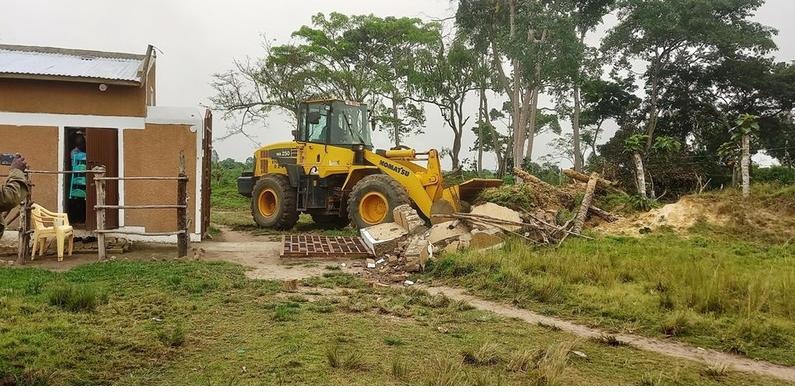
In 2022, as the government moved to clear land for the project, reports surfaced of evictions in the Sango Bay Estate. Bulldozers tore down structures belonging to those labeled as encroachers across roughly 247 square miles.
At the time, the government said it was prepared to compensate only 300 people considered bona fide occupants, out of an estimated 10,000 households living in the area.
Reports suggested that compensation had begun, yet uncertainty lingered for the many households still unsure how their claims to land and property would be resolved.
Anxiety is growing as the government eyes Busoga for oil palm expansion, touting the crop as a solution to boost rural incomes and reduce Uganda’s reliance on imported vegetable oil.
On October 21, Agriculture Minister Frank Tumwebaze told Parliament that Uganda consumes approximately 450,000 tonnes of vegetable oil annually but produces only 80,000 tonnes, leaving a deficit of 370,000 tonnes.
The country spends about US$300 million, equivalent to Shs1.25 trillion, on annual imports, he said.
To address the shortfall, the government plans to expand oil palm cultivation to approximately 100,000 hectares, with a longer-term ambition of reaching between 150,000 and 200,000 hectares within a decade.
Tumwebaze said oil palm produces between four and 10 times more oil per hectare than crops such as soybean and sunflower.
He also said farmers could earn about Shs500,000 per acre per month from the fourth year after planting, with production continuing for about 20 years.
But Musagala warns that farmers also shoulder costs that could eat into their earnings.
“Oil palm takes several years to mature, while farmers must meet the costs of seedlings, fertilizers, labor and other inputs before harvesting begins. Loan repayments can add to the pressure for those who borrow money to establish their plantations.” He added.
In Mayuge, Bugiri and Namayingo, 589.56 hectares are already under oil palm, out of the 2,817 hectares earmarked for cultivation.
As the project spreads into Busoga, community land defenders urge the government to address the challenges already reported in existing oil palm regions.
“People where this project has been, have suffered a lot. We pray that the government learns from the past mistakes and addresses the impacts that have come along with the project so that elsewhere people benefit,” Gwobikira said.
Busoga has already felt the impact of sugarcane cultivation, sparking worries over food security, land use and rural livelihoods. Now, as oil palm production expands, community land defenders are pressing the government to ensure this new investment does not deepen existing problems but instead offers farmers a steady income and safeguards their access to land and food.
Related posts:

Oil palm tree growing in Uganda: The National Oil Palm Project is threatening to evict hundreds of smallholder farmers to expand its operations.
Environmentalists raise red flags over plan to expand oil palm fields in Kalangala
Tension as Project-Affected Persons demand to meet Uganda’s President over Oil Palm growing on their grabbed land.
How Land evictions will expand its effects on the next electoral processes in Uganda
MEDIA FOR CHANGE NETWORK
Kiryandongo district, a notorious hotspot for land grabs in Uganda: A bitter land dispute spanning 22 years has left residents landless and food-insecure, while the investor anxiously guards his investment.
Published
2 days agoon
November 2, 2026
Special report by Witness Radio Team
In Uganda’s Kiryandongo district, a simmering land dispute has forced residents into a relentless struggle to reclaim ancestral land. They insist their family roots run deep in this soil, now swallowed by a vast agricultural estate purchased by an investor.
But the owners of Kisirizi Excellence Center (EA) Ltd, whose agricultural venture sprawls across 751 hectares, reject the residents’ claims. Renewed calls to return the land have stirred anxiety about the safety of their investment and the well-being of their farm workers.
“We fear violence. We fear for our investment and the lives of the workers on the farm,” Patrick Byabakama Kaberenge, the company’s managing director, told Witness Radio.
Kiryandongo District, nestled in Uganda’s midwest, has become a battleground for land disputes fueled by large-scale agricultural investments. In 2020, Witness Radio and its partners revealed that these projects had uprooted over 35,000 people from their land. The investigation spotlighted Kiryandongo Sugar Limited and Great Seasons SMC Limited, while in 2023, Somdiam joined the list of companies embroiled in controversial land takeovers for sugarcane cultivation.
Drawn by the district’s fertile soil, major agricultural projects have flocked to Kiryandongo, while oil development has only intensified the scramble for land. Against this backdrop, the Buhomoozi Parish dispute raises urgent questions: How are residents’ land rights safeguarded when new owners take over?
In Buhomoozi Parish, Kigumba Sub-county, the land dispute has ignited passionate demands from residents who say their families have called this land home for generations. Meanwhile, the investor now farming the contested property is seeking government protection for what he believes is rightfully his.
At the heart of the conflict are land deals involving businessman Mutebi Amans Kibibi and Byabakama with his partners. Residents allege these transactions triggered the eviction of over 500 people from their homes.
Documents seen by Witness Radio confirm that Byabakama holds a registered title to the property he claims to have bought from Mutebi. Yet residents challenge the registration’s legitimacy, arguing it now covers land their families have lived on for decades.
Asiimwe Moses Mwendwa, representing some affected residents, told Witness Radio that shifting land ownership and altered mapping have tangled claims and erased cherished community land.
Asiimwe maintained that the Church of God of East Africa and a property associated with Captain Omar Muhammed occupied separate parcels, with community land lying between them.
“We cannot now trace our origin. Our land was not titled, but it existed. People were living on it. When the rich men came in 2004, they evicted us and took it,” he said.
Asiimwe described the disputed land as a 500-acre stretch nestled between two registered properties: Plot 30 at Kisirizi Mixed Farm, owned by Captain Omar Muhammed, and a parcel at Kinyoga-Kaduku under the Church of God of East Africa.
Asiimwe recounted that the trouble began when Mutebi Kibibi acquired two titled properties that flanked land occupied by residents without formal titles. Rather than leaving the community land intact, Mutebi allegedly forced out the residents in 2004 and absorbed their land into a single, consolidated property.
Residents say this process wiped away the boundaries of land their families had known for generations, leaving them homeless and dispossessed. They allege that Byabakama and his partners later took over the property, insisting they bought a single registered parcel from Mutebi.
“Some people had occupied the land since the 1930s. It was terrible. People were evicted, some were beaten, and others lost their lives,” he told Witness Radio.
These allegations raise urgent questions about protecting customary land rights, the murky circumstances of land transfers, and the ethical duties of businesses acquiring contested property.
Uganda’s Constitution protects property rights and prohibits torture and cruel, inhuman or degrading treatment. The Land Act, 1998, also recognizes customary tenure, including rights that may arise from family and communal land arrangements. The application of these protections to the disputed property depends on the facts and the relevant legal records.
At the international level, the United Nations Guiding Principles on Business and Human Rights establish that businesses have a responsibility to respect human rights, avoid causing or contributing to adverse impacts and address harms in which they are involved. The principles also emphasize access to effective remedies for people whose rights have been violated.
Desperate for justice, the affected residents petitioned the State House Lands Unit, urging the government to step in and resolve the dispute.
The State House Lands Unit, which handles land matters, became the residents’ last hope. They hoped this intervention would untangle the competing claims and determine whether the investor’s title truly covered their ancestral land.
Mr. Osaja Peter, a 61-year-old community leader and land defender who says he was born on the disputed land, told Witness Radio that a State House team conducted a site visit and made a decision concerning the dispute.
“A locus visit was done by State House and led by counsel Susan Abbo, and the ruling was that Byabakama should go back on the land that he bought,” Osaja said.
Yet the details and current status of the alleged ruling remain unclear.
Peter recalled that his grandfather settled in Kaduku II, Kigumba, back in the late 1930s. He claims his family lost nearly 70 acres in the turmoil of the disputed takeover.
“At that time, over 500 people were evicted from our land, which covered the three villages of Nyama I, Kaduku II and Kinyonga II. We just saw the bullets, and when people see bullets, they run away. Some have remained lame, while others died because of injuries. Many are struggling to rebuild their lives,” he said.
Mr. Byabakama, now 70 and once the acting deputy governor of the Bank of Uganda, said he and 30 partners founded Kisirizi Excellence Center (EA) Ltd with a vision for commercial farming, focusing on animal husbandry.
“We wanted to do commercial farming,” he told Witness Radio.
In 2006, Byabakama and his partners purchased land at Kisirizi, Plot 80, Block 9, measuring about 751 hectares, from Mutebi Kibibi.
According to documents reviewed by Witness Radio, Omari Mohamed had previously mortgaged the land, but allegedly failed to meet the loan obligations. Uganda Development Bank subsequently exercised its powers under the mortgage arrangement and sold the property to Mutebi Kibibi.
Before sealing the deal, Byabakama said he and his partners conducted thorough due diligence, inspected the land, and confirmed its boundaries with local leaders and community members.
“We spent around three days inspecting the land. Apart from the seller, Mr Mutebi, there was no other person occupying the said land,” he said.
Byabakama said an independent surveyor, Angellus Mawa of Geomaps, opened the boundaries in the presence of community members and local leaders, including then Kigumba Sub-county LC III chairperson Mary Matunda and other officials.
He explained that this careful inspection, combined with checks at the land office, reassured the partners that the property was safe to buy.
“Upon confirming that there were no registered encumbrances on the land at the land office, we agreed to buy the land from Mutebi,” he said.
Yet the residents tell a different story. They allege their land once lay between two registered properties, but was swept up into the land Mutebi acquired and eventually passed to Byabakama.
The affected families formally brought the dispute to the State House Lands Unit’s attention.
In a letter dated July 2023, Susan Abbo, Senior Private Secretary to the President in Charge of Land Matters, invited Byabakama to a meeting on allegations that residents occupied land between two registered properties.
The letter identified one property as Plot 30 at Kisirizi Mixed Farm, associated with Omar Mohammed, and the other as Plot 66, Block 9, at Kinyogonya-Kaduku, registered in the name of the Church of God of East Africa.
According to the letter, the petitioners alleged that Mutebi and Byabakama had acquired the two properties, Kisirizi Mixed Farm and the Church of God of East Africa, and incorporated the intervening land occupied by residents, despite the community’s claims that the land had previously existed as a separate area with identifiable boundaries.
The letter further stated that the petitioners did not object to the purchase of the two registered properties but alleged that the intervening community land had been incorporated into them, resulting in the eviction of residents.
In response to the State House letter, Byabakama disputed the allegation that he had acquired multiple parcels or participated in an amalgamation of community land.
In a response submitted on behalf of the investor, his representatives, H&G Advocates, said their client acquired a single registered parcel identified as LRV 1759, Folio 15, Plot 80, Kibanda Block 9, at Kisirizi, along Masindi Port Road.
“Our client does not know about the alleged amalgamation of two land parcels mentioned in your letter or the persons who allegedly occupied an untitled parcel of land between two alleged titled parcels. Our client bought a single parcel of land comprised in LRV 1759, Folio 15, Plot 80, Kibanda Block 9, at Kisirizi, Masindi Port Road, Masindi. This can be verified from the land office,” the response stated.
Byabakama also said that after the company began commercial farming, nine people complained that a previous owner had given them extremely short notice to vacate their homes before the 2006 purchase.
He said the company asked why the complainants had not pursued the previous owner in court but agreed to help them maintain peaceful relations with neighboring communities.
According to the company’s response to State House, the partners agreed between 2006 and 2009 to provide the nine complainants with household resources and some land for cultivation, with the assistance of local leaders. The company said it believed it had no legal obligation to settle the claims.
But this response left the residents’ deeper grievances unresolved, especially their claims about lost boundaries and the absorption of their land into the registered property.
A State House official, who spoke to Witness Radio on condition of anonymity, said the matter remained under investigation.
“People are saying the land had two titles initially, and that Byabakama’s title overlapped with the others. They have no problem with Byabakama; rather, they have an issue with Mutebi, who sold the land to Byabakama. The land in the middle was also titled with the larger part and also got taken,” the official said.
The official explained that authorities plan to retrace the boundaries of the old properties and compare them with the land now under Byabakama’s title.
“We are going to open the boundaries of the former titles and compare them with his title to find out the truth. We will inform you once the investigations are complete,” the official said.
Former Kigumba Sub-county LC III chairperson Mary Matunda, meanwhile, told Witness Radio that the alleged evictions and burning of houses occurred before Byabakama acquired the property.
She said local leaders knew the incidents happened when Mutebi owned the land and argued that Byabakama and its partners should not be blamed for actions that allegedly took place before their purchase.
Byabakama said the company coexisted peacefully with neighboring communities until residents reignited their demands to return the disputed land.
For the families caught in the dispute, this is about far more than lines on a map. It is about ancestral land, lost homes, shattered livelihoods, and community bonds built over generations that are unraveling.
“What we have suffered is enough. Let the injustices that occurred be solved,” the residents said, vowing to continue pursuing their claims.
For Byabakama and his partners, the dispute casts a shadow over an agricultural investment they insist was acquired lawfully and with careful due diligence.
Now, the fate of the land hangs on the State House Land Unit’s findings from its investigation into the tangled history of transfers and boundaries.
Until those questions are resolved, the residents’ demands and the investor’s defense remain in conflict, leaving the future of the disputed land uncertain.

Related posts:

Lira siblings reclaim father’s land after bitter family dispute

Government orders arrest of notorious land grabber in Mubende district.
Land grabs at gunpoint in Kiryandongo district – Uganda – New report

State House Anti-Corruption Unit nets a surveyor implicated in Mubende district land-grabs
MEDIA FOR CHANGE NETWORK
Govt tightens human rights protections in extractive industry
Published
3 days agoon
November 2, 2026
The proposed mechanism is expected to provide a formal and accessible avenue for individuals and communities to seek redress when their rights are violated by business operations, including corruption, gender-based violence, child labour, labour rights violations, unfair compensation and other business-related grievances.
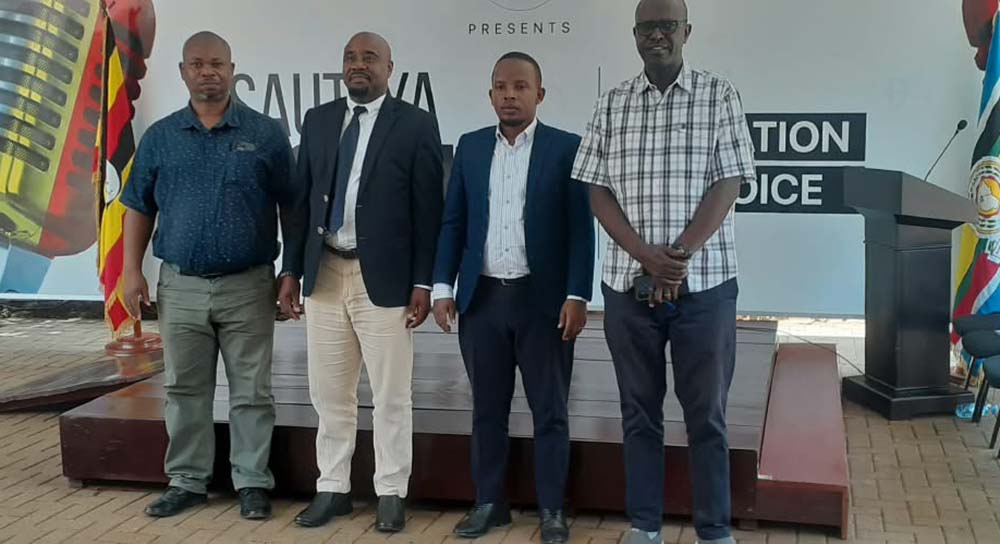
Bernard Mujuni, the commissioner for equity and rights at the Ministry of Gender, Labour and Social Development, said the initiative is intended to bridge existing gaps in access to justice, particularly for vulnerable communities affected by large-scale investments in oil and gas and mineral extraction in many parts of the country.
The Ugandan government is developing a national grievance redress and accountability mechanism to enable communities affected by business activities to report human rights violations, unfair compensation, corruption and other abuses, in the extractives sector.
The proposed mechanism is expected to provide a formal and accessible avenue for individuals and communities to seek redress when their rights are violated by business operations, including corruption, gender-based violence, child labour, labour rights violations, unfair compensation and other business-related grievances.
Bernard Mujuni, the commissioner for equity and rights at the Ministry of Gender, Labour and Social Development, said the initiative is intended to bridge existing gaps in access to justice, particularly for vulnerable communities affected by large-scale investments in oil and gas and mineral extraction in many parts of the country.
He made the remarks on Friday (October 23) at the Uganda Media Centre while announcing the Seventh National Forum on Business and Human Rights, which will take place from October 26 to 28 at the Sheraton Kampala Hotel.
The Government is encouraging businesses to integrate human rights considerations into their operations, especially in sectors involving land acquisition, natural resources, large-scale infrastructure projects and extractive industries
“An individual should be able to access remedies when a violation takes place in business operations,” said Mujuni.
He said some communities affected by development projects often lose out during compensation processes, with intermediaries allegedly taking substantial portions of money intended for project-affected persons, leaving them with little recourse.
It is hoped the new grievance mechanism will strengthen accountability by providing a recognised platform through which such concerns can be reported, investigated and resolved.
Oil pipeline
Mujuni pointed to Uganda’s oil pipeline project as an example of growing efforts to integrate human rights considerations into major investments, particularly in relation to land rights, compensation and community engagement
“This is a milestone for this country,” he said, while commending President Yoweri Museveni for supporting Uganda’s business and human rights agenda.
Mujuni stressed that investors must engage meaningfully with affected communities and respect their rights to land, livelihoods and other resources.
He cautioned against the appropriation of community-owned resources without adequate consultation and compensation, warning that failure to address legitimate grievances could spark disputes, delay projects and increase operational costs.
“Human rights concerns should be dealt with before they escalate into conflict, litigation or disruptions that can ultimately affect investment outcomes.”
The extractives sector will be a key area of discussion at the upcoming forum, with participants expected to examine the human rights implications of resource exploitation, protection of affected communities and the role of environmental and human rights defenders.
Abuses in sugar plantations
Beyond the extractives sector, concerns were raised about persistent labour rights violations in large-scale agricultural enterprises, particularly sugarcane plantations.
Child labour, sexual harassment, workplace exploitation and violence against women and girls were cited as some of the challenges identified during inspections conducted by the gender ministry in districts such as Mayuge and Hoima
Working alongside labour officers, community development officers and other stakeholders, the ministry has undertaken a series of human rights inspections aimed at ensuring compliance with labour standards.
Mujuni said such abuses not only undermine workers’ dignity and wellbeing but can also disrupt business operations and damage investor reputations.
The initiative, dubbed Advancing Respect for Human Rights by Businesses in Uganda, is being implemented by the ministry in partnership with Enabel, the Belgian Agency for International Cooperation, with support from the European Union.
Sector-based minimum wage
It is understood the Government is reviewing several labour-related issues, including minimum wages, workers’ compensation and protections for domestic workers
Ongoing research and consultations are intended to guide future policy proposals following a directive from President Museveni that a comprehensive study be undertaken before the Government adopts a minimum wage framework.
Rather than introducing a blanket minimum wage across all sectors, the Government is exploring the possibility of sector-specific wage structures that consider the unique circumstances of different industries.
Human rights forum
The Seventh National Forum on Business and Human Rights will be held under the theme: “Reflecting on Progress and Strengthening Commitment: The Journey of Uganda’s National Action Plan on Business and Human Rights.”
Discussions will focus on labour rights and decent work, land and natural resources, environmental protection and climate justice, access to remedies, consumer protection, corporate accountability, as well as technology, digital rights and data protection.
Mujuni urged workers to report cases of intimidation, mistreatment and sexual harassment through established workplace channels, including human resource departments and sexual harassment committees.
He revealed that the SAUTI reporting mechanism receives about 200 cases daily, which are processed and referred to relevant authorities for action
The SAUTI 116 toll-free platform brings together multiple institutions capable of investigating complaints and ensuring victims receive appropriate support and justice.
Related posts:

Land and environmental rights defenders, CSOs, scholars, and government to meet in Kampala to assess Uganda’s performance on the implementation of the UN Guiding principles on Business and Human Rights in Uganda.

A multisectoral meeting has kicked off in Kampala to discuss progress in implementing the UN Guiding Principles on Business and Human Rights and other related standards and principles.

Five years after Uganda’s National Action Plan on Business and Human Rights, are local communities hosting land-based investment projects seeing change?

UN Human Rights Chief urges EU leaders to approve key business and human rights legislation
Uganda’s drive to expand oil palm farming is stirring unease among rural communities, who worry about the far-reaching effects on their lives and land.
Kiryandongo district, a notorious hotspot for land grabs in Uganda: A bitter land dispute spanning 22 years has left residents landless and food-insecure, while the investor anxiously guards his investment.
Govt tightens human rights protections in extractive industry
African faith leaders are raising their voices for reparations as AGRA’s 20-year legacy faces intense scrutiny.
Tanzanian Government Abducts Maasai Villagers in an Unconscionable Attack on Indigenous Land Defenders
Environmental and human rights advocates are urging the world to hold global investors accountable for their actions.
World Food Day 2026: Building healthy diets means reimagining how we grow, share, and enjoy our food.
Court remands 10 anti-oil activists as suspect collapses in dock
Innovative Finance from Canada projects positive impact on local communities.
Over 5000 Indigenous Communities evicted in Kiryandongo District
Petition To Land Inquiry Commission Over Human Rights In Kiryandongo District
Invisible victims of Uganda Land Grabs
Resource Center
- CAN AFRICAN FOOD SYSTEMS THRIVE WITHOUT CHEMICAL FERTILISERS
- Land And Environment Rights In Uganda Experiences From Karamoja And Mid Western Sub Regions
- REPARATORY AND CLIMATE JUSTICE MUST BE AT THE CORE OF COP30, SAY GLOBAL LEADERS AND MOVEMENTS
- LAND GRABS AT GUNPOINT REPORT IN KIRYANDONGO DISTRICT
- THOSE OIL LIARS! THEY DESTROYED MY BUSINESS!
- RESEARCH BRIEF -TOURISM POTENTIAL OF GREATER MASAKA -MARCH 2025
- The Mouila Declaration of the Informal Alliance against the Expansion of Industrial Monocultures
- FORCED LAND EVICTIONS IN UGANDA TRENDS RIGHTS OF DEFENDERS IMPACT AND CALL FOR ACTION
Legal Framework
READ BY CATEGORY
Newsletter
Trending
-
MEDIA FOR CHANGE NETWORK2 weeks agoEnvironmental and human rights advocates are urging the world to hold global investors accountable for their actions.
-
MEDIA FOR CHANGE NETWORK1 week agoA coalition of 625 African faith leaders will gather, united in their call for reparations in response to what they describe as the failure of a Gates-backed agricultural model.
-
MEDIA FOR CHANGE NETWORK2 weeks agoWhy are secure land rights key to Africa’s climate resilience and the protection of its natural treasures?
-
MEDIA FOR CHANGE NETWORK1 week agoHigh land title costs, bureaucracy, and distance leave women struggling to secure land rights in Africa.
-
MEDIA FOR CHANGE NETWORK1 week agoFrom grassroots action to policy transformation: How local environmental solutions spark enduring change.
-
MEDIA FOR CHANGE NETWORK2 weeks agoLands Ministry tightens rules for replacing lost titles, gives landowners 30 days to object
-
MEDIA FOR CHANGE NETWORK2 weeks agoBiodiversity Goals: The world has no time to meet its 2030 goals.
-
MEDIA FOR CHANGE NETWORK2 days agoKiryandongo district, a notorious hotspot for land grabs in Uganda: A bitter land dispute spanning 22 years has left residents landless and food-insecure, while the investor anxiously guards his investment.