Connect with us

WITNESS RADIO MILESTONES

Adjumani officials worry as refugees strip the land bare

Published

on

Grace Anyang, 32, bundles a pile of freshly cut wood tied using grass neatly knotted for a rope.

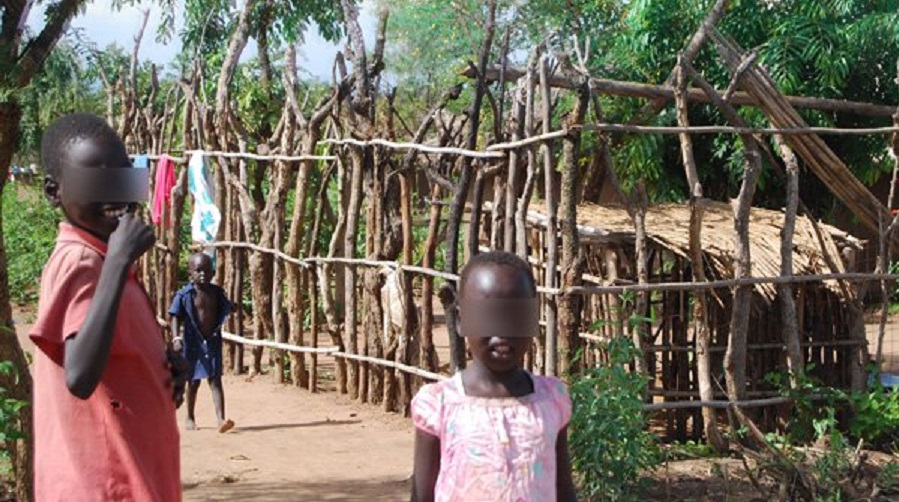
She is a South Sudanese refugee residing at Pagirinya Refugee Settlement Camp in Adjumani District. The widow and mother of four fled the mayhem in her home country in November 2016.
Ms Anyang, a resident of Block B10, together with four other women, are carrying their bundles of firewood back ‘home’.
While Ms Anyang cuts the trees from the nearby woodlands for firewood, others are cutting it for building. This is how Ms Anyang has been surviving at the camp after she and thousands of other refugees were forced to flee to Uganda in 2016 following an outbreak of war in South Sudan.
Both refugees and the host communities in the area use firewood for everyday cooking needs and making shelters, which activities have taken a toll on the environment and thus brewing tension over natural resources in the district.
Today, deforestation in the district has reached its highest rate in a decade, according to data at the district’s forest office, due to increased energy demands precipitated by the influx of refugees to the district. This has led to protests by host communities.

No alternative
Mr Tonny Okot, a resident of Block E32 at Pagirinya Refugee Settlement Camp, says refugees cut trees in large quantities every day and the demand keeps increasing.
“Some organisations tried to train us on using eco-friendly alternatives like charcoal briquettes or stoves but it took only a few months before the raw materials for making them got used up due to high population and demand here,” Mr Okot says.
This is the same story at Maji Refugee Settlement Camp, also in Adjumani District. The environment, that formerly boasted of thick shrubs and tree cover, has changed to almost bare land surface after the refugees cut down most of the trees.
Adjumani District officials have petitioned the government and other development partners to intervene and create alternative energy sources for the refugees.
“The refugees have become a big challenge to us in regards to the environment in communities surrounding these settlements. Trees are indiscriminately cut down whereas no replacement is being done,” Mr James Leku, the Adjumani District chairperson, says.
Adjumani District provided 3,128Sqkm of land on which 17 refugee settlement facilities are established to host a total of 202,433 refugees, according to the United Nations High Commission for Refugees (UNHCR).
However, 93 per cent of these refugees rely on the environment around for their energy demands, a scenario shared by the rest of the districts across the West Nile region.
But efforts towards afforestation in these refugee communities, for example in Pagirinya, have equally been frustrated as distributed tree seedlings are not planted but left to dry on the verandas or under trees.
Mr Mark Dulu, the Adjumani East MP, in whose constituency a number of refugees camps are located, says the refugees do not only cut down trees but also steal food from gardens of the host communities.
“We are sensitising these refugees to let them understand that they have a role in ensuring that we escape the tough impacts of environmental degradation like global warming, drought and soil erosion,” Mr Dulu reveals.
Recently, UNHCR urged countries hosting large numbers of refugees to plant more trees as deforestation could trigger more conflict.
The refugee humanitarian body stated that tree planting was paramount since four out of five people who flee their homes rely on firewood for cooking and heating, which is a major cause of deforestation in most refugee settlements across the world.
But Mr Leku accuses humanitarian agencies operating in the district of not taking the reforestation initiative seriously and that refugees themselves have a negative attitude towards planting trees where they did not own land.
“Unfortunately, refugees’ attitude towards tree planting has been too bad that they do not want to plant seedlings given to them, as they claim they have nothing to benefit from planting the trees since they hope to return to their home countries anytime,” Mr Leku says.
Uganda has one of the most favourable refugee protection environments in the world; providing for freedom of movement, access to land for agriculture and settlement in line with the Refugee Act 2006.

UNHCR speaks out

Ms Duniya Khan, the United Nations High Commission for Refugees (UNHCR) spokesperson, told this newspaper in an interview recently that deforestation by refugees who largely rely on natural resources to meet their basic needs, has had a significant impact on the environment in the recent past, not only in Adjumani but across all the districts in West Nile region.
“UNHCR, the Office of the Prime Minister and the district are engaged in various activities to remedy the situation. For example, they are training communities on alternative energy use such as the use of biogas and energy-saving stoves,” Ms Khan said.
She said UNHCR has partnered with NGOs in refugee settlements and host communities in West Nile to plant 588 hectares of trees through “cash for work” programmes, support operations for 20 tree nurseries, as well as supporting 58 refugee groups by giving them briquette-making machines and providing training.
“UNHCR is supporting 14,620 households to access fuel-efficient stoves and 1,100 households with heat-retaining cooking bags, produce and distribute 122 tones of cooking briquettes to refugee communities and we believe it will relieve the pressure on the environment,” she said.
At least 400,000 trees out of a target of 700,000 trees for this year had already been planted by the beginning of July in Adjumani District, according to Ms Khan.
Today, UNHCR-funded partners have reported planting more than two million trees in the South Sudanese refugee and host communities (primarily in the West Nile) this year.
In October last year, a joint United Nations and World Bank report warned on the competition for available resources such as trees and land for cultivation, among other factors, as a possible cause of tension between the refugees and host communities.

Source: Daily Monitor

WITNESS RADIO MILESTONES

UNCCD COP17 kicks off in Mongolia, drawing nations together to tackle urgent issues of land, drought, and food security.

Published

on

By Witness Radio team

ULAANBAATAR, Mongolia – Over the next two weeks, the World’s spotlight is on Mongolia, where governments, environmental experts, civil society, pastoralists, and others unite for the 17th UNCCD COP to confront land degradation challenges.

The conference, starting today in Ulaanbaatar and running through August 28 under the banner “Restoring land, restoring hope,” brings delegates together to tackle land degradation, desertification, drought, sustainable land management, food security, and vital funding to revive damaged ecosystems.

This gathering comes at a critical moment as land degradation and drought threaten food supplies, water security, biodiversity, and the livelihoods of millions worldwide.

The UN Convention to Combat Desertification was established in response to land degradation, particularly in dry and drought-prone areas, and its consequences for communities and economies.

The Convention was adopted in Paris on 17 June 1994 and entered into force in December 1996. It is the first and only internationally legally binding framework to address desertification. It is based on participation, partnership, and decentralization, which form the backbone of Good Governance.

Mongolia welcomes COP17 while facing immense strain on its land and rangelands. Nearly 77 percent of its territory is degraded. Pastoralism remains the heartbeat of Mongolia’s economy and culture, making rangeland stewardship more crucial than ever.

Speaking at the opening press conference, UNCCD Executive Secretary Yasmine Fouad said Mongolia’s own experience makes it an important setting for discussions on land restoration and pastoralism.

“77% of the land of Mongolia is facing land degradation, and the economy here, with all the number of people, is really depending on the issue of rangeland,” Fouad said.

Ahead of the UNCCD event, Mongolia hosted a Pastoralism gathering. Fouad noted that the three-day global gathering brought together representatives from over 100 countries. It produced a Declaration outlining the needs and priorities of pastoralists worldwide, with a special focus on women.

“The interesting part is how seriously Mongolia took this by convening the Global Pastoralism Gathering over three days, bringing together representatives from more than 100 countries. They came out with a Declaration highlighting the needs and priorities of pastoralists around the world, with a special emphasis on women. This means that this COP, and the Convention itself, will continue to be a human-centered convention. It will continue to serve people, with women remaining at the top of that agenda.” Sher added.

According to Mongolia’s government, around 80 percent of the nation is pasture land, supporting about 60 million livestock. Finding harmony between agriculture and pastoralism is becoming more challenging.

Mongolia’s Minister of Environment and Climate Change, Sandag-Ochir Tsend, said deciding how much land to allocate to agriculture and how much to keep available for pastoralism is one of the country’s major challenges.

He explained that Mongolian herders traditionally move their livestock across different areas during the four seasons. This creates tensions over land allocation and use.

“Deciding how much land to use for agriculture and how much for rangeland is difficult. Because of this, agriculture and herding lifestyles cause conflicts,” Tsend added.

Tsend said COP17 offers an opportunity to reconsider land management amid soil degradation, climate change, and other pressures.

“We must change our approach to these issues, including government policy and finance. I see this conference as the start of a solution,” he added.

COP17’s significance stretches far beyond Mongolia, as land underpins global food production and freshwater resources and is deeply intertwined with biodiversity and climate.

Dr. Osama Ibrahim Faqeeha, Saudi Arabia’s Deputy Minister for Environment, Water and Agriculture and adviser to the COP16 presidency, said humanity’s dependence on land is much greater than is often recognized. He said about 95 percent of the World’s food comes from land, while 99.7 percent of human calories are ultimately derived from land.

“Our main focus is to raise global awareness about the importance of land. Our cities, forests, farms, food, and freshwater all depend on land, yet we have treated it as infinite. We have failed to understand the links between land, ocean, atmosphere, and climate. At COP16, we brought these connections together because degrading land undermines food and water security and drives biodiversity loss. About 60% of biodiversity loss is due to habitat loss, closely linked to land degradation,” Hon Faqeeha added.

UNCCD officials revealed that roughly 40 percent of the World’s land is degraded, impacting up to 2 billion hectares. Each year, another 100 million hectares of farms, forests, and rangelands degrade. Meanwhile, drought affects about 1.8 billion people, with farming communities bearing the brunt of the hardship.

Faqeeha called for a shift towards sustainable land management and faster restoration of degraded land.

“Many resource-related conflicts and migration are linked to drought. About 3.5 billion people are affected by land degradation, and 1.8 billion by drought. Farming communities bear eighty percent of drought impacts, and 85 percent of those affected live in low- and lower-middle-income countries. There is a significant social dimension.

“The task is huge. We cannot continue business as usual. The mission of this Convention is to transform land management. We need to shift to sustainable land management and accelerate restoration,” he added.

COP17 also arrives with unresolved issues carried over from the last UNCCD conference.

At COP16 in Riyadh, Saudi Arabia, in December 2024, countries adopted resolutions and launched initiatives covering sustainable agricultural land management, food security, Indigenous peoples, civil society and drought. However, they failed to agree on a major drought decision or a multilateral agreement to address drought’s consequences.

In his welcome address to COP16 on December 2, 2024, UNCCD Secretary-General Ibrahim Thiaw had urged delegates to adopt a bold decision on drought, describing it as one of the most pervasive and disruptive environmental challenges.

The negotiations ended without this agreement, leaving the issue to be taken up at COP17 in Mongolia. Fouad told journalists that countries had already shown a willingness to return to the issue.

“The role of the COP17 presidency is to build consensus and facilitate discussion till a drought decision is gavelled,” she said.

She added that the secretariat hopes countries will agree on a drought decision that reflects the urgency and scale of the problem while providing the space and finance necessary for implementation.

Continue Reading

WITNESS RADIO MILESTONES

Karamoja stands on the brink, with nearly half a million people gripped by acute hunger.

Published

on

By the Witness Radio team.

Nearly half a million people in Uganda’s Karamoja sub-region are facing acute hunger as repeated climate shocks, poor harvests and environmental degradation continue to erode food production and livelihoods, according to the latest integrated food security phase classification (IPC) analysis.

The IPC assessment found that 473,000 people, nearly one in every three people assessed, experienced crisis (IPC phase 3) or worse levels of acute food insecurity between April and July 2026. Of these, about 41,000 people were classified in emergency (IPC phase 4), requiring urgent food assistance and livelihood support.

The assessment paints a grim picture: relentless dry spells, sudden floods, and waves of crop and livestock diseases have battered Karamoja, leaving families struggling to recover season after season. Soaring food prices and scarce quality farming supplies have only deepened the crisis.

The IPC also found that only 54.1 percent of households had food stocks at the time of the survey, with supplies in most districts expected to last for less than one month.

The assessment reveals that swarms of crop pests, outbreaks of livestock disease, and wildlife ravaging fields, combined with a shortage of quality seeds, have slashed agricultural yields and left countless families exposed and vulnerable.

In response to the findings, Oxfam sounded the alarm: families in Karamoja are racing through their dwindling food stores and scrambling for safe water. Prolonged drought and vanishing pastures now threaten the livestock that so many depend on for survival.

“People in Karamoja are not just running out of food; they are also running out of options. Climate shocks and long-standing inequalities, including low investment in education and water infrastructure, have steadily stripped away their ability to cope,” Said Francis Shanty Odokorach, Oxfam’s country director in Uganda.

The nutrition outlook is just as dire. The IPC foresees 122,100 children under five needing urgent treatment for acute malnutrition between March 2026 and February 2027, with 30,600 of them facing the most severe cases. An additional 8,000 pregnant and breastfeeding women are expected to need vital nutrition support during this time.

The assessment places Kaabong and Kotido districts in the critical phase of acute malnutrition, underscoring the depth of the crisis. In Kotido, relentless drought has left families desperately searching for enough to eat.

“The ground is all dry and bare. You can visibly see people, especially children, very hungry. Families have run out of food early and are now forced to skip meals. Livestock are also suffering from a lack of water and pasture,” Said Lokiru Musa Hassan, Oxfam project officer working in Napumpum sub-county.

Though the IPC predicts a slight reprieve during the August 2026 to February 2027 harvest, hope remains fragile. Around 352,000 people are still expected to endure crisis or worse, especially in Kaabong, Karenga, Kotido, and Moroto, where relentless climate shocks keep sabotaging recovery.

While acute malnutrition has dipped slightly since 2025, the IPC cautions that these hard-won gains could vanish with the next wave of extreme weather, disease, or funding gaps. Without ongoing aid and real investment in climate resilience, many families may fall even further into hunger.

To confront the crisis, Oxfam has announced a two-phase plan across five districts, delivering emergency food, cash, safe water, drought-resistant seeds, and livestock support. The organization also aims to boost climate-smart farming, water harvesting, livelihood recovery, and local early warning systems.

“This response must be shaped with communities, not simply delivered to them. Women, young people, older people and people with disabilities must be able to access assistance safely, provide feedback and influence the decisions that affect their lives,” Odokorach said.

With climate change tightening its grip on Uganda’s drylands, humanitarian agencies stress that emergency relief alone is not enough. Only lasting investments in resilient agriculture, water systems, and community-driven climate adaptation can help Karamoja escape the cycle of hunger.

Continue Reading

MEDIA FOR CHANGE NETWORK

Uganda moves toward a Bamboo Policy to boost environmental conservation and green growth.

Published

on

By Witness Radio team.


Uganda’s move to develop a national bamboo policy aims to boost environmental conservation and create green jobs, addressing the country’s urgent unemployment issues among the working class.


Bamboo is a critical tool in fighting climate change due to its rapid growth, high carbon sequestration capacity, and ability to produce 35% more oxygen than equivalent trees. As a fast-growing, renewable resource, it restores degraded land, provides sustainable materials that replace emission-intensive products like concrete, and offers a resilient, low-carbon bioenergy source. 


Bamboo’s potential is outlined in the existing National Bamboo Strategy. Still, stakeholders stress that a formal policy involving entrepreneurs, farmers, and processors is essential to remove regulatory uncertainty and foster sector growth.


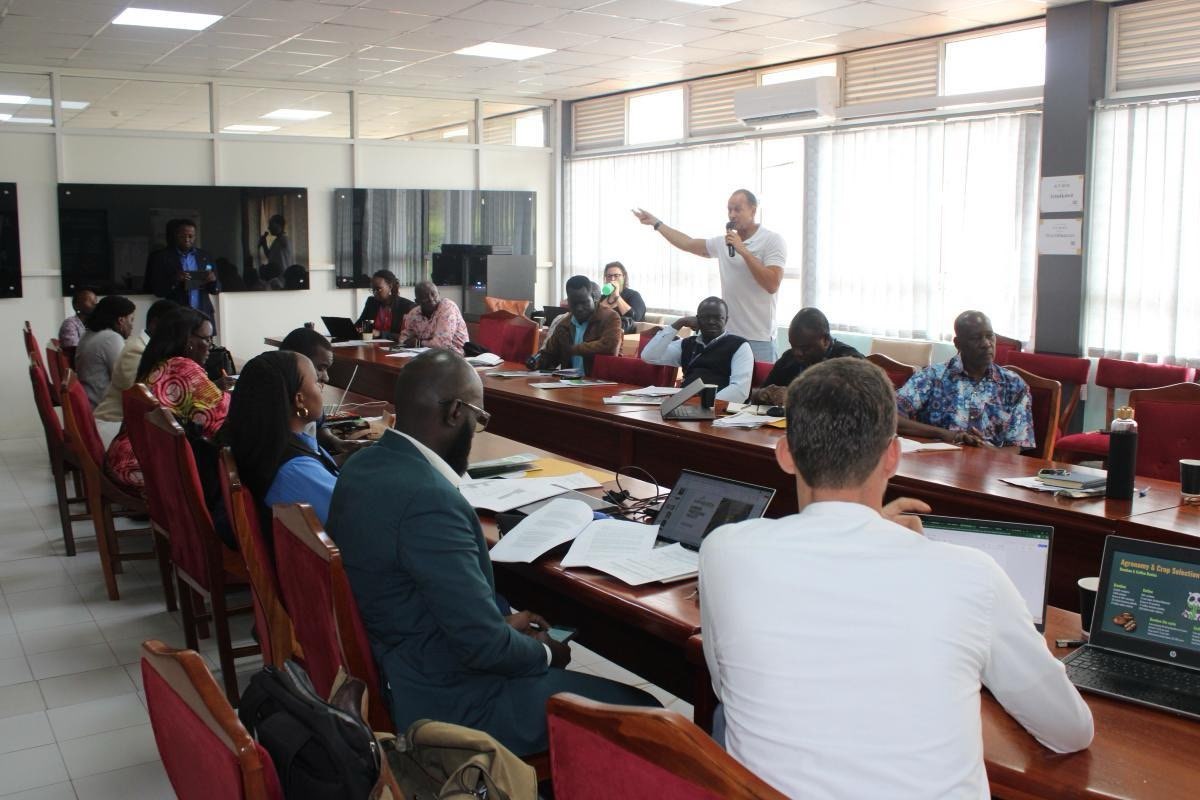
“The strategy is a good document, but it was developed largely through desk research. It did not fully involve entrepreneurs, farmers, and processors who are already working in the bamboo industry,” said Sjaak de Blois, chairman of Bamboo Uganda, encouraging stakeholders to see their role as vital.


The bamboo policy is currently at an early consultative stage, with no draft yet submitted to the cabinet or parliament. Recent consultations brought together representatives from eight government ministries, private-sector bamboo actors, and development partners to begin aligning the strategy with practical regulatory needs.


“What we have now is the starting point,” De Blois mentioned. “The next step is to take the strategy and make it more practical, more market-driven, and more Ugandan. The next step is to move from having a plan to adopting a policy.


Bamboo currently falls under several regulatory frameworks, with no single authority overseeing the sector. The policy push is being driven in part by Bamboo Uganda, a membership-based organization bringing together bamboo farmers and processors, among others. The organization aims to play a coordinating role similar to that historically played by the Uganda Coffee Development Authority in the coffee sector.


“If you want to make a sector meaningful for a country, you need coordination. Coffee became what it is because of an institution that aligned farmers, traders, exporters, and regulators. Bamboo needs the same kind of coordination.” He said.


The policy process is supported by the Belgian development agency, which is funding consultations and facilitating dialogue between the government and the private sector.

Industry players say the absence of clear regulations has constrained investment despite growing demand.

“At the moment, bamboo is everywhere and nowhere at the same time. As a farmer, you talk to forestry, as a charcoal producer, you talk to energy, as a builder, you talk to works. There is no single framework that enables the industry to function.” De Blois added.


Supporters of the policy argue that bamboo could play a significant role in environmental conservation. Bamboo grows rapidly, regenerates after harvesting, and can be harvested annually for decades, reducing pressure on natural forests.


According to Global Forest Watch (GFW), Uganda lost 1.2 million hectares of tree cover between 2001 and 2024, representing a 15% decline from the 2000 baseline. Bamboo has been identified as a key species for restoration.


“One acre of bamboo that is harvested sustainably can prevent the destruction of hundreds of acres of natural forest,” De Blois said. “If we get this right, bamboo can help reverse deforestation rather than contribute to it.”


Ms. Susan Kaikara, from the Ministry of Water and Environment, emphasized bamboo’s potential to drive Uganda’s green-growth agenda.


“Establishing a coherent national policy framework will strengthen coordination, inspire investment, and unlock bamboo’s full potential as a pillar of Uganda’s green economy,” she said.


Uganda’s charcoal market alone is estimated to be worth hundreds of millions of dollars annually, much of it supplied through unsustainable wood harvesting. Industry actors say certified bamboo charcoal plantations could offer a cleaner alternative.


“If they allow us to certify bamboo charcoal plantations, then we can get a trade license to compete or to work together with the existing market. We will reverse deforestation. We would enter an industry of about 500,000 hectares, creating smart, green jobs. We can digitalize them to make them attractive through bamboo agroforestry. So again, those things need a policy.” He adds.


Bamboo is also viewed as a climate-friendly crop due to its high capacity for carbon sequestration. Its rapid growth enables it to absorb large amounts of carbon dioxide, while its extensive root system improves soil structure and increases long-term carbon storage.


“When you look at carbon sequestration, bamboo offers several advantages. Residues from harvested bamboo can be converted into biochar, locking carbon into the soil for long periods. When you also see the sequestration per acre compared to many other trees, it is five or six times higher. So, we sequester a lot,” De Blois said


Stakeholders say that if the policy process progresses as planned, bamboo could emerge as one of Uganda’s key green growth sectors within the next decade.


“Policy making takes time. But what is important is that we have started the conversation with all the right ministries in the room. From here, it is about taking steady, practical steps.” He concluded.

Continue Reading

Resource Center

Legal Framework

READ BY CATEGORY

Facebook

Newsletter

Subscribe to Witness Radio's news and report updates


Trending

Subscribe to Witness Radio's news and report updates