










Connect with us

FARM NEWS

Africa moves to conserve animal genetic resources

Published

on

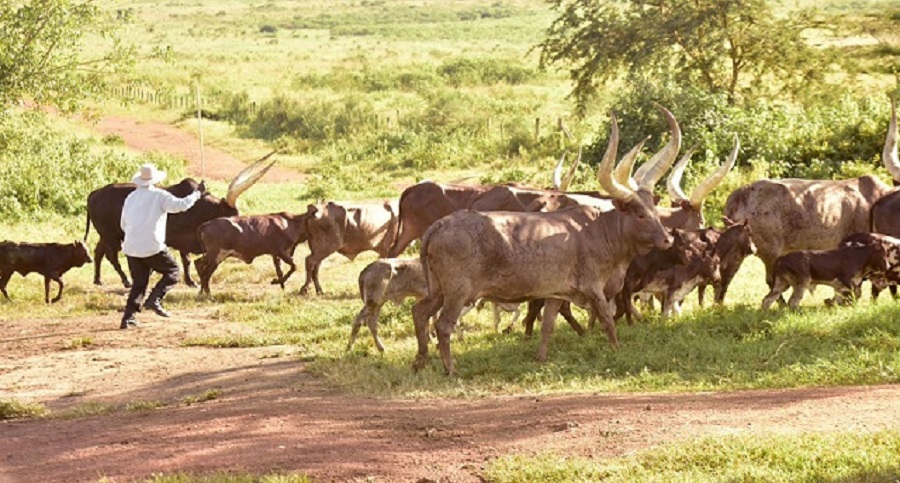
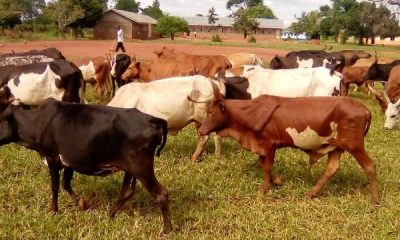
Kampala, Uganda | ISAAC KHISA | For the recent decades, Africa’s indigenous animals such as the East Africa’s sinewy Ankole cattle; a product of the centuries of selection for traits adapted to harsh conditions, have been threatened with the imported bred animals triggering panic in the livestock keeping communities that the indigenous materials may at one point become unavailable for utilization for the future generation.

But the good news is that the genes of these indigenous animals will now be kept in various gene banks across the continent.

Uganda through the National Animal Genetic Resource Centre and Data Bank (NAGRIC & DB) Entebbe, will conserve and store animal genetic resources on behalf of 12 countries in the East African region.

These include; Uganda, Kenya, Somalia, Eritrea, Djibouti, Tanzania, Rwanda, Burundi, Ethiopia, Sudan, and South Sudan.

Dr. Charles Lagu, the executive director at NAGRIC & DB who also doubles as the focal person for the regional facility, said the gene bank will help rescue animal genetic resources that are currently threatened or facing extinction.

“We want to have these gene banks such that in case something happens, we can recreate these animals, develop new ones or carryout further research. This is to ensure that these good indigenous breeds are not lost,” he said.

This comes more than a decade since the Food and Agriculture Organisation (FAO) in partnership with the International Livestock Research Institute (ILRI) and other research groups released a report titled “The State of the World’s Animal Genetic Resources” showing that nearly 70 per cent of the entire world’s remaining unique livestock breeds are found in developing countries, and that there was need to establish gene banks in Africa to store her semen and embryo due to their rich genetic diversity.

This prompted the African Union through its technical office, African Union Inter-African Bureau for Animal Resources (AU-IBAR) with the support of European Union, to set up the regional gene banks to act as seed haven for various genetic material drawn from of indigenous breeds that continue to contribute to the social fabric of the African people and tell the historical origin and background of the local population.

Currently, only a few developed countries including the US, China, India, some in Europe and South America have well–established gene banks for their animal diversity.

Dr Mary Mbole-Kariuki, the Genetics Project’s Data Management expert at AU-IBAR, said the new development comes at the time the Ankole cattle that is raised across East and Central Africa was being replaced by black and white Friesian cows and that they will disappear in the next few years.

“Definitely, (it will be) a very big disaster for the East African region,” she said. “Yet, it is evident that drought and disease tolerant attributes are very important to the livestock keepers in the future given the eminent climate change.”

She said the regional gene banks will also serve as centres of excellence with regards to training on use of modern cryopreservation technologies by member states.

“Member states will have full access to their materials and exchange between them is encouraged to diversify their diversity,” she said.

Josefa Sacko, the commissioner for Rural Economy and Agriculture at the African Union, said they are optimistic that the regional members will take advantage of the facility and utilise it as a back-up gene bank or more pyrogenic storage for their genetic materials.

“As AU, we have proposed mechanisms in the management and administration of regional these regional gene banks across the continent,” she said.

“These mechanism include; the standard operating procedures for collection, processing, storage and transmission of genetic materials as well as accompanying material transfer agreements.”

She said the onus is now on the stakeholders in the Eastern Africa to put in place measures they consider appropriate for the management and operation of the regional banks whose sustainability will also depend on your commitment both financial and technical.

She said Uganda also need to carry out a cost estimate on how to run the facility so that it is shared among the member states for sustainability.

In addition, a separate animal gene bank that will serve the needs of a backup to provide security against accidental loss will be under the Mandate of the African Union Commission and will be established at the African Union Pan African Veterinary Vaccine Centre (AU-PANVAC).

AUPANVAC will serve as the Laboratory for the African Union Commission and will hold samples of each region, thus providing for an African ownership and security against accidental loss.

Prime Minister, Dr. Ruhakana Rugunda, said the government greatly supports the initiative and that it will ensure that it succeeds for the betterment of the regional community.

Other regional gene banks have been established in Burkina Faso to serve the West African region; Botswana to serve the Southern region, Tunisia to serve the North African region and Cameroun to serve the central African region.

Original Post: The Independent 

Continue Reading
Click to comment

Leave a Reply

Your email address will not be published. Required fields are marked *

FARM NEWS

Govt moves to set up food and agriculture regulatory authority

Published

on

Agriculture minister Frank Tumwebaze tabled the Food and Agriculture Regulatory Authority Bill, 2026, for first reading in Parliament on August 25, 2026. (Credit: Maria Wamala)

The Bill has been referred to the Committee on Agriculture for scrutiny. The proposed authority will regulate the manufacture, processing, importation, exportation, distribution, transportation, advertisement, labelling, storage, sale and supply of veterinary medicines, agricultural chemicals, veterinary equipment and devices.

KAMPALA – The Government has proposed the creation of a food and agriculture regulatory authority to bring food, animal medicines, agricultural chemicals and related products under one regulatory framework.

Agriculture minister Frank Tumwebaze tabled the Food and Agriculture Regulatory Authority Bill, 2026, for first reading in Parliament on August 25, 2026.

The Bill has been referred to the Committee on Agriculture for scrutiny. The proposed authority will regulate the manufacture, processing, importation, exportation, distribution, transportation, advertisement, labelling, storage, sale and supply of veterinary medicines, agricultural chemicals, veterinary equipment and devices.

It will regulate food and feed manufacturing, processing and distribution, oversee food and feed safety, develop standards, inspect and certify agricultural inputs, and establish traceability systems for regulated products.

The Bill’s memorandum presents a troubling picture of the current food and agricultural regulatory system, stating that the country is “flooded with counterfeit substandard veterinary medicines and agricultural chemicals.”

It cites concerns over medicines and chemical residues, aflatoxins, harmful microorganisms and heavy metals in food and feed, warning that such contaminants compromise public health and the safety of agricultural exports.

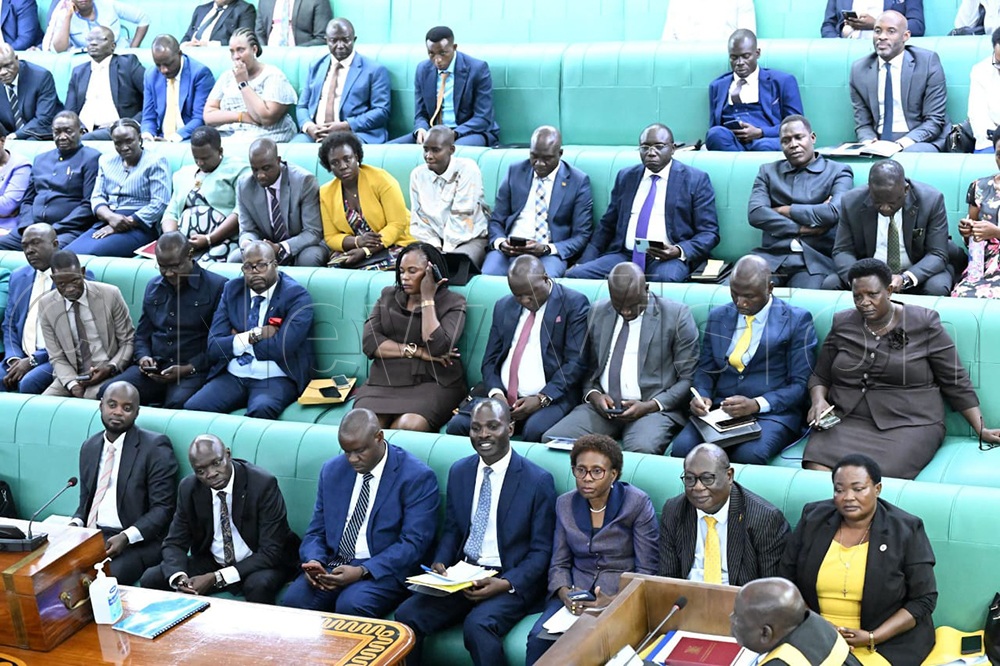
Members of Parliament during Plenary on Tuesday. (Credit: Maria Wamala)The memorandum attributes the problem in part to “fragmented regulation”, which it says has resulted in weak and uncoordinated regulation by multiple agencies, duplication of efforts and inefficiencies in enforcement.

It argues that the absence of a single body overseeing the food and agriculture value chain “undermines the effectiveness of regulation” and creates uncertainty for stakeholders.

The proposed authority will inspect food premises, certify meat for public consumption, inspect and certify fish, regulate processed and semi-processed food, and oversee the storage and transportation of food.

The Bill seeks to regulate food packaging, labelling and advertising, while prohibiting the use of radioactive materials, heavy metals and banned substances in food. It provides for residue monitoring to detect harmful substances in food products.

Members of Parliament during Plenary on Tuesday. (Credit: Maria Wamala)

For agricultural chemicals, the Authority will license manufacturers, distributors, fumigators and commercial applicators. It would regulate the import and export of chemicals, as well as their packaging and labelling, storage, sale and advertising.

The Authority will have powers to recall agricultural chemicals and deal with prohibited, banned, restricted, falsified or adulterated products.

The Bill proposes inspectors and analysts with powers to access establishments, conduct sampling and analysis, seize adulterated products and oversee the disposal of obsolete, banned, prohibited and expired products.

Inspectors will, in certain circumstances, order the detention, return or destruction of non-compliant consignments.

The proposed authority will be a body corporate with perpetual succession. Its functions include the registration of veterinary medicines, veterinary devices, veterinary equipment, agricultural chemical application equipment and agricultural chemicals for use in Uganda.

The authority will be governed by a nine-member board appointed by the minister. The board will comprise a chairperson, six members with expertise in veterinary medicine, agriculture, pharmacy, standards and environmental science, and two representatives of farmers nominated by a recognised farmers’ federation.

The Bill contains 13 parts, 101 clauses and three schedules. It seeks to amend the Dairy Industry Act, Fisheries and Aquaculture Act, National Coffee Act and Animal Feeds Act, while repealing the Agricultural Chemicals (Control) Act and the Food and Drugs Act.

The proposed law seeks to give the Minister power to issue written policy directions to the authority.

The Government argues that the new framework would improve the quality and safety of agricultural inputs, strengthen consumer protection and help Uganda gain access to regional and international agricultural markets.

The Bill moves to the Agriculture Committee, where MPs are expected to examine its regulatory, institutional and enforcement provisions before it returns to the House for further consideration.

The public, including experts, are expected to provide their views on the Bill.

Continue Reading

FARM NEWS

Concern over low cassava yields in Bukedi region

Published

on

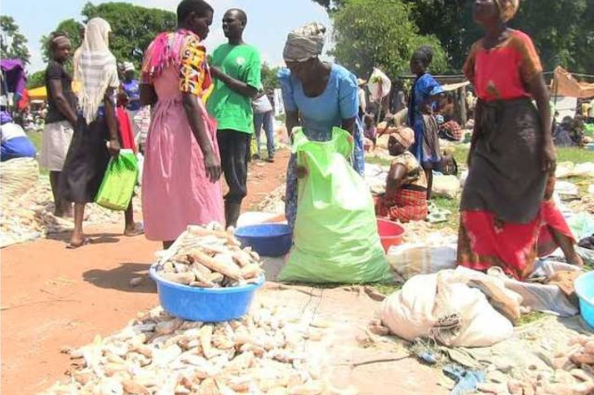
For decades, cassava has been more than just a crop in Bukedi Sub-region in eastern Uganda. It has served as a lifeline, providing a reliable source of food during droughts, a key source of household income and an integral part of the region’s cultural identity.

Across the districts of Budaka, Kibuku, Butebo, Pallisa and parts of Butaleja, cassava gardens once stretched across vast expanses of land. Families harvested the crop throughout the year, processed it into flour and sold surplus produce in local markets.

Today, however, those fields are shrinking. Farmers are increasingly abandoning cassava cultivation in favour of crops they consider more profitable and less risky, raising concerns about food security and the future of one of Bukedi’s traditional staples.

Continue Reading

FARM NEWS

Parliament gives Jinja land office three months to clear backlog

Published

on

Some staff of the Jinja Ministry Zonal Office meet members of the Parliamentary Committee on Land on August 27, 2026. PHOTO/TAUSI NAKATO.

Continue Reading

Resource Center

Legal Framework

READ BY CATEGORY

Facebook

Newsletter

Subscribe to Witness Radio's news and report updates


Trending

Subscribe to Witness Radio's news and report updates