The natural world as we know, it is certainly unimaginably more useful to us than we are to it. Aware of this, our ancestors nobly bequeathed to us a natural world good enough to live in.
Whether the current generation shall ably do the same for posterity elicits monumental doubt considering the damage human activity has exacted on key environmental features such as Wanale ridge.
Breathtakingly beheld from all areas in Mbale and neighbouring districts, the 6,864 ft ridge has for years unceasingly mothered Bugisu region and a greater part of the country’s eastern swath with water that gushes from its stony hills, and calmly flows through materially poor, but food-secure rural communities, into River Manafwa.
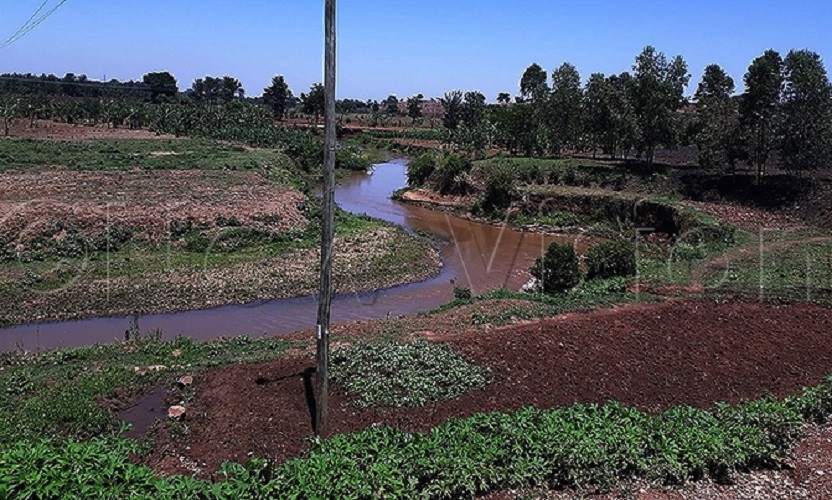
Part of River Shambe’s course that dried up
River Manafwa then involuntarily flows through rice-cultivating communities in Butaleja, Kibuku and Budaka districts, into Mpologoma River which drains into Lake Kyoga, leaving in their wake incredibly fertile soils that have for generations enabled locals to enjoy economic sustenance and guaranteed food security through irrigation, animal husbandry and cultivation of crops such as bananas, maize, millet, rice, sorghum, beans, rice, among others.
The aforesaid sustenance agricultural activities, however, are gradually diminishing for lack of environmentally sustainable and acceptable farming methods.
This has resulted in soil erosion and decreasing water levels at the Wanale river resource, subsequently affecting several other rivers in the region.
The shrinking water levels are attributed to siltation, triggered by poor farming methods, sand mining, eucalyptus tree growing, water diversion into individual gardens and poor waste disposal.
This has turned, for example, the once serene flowing Manafwa, Nabuyonga, Namatala, Khala, Tsume and Nambale, Nabinjo rivers in Elgon region into dirty streams, pushing the communities into the inconvenient search for clean water.
The rivers have shrunk leaving locals with fond memories of the gone days, considering 67-year-old Yahaya Wamakale’s nostalgic recollection of River Tsume’s thunderous nature as the water for years negotiated past the boulders in its path.
“That has ceased. You cannot know there was once a river unless told,” he sombrely notes, recalling: “The rainy seasons worried our parents the most – not even adults would risk cross it.”
River Tsume, arguably one of the biggest after Manafwa in the region, is now suffocating under the weight of extinction.
In Bubilabi Mbale district, River Khala which was also one of the biggest in the area is also suffocating.
What remains of it are huge boulders, negligible water flow and gardens that have consumed part of its path, according to 65-year-old Francis Wambuto, a resident of Bubilabi village, Mbale district.
“The water has dried up. Even when there is a heavy down power, no one can reorganize that Khala exists,” he observes, recalling that the river banks had indigenous trees that no one was allowed to cut. Although this justifiably aimed at river preservation and protection, none of these trees exists today.
Children bathing in River Manafwa. Other Families use the river’s water for home consumption. (Photo by Richard Wetaya)
“They were selfishly cut and replaced with commercial trees,” he reports, complaining: “Commercial trees such as eucalyptus do not preserve water. They consume it.” This has, he notes, affected crop production.
Again, in Mbale district, Nambitsi, Ndokhwe and Nashirumba rivers are almost no more – people have built permanent houses at their banks and established gardens in their passage.
Julius Wamuyale, an LC 1 chairman notes, for example, that the various water channels that used to feed river Ndokwe, which he avers was massive, have since dried up notwithstanding the community sensitisation on river bank conservation.
“I have tried my best to sensitise the public, but they claim that since the government is giving away big wetlands to investors, local leaders have no authority to intervene,” he resignedly notes.
Thinking of the cleanest and coldest water in the area, Nashirumba was the river to talk about. “Its water,” states Mary Masawi, “was always cold even in the dry seasons and was not contaminated by human activity”.
River Namatsyo
This, she says, was so because upon leaving Wanale hill and reaching the lower levels, the water flowed underground, later surfacing under a huge Ficus natalensis tree where it burst out into a wide stream.
What is fuelling the problem?
Yonasani Bululu, the Bududa district vice-chairperson and secretary natural resource and production contends that a big problem exists and attributes it to human behaviour.
“There is a lot of destruction of natural trees and other plants that used to protect the water, leaving the water bare which in the results in evaporation,” he notes.
Similarly, Yosia Kule, an environmentalist, adds rapid population growth, urbanization, poverty levels in rural and peri-urban areas, to the list of factors exacerbating serious depletion and degradation of the available water resources,
“The overall impact of global warming implies that volumes of water in the form of rain and underground have to reduce,” he observes, adding: “As people struggle to survive, they clear out vegetation, encroach on water banks to irrigate their crops, and carry out bricklaying to construct houses, among others.”
Kule warns that rivers are drying up portends inevitable future difficulties such as lack of water for use, the disappearance of breezes, mist and fog, and increases water evaporation.
What needs to be done
The major solution to anything, argues Joanita Babirye a climate campaigner, is having a political will and warns that once politicians and other leaders do not take treat climate change and environmental protection seriously, a dire situation awaits us.
“Communities too, need to be involved in all the drives aimed at restoring the environment,” she advises, arguing that this certainly enables communities to own up the environment and work towards protecting it.
A water fall in Manafwa district
The affected communities, she says, must not sit back on their laurels and look on – they must stand up and demand from their leader’s reliable solutions. “If the communities are united, they can never sit and look on as leaders continue to give away natural resources to certain individuals,” she avers.
Additionally, she opines that new alternatives and lifestyles need to be adopted, for example, embracing environmentally friendly forms of energy such as solar and electricity compared to firewood and charcoal.
What government says
According to Albert Orijabo, the assistant commissioner of the directorate of water resources management in the water and environment ministry, the challenges bedevilling Wanale region are within the ministry’s knowledge.
“Although we want to stop this problem, there are challenges that are hampering us such as meagre human resource to enforce or support in protecting these water resources. Also, the finances to support conservation are meagre,” says Orijabo.
According to the ministry’s national water policy 1999, Uganda’s freshwater is a key strategic resource vital for sustaining life, promoting development and maintaining the environment
It is perhaps for this reason that not all is grim considering that as a solution to the many challenges of water scarcity and depletion, the ministry, reports Orijabo is promoting an Integrated Water Resources Management (IWRM) that is aimed at de-concentration of water resources management to the Water Management Zone (WMZ) and catchment levels.
In the same sense, he adds, the ministry is promoting a Catchment-based Water Resources Management (CbWRM) to not only ensure equitable access to and use of water resources but also safeguard key natural resources for sustainable socio-economic development of the country.
Mutwalib Mafwabi Zandya, Mayor Mbale municipal says that several rivers and other small water channels that were coming from Wanale hill have either dried up or reduced in the past five to ten years.
According to Zandaya, in Mbale town, you would see big falls on the hill, but today they are becoming streams.
“All are as a result of bad human activities such as encroachment on the water sources, cutting down of traditional trees and also diversion of the water to people’s gardens.
He, however, revealed that as a council they are working with environment officers to sensitize the public on why they need to conserve the water bodies.
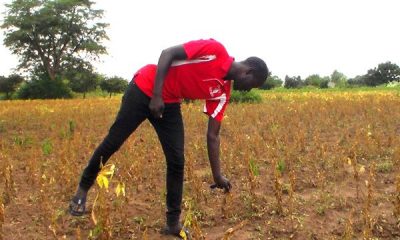
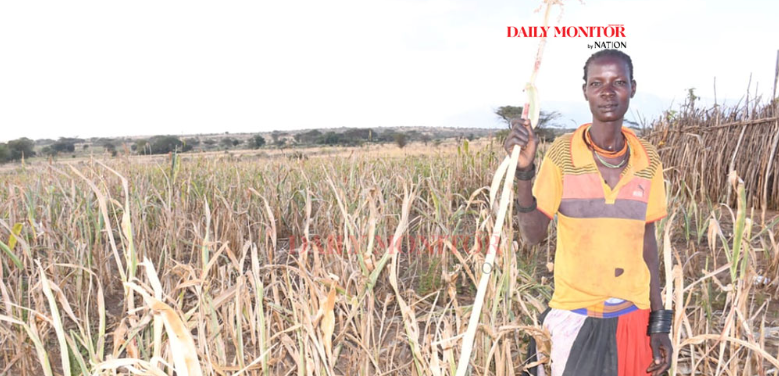
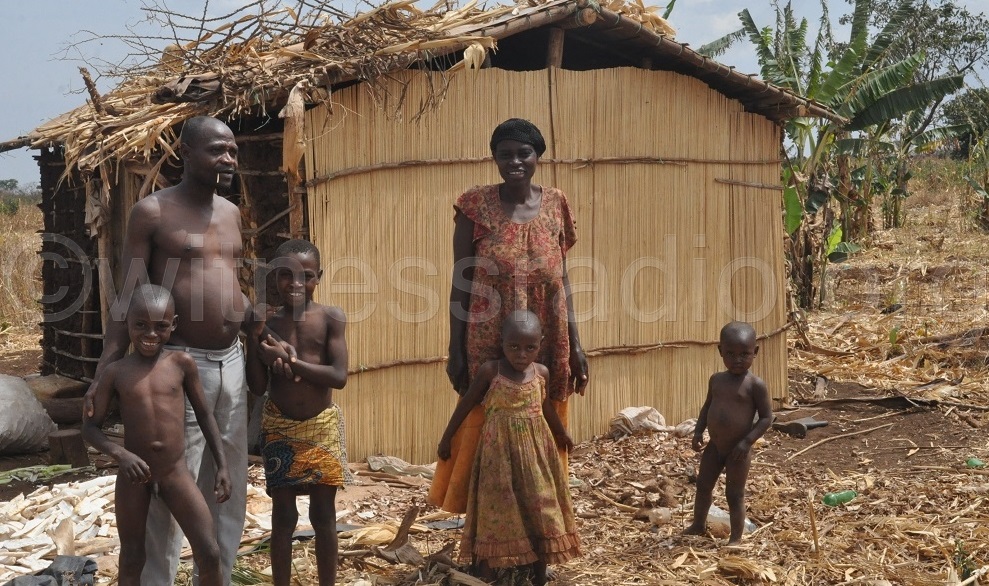
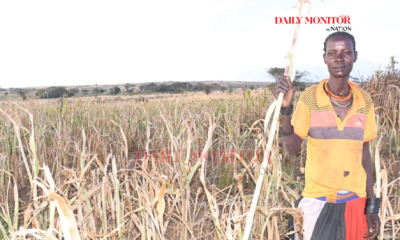
Once-green gardens in Bulambuli District, Bugisu Sub-region, have turned into scenes of despair as prolonged dry spells destroy crops, leaving thousands of farming households struggling to find food.
In the district’s lower-lying sub-counties, including Bwikhonge, Bunambutye, Bumufuni and Nabongo, farmers said they have suffered two consecutive seasons of poor harvests after rains failed to sustain their crops.
Households that previously harvested between 15 and 20 bags of maize and five to 10 bags of beans from an acre are now counting losses. Some have harvested as little as half a bag of maize per acre, while others have managed only about 10 kilogrammes of beans.
Other crops affected include sunflower, soya beans, cassava, bananas and rice, which are important sources of food and income for rural households.
The poor harvests have triggered food shortages, pushed up prices and left families struggling to meet basic needs, with women, children and elderly people bearing the greatest burden.
Mr Ronald Wakoko, the LCII chairperson of Buwabwala Parish in Buyaka Village, Bwikhonge Sub-county, said several families can no longer afford decent meals because they have little produce to sell or consume.
“Families are hardly getting what to eat because they have not harvested in two seasons and the prices of foodstuffs are high. For instance, a kilogramme of beans now costs Shs6,000, while a kilogramme of maize flour goes for Shs3,000,” he told Daily Monitor on Saturday.
He said the food shortage has also strained family relationships, with some men abandoning their households after failing to provide for their families.
“The situation has increased theft and domestic violence. The government should intervene,” he said.
Ms Harriet Wasike, a 72-year-old resident, said the situation has become difficult. Standing in her garden in Bunamono Village, Bwikhonge Sub-county, Ms Wasike said she harvested only three kilogrammes of beans and 50 kilogrammes of maize from her one-acre garden during the first season.
“We used to eat at least two times a day, but now we struggle and, if we are lucky, we survive on one meal a day. Other days we only live on porridge. We cannot continue like this,” she said.
Ms Janet Nandutu, another resident, warned that prolonged food shortages could affect children’s health, growth and performance in school.
“Poor access to food threatens the health and growth of our children and their ability to concentrate in schools,” she added.
In Nabongo Trading Centre, residents are also concerned about the nutritional consequences of the failed harvests.
Mr Robert Wanyoro said some households are struggling to provide balanced meals, raising fears of increasing malnutrition among children.
The ruling National Resistance Movement party’s Chairperson for Bulambuli District, Mr Paul Kimamati, said the drought affected more than 10 sub-counties, particularly those in the lower parts of the district.
He explained that the first planting season, which begins around January, received inadequate rainfall, leaving farmers with extremely poor yields.
“Right from the first season, it drizzled. People planted, but the harvests were extremely poor. A peasant farmer would harvest one bag of maize and 10 kilogrammes of beans from an acre, which has been producing about 15 to 20 bags of maize and five or more bags of beans,” he said.
Mr Kimamati said several farmers, hoping the second season would bring better rains, planted again using the little seed they had saved from previous harvests.
However, the rains remained inadequate, resulting in another failed season and leaving households with little food or seed for the next planting period.
He called on government to assess the extent of the losses and provide assistance to the most affected families.
“I am appealing to government to send a team to evaluate the losses these people have encountered and the challenges they are going through, as is being done in other areas where people affected by landslides are being rescued,” he said.
Mr Kimamati said women, children and elderly people were particularly vulnerable, adding that some men had abandoned their families after failing to provide for them. “When women are affected, it means the younger children are also affected because the women cannot afford meals for their children,” he said.
Mr Alex Wataka, an agricultural officer in Bulambuli District, said assessments by the district indicated that crop failure was estimated at about 90 percent in the affected communities. He attributed the poor harvests partly to declining soil fertility and inadequate use of fertilisers, saying these factors have compounded the effects of unreliable rainfall.
“We are asking government to come up with a permanent solution of setting up an irrigation scheme with smaller water pumps so that people can use irrigation to grow their crops,” he said.
Bulambuli District Production Officer Alfred Tsekeli acknowledged the food security challenges, saying the district was advising farmers to adopt improved farming methods to minimise losses arising from increasingly unpredictable weather conditions.
BACKGROUND
Two consecutive seasons of poor rainfall have disrupted farming, the main source of livelihood for several households in Bulambuli District. Farmers who previously harvested 15 to 20 bags of maize per acre are now getting as little as half a bag, depriving families of both food and income.
The poor harvests have weakened purchasing power in local trading centres, while rising food prices, with a kilogramme of beans costing Shs6,000 and maize flour Shs3,000, have further strained household budgets.
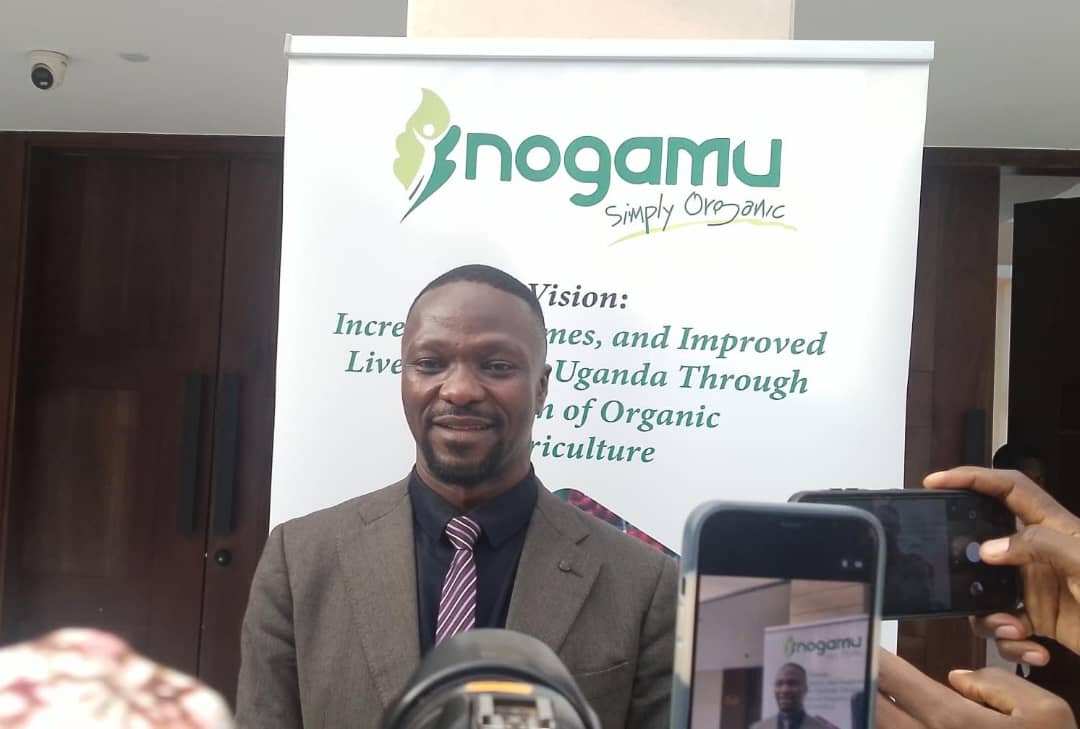
Uganda has emerged as Africa’s leading country in organic agriculture, recording the continent’s largest area of certified organic farmland as it prepares to host Africa’s first Organic and Nature Expo (ONE).
The latest Uganda Organic Agriculture Sector Statistics 2021–2025 show that the country had an estimated 744,288 certified organic farmers cultivating approximately 930,360 hectares of certified organic farmland by 2025.
The statistics were released on Friday during the launch of the first Organic and Nature Expo, which will take place alongside the fifth National Organic Week from November 4 to 7, 2026, at Hotel Africana in Kampala.
According to the report, Uganda’s organic agriculture sector has recorded sustained growth, with the number of certified organic farmers increasing from 211,584 in 2018 to 744,288 in 2025, representing an average annual growth rate of 19.7 per cent.
Organic exports have also increased significantly, rising from an estimated $123.3 million in 2018 to $225.7 million in 2025. Ugandan organic products are exported to markets in the European Union, the United States, Japan and the wider region.
Chariton Namuwoza, Chief Executive Officer of the National Organic Agricultural Movement of Uganda (NOGAMU), said the figures demonstrate the growing importance of organic agriculture to Uganda’s economy and international trade.
“These numbers confirm what the sector has long known: organic agriculture is one of Uganda’s strongest positions in global trade, and a genuine national asset,” Namuwoza said.
The statistics further show that the number of certified organic operators increased from 65 in 2018 to 439 in 2025, representing a 575 per cent increase over the seven-year period.
NOGAMU and its partners also mapped 493 active organic sector actors across 58 districts. These include producers and farmer groups, exporters, processors, cooperatives and agricultural input dealers.
Uganda’s organic product catalogue now lists 95 distinct products and 403 variants across 11 categories. The report also identifies opportunities for further growth in value addition, particularly in high-volume crops such as coffee.
Namuwoza said the sector’s expansion presents opportunities to link organic production with enterprise development, trade, investment and sustainable environmental practices.
The statistics are also expected to provide an evidence base for policymakers as Uganda advances the development of its National Organic Agriculture Bill.
The upcoming ONE Expo is being organised by NOGAMU in collaboration with the Ministry of Agriculture, Animal Industry and Fisheries (MAAIF), the African Organic Network (AfrONet) and other partners.
The four-day event is expected to bring together more than 2,000 participants, including producers, processors, exporters, buyers, investors, financiers, development partners and policymakers from across Africa.
The programme will feature a conference on organic and regenerative agriculture, business-to-business meetings, a regenerative coffee day, exhibitions and organised tours to farms, value-addition centres, and processor and cooperative enterprises.
According to the organisers, the expo will showcase Uganda’s organic agriculture sector while creating opportunities for producers and businesses to access markets, financing, technology and strategic partnerships.
The event will be held under the theme “Competitive Partnerships: Organic and Regenerative Innovations: Africa’s Edge.”
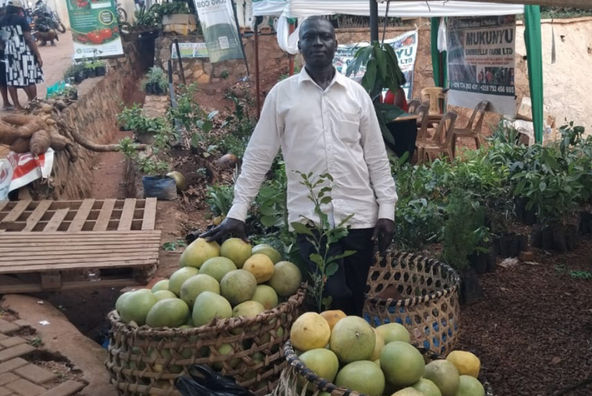
A grape fruit farmer from Kaplabweng District showcasing his grape fruits at the recently concluded Trade Show at UMA show grounds in Kampala. Photo | Lominda Afedraru
While farmers in Teso region are known for commercial growing of oranges, some of them have found a niche in growing grapefruit.
During the recently concluded Trade Show at the Uganda Manufacturers Association (UMA) showground, selected farmers displayed the rare grapefruit, appealing to many.
The orange-like fruit weighed about 1- 2kg.
In Science Direct, a scientific publication, experts say grapefruit (citrus paradise) is a heavy citrus fruit that originated as hybrid of a variety called pomelo crossed to sweet orange, characterised by its oblate shape.
The varieties are both seed and seedless, with red and white flesh attributed to carotene and lycopene pigments.
Grapefruits, with 6 percent of world production, are the fourth most important commercial group within the edible citrus species, with China leading in production.
Stable production over the last 20 years is now being influenced by new cultivars having lower acid levels and red pigmented flesh.
These factors are creating renewed interest by growers, marketers and consumers for fruit or processed products.
Dr Gabriel Ddamulira, the programme leader, Horticulture and Oil Palm Programme said interested farmers picked scion for grafting and processing seedlings from an old orchard at NaSARR in Serere and Ngetta Zonal Agricultural Research and Development Institute in Lira.
“It is not true that only a few farmers picked interest in growing grapefruits in the Teso region. They picked and multiplied these as individual seedling multipliers for farmer adoption,” he said.
The fruit produces a lot of juice and is believed to be medicinal but the challenge is that it has specialised market since most Ugandan fruit consumers do not know about it.
“Currently, the fruit is not one of priority plants for research as gazetted by the Agriculture ministry. But we keep it as germplasm for future use and this does not stop farmers from growing it if they have identified market for it,” Dr Ddamulira says.
Health benefits
There are several health benefits associated with fresh citrus consumption, such as being a source of Vitamin C, dietary fibre, folate and potassium.
The experts say grapefruit is a nutrient dense citrus fruit that is also low in calories, and provides an antioxidant that protects cells from bacteria and viruses.
It also contains Vitamin A and beta-carotene to help fight inflammation and high water and fibre content can reduce overall calorie intake, which lowers blood pressure.
Farmers’ take
Most farmers growing grape fruit are concentrated in Serere District because it was easy to obtain the seedlings from the research institute.
Mr James Oriokot, a farmer and director of Eden Farm Products in Amuria District has allocated five acres for grapefruit farming.
He ventured into growing grapefruit in 2008 having identified a market potential with Koreans and Chinese who are working in Teso Sub-region.
“The fruit grows in two years and its starts fruiting. One tree can produce over 30 fruits and we sell each fruit at Shs10,000, though the farm gate price is Shs5,000 per fruit,” Ariokot says.
He also multiplies seedlings, selling the six-month-old propagated seedlings at Shs100, 000 while the three months seedling goes for Shs50,000.
He encourages farmers in other parts of the country to embrace grapefruit farming for export market.
“Apparently, the Asians are purchasing it for local consumption but they have intentions to purchase in bulk for export,” he says.
Origin
Grape fruit was introduced in Uganda in the I990s by agricultural scientists from Food and Agriculture Organisation, particularly in the National Agricultural Semi-Arid Resources Research Institute (NaSARRI) where farmers picked seedlings.