Connect with us

MEDIA FOR CHANGE NETWORK

Oil-affected residents and civil society organizations reject TotalEnergies’ Tilenga Progress Report, citing unfairness in their operations.

Published

on

By the Witness Radio team.

Residents affected by the Tilenga oil project, along with civil society organisations, have rejected a progress report by TotalEnergies, arguing that the compensation and resettlement processes are unfair and inadequate.

In 2023, Jealous Mugisha Mulimba and 41 other families were sued by the Government of Uganda for refusing the compensation offered for their land and property, which were required for the Tilenga Resettlement Action Plan 5 (RAP 5), part of the broader Tilenga Project.

Mugisha is a smallholder farmer who had been deriving his livelihood from 2.5 acres of land, which he lost to the project.

“That land, however small you may see it, was my only source of income. I didn’t go to school to have a formal job. I squeezed every single bit of money I got from my land, and without it, life is a real struggle,” Mugisha told Witness Radio, visibly heartbroken.

In December 2023, Mugisha’s life and that of his family were thrown into disarray when the government acquired his land for the oil project. He and other affected community members rejected the government’s valuation and compensation offer, arguing it was far too low to sustain their livelihoods.

“For me personally, they wanted to give 5 million shillings per acre, yet land is more valuable in our area, and I had property on it, which I rejected. Many others who refused went through the same,” he said.

As a result, the government, through the Ministry of Energy and Mineral Development (MEMD), sued the project-affected families, requesting the High Court of Hoima to allow it to deposit the compensation into court accounts and to issue demolition orders for the project. The court ruled in favor of the government within just four days of filing the case, a process Mugisha described as rushed and unfair.

“We witnessed one of the quickest court rulings, with the court offering only a single hearing. In fact, the court informed some of our lawyers and community members only two days before the hearing. There was no time to prepare a defense, which caused the community to lose the case.” Mugisha added.

The discovery of oil in Uganda was initially welcomed by host communities and expected to boost local livelihoods and national economic growth. Critics now say the benefits are uneven, with large-scale profits going to the government and multinational companies, while affected residents suffer losses.

“The oil projects have caused a lot of suffering to people; there have been setbacks in their livelihoods because of inadequate compensation accompanied by gross violation of human rights to project critics.” Mugisha adds.

The Tilenga Project is operated by TotalEnergies (56.67%), in partnership with China National Offshore Oil Corporation (CNOOC) (28.33%) and the Uganda National Oil Company (UNOC) (15%). According to TotalEnergies’ report, the project acquired approximately 2,108 acres of land, affecting 4,954 Project-Affected Persons (PAPs). Of these, 205 (4%) experienced physical displacement requiring housing, while 4,749 (96%) experienced economic displacement, primarily due to the loss of livelihoods.

The report, prepared by Land and People Planning Ltd. and Interface Consulting Ltd., assesses RAPs 2–5 and benchmarks them against the project’s Land Acquisition and Resettlement Framework (LARF). It claims 99% compliance with compensation and resettlement, and 100% adherence to responsible resettlement principles.

While TotalEnergies claims 99% compliance with compensation and resettlement, residents like Mugisha highlight that on the ground, significant disparities persist, with many unable to sustain their livelihoods despite official reports.

Victims of the project say these exist only on paper, while the reality on the ground is very different.

“Sometimes they write good reports, but when you go to the ground, that’s when you realize their falseness. If the processes were fair, why did the government have to sue families instead of settling this matter in a way that benefits both sides?” Mugisha, who currently lives on clan land after the eviction, told a Witness Radio journalist, adding, “I wouldn’t be struggling at my age to find a place to live and food for my family.”

Efforts to get a comment from Total Energies on these grievances went unanswered. However, the Ministry of Energy states that the government and project developers are actively monitoring RAP implementation to ensure compliance.

“The latest social performance updates on land compensation under RAPs 2–5 indicate that the overwhelming majority of Project Affected Persons (PAPs) have successfully received their entitlements and, where applicable, have been resettled.” Dr. Patricia Litho, the Assistant Commissioner for Communication at the Ministry of Energy, wrote to Witness Radio.

Dr. Litho added that the remaining 1% of cases involve disputes such as ownership disagreements, ongoing succession processes, or refusal to accept the compensation.

About groups like Mugisha’s who refused compensation, Dr. Litho added that, “On the matter of individuals who challenged the valuation of their assets and chose not to accept the compensation offered—including the example you referenced in Buliisa District—the law provides a clear mechanism for resolving such disputes. Where communities cannot reach an agreement, the government may deposit the assessed compensation amount with the courts, allowing the project to proceed while preserving the rights of affected persons to pursue legal redress. The individuals in such circumstances remain fully entitled to challenge the valuation through the courts, and the judiciary ultimately determines the appropriate outcome.”

However, Margret Kemigisa, Legal Officer working with the Africa Institute for Energy Governance (AFIEGO), highlights that many families affected by oil projects such as Tilenga continue to struggle to access justice, a claim disputed by Dr. Litho, who asserts that multiple grievance redress mechanisms are in place to address concerns raised by PAPs:

“Before any matter reaches court, the resettlement process under the Tilenga Project provides several engagement and grievance resolution mechanisms for PAPs established under the Resettlement Action Plans. Through these mechanisms, PAPs can raise concerns about asset valuation, compensation amounts, or any other resettlement-related issues. However, some PAPs may still choose not to accept the compensation offered even after the grievance mechanisms have been exhausted. In such circumstances, the government must balance two important considerations: respecting the rights of the affected persons while also ensuring that nationally significant projects proceed in accordance with the law.” Dr. Litho revealed.

But Civil society groups are raising concerns about the independence of Ugandan courts, arguing that justice for people experiencing poverty is often delayed or denied. After what was described as a “quick ruling” against Mugisha and the 41 other households, the residents and their lawyers filed an appeal on December 22, 2023, at the Court of Appeal. However, the case has not yet been scheduled for a hearing.

“We have written three letters requesting that the appeal be fixed for a hearing. However, none of these letters has received a response so far. Generally, the hearing of appeals, especially time-sensitive cases such as this, has been very slow and frustrating for PAPs. Meanwhile, the cases filed by the government seeking to evict PAPs are heard expeditiously.” Adds Margret Kemigisa of AFIEGO, which is supporting the legal action of the affected families.

When asked about the status of the case involving the 42 households, the Judiciary spokesperson, His Worship Mawanda James, declined to comment, saying the matter is still before the court. “The matter is still in court. I can’t comment,” he said in a reply to Witness Radio.

AFIEGO also criticized the resettlement process for relying on intimidation, division of families, and coercion, which forced some families to accept inadequate compensation.

“The Tilenga project’s compulsory land acquisition processes have been marked by delayed, inadequate, and unfair compensation, as well as the use of threats, division of families, intimidation, and other tactics to coerce many low-income families to accept inadequate and unfair compensation.

As a result, many affected households are unhappy with the project, and call it a curse,” a May 17, 2024, statement by AFIEGO titled,” Last Man Fighting: Statement on Eviction Mr. Fred Balikenda and His Family for Total’s Tilenga Oil Project stated.

Now, as Total celebrates what it calls a milestone in involuntary resettlement, the fate of those who were supposed to benefit from the project remains uncertain. For Jealous Mugisha and others, it is now clear that both the government and multinational corporations are primarily profit-oriented

Continue Reading

MEDIA FOR CHANGE NETWORK

More than 500 Masindi residents live in fear as a tycoon targets their land.

Published

on

By the Witness Radio team.

Kyamaiso, Masindi District: Katushabe Charles is one of hundreds facing uncertainty after a businessman claimed ownership of land they’ve occupied for decades.

“He has issued threats, arrested some of us, and warned us that he doesn’t want us on this land anymore,” Katushabe, a father of seven and village defense secretary, said, emphasizing the community’s fears of eviction and displacement.

In 2002, Katushabe bought 30 acres of land and took possession with the intention of practicing large-scale agriculture. “I acquired this land from the citizens of Kyamaiso village, and I have lived here for over a period of twenty-four years,” The 50-year-old caretaker of a family of 9 told our journalist.

On his land, he says he grows sugarcane and other crops, such as cassava, which he sells to sustain his family. “I earn some good money from these crops, and I can ably take care of my children, pay their school fees, and look after my family.” He said.

Katushabe is among the 500 families whose survival is at risk after Masindi-based businessman Ahamed Ssewagudde surfaced claiming ownership of their land, on which they have lived for decades.

Witness Radio investigations reveal that the contested land spans 68.79 hectares (170 acres) and covers the villages of Kitinwa, Kyakatera, and Kyamaiso in the Kijunjubwa, Bikozi, and Bwijanga sub-counties.

Residents say some families have occupied the contested land since the 1960s, highlighting their deep roots and long-standing connection to the land.

Sylvia Karungi, a resident of Kyamaiso village, says the alleged land claimant does not have documents to prove ownership, building trust and confidence in the residents’ claims.

“He says he and his family own this land, but this is not true. We have been here for many years. They only have land in another village, Kyangamwoyo, but on this land, they have no proof of ownership,” she said.

Mr. Wobusoboozi Pius, another affected resident, accuses Ssewagudde of using the area police to intimidate and criminalize those opposing the alleged land grabbing.

“He first accused about eight individuals, claiming they had encroached on his land. He relies on police and courts, yet he does not have the rightful documents,” Wobusoboozi told Witness Radio.

However, Ahmed Ssewagudde maintains that his father acquired the land in 1968 and that the current occupants are encroachers who took advantage of his father’s absence.

He says the dispute is not new and has been in court for more than two decades.

“For over a period of twenty-three years, I have been in court with those people, and I have always won the cases, even though they do not want to accept the truth,” Ssewagudde said in an interview with our journalist. Ssewagudde added that evictions will proceed through legal channels.

“We are working on the legal process with my team to get the necessary documents and land title. We shall evict them because no one is above the law. I will only follow the directives of the court.” The tycoon told our journalist.

Continue Reading

MEDIA FOR CHANGE NETWORK

Kiryandongo farmer accuses minister of grabbing 100-acre land

Published

on

Farmer Edward Balikagira at Kinyara II Village in Kigumba Sub-county in Kiryandongo District during an interview with Monitor. PHOTO/DAN WANDERA

A Kiryandongo farmer accuses Minister for Karamoja Affairs Peter Lokeris of illegally occupying his 100-acre plot, sparking a decades-long dispute now under State House scrutiny. Despite interventions, the conflict remains unresolved amid conflicting claims and documentation. Source: https://www.monitor.co.ug/uganda/news/national/kiryandongo-farmer-accuses-minister-of-grabbing-100-acre-land-5447308

Edward Balikagira from Kinyara II Village in Kiryandongo District alleges that Minister Peter Lokeris has forcefully taken over his 100-acre land, which he bought in 1996 from the late John Bitunda Bitagasa.

Balikagira holds a 1996 handwritten sale agreement in Runyoro, detailing payment of Shs170,000, 12 goats, a bicycle, and a blanket, witnessed by local land executives.

Lokeris rejects the accusations, stating he legally obtained the land in 1996 and has occupied it peacefully for over 20 years without issues. He questions Balikagira’s ownership documents.

Balikagira recounts that in 2007, as land committee chair, he negotiated with Lokeris for adjacent land at Shs500,000 per acre, but the deal fell through due to delays.

Tensions peaked in 2022 when Balikagira was arrested for alleged trespassing during the Covid-19 lockdown. A State House fact-finding meeting followed, where Lokeris reportedly admitted to applying for only 100 acres and agreed to return any excess.

A June 2022 State House letter to the Kiryandongo RDC, signed by Nathan Bwogi, halted all activities on the disputed land and noted ongoing fencing by Lokeris’s associates, warning of potential violence.

Despite this, Balikagira says the issue lingers without court action, citing the minister’s influence. Local leaders and the Deputy RDC confirm ongoing administrative reviews but no closure.

Land wrangles like this are rampant in Uganda, especially in Kiryandongo’s former ranch areas, with police reporting a surge in such cases.

Source: Daily Monitor

Continue Reading

MEDIA FOR CHANGE NETWORK

“We are facing increased violent land dispossessions and climate injustices” – African women.

Published

on

By the Witness Radio Team


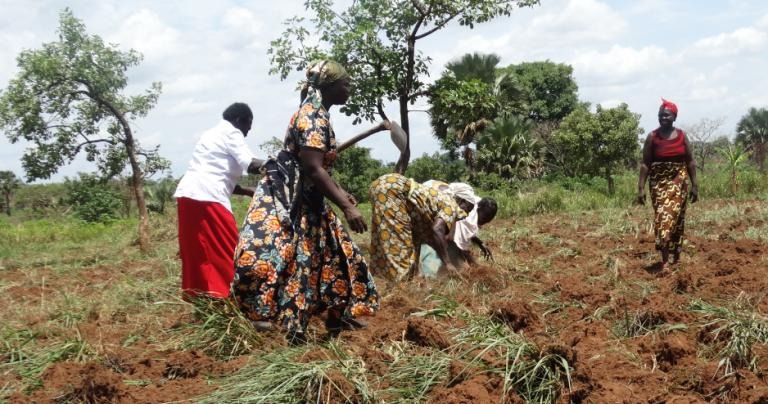
Stories of displacement, land loss, and resilience filled the room as 45 women from six African countries gathered for the East Africa Women’s Land and Climate Justice Convergence in Nairobi, organized to raise awareness and explore resistance strategies against land dispossession and climate injustice.


Representing communities from Kenya, Uganda, Tanzania, the Democratic Republic of Congo, Zimbabwe, and South Africa, the women came together not only to learn but also to speak, listen, heal, and feel the weight of their struggles, resisting destructive extractive projects and reclaiming what belongs to them, despite the immense impacts they have endured.


Africa is often described as having vast unused or underutilized land. This narrative has attracted investors, especially from the Global North, into large-scale industrial agriculture and other land-based investments. However, a 2025 report by the Alliance for Food Sovereignty in Africa (AFSA), PLAAS, and the Institute for Agriculture and Trade Policy challenged this claim, showing that such narratives have fueled large-scale land grabs, ecological destruction, and community dispossession across the continent.


In Uganda, the land eviction crisis has intensified due to increasing land-based investments that have dispossessed local communities with impunity, with oil development activities among them. According to human rights groups, this has led to more than 100,000 people in Uganda and Tanzania permanently losing their land to make way for the pipeline and related projects.


Jenniffer Kiiza, a resident of Hoima, is among those whose land was taken for oil development.


“The project has had severe negative impacts, especially on vulnerable groups like women,” she said, highlighting how delayed compensation, gender-based violence, and food insecurity disproportionately affect women and their families.


“We face dispossession, and sadly, we are paid very little money, which comes late and is no longer enough to buy land elsewhere. Hunger and malnutrition in adults and babies have increased, and this is affecting us as women and our families.” Kiiza added.


Kiiza has continued to speak out despite growing repression against dissent, advocating for justice for her community, especially women, even as opposing such mega-projects comes at a high cost.


“These developments have caused hunger, increased gender-based violence, family breakdowns, school dropouts, and early marriages. There has also been a rise in prostitution, as women struggle to provide for their children after losing their land.” She added.


Meanwhile, in Uganda alone, the Uganda Police’s Annual Crimes Report, 2025, released early April, recorded 663 cases of land fraud, an indicator of the country’s escalating land crisis.


In Zimbabwe’s Midlands province, particularly in Shurugwi, communities are facing similar challenges linked to mining activities, including land dispossession and environmental harm. Jecha Benenia a women’s rights defender from a community affected by Unki Mine, shared her experience during the convergence.


“We are facing many challenges from the miners. Chinese investors are coming into our area and evicting us. They tell us to leave, and if we refuse, they come with bulldozers and destroy everything, including our homes. We are left with no shelter and nowhere to go,” she said.

She added that abandoned open pits left by mining companies have become deadly hazards.


“When it rains, the pits fill with water. Our livestock fall into them, and even our children have fallen in. We are losing both animals and lives, and the danger is ever-present,” She added.


Communities in Zimbabwe also report water pollution from mining activities, which threatens their health and livelihoods. “The water we use is our source of livelihood, serving domestic needs, drinking, and our animals. However, after consuming it, we have experienced illnesses like cholera, and pregnant women face severe complications,” she added.


Her revelations echo concerns raised at the 2025 Zimbabwe Alternative Mining Indaba (ZAMI). The 14th edition of the Indaba, convened by the Zimbabwe Environmental Law Organization (ZELO) and partners in September 2025, highlighted multiple challenges within a sector that contributes about 12% to 13.3% of the country’s Gross Domestic Product (GDP).


In its December 2025 communiqué, ZAMI noted that unsustainable resource extraction is driving widespread environmental damage, including water pollution, habitat loss, soil degradation, and deforestation.


It further pointed to displacement, inadequate compensation, and the absence of Free, Prior, and Informed Consent (FPIC), particularly affecting marginalized communities whose exclusion from governance processes has resulted in violence, disempowerment, and the entrenchment of poverty in resource-rich areas, worsened by weak oversight that has enabled environmental violations and illicit financial flows.


Amid these challenges affecting their communities, the women shared, the convergence concluded with a renewed sense of solidarity, forming a network of resilient women committed to defending Africa’s commons—land, forests, water, and cultural systems—now under increasing threat.


According to the organizers, the meeting was particularly significant in creating a platform for women to share lived realities that are often excluded from formal land governance discussions. Participants exchanged insights on the challenges they face and identified collective strategies to strengthen their land rights.


“The convergence brought together women to reflect on their experiences with customary and communal land tenure systems. We will continue to build on this knowledge and strengthen solidarity plans at both national and regional levels with the women,” WoMin’s Sizaltina Cutaia told Witness Radio.


Participants described the gathering as a transformative learning space that not only exposed shared struggles but also equipped them with the skills and knowledge to defend their rights collectively.


“And a message I can give to a woman in the struggle is to keep fighting for her goal. She should not give up, but continue until she achieves what she wants. This cuts across countries and brings us together through networking. When we unite as women, we realize we share one goal—as mothers in our communities and countries—because land is our motherland,” said Sarah Osas from Nakuru in Kenya.


Despite powerful companies taking over their land, women defenders say they are determined to continue resisting and reclaim what is rightfully theirs.


“We are fighting back so that we can reclaim our natural resources, including land and water. Many women are facing serious health challenges, including stress and stroke, as a result of these struggles. But we are not going back. We are fighting to reclaim our commons through demonstrations, cultural resistance, and petitions led by marginalized communities.” Jecha mentioned.

Continue Reading

Resource Center

Legal Framework

READ BY CATEGORY

Facebook

Newsletter

Subscribe to Witness Radio's newsletter


Trending

Subscribe to Witness Radio's newsletter