Unknown to Makerere, he disposed of the lease interest to Rutungu Investments Limited linked to businessman Ben Kavuya, contrary to the lease agreement.
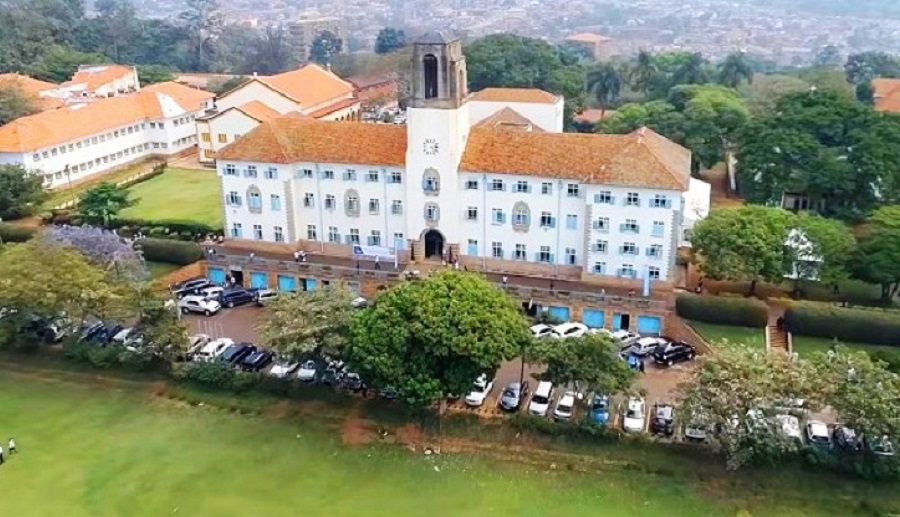
And the plunder is not yet over. Most of the university properties are also under threat of being taken over, as different companies, institutions and individuals lay claim to them.
In 2017, the university set up an Inter-Agency Task Force to develop a holistic and systematic strategy to safeguard the university lands and property. Sources at Makerere University who did not want to be named for fear of reprisals confirmed that the committee was shocked to find that a racket of land grabbers, involving senior government officials and businessmen, had freely acquired land and depleted its asset profile.
The committee released a report, whose findings Sunday Vision highlights, together with the recent status of some of the properties.
34A, 36A ON PRINCE CHARLES DRIVE (2.4 ACRES)
Makerere University has owned the three-acre land located on plots 34A and 36A on Prince Charles Drive since 1962 and preparations to start developing were underway. However, it was leased to Janice Amayo during the reign of then vice-chancellor, Prof. Venansius Baryamureeba.
Amayo, together with the land ministry officials, led by the then secretary Sarah Kulata, are said to have transferred the lease interest to Nassour Rahez, without the knowledge of Makerere.
After learning about the transaction, the university secretary, Kahunda Muhwezi, instituted a team of lawyers and land surveyors in February 2010, to probe the allegations. In a report released to the media, Makerere confirmed that the transaction took place on December 24, 2009.
The High Court ruled in the favour of Ramez indicating he was a bonafide purchaser for value even though Amayo had committed fraud. Makerere appealed the decision and Ramez approached the university. He asked them to lease the property to him, which the university did, on the understanding that he would build a five-star hotel.
Unknown to Makerere, he disposed of the lease interest to Rutungu Investments Limited linked to businessman Ben Kavuya, contrary to the lease agreement. Rutungu Investments attempted to change the original development plan with a proposal to subdivide the land and on the basis of this, on April 16, 2016, the university lodged a caveat on the property.
Rutungu Investments proceeded to Kampala Capital City Authority, where they were advised to get consent from Makerere. The consent was given, but the council resolution to the effect is not on file. Rutungu Investments then transferred its lease to Universal Establishment Limited without the knowledge or consent of the university council, which is mandatory under a clause in the lease agreement.
The Makerere Land Task Force noted that the fact that the university had lodged a caveat on the land implied that the lessee could no longer deal with the land without the consent of the university council. “There is no record of the caveat being lifted. So, any dealings that have taken place thereafter are illegal including the amalgamation of the Plot into 17 and 19 Kololo Hill Drive.” It recommended the council needs to re-enter her land and take physical possession.
PLOT 40 PRINCE CHARLES DRIVE (1.64 ACRES)
Makerere University leased the land to Harjit Singh for 49 years, effective June 1, 2002, for consideration of sh80m premium and ground rent of sh4m per annum. Singh has since put up residential apartments on the land and, according to the lease agreement, ground rent ought to be revised after every 10 years.
Although the rent should have been revised in 2012, there is no evidence to that effect. Singh, through his lawyers, had proposed to buy the entire land interest from Makerere, but there is no information on file indicating any response. The committee recommended that the university revises the ground rent and further searches at the land registry to ascertain whether the plot number has not changed from what the university has on the file.
PLOT 24 ACACIA AVENUE (NOW JOHN BABIIHA AVENUE)
(0.5 ACRES) Plot 24 John Babiiha Avenue is recorded as the property of Makerere University Council according to records as early as 1952, as per property rates, arrears demands notice from the City Council of Kampala, on July 21, 1992.
Currently, the property is occupied by the Insurance Association of Uganda and Plot 24B is occupied by the dfcu Bank, which rents it from Charles Kimera. It remains unclear how Kimera accessed the property.
BLOCK 28, PLOT 49 ON SIR APOLLO KAGGWA ROAD (1.64 ACRES)
Plot 49, which measures 1.64 acres officially belongs to the university under freehold title. However, there are two claimants, Amina Kayaga claims ownership by the Will of her late father, while Wilberforce Sekubwa Mpindi says he has a mailo title. A one Bwire also encroached on the same plot, while Shell fuel station appears to have also encroached on the other part.
In 2013, Makerere University dragged the trespassers to court, seeking a declaration that it is the rightful owner of Plot 49 under HCCS 532 of 2013. The case was referred for mediation and failed.
The court case is still ongoing. The committee recommended an immediate boundary opening and expedite the court process to redeem the land.
BLOCK 28 PLOT 170-174 (239 ACRES)
This plot is bordered by Bombo Road to the east, Makerere Hill Road to the south and Sir Apollo Kaggwa to the west.
It is encroached on the eastern side by Mussy Hotel on Bombo Road, owned by one Kulubya. He extended his perimeter wall into the university land. On the north-eastern side, on Muganzi Awogererwa Road, there are multiple occupancies that include residential, commercial and a carpentry workshop owned by Bernard Mukiibi.
In an interview with Sunday Vision, Mukiibi defended his acquisition of the property, saying he is the legitimate owner, having been born and raised there even though he did not have a title. The report recommends that there is need to open a boundary around the affected areas.
BLOCK 9, PLOT 225 AND 269 SIR APOLLO KAGGWA ROAD (0.79 ACRES)
These plots are located opposite the Full Gospel Church Makerere on the junction between Makerere Hill Road and Sir Apollo Kaggwa Road. They have residential flats. The committee recommended the need to amalgamate the two plots to obtain a single title.
BLOCK 28, PLOT 187 AND 186 MAKERERE HILL KIBUGA (1.58 ACRES)
The land is found in Makerere north below the College of Veterinary Medicine, Animal Resources and Biosecurity. The university purchased Plot 187, while Plot 186, which was subdivided to form Plot 556 and 557, was purchased by the Uganda Land Commission for Makerere University use.
The land is said to have been encroached upon and some suspected encroachers have sales agreements and they include Yoona Kwesigwa, who says he bought the land from a one Kalinte in 1987. Kalinte was a former employee of the university. Similarly, Benard Guma allegedly purchased a portion from a one Muhumuza in 1997. The boundary pillars have been broken down.
Information on the file indicates that there are fraudulent titles that have been issued as recently as 2006. The committee recommended that the university needs to apply to the land commission to transfer the land to it for better management.
BLOCK 28 PLOT 60, 58, 39, 38 (5.8 ACRES)
This is the land upon which the Makerere University Primary School, also known as Yellow Primary School is located. It neighbours Bombo Road to the northeast side. Plot 60, which neighbours Bombo Road to the northeast side is being used by the primary school as a washing bay under agreement with Martin Muzale and managed by Ashraf Bashir who, in addition, runs a garage.
The washing bay business was authorised by the school management and the tenant pays sh500,000 per month. The committee recommended that the university needs to re-demarcate the land for the primary school and erect a fence.
BLOCK 28 PLOT 32 (1.61 ACRES)
Commonly known as the students’ plot, it is located in Makerere north. The plot neighbours Plot 35 (commonly referred to as Ex-Sempa land because Makerere University purchased it from the late Amos Sempa). Its fence is run down because it is encroached upon on the southern side. The committee recommended its boundaries be re-opened.
Block 28 Plot 239 Kibuga (1.08 acres ) Another Ex-Sempa land. Although Sempa handed over the original certificate of title and signed transfer forms to the university, Makerere did not complete the transfer process.
The administrators of the estate applied for a special certificate of title and subdivided the land into smaller plots and there are developments on the land, such as the Mulago View Hostel and other residential buildings including one of Sam Segilinya. The committee recommended the need to establish details about the plot and the transfer processes in order to guide on the way forward.
Block 28 Plot 339 and 338 (6 acres ) The land is located on Muganzi Awogererwa Road towards Sir Apollo Kaggwa Road. It was sold to Makerere University by Prof. Ssemakula Kiwanuka, in 1971. The university registered the land in its names and obtained a certificate of title.
However, the land is heavily encroached upon and illegally subdivided into smaller plots with buildings, such as Fiona Hostel, a school, church and residential houses. The university says whereas Kiwanuka was fully paid for the land in 1971, he has, through his lawyers, turned around and is demanding sh4.2b, which he purports to be the current value of the land.
In an interview with Sunday Vision, Kiwanuka insisted he had never been paid. The committee recommended that Makerere University reclaims its land. Block 28 Plots 482, 487 and 488 Mukubira Zone (1.16 acres ) The university purchased the land and transferred it into its name, but the place is heavily encroached upon with residential houses.
Block 28, Plots 5, 9, 11, 17 (4.90 acres)
It is popularly known as the Makerere Junior Staff Quarters towards the Northern Bypass. In the north-east of Plot 5 and to the north-west and west of Plot 9 is Plot 7, whose ownership was not identified.
The plot is managed by the widow to the former Makerere University deputy chief security officer, Sam Iraat. It has been encroached on by general businesses, including Fuelex Petrol Station, Parking Yard, washing bay and a garage.
Kasangati, Block 187 Plots 116 and 117 (1.09) acres
The land houses facilities for the College of Health Sciences. There are currently steps being taken to negotiate with the Uganda Land Commission to acquire a certificate of title. However, the land has been greatly encroached upon by one Francis Ngabirano and there is a community road passing right in the middle.
Nakyes a Land (207 acres )
This land was allocated to Makerere for use by the College of Veterinary Medicine, Animal Security and Biosecurity. However, the certificate of title is yet to be secured from NARO. The land was fenced off. However, the manager expressed concern. It is possible that the land fenced off may be less than the 207 acres allocated.
The university signed a memorandum of understanding with the National Agricultural Research Organisation for a period of five years, which expired in 2016, but there was no evidence that the memorandum of understanding was renewed.
Kabanyolo farm 552 acres Kabanyolo farm sits on 552 although it is supposed to actually be 650 or 680 acres and serves as a demonstration farm for students of the College of Agriculture and Environmental Sciences. Atlas High School has been named as one of the people on the land.
There is also a separate claim by one Bernard Sserunjoji on Plot 67. The boundary pillars in some sections were removed. There is also a claim of 165.50 acres by one Mohammed Sharif Omar, who lodged a caveat on the land, in February 2011.
Part of the land was encroached upon by Uganda National Roads Authority.
Makindye Lukuli Block 253 Plots 14, 45 and 57 (14 acres)
The university holds a freehold title for this land, but part of it has been encroached upon by a garden, two residential properties and a perimeter wall fence. ‘Princess’ Farida Namusisi Bwanga has also laid claim on the entire piece of land, alleging it is a cultural heritage of Buganda kingdom. The committee said she demolished the university boundary pillars.
Lower Mulago and Katanga valley Block 38 Plot 40 (1.33 Acres )
This is located along Dwaliro Road and currently occupied by the Kampala Capital City Authority mortuary. It is not clear how the mortuary was established on the land.
Block 38 Plot 42, Dwaliro Road (0.61 acres )
This is also located on Dwaliro Road on Mulago hill. This piece of land is heavily encroached on by a number of retail businesses and workshops under the Mulago Youth Development Organisation with the permission of Mulago National Referral Hospital management.
There is also a parallel claim on the land by Brig. Elly Kayanja, who has attempted to evict the Mulago Youth Development Organisation. The committee recommended, that the university management needs to open boundaries and evict the encroachers.
Block 38 Plots 1-47, Lira Municipality, Plot 7-9 (1.49 acres )
Makerere University Council holds a 49-year interest on Plot 7-9 on Makerere Road in Lira Municipality. The fence that was erected around the property seems to have left out part of the university land. The committee recommended that boundaries of this land be opened.
Buyana Stock Farmland Block 237, Plot 3 (332.99 Acres )
This land is found in Gomba district and was allocated to Makerere by the Government, in 1972. It is currently under use by the College of Veterinary Medicine, Animal Resources and Biosecurity. However, there is a piece of land totalling 2.3 acres within the farm owned by a private individual.
The titled land is also encroached upon with one of the neighbours placing mark stones inside the university land and others using part of the land for farming. The committee recommended that Makerere expedites the process of transferring the title.
Nyabyeya Forest College, Masindi While this is the property of Nyabyeya Forestry College, Makerere owns a hostel block on the land that is used as a residence for its students on the bachelor of the forestry programme.
The committee recommended that the university formalises the existence of its property on the Nyabyeya Forestry College land.
Kibaale Ecological Field Station, Kabarole District at Nkingo and Kamwengye (100 acres )
The land was inherited by Makerere from a research project initiated by Dr Thomas Strasker in 1987. The station, over the years, bought land both within and outside the Kibaale Forest on behalf of Makerere University.
The pieces of land, according to records are estimated to total to about 100 acres located in Kanyawara (Kabarole district) and Kingo in Kamwenge district. However, a recent survey by the estates and works directorate of Makerere University puts the acreage at about 40.2 acres.
The Makerere University biological field station facilities sit on about six acres of land, belonging to the Uganda Wildlife Authority (UWA), which has a standing memorandum with the university. The committee recommended that the university management needs to expedite the process of acquisition of certificates of title for all the pieces of land.
It also needs to negotiate for a lease from UWA for the land on which the facilities of the station sit and also negotiate the purchase of pieces of land encircled by university land.
Nakasongola-Buruli (9A and 9C) and Kyankwanzi-Ssingo (Ranch 16)
In January 1989, President Yoweri Museveni directed the lands ministry to identify 10 square miles of land to be offered to Makerere University to facilitate the expansion of her agricultural projects. The land was to be located in a radius of 50 miles from the university.
Kyankwanzi-Ssingo Ranching scheme
Five square miles of the land on Ranch 16 in Ssingo Ranching Scheme was earmarked to be allocated to Makerere University following the directive by the President. This was also never concluded. This land is, however, still available should the university be interested.
Ranch 16, Kyankwanzi One Square Mile
The agriculture ministry allocated one square mile on Ranch 16 to the Makerere University Council for use by the College of Veterinary Medicine, Animal Resources and Biosecurity. The land is still available and is currently under the custody of the District Veterinary Officer of Kyankwanzi district.
Bugulumizi, Nakaseke District Information on file indicates that ten square miles of land were offered to Government to build an agricultural university by the late I.K. Musaazi at Bugulumizi, Nakaseke District. The Government gave the land to Makerere University to establish an agrosilvipastoral centre.
Makerere then requested the lands ministry to transfer it into the university council names, but this was never concluded. In the meantime, 10 square miles have since been sold off by the administrators of Musaazi’s family.
Land At Kabete
Makerere University-owned land in Kabete, Nairobi Kenya, since as far back as 1956, where it had a faculty of veterinary sciences. By 1978, the university-owned 165 acres of land, which was later transferred to Nairobi University. The committee wants verification of how the transfer of this land was concluded.
University College, Dar-Es-Salaam Information on file indicates that James Norden leased Plot 47, Ada Estate to Makerere College Council around 1960, which it later subleased to University College Dar-es-salaam. However, the current status is not known.
Land at Kololo
The Makerere taskforce report established that Makerere University has 29 housing units in Kololo sitting on 13 acres of land. However, there are two private properties developed within the university housing estate in Kololo, which are not captured on record as belonging to the university.
It remains unclear who owns them and when exactly they were carved out of the university possession, yet they are within the Makerere University estate. The task force also established that there was an illegal kiosk at the northern side Plot 1 of Prince Charles Drive owned by Sheila Mugisha.
When contacted, Mugisha noted that she was not at liberty to comment about the story because “the kiosk belongs to her family and her comment may not represent the true family position.” The task force recommended the need to enclose Plot 11 York Terrace for protective measures and need to reopen the boundaries and any trespasser on the university land be evicted.
Kateleemwa estate block 206 (82 acres) Makerere University purchased 31.058 acres of land at Katelemwa between 1949 and 1960. It subsequently acquired additional land from the neighbourhood, which is clearly marked by pillars. Signposts indicating that the land belonged to Makerere were removed and replaced with those indicating that the land belonged to the Namasole (Queen Mother).
Some of the boundary pillars to the east, south-east were moved by unknown people from their original locations and moved inside Makerere land. The land has also been encroached upon by several activities, such as brick-making, gardens, churches, among others.
There have been attempts by several people, including Levi Kahigimo, to enter the estate and try to survey the land. There are also suspected fraudulent surveying activities being carried out, including one by Riham Industries, who claim they were given the land by the former lands minister, Betty Amongi.
Block 38 Plots 1-47, 45 Katanga Valley Land (31 acres)
The land is located on Old Kira and Binaisa Road, covering the villages of Kimwanyi, Soweto, Busia and Lower Mulago. Boundary pillars placed by Makerere University were vandalised. The biggest part is encroached by schools, offices, garages, churches, residential and commercial houses.
Mailo tiles that had been created for the land were cancelled by the court, with the ruling Makerere University Council held a freehold land title thereby, recognising the undisputed ownership of the land by the council. The ruling appealed and High Court ruled that whereas Makerere University held a Freeland title over the land, the plaintiffs and their leases are bonafide occupants on the land and are by law entitled to continue in possession.
The university also appealed, but the Court of Appeal has not served a schedule for filing conferencing notes. In the meantime, the university sought an order of injunction restraining the respondents/ judgment creditors from putting up further developments on the land, which was unoccupied at the time of judgement.
Unfortunately, the application was dismissed with costs and the respondents were awarded sh120m. The university appealed against the award, which is still pending for hearing. Information on file indicates that the university has been approached to drop the appeal, in exchange for one square mile of land in any place of choice in the districts of Wakiso, Kayunga, Mukono and Mpigi.
The remaining part of the land is also under threat because the commercial activities taking place on this piece of land are not authorised by the university and previous attempts to fence it off have been frustrated.


 Witnesses accuse Uganda Land Commission of fraud in Namboole land acquisition
 Prof. Nawangwe Orders Illegal Occupants of Makerere land to Vacate
 Land registrar admits to issuing fake land titles
 The Land Act 1998: Uganda’s 20 year old gambling to Land Ownership




 As Uganda awaits the Energy Efficiency and Conservation law, plans to develop a five-year plan are underway.
 REC25 & EXPO Ends with a call on Uganda to balance conservation and livelihood
 Africa’s growth lies with smallholder farmers
 Green Resources’ forestry projects are negatively impacting on local communities – donor
 Banks have given almost $7tn to fossil fuel firms since Paris deal, report reveals
 Opinion: USAID needs an independent accountability office to improve development outcomes
 Communities Under Siege: New Report Reveals World Bank Failures in Safeguard Compliance and Human Rights Oversight in Tanzania
 Oxfam Report 2011: When Indigenous communities named Rwanda nationals by investor to run away from corporate accountability






 FARM NEWS1 week ago
 MEDIA FOR CHANGE NETWORK2 weeks ago
 MEDIA FOR CHANGE NETWORK2 weeks ago
 MEDIA FOR CHANGE NETWORK5 days ago
 MEDIA FOR CHANGE NETWORK2 weeks ago
 MEDIA FOR CHANGE NETWORK6 days ago
 MEDIA FOR CHANGE NETWORK2 weeks ago