Connect with us

MEDIA FOR CHANGE NETWORK

EACOP activism under Siege: Activists are reportedly criminalized for opposing oil pipeline project in Uganda.

Published

on

By Witness Radio and Südnordfunk teams.

Close to 100 activists have been criminalized this year for speaking out about the harm caused by the East African Crude Oil Pipeline (EACOP) project in Uganda. The EACOP has already caused significant social harm to communities hosting the project, and it is projected to further damage the environment.

The EACOP is a planned 1,443km pipeline stretching from Hoima in Western Uganda to the port of Tanga in Tanzania. It is expected to transport crude oil from Uganda’s Tilenga and Kingfisher oil fields to export markets. Key stakeholders in this venture include Total Energies, the China National Offshore Oil Corporation (CNOOC), and the governments of Uganda and Tanzania.

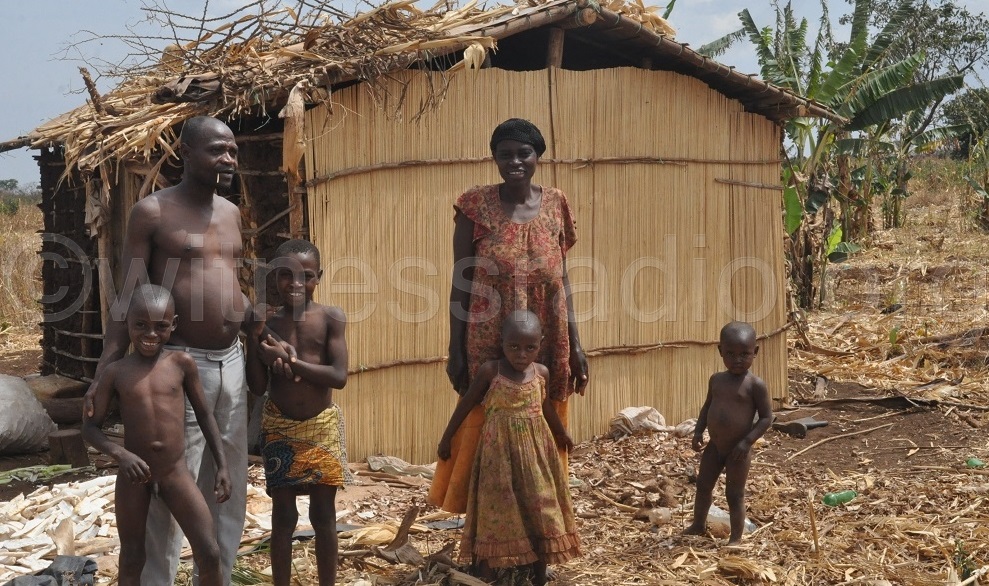
In Uganda, hundreds of families have already lost their land to the project through the government’s compulsory land acquisition. Many had refused to accept the compensation, arguing it was inadequate compared to the size and value of the land taken but the government, in some cases, has forcibly acquired it. Meanwhile, those who also accepted compensation and surrendered their land have reported that the project has driven them deeper into poverty.

The social harm already inflicted on these communities, coupled with the impending environmental destruction, has sparked a massive rise in anti-EACOP activism, both within Uganda and internationally, with growing opposition to the project.

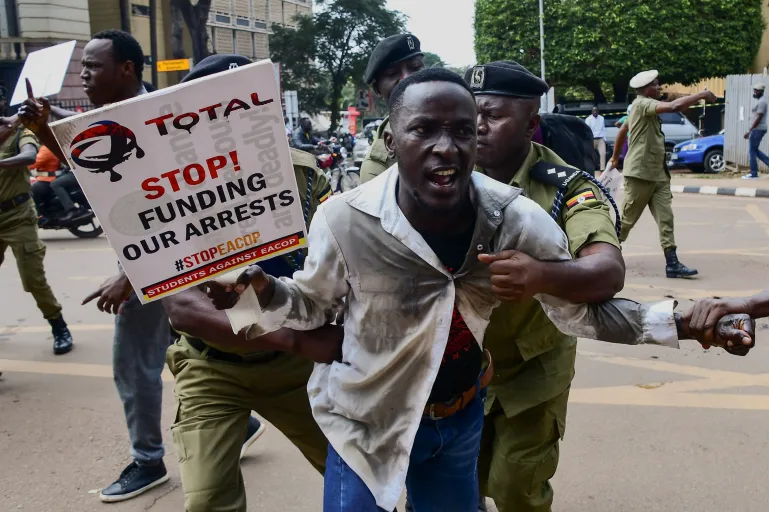
In August, Global Witness reported that at least 96 people, alone in Uganda had been detained in the past nine months, highlighting the increasing repression faced by environmental and human rights defenders who stand against the pipeline and its impacts.

Bob Barigye cannot be excluded when discussing EACOP activism and the fight for environmental justice in Uganda. Once a biology and chemistry teacher, Barigye has since turned into an activist and has been criminalized for opposing the controversial EACOP project. He is among the many activists targeted for standing up against the environmental and social impacts of the oil industry in Uganda.

“I have been arrested more than six times now”. Barigye revealed.

The escalating arrests result from activists revealing the darker side of the project once implemented, facts that the government and other project implementers are not interested in acknowledging. Their efforts to expose the environmental and social impacts of the project have continued repression.

“Our crime has always been trying to talk about the effects, trying to petition embassies, trying to report, trying to talk to government officials about the dangers of the project that they badly want to invest in. We have encountered with the Chinese embassy where we have been arrested three times with other activists trying to deliver a petition,” the activist revealed in an interview with Surdinordfunk.

The most common accusations against the Stop EACOP activists such as common nuisance, incitement to violence, and most recently, unlawful assembly are seen by the activists as deliberate attempts to weaken their efforts in challenging the environmental harm caused by the project. This makes the activists feel isolated in their struggle.

“They have made us seem like criminals, they have made us seem like unserious people. I have been taken to court twice, and the charges that they have always preferred against us are dubious and dehumanizing. Because the common charge that they normally charge us is a common nuisance, you are taking a report to a government body, but when you are arrested, you will be arraigned in court as a common nuisance.” Barigye further added.

Activists assert that these charges are false, pointing to the recent dismissal of cases due to lack of evidence as proof. For instance, in November 2023, incitement to violence charges against nine young environmental activists were dropped. Earlier, in January 2023, human rights defenders Barigye Bob, Ivan Kabale, Musoke Hamis Walusimbi, and Ssemwanga Jackson were re-arrested and similarly charged with incitement to violence and common nuisance. However, their case was dismissed for want of prosecution, further reinforcing the activists’ claims that these charges are fabricated.

It is not only in Uganda where those campaigning against the oil project are living dangerously. But also, in neighboring Tanzania where oil is to be transported. Richard Senkondo leads the Organization for Community Engagement (OCE) there. At the World Climate Change Conference in Dubai in November 2023, he addressed the problematic consequences of EACOP in his country. However, this didn’t go well with him upon his return back home from COP 28.

“I didn’t know the government was censoring me. Immediately after returning on the 4th of December to Tanzania, I found out that I had been summoned to one of the infamous police stations in Dar es Salaam. That police station is typically known and has recorded a high number of torture and complete disappearances of people who criticize the government.

According to Mr. Senkondo, after receiving the summons, he had to flee Tanzania to save his life. “I was ordered immediately to vacate to Kenya. Up to now, I have not been able to reunite with my family because there is still a lot of hunting and searching for me, but I have stood very firmly against the challenges,” he added.

Standing up against the oil project and for justice demands a lot from activists in Tanzania and Uganda. Also, the lawyers representing the Stop-EACOP activists and the affected community members report being threatened.

“Some of us have received letters, telling us to back off the cases or they prefer charges of defamation on their companies against us individually. But because we believe that the information and the knowledge we use, the evidence we use is direct and correct. So even if they prefer such kind of defamation cases, we are not scared because we have the evidence-based information, that is real and well known to everybody.” Lawyer Kato Tumusiime revealed this in an interview with Surdinordfunk.

The aim of the threatening letters, arrests, and lawsuits is to silence the voices against the oil development activities. Activist Barigye says that young people in particular who still live with their parents, are intimidated by this. Women are also increasingly deterred by police violence and social stigma:

“Most of them are married. Most of them have children. So, in case a charge like a common nuisance is provided against this person, it is the way that he will be viewed in the community. Because if you are being arraigned before court, if you are being harassed as a woman, being arrested the way they arrest us, being beaten, bangled on police pickups, there is that kind of dignity and psychological torture that it brings to them. And it has discouraged most of them.” Barigye added.

But, lawyers and activists are now discovering that the unending arrests of those opposing the EACOP Project are being sponsored by the oil companies involved in the project. They believe that companies like Total are directly funding these arrests to suppress opposition to their operations.

“Of course, these kinds of arrests, I believe, are sponsored directly by the oil companies here that we have in Uganda, including Total itself. Yes, obviously, most of the arrests, including of the activists themselves and the PAPs that are affected by the whole project are sponsored directly by those companies. When you go ahead and follow up on those cases, you find the representatives of those companies also at different police stations or even attending different court sessions to find out what is transpiring about these cases. So that one is a clear and a green light to show that these companies are directly involved and sponsoring these kinds of arrests,” counsel Tumusiime further mentioned.

Listen to the podcast here.

Continue Reading

MEDIA FOR CHANGE NETWORK

Kiryandongo farmer accuses minister of grabbing 100-acre land

Published

on

Farmer Edward Balikagira at Kinyara II Village in Kigumba Sub-county in Kiryandongo District during an interview with Monitor. PHOTO/DAN WANDERA

A Kiryandongo farmer accuses Minister for Karamoja Affairs Peter Lokeris of illegally occupying his 100-acre plot, sparking a decades-long dispute now under State House scrutiny. Despite interventions, the conflict remains unresolved amid conflicting claims and documentation. Source: https://www.monitor.co.ug/uganda/news/national/kiryandongo-farmer-accuses-minister-of-grabbing-100-acre-land-5447308

Edward Balikagira from Kinyara II Village in Kiryandongo District alleges that Minister Peter Lokeris has forcefully taken over his 100-acre land, which he bought in 1996 from the late John Bitunda Bitagasa.

Balikagira holds a 1996 handwritten sale agreement in Runyoro, detailing payment of Shs170,000, 12 goats, a bicycle, and a blanket, witnessed by local land executives.

Lokeris rejects the accusations, stating he legally obtained the land in 1996 and has occupied it peacefully for over 20 years without issues. He questions Balikagira’s ownership documents.

Balikagira recounts that in 2007, as land committee chair, he negotiated with Lokeris for adjacent land at Shs500,000 per acre, but the deal fell through due to delays.

Tensions peaked in 2022 when Balikagira was arrested for alleged trespassing during the Covid-19 lockdown. A State House fact-finding meeting followed, where Lokeris reportedly admitted to applying for only 100 acres and agreed to return any excess.

A June 2022 State House letter to the Kiryandongo RDC, signed by Nathan Bwogi, halted all activities on the disputed land and noted ongoing fencing by Lokeris’s associates, warning of potential violence.

Despite this, Balikagira says the issue lingers without court action, citing the minister’s influence. Local leaders and the Deputy RDC confirm ongoing administrative reviews but no closure.

Land wrangles like this are rampant in Uganda, especially in Kiryandongo’s former ranch areas, with police reporting a surge in such cases.

Source: Daily Monitor

Continue Reading

MEDIA FOR CHANGE NETWORK

“We are facing increased violent land dispossessions and climate injustices” – African women.

Published

on

By the Witness Radio Team


Stories of displacement, land loss, and resilience filled the room as 45 women from six African countries gathered for the East Africa Women’s Land and Climate Justice Convergence in Nairobi, organized to raise awareness and explore resistance strategies against land dispossession and climate injustice.


Representing communities from Kenya, Uganda, Tanzania, the Democratic Republic of Congo, Zimbabwe, and South Africa, the women came together not only to learn but also to speak, listen, heal, and feel the weight of their struggles, resisting destructive extractive projects and reclaiming what belongs to them, despite the immense impacts they have endured.


Africa is often described as having vast unused or underutilized land. This narrative has attracted investors, especially from the Global North, into large-scale industrial agriculture and other land-based investments. However, a 2025 report by the Alliance for Food Sovereignty in Africa (AFSA), PLAAS, and the Institute for Agriculture and Trade Policy challenged this claim, showing that such narratives have fueled large-scale land grabs, ecological destruction, and community dispossession across the continent.


In Uganda, the land eviction crisis has intensified due to increasing land-based investments that have dispossessed local communities with impunity, with oil development activities among them. According to human rights groups, this has led to more than 100,000 people in Uganda and Tanzania permanently losing their land to make way for the pipeline and related projects.


Jenniffer Kiiza, a resident of Hoima, is among those whose land was taken for oil development.


“The project has had severe negative impacts, especially on vulnerable groups like women,” she said, highlighting how delayed compensation, gender-based violence, and food insecurity disproportionately affect women and their families.


“We face dispossession, and sadly, we are paid very little money, which comes late and is no longer enough to buy land elsewhere. Hunger and malnutrition in adults and babies have increased, and this is affecting us as women and our families.” Kiiza added.


Kiiza has continued to speak out despite growing repression against dissent, advocating for justice for her community, especially women, even as opposing such mega-projects comes at a high cost.


“These developments have caused hunger, increased gender-based violence, family breakdowns, school dropouts, and early marriages. There has also been a rise in prostitution, as women struggle to provide for their children after losing their land.” She added.


Meanwhile, in Uganda alone, the Uganda Police’s Annual Crimes Report, 2025, released early April, recorded 663 cases of land fraud, an indicator of the country’s escalating land crisis.


In Zimbabwe’s Midlands province, particularly in Shurugwi, communities are facing similar challenges linked to mining activities, including land dispossession and environmental harm.

Jeyche Belenia, a women’s rights defender from a community affected by Unki Mine, shared her experience during the convergence.


“We are facing many challenges from the miners. Chinese investors are coming into our area and evicting us. They tell us to leave, and if we refuse, they come with bulldozers and destroy everything, including our homes. We are left with no shelter and nowhere to go,” she said.

She added that abandoned open pits left by mining companies have become deadly hazards.


“When it rains, the pits fill with water. Our livestock fall into them, and even our children have fallen in. We are losing both animals and lives, and the danger is ever-present,” She added.


Communities in Zimbabwe also report water pollution from mining activities, which threatens their health and livelihoods. “The water we use is our source of livelihood, serving domestic needs, drinking, and our animals. However, after consuming it, we have experienced illnesses like cholera, and pregnant women face severe complications,” she added.


Her revelations echo concerns raised at the 2025 Zimbabwe Alternative Mining Indaba (ZAMI). The 14th edition of the Indaba, convened by the Zimbabwe Environmental Law Organization (ZELO) and partners in September 2025, highlighted multiple challenges within a sector that contributes about 12% to 13.3% of the country’s Gross Domestic Product (GDP).


In its December 2025 communiqué, ZAMI noted that unsustainable resource extraction is driving widespread environmental damage, including water pollution, habitat loss, soil degradation, and deforestation.


It further pointed to displacement, inadequate compensation, and the absence of Free, Prior, and Informed Consent (FPIC), particularly affecting marginalized communities whose exclusion from governance processes has resulted in violence, disempowerment, and the entrenchment of poverty in resource-rich areas, worsened by weak oversight that has enabled environmental violations and illicit financial flows.


Amid these challenges affecting their communities, the women shared, the convergence concluded with a renewed sense of solidarity, forming a network of resilient women committed to defending Africa’s commons—land, forests, water, and cultural systems—now under increasing threat.


According to the organizers, the meeting was particularly significant in creating a platform for women to share lived realities that are often excluded from formal land governance discussions. Participants exchanged insights on the challenges they face and identified collective strategies to strengthen their land rights.


The convergence brought together women to reflect on their experiences with customary and communal land tenure systems. We will continue to build on this knowledge and strengthen solidarity plans at both national and regional levels with the women,” WoMin’s Sizaltina Cutaia told Witness Radio.


Participants described the gathering as a transformative learning space that not only exposed shared struggles but also equipped them with the skills and knowledge to defend their rights collectively.


“And a message I can give to a woman in the struggle is to keep fighting for her goal. She should not give up, but continue until she achieves what she wants. This cuts across countries and brings us together through networking. When we unite as women, we realize we share one goal—as mothers in our communities and countries—because land is our motherland,” said Sara Possass from the Kogiya Community.


Despite powerful companies taking over their land, women defenders say they are determined to continue resisting and reclaim what is rightfully theirs.


“We are fighting back so that we can reclaim our natural resources, including land and water. Many women are facing serious health challenges, including stress and stroke, as a result of these struggles. But we are not going back. We are fighting to reclaim our commons through demonstrations, cultural resistance, and petitions led by marginalized communities.” Jeyche mentioned.

Continue Reading

MEDIA FOR CHANGE NETWORK

Kassanda businessmen accused of a second attempt to grab an 86-year-old farmer’s land despite court orders.

Published

on

Bacumikire’s son stands on their land in Kassanda District, allegedly fenced off by businessmen in a renewed attempt to grab the entire land.

By the Witness Radio team.

Kassanda-Uganda. Three businessmen in Kassanda District are accused of forcefully taking over land belonging to an 86-year-old resident of Kagasa village, Kiteredde Sub-county, Kassanda District, in what appears to be a second attempt to grab his entire land.

The accused, Mwesigye George, Busesire Geoffrey, and Eric Karamba Saizi, allegedly fenced off land belonging to Mr. Fred Bacumikire, depriving him of access to his farmland and grazing areas, which are his primary source of livelihood.

According to the family, this is not the first time the group has targeted the older man’s land. In 2022, two of the accused, Busesire Geoffrey and Eric Karamba Saizi, allegedly seized the entire land and wanted to evict Mr. Bacumikire, allocating themselves approximately 280 acres (113.312 ha) of Bacumikire’s land. The encroachment significantly reduced his access to the property and triggered a legal battle in which he sought full access to the property.

“They entered the whole land of about 640 acres (258.99 ha) forcefully and wanted to evict him, leaving him with only two acres,” said Mr. Mwebesa Richard, Bacumikire’s lawyer.

According to family members who spoke to Witness Radio, Mr. Bacumikire purchased the

land in 1995 from Samuel Ssekamwa under a running lease, covering approximately 640 acres. Before the sale, Ssekamwa had acquired the land from the original owner in 1972 under a 99-year lease.

“We have lived on this land since 1995, when Mzee bought it peacefully from Mr. Ssekamwa. But when Busesire and his accomplices surfaced, everything changed, and peace was lost,” Mr. Kazuga Lazarus, the eldest son of Bacumikire, said.

Kazuga added that the disputed land is located in Block 427, Plot 59, Kagasa Village, and measures approximately 640 acres.

In response to the land grab, Bacumikire, through his lawyer, filed a case at the Mubende High Court, seeking protection against eviction. The court issued an order restraining the defendants from evicting him, but the current enforceability of this order remains unclear, raising questions about legal protection for landowners.

“We went to court, I explained to the court, and they gave us an administrative order, ordering them not to evict Mr. Bacumikire.” His lawyer further added.

The lawyer says that the situation reportedly changed when a new judge temporarily took over the matter. Justice Karemani, who was holding brief for another judge, set aside the earlier court order under circumstances that the legal team questions.

According to Mr. Mwebesa, this development allowed the defendants to renew their attempts to evict the plaintiff, having already gained physical possession of 280 acres of the older man’s land. At the time, Mwesigye George owned approximately 180 acres, while Busesire Geoffrey owned about 100 acres.

Bacumikire’s legal team then appealed to the Court of Appeal in Kampala to restrain the defendants from violating the previous order.

“When the order was violated, I ran to the Court of Appeal specifically to challenge the setting aside of that order and to have it reinstated. So, when we went to the Court of Appeal, that’s now, we consented that Mr. Bacumikire and the defendants must remain on the land.” The lawyer further revealed

According to Court documents seen by Witness Radio, the deputy registrar of the Court of Appeal, Jane Mugala, issued a consent order on 3rd October 2024 ordering Mwesigye George (1st respondent) to retain physical possession of 180 acres of the land, and Busesire Geofrey (2nd respondent) to retain approximately 100 acres in the area. And that the remaining part of the land was to be left to Bacumikire. The court also ordered the complainant (Bacumikire) to be given reasonable access to a water point at Lake Wamala for his cattle.

Despite this agreement, the family now accuses the same individuals- Mwesigye George, Busesire Geoffrey, and Eric Karamba Saizi- of returning to seize the remaining land, marking what they have described as a second land grab attempt.

“They have come back again and fenced off all the land we were left with, even before the High Court case is concluded,” said Kazuga Lazarus, Bacumikire’s son, in an interview with Witness Radio, emphasizing the ongoing distress and urging authorities to intervene in what he described as an abuse of power and impunity.

This latest development, according to the family, has cut the older man and his family off from his land and left his household in distress, with reports that several of his cattle have died.

“They have fenced off the entire land, blocked access to water sources, and denied us the use of our own property. They are acting above the law, evicting us despite valid court orders and clear proof of ownership. This is land my father bought in 1995,” he said, underscoring the importance of legal protections for landowners.

He added that the situation has worsened, with four cattle already dead. He said the animals have been left without water and grazing land for a long time, a situation he blames on the alleged land grabbers.

The chairperson of Lwamugenyi village, Jamil Kibuuka, affirms that the consent order clearly states that Mwesigye and Busesire are to remain on part of the land. At the same time, the rest is used by Bacumikire. He, however, wonders why the accused abandoned this order and chose to violate it instead.

Tamale Elidadi, a resident of Kagasa village, urged authorities and stakeholders to intervene and support Bacumikire’s pursuit of justice.

“He is an old man, and these grabbers are using money and influence to buy off whoever

supports Bacumikire. He needs to be supported because his cattle are perishing due to inadequate water and pasture, yet he acquired all the land with his hard-earned money.” Mr. Tamale added.

Should the land grab succeed, the older man will be evicted from his land and left with no place to call home, highlighting the severe consequences of the ongoing violations for his family and community.

Continue Reading

Resource Center

Legal Framework

READ BY CATEGORY

Facebook

Newsletter

Subscribe to Witness Radio's newsletter


Trending

Subscribe to Witness Radio's newsletter