By the Witness Radio team.
“At times, I feel our oil is a curse. We blessed it, saying it is our oil. But today, they are not cooperating with us?” Gladys Birungi says.
Birungi, a community leader from Kasenyi village in Uganda’s oil-rich Albertine region, is challenging the grand promises that once drew the world’s gaze. For her, oil was meant to spark progress. Instead, she sees her community fighting to hold on to their land and future.
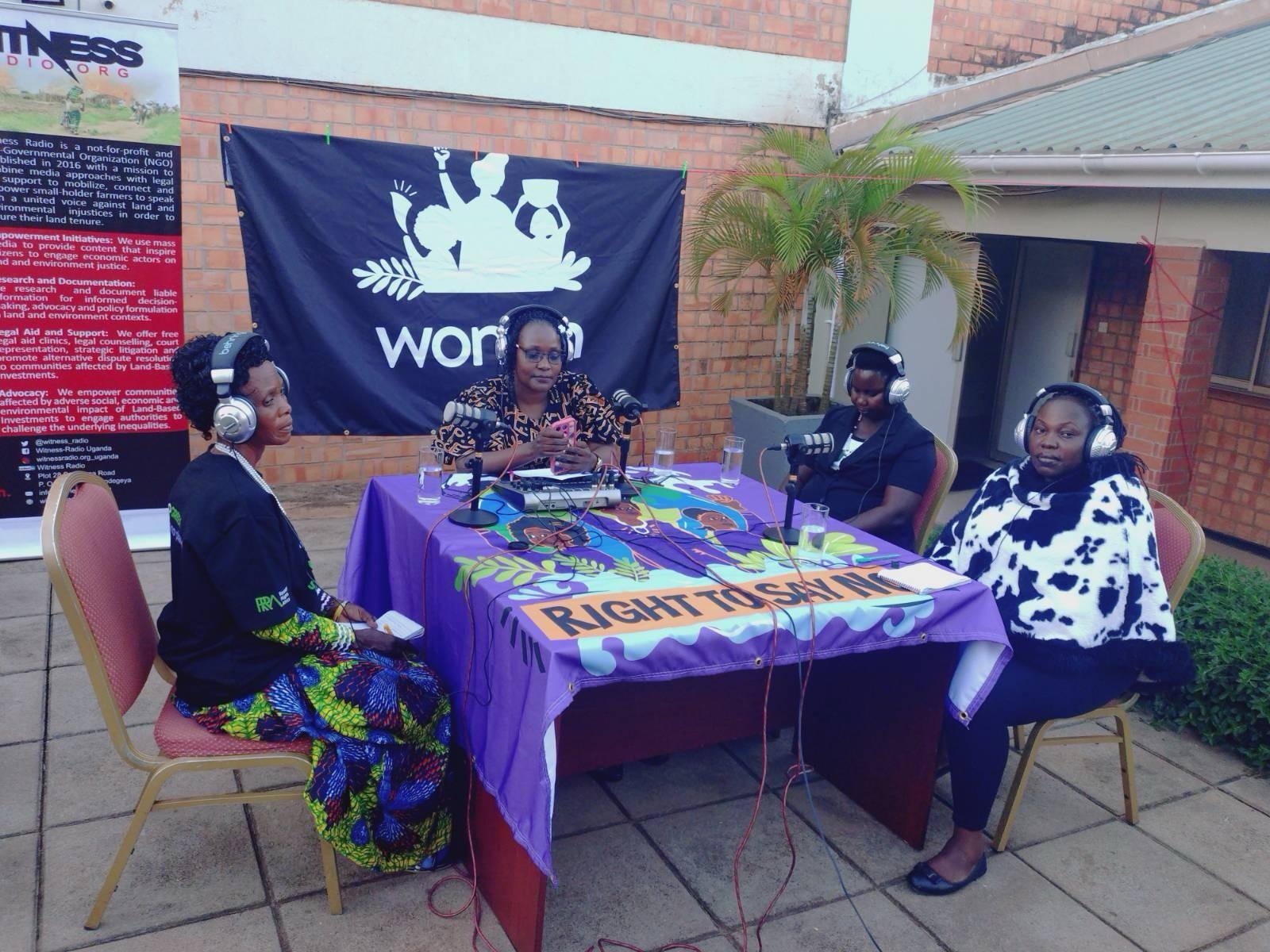
On a Witness Radio broadcast, Birungi likened land negotiations to marriage to show why communities deserve a voice in valuing their land before development takes it.
“If you admire my daughter, even if my family is poor, you have to bring the dowry I decide. Even if I am poor, I have prepared my daughter well. If you want to marry her, you should bring what I ask for. It is the same with land. If you want my land, you must pay an amount I consider fair,” she said.
She insisted that poverty must never diminish the worth of land or strip away the rights of those who depend on it.
“When government agencies came, they said the amount we asked for was too high because we were in a village. But this is my land. If it is too expensive, let them leave it,” she added.
For Birungi, the fight goes far beyond compensation. It is about whether those living in the shadow of major investments truly have a say in decisions that could transform their lives forever.
“We are not included in consultations, but when the consequences of oil production come, we will suffer. We could lose our lives, along with our children. Why is the government not thinking about us? We live near the industrial area and cannot sleep because of the noise.
Why are they silent about our suffering? Are they not thinking about us? Are we not Ugandans? Why are they leaving us to suffer?” she questioned.
Her questions echo a broader unease about Uganda’s investment boom across oil and gas, mining, infrastructure, forestry, and agribusiness. While these ventures promise jobs and growth, women from Kasenyi, Kassanda, and Makuutu urge us to count the true cost: land lost, livelihoods shattered, families strained, and futures clouded by uncertainty.
For women, the stakes are even higher. Land is more than wealth; it is the bedrock of food security and the survival of their families.
“If land is taken, we women shall be the ones to suffer tomorrow, not the men who are often invited to meetings,” Birungi said.
Birungi says she first learned in 2016 that her family’s land in Kasenyi village fell within an area earmarked for oil development. During a community meeting, she heard that aerial assessments had been conducted and that the area under consideration included her village.
As compensation talks began, she says community members proposed Shs20 million per acre. She recalls becoming angry when someone questioned whether land in a remote village could be worth that much.
She stood her ground, defending the land’s worth through the eyes of those whose lives are rooted in its soil.
“If you think my land looks bad on your side, leave it. If you admire my daughter and want to marry her, even though I am poor, I have prepared her well with what I have. You admired her, so you should bring what I want,” she recalls.
At another meeting, Birungi challenged a minister who said they would acquire their land at Shs1.5 million per acre. “I raised my hand before she finished speaking. I said, ‘No,’” Birungi recalls.
She recalls the mood turning tense when the defense minister warned the village could be wiped out in two minutes. With soldiers in the room, Birungi felt the words as a chilling threat.
“I was afraid,” she says, remembering how some residents slipped out of the meeting before it was over.
The next day, valuers arrived to assess land and crops. Residents questioned why the exercise was proceeding without their consent.
“They said, ‘This is a government project.’ We said it is a government project, but on our land, we need consent,” she adds.
Her story raises questions about how authorities communicate land takeovers, how they set compensation, and whether people feel safe pushing back against decisions that could alter their lives forever. Witness Radio has documented many cases where companies seize land by force, pushing aside the voices of those who call it home.
In Makuutu Sub-county, Bugweri District, community defender Josephine Mpindi describes a different investment that has left residents anxious about their land’s future.
Mpindi identifies the company involved as Rwenzori Rare Metals Limited, which is developing the Makuutu Rare Earth Project. She says physical mapping and sampling on community land began in 2021, with company representatives, sometimes accompanied by local leaders, visiting homes to seek access to land for sample collection.
According to Mpindi, many discussions involved men, leaving women with limited information about what was proposed and what the arrangements could mean for their land.
“They went to homes and met the men. Even community association meetings were held with men,” she said.
The Makuutu Rare Earth Project, which spans parts of Bugweri, Bugiri, Iganga and Mayuge districts, is being developed to extract rare earth elements from ionic adsorption clay deposits. These minerals are used in a range of modern technologies and industrial applications, making the project part of Uganda’s efforts to develop its mineral resources and participate in emerging critical-mineral supply chains. Rwenzori Rare Metals Limited is developing the project, with the Uganda National Mining Company participating as a state commercial partner.
The project has also attracted government support. When the government awarded a 21-year large-scale mining license to Rwenzori Rare Metals Limited, then Minister of Energy and Mineral Development Ruth Nankabirwa described the development as an opportunity to generate economic benefits for the country and the Busoga region.
“This large-scale mining license award represents the first step in developing one of the world’s heavy rare earth element assets,” Nankabirwa said.
She further argued that the project should be supported because its anticipated benefits would extend to local communities.
“This project should be supported all through because the outcome is going to support the country. It is going to benefit the people of Busoga because they will receive royalties, and they will be able to change their lives,” she said.
Yet Mpindi says beneath the promises of prosperity, many residents are left in the dark, unsure what the project will mean for their land, livelihoods, and future on the soil they depend on.
She notes that while payments were made for land access and sampling, residents often had little understanding of the long-term consequences hidden in these deals.
“People fear evictions because they don’t know what the company plans. There is a lot of tension. People have lost hope. They don’t know what will happen tomorrow,” she said.
On Witness Radio, Mpindi voiced worries about scars left after sampling. She claims open pits were abandoned across the land, endangering livestock and turning fertile fields into obstacles for farmers. ” If you go to Kigulamo, those pits are still there uncovered,” she said.
Mpindi says villagers have seen animals tumble into pits and families now struggle to grow crops on damaged earth. She believes the harm runs deeper than the land, adding burdens on those who rely on farming to survive.
In Kassanda District, community defender Olivia Nakasumba says a tree-growing investment by UK-domiciled New Forests Company continues to haunt families evicted from their land sixteen years ago. According to Nakasumba, hundreds of families have struggled to rebuild their lives since the evictions, with some still seeking compensation for the losses they say they suffered.
“Over 10,000 people were forcefully evicted without compensation. More than a decade later, people are still suffering. Others have died without receiving compensation,” she said. A curse for those who once owned the land, insisting that no promised benefit can erase the pain and hardship families have endured.
For the women defenders on the radio program, justice means more than just compensation. It demands recognition of the harm done, real solutions for those affected, and a promise that others will not suffer the same fate.
Despite hardships, these women refuse to stay silent. They organize, raise their voices, and demand accountability. In Kassanda, Nakasumba says the fight for justice is far from over. ” We were not able to resist the evictions because the government deployed in full force, but we are still alive to demand accountability for what belonged to us, the damage they caused, and the suffering we have gone through,” she said.
In Bugweri, Mpindi describes how women are taking matters into their own hands, banding together to share knowledge about land rights before decisions are made behind closed doors. Through meetings, savings groups, loudspeakers, and radio, they ensure everyone knows their rights and what is at stake.
Mpindi says their group, Makuutu Advocates Women’s Group, is also registered at the district level, giving women a platform to organize and raise their concerns collectively.
“We have held community meetings at different levels, in various parishes and villages, moving together as a team,” she said.
One of their greatest fears is signing away their rights without understanding the fine print. Mpindi says some documents are in unfamiliar languages, leaving people unable to understand what they agree to fully. Don’t sign anything without an interpreter. You should get a trustee you trust yourself to interpret for you and your husband what the agreement is saying,” she said. “
Mpindi’s message is not to reject all investment but to insist people understand what is offered, weigh the consequences, and have a real seat at the table regarding the land that feeds their families. ” To say no,” she added.
For Birungi, true investment starts with honest dialogue and respect for those whose land is at stake. She believes communities should not just be told what will happen, but given a real chance to understand, question, and shape their land’s future.
“The first thing they should have done is consult the community and obtain its consent. The affected person, or the person whose land they want to use, should first agree with what they are coming to do,” she said.
Birungi also calls on the government to help communities get independent legal advice before signing any deals. She points out that investors come armed with lawyers and experts, while ordinary landowners often lack the tools to understand or negotiate fair terms.
“Let the government give people lawyers to help us interpret documents before they start anything,” she said.
As Uganda advances with investments in oil, minerals, forestry, and more, these women insist their stories must be heard. They demand fairness, clear information, a real voice in decisions, and accountability when harm is done.


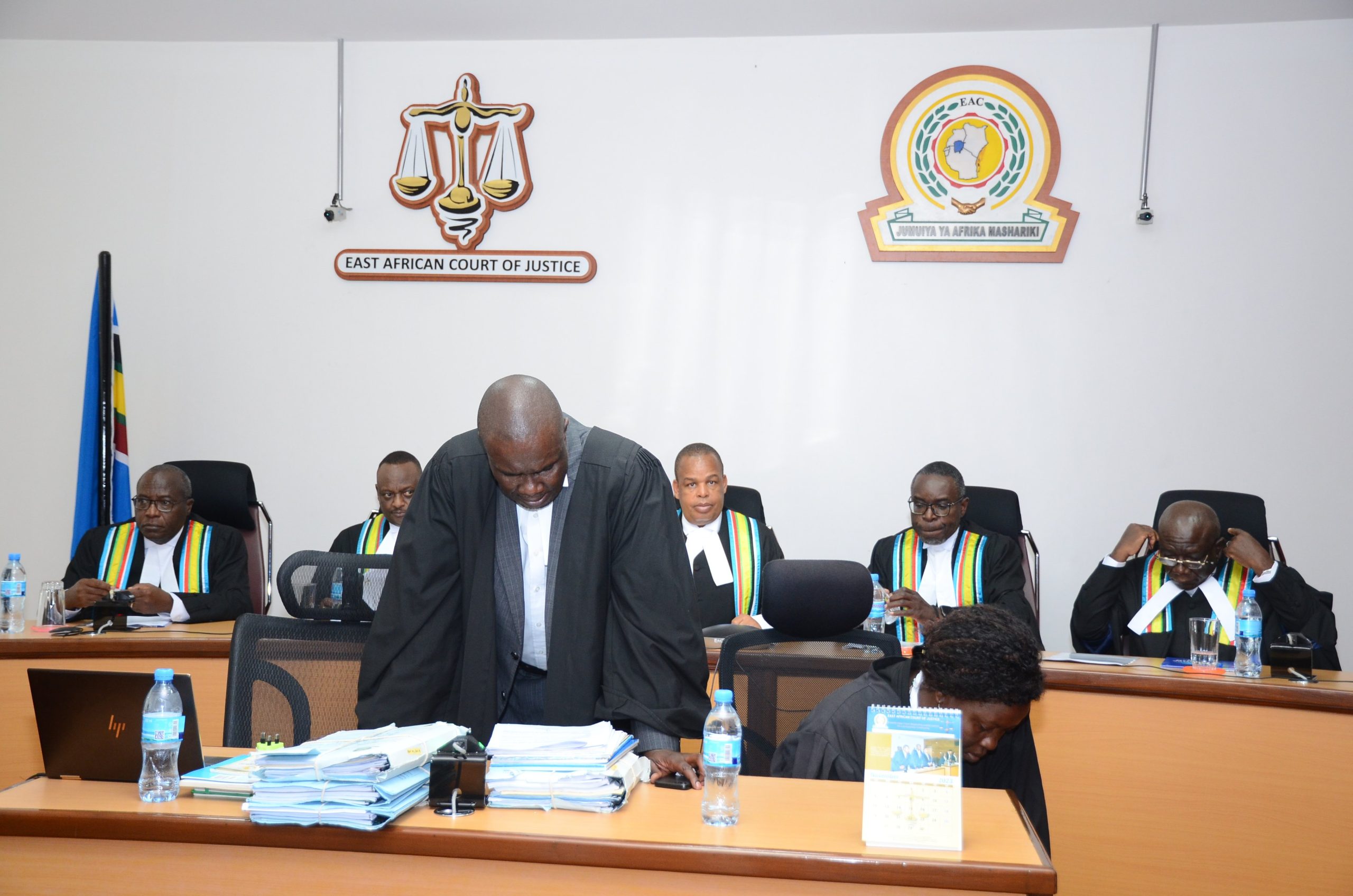

 East African Court of Justice is to decide whether it has jurisdiction to try the EACOP case filed by Four East African NGOs today.
 The East Africa regional court dismisses a case challenging the construction of the EACOP project.
 The East African Court of Justice fixes the ruling date for a petition challenging the EACOP project.
 A reference filed by CSOs against the planned construction of the East African Crude Oil Pipeline (EACOP) is set for hearing.

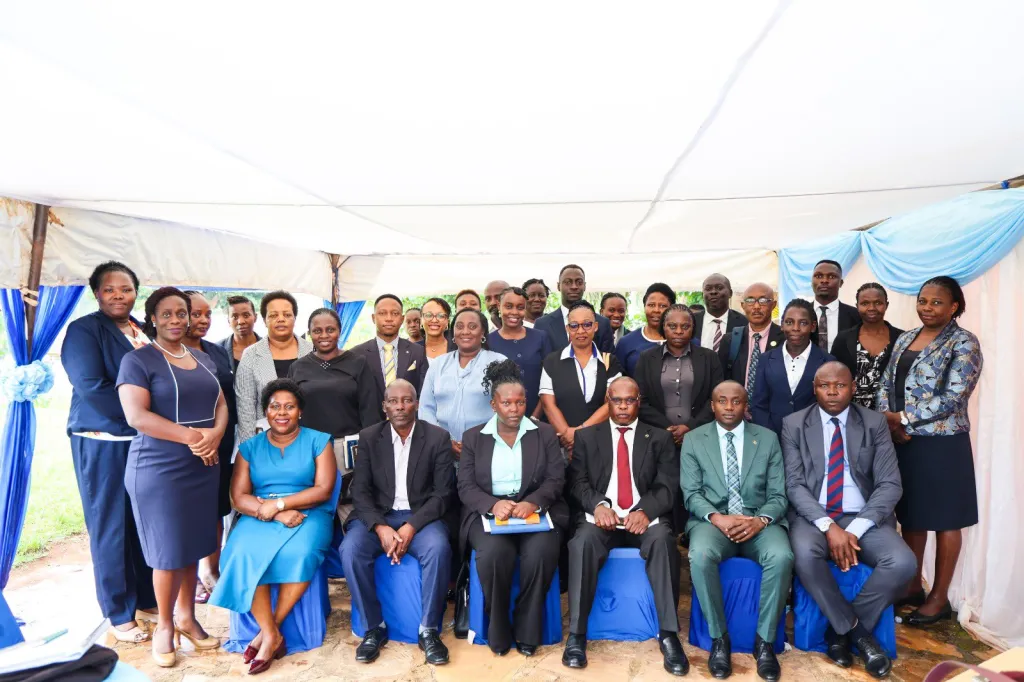

 Witness Radio Petitions ODPP urgently to review and withdraw criminal charges against Buvuma Community Land Defenders.
 Witness Radio petitions chief prosecutor: Want 34 community land rights defenders and activists released from prison.
 Mubende district police are aiding land grabbing and committing crimes against locals they are obliged to protect.
 Uganda: the number of community environmental and land rights defenders targeted for challenging irresponsible business practices has reached more than 1500 victims as of June 31st, 2023.
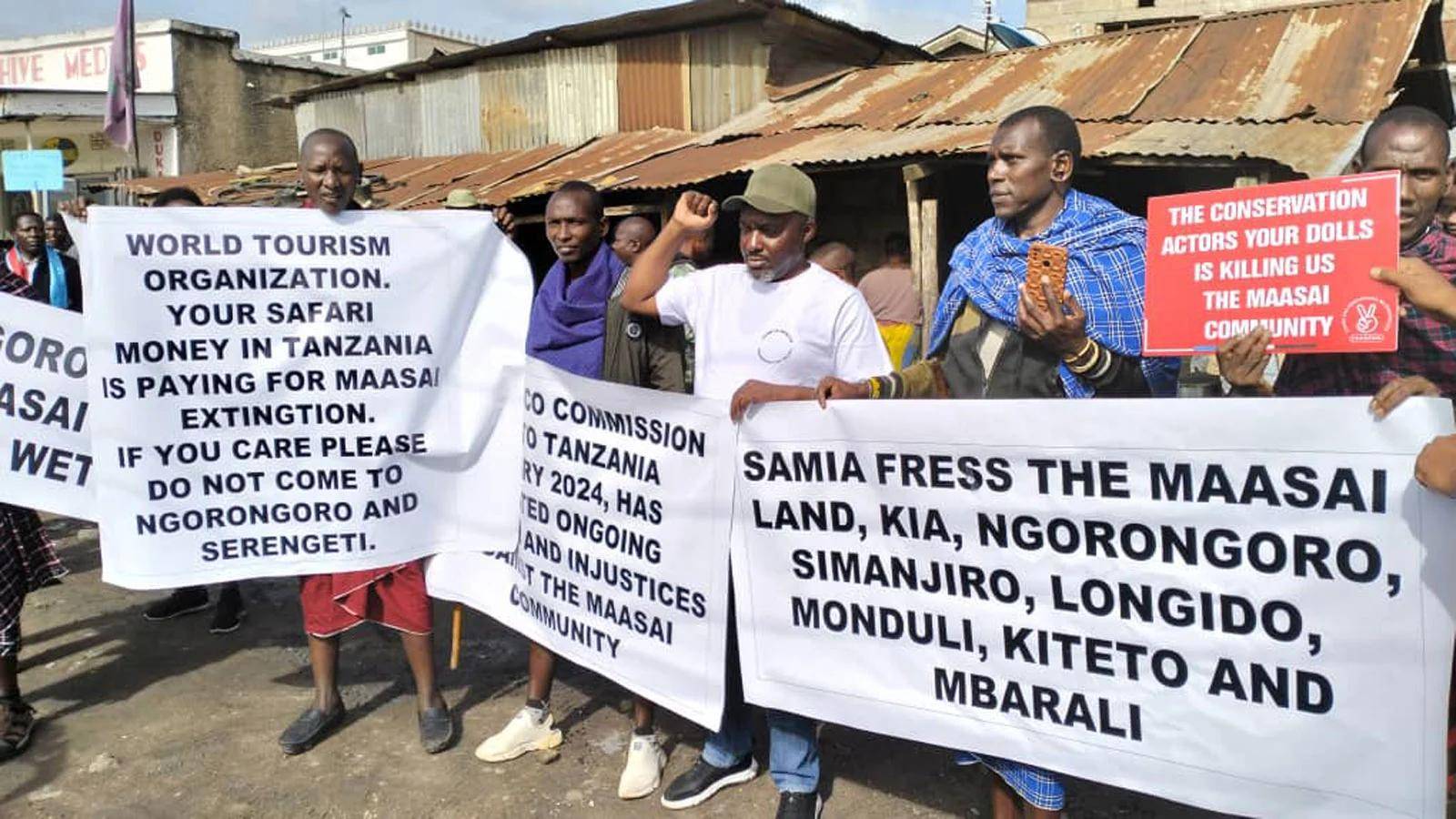
 Maasai protest evictions from Ngorongoro as UN experts warn conservation must respect rights
 Tanzania: Commissions call for mass eviction of Indigenous Maasai from world-famous tourist destinations.
 More than 17,000 people in the Philippines face eviction from their ancestral land for a multimillion-dollar energy project.
 Tanzanian Government Abducts Maasai Villagers in an Unconscionable Attack on Indigenous Land Defenders

 In memory of land and investment women victims in Uganda on the International Women’s Day 2021
 Women’s Climate Assembly, 2024: African women vow to protect human and environmental rights amidst an influx of destructive land-based investments on the continent.
 Thirteen years after the Karuma Hydropower Project broke ground, countless people forced from their homes are still waiting for the compensation and resettlement they were promised.
 Land as a security issue: endless forced land evictions and impunity threaten Uganda’s peace, lawlessness on the rise.





 MEDIA FOR CHANGE NETWORK2 weeks ago
 MEDIA FOR CHANGE NETWORK1 week ago
 MEDIA FOR CHANGE NETWORK1 week ago
 MEDIA FOR CHANGE NETWORK1 week ago
 MEDIA FOR CHANGE NETWORK3 days ago
 FARM NEWS2 weeks ago
 NGO WORK2 days ago
 FARM NEWS1 week ago