Connect with us

MEDIA FOR CHANGE NETWORK

Despite harsh repression, opposition to the EACOP pipeline in Uganda remains strong

Published

on

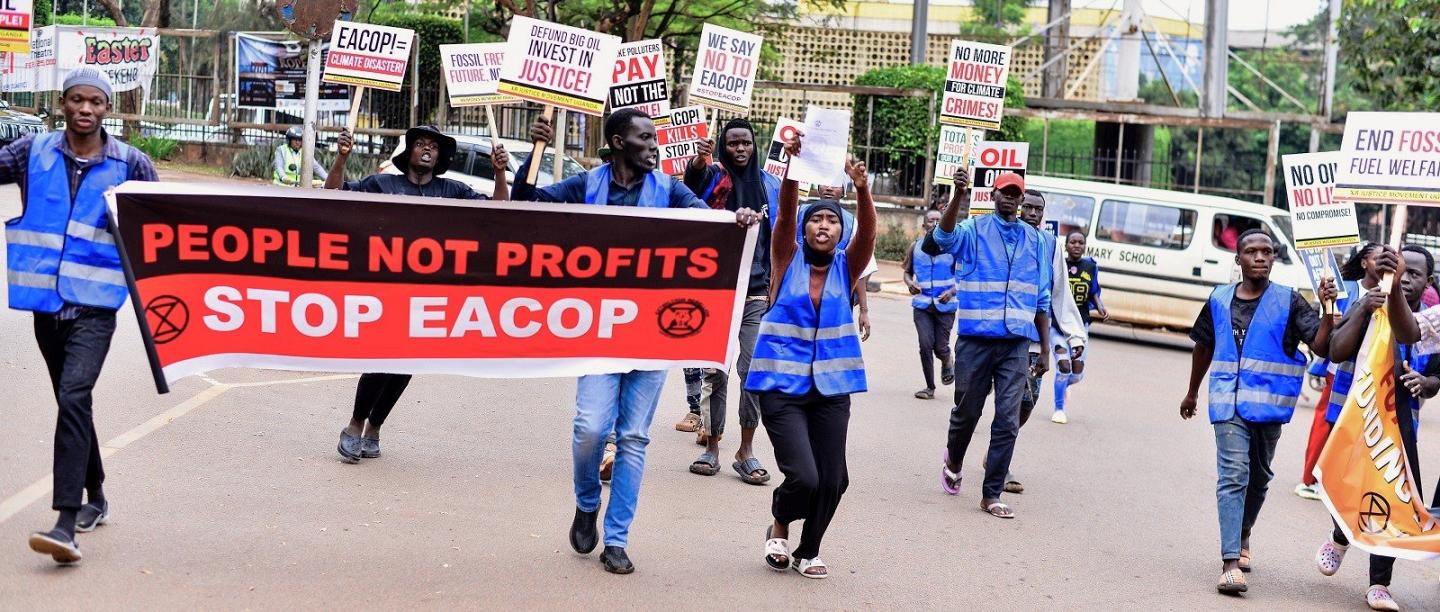
On March 19, 2025, student members of the Justice Movement Uganda, including Ibrahim Mpiima (left), protest in the streets of Kampala against the EACOP oil project and its consequences for the climate and local populations. (Bruce Nahabwe)

“We will keep protesting until our demands are met. This project isn’t sustainable. The world is moving towards renewable energy, and Uganda should follow suit,” says Ibrahim Mpiima, team leader of Justice Movement Uganda, a student-led protest group of around a hundred members opposing the East African Crude Oil Pipeline Project (EACOP)—the world’s longest heated oil pipeline.

“We protest whenever we can. The only thing holding us back is money. But as soon as we raise enough, we make banners, buy disposable mobile phones, secure safe houses in case things go wrong—and then we go.” This local group is part of a broader movement, StopEACOP, a coalition of international NGOs that joined forces “for greater solidarity, visibility and funding,” explains the student from Kyambogo University in Kampala.

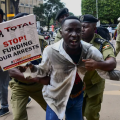
Despite all the precautions taken by Ibrahim Mpiima and around 30 of his fellow students, he was arrested at the demonstration on 19 March. Taken by force with three other activists to the capital’s high-security prison, he was beaten and tortured before ultimately being released on 3 April. In a story published on social media, Mpiima also accuses security agents of raping him during his detention.

Martha Amviko, an activist with Extinction Rebellion, was also at the protest. “We wanted to march to Parliament to hand in our petition demanding an end to the project. But no sooner had we unfurled our banners than the police appeared. I managed to escape, but not everyone was so lucky. Once they take you away in the police vans, you know you’re going to be badly beaten. The violence is systematic.”

Although protests began several years ago, over the past year around 100 people have been arrested and threatened with prosecution in Uganda for taking part in peaceful demonstrations against oil projects backed by the government.

The EACOP pipeline is expected to stretch approximately 1,400 kilometres, running from Murchison Falls National Park in Uganda to the port of Tanga in Tanzania. It will transport oil from 400 wells in the Tilenga and Kingfisher fields to the coast, where it can be exported to international markets. An estimated 246,000 barrels of oil are expected to flow through the pipeline each day over its projected 25-year operational lifespan.

Presented to the public as opportunities for development, these projects are backed by the governments of Uganda and Tanzania, along with oil giants TotalEnergies and China National Offshore Oil Corporation (CNOOC). Initially estimated at US$3.5 billion in 2020, costs have continued to climb. Both countries hope the pipeline will generate substantial revenue and create jobs, both during construction and for ongoing maintenance of the infrastructure.

In a country like Uganda, where per capita income is around US$1,000 per year, the government is banking on oil wealth to lift the nation out of poverty. “We believe this will serve as a catalyst for economic growth,” said Robert Kasande, an official at Uganda’s Ministry of Energy, during the signing ceremony in 2021.

The human cost of pipeline construction

On the ground, however, some residents are facing serious disruptions to their lives and livelihoods. One of them is Geoffrey Byakagaba, a 45-year-old farmer and father of eight, who was stripped of part of his land to make way for the project. “In 2017, Total took ownership of our land in the village. There were several types of compensation on offer. I chose the ‘land for land’ option. They took my land, but to this day, I haven’t been compensated,” he says.

Byakagaba still lives in Kasenyi, in Uganda’s Buliisa district, where the town is currently preparing to host a processing plant for the Tilenga project. He says his standard of living has dropped significantly. “Before the project, I used to grow cassava and sweet potatoes. We ate what we needed and sold the rest. I had 20 to 25 animals—cows and goats. Today, I’m down to just about ten, and my harvest barely feeds the family.”

Due to this loss of income, Byakagaba had to move his children to different schools. “They’re still in school, but in neighbourhoods we’re not happy with.” Since then, he has been surviving by doing odd jobs and selling what he catches fishing. Still, compared to other residents of Kasenyi, he considers himself fortunate. “Luckily, I didn’t live on the land I farmed, so I still have somewhere to stay. That’s not the case for everyone.” He adds: “And I didn’t accept their money. Total’s compensation would never have allowed me to buy land. They offered just 3.5 million shillings per hectare [around €850], but today, buying a hectare around here costs between 10 and 15 million [€2,500 to €3,500]. I would have been ruined. Some people were.”

Geoffrey Byakagaba is the fifth generation of his family to live on this land. For him, it holds far more than just market value.

“This is where I grew up. I inherited nine hectares from my parents, but now I have less than half of that left. If I were to die today, my children would be landless. I’m not just fighting for my rights, but also to leave something behind for my children.”

In April 2021, frustrated by the situation, he decided to file a land-grabbing lawsuit in the High Court of Masindi, seeking fair compensation from the developers of the EACOP project. As he told Equal Times, he was soon labelled a saboteur—not only by the project’s backers but also by the Ugandan authorities—for daring to protest and for speaking to Italian journalist Federica Marsi. Marsi was arrested shortly thereafter, along with Ugandan human rights defender Maxwell Atuhura.

As of 2025, according to Geoffroy Byakagaba, the situation remains unchanged and he is still waiting for compensation. He is not alone. Byakagaba is one of an estimated 118,000 people who have been fully or partially displaced due to the Tilenga and EACOP projects.

One of them is the grandmother of activist Ibrahim Mpiima. “She was evicted from her land in Hoima, so she came to live with us in Kampala. With the compensation she received, she couldn’t afford to buy any land. Because of that, she never felt at peace. And now she has passed away,” says the young man. It was this experience that prompted him to get involved in the campaign against the project while still a student. “At the time, I didn’t know much about EACOP, but seeing what happened to my grandmother made me want to understand it better. Then I realised that most people know nothing about the project or its consequences. Some even believe it’s a development scheme that will lift Uganda out of poverty—when in reality, huge numbers of people have lost their land. We have to fight this misinformation,” he says angrily.

Opponents of the project face harsh repression

Even before the project was officially approved, anti-EACOP mobilisation had already begun to take shape nationally. The movement went global in 2018, coinciding with the major student protests led by Fridays For Future. The world began to take notice of EACOP and its alarming scale—the fifteen protected areas that it will cut through, its proximity to the Great Lakes (Lake Albert and Lake Victoria), one of Africa’s most important sources of fresh water, and its massive projected carbon footprint: 34 million tonnes of CO² per year, compared to Uganda’s annual emissions of just 5 million tonnes. All these reasons have led scientists to describe the project as a ‘carbon bomb’.

In Uganda, authorities have responded in a press release issued by the Ugandan oil authority by describing the international protest movement #StopEacop as a misguided opposition movement bordering on racism and colonialism. According to an investigation by the British media outlet DeSmog, TotalEnergies reportedly hired a South African public relations agency to “squash all the negative PR” surrounding the oil projects. To achieve this, a full-scale campaign has been launched both on the streets and across social media.

For Dickens Kamugisha, CEO of the non-profit AFIEGO (Africa Institute for Energy Governance), which has been tracking the EACOP case for years, this comes as no surprise. “Unfortunately, we have both a weak judicial system and a government that uses the police to punish community members who speak out. Many people have been arrested, intimidated and imprisoned.”

“Here, if you oppose what the government and the company (TotalEnergies, editor’s note) are doing, you become the enemy. And once you’re in their sights, you have to face the consequences.”

Ibrahim Mpiima has always been aware of the risks, having already been arrested once in 2023. “It’s our responsibility. I’m afraid of ending up in prison, of being beaten. I’m really afraid. But if we, the people who are informed, don’t protest, then we will have betrayed all those who believe in us,” he told Equal Times a few days before the demonstrations in March. Reached again by phone after his release from detention, where he endured torture, he said the ordeal had taken its toll: “I feel depressed. I haven’t fully recovered physically or mentally. The feeling is still fresh in my mind, as if it happened yesterday.”

Martha Amviko was also arrested in August 2024 and spent two weeks in prison. “They took us to Luzira, the high-security prison. They put me in the same cell as criminals, people who had committed murder, even though I was being charged with disturbing the public order,” she recalls. “It was overcrowded. From time to time, the guards would call us into their offices where they beat us and did everything to break our spirit.” Despite this ordeal, she insists, “I’d rather die than leave things as they are today. The people building this pipeline will be dead in 20 to 30 years. We are the generation who will have to live with their decisions—us and our children. We cannot give up the fight.”

Indeed, on 23 April, despite the ongoing repression, another demonstration was held in Kampala. Eleven activists were arrested. At the time of writing, they remain behind bars in Luzira high-security prison.

This article has been translated from French by Brandon Johnson

Continue Reading

MEDIA FOR CHANGE NETWORK

Kassanda businessmen accused of a second attempt to grab an 86-year-old farmer’s land despite court orders.

Published

on

Bacumikire’s son stands on their land in Kassanda District, allegedly fenced off by businessmen in a renewed attempt to grab the entire land.

By the Witness Radio team.

Kassanda-Uganda. Three businessmen in Kassanda District are accused of forcefully taking over land belonging to an 86-year-old resident of Kagasa village, Kiteredde Sub-county, Kassanda District, in what appears to be a second attempt to grab his entire land.

The accused, Mwesigye George, Busesire Geoffrey, and Eric Karamba Saizi, allegedly fenced off land belonging to Mr. Fred Bacumikire, depriving him of access to his farmland and grazing areas, which are his primary source of livelihood.

According to the family, this is not the first time the group has targeted the older man’s land. In 2022, two of the accused, Busesire Geoffrey and Eric Karamba Saizi, allegedly seized the entire land and wanted to evict Mr. Bacumikire, allocating themselves approximately 280 acres (113.312 ha) of Bacumikire’s land. The encroachment significantly reduced his access to the property and triggered a legal battle in which he sought full access to the property.

“They entered the whole land of about 640 acres (258.99 ha) forcefully and wanted to evict him, leaving him with only two acres,” said Mr. Mwebesa Richard, Bacumikire’s lawyer.

According to family members who spoke to Witness Radio, Mr. Bacumikire purchased the

land in 1995 from Samuel Ssekamwa under a running lease, covering approximately 640 acres. Before the sale, Ssekamwa had acquired the land from the original owner in 1972 under a 99-year lease.

“We have lived on this land since 1995, when Mzee bought it peacefully from Mr. Ssekamwa. But when Busesire and his accomplices surfaced, everything changed, and peace was lost,” Mr. Kazuga Lazarus, the eldest son of Bacumikire, said.

Kazuga added that the disputed land is located in Block 427, Plot 59, Kagasa Village, and measures approximately 640 acres.

In response to the land grab, Bacumikire, through his lawyer, filed a case at the Mubende High Court, seeking protection against eviction. The court issued an order restraining the defendants from evicting him, but the current enforceability of this order remains unclear, raising questions about legal protection for landowners.

“We went to court, I explained to the court, and they gave us an administrative order, ordering them not to evict Mr. Bacumikire.” His lawyer further added.

The lawyer says that the situation reportedly changed when a new judge temporarily took over the matter. Justice Karemani, who was holding brief for another judge, set aside the earlier court order under circumstances that the legal team questions.

According to Mr. Mwebesa, this development allowed the defendants to renew their attempts to evict the plaintiff, having already gained physical possession of 280 acres of the older man’s land. At the time, Mwesigye George owned approximately 180 acres, while Busesire Geoffrey owned about 100 acres.

Bacumikire’s legal team then appealed to the Court of Appeal in Kampala to restrain the defendants from violating the previous order.

“When the order was violated, I ran to the Court of Appeal specifically to challenge the setting aside of that order and to have it reinstated. So, when we went to the Court of Appeal, that’s now, we consented that Mr. Bacumikire and the defendants must remain on the land.” The lawyer further revealed

According to Court documents seen by Witness Radio, the deputy registrar of the Court of Appeal, Jane Mugala, issued a consent order on 3rd October 2024 ordering Mwesigye George (1st respondent) to retain physical possession of 180 acres of the land, and Busesire Geofrey (2nd respondent) to retain approximately 100 acres in the area. And that the remaining part of the land was to be left to Bacumikire. The court also ordered the complainant (Bacumikire) to be given reasonable access to a water point at Lake Wamala for his cattle.

Despite this agreement, the family now accuses the same individuals- Mwesigye George, Busesire Geoffrey, and Eric Karamba Saizi- of returning to seize the remaining land, marking what they have described as a second land grab attempt.

“They have come back again and fenced off all the land we were left with, even before the High Court case is concluded,” said Kazuga Lazarus, Bacumikire’s son, in an interview with Witness Radio, emphasizing the ongoing distress and urging authorities to intervene in what he described as an abuse of power and impunity.

This latest development, according to the family, has cut the older man and his family off from his land and left his household in distress, with reports that several of his cattle have died.

“They have fenced off the entire land, blocked access to water sources, and denied us the use of our own property. They are acting above the law, evicting us despite valid court orders and clear proof of ownership. This is land my father bought in 1995,” he said, underscoring the importance of legal protections for landowners.

He added that the situation has worsened, with four cattle already dead. He said the animals have been left without water and grazing land for a long time, a situation he blames on the alleged land grabbers.

The chairperson of Lwamugenyi village, Jamil Kibuuka, affirms that the consent order clearly states that Mwesigye and Busesire are to remain on part of the land. At the same time, the rest is used by Bacumikire. He, however, wonders why the accused abandoned this order and chose to violate it instead.

Tamale Elidadi, a resident of Kagasa village, urged authorities and stakeholders to intervene and support Bacumikire’s pursuit of justice.

“He is an old man, and these grabbers are using money and influence to buy off whoever

supports Bacumikire. He needs to be supported because his cattle are perishing due to inadequate water and pasture, yet he acquired all the land with his hard-earned money.” Mr. Tamale added.

Should the land grab succeed, the older man will be evicted from his land and left with no place to call home, highlighting the severe consequences of the ongoing violations for his family and community.

Continue Reading

MEDIA FOR CHANGE NETWORK

East African women unite and meet in Nairobi to develop strategies to protect communal tenure systems and collectively resist false climate solutions.

Published

on

By the Witness Radio team.

Women in East Africa are on the front lines of land and climate struggles against harmful extractive investments, land grabs, and land giveaways that have not only damaged their livelihoods but also continued to harm the environment.

In Tanzania’s Manyara and Arusha regions, Maasai pastoralists face environmental disasters and land conflicts driven by encroachment and land degradation.

Paulina Peter, a Community Development Officer with the KINNAPA Development Program in Kiteto District, Tanzania, has witnessed these changes firsthand.

“Deforestation for agriculture is a major challenge. Some pastoralists are diversifying into crop farming, which affects environmental conservation. At the same time, population growth and land degradation are driving migration into pastoralist areas.” She explains, in an interview with Witness Radio

These pressures are not only ecological, but they are also fueling conflict. According to Paulina, disputes have emerged between local communities and incoming agriculturalists seeking access to community lands, sometimes escalating into legal battles.

To address these challenges, KINNAPA is supporting pastoralist communities through land rights awareness, environmental education, and the development of village land use plans. These initiatives, particularly the formalization of shared rangelands, have helped reduce conflict and promote more sustainable land use.

While Tanzanian communities struggle with gradual encroachment, the story of the Mosopisyek of Benet Indigenous community in Eastern Uganda reflects a more abrupt and violent history of land loss, which has had an overwhelming impact on thousands of local communities for decades.

The Benet Indigenous community in Uganda lost its ancestral land in 1993 when it was designated as a national park, causing decades of displacement and hardship.

“In 1993, the government evicted hundreds of people without compensation. During the initial giveaway of our land, we were not consulted to give consent,” Chelangat Scovia, a women’s leader of the Mosopisyek of Benet Indigenous community, told Witness Radio, recalling the trauma of forced evictions from their ancestral lands on Mount Elgon.

The government has promised to resettle them, but the affected communities in Sebei still await justice after more than 30 years, underscoring their resilience.

Following the 1993 evictions, thousands were left in temporary settlements without adequate land or support. In 2008, again, the government further displaced more than 170 families and destroyed homes in a violent eviction.

Today, many Benet remain landless, surviving through casual labor or relying on aid, while continuing to face harassment when they attempt to access their ancestral lands for grazing or cultural practices.

Despite these challenges affecting their communities, women like Paulina and Chelangat are not only victims but also inspiring leaders driving efforts to defend and reclaim the commons.

Both are attending the East Africa Women’s Land and Climate Justice Convergence in Nairobi, where grassroots women leaders, activists, and organizations from Uganda, Kenya, and Tanzania have gathered from April 26 to May 1 to confront land dispossession, extractivism, and false climate solutions.

The convergence comes at a critical moment when Africa’s commons—land, forests, water, and cultural systems—are under growing threat. Most land on the continent is held under communal tenure systems that sustain rural populations. However, weak legal protections continue to expose these systems to state control, corporate exploitation, and large-scale land grabs.

While communal systems are vital, they are also shaped by deeply entrenched patriarchal norms. Women, despite being the backbone of food production, often access land through male relatives. This leaves them particularly vulnerable during moments of crisis such as widowhood, divorce, or family disputes.

The convergence seeks to challenge this model by advancing a different vision, one that strengthens, rather than dismantles, the commons while centering women’s leadership.

The convergence aims to build collective strategies to protect communal lands and resist extractive industries and false climate solutions, empowering communities to act together.

“The convergence will also explore the new threats to the commons in the form of mega ‘green’ energy and mining projects, and the false solutions to the climate crisis, such as carbon capture and storage, as well as REDD+, typically involving the capturing and privatization of land, forests, and water bodies. We will also explore the question of climate debt and how it is deeply interlinked with the continued commodification of the commons,” Says Womin in its press release.

Bringing together 35 to 45 participants, primarily women living under communal tenure systems, the convergence includes farmers, fisherfolk, pastoralists, indigenous women, and activists resisting extractive projects. Organized by Womin in partnership with allied organizations, the gathering runs until May 1.

Witness Radio will continue to provide updates on all developments from the convergence.

Continue Reading

MEDIA FOR CHANGE NETWORK

African women push for reparations and environmental accountability after landmark Climate Justice Day.

Published

on

By Witness Radio team

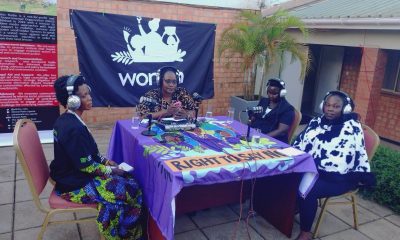
Women’s community organizations and grassroots movements across Africa are intensifying calls for climate reparations and environmental accountability following the inaugural African Women’s Climate Justice Day, marked on April 15.

Organized by the West and Central African Women’s Climate Assembly (WCA) under the theme “Our Lands, Our Voices: African Women United for Reparations and Climate Justice,” the convergence took place across multiple parts of the continent, highlighting how women in regions like West and Central Africa face unique climate impacts such as droughts and land degradation, demanding tailored solutions.

The WCA provides a powerful space to analyze the intersecting crises affecting their communities collectively and to develop strategies of resistance rooted in climate justice, food sovereignty, and the Right to Say NO to destructive extractivist and mega-development projects that displace communities, erode ancestral ways of life, and destroy ecological futures.

Since 2022, women from across Central and West Africa have gathered annually through the Women’s Climate Assembly (WCA) — a growing Pan-African, grassroots-led platform that brings together over 120 activists, ecofeminist leaders, and community organizers to collectively build strategies for climate justice, strengthen solidarity across movements, and advance community-led resistance against harmful, destructive projects while amplifying women’s voices.

On the 15th, the Women’s Alliance on Natural Resources Governance (WANRG) led nationwide actions across four districts in Sierra Leone, bringing climate justice conversations directly to communities most affected by environmental degradation. In the West African country, Climate change has had a significant impact on agriculture, exacerbating the existing challenges of low productivity and food insecurity.

According to the Food and Agriculture Organization (FAO), women make up almost 70% of Sierra Leone’s agricultural workforce, and FAO’s support aims to empower women to adapt to climate shocks that threaten food production and household incomes.

These impacts, including unpredictable rainfall patterns, prolonged droughts, and increasing occurrences of extreme weather events such as floods and storms, are disrupting farming activities and resulting in declining crop yields. Further, environmental concerns caused by extractive projects are adding salt to the injury.

In the eastern districts of Kono and Kenema, outreach efforts focused on women working on the front lines of natural resource management, highlighting how extractive activities and climate change are eroding livelihoods.

“Climate justice is a women’s rights issue! Across four districts, we took bold action to ensure women’s voices are at the heart of environmental protection,” the organization’s statement read.

The alliance brought together local leaders and policymakers in Bo District for a stakeholder dialogue to develop and implement gender-sensitive climate policies, with commitments to integrate women’s voices into national climate strategies and to demonstrate tangible policy support for climate justice.

“When women lead, the planet wins. We are not just victims of climate change; we are the leaders, the innovators, and the defenders of our land,” The organization’s statement highlighted. This should inspire the audience with pride and confidence in women’s vital role in climate justice.

Across the continent, similar demands were echoed. In Liberia, the Natural Resource Women Platform (NRWP) described the moment as critical, warning that climate change continues to disproportionately affect women in rural, coastal, and resource-dependent communities.

“Across Liberia and the wider region, women are experiencing the harsh impacts of environmental degradation, land dispossession, and the growing burden of sustaining livelihoods amid the climate crisis,” the organization said in a statement from Monrovia.

The group pointed to worsening coastal erosion in Buchanan, increasing urban pollution, and challenges for women farmers due to erratic rainfall and soil decline. These realities should evoke empathy and a sense of urgency in your audience to support community-led solutions.

Central to the demands raised during the day of action are calls for reparations for communities affected by historical and ongoing environmental exploitation, an end to destructive extractive practices, and greater accountability from governments and corporations driving climate harm.

These calls were reinforced by regional movements such as the Global Convergence of Struggles for Land, Water, Seeds, Forests, Savannas, and the Sea in Central Africa, which framed the climate crisis as part of a broader system of dispossession.

“Land, water, forests, and the sea are fundamental rights, not commodities,” the coalition declared, calling for the dismantling of extractivist systems and for communities to be placed at the center of decisions affecting their territories.

In Central Africa, women’s organizations are already moving from declarations to strategy. In the Democratic Republic of Congo, the Indigenous Women and Local Communities for Sustainable and Participatory Development (FACID) brought together civil society groups to develop joint action plans and strengthen advocacy for climate justice.

“These are our struggles, and African women across the region have come together to reflect on climate change issues. There is drought, water pollution, air pollution, and soil pollution, as well as deforestation. All these scourges of climate change are affecting the African continent.  Since we cannot work in isolation, we have established the Constituent Assembly of African Women on Climate Justice to fight for climate justice through actions that bring about solutions that serve everyone,” said Marie Dorothée Lisenga, a coordinator with FACID, adding that women are at the forefront of the fight against climate change, and their leadership must shape the response.

As momentum builds beyond the April 15 mobilizations, organizations say the focus is now on sustaining pressure through advocacy, alliance-building, and grassroots action to ensure that climate justice is not reduced to rhetoric.

“We commend the growing movement of African women rising in unity to demand systemic and transformative change. Their call for reparations is not only for compensation; it is for dignity, justice, and the restoration of lives, lands, and livelihoods,” The group emphasized. This framing should foster respect and moral support among your readers.

The African Women’s Climate Justice Day was organized by NGO partners, civil society, and community-based organizations, and allies across Africa, including Women and Development (Nigeria), WoMin African Alliance, SynDev (Senegal), Green Development Advocates, and RADD (Cameroon), among others, who hosted solidarity actions and activities.

Continue Reading

Resource Center

Legal Framework

READ BY CATEGORY

Facebook

Newsletter

Subscribe to Witness Radio's newsletter


Trending

Subscribe to Witness Radio's newsletter