Connect with us

MEDIA FOR CHANGE NETWORK

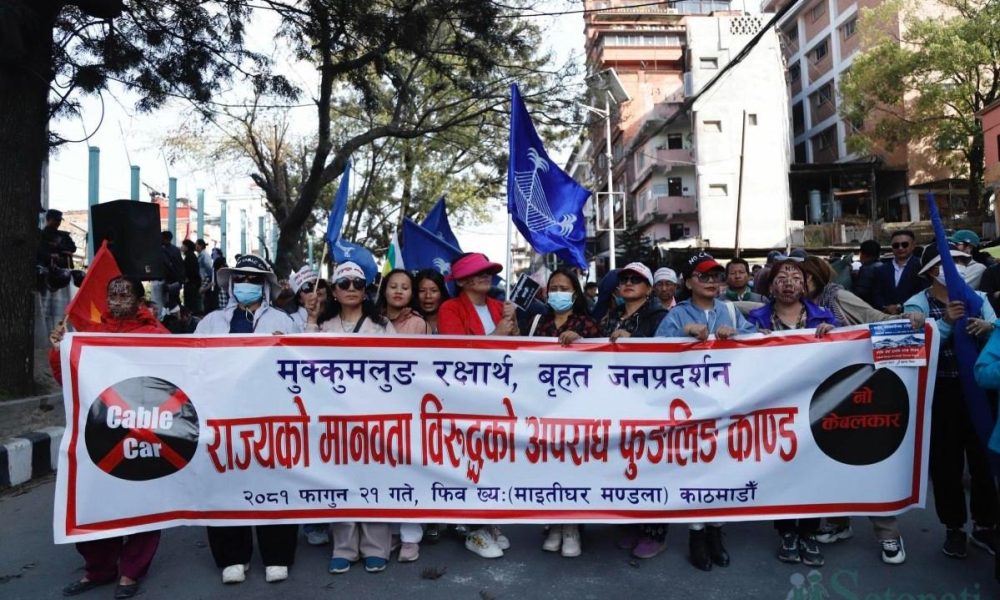
Indigenous communities’ complaint against World Bank-linked Nepal Cable Car Project declared eligible for investigation.

Published

on

By Witness Radio team

Indigenous Yakthung (Limbu) communities in eastern Nepal have fought hard for recognition after the World Bank Group’s accountability mechanism acknowledged a complaint about rights violations, underscoring their ongoing struggle to protect their land and culture.

The Compliance Advisor Ombudsman (CAO), the independent watchdog of the World Bank Group, accepted the complaint for further assessment and formally registered the case in December 2025. The decision clears the way for a potential mediation process or a full compliance investigation into whether the project breached the IFC’s environmental and social safeguard standards.

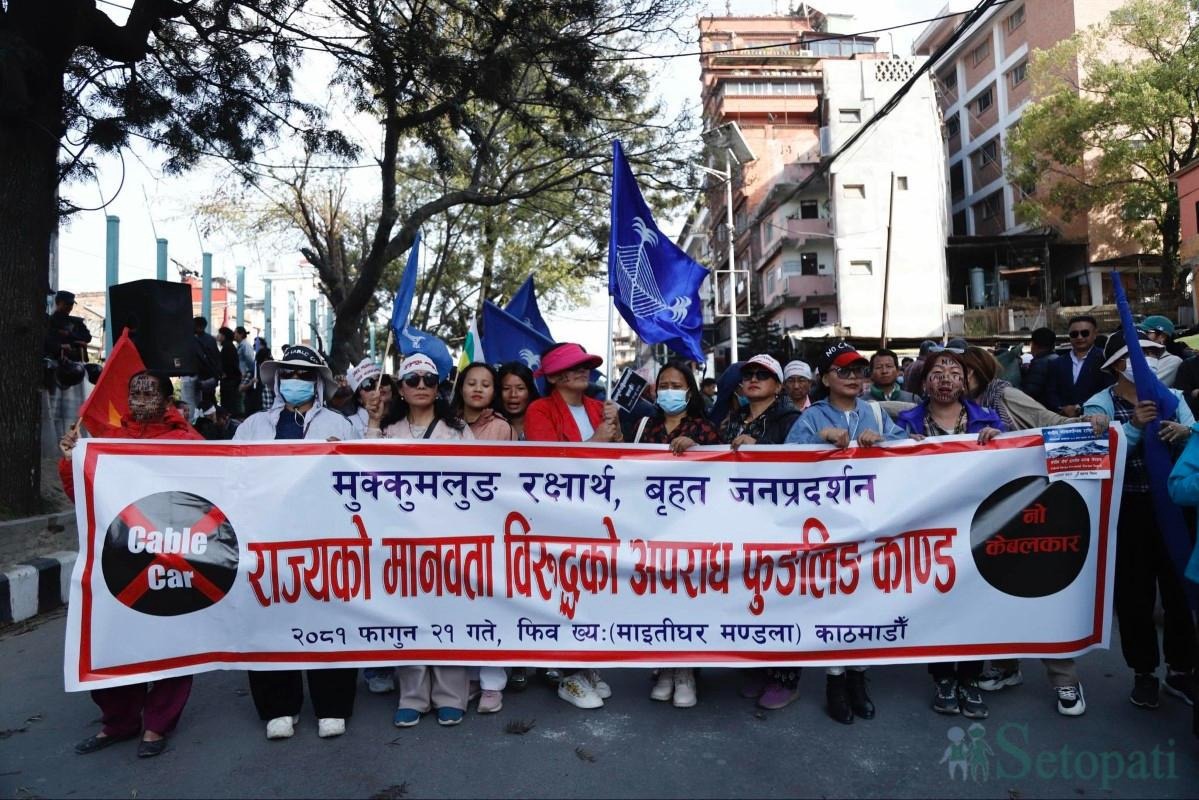
In August 2025, Indigenous Yakthung leaders, supported by lawyers and civil society organizations, filed a complaint against the IFC’s advisory support to IME Group for the $22 million Pathivara (Mukkumlung) cable car project in Taplejung District. This filing marks a critical step in holding the project accountable for alleged rights violations and environmental harm.

The cable car is being constructed on Mukkumlung Mountain, a sacred ancestral landscape central to the Yakthung people’s spirituality and Identity, risking irreversible damage to their cultural heritage and Identity.

According to the complainants, construction has already resulted in the felling of more than 10,000 trees in and around the Kanchenjunga Conservation Area, threatening habitats of endangered species such as red pandas, snow leopards, and Himalayan musk deer, underscoring the project’s severe environmental consequences.

“The reason the Complainants and their advisors seek to engage with the CAO is because of the social and environmental harms caused by one of the cable car projects in particular, the Pathivara project. This cable car project has severe impacts on one of the most sacred sites of the Limbu (Yakthung) Indigenous Peoples, including their forests, flora, fauna, heritage (tangible and intangible), and Mukkumlung mountain. The Pathivara project has been imposed on the local Indigenous communities without their Free, Prior, and Informed Consent (FPIC), and has proceeded to destroy their lands, forests, sacred sites, and livelihoods. When the people protest, they have been met with extreme violence and repression by security forces.” The community complaint submitted to the Ombudsman in August 2025 read.

Between August 2022 and July 2024, the IFC provided advisory services to IME Group related to four cable car projects in Nepal, including the Pathivara project. The complainants allege that the IFC failed to ensure that its Environmental and Social Performance Standards, particularly those protecting Indigenous Peoples, were applied.

“The cable car project is tantamount to cultural genocide of the Limbu nation in violation of our rights guaranteed in Nepal’s constitution, the Treaty of 1774 with the Gorkha kingdom, and the UN Declaration on the Rights of Indigenous Peoples,” said Advocate Shankar Limbu, Vice-Chair of LAHURNIP.

Community members say they were unaware of IFC’s involvement until July 2024, nearly two years after construction began, due to the delayed public disclosure of the advisory support.

Accordingly, the complaints stated that the project did not meet the IFC Performance Standards, including failures to assess and manage project impacts, conduct land acquisition, and address involuntary resettlement, among others.

“The IFC’s inability to ensure its client integrated the Performance Standards into the implementation of its plan for delivering cable car projects around Nepal has led to severe breaches of the protections that were supposed to safeguard vulnerable and marginalized communities. Today, Indigenous Limbu communities are being beaten, shot at, arrested, and terrorized for trying to defend their land and way of life,” the community complaints read.

Although the IFC exited the advisory role in 2024, it continues to invest in Global IME Bank, Nepal’s largest commercial bank and a core company within the IME Group. Over the past decade, the IFC has provided more than $50 million in financing to the conglomerate, along with a $500 million trade finance guarantee, which critics say gives the institution ongoing leverage and responsibility.

In its eligibility determination, the CAO found that the complaint met the required criteria, including a plausible link between IFC-supported activities and the alleged environmental and human rights harms. The case has now entered a 90-day assessment phase, during which the CAO will consult with the affected communities, the IFC, and the company involved.

At the end of the assessment, the parties may choose to engage in dispute resolution through mediation or proceed to a full compliance investigation examining whether the IFC failed to follow its own safeguard policies.

The advocates representing the communities welcomed the CAO’s decision.

“We welcome the fact that the CAO has found this complaint eligible, and look forward to working with investigators to uncover how things went so badly wrong. The IFC is currently reviewing its Performance Standards and must learn lessons on consultation, safeguarding cultural heritage and biodiversity, respecting Indigenous Peoples’ rights, and protecting them against retaliation,” Kate Geary, Programme Director at Recourse, one of the organizations that supported the communities in the complaint, reveals.

Further, their appeal is for the CAO to handle the case with utmost urgency. “The CAO investigation into the complaint against the cable car project should move swiftly to remedy ongoing impacts of the project, including retaliations against the local communities,” added Advocate Shankar Limbu.

Indigenous leaders are demanding an immediate halt to construction, the withdrawal of security forces from the area, the release of all IFC-related project documents, and an independent investigation into alleged human rights abuses, urging urgent action to protect their rights and environment.

Continue Reading

MEDIA FOR CHANGE NETWORK

Ugandan farmers take TotalEnergies’ pipeline to UK court

Published

on

Police apprehend a Ugandan activist during a protest against the East African Crude Oil Pipeline (EACOP) plans in Kampala, Uganda, on 15 September, 2023. © Reuters

Four Ugandan farmers filed a case against the East African Crude Oil Pipeline (EACOP) at the UK’s High Court on Tuesday, seeking to have Ugandan constitutional, environmental and climate law applied to EACOP Ltd, the UK-registered company financing the project

Continue Reading

MEDIA FOR CHANGE NETWORK

Lawyers Move to Court to Stop New Luxury Tourism Projects in Maasai Mara

Published

on

A coalition of regional legal and environmental organisations has moved to court seeking to halt the approval and development of new luxury tourism facilities in the Maasai Mara National Reserve, arguing that the projects threaten one of the world’s most important wildlife ecosystems.

The petition, filed before the Environment and Land Court, seeks orders stopping further construction of high-end tourist accommodation within the reserve pending the determination of the case.

Those behind the petition include East Africa Law Society, Natural Justice, JustAct and Africa Centre for Peace and Human Rights, who have sued several government agencies and private investors involved in the developments.

Among the respondents are Marriott International, The Ritz-Carlton Hotel Company, Minor Hotels, National Environment Management Authority (NEMA), Kenya Wildlife Service (KWS) and the Narok County Government.

Narok Governor Patrick Ole Ntutu and the Maasai Mara National Reserve date in Narok County.
Photo| County Government of Narok / Maasai Mara National Reserve.

The petitioners contend that approvals granted for the tourism developments violated constitutional and environmental safeguards, arguing that the projects were allowed within ecologically sensitive areas meant primarily for wildlife conservation.

Court documents further claim that the developments sit close to critical wildlife habitats and migration routes linking the Maasai Mara ecosystem with Serengeti National Park.

This, according to them, potentially disrupts the annual wildebeest migration that attracts thousands of tourists every year.

They have asked the court to certify the matter as one raising substantial constitutional questions and refer it to the Chief Justice for the appointment of a five-judge bench to hear the case.

The latest legal challenge comes months after the planned opening of the luxury Ritz-Carlton safari camp sparked public debate, with conservationists raising concerns that the facility could interfere with wildlife movement near the Sand River.

At the time, the Kenya Wildlife Service dismissed claims circulating online that the camp had blocked the wildebeest migration, describing videos shared on social media as misleading.

“The Ritz-Carlton safari camp is situated within a designated tourism investment low-use zone, as provided for in the Maasai Mara National Reserve Management Plan, 2023-2032,” KWS said at the time.

The agency also maintained that camps established along the Mara, Sand and Talek rivers have historically coexisted with wildlife movements without obstructing migration.

Source: kenyans.co.ke

Continue Reading

MEDIA FOR CHANGE NETWORK

More than 17,000 people in the Philippines face eviction from their ancestral land for a multimillion-dollar energy project.

Published

on

By Witness Radio Team,

In the Visayas and Mindanao regions, in the Iloilo municipality on Panay Island in the central Philippines, thousands of Indigenous Tumandok people face forced displacement as a major energy project advances through their ancestral territories.

The Jalaur River Multi-Purpose Project, a state-backed dam and hydropower initiative, has triggered fears of forced evictions affecting more than 17,000 people and has already submerged ancestral land belonging to Indigenous communities.

The Tumandok have relied on the river basin as burial grounds, fishing sites supporting their livelihoods, and sacred landscapes preserved through oral history and cultural tradition for decades.

In 2012, the Korean Export-Import Bank provided a USD 260 million loan to the Philippine government for a multi-purpose project on the Jalaur River. Authorities present the project as a long-term solution for irrigation, flood control, and hydropower generation, designed to benefit agricultural production across thousands of hectares of farmland. However, host communities say the development has come at a high human cost.

The dam project, which began in the 1960s, entered a new construction phase in 2012, triggering new waves of human rights violations, from attacks and killings to arrests, and is expected to reach full completion in 2027.

As construction progresses, Indigenous ancestral domains within the project-affected watershed—covering approximately 16,780 hectares in the Calinog component—are being impacted by the Jalaur River Multi-Purpose Project Stage II. Community leaders say this is displacing Indigenous families from their homes amid concerns over inadequate consultation and potential violations of Indigenous land rights and free, prior, and informed consent standards.

Article 19 of the Declaration on the Rights of Indigenous Peoples requires states to consult and cooperate in good faith with the Indigenous peoples concerned, through their own representative institutions, to obtain their free, prior, and informed consent before adopting and implementing legislative or administrative measures that may affect them.

Article 32(b) of the same declaration urges states to make consent the objective of consultation before any projects that affect Indigenous peoples’ rights to land, territory, and resources, including mining and other uses or exploitations of resources.

John Ian Alecianga, coordinator of the Jalaur River People’s Movement, says opposition to the project has drawn allegations of intimidation, killings, arrests, and a heavy security presence in affected communities.

“Mobilizing these indigenous communities to fight for their rights has come at a cost. Indigenous leaders and activists have been subjected to surveillance, harassment, and red-tagging due to their resistance to the dam,” John said in an exclusive interview with our team.

According to John, tensions escalated in December 2020 when a police attack in Tumandok communities killed at least nine Indigenous leaders and elders and led to the arrest of 16 others.

“The military was deployed, human rights were violated, many elders were killed, and others were arrested, escalating into what we call a massacre. A fake search warrant was used in a staged operation to enter the houses of the Tumandok leaders. This is how much the government has ignored the rights of the indigenous peoples from the project conception until the project implementation,” he said. “The event remains one of the most traumatic moments in the ongoing conflict around the project,” John added.

Despite pressure, Indigenous communities continue to resist eviction through local and international advocacy networks, calling for justice for those killed in 2020, recognition of their land rights, and immediate protection from further displacement.

“The people are resisting because land is their life. Without it, there will be no community. There will be no identity,” he said.

The Jalaur River People’s Movement also seeks accountability through international mechanisms, including engagement with South Korean institutions linked to project financing.

Continue Reading

Resource Center

Legal Framework

READ BY CATEGORY

Facebook

Newsletter

Subscribe to Witness Radio's news and report updates


Trending

Subscribe to Witness Radio's news and report updates