
WITNESS RADIO MILESTONES
Unprecedented Wave of “Criminalization” Sweeping the Globe to Silence Indigenous Peoples

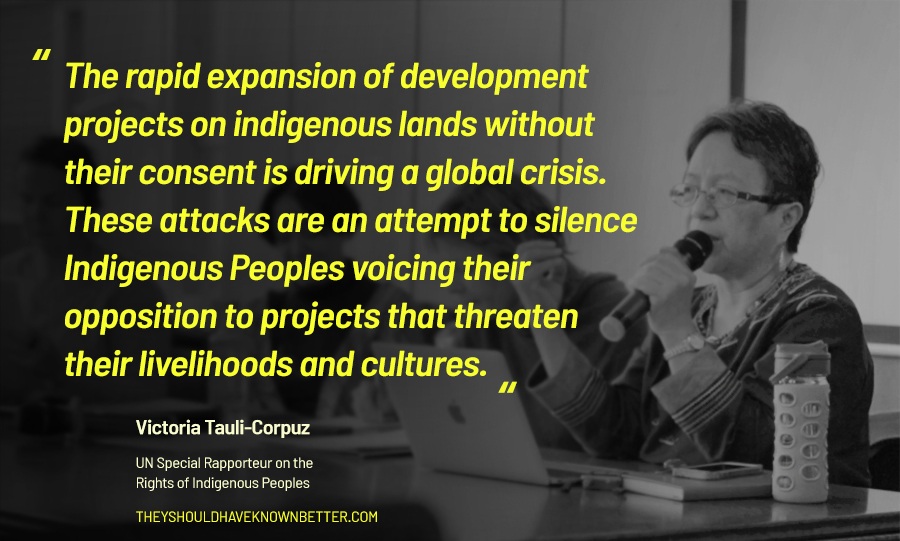
New UN report highlights drastic increase in violence and legal harassment driven by rapid expansion of development projects on indigenous lands
A significant pattern of abuse has emerged in a wide variety of countries, in which both physical violence and legal prosecution are used against Indigenous Peoples defending their rights and lands, according to a new report that UN Special Rapporteur on the Rights of Indigenous Peoples Victoria Tauli-Corpuz submitted to the UN Human Rights Council today.
The report describes how private sector interests collude with governments in coveting the lands of Indigenous Peoples for economic development projects. “Criminalization”—the process of turning those defending their land rights into criminals—has become an increasingly common tool and contributes to how these disputes often transform into open conflicts. While the majority of indigenous individuals who face criminal charges are men, women bear the brunt of their absence as they have to single-handedly assume all responsibilities in their families and communities.
“I’ve been alerted to hundreds of criminalization cases from nearly every corner of the world,” said Tauli-Corpuz. “The rapid expansion of development projects on indigenous lands without their consent is driving a global crisis. These attacks—whether physical or legal—are an attempt to silence Indigenous Peoples voicing their opposition to projects that threaten their livelihoods and cultures.”
Since June 2014, when her tenure as Special Rapporteur began, Tauli-Corpuz has witnessed a significant uptick in cases of criminalization and violence in the Philippines, as well as in Brazil, Colombia, Ecuador, Guatemala, Honduras, India, Kenya, Mexico, and Peru.
Many of the worst violations are driven by rising militarization, national security acts, and anti-terrorism legislation. These can put Indigenous Peoples in the line of fire—literally—of army and police forces. During and shortly after her most recent official country visit to Guatemala in May 2018, seven indigenous leaders were killed. Another activist was murdered just two weeks ago.
“Indigenous leaders in Guatemala who raise their voices face arbitrary detention, torture and sexual harassment from the police, and even murder,” said Aura Lolita Chávez Ixcaquic of the Maya K’iche’ People for the Defense of Life, Mother Nature, Land and Territory. “The justice system not only fails to address our concerns—it is a tool for the state and private interests to attack the authorities and leaders of our communities.”
The Special Rapporteur herself was one of 600 people labeled a terrorist in a legal petition filed in her native Philippines by President Rodrigo Duterte’s government. Although her name and three others were removed from the petition—in the week before her criminalization report was expected to be released—the vast majority of people on the petition remain blacklisted.
Ms. Tauli-Corpuz has noted that the charges were retaliation for her advocacy on behalf of displaced Indigenous Peoples in the Mindanao region of the Philippines, who have faced criminalization and military actions for resisting coal mines and other developments targeting their lands.
“There is widespread impunity for those who commit violence against Indigenous Peoples,” said Anne-Sophie Gindroz, RRI Facilitator for South East Asia. “At the same time, justice systems can be used against indigenous human rights defenders. In Indonesia, for example, people have been arrested for remaining on their land after it was granted to palm oil companies by the government.”
The report notes that violence and criminalization can even extend to lawyers and civil society advocates working with Indigenous Peoples. Gindroz, a longtime indigenous activist, was expelled from the Lao People’s Democratic Republic.
“In 2016, I had to flee my country, and my entire organization went underground,” said Alfred Brownell, founder of Green Advocates, an organization of lawyers, community mobilizers, and women that advocates for the land rights of Liberia’s rural communities and the environment. “These communities are not opposed to development, but they want a say in what happens to the lands they have called home for generations. Some 3 million Liberians depend on customary territories, but their rights are in limbo until we pass vital legislation that has been debated for four years now.”

Across the world, laws are stacked against Indigenous Peoples. A new report from the World Resources Institute finds that the process to formalize indigenous and community land rights is extremely costly and complex, sometimes taking up to 30 years—while companies can typically secure long-term rights to land in as little as 30 days.
While the majority of recorded cases were associated with opposition to business interests, in other instances Indigenous Peoples’ ways of life are deemed illegal in the name of conservation(link is external), leading to arrests, forced evictions, and other human rights violations.
“Conservation has been given as an excuse for escalating violence against the Sengwer Indigenous Peoples living within their ancestral lands in the Embobut forest in Kenya. Some have even been killed,” said Yator Kiptum, Executive Coordinator of the Sengwer Indigenous Peoples Programme. “The Kenyan Forest Service has repeatedly forcefully evicted and burned Sengwer homes and arrested community members—in spite of the fact that the court issued an injunction to prevent such evictions. Sengwer Indigenous Peoples want to live in, govern, manage, and own their ancestral lands working hand in hand with the government and other stakeholders—this is the only way to ensure sustainable conservation of forests. Eviction will only lead to further destruction.”
From defamation to indefinite detention and worse, despite UN treaties
Criminalization typically occurs as part of the government “push back” when Indigenous Peoples oppose large-scale projects. Leaders are targeted as a strategy to suppress and silence entire communities. While the process can vary, it often follows a similar pattern:
- Smear campaigns: Fueled by hate speech based on racism and discrimination, smear tactics and defamation campaigns on social media portray Indigenous Peoples as members of criminal gangs, guerrillas, terrorists, and threats against national security.
- Criminal charges: Indigenous leaders and their communities are often accused of vague charges—such as “perturbation of public order,” “usurpation,” “trespassing,” “conspiracy,” “coercion,” and “instigation of crime.” “States of emergency” are used to suspend judicial guarantees and suppress peaceful protests.
- Arrest Warrants: Warrants are repeatedly issued despite poor evidence and uncorroborated testimony. At times, accusations fail to name people, leaving an entire community accused of a criminal act. Many times, warrants are left pending, unexecuted, leaving the indigenous person affected under a perpetual threat of arrest.
- Illegal shortcuts: The prosecution of indigenous individuals often includes pre-trial detention that can last up to several years, as procedural guarantees are frequently flaunted. Indigenous Peoples seldom have the means to seek legal counsel or even an interpreter. If acquitted, indigenous individuals are rarely awarded remedies.
- Mass criminalization: Indigenous organizations have been subject to illegal surveillance and confiscations while laws imposing registration requirements and funding controls weaken their mobilization and restrict their support. Civil society organizations and lawyers who assist indigenous communities have been physically attacked and even killed.
The report lists a number of international treaties and conventions that provide protections for the rights of Indigenous Peoples and local communities. These agreements include:
- United Nations Declaration on the Rights of Indigenous Peoples (UNDRIP)
- International Covenant on Civil and Political Rights (ICCPR)
- Universal Declaration of Human Rights
- International Labour Organisation Convention on Indigenous and Tribal Peoples No. 169
- International Covenant on Economic, Social and Cultural Rights
- United Nations Framework Convention on Climate Change
- Convention on Biological Diversity
To prepare the report, the Special Rapporteur drew from both primary and secondary sources, information received first-hand during country visits, a public call for submissions, and a two-day expert consultation in Geneva in March 2018. In addition, a consultation meeting with indigenous representatives took place on the side-lines of the Permanent Forum on indigenous issues in April 2018.
Violence continues to add up
Front Line Defenders documented 312 human rights advocates murdered in 2017. Sixty-seven percent were killed for defending their lands, the environment, or indigenous rights, nearly always in the context of private sector projects. Around 80 percent of killings took place in just four countries: Brazil, Colombia, the Philippines and Mexico.
Global Witness documented 207 killings of land and environmental defenders in 2017—the worst year on record—with agribusiness as the industrial sector linked to the most killings. Twenty-five percent of those killed were indigenous.
The failure of states to recognize the land rights of Indigenous Peoples drives this violence, and can lead to them being labeled trespassers in their own homes and evicted from the lands that form the basis of their livelihoods, social cohesion, and spiritual traditions. Indigenous Peoples and local communities customarily claim more than 50 percent of the world’s land but only have legally recognized rights to 10 percent.
“What is happening now across the world is nothing less than a systematic attack on peasant communities and Indigenous Peoples,” said Front Line Defenders Executive Director Andrew Anderson. “In their insatiable greed for wood and oil and gold, corrupt elites, who have no ambition beyond their own enrichment, risk not only destroying the lives and culture of Indigenous Peoples, but also destroying the environment on which our collective future survival depends.”
###
Victoria Tauli-Corpuz (The Philippines), the UN Special Rapporteur on the Rights of Indigenous Peoples(link is external), is an indigenous leader from the Kankana-ey Igorot people of the Cordillera Region in the Philippines. As an indigenous leader, she has worked for over three decades on building movement among indigenous peoples and as an advocate for women’s rights. Tauli-Corpuz is the former Chair of the UN Permanent Forum on Indigenous Issues (2005-2010). She was actively engaged in drafting and adoption of the UN Declaration on the Rights of Indigenous Peoples in 2007.
Related posts:
 Defending tomorrow: The climate crisis and threats against land and environmental defenders
 Silence far from golden for child labourers in the mines of Uganda
 As COVID-19 crisis rages, 119 groups from 30 countries push urgent demands for rural peoples
 Investigate the criminalization of land rights defenders – witnessradio.org asks National Human Rights Body.



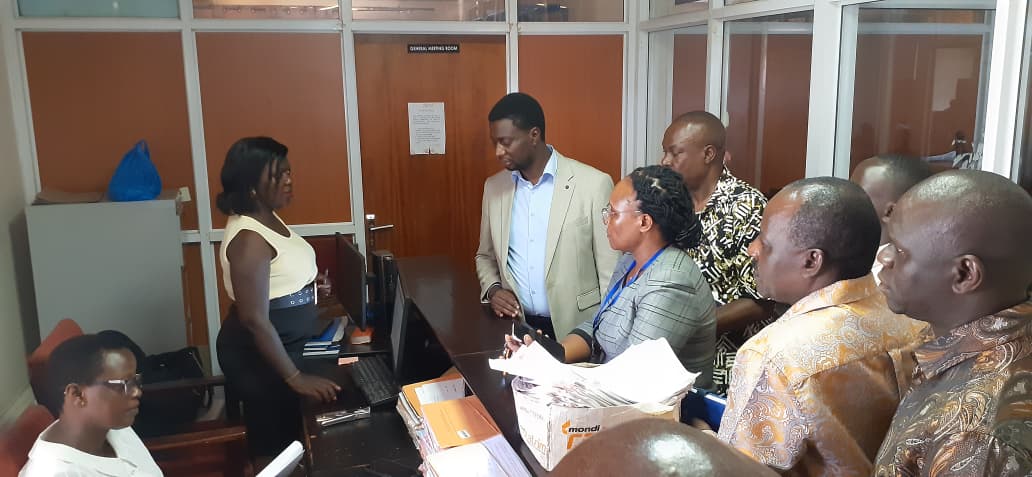
Parliament’s Committee on Lands, Housing and Urban Development has ordered a police investigation after recovering hundreds of land files allegedly hidden in shops and vehicle boots near the Mukono Zonal Land Office (MZO).
The committee, led by chairperson Edison Rugumayo, was inspecting the office as part of an inquiry into allegations of land fraud, delays in processing titles and other irregularities affecting land transactions in Mukono District.
During the inspection, legislators toured various departments and questioned staff about their work, including the handling and storage of land records.
At the office of Senior Staff Surveyor Steven Ndegeya, the committee raised concerns over alleged irregularities involving land titles reportedly created in wetlands and central forest reserves.
The legislators also questioned officials about more than 200 titles reportedly issued in Mabira Forest and demanded a list of people associated with the titles.
The committee was further alarmed after being told that more than 50 land titles had allegedly been created on the government-owned Njeru Stock Farm.
Rugumayo asked Ndegeya to provide the transaction trail, original title documents, geographical maps and details of all individuals holding titles on the land.
Ndegeya asked for more time, saying he needed to consult registrars before preparing an organised report.
He told the committee that there was no certificate of title for Njeru Stock Farm belonging to the Uganda Land Commission in the system.
However, he said the system contained records of individual Mailo landowners whose interests dated back many years, arguing that some people who obtained titles on the land had acquired them legally.
The committee later met MZO officials to establish the causes of the complaints and alleged irregularities.
Three staff members, Dan Kyalo, Hannifah Nantongo and Susan Aceru, were tasked with producing files that were allegedly being taken out of the MZO.
The three denied having moved the files.
However, accompanied by police officers, the committee recovered hundreds of titles allegedly stored in shops across the road from the land office. Other files were reportedly found in vehicle boots.

When questioned about who had instructed them to keep the files outside the office, the officials reportedly told the committee they had been directed by their supervisor, Ndegeya.
The committee also questioned the security team deployed by the Ministry of Lands in Kampala about how the files and titles had been removed from the office.
It emerged that Emma Otim, the security head, had left responsibility for keeping the office keys with a private security guard who routinely opens and closes the office.
The committee questioned why a guard whose primary responsibility was reportedly to man the gate had been entrusted with the office keys.
Principal Assistant Secretary at the MZO, Doreen Tumushabe, said she could not be held responsible for the alleged conduct of individual employees but promised to strengthen supervision.
Tumushabe also cited staff shortages, lack of vehicles and the large number of complaints involving allegedly forged land titles among the challenges affecting the office.
During the oversight visit, the committee also discovered hundreds of allegedly forged land titles at the MZO.
Officials told the committee that no related case had been opened at Mukono Police Station despite the alleged discovery of the forged titles.
The committee also heard complaints from members of the public who said they had waited for years to obtain land titles or have land disputes resolved.
A 75-year-old woman, Maria Nakitende, told the committee that she had waited for decades for authorities to resolve her title-related matter.
Hajji Musa Muliika of Katosi alleged that he was asked to pay Shs14 million after the title he had submitted was reportedly lost while in the hands of MZO officials.
Rugumayo directed police to conduct a thorough investigation into the circumstances surrounding the removal and concealment of the files and establish why they were taken outside the office, particularly ahead of the committee’s visit.
He also ordered the head of the Mukono land office to submit, within one week, a report on land titles in Mabira Forest and wetlands, as well as complaints against staff members.
Masaka legislator Joan Namutaawe criticised the quality of services at the land office and questioned whether Tumushabe was fully in control of operations at the MZO.
Namutaawe warned that the committee would pursue cases involving alleged illegal occupation and development in wetlands.
Source: nilepost.co.ug
Related posts:

MEDIA FOR CHANGE NETWORK
Uganda moves toward a Bamboo Policy to boost environmental conservation and green growth.

Related posts:
 As Uganda awaits the Energy Efficiency and Conservation law, plans to develop a five-year plan are underway.
 REC25 & EXPO Ends with a call on Uganda to balance conservation and livelihood
 Africa’s growth lies with smallholder farmers
 Green Resources’ forestry projects are negatively impacting on local communities – donor
WITNESS RADIO MILESTONES
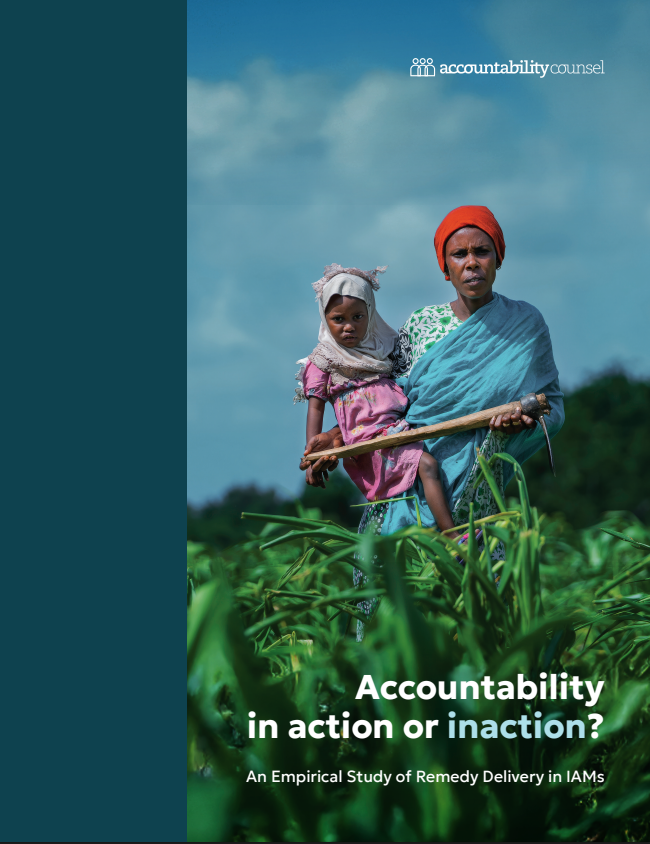
A Global Report reveals that Development Banks’ Accountability Systems are failing communities.
Related posts:
 Banks have given almost $7tn to fossil fuel firms since Paris deal, report reveals
 Opinion: USAID needs an independent accountability office to improve development outcomes
 Communities Under Siege: New Report Reveals World Bank Failures in Safeguard Compliance and Human Rights Oversight in Tanzania
 Oxfam Report 2011: When Indigenous communities named Rwanda nationals by investor to run away from corporate accountability

Nabakooba orders probe into 1,500-acre land dispute

Lira siblings reclaim father’s land after bitter family dispute

After weeks behind bars, six anti-oil activists have been granted cash bail by the LDC Court.

While hunger continues to grip the world, a new report highlights forests and forest foods as a hidden treasure trove of nourishment.

Breaking: Sixteen Rooted in Resistance activists arrested and detained as they boldly protested Uganda’s oil ambitions.

Thirteen years after the Karuma Hydropower Project broke ground, countless people forced from their homes are still waiting for the compensation and resettlement they were promised.

Civil society organizations across East Africa have revived their campaign against the EAC Seed and Plant Varieties Bill 2025, just as the regional parliament opens the floor to public consultations.

Tanzania’s surge in conservation investments is under the UN spotlight, as allegations of indigenous land rights violations prompt an urgent call for the government to stop the evictions at once.

Innovative Finance from Canada projects positive impact on local communities.
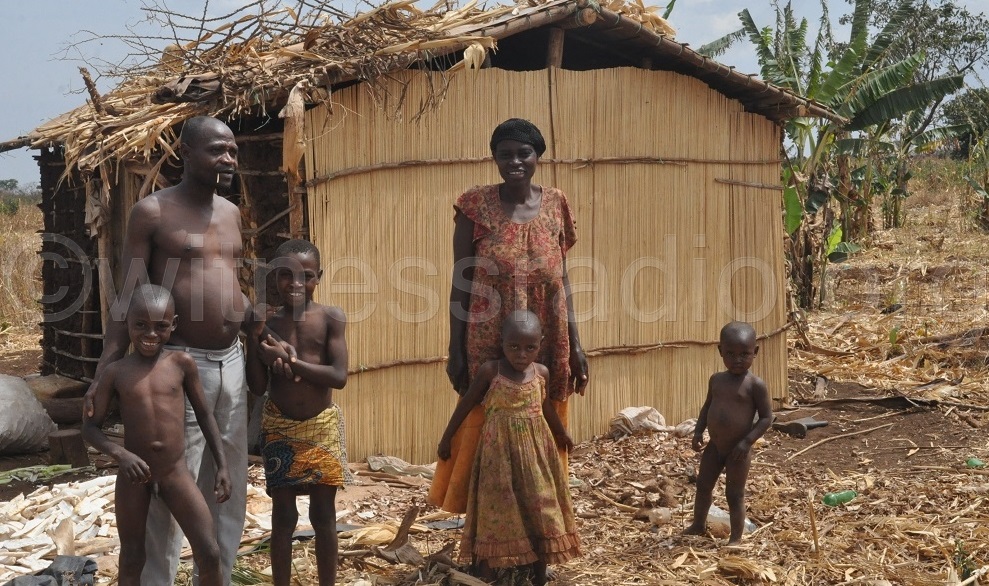
Over 5000 Indigenous Communities evicted in Kiryandongo District

Petition To Land Inquiry Commission Over Human Rights In Kiryandongo District

Invisible victims of Uganda Land Grabs
-

 MEDIA FOR CHANGE NETWORK1 week ago
New revelations: TotalEnergies is investing in countries facing political and economic risks, raising fresh questions about the company’s investment strategy.
-

 MEDIA FOR CHANGE NETWORK2 weeks ago
Smallholder farmers were excluded from the consultative process for the East African Community Seed and Plant Varieties Bill, 2025: CSOs across the EAC call for a time extension and greater inclusion of smallholder farmers in shaping the bill.
-

 MEDIA FOR CHANGE NETWORK2 weeks ago
Six other Anti-EACOP Activists remanded to Luzira over alleged unlawful assembly.
-

 MEDIA FOR CHANGE NETWORK2 weeks ago
Wakiso LCs warned against using official stamps to facilitate land grabbing
-

 MEDIA FOR CHANGE NETWORK1 week ago
Hunger Soars in AGRA Countries Despite Decades of Green Revolution Push
-

 MEDIA FOR CHANGE NETWORK1 week ago
Nimule residents raise alarm over alleged land grabbing
-
 MEDIA FOR CHANGE NETWORK4 days ago
In Kasanda District, a grandmother faces eviction as her own grandchildren join forces against her.
-
 MEDIA FOR CHANGE NETWORK23 hours ago
While hunger continues to grip the world, a new report highlights forests and forest foods as a hidden treasure trove of nourishment.