Connect with us

MEDIA FOR CHANGE NETWORK

Residents in Nakaseke district woke up to eviction notice amid COVID-19 lock-down land eviction directives.

Published

on

By witnessradio.org Team

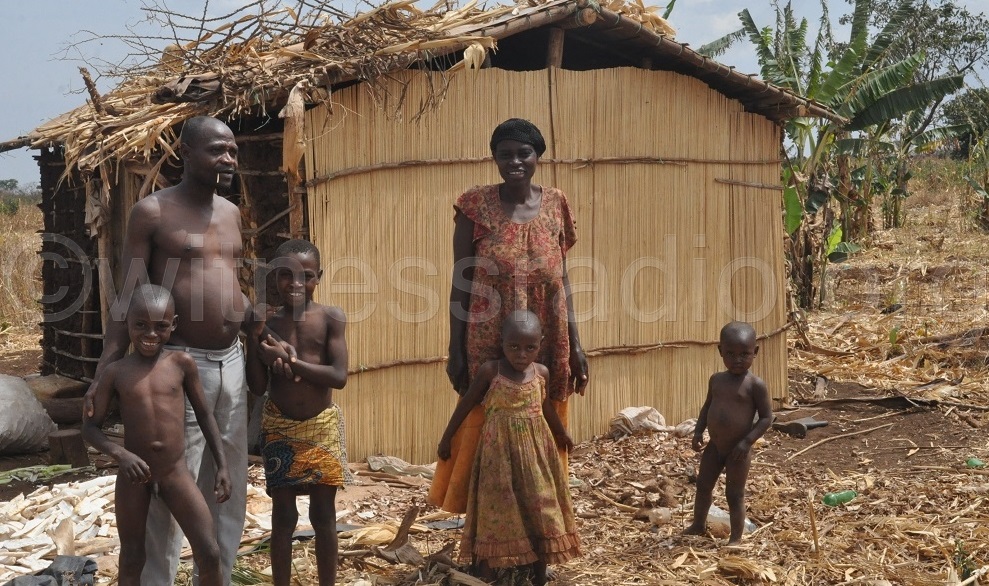
Nakaseke – Uganda – Over 450 residents of Kasambya northward in Ngoma Town Nakaseke District are at the verge of losing their land after receiving a three days’ notice to vacate.

The land under the contention was allegedly leased out to businessman Nathan Kyozo who has started clearing the land.

On April 16th, 2020, the government of Uganda ordered a total halt of all land evictions during the ongoing COVID-19 lockdown and directed all local governments and security agencies to enforce the order.

Local communities testify that their plantations have already been destroyed as evictors (businessmen) have already asked them to leave but residents have told witnessradio.org they do not know what will happen to their houses, and burial grounds upon the expiry of the deadline.

One of the residents identified as Richard Balongo Senjobe says they will wait to see what happens because they do not have where to go.

“I have been living here all my life and I don’t have where to go with my family. This land has also been burial grounds for our family. We need help to save our land”. The 86 years old Ssenjobe said.

Some of the leaders who spoke to witnessradio.org accuse the three businessmen of flouting the legal procedures in acquiring land.

“We were never involved and not aware of anything. If Kyozo has the title to the land, then why not follow the lawful procedures in taking over this land? We have been here for several years and this is not we should be treated because we are bonafide occupants”. Another resident said.

Nakaseke district chairman Ignatius Koomu Kiwanuka has lashed out at the investors who he also accuses of bypassing the law calling for action from government to stop their activities especially at such a time when the country is battling COVID 19.

“We have been to several government offices, but we have not been helped yet Mr. Kyozo has already hired people to survey the land. Our appeal is to the president to intervene and save us”

The land in question has been home to the Lugbara community for quite some time.

In a telephone interview with witnessradio.org Team, Mr. Nathan Kyozo refused to divulge details on the land matter but advised the residents to report the matter to police.

MEDIA FOR CHANGE NETWORK

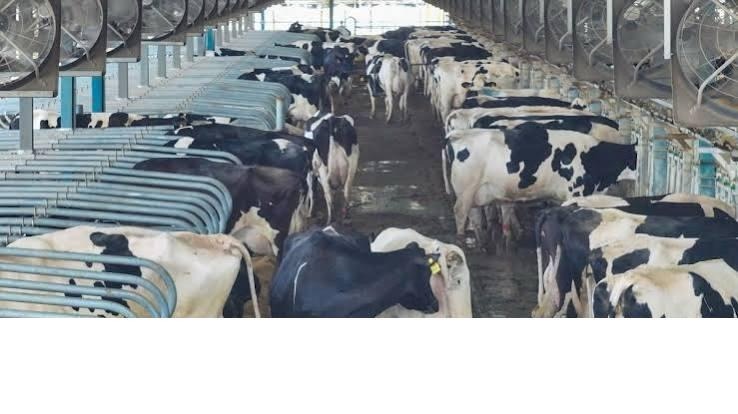
Development finance faces growing scrutiny as industrial livestock farming rapidly spreads across Africa.

Published

on

By the Witness Radio team.

As investment in large-scale agricultural enterprises surges across Africa, the spotlight is turning to development finance institutions and their power to determine which farming systems thrive and which are left behind.

Multilateral development banks and other financial institutions are playing a bigger role in shaping Africa’s agricultural landscape, funding everything from business models to infrastructure and production systems. Industrial livestock farming stands at the center of heated debate, with experts warning that its rise could sideline smallholder farmers, pastoralist communities, and agroecological food systems.

These pressing concerns took center stage during a webinar hosted by the Stop Financing Factory Farming (S3F) coalition, where participants explored how financing industrial livestock farming in Africa impacts farmers, the environment, climate, and public health.

The S3F Africa Regional Coordinator, Mariann Bassey-Olsson, said financial decisions made by development institutions have consequences beyond the businesses receiving the money.

“Since public money shapes food futures, what banks fund today decides what people eat and their livelihoods,” she said.

She pointed out that Africa’s livestock production is a tapestry of pastoralism, mixed crop-livestock farming, and commercial ventures. She urged that agricultural investment should honor this diversity instead of pushing industrial production as the default path.

“We must strengthen our diverse, locally appropriate and sustainable livestock systems, not replace them with industrial models,” she said.

Miriann also challenged the surge in support for agribusinesses, highlighting the stark contrast with the limited financing that reaches agroecological and community-led food systems.

“Factory farming is a finance story that depends on capital, infrastructure and policies that enable its expansion, yet public and private finance increasingly support agribusinesses while far less reaches agroecological community-led food systems,” she said.

Ms. Lizah Makombore of the University of Vermont said existing patterns of industrial production and consumption are pressuring ecosystems and making it difficult to achieve sustainable development goals.

“Because our food systems play such a monumental role in this crisis, they are now undeniably a growing cause for deep transformation,” she said.

Makombore called for a stronger embrace of agroecological farming, emphasizing that agricultural approaches must be rooted in local cultures, wisdom, and environmental realities.

She also highlighted the alarming decline in soil health and stressed the importance of weaving indigenous knowledge and cultural values into sustainable food systems.

“We therefore need to think about how we can shape the context using our cultural values and how we can reclaim our cosmovision, such as Ubuntu,” she said.

Citing an assessment by the Convention on the Elimination of All Forms of Discrimination Against Women (CEDAW) on financing for agroecology through the Green Climate Fund, Makombore said 79% of the funding assessed supported factory farming and other non-agroecological agricultural systems.

She added that agroecological systems received 10.3%, while agroecology received 10.6%.

Mr. Michael Farrelly of the Alliance for Food Sovereignty in Africa (AFSA) cautioned that investment figures alone cannot reveal whether farmers are truly gaining control over their production or reaping the rewards of funded businesses and programs.

“More finance doesn’t automatically mean more power or better incomes for farmers,” he

said.

Farrelly pointed to the Comprehensive Africa Agriculture Development Program (CAADP), the African Union framework guiding agricultural development across member states, as an important influence on investment priorities.

He said the program’s 2026–2035 implementation period has a $100 billion investment target combining public and private financing.

He also referred to regional agricultural policy platforms and summits where governments are seeking to attract private investment into the sector.

Farrelly urged closer scrutiny of the fine print of these investments, especially when they fuel the growth of large commercial agricultural enterprises.

He warned that as corporate agribusinesses gain ground, small-scale producers risk becoming more dependent on commercial buyers, facing mounting debt, and losing their grip on livestock production and marketing.

“The World Bank is helping shape both the businesses and the rules under which they operate. The authors of the report warn that farmers can become more dependent on corporate buyers and debt with less control over their livestock. Some programs aim to reduce the share of people working in agriculture.” He said.

Ms. Nne Nelly Umoren of the Green Leaf Advocacy and Empowerment Center voiced concerns about the hidden social and environmental costs that often accompany large industrial investments, such as fertilizer production.

Citing the Nduruma fertilizer industry, she questioned whether the economic promises of industrial projects truly reflect the realities faced by surrounding communities.

She noted that while such investments are often touted as engines of job creation, increased production, and economic growth, it is crucial to weigh these benefits against the environmental and social burdens local communities’ shoulder.

“They make us believe that investment is for production and for economic growth, food security, and also for the future food of Africa, especially the Nduruma fertilizer,” she said.

“The question behind this is: does industrial growth genuinely improve people’s lives and strengthen food systems? Does it really create economic benefit for investors while transferring environmental and social costs to the local communities?” she asked.

Umoren called for a sharper focus on the lived experiences of communities impacted by industrial projects and a closer look at how the benefits and costs of these investments are shared.

The experts urged that agricultural and development finance should prioritize approaches that empower local food systems and uplift small-scale producers.

They argued that Africa’s food security cannot be achieved through a one-size-fits-all model. Still, they must instead honor the continent’s rich tapestry of farming systems and ecological landscapes.

Continue Reading

MEDIA FOR CHANGE NETWORK

The African Union recognizes farmers’ vital seed rights, yet national laws can still get in the way, creating hurdles for those who depend on these traditions.

Published

on

By the Witness Radio team.

For generations, smallholder farmers across Africa have carefully saved, replanted, and exchanged seeds, nurturing crop varieties that sustain their families and communities. But as governments introduce stricter seed regulations, many are now questioning just how secure these age-old practices truly are.

A new African Union (AU) policy framework on Farmer-Managed Seed Systems aims to shift this landscape by honoring the vital role of farmers who produce, preserve, and share seeds beyond formal commercial channels. Yet concerns are growing that the framework’s promise may fall short if national seed laws continue to restrict the very rights it aims to champion.

Farmers, civil society organizations, and legislators voiced these worries during a post-summit webinar on November 4, 2026, delving into the new continental policy’s impact and its significance for ongoing efforts to harmonize seed laws within the East African Community (EAC).

The evaluation convening was spearheaded by the Center for Food and Adequate Living Rights (CEFROHT), the Swiss Foundation for Development Cooperation (SWISSAID) and the Eastern and Southern Africa Small Scale Farmers’ Forum (ESSAF).

These discussions built on the momentum of the inaugural Africa Seed Summit, held from October 5 to 7 in Ezulwini, Eswatini, under the banner Resilient Seed Systems for a Food Secure Africa. Hosted by the African Union Commission and the Government of Eswatini, the summit united African leaders, agriculture ministers, seed experts, farmer organizations, and private sector voices to chart the future of seed systems across the continent.

Key outcomes included the Ezulwini Declaration on African Seed Systems, the unveiling of the 2025 Seed Sector Performance Index Status Report, and a refreshed 10-year action plan for the Africa Seed and Biotechnology Program.

The summit also set a new continental policy course, recognizing farmer-managed seed systems as a lifeline for smallholder farmers and urging greater investment in community seed banks, farmer networks, agricultural biodiversity, and the safeguarding of plant genetic resources.

Yet for farmers and the organizations that stand with them, true recognition means being able to keep using and sharing the seeds they have carefully preserved through generations.

The National Coordinator of ESSAF Uganda, Mrs. Nancy Mugimba, said farmers remain at the center of food production, calling for discussions about food security to go beyond the quantity of food produced to consider the quality and resilience of the seeds from which it comes.

She argued that indigenous seeds managed by smallholder farmers have an important role in helping communities withstand difficult agricultural conditions.

“All the seeds are not uniform, but when it comes to issues of hunger, you’ll find that it is usually the indigenous seeds that are managed by the small-scale farmers that are resilient to all these conditions,” she said.

Mugimba stressed that farmers’ ability to maintain and access a rich diversity of seeds is crucial as communities face drought, shifting weather patterns, and looming food shortages.

While the AU framework recognizes the value of farmer-managed seed systems, its approach to farmers’ rights has sparked concern among civil society groups that support smallholder farmers.

Mrs. Joan Kembabazi from CEFROHT welcomed the spotlight on farmer-managed seed systems but questioned whether the framework truly offers enough safeguards for farmers to freely save, use, exchange, and sell their seeds.

The United Nations Declaration on the Rights of Peasants and Other People Working in Rural Areas (UNDROP) recognizes farmers’ rights to save, use, exchange and sell farm-saved seeds, subject to national law. However, Kembabazi said the AU framework does not adequately address how to protect these rights where national laws impose restrictions.

She cautioned that tying farmers’ rights to national seed laws could undermine the very protections the continental framework is meant to deliver.

“If there are any national seed laws that have already been developed that would not uphold the rights of farmers, then this particular conflict is going to limit how much of the farmers’ rights can be exercised in relation to saving, using and exchanging seed as something we think is a very big weakness with this law,” she said.

Kembabazi also cast doubt on the framework’s legal muscle, pointing out that as a policy instrument, it lacks the force of a binding treaty. Member states are encouraged, but not required, to align their national laws with its recommendations.

She also pointed out gaps in how the framework addresses farmers’ rights to sell seeds. She noted its scant attention to legal conflicts with instruments like the International Union for the Protection of New Varieties of Plants (UPOV) and national seed marketing laws.

These concerns are especially pressing in East Africa, where efforts to harmonize seed regulations are unfolding alongside calls for stronger recognition of agroecology and farmer-managed seed systems.

Continue Reading

MEDIA FOR CHANGE NETWORK

The economic promise of climate action: How governments, businesses, and communities can join forces for a sustainable future.
Published

on

By the Witness Radio team.

Climate action is no longer just an environmental concern; it has become an economic imperative as governments and businesses face mounting costs from climate disasters, energy insecurity, and environmental harm.

Investing in renewables, land restoration, and climate resilience not only safeguards economic growth and livelihoods but also helps prevent future losses. But capital alone is not enough; lasting progress demands steady government policies, private-sector commitment, and true community engagement.

These urgent topics took center stage at a high-level discussion hosted by the Organization for Economic Co-operation and Development (OECD) ahead of COP31, where leaders from international institutions, business, and the environmental sector explored how partnerships can speed up climate action.

Presenting the OECD’s economic analysis, Mr. Jaime de Bourbon de Parme, the OECD Environment Director, argued that despite uncertainty in international climate negotiations, the real economy continued to move toward cleaner energy and climate-related investment.

“What hasn’t been stalling is the real economy,” he said, arguing that the focus was increasingly shifting from setting climate ambitions towards implementing them.

He said clean energy is becoming important not only for reducing emissions but also for strengthening energy security and reducing dependence on volatile fossil fuel markets.

“Fossil fuels were seen as a stable energy source and renewable energy was the new kid on the block. Now we see that fossil fuels are seen as a source of instability, and renewable energy is a source of stability going forward,” Jaime said.

Jaime also pointed to the growing investment in clean energy, noting that of approximately $3 trillion invested in energy systems, about $2 trillion went towards clean energy, compared with $1 trillion for fossil fuels. He adds that early investment in climate action is therefore not simply an environmental choice but an economic decision.

“The costs today are cheaper than in five years or in 10 years or in 15 years. So, acting early makes sense,” he said.

To turn climate investment pledges into real progress, businesses need policies that inspire long-term confidence. Peter Bakker, President and CEO of the World Business Council for Sustainable Development (WBCSD), noted that sustainability is fast becoming a competitive edge for companies, not just a box to tick for corporate responsibility.

Drawing on the organization’s Business Breakthrough Barometer, which surveyed more than 500 executives across more than 50 countries, Bakker said 89 percent of companies expected to maintain or increase their sustainability investments compared with the previous year.

He also noted that 85 percent of respondents wanted more government policy, rather than less, to support the transition.

He also warned against focusing solely on the supply side of the energy transition, stressing that governments must spark demand for cleaner technologies while investing in their production.

“We shouldn’t only focus on the supply side; we must focus on the demand side,” he said.

Bakker highlighted the private sector’s growing opportunities, from electrification and energy-smart buildings to cleaner ways of making goods.

Beyond energy, restoring damaged land and boosting drought resilience open new doors to blend environmental protection with economic growth.

Dr.Yasmin Fouad, Executive Secretary of the United Nations Convention to Combat Desertification (UNCCD), said land degradation and drought were increasingly threatening economic stability, food security and human livelihoods.

She noted that half of global GDP depends on nature. At the same time, one-fifth of the world’s land is already degraded, affecting approximately 1.3 billion people, and restoring degraded land should be treated as an economic investment rather than an expense government can postpone.

“The studies show you that for every dollar that you are investing now as a cost to restore land, there is a revenue that comes to around $30,” Fouad said.

Yet, despite these promising economic returns, she admitted that scarce financing, budget strains in vulnerable countries, and too few projects ready to attract private capital still hold back land restoration investment.

She proposed a financing approach in which multilateral development banks help reduce investment risks, making it easier for private companies to participate in restoration projects.

“The financial architecture that was developed for renewable energy needs to be transferred and realized very quickly on land restoration,” she said, adding that under such arrangements, development banks could help reduce the risks associated with restoration projects, making them more attractive to private investors.

Fouad also emphasized the importance of aligning national policies so that investments in climate adaptation, agriculture, biodiversity and land restoration reinforce rather than compete with one another. She pointed to the UNCCD’s Business for Land initiative, which brings governments and businesses together to discuss investment opportunities in land restoration.

The initiative has attracted interest beyond agricultural companies, including businesses in the fashion, beverage. However, she emphasized that investment only works when paired with secure land rights and real community involvement full of community participation.

“If we don’t have clear land rights to allow the private sector to invest, and clarity on how many years I’m owning land, what is the legality of that, that would really prevent the private sector from pitching in,” she said.

While restoring land helps reduce environmental risks, climate resilience must also be woven into infrastructure planning and investments. Mark Fletcher, Head of Zurich Resilience Solutions for Asia-Pacific, urged businesses and governments to factor in climate risks before breaking ground, not after disaster strikes.

“The fundamental barrier today is that resilience is still treated as a recovery tool, not as a design input,” he said.

Fletcher cited research by Zurich on renewable energy assets across Southeast Asia, covering more than 1,000 wind, solar, geothermal and hydropower locations.

The assessment found that 75 percent of these sites, worth an estimated $165 billion, face high risk from climate hazards within five years. Investing in resilience from the start could slash future losses.

According to Fletcher, the study estimated that investing approximately $13 billion in resilience measures at the investment stage could prevent about $85 billion in future losses.

He suggested that insurers can nudge businesses toward resilience by rewarding reduced risks with better insurance terms, such as improved coverage and lower deductibles. protection, that property is a better risk,” he said,

Governments, financial institutions, and businesses all play vital roles in funding and driving climate action. Still, the conversation also underscored the importance of bringing communities into the heart of the transition.

Fouad cautioned that restoration projects risk causing new problems if local communities are left out of decisions about the land and resources they rely on.

“If you don’t do that, you may end up doing something that they did not participate in, and again that would cause conflict and cause migration,” she said.

Jaime also highlighted civil society’s crucial role in building trust and shaping climate investments for the long haul. He described these organizations as bridges, connecting governments and businesses with the communities their investments touch.

“Civil society has an important role in ensuring that the just transition is inclusive and sustainable. Beyond their traditional role of holding institutions accountable, civil society organizations can build relationships and act as agents of trust, helping ensure environmental initiatives are designed for long-term success. This requires a shift from criticism towards collaboration, with governments, businesses and communities working together to advance the transition,” he concluded.

Continue Reading

Resource Center

Legal Framework

READ BY CATEGORY

Facebook

Newsletter

Subscribe to Witness Radio's news and report updates


Trending

Subscribe to Witness Radio's news and report updates