
NGO WORK
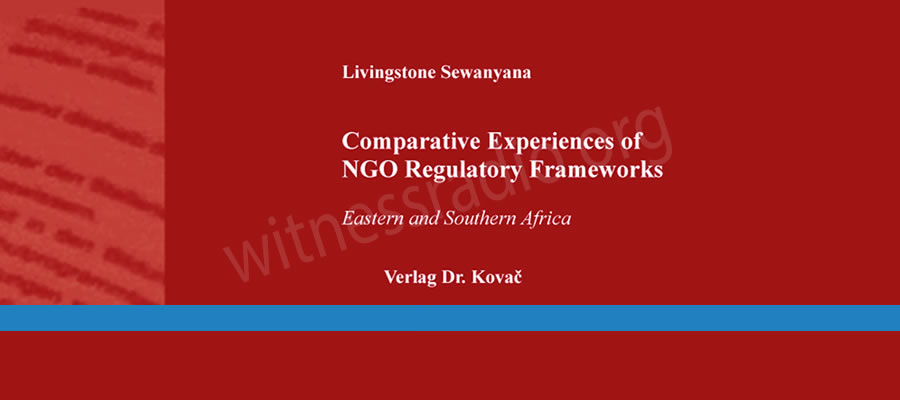
Operations of civil society organizations will continue to be stifled until government understands their work – New Book.

Related posts:

 30 civil society organizations have written to the World Bank Group demanding to publicly disclose the Africa Energy Approach paper.
 Accessing information still a problem in Uganda: civil society
 African Civil Society Refuses To Engage With UNFSS Without Radical Change
 “Closing Space for Civil Society and Media in East Africa: Forging a Collaborative Response”




Related posts:

 Failed US-Brokered “Peace” Deal Was Never About Peace in DRC
 Profit off Peace? Meet the Corporations Poised to Benefit from the DRC Peace Deal
 Grain trader Cargill faces legal challenge in US over Brazilian soya supply chain
 Mps Are Likely To Defy Electorates On Age-Limit Constitutional Amendment – Survey

Minority Rights Group welcomes today’s decision by the African Court on Human and Peoples’ Rights in the case of Ogiek people v. Government of Kenya. The decision reiterates previous findings of more than a decade of unremedied violations against the indigenous Ogiek people, centred on forced evictions from their ancestral lands in the Mau forest.
The Court showed clear impatience concerning Kenya’s failure to implement two landmark rulings in favour of the indigenous Ogiek people: in a 2017 judgment, that their human rights had been violated by Kenya’s denial of access to their land, and in a 2022 judgment, which ordered Kenya to pay nearly 160 million Kenyan shillings (about 1.3 million USD) in compensation and to restitute their ancestral lands, enabling them to enjoy the human rights that have been denied them.
Despite tireless activism from the community and the historic nature of both judgments, Kenya has not implemented any part of either decision. The community remains socioeconomically marginalized as a result of their eviction and dispossession. Evictions have continued, notably in 2023 with 700 community members made homeless and their property destroyed, and in 2020 evicting about 600, destroying their homes in the midst of the Covid-19 pandemic.
Daniel Kobei, Executive Director of the Ogiek Peoples’ Development Program stated, ‘We have been at the African Court six times to fight for our rights to live on our lands as an indigenous people – rights which our government has denied us and continues to violate, compounding our plights and marginalization, despite clear orders from the African Court for our government to remedy the violations. This is the seventh time, and we were hopeful that the Court would be more strict to the government of Kenya in ensuring that a workable roadmap be followed in implementation of the two judgments.’

Kenya has repeatedly justified the eviction of Ogiek as necessary for conservation, although the forest has seen significant harm since evictions began. Many in the community see a connection between their eviction and Kenya’s participation in lucrative carbon credit schemes.
‘The Court’s decision underscores the importance of timely and full implementation of measures imposed on a state which has been found to be in breach of their internationally agreed obligations. Kenya must now repay its debt to the indigenous Ogiek by restituting their land and making reparations, among other remedies ordered by the Court’, said Samuel Ade Ndasi, African Union Advocacy and Litigation Officer at Minority Rights Group.
The decision states, ‘the court orders the respondent state to immediately take all necessary steps, be they legislative or administrative or otherwise, to remedy all the violations established in the judgment on merits.’ The court also reaffirmed that no state can invoke domestic laws to justifiy a breach of international obligations.
Both of the original judgments were historic precedents, breaking new ground on the issue of restitution and compensation for collective violations experienced by indigenous peoples and confirming the vital role of indigenous peoples in safeguarding ecosystems, that states must respect and protect their land rights, that lands appropriated from them in the name of conservation without free, prior and informed consent must be returned, and their right to be the ultimate decision makers about what happens on their lands. Today’s decision adds to this tally of precedents as it is the first decision of the African Court on Human and Peoples’ Rights concerning the record of a state in implementing a binding decision.
The case
In October 2009, the Kenyan government, through the Kenya Forestry Service, issued a 30-day eviction notice to the Ogiek and other settlers of the Mau Forest, demanding that they leave the forest. Concerned that this was a perpetuation of the historical land injustices already suffered, and having failed to resolve these injustices through repeated national litigation and advocacy efforts, the Ogiek decided to lodge a case against their government before the African Commission on Human and Peoples’ Rights with the assistance of Minority Rights Group, the Ogiek Peoples’ Development Program and the Centre for Minority Rights Development. The African Commission issued interim measures, which were flouted by the Government of Kenya and thereafter referred the case to the African Court based on the complementarity relationship between the African Commission and the African Court on Human and Peoples’ Rights and on the grounds that there was evidence of serious or massive human rights violations.
On 26 May 2017, after years of litigation, a failed attempt at amicable settlement and an oral hearing on the merits, the African Court on Human and Peoples’ Rights rendered a merits judgment in favour of the Ogiek people. It held that the government had violated the Ogiek’s rights to communal ownership of their ancestral lands, to culture, development and use of natural resources, as well as to be free from discrimination and practise their religion or belief. On 23 June 2022, the Court rejected Kenya’s objections and set out the reparations owed for the violations established in the 2017 judgment.
Source: minorityrights.org
Related posts:
 Trauma and Land Loss: New Study Focuses on Mental Health of Evicted Indigenous People
 Justice Denied: East African Court of Justice Grants Tanzanian Government Impunity to Trample Human Rights of the Maasai
 EACOP: East African Court of Justice will hear arguments on court’s jurisdiction
 Tanzanian High Court Tramples Rights of Indigenous Maasai Pastoralists to Boost Tourism Revenues
Related posts:
 30 civil society organizations have written to the World Bank Group demanding to publicly disclose the Africa Energy Approach paper.
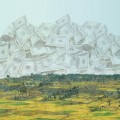 World Bank’s new scheme to privatize land in the developing world exposed
 World Bank is backing dozens of new coal projects, despite climate pledges
 Communities Under Siege: New Report Reveals World Bank Failures in Safeguard Compliance and Human Rights Oversight in Tanzania

UPDF General on the spot over fresh evictions in Hoima

Small-scale fishers and coastal communities are pushing to testify before a human rights commission investigating the causes of food inequality in South Africa.

The Kenyan government insists on maintaining provisions of the Seed Act that the court nullified: farmers and legal experts question the motive.

FEATURE: What Lagos Can Learn From Kenya, Morocco, Uganda’s Forced Evictions

Women environmental rights defenders in Africa are at the most significant risk of threats and attacks – ALLIED New report

Uganda moves toward a Bamboo Policy to boost environmental conservation and green growth.

Evicted from their land to host Refugees: A case of Uganda’s Kyangwali refugee settlement expansion, which left host communities landless.

200 farmers demonstrate at parliament, worried about new seed monopoly

Innovative Finance from Canada projects positive impact on local communities.

Over 5000 Indigenous Communities evicted in Kiryandongo District

Petition To Land Inquiry Commission Over Human Rights In Kiryandongo District

Invisible victims of Uganda Land Grabs
-

 NGO WORK2 weeks ago
US-DRC Strategic Partnership Agreement Faces Constitutional Challenge in Court
-
 MEDIA FOR CHANGE NETWORK2 weeks ago
Close to six years on, Pangero Chiefdom subjects still linger in pain after the government army’s forceful takeover of their ancestral land.
-
 MEDIA FOR CHANGE NETWORK2 weeks ago
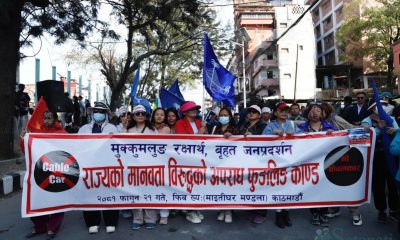
Indigenous communities’ complaint against World Bank-linked Nepal Cable Car Project declared eligible for investigation.
-

 MEDIA FOR CHANGE NETWORK2 weeks ago
Decades of land loss and chronic poverty: Salala Rubber Plantation prioritizes profit over the well-being of local Liberian communities.
-
 MEDIA FOR CHANGE NETWORK2 weeks ago
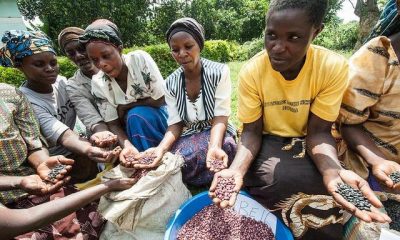
The Witness Radio and Seed Savers Network Joint Radio program boosts Farmers’ knowledge of seed and food sovereignty.
-
 MEDIA FOR CHANGE NETWORK7 days ago
FEATURE: What Lagos Can Learn From Kenya, Morocco, Uganda’s Forced Evictions
-
 MEDIA FOR CHANGE NETWORK1 week ago
13 years after the refugee host community was forcefully evicted to expand a refugee settlement, thousands remain unsettled.
-
 MEDIA FOR CHANGE NETWORK2 days ago
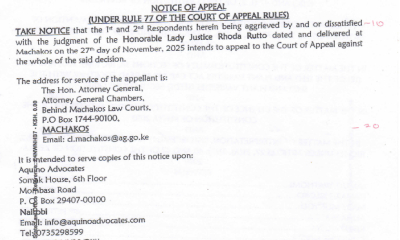
The Kenyan government insists on maintaining provisions of the Seed Act that the court nullified: farmers and legal experts question the motive.