
NGO WORK
World Bank Project Cancelled in a Landmark Victory for Tanzanian Villagers


—FOR IMMEDIATE RELEASE—
January 21, 2025; 9:00 AM PST
Media Contact: amittal@oaklandinstitute.org, +1 510-469-5228
- In a major victory for Tanzanian pastoralists and farmers, the World Bank funded REGROW project, which enabled extrajudicial killings, human rights abuses, livelihood restrictions and forced evictions to expand Ruaha National Park (RUNAPA) is cancelled.
- Amidst an ongoing investigation by the independent Inspection Panel, the Bank first suspended the project in April 2024, citing the Tanzanian government’s noncompliance with safeguards for resettlement and grievance mechanisms.
- The cancellation comes after nine United Nations Special Rapporteurs expressed their concerns and demands to the Tanzanian government and the World Bank around forced evictions and human rights abuses linked to the project.
- Over 84,000 people in 28 villages remain at risk of eviction, abuses, and livelihood restrictions. Impacted communities call on the World Bank and the government of Tanzania to cancel the park expansion so they can remain on their lands and reclaim their lives.
Oakland, CA – The World Bank’s US$150 million Resilient Natural Resource Management for Tourism and Growth (REGROW) project in Tanzania is cancelled. The decision came after 16 months of advocacy by the Oakland Institute to hold the Bank accountable for enabling the expansion of RUNAPA and supporting TANAPA, the paramilitary Tanzania National Parks Authority. Its rangers are responsible for egregious human rights abuses, including extrajudicial killings and crippling livelihood restrictions that have terrorized farmer and pastoralist communities in the Mbarali District. The expansion of the Park from one to over two million hectares threatens over 84,000 people.
“This landmark decision is a major victory for the villagers who courageously stood up to stop the project,” said Anuradha Mittal, Executive Director of the Oakland Institute. “Though forced to stop funding the terror it unleashed, the Bank must now urgently address the serious harms it has enabled and respond to the demands of the communities whose lives are on hold.”
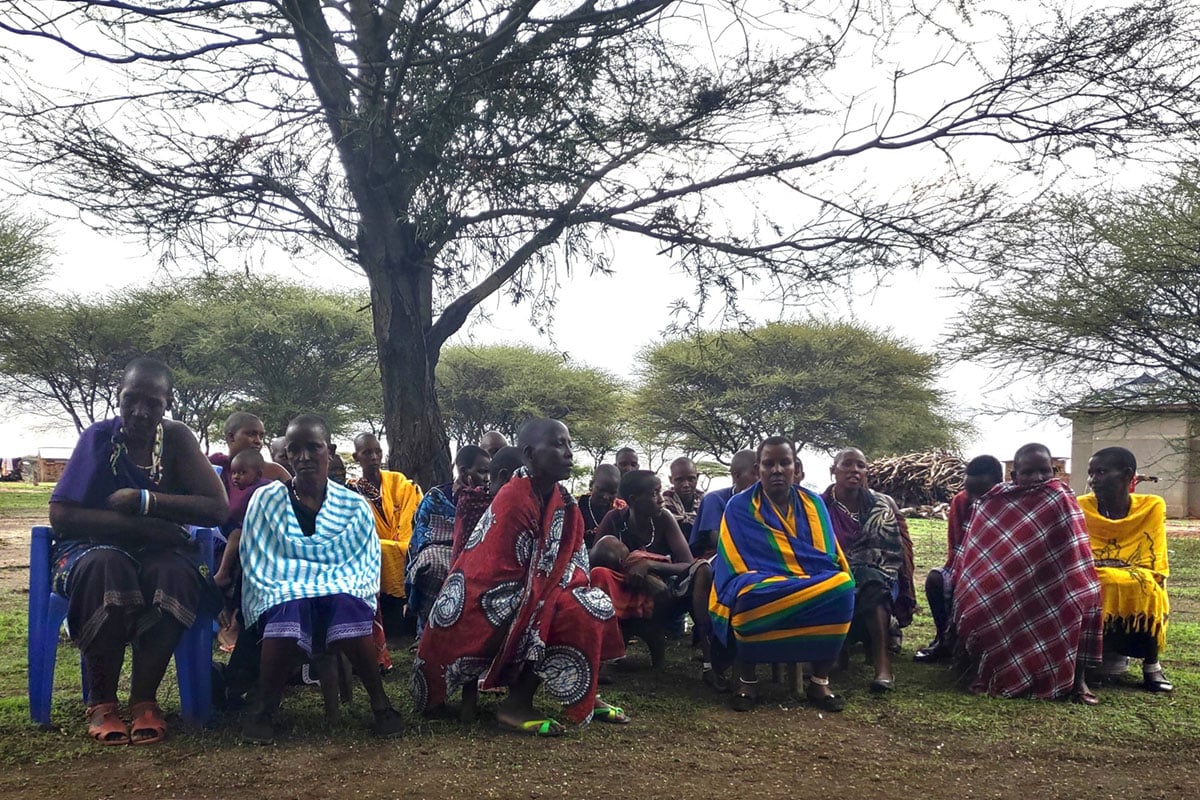
When initially informed of the abuses and violations of its own safeguards in April 2023, the World Bank failed to take action. In June, the Institute filed a request for inspection on behalf of the impacted villagers with the Bank’s Inspection Panel and followed up in September 2023 with a widely covered report, Unaccountable & Complicit.
As a result, the Inspection Panel launched an investigation in November 2023. Amidst the investigation, in a rare move, the World Bank suspended disbursements to the project in April 2024, citing(link is external) the Tanzanian government’s “non-compliance with their Environmental and Social (E&S) obligations… non-compliance related to involuntary resettlement planning activities taking place in RUNAPA,” as well as the absence of a grievance redress mechanism. Continued advocacy led to the project being eventually cancelled in November 2024.
Additional pressure(link is external) to hold the Tanzanian government and the World Bank accountable came from nine United Nations Special Rapporteurs who urged “all necessary interim measures … to prevent any irreparable harm” to affected villagers.
“The initiative of the UN experts is vital given the extent of abuses inflicted by paramilitary rangers on local communities in a country where there is no rule of law,” continued Mittal. “The government and the Bank must be held accountable for the harms caused by their disregard for basic human rights for the sole purpose of increasing tourism revenue,” she concluded.
Impacted communities are demanding the following actions:
- Removal of beacons placed marking the expansion of the park and to officially revert park boundaries to the 1998 borders established by GN 436a.
- Provide comprehensive compensation for damages incurred by livelihood restrictions and violence inflicted by TANAPA rangers, including:
- Value of fines paid by pastoralists to reclaim cattle illegally seized.
- Value of cattle auctioned.
- Compensation for the loss of agricultural production for three seasons (2023, 2024, 2025).
- Compensation for the victims of violence and killings by TANAPA.
- Establish a multistakeholder independent mechanism to oversee reparations.
- Restore social services to villages impacted by GN 754.
- Complete construction on Luhanga Secondary School and provide it with government teachers.
- Reopen Mlonga Primary School that was closed in October 2022.
- Ensure all villages located within GN 754 boundaries are provided with the power, water, and social services they are entitled to like other villages.
“We call on the World Bank to fully assume its responsibility and urgently take these necessary steps to answer our pleas for justice. Our lives are on hold as the threat of eviction looms over us every single day. Our livelihoods have been undermined for years, our children are out of school, our farms sit fallow and our cattle are still being forcibly seized. We cannot continue living like this. The Bank must adequately address our past and ongoing suffering.”
– Statement by impacted villagers in Mbarali, January 2025
Source: oaklandinstitute.org
Related posts:
 URGENT ALERT: Tanzanian Government on a Rampage Against Indigenous People
 Justice Denied: East African Court of Justice Grants Tanzanian Government Impunity to Trample Human Rights of the Maasai
 World Bank extends the Lubigi drainage project dispute resolution process for another six months.
 CSOs call for meaningful changes in the World Bank’s Dispute Resolution Service to foster access to justice for project-affected communities.

NGO WORK
UN Experts Put Tanzanian Government on Notice – “Ensure Transparency and Respect for Indigenous Peoples’ Rights in Ngorongoro”
|
|

Related posts:

 Sham Presidential Commissions Rubber Stamp Tanzanian Government’s Efforts to Evict Indigenous Maasai from Ngorongoro Conservation Area
 Tanzanian Government’s Sustained Campaign Against the Maasai in Loliondo and the Ngorongoro Conservation Area
URGENT ALERT: Tanzanian Government on a Rampage Against Indigenous People
Tanzanian Government’s Sustained Campaign Against the Maasai in Loliondo and the Ngorongoro Conservation Area
URGENT ALERT: Tanzanian Government on a Rampage Against Indigenous People
 Call to Sever Ties with Tanzanian Government Over Latest Human Rights Abuses Against the Maasai
Related posts:

 Amidst Failed US Sanctions, the Indigenous Pay the Price for Nicaragua’s Gold Rush
 DR Congo oil palm company bankrolled by development banks unleashes wave of violence against villagers after peaceful protests
 Artisanal gold miners defy government on mercury use
 Njuba’s Gold Mine victims: A violent Eviction that Opened Wounds That May Never Heal Forever
NGO WORK
Tanzania: Commissions call for mass eviction of Indigenous Maasai from world-famous tourist destinations.
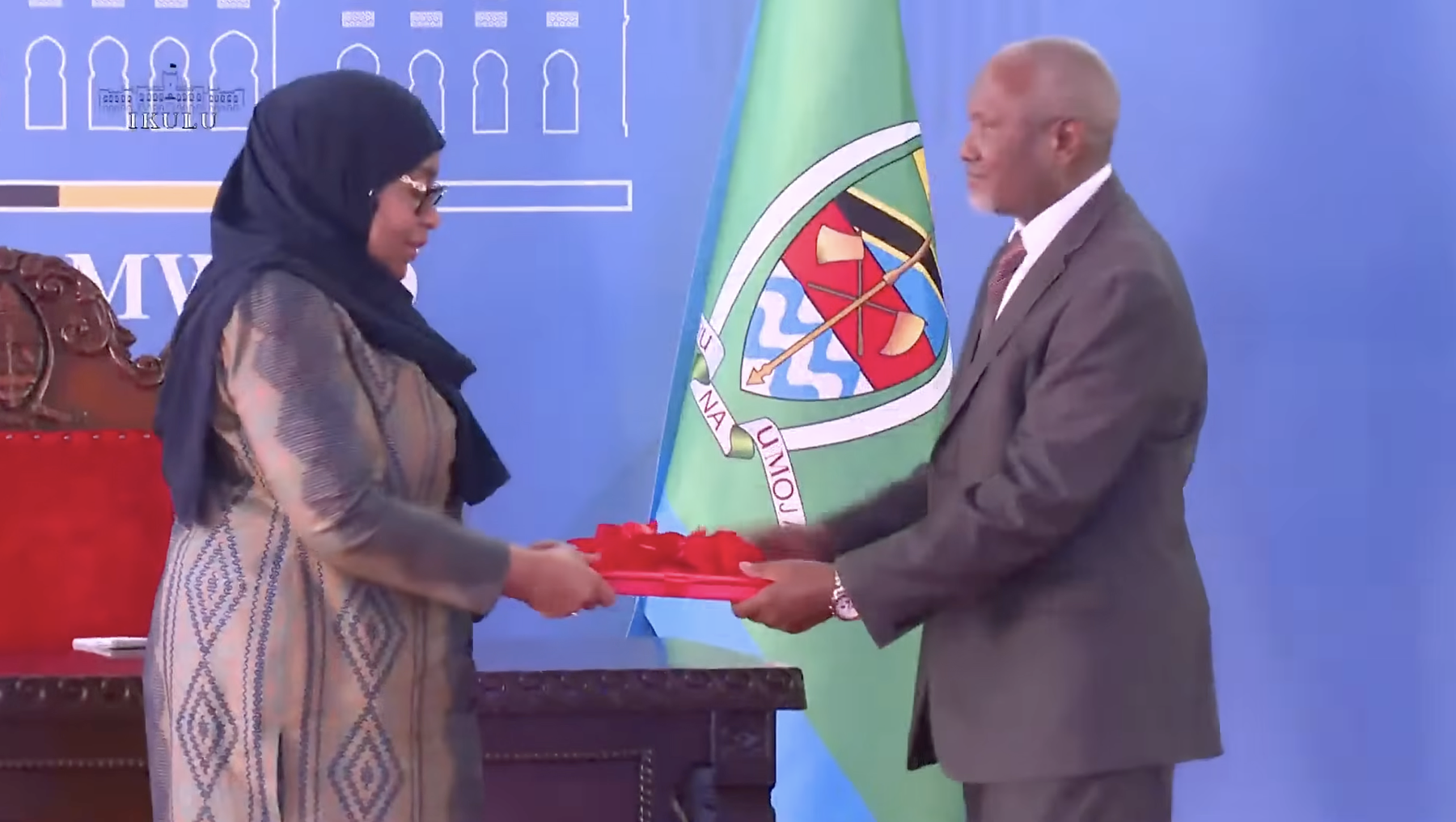
Two presidential commissions have recommended the mass eviction of Maasai people from some of East Africa’s most iconic conservation areas and tourist destinations.
The commissions were established by Tanzania’s President Samia Suluhu Hassan following previous evictions of Maasai pastoralists from parts of the world-famous Serengeti ecosystem, and large-scale protests in the Ngorongoro Conservation Area in 2024.
Now, despite a global outcry at the earlier evictions, the two Commissions have:
- Backed the previous evictions and called for them to continue, including in the UNESCO World Heritage Sites of Ngorongoro and neighboring Lake Natron.
- Described the long-standing Maasai presence in the area as an “environmental pressure” that needs to be reduced.
- Threatened local NGOs that support the Maasai, accusing them of “spreading misinformation or propaganda” because they “conflict with government interests.”
- Called for the “relocation” of all “non-conservation activities” [in other words, Maasai occupancy of the land] outside the conservation areas.
- Called for existing recognition of the Maasai people’s right to live in the Ngorongoro area to be removed.
An anonymous Maasai spokesperson said today: “We are blamed for environmental degradation while the unchecked expansion of tourism is ignored. Forced relocation, disguised as policy, has deprived our people of basic rights and dignity. We reject any continuation of these measures and condemn the Commission’s failure to reflect the voices, realities, and rights of our people.”
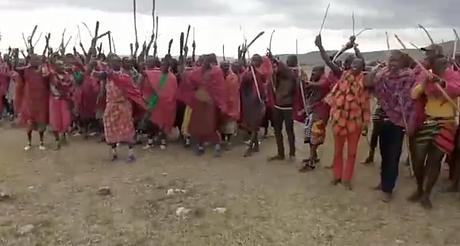
The authorities maintain that these are “voluntary relocations.” However, the Maasai have overwhelmingly rejected being moved.
The Ngorongoro Conservation Area is a UNESCO World Heritage Site. When it was established, the ancestral right of the Maasai to live there with their cattle was explicitly acknowledged. But UNESCO’s World Heritage Committee has backed the so-called “voluntary relocations”, and UNESCO endorses the “fortress conservation” model that underpins Tanzania’s approach.
Survival International Director Caroline Pearce said today, “These commissions were a sham, a gimmick designed to give Tanzania’s violent persecution of the Maasai a veneer of respectability. It was widely predicted that they’d back further evictions: the whole saga just confirms that colonial-style fortress conservation is alive and well in Tanzania today, and enthusiastically endorsed by UNESCO.
“These recommendations give the green light to more evictions, in Ngorongoro and beyond. And while the Maasai are robbed of their lands and livelihood, the government, tour operators and so-called conservationists will enrich themselves from a landscape emptied of its original owners.”
Source: survivalinternational.org
Related posts:
The Oakland Institute Calls on the Tanzanian Presidential Land Commissions to Respect & Ensure Rights of Maasai Living in the Ngorongoro Conservation Area
Call to Sever Ties with Tanzanian Government Over Latest Human Rights Abuses Against the Maasai
 Worldwide Condemnation Over Violence against the Maasai by Tanzania Security Forces
 US Luxury Safari Operator Tightens Stranglehold Over Maasai Land in Tanzania

East African women unite and meet in Nairobi to develop strategies to protect communal tenure systems and collectively resist false climate solutions.

African women push for reparations and environmental accountability after landmark Climate Justice Day.

Nigerian Banks under fire over ESG failures as a new report exposes Weak Climate and Human Rights Compliance.

Maasai protest evictions from Ngorongoro as UN experts warn conservation must respect rights

Breaking: Ugandan Court jails eight Anti-EACOP activists as crackdown on dissent deepens.

U.S. Peace Efforts in the DRC: Protecting Communities or Minerals?

African women are rising for climate justice and reparations on the inaugural continental day of action.

Breaking: Land-related cases increase by 67% in Uganda – Police report reveals.

Innovative Finance from Canada projects positive impact on local communities.
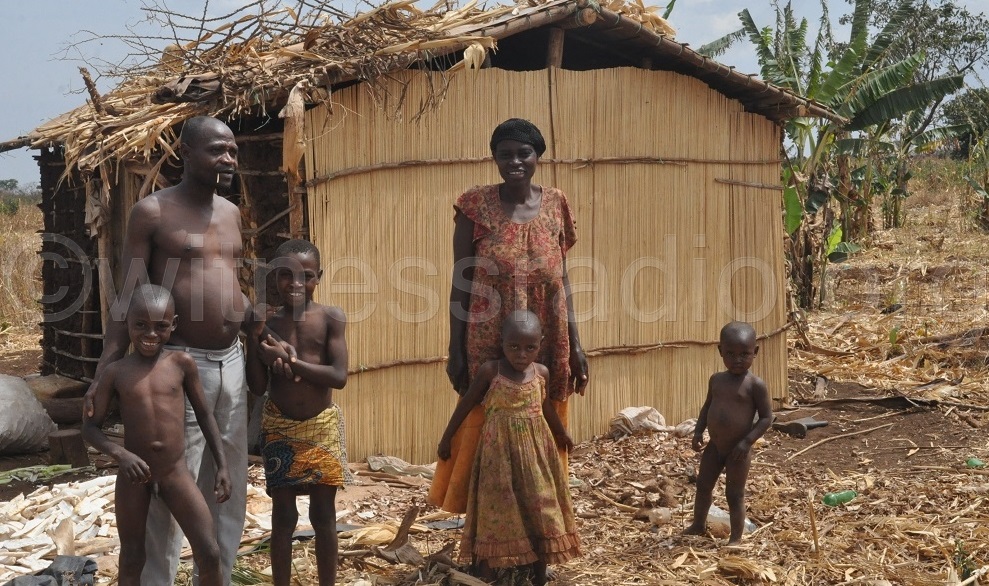
Over 5000 Indigenous Communities evicted in Kiryandongo District

Petition To Land Inquiry Commission Over Human Rights In Kiryandongo District

Invisible victims of Uganda Land Grabs
-
 MEDIA FOR CHANGE NETWORK2 weeks ago
Breaking: Ugandan Court jails eight Anti-EACOP activists as crackdown on dissent deepens.
-
 MEDIA FOR CHANGE NETWORK2 weeks ago
African women are rising for climate justice and reparations on the inaugural continental day of action.
-

 MEDIA FOR CHANGE NETWORK2 weeks ago
Agroecological farming: EAC Bill moves to Parliament to establish a regional legal framework to protect and promote sustainable farming and food systems.
-
 MEDIA FOR CHANGE NETWORK4 days ago
African women push for reparations and environmental accountability after landmark Climate Justice Day.
-
 MEDIA FOR CHANGE NETWORK4 days ago
Nigerian Banks under fire over ESG failures as a new report exposes Weak Climate and Human Rights Compliance.
-
 MEDIA FOR CHANGE NETWORK2 weeks ago
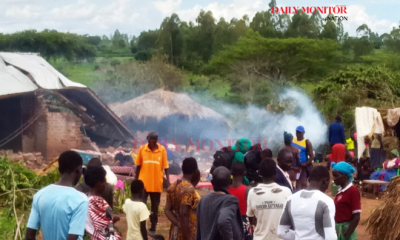
Govt launches war on land fraud, illegal evictions
-
 MEDIA FOR CHANGE NETWORK2 days ago
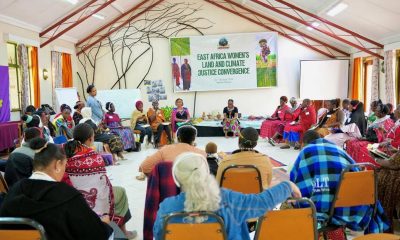
East African women unite and meet in Nairobi to develop strategies to protect communal tenure systems and collectively resist false climate solutions.
-
 NGO WORK6 days ago
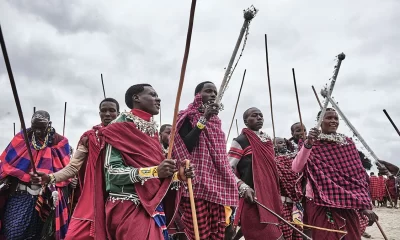
UN Experts Put Tanzanian Government on Notice – “Ensure Transparency and Respect for Indigenous Peoples’ Rights in Ngorongoro”