Connect with us

MEDIA FOR CHANGE NETWORK

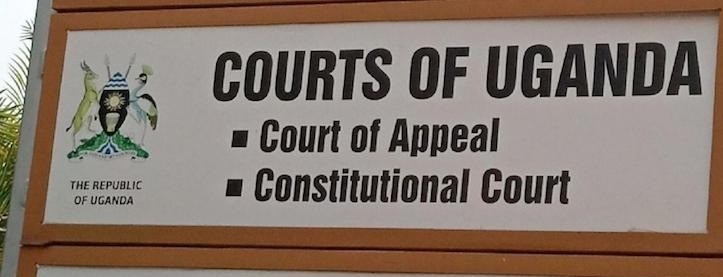
Court Ruling: RDCs and police cannot stop lawful land evictions.

Published

on

By Witness Radio Team.

Uganda’s Constitutional Court has ruled that Resident District Commissioners (RDCs), police, and other executive actors have no authority to stop, suspend, delay, or require additional approvals for lawful court eviction orders, in a landmark judgment that reinforces judicial independence.

The ruling comes amid escalating land conflicts and follows presidential directives that require all evictions to be scrutinized by the District Security Committees, chaired by Resident District Commissioners (RDCs), in consultation with the Ministry of Lands. An RDC is a constitutional representative of the President at the district and local government levels.

Under Uganda’s 2021 Land Eviction Guidelines and Practice Directions, court agents may carry out evictions after strict legal requirements are fulfilled. These include a valid court order or decree authorizing the eviction, an eviction order clearly identifying affected persons or structures, a notice of eviction or demolition issued to affected parties, and a warrant of eviction or demolition.

However, many evictions in Uganda have been criticized as forceful or unlawful, carried out without a proper due process.

In a presidential communication in 2022, President Museveni directed that no eviction should occur in any district without a District Security Committee meeting chaired by RDCs and conducted in consultation with the Ministry of Lands.

But court Bailiffs under the umbrella body, Uganda Court Bailiffs Association, challenged the President’s directive and petitioned the Constitutional Court of Uganda, arguing that even where valid court orders exist, RDC-led security committees have frequently interfered with lawful enforcement.

Court records listed the petition as Uganda Court Bailiffs Association Ltd vs Attorney General (Constitutional Petition No. 0001 of 2023),

The Constitutional Court addressed that tension, holding that enforcement of court orders is not an executive function but an integral component of judicial power.

“The court therefore reiterates that enforcement of judicial decisions remains a core judicial function. Any participation by non-judicial actors must be facilitative only, and not supervisory or controlling,” The ruling, which Witness Radio has seen a copy of, states.

The 2023 petition further challenged what it described as persistent interference by the executive arm of government, including RDCs, police, District Internal Security Officers (DISOs), and local councils in the enforcement of court orders.

According to the petitioners, security agencies had, over time, imposed unauthorized “clearances,” halted executions, confiscated court documents, and frustrated lawful enforcement of judicial decisions.

In its decision, the Constitutional Court distinguished facilitating and controlling court executions.

“Any conduct by executive officials that purports to halt execution, confiscate court process, subject judicial warrants to extra-judicial “clearance” or ‘approval,’ or otherwise frustrate lawful execution amounts to a direct encroachment upon judicial authority and is inconsistent with Articles 2, 126, and 128 of the Constitution of the Republic of Uganda.” The judgment stated.

The judgment, concurred in by Deputy Chief Justice Flavian Zeija and Constitutional Court judges Frederick Egonda Ntende, Florence Nakachwa, and Ketrah Katunguka, acknowledged that security agencies may lawfully participate during sensitive enforcement exercises, including land evictions, particularly where there is risk of violence or public disorder. However, the judges stressed that such involvement must be strictly limited.

“Where the execution of a court order is likely to provoke violence, resistance, or a breach of the peace, security agencies are lawfully entitled to intervene for the limited purpose of maintaining peace, protecting life and property, and ensuring that the process does not descend into disorder,” the judgment reads.

But the court warned that this supportive role has “clear constitutional limits.” “Security agencies do not possess authority to review, vary, suspend, veto, or otherwise sit in judgment over court orders. The direction and supervision of execution remain the exclusive preserve of the courts.”

The court further clarified that security agencies may verify the authenticity of court orders where necessary, particularly in cases involving forged, irregularly issued, or improperly extracted court documents.

“Such verification, however, must remain strictly confined to confirming authenticity. It must not be turned into a process for questioning the legal validity, correctness, propriety, or enforceability of the order itself, for those are matters reserved exclusively for the courts. Nor must it become a device for delay, obstruction, refusal, or abuse. Verification is legitimate only where it is undertaken promptly, in good faith, and solely for the purpose of ascertaining that the order sought to be enforced is genuine. Once authenticity is confirmed, security agencies are bound to act in aid of, and not in derogation from, the authority of the court,” the ruling states.

The ruling raises new legal questions about the implementation of recent presidential directives on land evictions.

In a presidential communication in 2022, President Museveni directed that no eviction should occur in any district without a District Security Committee meeting chaired by RDCs and conducted in consultation with the Ministry of Lands. He further warned that members of District Security Committees would face consequences if evictions occurred outside this framework.

The President also warned magistrates and judges against facilitating illegal evictions in collusion with land grabbers and tasked the Minister of Lands with reporting judicial abuses to the Attorney General for possible legal action.

However, the Constitutional Court ruling appears to place constitutional limits on the role of executive actors in enforcing lawful court orders.

The judgment arrives against a backdrop of increasing land conflicts across Uganda, where forced evictions, land-grabbing allegations, and court-enforced removals remain a major source of tension.

It is unclear whether the President’s office will appeal the ruling.

Continue Reading

MEDIA FOR CHANGE NETWORK

Mbale City Senior Lands Officer Charged with Abuse of Office Over Sale of Govt Property

Published

on

KAMPALA — A senior land management official in Mbale City has been arraigned before the Anti-Corruption Division of the High Court on charges of abuse of office and fraudulent procurement of a certificate of title after allegedly facilitating the irregular sale of government-allocated land to a private businessman.

Emmanuel Paul Kigaye appeared in court Tuesday following his arrest by the State House Anti-Corruption Unit in collaboration with the Criminal Investigations Directorate and the Office of the Director of Public Prosecutions.

According to the prosecution, between September 2019 and May 2023, Kigaye, while serving as senior land management officer at Mbale City, engaged in an arbitrary act prejudicial to his employer’s interests. He is accused of irregularly causing the Registrar of Titles at the Mbale Ministry Zonal Office to issue a certificate of title for Plot 27, Bishop Masaba Road, in the name of businessman Moses Wamatsembe.

The state alleges that the action was illegal because the plot had already been allocated to the Dairy Development Authority. Prosecutors further claim that Kigaye fraudulently processed and procured the registration of a freehold certificate of title — FRV MBA199 Folio 22, instrument number MBA-0009476 — for land measuring approximately 0.5040 hectares at the same location, still in Wamatsembe’s name.

Kigaye denied the charges. He was remanded to Luzira Prison and is scheduled to reappear in court July 16.

The case highlights ongoing efforts by anti-corruption agencies to tackle irregularities in land administration, a sector long plagued by disputes and allegations of malfeasance in Uganda. Land management officers wield significant influence over title processing and allocations, making the position susceptible to abuse when proper safeguards are bypassed.

The State House Anti-Corruption Unit, established by President Yoweri Museveni in December 2018 under Article 99(4) of the Constitution, was created to fast-track the resolution of corruption complaints received by the presidency. Since its inception, the unit has conducted more than 400 operations across more than 100 districts, resulting in the arraignment of more than 856 suspects and 150 convictions. It has also recovered billions of shillings in public funds and facilitated the interdiction of numerous corrupt officials.

The arrest of Kigaye forms part of the unit’s intensified scrutiny of public officials suspected of undermining government interests through corrupt land deals. Such cases often involve collusion between bureaucrats and private individuals to divert public resources for personal gain, eroding public trust in local governance and development authorities.

Court proceedings are expected to shed more light on the alleged transaction as investigations continue. Officials from Mbale City and the Dairy Development Authority have yet to issue public statements on the matter.

Source: pmldaily.com

Continue Reading

MEDIA FOR CHANGE NETWORK

Kibaale Residents Raise Corruption Concerns Over Delayed Land Title Processing

Published

on

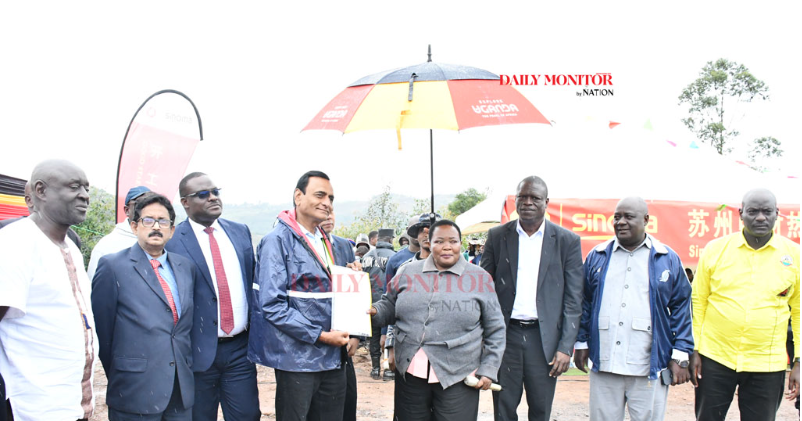
Residents of Kibaale District have accused officials of corruption and unnecessary delays in the processing of land titles, saying the challenges continue to fuel land conflicts and deny vulnerable communities secure land ownership. The concerns were raised during a Uganda Land Commission sensitisation on the Systematic Land Adjudication and Certification programme.

Residents of Kibaale District have raised concerns over alleged corruption and prolonged delays in the processing of land titles, saying the challenges continue to affect land ownership and fuel disputes within communities.

The concerns were raised during a community sensitisation meeting organised by the Uganda Land Commission (ULC) on the Systematic Land Adjudication and Certification (SLAC) programme, ahead of the issuance of more than 2,000 land titles covering 647 hectares (1,600 acres) of land purchased by the government from Fred Kasozi for beneficiary communities.

The land, located on Block 241, Plot 1 in Buyanga, covers Kasambya, Kineka A, Kikonge, and Kidukuule villages in Buyanga Sub-county, Kibaale District.

Residents welcomed the initiative but questioned why many beneficiaries under previous phases of the programme are yet to receive their land titles despite completing the registration process several years ago

They argued that the delays have created uncertainty over land ownership and contributed to an increase in land-related disputes.

Community members also alleged that corruption within the land administration process has made it difficult for vulnerable people to access land titles, with some officials reportedly demanding bribes before processing applications.

Ibrahim John Mulumba, a resident of Kibaale Town Council, said he applied for a land title more than six years ago but has never received it.

“Some of us processed our land titles over six years ago, but they have never been released. We believe some of the delays are because people could not afford to pay bribes. Corruption among some land officers has frustrated many applicants,” Mulumba said.

He further claimed that only a few people managed to obtain land titles through the intervention of adjudication committees.

Janepher Mbabazi, a resident of Kikonge A Village, accused some government officials of promoting corruption, which she said has contributed to increasing cases of land grabbing.

Matia Birungi, the LC I Chairperson of Kasambya Village, welcomed the government’s intervention, saying the programme offers a lasting solution to persistent land conflicts affecting communities.

Augustine Bugara from the Uganda Land Commission warned officials against engaging in corrupt practices, noting that such behaviour undermines government programmes intended to improve people’s livelihoods.

“Corruption sabotages government programmes and denies intended beneficiaries the services they deserve,” Bugara said.

Vincent Kasaija, the LC II Chairperson of Kibaale, applauded the government for rolling out the programme, saying secure land ownership would promote peaceful coexistence and create a stable environment for economic development.

Kenneth Kabyanga, Chairperson of Kibaale Town Council, urged the Commission to ensure that land titling is implemented in line with the town’s physical development plan to avoid future planning challenges within the central business area.

Tom John Kasenge, a Commissioner at the Uganda Land Commission, said the programme is intended to improve community livelihoods by securing land rights and reducing land-related conflicts.

“The programme is aimed at promoting community livelihoods through agriculture by securing land ownership and ensuring communities live in a conflict-free environment,” Kasenge said.

He explained that communities who have occupied the land as bona fide occupants would eventually receive legal ownership, enabling them to invest confidently in long-term development.

Kasenge also outlined the requirements for processing land titles, noting that beneficiaries would pay processing fees ranging between Shs30,000 and Shs40,000.

He said the exercise would begin with community mobilisation, followed by boundary opening, land surveys, plot subdivision, and eventual issuance of land titles.

Responding to concerns raised by residents, Kasenge assured the community that the Commission remains committed to addressing challenges affecting the programme and finding sustainable solutions to land disputes.

Meanwhile, Kibaale Resident District Commissioner Stephen Byaruhanga acknowledged the existence of corruption within the district’s land administration system, alleging that some officials attached to the District Land Board had frustrated legitimate applicants.

“There have been corruption tendencies involving some officials, and many people have failed to benefit because of those practices,” Byaruhanga said.

He requested the Uganda Land Commission to provide his office with records from previous land title processing exercises to facilitate investigations into cases where beneficiaries never received their titles.

“Having this information will enable the security team to investigate those who frustrated the process and ensure accountability,” he added.

John Byarugaba, a staff surveyor in the Kibaale District Lands Office, said preparations for the latest land title distribution exercise had been completed.

“We already have everything in place, including survey stones, and we are ready to begin the exercise,” Byarugaba said.

He explained that under Block 244, Plot 20 in Karuguza, 912 land titles were processed and all beneficiaries received them, while under Block 178, Plot 1 in Nyamarunda Town Council, 1,517 land titles were processed, although a few remain uncollected.

He added that approximately 200 land titles under Block 244, Plot 19 in Buyaga, Karuguza, are still pending processing.

Source: nilepost.co.ug

Continue Reading

MEDIA FOR CHANGE NETWORK

New MPs to undergo orientation on land governance

Published

on

KAMPALA – Members of Uganda’s 12th Parliament are set to participate in a high-level orientation on land governance on 17th July 2026 at the Parliamentary Conference Hall, in a move aimed at strengthening legislators’ understanding of one of the country’s most complex and sensitive development issues.

The orientation, organised by the Uganda Parliamentarians Land Management Forum (UPLMF) in collaboration with the Ministry of Lands, Housing and Urban Development, will bring together Members of Parliament, government officials, development partners, technical experts and civil society organisations to discuss emerging land governance challenges and the role of Parliament in promoting equitable, transparent and sustainable land management. Land remains a critical national asset that underpins  agriculture, investment, infrastructure development, environmental conservation and social stability.

However, persistent challenges such as land conflicts, illegal evictions, insecure land tenure, weak land administration systems and limited public awareness continue to hindersocio-economic transformation. Parliament has consistently identified land governance as a priority area requiring stronger legislative oversight and policy implementation.

The orientation is expected to equip legislators with practical knowledge on Uganda’s land laws, the National Land Policy, customary and statutory land tenure systems, land administration institutions, and the rights and responsibilities of citizens. Special attention will also be given to gender-responsive land governance, dispute resolution mechanisms, and the importance of protecting vulnerable groups, including women and youth, in accessing and owning land.

Participants will engage with experts from government, academia, development partners and civil society, providing an opportunity to exchange experiences and identify policy interventions that can strengthen land governance across the country.

According Charles Opolot, the orientation comes at an important time as the new Parliament begins its legislative work. It is expected to prepare Members of Parliament to effectively debate land-related legislation, scrutinise government programmes, monitor implementation of land policies and respond to constituents’ concerns on land matters.

Charles Opolot, Advocacy and Partnership Manager with the forum, believes that well-informed legislators will contribute significantly to reducing land-related disputes, promoting responsible land administration and advancing inclusive national development.

The orientation has attracted support from development partners such as Oxfam, Pelum Uganda, Cordaid and Zoaamong others who committed to improving land governance and strengthening parliamentary engagement on land issues. It also reflects growing recognition that effective land governance is central to achieving sustainable development,  food security, environmental protection and economic growth.

As Uganda continues to experience increasing pressure on land arising from population growth, urbanisation and commercial investment, stakeholders hope that the orientation will strengthen Parliament’s capacity to champion policies that promote justice, transparency and equitable access to land for all Ugandans.

Source: pmldaily.com

Continue Reading

Resource Center

Legal Framework

READ BY CATEGORY

Facebook

Newsletter

Subscribe to Witness Radio's news and report updates


Trending

Subscribe to Witness Radio's news and report updates