Connect with us

MEDIA FOR CHANGE NETWORK

EU delegation praises Uganda’s oil and gas progress amid mounting land and human rights challenges in the Albertine Region.

Published

on

By the Witness Radio Team

Hoima, Uganda — On May 7, the European Union marked 50 years of partnership with the Government of Uganda during the Europe Day 2026 celebrations in Kampala, attended by EU members, Ugandan officials, development partners, and diplomats.

It’s reported that over the past five decades, the EU has invested EUR 5 billion in development support, alongside a similar amount of European private investment. This partnership progressed to engagements in trade, investment, energy, climate action, education, health, and humanitarian support.

Focusing on sustainable growth of the EU’s support, part of the celebrations involved a visit to the Albertine oil graben by the EU delegation, with several ambassadors from EU countries, to reflect on the ongoing transformations in oil and gas projects in the Albertine region and on the EU’s commitments to its development ambitions.

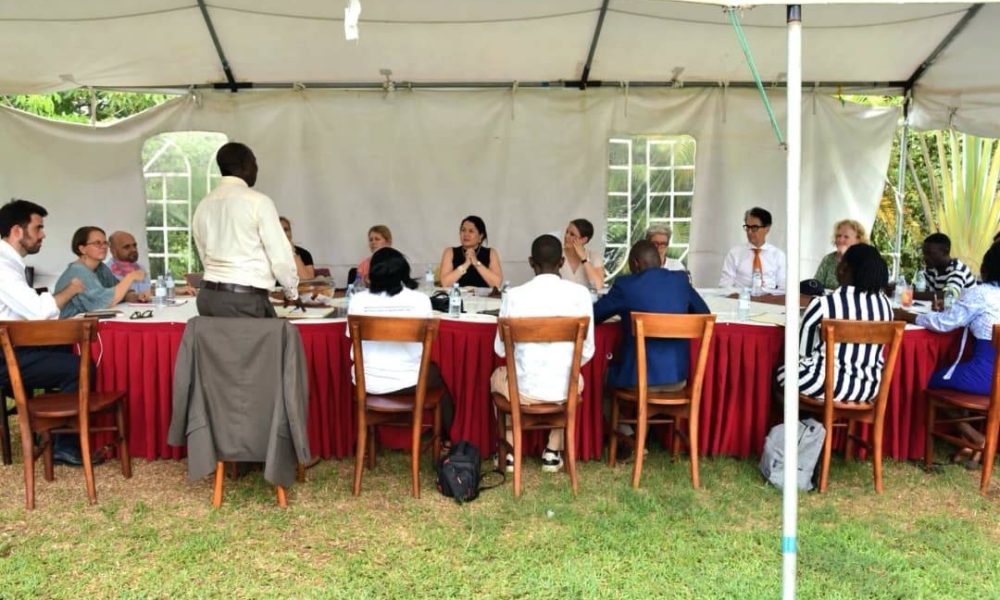
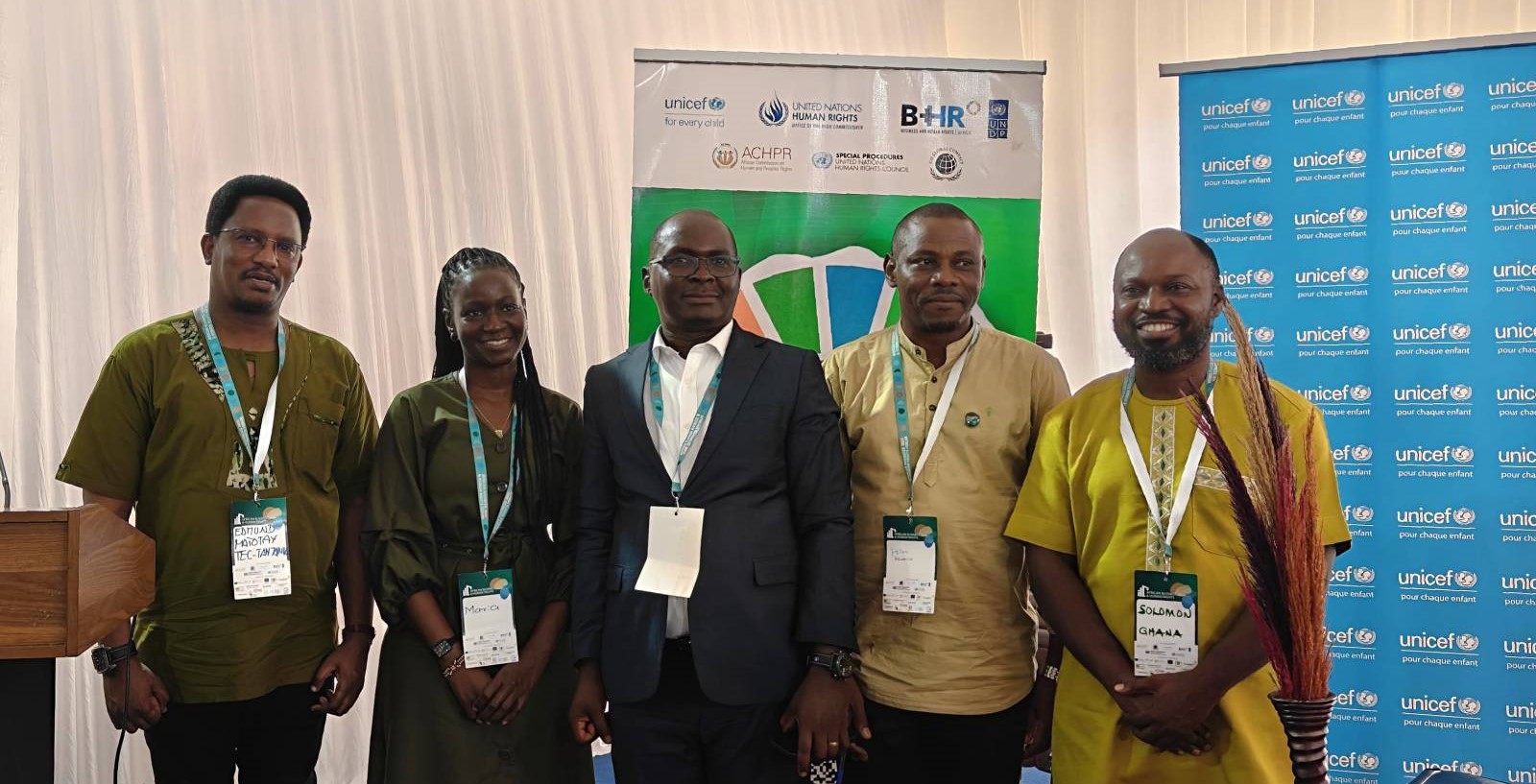
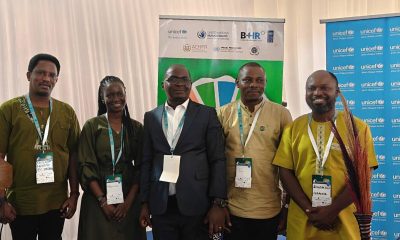
During the visit on May 19 2026, the EU delegation engaged selected Land and Environmental Defenders (LEDs) from Uganda’s oil-rich Albertine region who are beneficiaries of the Monitoring, Documentation and Advocacy for Human Rights in Uganda (MDA-HRU) project. The project is being implemented by Witness Radio Uganda and the National Coalition of Human Rights Defenders Uganda (NCHRD-U), in partnership with DanChurchAid and funded by the European Union. Besides, the Delegation visited several oil and gas projects and surrounding communities.

The visit concluded on May 20 2026, with a dinner at Hoima City Stadium, attended by Several EU country ambassadors, Hoima Local Government authorities, Hoima City officials, development partners, and Civil society organizations. Addressing the guests, H.E. Jan Sadek, European Union Ambassador to Uganda, noted the large-scale and importance of the oil and gas developments in the mid-western region of Uganda, but also acknowledged the complex social, environmental, and human rights issues that come with such investments.

“The future is already unfolding quickly. Today we were in Buliisa with TotalEnergies and its partners, learning more about one of the largest industrial energy projects in East Africa,” Sadek said.

He thanked TotalEnergies, its General Manager Philippe Groueix, and the company’s staff, praising what he described as their openness and hospitality during the visit.

“What we saw was very impressive in scale and ambition. We visited the Tilenga Central Processing Facility and oil rigs both inside and outside Murchison Falls National Park, and saw efforts to reduce the project’s footprint in the area. These developments are very significant for Hoima and Buliisa, and for Uganda and the wider region.” He added.

Sadek also pointed to Europe’s growing economic ties with Uganda, noting that European firms remain among the country’s largest foreign investors.

“TotalEnergies is not just a major investment in Uganda, but also part of the broader economic relationship between Europe and Uganda. The European Union remains one of Uganda’s biggest export markets outside the region and a long-standing development partner,” he further said.

Challenges amidst oil and gas developments

However, alongside the praise for the sector’s economic potential, land and environmental defenders raised concerns over escalating land pressure, delayed compensation, environmental degradation, and shrinking civic space linked to large-scale oil investments.

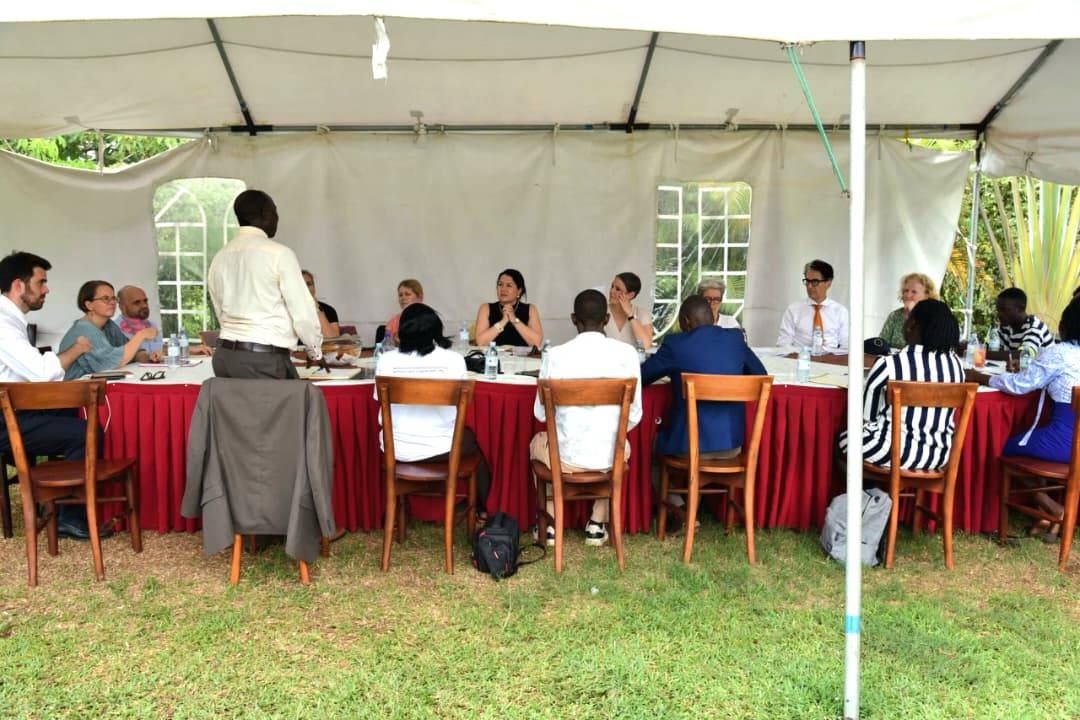
The concerns were raised during a European Union feedback and engagement meeting held on May 19 at Miika Eco Resort Hotel in Hoima District. The session brought together land and environmental rights defenders, project partners including Witness Radio Uganda, and European Union representatives to review project progress and assess emerging human rights concerns.

Defenders told the EU delegation that oil-related developments have intensified land pressure in the Albertine region through projects associated with Uganda’s petroleum sector, including the East African Crude Oil Pipeline (EACOP), Tilenga, and Kingfisher projects.

Participants reported prolonged delays in compensation for households whose land has been acquired or earmarked for oil-related projects, leaving many families facing prolonged uncertainty and livelihood insecurity.

“People are being affected by delayed compensation processes. Some have even rejected the compensation, saying it is too low, even though their land has already been taken. When people raise complaints, they face intimidation,” Gloria Mugonzebwa, one of the defenders, told the Delegation.

Beyond land concerns, defenders raised alarm over increasing human-wildlife conflict, which they linked to ongoing oil exploration and infrastructure development in and around protected ecosystems, including national parks.

They said disturbances associated with construction activities, industrial lighting, forest encroachment, and vibrations have contributed to wildlife displacement into neighboring communities.

Environmental organizations such as the Africa Institute for Energy Governance (AFIEGO) have previously raised similar concerns, warning that oil activities, climate change, and poaching are reshaping ecosystems in Murchison Falls National Park.

In its 2024 report, How Oil Activities, Climate Change, and Poaching Are Negatively Reshaping Murchison Park, AFIEGO documented that between 2023 and 2024, more than five people were killed in elephant-related incidents, highlighting growing human-wildlife tensions around the park.

Participants also raised concerns over environmental degradation linked to oil development, including deforestation, forest encroachment, and alleged risks of water contamination in affected communities.

“These developments are changing the natural balance. Communities are now living with increased risks from displaced wildlife and environmental disruption,” Nyakato Hellen said.

Uganda has also witnessed the shrinking of civic space for community land and environmental defenders, particularly those questioning the impacts of mega-development projects.

Defenders who attended the meeting said it has become increasingly difficult to document and raise concerns about land and environmental abuses linked to oil investments.

“As activists, the biggest issue has been intimidation, and some defenders have been arrested in the course of their work,” Mr. Biira Kiwanuka Nassa revealed.

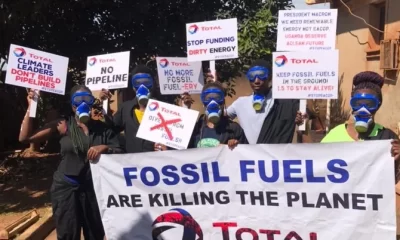
Global Witness reported in 2024 that more than 96 arrests linked to environmental activism against oil development activities in Uganda were recorded within only nine months, illustrating the scale of restrictions faced by activists.

“We used to be arrested when we spoke about violations. We had to demonstrate for companies to listen,” one defender said.

Need for sustained dialogue.

In response, the European Union delegation emphasized the importance of sustained dialogue among governments, companies, civil society, and affected communities.

The Delegation acknowledged that large-scale projects, such as oil development, inevitably raise complex questions regarding land rights, compensation, environmental protection, biodiversity, and human rights.

“These issues deserve serious attention and continued dialogue,” the Delegation said.

The Delegation further stressed that inclusive development depends on communities being informed, respected, and meaningfully involved in decisions that affect them.

“Development works best when communities feel included, respected, and heard. That is why our program has included not only meetings with authorities and investors, but also discussions with civil society, community representatives, and local stakeholders,” the Delegation added.

About the MDA-HRU project

DanChurchAid coordinates the project in partnership with Witness Radio. It was designed to promote the protection and respect of human rights and strengthen access to remedy in Uganda’s Mid-Western and Karamoja sub-regions, where private sector actors are increasingly involved in land-based investments.

Speaking at the meeting, Mr. Christopher Kiwanuka, Director of Programs at Witness Radio, welcomed the EU delegation’s assessment mission, noting that it reflects growing recognition of the documentation work undertaken under the MDA-HRU project.

He said the project has strengthened the capacity of land and environmental defenders to document violations and engage duty bearers more effectively.

Uganda’s Mid-Western region remains among the areas most affected by land conflicts linked to large-scale investments, particularly oil development.

Since the discovery of oil in 2006, the sector has generated expectations of economic transformation alongside persistent concerns over displacement, environmental degradation, and unresolved human rights impacts in affected communities.

Continue Reading

MEDIA FOR CHANGE NETWORK

Court Ruling: RDCs and police cannot stop lawful land evictions.

Published

on

By Witness Radio Team.

Uganda’s Constitutional Court has ruled that Resident District Commissioners (RDCs), police, and other executive actors have no authority to stop, suspend, delay, or require additional approvals for lawful court eviction orders, in a landmark judgment that reinforces judicial independence.

The ruling comes amid escalating land conflicts and follows presidential directives that require all evictions to be scrutinized by the District Security Committees, chaired by Resident District Commissioners (RDCs), in consultation with the Ministry of Lands. An RDC is a constitutional representative of the President at the district and local government levels.

Under Uganda’s 2021 Land Eviction Guidelines and Practice Directions, court agents may carry out evictions after strict legal requirements are fulfilled. These include a valid court order or decree authorizing the eviction, an eviction order clearly identifying affected persons or structures, a notice of eviction or demolition issued to affected parties, and a warrant of eviction or demolition.

However, many evictions in Uganda have been criticized as forceful or unlawful, carried out without a proper due process.

In a presidential communication in 2022, President Museveni directed that no eviction should occur in any district without a District Security Committee meeting chaired by RDCs and conducted in consultation with the Ministry of Lands.

But court Bailiffs under the umbrella body, Uganda Court Bailiffs Association, challenged the President’s directive and petitioned the Constitutional Court of Uganda, arguing that even where valid court orders exist, RDC-led security committees have frequently interfered with lawful enforcement.

Court records listed the petition as Uganda Court Bailiffs Association Ltd vs Attorney General (Constitutional Petition No. 0001 of 2023),

The Constitutional Court addressed that tension, holding that enforcement of court orders is not an executive function but an integral component of judicial power.

“The court therefore reiterates that enforcement of judicial decisions remains a core judicial function. Any participation by non-judicial actors must be facilitative only, and not supervisory or controlling,” The ruling, which Witness Radio has seen a copy of, states.

The 2023 petition further challenged what it described as persistent interference by the executive arm of government, including RDCs, police, District Internal Security Officers (DISOs), and local councils in the enforcement of court orders.

According to the petitioners, security agencies had, over time, imposed unauthorized “clearances,” halted executions, confiscated court documents, and frustrated lawful enforcement of judicial decisions.

In its decision, the Constitutional Court distinguished facilitating and controlling court executions.

“Any conduct by executive officials that purports to halt execution, confiscate court process, subject judicial warrants to extra-judicial “clearance” or ‘approval,’ or otherwise frustrate lawful execution amounts to a direct encroachment upon judicial authority and is inconsistent with Articles 2, 126, and 128 of the Constitution of the Republic of Uganda.” The judgment stated.

The judgment, concurred in by Deputy Chief Justice Flavian Zeija and Constitutional Court judges Frederick Egonda Ntende, Florence Nakachwa, and Ketrah Katunguka, acknowledged that security agencies may lawfully participate during sensitive enforcement exercises, including land evictions, particularly where there is risk of violence or public disorder. However, the judges stressed that such involvement must be strictly limited.

“Where the execution of a court order is likely to provoke violence, resistance, or a breach of the peace, security agencies are lawfully entitled to intervene for the limited purpose of maintaining peace, protecting life and property, and ensuring that the process does not descend into disorder,” the judgment reads.

But the court warned that this supportive role has “clear constitutional limits.” “Security agencies do not possess authority to review, vary, suspend, veto, or otherwise sit in judgment over court orders. The direction and supervision of execution remain the exclusive preserve of the courts.”

The court further clarified that security agencies may verify the authenticity of court orders where necessary, particularly in cases involving forged, irregularly issued, or improperly extracted court documents.

“Such verification, however, must remain strictly confined to confirming authenticity. It must not be turned into a process for questioning the legal validity, correctness, propriety, or enforceability of the order itself, for those are matters reserved exclusively for the courts. Nor must it become a device for delay, obstruction, refusal, or abuse. Verification is legitimate only where it is undertaken promptly, in good faith, and solely for the purpose of ascertaining that the order sought to be enforced is genuine. Once authenticity is confirmed, security agencies are bound to act in aid of, and not in derogation from, the authority of the court,” the ruling states.

The ruling raises new legal questions about the implementation of recent presidential directives on land evictions.

In a presidential communication in 2022, President Museveni directed that no eviction should occur in any district without a District Security Committee meeting chaired by RDCs and conducted in consultation with the Ministry of Lands. He further warned that members of District Security Committees would face consequences if evictions occurred outside this framework.

The President also warned magistrates and judges against facilitating illegal evictions in collusion with land grabbers and tasked the Minister of Lands with reporting judicial abuses to the Attorney General for possible legal action.

However, the Constitutional Court ruling appears to place constitutional limits on the role of executive actors in enforcing lawful court orders.

The judgment arrives against a backdrop of increasing land conflicts across Uganda, where forced evictions, land-grabbing allegations, and court-enforced removals remain a major source of tension.

It is unclear whether the President’s office will appeal the ruling.

Continue Reading

MEDIA FOR CHANGE NETWORK

The Indigenous Seeds movement in East Africa is convening in Kenya, with the potential to reshape the region’s food systems.

Published

on

By the Witness Radio team.

As climate change, commercial agriculture, and changing agricultural policies place growing pressure on farmer-managed seed systems, the first-ever Eastern Africa Indigenous Seeds Conference will be convened in Nairobi, Kenya, to discuss the future of indigenous seeds and food systems in the region.

The first-ever Eastern Africa Indigenous Seed Conference, convened by Seed Savers Network (SSN) in collaboration with other key partners, including Witness Radio, will bring together farmers’ organizations, researchers, policymakers, seed custodians, and food sovereignty advocates from 17th to 20th November 2026 in Nairobi, Kenya. This gathering offers a unique chance for regional stakeholders to influence the future of indigenous seed systems and amplify their collective voice.

According to Daniel Wanjama, Executive Director of Seed Savers Network, the conference will offer indigenous communities, seed-saving farmers, and practitioners worldwide an opportunity to exchange experiences, learn from one another, and strengthen collaboration on indigenous seed conservation.

“It’s a very important moment for all of us because it will be our moment to exchange our practices, to learn from each other, and also borrow whatever we can from each other.” Mr. Wanjama said.

He said the gathering would also provide space to recognize women’s crucial role in seed saving, agricultural biodiversity conservation, and the preservation of indigenous knowledge systems.

The four-day conference, set to take place at the Catholic University of Eastern Africa, occurs at a critical time when climate change, biodiversity loss, and repressive agricultural policies threaten traditional farming systems and local seed diversity.

For generations, indigenous seeds have helped communities adapt to changing weather patterns, preserve biodiversity, and maintain culturally rooted food systems. Recognizing their vital role can inspire stakeholders to value and protect local knowledge and seed diversity.

The conference, themed “Realizing the Right to Food through Seed Sovereignty,” highlights the importance of indigenous seeds in resilient food systems and seed sovereignty and encourages participation from a wide range of stakeholders.

Participants will engage in panel discussions, policy dialogues, side events, knowledge-sharing sessions, exhibitions, and regional networking to strengthen cooperation among farmers, farmer organizations, researchers, civil society actors, development partners, and government institutions.

Key discussions will examine how indigenous and local seed varieties contribute to climate adaptation and resilience, emergency seed responses during crises and disasters, conservation of agricultural biodiversity, and food and nutrition security, among others.

“The conference will create a lasting platform through which stakeholders can continue interacting, exchanging information and knowledge, and developing joint approaches to address shared challenges affecting indigenous seed systems,” Daniel added.

As global conversations on food systems and climate resilience intensify, the conference offers Eastern Africa a vital chance to reaffirm indigenous seeds as a cornerstone for sustainable agriculture and community resilience, inspiring collective action.

Continue Reading

MEDIA FOR CHANGE NETWORK

Stop favoring export-oriented production over strengthening local food systems – Food Sovereignty advocates to the African Development Bank officials.

Published

on

By the Witness Radio team.

Brazzaville: As the African Development Bank’s 2026 Annual Meetings drew to a close in Brazzaville on this Friday, policymakers, finance ministers, and development leaders renewed their demand for stronger economic reforms, expanded investment mobilization, and new approaches to financing Africa’s development ambitions in an increasingly fragmented global economy.

Held under the theme “Mobilizing Africa’s Development Financing at Scale in a Fragmented World,” the meetings brought together representatives from the Bank’s 81-member countries to debate debt pressures, climate financing, regional integration, private investment, and the future of Africa’s economic transformation. Discussions throughout the week stressed the urgency of strengthening domestic resource mobilization while attracting larger pools of development finance to address infrastructure gaps, food insecurity, and climate vulnerability.

The launch of the African Development Bank’s African Economic Outlook 2026 during the meeting, which started on Monday, the 25th, and ends today, the 29th of May 2026, reinforced both optimism and caution. While the report projected stronger continental growth prospects, it warned that rising debt burdens, shrinking concessional aid, and intensifying climate shocks continue to constrain African economies.

As discussions in Brazzaville focused on scaling development finance, food sovereignty advocates highlight that strengthening local food systems and supporting smallholder farmers are essential for inclusive growth and community resilience, and should be a priority for the African Development Bank.

The Alliance for Food Sovereignty in Africa (AFSA) has challenged the direction and accountability of the Bank’s agricultural financing, arguing that a significant share of development funding continues to favor industrial agribusiness approaches. At the same time, farmer-led food systems receive limited support.

AFSA’s review of African Development Bank agricultural financing between 2019 and 2025 found that Bank investments remain heavily concentrated in agro-industrial corridors, fertilizer and hybrid seed systems, mechanization, irrigation expansion, industrial processing, and corporate value chains.

Examining 20 Bank-funded agricultural projects, researchers concluded that none demonstrated strong alignment with agroecological principles such as crop diversification, soil health, ecological resilience, or community-led practices, highlighting a significant gap in sustainable practices and the need for more holistic approaches.

The findings also raise questions about the Bank’s climate financing claims. Although nearly half of its agricultural lending is classified as climate finance, researchers argue that many projects continue to reproduce input-intensive Green Revolution approaches that rely heavily on external seeds, fertilizers, and monoculture production systems.

“The real question is what this finance does once it reaches the ground. It is overwhelmingly funding an industrial model that sidelines smallholders and calls high-input monocultures ‘climate-smart.’ Africa’s farmers are not asking the Bank to stop investing — they are asking it to invest in systems that truly support local food sovereignty,” Said the Alliance for Food Sovereignty in Africa’s General Coordinator, Million Belay Ali.

The criticism by the agricultural organizations extends beyond financing patterns into questions of land and agricultural expansion. Research by the Institute for Poverty, Land and Agrarian Studies (PLAAS) at the University of the Western Cape disputes a core assumption underpinning the Bank’s Feed Africa agenda, “the idea that the African continent contains vast amounts of idle land available for large-scale agricultural development”.

Researchers highlight that smallholder farmers manage roughly 80 percent of Africa’s farmland and produce most of the food consumed across sub-Saharan Africa, underscoring their vital role and deserving of stronger support from the continental bank.

AFSA consultant Michael Ferally said the Bank’s agricultural investments increasingly link farmers to commercial value chains but often fail to strengthen local food systems or ecological resilience.

“Most of the agriculture, it is financing still follows an industrial model,” Ferally said in an interview with Witness Radio. “It heavily supports fertilizers, hybrid seeds, mechanization, irrigation, and large-scale processing infrastructure. In many cases, the aim is to integrate farmers into commercial value chains rather than strengthen local food systems.”

He added that this model risks reshaping food systems around export-oriented agribusiness and supermarket supply chains, in which small-scale farmers are treated primarily as suppliers rather than as central actors in food system design.

According to Ferally, an assessment of 20 Bank-supported projects found weak alignment with agroecological principles, with none scoring highly on ecological farming approaches. He said climate-smart agriculture programs, while widely promoted, often fail to deliver meaningful ecological resilience.

“Nearly half of agricultural investments are labeled as climate-related, but only a small share actually supports soil regeneration, biodiversity, or diversified farming systems. Without those elements, climate finance risks becoming a label rather than a meaningful transformation of agricultural practice,” He explained, emphasizing the need for genuine ecological outcomes in climate-related investments.

AFSA says these findings reinforce concerns that current investment models risk reshaping land-use systems in ways that could marginalize smallholder farmers, particularly when industrial value chains and certified seed systems are promoted at scale.

The organization is calling for the establishment of an agroecology transition financing window within the Bank’s agricultural portfolio, offering a promising pathway to support smallholder farmers, promote ecological resilience, and align investments with sustainable, locally rooted food systems, inspiring confidence among advocates and policymakers.

It argues that sufficient resources already exist within current agricultural finance flows to support a transition toward more ecologically sustainable and locally rooted food systems, if priorities are adjusted.

Continue Reading

Resource Center

Legal Framework

READ BY CATEGORY

Facebook

Newsletter

Subscribe to Witness Radio's newsletter


Trending

Subscribe to Witness Radio's newsletter