
NGO WORK
A new wave of land grabs strikes Tanzania

Tanzania was one of the most heavily targeted countries of a huge scramble for farmland around the world that followed the food and financial crises of 2008 and that was supposed to help solve global food insecurity. The large farm projects, which became a strategy of choice for donors, multinational corporations and some governments, ultimately caused more harm than good by exacerbating land conflicts and destroying people’s livelihoods. In Tanzania, most of these projects soon collapsed and caused miseries for small farmers. But, despite this tragic record, Tanzania’s government is pursuing another round of foreign agribusiness investment by turning hundreds of thousands of hectares of lands into block farms where corporations will produce export crops, not local foods for the people. With China looking to Tanzania as a new supply source for soybeans, the stage could be set for another wave of land grabs, with dire consequences for Tanzania’s small farmers.
It should have been the death knell for large-scale agribusiness in Tanzania. In early 2019, Kilombero Plantation Limited (KPL), the much-hyped, showcase model of the Southern Agricultural Growth Corridor for Tanzania (SAGCOT), went bankrupt.[1] Despite receiving tens of millions of dollars from foreign development banks and investors, the owner of this large-scale rice farm, a UK-based private equity fund, was unable to pay off its debts and the farm was seized by its creditors. Tanzania’s NMB Bank spent the next two years trying to find a buyer, before the government stepped in to acquire it, and then handed it over to the Army to manage.[2]
The 5,818-hectare rice farm was once highlighted by the G7 and the World Economic Forum as proof that large-scale agribusiness could drive Africa’s agricultural growth. But, with the firm in financial ruin, Kilombero Plantations Limited became instead a stark example of Tanzania’s misguided and failed decade-long drive to increase foreign investment in agriculture.
The collapse of Kilombero Plantations was the latest in a long list of failed agribusiness projects in Tanzania, ushered in by a series of donor-funded programmes under the Presidency of Jakaya Kikwete (2005-2015).[3] These programmes– beginning with Kilimo Kwanza in 2006, then SAGCOT in 2010, and finally Big Results Now in 2013– aimed to make large areas of land available to companies, on the assumption that these would make Tanzania an export powerhouse, ensure food security, and most importantly, bring employment, technology, services (training, inputs, machinery, etc) and new markets for the small farmers living near to the farms. SAGCOT alone claimed it would bring in USD 2.1 billion in private sector investment.[4] But after 10 years, very little of this promised investment had materialised, and, of the few projects that got off the ground, most had failed, leaving a legacy of problems for the affected communities to deal with.[5]
By the time of the Kilombero Plantations bankruptcy, Tanzania’s then President, Dr John Pombe Magufuli, had grown frustrated with the approach of his predecessor, and had begun charting a new course. He scrapped the Big Results Now programme and began winding down SAGCOT. His government cancelled funding to a SAGCOT “catalytic fund” that had been created through a World Bank Loan– a clear sign of the changed approach.[6] And he also launched a process to revoke dozens of land titles from companies that had failed to bring lands under production.[7]
But in 2021, Magufuli died, and his successor, his Vice-President, Samia Suluhu Hassan, quickly reversed direction. Under the leadership of her Minister of Agriculture, Hussein Bashe, large-scale agribusiness once again became the government’s priority and the doors were swung wide open for domestic or foreign companies wanting large areas of farmland. SAGCOT resumed its central role, with an expanded mandate to establish corridors across the whole country.[8] Hundreds of millions of dollars of public funds have been budgeted for large-scale irrigation and, through a programme that claims to support the involvement of youth in agriculture, hundreds of thousands of hectares of lands across the country are being cleared and consolidated into “block farms” and offered to companies for the production of specified export crops.[9]
Betting on tomorrow
The centrepiece of President Samia’s renewed effort to allocate lands to agribusiness companies is a programme called Building a Better Tomorrow (BBT).[10] Under this programme, the government designates and clears large areas of land for conversion to large-scale, irrigated agriculture, called “block farms”, in which a selection of youth and women, mainly from urban cities and graduates from universities, are allocated small plots of between 1 – 10 acres (0.4-4 ha), while local communities are sidelined. In July 2023, President Samia announced that all 52,000 youth who had applied to join the army that year would be drafted into the BBT programme.[11]
Each BBT block farm is to produce a specific crop for a company that co-invests in the operation. In the model, the company will supply the inputs and machinery and purchase all of the production. It can also get a 99-year lease on a portion of the block farm area to farm the lands itself. The BBT farmers meanwhile get 33 to 66 year titles, and, while they can transfer the titles to someone else, they cannot change the conditions of their contract. They will thus be at the mercy of the company controlling the farm from whom they must buy all of their inputs and to whom they must sell all of their harvests.[12]
President Samia has stated that 690,000 hectares around the country have already been identified for block farms, but there is no publicly available information about the exact locations. In January 2023, the government published a first call for investment proposals for various BBT block farms on 65,000 hectares in the regions of Dodoma, Mbeya, Kagera and Kigoma. Interested companies could apply for lands of between 400 to 8,000 hectares on each block farm.
In March 2023, the first BBT farm was officially opened in the Chamwino district of Dodoma Region. The Minister of Agriculture, Hussein Bashe, explained that an initial 162 hectares were allocated for training 812 youth selected to participate in the project.[13] Despite access to land being an issue for the local communities, most of the youth selected for the project are not local and have little of any agricultural experience. The farm in Dodoma is supposed to eventually extend to 11,453 hectares and will produce grapes for a wine processing plant. But there has been no public mention of any private investor as of yet.
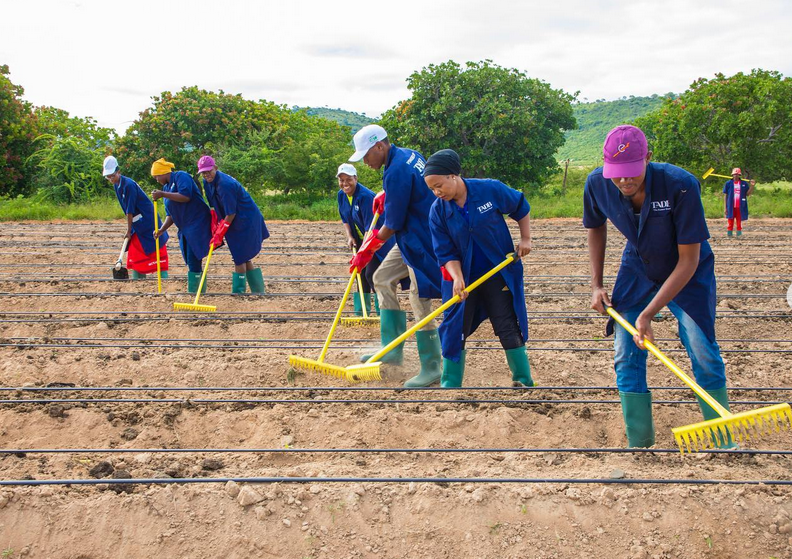 Promotional photoshoot of youth farmers at the BBT block farm in Dodoma, Tanzania, 25 March 2023. Source Twitter (X)
 Prudence Lugengo, a policy specialist with SAGCOT, says lands for another BBT farm have also been allocated in the regions of Katavi and Tabora. In this case, the BBT farm is said to be a massive, 120,000-hectare block farm that will produce wheat for the Tanzanian agribusiness company MeTL, owned by the Tanzanian billionaire and former politician Mohammed Dewji. According to Lugengo, MeTL will acquire 50,000 hectares for itself and the remaining 70,000 hectares will be allocated under the BBT programme for youth. MeTL did not respond to our requests for confirmation of the deal, and it is not clear how Dewji will be financing this project.[14] It should be noted that just a few years ago, Magufuli’s government revoked several titles for large areas of farmland belonging to Dewji because of his failure to bring them into production.[15]
Together with the aforementioned issues, the odds and prospects of the glorified BBT programme are questionable in its very early days, with allegations surfacing within the corridors of social media, accounting on the government’s failure to live and fulfil its promises. As of late January 2024, a letter alleged to have originated from one BBT youth participant was widely circulated on social media, asserting that the government had failed to allocate to them the promised 5 hectares of land, individually, (let alone the 10 hectares originally promised) and so has the government failed to establish irrigation facilities. Instead, 260 of the youth who had passed through the training programme were sent to a 600 acres farm area in Chinangali, where they are farming without irrigation or decent housing, and are producing sunflower under an off-take arrangement with a company, without any guarantee of a land allocation for themselves.[16]
Zambia has pursued a programme since 2006 to establish block farms of 100,000 hectares in each of its 10 provinces. Although the government failed to attract any “credible investors”, in 2023 it hoped to revive the programme through a USD 300 million loan from the World Bank for the construction of infrastructure at the farm sites.[17] The Government of Malawi also launched a block farm programme in 2020, consisting of a number of what it calls “mega farms” of around 5,000 hectares each. It too has struggled to attract significant private sector investment.[18]
A new soybean frontier for China?
Despite the pomp surrounding the roll-out of the BBT programme, there is little evidence of much interest from the private sector. The only significant funds that have so far been committed are from the government, which has pledged USD 1.4 billion over the next 10 years, and from a similar batch of donors to those who supported the SAGCOT era investment drive. These include the World Bank (USD 300 million), the African Development Bank (USD 100 million), AGRA (USD 40 million), the International Fund for Agricultural Development (USD 60 million) and USAID (USD 100 million).[19]
Soybeans could be an exception, and in particular, soybeans destined for China. Due to the growing tensions with the US and the war in the Ukraine, China is increasingly concerned about its dependence on these two countries for soybeans (as well as maize), and it is now looking to Africa as an alternative source of supply. Tanzania is one of three African countries that China has identified for the development of soybean exports. In 2020, it passed a phytosanitary measure to allow the import of soybeans from Tanzania and the first shipment was made the following year by China’s largest grain trader, COFCO.[20] In November 2022, President Samia signed a Comprehensive Strategic Cooperative Partnership with China during her visit to Beijing in which soybean exports were specified as an initial priority and a task force was created for implementation.
At the moment, Tanzania only produces 200,000 tonnes of soybeans per year– a mere drop in the bucket compared to China’s annual import of 100 million tonnes, most of which goes to produce animal feed and vegetable oil. Production would have to increase dramatically for Tanzania to become a significant supplier.
China’s largest seed company, Yuan Longping High-tech Agriculture, has been tasked with pursuing this potential. The company is part of the CITIC Group, China’s largest state-owned conglomerate, and it is already playing a key role in advancing China’s control over soybean and maize production in Brazil, China’s most important supplier. After entering Brazil in 2017, Longping quickly became one of the top seed companies in the country. Now Longping is looking to do the same in Tanzania, as China seeks to export the Brazilian model to Africa.
“We want to take Longping’s expertise in maize and soybean seeds to [Tanzania and Ghana]. There, the climate conditions, temperature and altitude are similar to those in Brazil and very favourable for the development of agriculture. We want to be facilitators of this process, teach them how to plant and produce grains so that in the future they will also be suppliers to China”, says Aldenir Sgarbossa, President of Longping’s Brazilian operations.[21]
In 2022 and early 2023, Longping sent delegations to Tanzania to secure political support and to identify areas for soybean production. Tests of its soybean varieties from Brazil are now underway, as well as for its hybrid maize and sorghum seeds, which will be grown in rotation with the soybeans, as is done in Brazil. While these initial varieties are not GMOs, Longping has several GMO varieties under testing and awaiting approval for commercial sale in China, and it has already had some of its GMO maize varieties approved for human consumption.
Longping says it will invest over USD 213 million (500 billion shillings) in a first phase for developing soybean production in the south of Tanzania and will also invest in the improvement of grain exporting facilities at the port of Dar es Salaam.
The company’s operations in Tanzania are being run through a joint venture with a Tanzanian businessman, the media mogul Joseph Kusaga, owner of Clouds Entertainment Group, along with his wife, Juhayna Kusaga. Longping also has high level support from within the Ministry of Agriculture, from SAGCOT and even from former President Kikwete, who has been using his position as a director of AGRA to encourage Tanzanian farmers to plant soybeans for export to China.[22] As evidence of Longping’s political connections, the government gave it special clearance to reduce the required time for testing of its seeds from five years to five seasons, making it possible for Longping to start large-scale production in 2024.[23]
The Tanzanian government is also making lands available for the company. An initial area of 53,000 ha is said to have been allocated as a BBT farm in the Chunya District of Mbeya Region. Longping Tanzania says it has “acquired” 10,000 ha of these lands for its own farm and claims to have already started farming, while the remaining 43,000 ha will be allocated to participating farmers who the company will supply with seeds, fertilisers, and machinery.[24] The farmers must sell their harvests exclusively to Longping Tanzania, which will then export to China, where the Chinese government has offered a guarantee to purchase all of the soybeans that are produced.[25]
 Vice-President of Tanzania Dr. Philip Mpango shakes hands with the CEO of Yuan Longping High-tech Agriculture, Liang Shi, outside the national State House. To the right is Deputy Minister of Agriculture, Anthony Mavunde. February 17, 2023 . Source : Twitter (X)
 Longping’s ambitions extend beyond this BBT farm. The company is also setting up block farms with the recently established Soybean Association of Tanzania.[26] According to the association’s chairman, Marcus Albany, these block farms will bring together a group of farmers, with each farmer contributing an area of land (minimum is 2 hectares and maximum is 10% of the entire block farm) to establish one large farm that will be managed as a group. The farm will operate under a contract with Longping, which stipulates the amount the farmers must pay Longping for the supply of inputs and machinery and the price they receive for the sale of their harvests, with the amounts renegotiated each season. As with the BBT farms, a farmer can transfer their share of the lands to another farmer, but that farmer must then take on the same conditions agreed to with Longping.
The Soybean Association of Tanzania and Longping have already formed one block farm in Morogoro Region that is presently at 5,700 hectares and they expect it to eventually reach 10,500 hectares. They are in the process of setting up another one in Lindi Region on 10,500 hectares, one in Katavi starting at 202 hectares and one in Sumbawanga that is still in the process of negotiation with a private landowner. Albany says that, although his association is not made up of youth, the government is also trying to get them to be part of the BBT farm in Mbeya.
Other Tanzanian businessmen are also moving quickly to acquire lands for soybean production. The newly established company Jadeja Farming is developing a 2,800-hectare soybean farm on contested lands at Sumbawanga district in Rukwa Region.[27] The company has ties to Jatu PLC, a company listed on the national stock exchange that claimed to be pursuing block farms but that ended up defrauding its shareholders of over USD 2 million.[28] In the northern region of Kagera, a Tanzanian company called Global Agency is building a massive 21,000 ha maize and soybean farm. Despite its past legal and financial troubles, Global Agency has received substantial funding from the Tanzania Agricultural Development Bank (via a loan from the African Development Bank), as well as political support from high level members of President Samia’s party.[29]
Moreover, Longping is not the only Chinese company investing in soybean production in Tanzania. In the coastal region of Kilwa, a company called Pan Tanzania Agriculture Developments is pursuing a 25,000 ha large-scale cassava and soybean farming project, on lands that were previously part of a much contested biofuels project that went bust. Pan Tanzania Agriculture Developments is connected to the Chinese company, Beijing Chaoliang (translated as “Best Agro” or “Super Grain”), as well as Hunan Construction Engineering Group and the Djibouti Silk Road International Bank.[30] In July 2022, nearly 25,000 ha were converted from village lands to “Export Processing Zone” lands, opening the possibility for Pan Tanzania Agriculture Developments to acquire them on a long-term lease.[31]
Land conflicts will get much worse
The combination of China’s new interest in soybean exports from Tanzania and the Tanzanian government’s revitalised interest in foreign agribusiness investment is creating the conditions for a surge in land grabbing. Land conflicts are already present across the country, not only because of agribusiness projects but also because of deals for mining, wildlife and forest reserves, parks and carbon credit projects that the government is also pursuing. One of these, a “sustainable forestry” project with a company owned by a member of the Dubai Royal Family, involves setting aside eight million hectares of lands for the generation of carbon credits.[32]
The new push for block farms and soybean production adds fuel to a fire that is already running hot. For example, in the Kilosa District of Morogoro Region, tensions over land have simmered for decades between villagers who want to maintain access to lands for food production and businessmen who either use the lands for sisal plantations, rent them out for cash or hoard them and render them unproductive. The villagers finally succeeded in getting the government to intervene during the presidency of Magufuli and many land titles held by these businessmen were revoked. But the lands were not redistributed to the villagers. Instead, they were turned over to the District Councils, which are now consolidating the lands and leasing them out as block farms to so-called “farmer groups” to produce cash crops like sisal on the instructions of the state or are handing them over to businessmen and public agencies, such as Tanzania’s Agricultural Seed Agency.
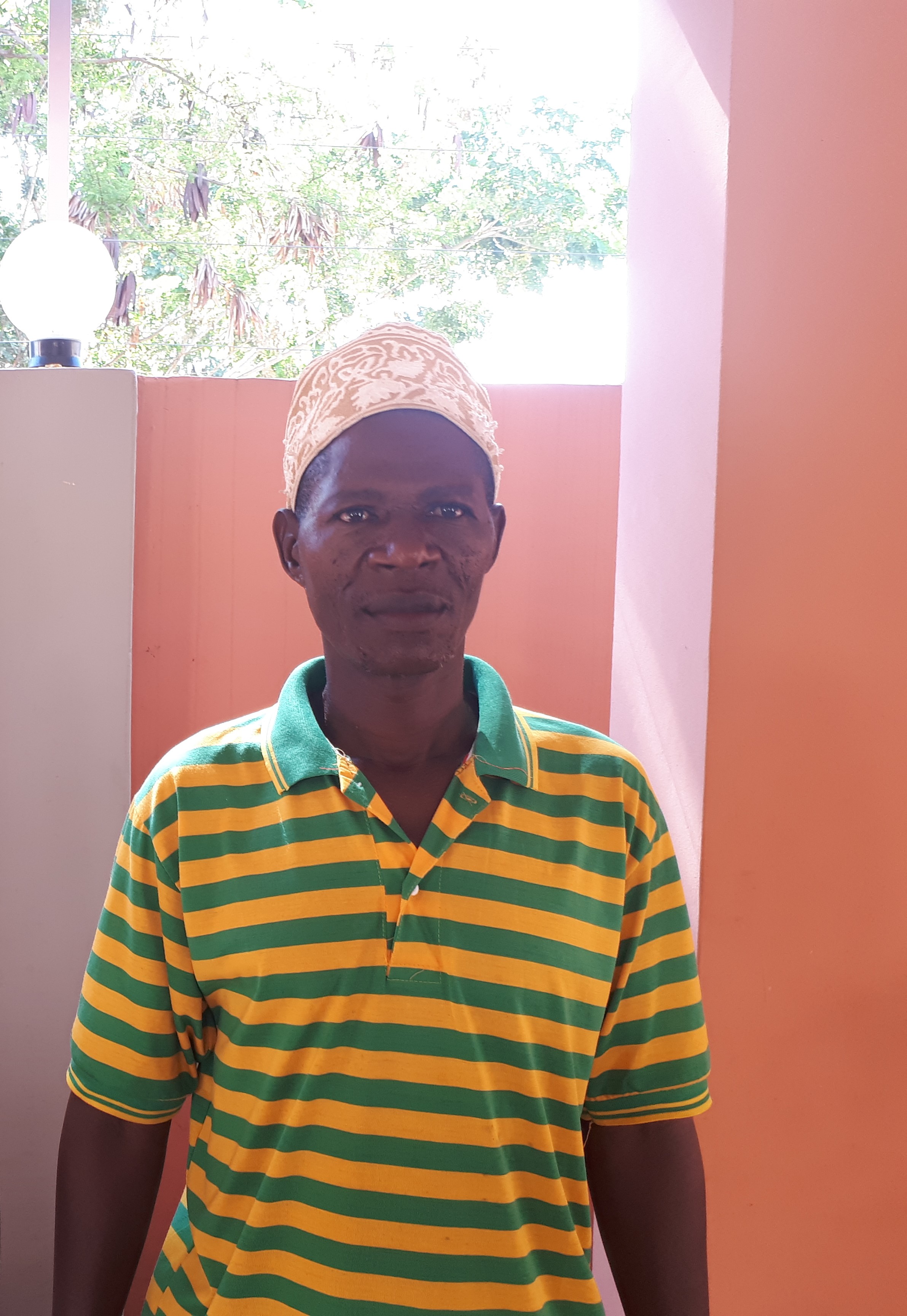
Abdul Tumbo is a farmer from Mvumi village in Kilosa District. He has been repeatedly arrested and imprisoned for farming on lands that his grandparents farmed but that are also claimed by a powerful businessman. The Magufuli government revoked the businessman’s land titles a few years back but the District Council is now trying to organise these lands into a block farm instead of letting Tumbo and the other villagers continue with their farming. The villagers want nothing to do with the block farm. They say the land is theirs and there is no reason why they should pay rent for it. Moreover, they want to produce food for their families and communities, not commodities for companies.[33]
Tumbo points to one neighbouring community where the District Council has pushed ahead with a 325-hectare block farm on lands the local villagers have been farming since 1984 when a sisal estate was shuttered. In December 2022 the villagers planted local maize for food, and shortly after, on the very same lands, the “farmer group” planted sunflowers. Now the District Council has seized the maize harvest and tensions are boiling over.
Across Tanzania, similar conflicts are erupting as the government and businessmen illegally use backdoor channels to transfer large areas of village lands into block farms to produce soybeans and other crops for export. Thousands of small farmers and pastoralists could be displaced from their lands in the process, and many more could lose access to water, as these projects tend to involve the use of large amounts of water for irrigation. The impacts will be felt not only in rural areas, but also in urban centres, as the lands that small farmers now use to produce food for the country will be converted into large-scale farms to produce agricultural commodities for export.
In another example, in 2023, the government, controversially, gave an eviction order to villagers of at least 23 villages in Mbarali District through a government notice (no. 28 of 2008), whose implementation was delayed because of the controversy and uncertainty on the legality and morality of the notice itself. This eviction order affects one of the most productive districts and national food baskets for rice and will affect over 25,000 smallholder farmers in the area. The order is to expand the Ruaha National Park in a World Bank funded project.[34] At present, 852 villagers have taken the matter to the High Court of Tanzania to challenge the eviction order.[35]
The current situation in Tanzania is reminiscent of the ProSavana project that Japan sought to finance in Northern Mozambique a decade ago. That project involved the take-over of 14 million hectares of land in one of the most fertile and densely populated areas of the country to set up large farms and enlist farmers into contract farming schemes to produce soybeans and other cash crops for export to Japan. ProSavana was developed between the Japanese, Brazilian and Mozambican governments behind closed doors, without the knowledge of the affected communities. When these communities became aware of what was going on, they immediately began to organise resistance, with the support of civil society organisations in Mozambique, Brazil and Japan. Despite the powerful forces aligned against them, Mozambican farmers and their allies managed to stop the project, and it was officially terminated in 2020.[36]
This is a critical moment for Tanzania’s small farmers and pastoralists to defend their lands. These food producers are already struggling with a lack of access to sufficient land and water, exacerbated by the climate crisis and the country’s rapidly growing population. They can produce an abundance of nutritious, chemical-free foods to feed the country, and even produce a surplus for export, if the right policies are in place to support their seed systems, provide protection for their lands and water and ensure they have adequate access to markets. Scarce public resources should not be wasted on a failed model of corporate agriculture.
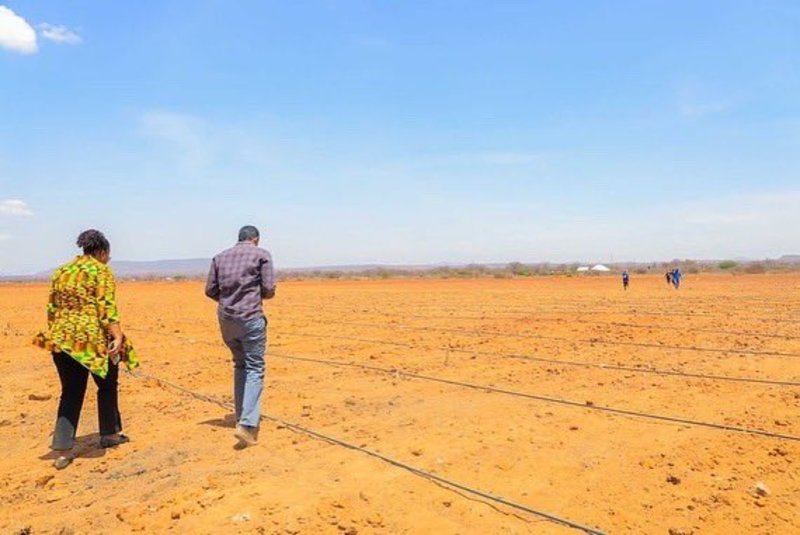
Banner photo: Tanzania’s Minister of Agriculture, Hussein Bashe, visiting a block farm project in Chinangali area, Chamwino, Dodoma District. Source : Twitter (X)
__________________________________
[36] For more information on ProSavana, see: https://www.farmlandgrab.org/cat/show/827
Original Source: Grain
Related posts:

 Worldwide Condemnation Over Violence against the Maasai by Tanzania Security Forces
 African bishops demand end to ‘land grabs’ by private companies
 DR Congo oil palm company bankrolled by development banks unleashes wave of violence against villagers after peaceful protests
 Repression for land and profits


Oakland, CA – As the World Bank convenes its Annual Meetings in Thailand this week, the accountability of the institution is entirely omitted from the agenda. Yet, its lack of accountability to the millions of people displaced or harmed by its programs around the world has never been more appalling.
The Bank claims that recent 2026 reforms would strengthen its accountability mechanism, but the facts show a total disregard for the devastation it has caused. In Tanzania, it has failed to act on damning findings from its own Inspection Panel – whose investigation detailed systemic violations of its own Operating Procedures and a “critical failure” in project planning and supervision, leaving local villagers to continue bearing the brunt of harsh, unmitigated serious harms.
Between 2017-2024, the World Bank poured over US$100 million into REGROW, doubling the size of Ruaha National Park in Southern Tanzania and funding the paramilitary park rangers (TANAPA) implicated in egregious human rights abuses – including killings and forced disappearances. Following an independent investigation, the project was officially cancelled.
“The park expansion effectively criminalized over 84,000 people on their own land, stripping them of their livelihoods by barring essential farming and grazing. The Bank’s REGROW initiative turned poor villagers into targets for park rangers. Despite clear evidence that the devastation it unleashed continues today, the Bank has completely failed to provide redress, compensate or support the communities whose lives it upended,” said Anuradha Mittal, Executive Director of the Oakland Institute, who represented villagers in their complaint to the Inspection panel.

In April 2025, ignoring community demands for reparations and the return of land, the Board approved a largely insufficient and inadequate Management Action Plan (MAP). On September 4, 2026, the Bank officially “closed” the REGROW case after deeming all actions in the MAP had been completed.
“The World Bank has destroyed our lives. Since the project started, rangers have killed or disappeared 18 of us. We are banned from farming our lands and grazing our livestock. Thousands of our cattle were confiscated. We are still waiting for justice and reparations for our losses. How can the World Bank walk away after being found responsible for this catastrophe?” said a local villager who filed the initial complaint.
Today, despite the Bank’s assertions that livelihoods could resume, many farmers remain barred from their fields, and pastoralists face continuous threats and fines for grazing cattle. The international spotlight that the Institute put on the dire situation has brought a halt to fatal shootings by TANAPA rangers since May 2025 – a grim baseline for “progress” from a paramilitary force that has terrorized communities since the Bank bolstered their capacity. The families of those murdered by TANAPA, including 27-year-old Hamprey Mhaki and 20-year-old Kulwa Igembe, continue to be denied justice.
“The Inspection Panel presented undeniable evidence of the Bank’s wrongdoings, yet the Bank’s Board and senior management refused to take responsibility. Affected communities took monumental personal and collective risks to expose these abuses, offering the Bank every opportunity to correct course. Instead, management turned its back on the very people it harmed – leaving a permanent stain on the institution’s credibility. The Oakland Institute will continue to stand with communities in their fight for justice,” concluded Mittal.
The World Bank’s expanding accountability crisis is further deepened by its decision to join the Trump-established Board of Peace (BoP) for Gaza, proactively enabling impunity for crimes against humanity and genocide. By joining the BoP, the Bank directly violates its own mandate and policies, international humanitarian law and decades of UN General Assembly Resolutions. Furthermore, the move defies provisional orders and advisory opinions from the International Court of Justice (ICJ) and rulings from the International Criminal Court (ICC).
Source: oaklandinstitute.org
Related posts:
 World Bank Fails to Remedy Harms it Caused in Tanzania, Despite a Scathing Investigation by its Inspection Panel
 Communities Under Siege: New Report Reveals World Bank Failures in Safeguard Compliance and Human Rights Oversight in Tanzania
 The World Bank Must Be Held Accountable for Harm Inflicted on Tanzanian Communities by Tourism Project
 Campaign Victory: World Bank Suspends Funding for REGROW, a Conservation Project Responsible for Evictions & Human Rights Abuses in Tanzania
NGO WORK
Tanzanian Government Abducts Maasai Villagers in an Unconscionable Attack on Indigenous Land Defenders
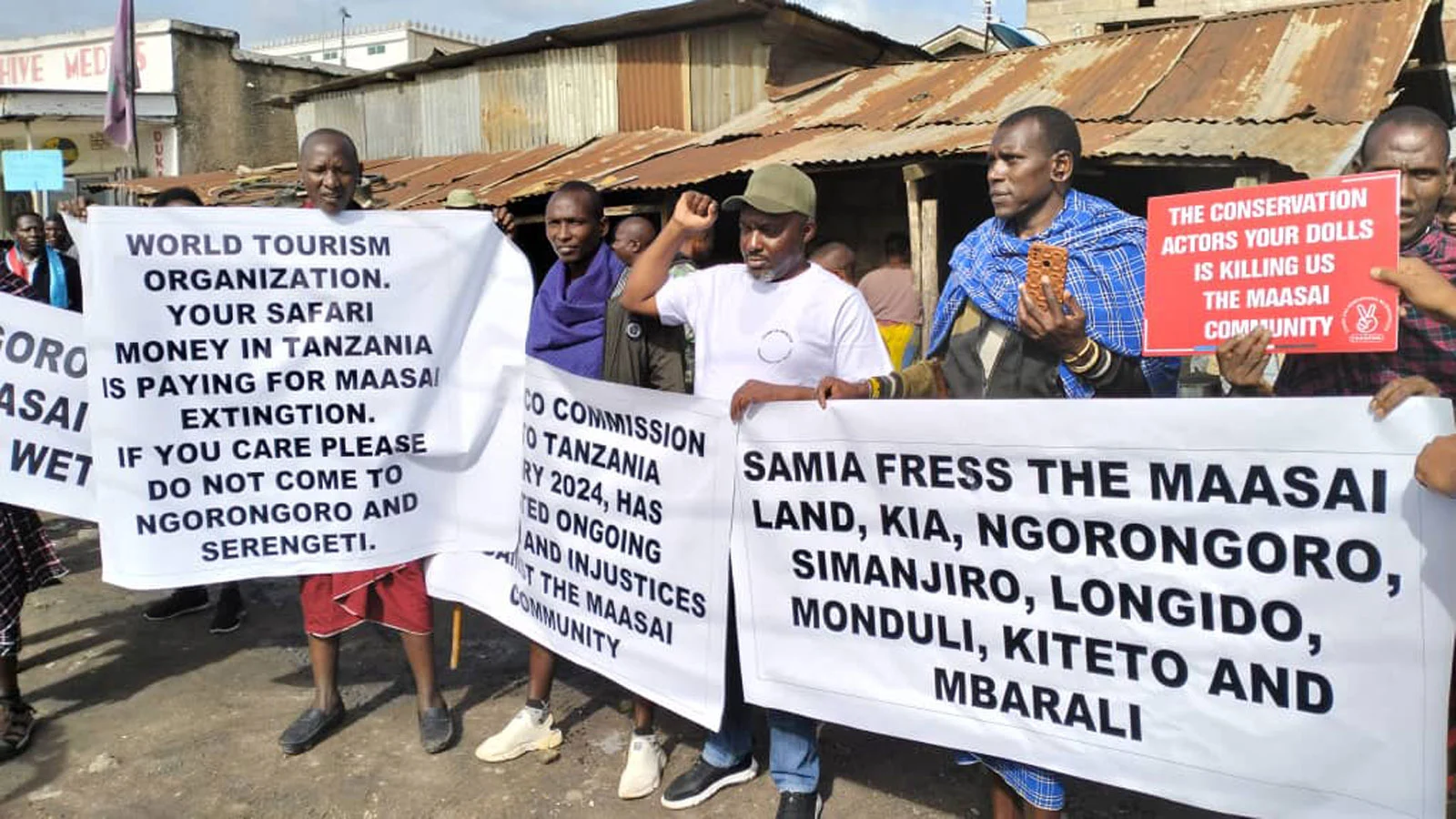
- Human rights conditions in northern Tanzania have deteriorated sharply since August, as the Tanzanian government carries out a coordinated campaign of violence and arrests against the Indigenous Maasai.
- In Ngorongoro, five Maasai were arrested last week; Over 30 community members have been arrested over the last two months; In neighboring Loliondo, thousands of livestock have been confiscated.
- The government is pressuring Maasai to leave the area to reach its goal of expanding the number of safari tourists and trophy hunters to eight million by 2030.
- The last arbitrary arrests unfolded in Arusha as Tanzania hosted the 153rd Assembly of the Inter-Parliamentary Union, centered on the theme of “enhancing good governance and empowering communities through inclusivity, trust and opportunities for all.”
Oakland, CA – On the night of October 6, the Tanzanian government forcefully abducted five Maasai men, Nangei Meitaya, Salangat Makko, Ezekiel Kishau, Dickson and Thadeus Clamian, holding them under arbitrary detention at the Arusha Central Police Station. While the individuals were released the following night, these targeted arrests are a dangerous escalation in the government’s systemic oppression of the Indigenous Maasai people.
Since August, human rights conditions in northern Tanzania have worsened sharply as the state carries out a wave of coordinated violence and arrests against the Maasai. In the Ngorongoro Division, authorities have detained more than 30 community members, while confiscations of livestock have intensified in neighboring Loliondo. Local advocates state these actions are part of a systemic campaign to suppress peaceful dissent and dismantle civil society, through economic restrictions, intimidation, and unlawful incarceration of Maasai pastoralists.
“Far from being an isolated incident, this is a calculated campaign of intimidation. Driven by its goal to attract eight million safari tourists by 2030, the Tanzanian government is escalating pressure to evict the Maasai from their ancestral lands. As a result, community leaders have been driven into hiding once again, describing a rapidly deteriorating situation across the region,” said Anuradha Mittal, Executive Director of the Oakland Institute.
While detained, the victims were deprived access to their families or legal counsel. Four of those arrested are employees of the Pastoral Women’s Council (PWC), a local NGO dedicated to the “sustainable empowerment of Indigenous pastoralist women and girls in northern Tanzania.” Furthermore, authorities searched the homes of other staff members without due process.
“The abduction and subsequent detention of our community members is one of the many incidents of lawless targeting of the Maasai people in Ngorongoro – a deliberate campaign to instill fear and censorship, designed to make state dispossession and displacement easy. When a regime normalizes abductions and uses public hospitals as hunting grounds, it reveals a complete breakdown of common sense and basic humanity,” said Joseph Moses Oleshangay, a prominent Maasai human rights lawyer and activist from the Ngorongoro District in Tanzania.

The arbitrary arrests unfolded in Arusha as Tanzania hosted the 153rd Assembly of the Inter-Parliamentary Union, centered on the theme of “enhancing good governance and empowering communities through inclusivity, trust and opportunities for all.” This international gathering of parliamentarians from around the world comes a year after the rigged October 2025 national elections, during which the security forces violently suppressed pro-democracy demonstrations and killed thousands of civilians. Meanwhile, in March 2026, President Hassan accepted recommendations from sham land commissions advocating for the widespread eviction of Maasai communities from their ancestral lands in the Ngorongoro Conservation Area (NCA) and Loliondo.
The government plans to drastically reduce Maasai presence in the NCA to expand safari tourism and trophy hunting. To pressure residents to leave, the government has stopped basic medical, education, and water services while restricting access to grazing land for pastoralists. Massive mobilizations by the Maasai against this forced resettlement have exposed the government’s lie that people are leaving willingly.
“As international visitors plan safari tours to Tanzania, they must recognize that tourism revenues are inadvertently financing the government’s violent attack on Maasai communities whose ancestral lands are being stolen in plain sight,” concluded Mittal.
Source: oaklandinstitute.org
Related posts:
 Tanzanian Government Continues Violent Repression of the Maasai in Loliondo Despite Worldwide Condemnation
 Justice Denied: East African Court of Justice Grants Tanzanian Government Impunity to Trample Human Rights of the Maasai
 Tanzanian Government’s Sustained Campaign Against the Maasai in Loliondo and the Ngorongoro Conservation Area
 Call to Sever Ties with Tanzanian Government Over Latest Human Rights Abuses Against the Maasai
Related posts:

 The Great “Green” Heist: When Artificial Intelligence and Arms Dealers Seize the Minerals of the South
 Human rights defenders & business in 2022: People challenging corporate power to protect our planet.
 U.S. Peace Efforts in the DRC: Protecting Communities or Minerals?
 Peruvian communities have launched a global petition to halt a mining project they say threatens the water supply of over 10 million people.

Environmental and human rights advocates are urging the world to hold global investors accountable for their actions.

Why are secure land rights key to Africa’s climate resilience and the protection of its natural treasures?

Biodiversity Goals: The world has no time to meet its 2030 goals.

Lands Ministry tightens rules for replacing lost titles, gives landowners 30 days to object

Lango ex-combatants count losses after dry spell destroys maize harvest

Five years after Uganda’s National Action Plan on Business and Human Rights, are local communities hosting land-based investment projects seeing change?

Tanzanian Government Abducts Maasai Villagers in an Unconscionable Attack on Indigenous Land Defenders

The global race for clean energy minerals is leaving communities grappling with conflicts and human rights abuses, a new report reveals.

Innovative Finance from Canada projects positive impact on local communities.

Over 5000 Indigenous Communities evicted in Kiryandongo District

Petition To Land Inquiry Commission Over Human Rights In Kiryandongo District

Invisible victims of Uganda Land Grabs
-
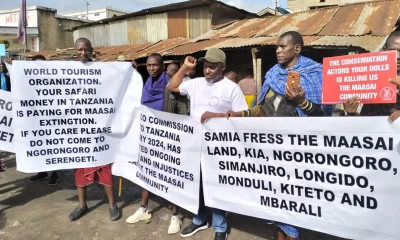 NGO WORK2 weeks ago
Tanzanian Government Abducts Maasai Villagers in an Unconscionable Attack on Indigenous Land Defenders
-
 MEDIA FOR CHANGE NETWORK1 week ago
World Food Day 2026: Building healthy diets means reimagining how we grow, share, and enjoy our food.
-

 MEDIA FOR CHANGE NETWORK2 weeks ago
Court remands 10 anti-oil activists as suspect collapses in dock
-
 MEDIA FOR CHANGE NETWORK1 week ago
International Day of Rural Women : Rural women farmers deserve not only equal rights and access to resources, but also the strength and voice to safeguard Mother Nature.
-

 MEDIA FOR CHANGE NETWORK1 week ago
Defending ancestral land comes at a steep price as Maasai communities in Tanzania face relentless, mounting pressure.
-
 MEDIA FOR CHANGE NETWORK2 days ago
Environmental and human rights advocates are urging the world to hold global investors accountable for their actions.
-

 MEDIA FOR CHANGE NETWORK1 week ago
As waves of investment sweep across Uganda, countless women rise to defend their land, safeguard their traditions, and claim their right to be heard.
-

 NGO WORK1 week ago
As World Bank Holds Annual Meetings, 84,000 Tanzanians Call for Justice