
MEDIA FOR CHANGE NETWORK
“No Land, No Life” – Women at the East Africa Convergence Refuse to Move out Quietly

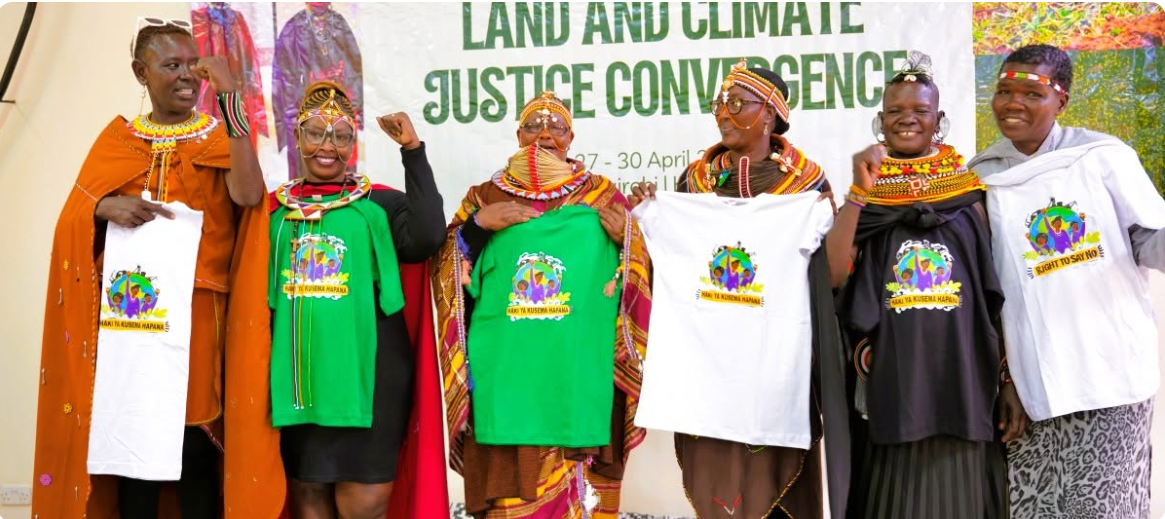
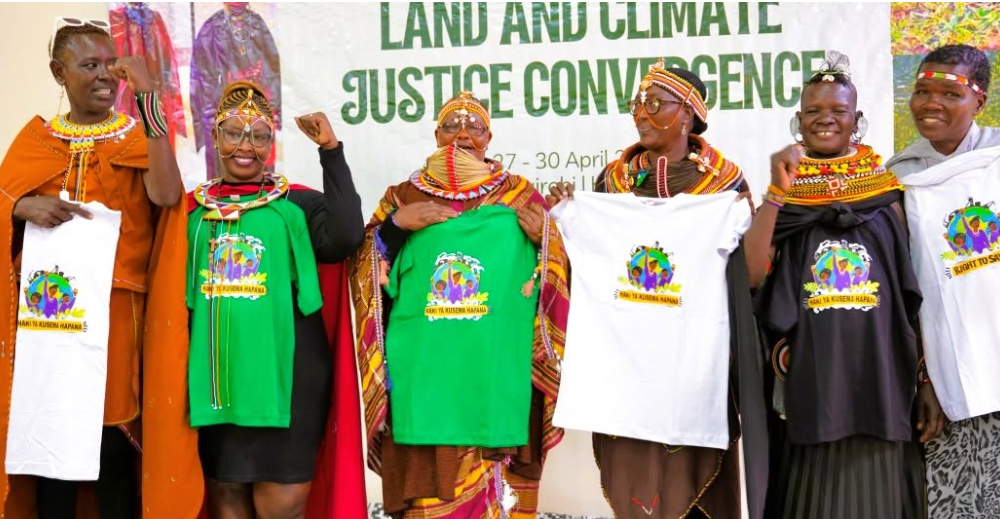
They came from forests, coastlines, grazing territories, and farmlands. In total, 45 women from Kenya, Uganda, Tanzania and communities across DRC, South Africa, and Zimbabwe gathered in Limuru, Kenya, for the East Africa Land and Climate Justice Convergence. Through plenaries and group discussions, storytelling, drawings and celebrations, they shared stories of trauma, injustice and despair. But they also told stories of resilience, movement building and leadership in the fight against land dispossession and big extractive projects. Each discussion reinforced that protecting the commons through collective stewardship is a powerful alternative to the current development model that encloses, destroys and dispossesses people and the environment.

A central theme throughout the convergence was the role of indigenous knowledge systems in the protection and care of communal land. The women participants shared various examples of governance practices that enable balance between human and non-human life, resolving conflicts, and sustained territories across generations.
Identifying the patterns across struggles
The women were very clear about the struggles they faced and could name the forces behind them. Across all the countries represented, women identified the same patterns: government gazette communal land and other resources, corporations move in, laws are poorly enforced, and Indigenous voices are pushed out. In this process, women suffer the most. They suffer twice — they lose land, and they carry the burden of survival when food, water, and dignity disappear.
Participants pointed to problems within their communal governance, which often grants women little to no control of the communal resources even though women are the primary users and the most consistent stewards of these resources. Alongside privatisation, male dominating structures in the governing systems of the commons continue to undermine women’s rights, agency and leadership.
Despite enclosure and violence, communities keep holding each other. In Namakwaland, South Africa, women organise protests against mining related dispossession. In Loliondo, Tanzania, a union of 50 women is taking land cases to the African Court in Arusha. In Kenya, the Ogiek fought 17 years through domestic courts until the African Court ordered reparations in 2022. In each of these iconic struggles, and many others across the continent, women are at the centre of the evidence, the advocacy, and the resistance.

“Protecting land means protecting life”
The convergence was not an end. It was a vessel to bring women together to deepen analysis and understanding of the struggles of the commons as well as to identify collective action. And the women planned – they spoke of the need for cross-country radical solidarity, mental health support programs for the women in the frontline of the resistance, political and leadership development trainings, and support for strategic litigation as tools to enhance the struggle.
While the convergence is over, the struggle is not. As one participant said: “Maybe the biggest thing we found here is each other. We are not just fighting for land. We are fighting for a way of living where no one is left behind.”
Because as women from Turkana reminded us: “No land, no life. Protecting land means protecting life.”

The graphic documentation shown throughout this article was developed in collaboration with Kenyan artist, MariaStella Kamuti. Each piece offers visual representation of the daily critical conversations and knowledge-sharing that took place throughout the convergence. They also serve as important popular education tools as we cultivate and expland the Land Commons and Care thematic area of work in East Africa and across the continent.
Source: Womin.africa
Related posts:
 “We are facing increased violent land dispossessions and climate injustices” – African women.
 African Women forge bold actions for climate justice at the 2024 Women’s Climate Assembly in Senegal.
 Africa must unlock the power of its women to save climate change
 Breaking: West and Central African women meet in Senegal over the climate crisis.

Related posts:
 Breaking Alert: Barely a year after signing the remedy agreement, World Bank Project-Affected Persons (PAPs) receive fresh land eviction threats
 Nile city project affected persons in fresh demand for compensation
 Tension as Project-Affected Persons demand to meet Uganda’s President over Oil Palm growing on their grabbed land.
 Govt reopens talks over Shs70b irrigation project
Related posts:

 Uganda’s Judiciary resorts to mediation to curb the escalating backlog of land cases
 Retrial of the Kaweeri forced land eviction case begins at Mubende High court.
 More than 50 witnesses to testify in the trial of 28 land rights defenders
 Nabakooba Urges Judicial Integrity in Land Cases Amid Rising Evictions
MEDIA FOR CHANGE NETWORK
Sweeping investments are fueling widespread land grabbing and deepening rights violations across Uganda – Report.
Related posts:

 Tanzania’s surge in conservation investments is under the UN spotlight, as allegations of indigenous land rights violations prompt an urgent call for the government to stop the evictions at once.
 Witness Radio Statement on the International Human Rights Day 2024: A call to the government of Uganda to protect Land and Environmental Rights Defenders and Communities affected by irresponsible land-based investments in Uganda.
 Kaweeri Coffee land grabbing case re-trial resumes as evictees continue to suffer gross human rights violations.
 Rights experts call for an inclusive transition as the East Africa region attracts renewable energy investments.

Govt orders fresh valuation of land for Rubanda iron ore project

Can Agroecology Improve the Resilience of African Smallholder Farmers?

Death Of Witnesses Cited Among Causes Of Land Case Backlog

Sweeping investments are fueling widespread land grabbing and deepening rights violations across Uganda – Report.

While hunger continues to grip the world, a new report highlights forests and forest foods as a hidden treasure trove of nourishment.

Five years after Uganda’s National Action Plan on Business and Human Rights, are local communities hosting land-based investment projects seeing change?

Lango ex-combatants count losses after dry spell destroys maize harvest

Alert: Land degradation is emerging as a pressing threat to global security.

Innovative Finance from Canada projects positive impact on local communities.

Over 5000 Indigenous Communities evicted in Kiryandongo District

Petition To Land Inquiry Commission Over Human Rights In Kiryandongo District

Invisible victims of Uganda Land Grabs
-
 FARM NEWS2 weeks ago
Lango ex-combatants count losses after dry spell destroys maize harvest
-
 MEDIA FOR CHANGE NETWORK1 week ago
The global race for clean energy minerals is leaving communities grappling with conflicts and human rights abuses, a new report reveals.
-

 MEDIA FOR CHANGE NETWORK2 weeks ago
Uganda urged to drop charges against 11 environmental defenders after 17 months without witnesses
-
 FARM NEWS1 week ago
Govt pushes natural regeneration to restore 8.4 million hectares
-
 MEDIA FOR CHANGE NETWORK5 days ago
Who will shape the future of East Africa’s seeds? Youth and civil society are sounding the alarm over a proposed regional law.
-
 MEDIA FOR CHANGE NETWORK5 days ago
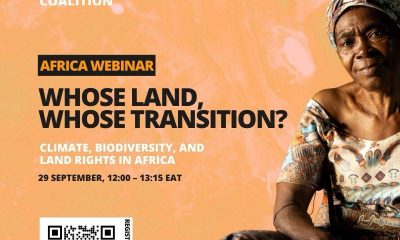
Across Africa, the push for a greener future is putting new pressure on local communities, as recent ILC case studies highlight.
-
 MEDIA FOR CHANGE NETWORK5 days ago
Sweeping investments are fueling widespread land grabbing and deepening rights violations across Uganda – Report.
-
 MEDIA FOR CHANGE NETWORK2 weeks ago
The pain and anguish in the Albertine Part II