










Connect with us

FARM NEWS

200 farmers demonstrate at parliament, worried about new seed monopoly

Published

on

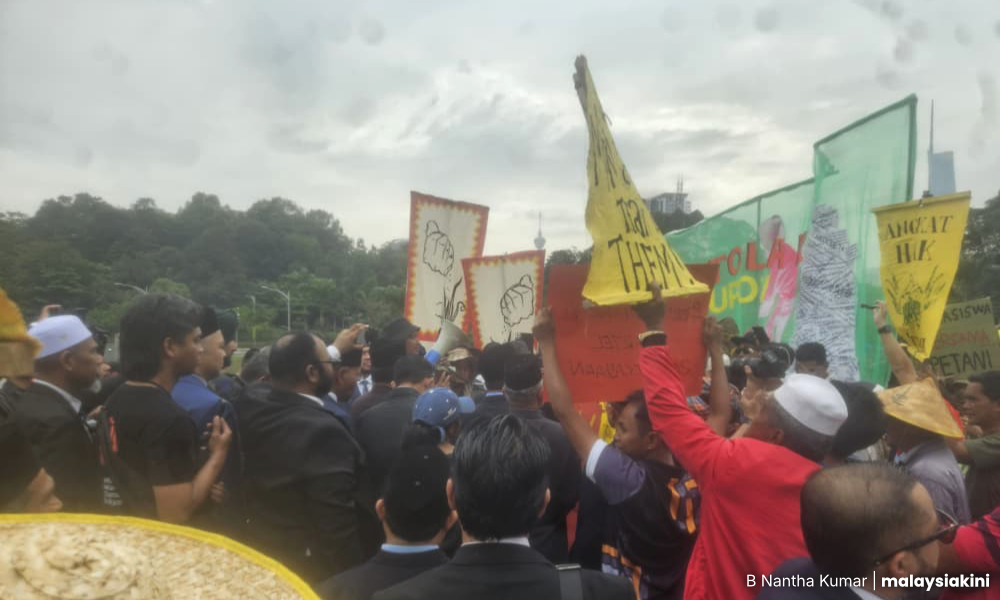
About 200 individuals consisting of rice farmers, small farmers, environmental activists and NGO representatives gathered in front of the parliament building in Kuala Lumpur to urge the government to cancel Malaysia’s participation in the 1991 UPOV convention.

The gathering aimed to submit two memorandums demanding the defense of the rights of small farmers who are alleged to be at risk if the amendment to the Protection of New Plant Varieties Act 2004 is continued.

Assembly spokesman Abdul Rashid Yob claimed that the Ministry of Agriculture and Food Security (KPKM) submitted a draft amendment to the act to the UPOV Secretariat in Geneva last September.

“The involvement of foreign bodies in the formation of national laws without comprehensive consultation with stakeholders, including the governments of Sabah and Sarawak, is seen as a form of violation of national sovereignty.

“This amendment will revoke the traditional rights of small farmers to exchange and sell seeds, as well as limit the right to save seeds for the next breeding season,” he told reporters after handing over the memorandum.

The government has so far neither confirmed nor denied the allegations of submitting the draft act to the UPOV Secretariat.

Malaysiakini is trying to obtain clarification from Agriculture and Food Security Minister Mohamad Sabu and his officials regarding this allegation and issue. 

Today’s gathering was organised by the Malaysian Food Sovereignty Forum (FKMM) and was also attended by representatives from the Malaysian Socialist Party (PSM) and the Mandiri student group.

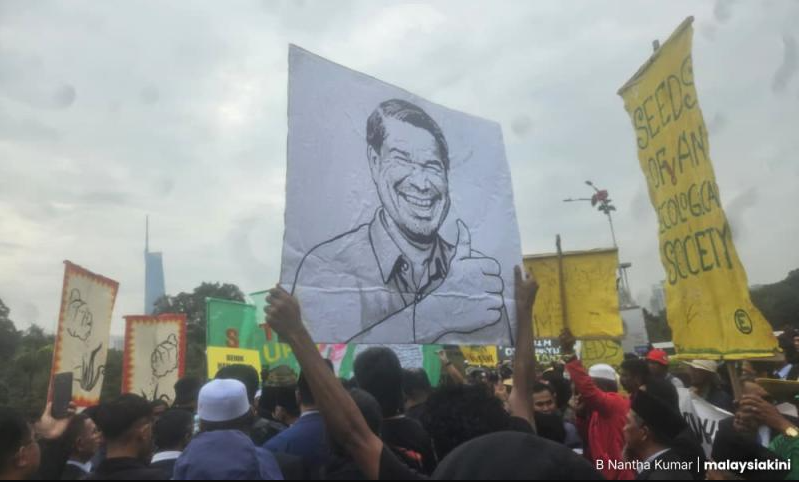
The attendees carried various placards with slogans such as “Lift Farmers’ Rights”, “Students with Farmers”, “Farmers are not lazy” and “Reject Upov”.

Also on display was a large sketch of Mohamad showing the “good” finger gesture.

More than 50 uniformed police were present to control the rally, which proceeded without any disturbances.

Earlier, a memorandum was also given to Deputy Minister of Agriculture and Rural Development Chan Foong Hin, PN Chief Whip Takiyuddin and Gopeng MP Tan Kar Hing representing the Agriculture and Domestic Trade Special Select Committee (PAC).

All parties that received the memorandum promised to bring the issue to parliament.

Seed supply monopoly

Meanwhile, the coalition claims that the 1991 UPOV will only strengthen the monopoly of large companies on seed supply, thus eliminating traditional practices that have long been the backbone of local farmers’ survival.

“The existing PNPV Act 2004 is sufficiently balanced in protecting the rights of breeders and farmers, as well as safeguarding the interests of Indigenous communities and local biodiversity.

“Deleting the section relating to the prevention of biopiracy and the obligation to supply seeds at reasonable prices will only place the country’s seed policy under the influence of foreign powers,” he said.

Apart from the seed issue, rice farmers also raised the cost of living crisis which is becoming increasingly pressing due to the increasing cost of agricultural inputs and pressure on paddy prices in the market.

Among their main demands is a call for the government to set the maximum paddy grading rate at 20 percent to avoid losses for the farmers.

They also demanded that the government revise the price of paddy to RM1,800 per metric ton and make immediate improvements to the agricultural subsidy system.

They also complained about delays in fertilizer distribution, weak water management, and bureaucratic red tape in the disaster takaful scheme that made it difficult for them to receive compensation.

“The government needs to address the issue of leakages and weak governance in relevant agencies which have been alleged to be affecting the country’s rice production chain.

“If these demands are ignored, the country’s food sovereignty will continue to be threatened and dependence on imported seeds will increase dramatically,” he added.

Abdul Rashid added that UPOV 1991 is an international agreement that gives plant breeders intellectual property protection rights for new plant varieties they produce.

However, it became controversial after allegations that farmers were not free to store, exchange or resell protected seeds, unless permitted by national law.

Small-scale farmers do not agree with this agreement because it is seen as potentially detrimental to small farmers and only benefits large seed companies, as well as potentially threatening food sovereignty.

Source: malaysiakini.com

Continue Reading

FARM NEWS

Govt moves to set up food and agriculture regulatory authority

Published

on

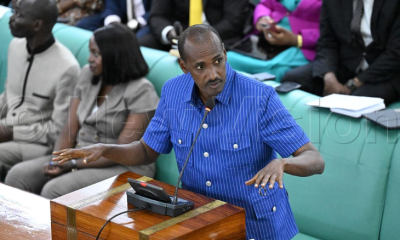
Agriculture minister Frank Tumwebaze tabled the Food and Agriculture Regulatory Authority Bill, 2026, for first reading in Parliament on August 25, 2026. (Credit: Maria Wamala)

The Bill has been referred to the Committee on Agriculture for scrutiny. The proposed authority will regulate the manufacture, processing, importation, exportation, distribution, transportation, advertisement, labelling, storage, sale and supply of veterinary medicines, agricultural chemicals, veterinary equipment and devices.

KAMPALA – The Government has proposed the creation of a food and agriculture regulatory authority to bring food, animal medicines, agricultural chemicals and related products under one regulatory framework.

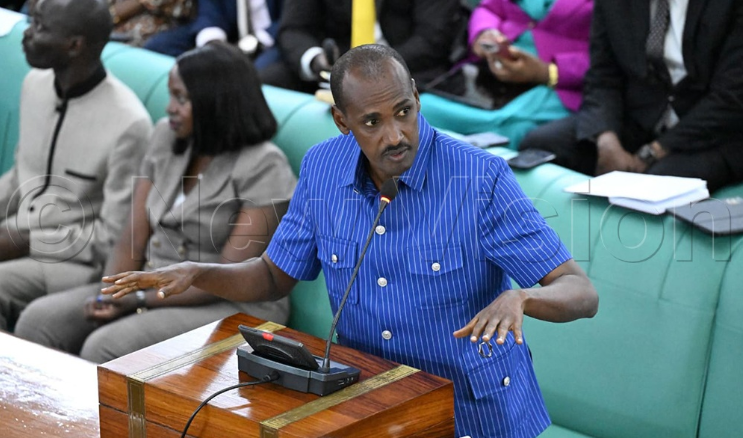
Agriculture minister Frank Tumwebaze tabled the Food and Agriculture Regulatory Authority Bill, 2026, for first reading in Parliament on August 25, 2026.

The Bill has been referred to the Committee on Agriculture for scrutiny. The proposed authority will regulate the manufacture, processing, importation, exportation, distribution, transportation, advertisement, labelling, storage, sale and supply of veterinary medicines, agricultural chemicals, veterinary equipment and devices.

It will regulate food and feed manufacturing, processing and distribution, oversee food and feed safety, develop standards, inspect and certify agricultural inputs, and establish traceability systems for regulated products.

The Bill’s memorandum presents a troubling picture of the current food and agricultural regulatory system, stating that the country is “flooded with counterfeit substandard veterinary medicines and agricultural chemicals.”

It cites concerns over medicines and chemical residues, aflatoxins, harmful microorganisms and heavy metals in food and feed, warning that such contaminants compromise public health and the safety of agricultural exports.

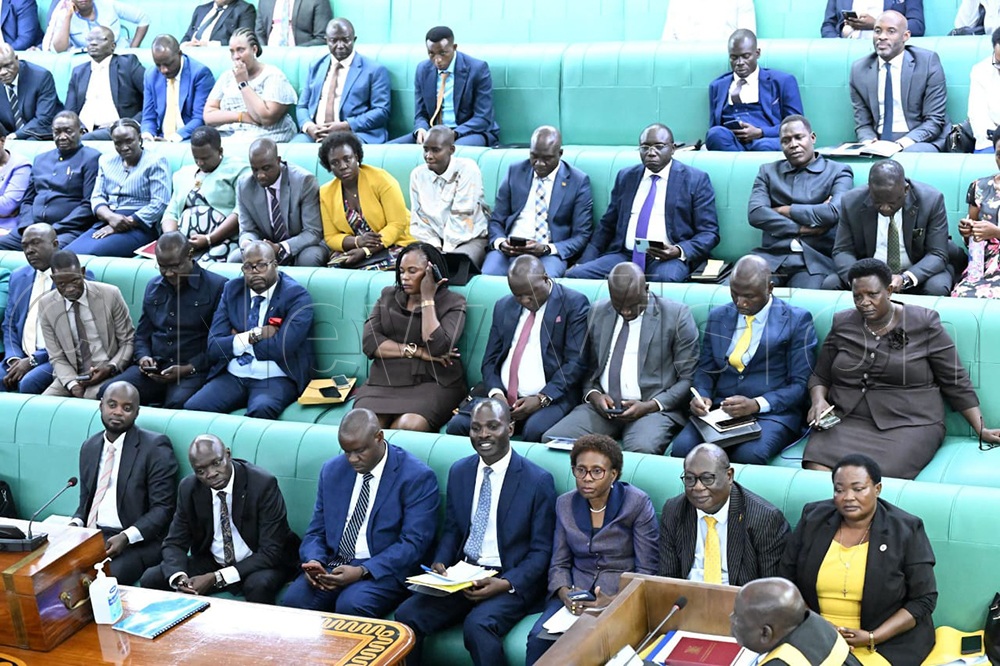
Members of Parliament during Plenary on Tuesday. (Credit: Maria Wamala)The memorandum attributes the problem in part to “fragmented regulation”, which it says has resulted in weak and uncoordinated regulation by multiple agencies, duplication of efforts and inefficiencies in enforcement.

It argues that the absence of a single body overseeing the food and agriculture value chain “undermines the effectiveness of regulation” and creates uncertainty for stakeholders.

The proposed authority will inspect food premises, certify meat for public consumption, inspect and certify fish, regulate processed and semi-processed food, and oversee the storage and transportation of food.

The Bill seeks to regulate food packaging, labelling and advertising, while prohibiting the use of radioactive materials, heavy metals and banned substances in food. It provides for residue monitoring to detect harmful substances in food products.

Members of Parliament during Plenary on Tuesday. (Credit: Maria Wamala)

For agricultural chemicals, the Authority will license manufacturers, distributors, fumigators and commercial applicators. It would regulate the import and export of chemicals, as well as their packaging and labelling, storage, sale and advertising.

The Authority will have powers to recall agricultural chemicals and deal with prohibited, banned, restricted, falsified or adulterated products.

The Bill proposes inspectors and analysts with powers to access establishments, conduct sampling and analysis, seize adulterated products and oversee the disposal of obsolete, banned, prohibited and expired products.

Inspectors will, in certain circumstances, order the detention, return or destruction of non-compliant consignments.

The proposed authority will be a body corporate with perpetual succession. Its functions include the registration of veterinary medicines, veterinary devices, veterinary equipment, agricultural chemical application equipment and agricultural chemicals for use in Uganda.

The authority will be governed by a nine-member board appointed by the minister. The board will comprise a chairperson, six members with expertise in veterinary medicine, agriculture, pharmacy, standards and environmental science, and two representatives of farmers nominated by a recognised farmers’ federation.

The Bill contains 13 parts, 101 clauses and three schedules. It seeks to amend the Dairy Industry Act, Fisheries and Aquaculture Act, National Coffee Act and Animal Feeds Act, while repealing the Agricultural Chemicals (Control) Act and the Food and Drugs Act.

The proposed law seeks to give the Minister power to issue written policy directions to the authority.

The Government argues that the new framework would improve the quality and safety of agricultural inputs, strengthen consumer protection and help Uganda gain access to regional and international agricultural markets.

The Bill moves to the Agriculture Committee, where MPs are expected to examine its regulatory, institutional and enforcement provisions before it returns to the House for further consideration.

The public, including experts, are expected to provide their views on the Bill.

Continue Reading

FARM NEWS

Concern over low cassava yields in Bukedi region

Published

on

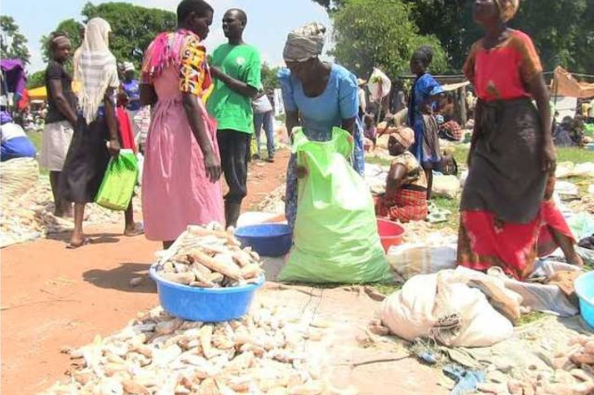
For decades, cassava has been more than just a crop in Bukedi Sub-region in eastern Uganda. It has served as a lifeline, providing a reliable source of food during droughts, a key source of household income and an integral part of the region’s cultural identity.

Across the districts of Budaka, Kibuku, Butebo, Pallisa and parts of Butaleja, cassava gardens once stretched across vast expanses of land. Families harvested the crop throughout the year, processed it into flour and sold surplus produce in local markets.

Today, however, those fields are shrinking. Farmers are increasingly abandoning cassava cultivation in favour of crops they consider more profitable and less risky, raising concerns about food security and the future of one of Bukedi’s traditional staples.

Continue Reading

FARM NEWS

Parliament gives Jinja land office three months to clear backlog

Published

on

Some staff of the Jinja Ministry Zonal Office meet members of the Parliamentary Committee on Land on August 27, 2026. PHOTO/TAUSI NAKATO.

Continue Reading

Resource Center

Legal Framework

READ BY CATEGORY

Facebook

Newsletter

Subscribe to Witness Radio's news and report updates


Trending

Subscribe to Witness Radio's news and report updates