
WITNESS RADIO MILESTONES
What Minister Nantaba told the Land Commission of Inquiry?


Ida Nantaba, is a former State Minister in charge of Lands now holding the portfolio of Minister of State for ICT and National Guidance.
On May 25, Nantaba appeared before the commission of inquiry into land acquisition and management headed by Court of Appeal judge Catherine Bamugemereire.
The commission is also inquiring into the effectiveness of law, policies and processes of land acquisition, land administration, land management and land registration in the country.
Due to critical matters, Minister Nantaba raised before the committee detailing how ever-increasing land grabs are planned by big shots in government, aided by government institutions-like police, army ministry of lands, witnessradio.org finds it fit to bring you the session verbatim, and below are excerpts:
 Albert Byenkya (lead counsel, commission): Please state your name, age and residence.
Nantaba: Thank you, my names are Aida Nantaba, I am the Member of Parliament and women representative for Kayunga District. I am the minister of State for ICT and National Guidance.
Byenkya: The reason why you were invited is because you were a minister of State for Lands and the commission wants to benefit from your experiences as a minister. During what period did you served in the ministry of Lands?
Nantaba: That was from 2012 December to 2016 June.
Byenkya: Approximately three years or so.
Nantaba: Yes.
Byenkya: Can you please describe what your mandate was at the time of your office.
Nantaba: I want to refer to the notice of appointment of the committee on illegal eviction that was issued by the President of Uganda and it was published in the Uganda gazette on the May 27, 2013. The terms of reference were mainly five and I will attach a copy on the memorandum which I will furnish the commission.
Our terms of reference are: we were supposed to identify, investigate and return tenants by occupancy and landlords who had been evicted illegally; number two, we were supposed to identify persons involved in illegal land evictions for purposes of prosecution and compensation of victims; three was to sensitise tenants and landowners on their rights and obligations and initiate the process of issuing certificates of occupancy; four was to assist land owners with authenticated eviction orders to execute them and number five was to implement presidential directives as comprised in his statement which was issued on February 2, 2013
Byenkya: What was your experience? How did this committee function? How successful was it in its terms of reference?
Nantaba: I would want to focus on three main areas: that is land administration, registration and management. Those three are the main areas that need to be looked at when we look at land ownership. Land ownership in regard to mailo land, freehold, leasehold and customary occupancy.
Once the three areas are abused or mismanaged, then land disputes crop up. I want to interest the commission into seven issues that surround the three areas that are violated.
Byenkya: Yes proceed.
Nantaba: In Uganda, we have overlapping land rights or land interests. You find a Kibanja owner and the land owner on the same piece of land yet each of them claim rights of occupancy and rights to use and develop that very land and what government has done was to introduce the land fund to solve these overlapping rights. Now land has become a commercial commodity, it is a tradable item where we have so many property agents coming up.
In the past we had landlords that accommodated Bibanja owners but of late someone gets registered on land but because he is not collecting the Busuulu (nominal ground rent), he feels like he is not using the land and therefore not benefiting anything. So he disposes off the land to the present landlord who has turned out to be property agents and these ones look at land as tradable item.
They would start parceling it out in small pieces and then sell it out and don’t accommodate the Kibanja owner who has been sitting on this land for ages. In introducing the National Land policy that now is giving a leeway to partition of land between land owners and the Bibanja owners, sometimes these are two unequals of the land owner and Kibanja owner where the later is not given a chance to say, out of my eight acres I remain with say six instead this property agent who is the new landlord dictates on how many acres, the Kibanja owner will remain with.
So land becoming the hottest commodity on the market today is exposing these Bibanja owners to people who don’t accommodate them as other people with interest on land and therefore just want to take their land without …
Byenkya: May be you will get to recommendations later, but how do we resolve these issues if the land policy is saying lets partition. If you leave it to anybody to negotiate then you will never solve the problem. Is there a way we can find a formula that works, that everybody can accept.
Nantaba: I would want to come to that later because it is one of the issues that would come later. But I was explaining that what is now fuelling land disputes are the overlapping land rights over the same piece of land where we have a Kibanja interest vis-à-vis a landlord who looks at land as another commodity for sale and leaves the Kibanja owner in abeyance.
We have an issue of speculators. Today, the discovery of oil in Uganda is one of the main reasons why disputes are rising. Some people heard, I don’t know from where that Kayunga has oil and so many big people rushed to acquire land in speculation that there is oil. You have seen what happened in Hoima, the entire Bunyoro region is suffering. Land grabbing is very rampant with a view that there is oil and so they anticipate that when compensation is due, they will be the ones to benefit.
Speculation is fuelling land disputes in this country where we are supposed to construct roads, officers in the ministry of Works together with the officers in the ministry of Lands, because they are the ones who know about the project, they rush and acquire land from whoever is sitting on that particular land and remember this is already a price doubled. When they are requesting for payment, they exaggerate the prices and, therefore, exorbitant prices become very difficult for government to compensate and make it difficult for government programmes to be implemented.
The other issue is the introduction of the land fund which I have talked about. I have also realised that some landlords are acquiring big chunks of land that are heavily occupied by tenants in anticipation that when the land fund is availed, they will be the ones to get the biggest share. I have an experience where one of the big persons in government at that time when I was fighting land grabbing and illegal land evictions, rang me and told me that the best thing for me to do is to convince the President to make sure that there is money in the land fund but “instead you think that you will just return land back to evictees. You rather put money and we pay off these landlords”.
But this is land which was grabbed and the title had been fraudulently acquired and the tenants illegally evicted and he is telling me to make sure that the President puts more money in the land fund and we just compensate this man and he goes away. So land fund is another area of speculation where people think that once money is there then we can acquire land which is fully occupied and then we shall compensate from that fund. Its availability has two areas that need to be looked at; the positive part of it and the other part where it is taken advantage of.
Then we have fraud in Land Registration Department. This is wide and I don’t think I will be able to expound fully because it takes various areas where records in the Land Registration Department are tampered with. You find the blue page that reads Nantaba is already changing to a different person and the white page will still be changed because consequently both of them will have to read different details. So when you come with your title, sometimes you are told that is fraudulent one even when it is a genuine title but because they have tampered with the records, your genuine title will be trashed away and you will be deprived of the rights to own land.
Fraud takes multiple land titling. You have heard land where we have various land titles, many of them but describing one single parcel of land.
That fuels land disputes. We have illegal sub divisions; you have a title which has 300 acres but someone sub divides your land, a surveyor and when you come to complain, they tell you that you actually had 100 acres and not 300, so bring that title and we amend the register and we give your title of 100 acres not the 300 that you knew of. This is in the Department of Mapping and Surveys.
We have caveats that are dislodged without the consent of the caveator. You lodge a caveat but you realise someone has a title even when you had lodged a caveat and because the registrar has powers to amend a register sometimes without notifying you, the caveat is dislodged and therefore they transact on your land without your consent.
Sometimes district land boards deny sitting tenant’s opportunity to acquire registrable interests. Many of these know because we tried to sensitise them during our committee operations that you can as well acquire title on the land which you occupy, especially when it is public land. Now when they try to apply, they are denied a chance to be registered because someone with more money is interested in the same land.
There are areas where former leases are denied a chance to renew their leases and I will give examples in my memorandum. We have cases where plot numbers change and when you come to complain to the registrars that are responsible for that, they tell you that title is not there or that land is in Mubende and Kayunga when actually that is your land.
We have registrars who fail to implement court orders. Court delivers judgment in favour of a person to amend the register and the registrar refuses to enter you on title and when they are held accountable they say they have never received this judgment.
We have forged letters of administration instruments. You forge letters of administration and then you are entered on a title and when you request the registrar to amend the register, yours is trashed. Therefore, we have forged documents that are used during the registration process and all this is fuelling land disputes.
We have the influx of investors into this country and quack investors. Quack investors in the sense that we saw people who were obtaining licences for instance to grow sugar but have no land to grow sugarcane and therefore would want to come and influence district land boards.
I will attach minutes where district land boards, a secretary and chairperson sit and sign on reports by area land committees even when the physical work on ground is not done. These are the minutes that they wave in our land offices, they acquire titles upon them and they come and say this is our land.
You ask for a survey report, it is not there, no deed plan, no physical survey done but they are waving a title. And when you try to interrogate, they would want to pay you off such that they shut your mouth up, leave the rest (eviction) to them because they can handle.
Our district land boards are not trained. We appoint chairpersons who have no knowledge in land administration issues; you don’t train and facilitate them. Area land committees are comprised of members that are picked from the community without any knowledge and when you bring documents, they will just append signatures as long as there is payment because it is the applicant who puts them in his car and tells them ‘I want this land and pays’ Government is not paying and you know what this person will do, there is no reason to hesitate to sign an area land committee that shows there are no tenants on land.
Byenkya: As a minister, you must have interacted with the Office of Registrar of Titles, you describe these incidences of malpractices on the part of the registrar of titles. How wide spread is this in the Office of the Registrar of Titles
Nantaba: I would just say that this is enormous because cases that were reported on a daily basis while we were dealing with issues of land evictions were all surrounded by fraud. It is fraud
Byenkya: Does the officers in the registrar of titles participating?
Nantaba: Yes. The registrar of titles, especially the commissioner-land registration has excessive powers.
When you look at the Registration of Titles Act (RTA), they have more powers, which they end up abusing. So they are directly involved in issuing these fraudulent land titles. It is to them you complain and it is upon them to amend the register and when he detects this fraud and refuses to amend the register that means he is directly involved.
Byenkya: Do you think that this office, apart from the powers that they have, the question of legal liability for the actions that they take the legal framework holds them liable for their actions?
Nantaba: No. The RTA for instance gives them power to register. Section 175 of the RTA gives the registrar of titles excessive powers and Section 181, whatever they do during the process, they are not held liable, they even have powers to amend the register without prior consultation of courts of law. Any time they can cancel out an entry, they can enter, and I actually recommend that there is need to review the RTA because it gives excessive powers without holding them accountable for their actions.
Byenkya: Next issue.
Nantaba: The next issue is on the drivers of land disputes. During the committee’s operation, we had to work with institutions like police, courts of law, local governments, officers in the administrator general’s office, district land boards, offices of lands, and many institutions involved in the registration of land processes.
We realised that one of the drivers is the involvement of the institutions that are supposed to be helping in executing the mandates in the land related laws.
Police for instance, we realised that police aides and abets evictions. I will give a scenario in Kayunga where one landlord acquired land in 2008 through fraudulent means. Land was occupied by more than 1,000 people and he swings in with police escorted by the army.
They start assaulting these tenants who were legal occupants, they arrested them, imprisoned them, those who were hesitant and resisting eviction were dragged to courts of law and criminal offences were preferred against them instead of civil cases.
Someone is accused of stealing goats, hitting a cow because they had to bring in as more cows as possible to destroy their crops, demolished their houses, burnt some and some are even still in prison for more than seven years now. And I would want to escort this commission to these prisons and you see these prisoners.
We tried as a committee to rescue as many as possible but many of them are there because they were charged with aggravated robbery. A man who has never touched a gun is charged with aggravated robbery and proving that we would go to courts and listen, but these are people imprisoned before I became chairperson of the committee.
Byenkya: In the case of Kayunga, was there a court order involved?
Nantaba: No court order, even the title was still in the process of being acquired because at this time registrars had started changing details on the title and this man says “I am the owner of this land”, but the landlord is there and these people know him and during this scuffle, both the landlord and the masquerader are in court but evictions are happening on ground.
When others are thrown in courts and in prisons and assaulted, the rest on ground are intimidated and end up leaving even before suffering what the others have faced. The involvement of police in aiding these land grabbers fuels land disputes because they side with others and leave the other party to suffer.
Some of us leaders in connivance with the offices of the RDCs, we also side with some parties and don’t listen to others; sometimes we are bribed. I saw bribes coming daily, “Nantaba get this and shut up, leave the rest to me to handle.”
So you either shut up by a bribe or you fear the person who is evicting because of his position in the army, police, in government, whether he is a minister, the position he is attached to, you just keep your hands off. So you keep quiet as he is evicting people.
Byenkya: Most of these evictions are carried out by highly placed people in various government agencies?
Nantaba: Absolutely. The kind of generals in the army, big people in police, sometimes us ministers, there was a time when I had to face my very Attorney General then, he was attempting to evict some people and I am the chairperson of the committee on illegal land evictions and he is supposed to cover me up in case of any litigation and I am telling him to not evict the people and he is supposed to cover me up in court. This is the level at which sometimes people back off and keep quiet and leave the peasants to suffer because of the person involved and the position he holds in government.
Byenkya: What was the relationship between the committee and other land disputes mechanisms such as courts of law? What laws were you supposed to use under your mandate?
Nantaba: At one time we had to suspend the operations of the committee for lack of a legal framework within which the committee was supposed to operate and at that time I was sued in my individual capacity as Nantaba and not as minister or chairperson of the committee.
This happened several times to an extent that cases were decided against me and I have lost salary to that effect to a tune of more than Shs100 million because myself and the Attorney General, things were sore. I intervened in a case where he was involved, stopping him from evictions and, therefore, there was no any representation in courts of law.
The office which was supposed to cover up neglected us and sometimes we would receive injunctions stopping us from visiting a locus like a case in Mubende. We wrote to the RDC that we were visiting an area and this man rushed to court to stop us from visiting and we were stopped and surprisingly he applied for costs and government could pay damages.
Related posts:

 Gov’t officials top land grabbers list –Land Commission
 Minister Betty Amongin Pinned Before The Land Inquiry Commission
 Uganda sets up a Commission of Inquiry to investigate into land management
 Kiryandongo District Authorities are on spot by the commission of inquiry into land matters
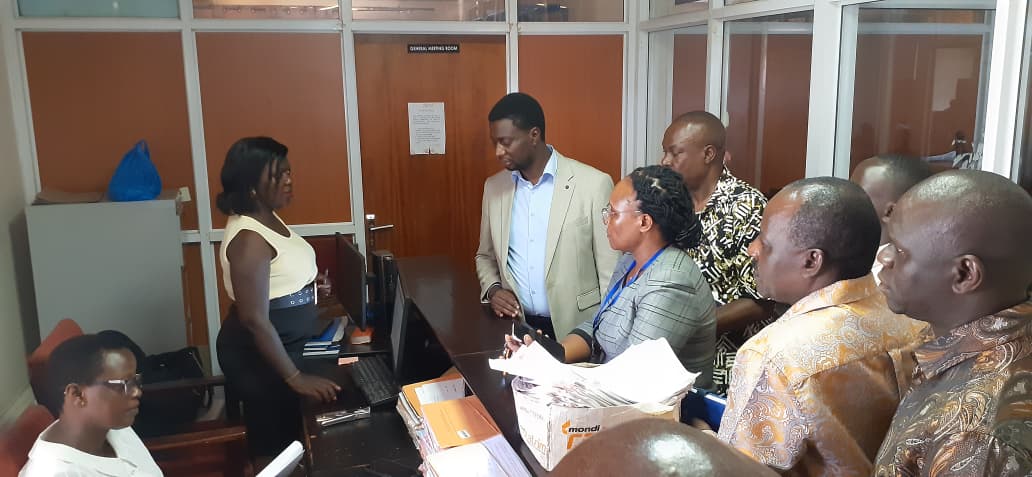
Parliament’s Committee on Lands, Housing and Urban Development has ordered a police investigation after recovering hundreds of land files allegedly hidden in shops and vehicle boots near the Mukono Zonal Land Office (MZO).
The committee, led by chairperson Edison Rugumayo, was inspecting the office as part of an inquiry into allegations of land fraud, delays in processing titles and other irregularities affecting land transactions in Mukono District.
During the inspection, legislators toured various departments and questioned staff about their work, including the handling and storage of land records.
At the office of Senior Staff Surveyor Steven Ndegeya, the committee raised concerns over alleged irregularities involving land titles reportedly created in wetlands and central forest reserves.
The legislators also questioned officials about more than 200 titles reportedly issued in Mabira Forest and demanded a list of people associated with the titles.
The committee was further alarmed after being told that more than 50 land titles had allegedly been created on the government-owned Njeru Stock Farm.
Rugumayo asked Ndegeya to provide the transaction trail, original title documents, geographical maps and details of all individuals holding titles on the land.
Ndegeya asked for more time, saying he needed to consult registrars before preparing an organised report.
He told the committee that there was no certificate of title for Njeru Stock Farm belonging to the Uganda Land Commission in the system.
However, he said the system contained records of individual Mailo landowners whose interests dated back many years, arguing that some people who obtained titles on the land had acquired them legally.
The committee later met MZO officials to establish the causes of the complaints and alleged irregularities.
Three staff members, Dan Kyalo, Hannifah Nantongo and Susan Aceru, were tasked with producing files that were allegedly being taken out of the MZO.
The three denied having moved the files.
However, accompanied by police officers, the committee recovered hundreds of titles allegedly stored in shops across the road from the land office. Other files were reportedly found in vehicle boots.

When questioned about who had instructed them to keep the files outside the office, the officials reportedly told the committee they had been directed by their supervisor, Ndegeya.
The committee also questioned the security team deployed by the Ministry of Lands in Kampala about how the files and titles had been removed from the office.
It emerged that Emma Otim, the security head, had left responsibility for keeping the office keys with a private security guard who routinely opens and closes the office.
The committee questioned why a guard whose primary responsibility was reportedly to man the gate had been entrusted with the office keys.
Principal Assistant Secretary at the MZO, Doreen Tumushabe, said she could not be held responsible for the alleged conduct of individual employees but promised to strengthen supervision.
Tumushabe also cited staff shortages, lack of vehicles and the large number of complaints involving allegedly forged land titles among the challenges affecting the office.
During the oversight visit, the committee also discovered hundreds of allegedly forged land titles at the MZO.
Officials told the committee that no related case had been opened at Mukono Police Station despite the alleged discovery of the forged titles.
The committee also heard complaints from members of the public who said they had waited for years to obtain land titles or have land disputes resolved.
A 75-year-old woman, Maria Nakitende, told the committee that she had waited for decades for authorities to resolve her title-related matter.
Hajji Musa Muliika of Katosi alleged that he was asked to pay Shs14 million after the title he had submitted was reportedly lost while in the hands of MZO officials.
Rugumayo directed police to conduct a thorough investigation into the circumstances surrounding the removal and concealment of the files and establish why they were taken outside the office, particularly ahead of the committee’s visit.
He also ordered the head of the Mukono land office to submit, within one week, a report on land titles in Mabira Forest and wetlands, as well as complaints against staff members.
Masaka legislator Joan Namutaawe criticised the quality of services at the land office and questioned whether Tumushabe was fully in control of operations at the MZO.
Namutaawe warned that the committee would pursue cases involving alleged illegal occupation and development in wetlands.
Source: nilepost.co.ug
Related posts:




MEDIA FOR CHANGE NETWORK
Uganda moves toward a Bamboo Policy to boost environmental conservation and green growth.


Related posts:

 As Uganda awaits the Energy Efficiency and Conservation law, plans to develop a five-year plan are underway.
 REC25 & EXPO Ends with a call on Uganda to balance conservation and livelihood
 Africa’s growth lies with smallholder farmers
 Green Resources’ forestry projects are negatively impacting on local communities – donor
WITNESS RADIO MILESTONES
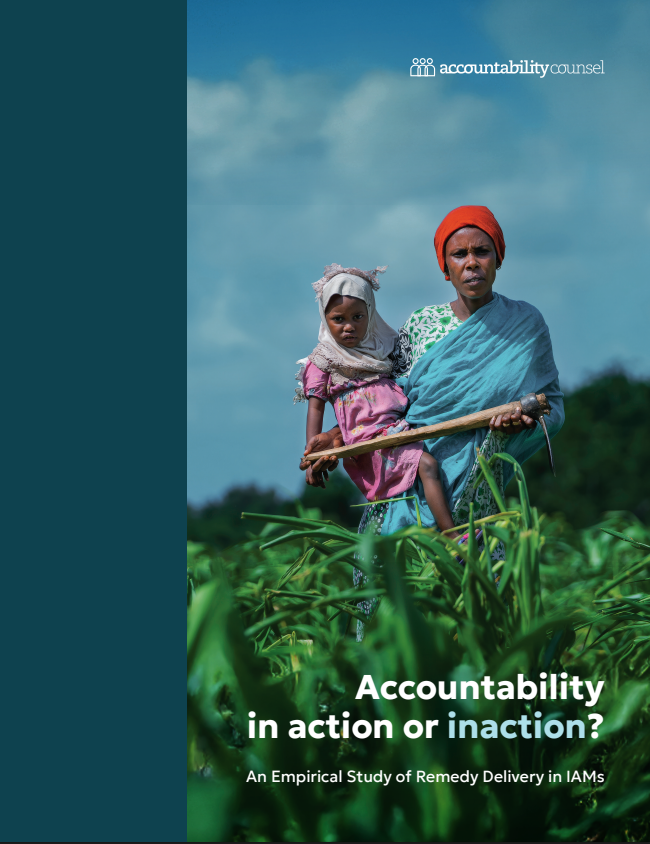
A Global Report reveals that Development Banks’ Accountability Systems are failing communities.
Related posts:
 Banks have given almost $7tn to fossil fuel firms since Paris deal, report reveals
 Opinion: USAID needs an independent accountability office to improve development outcomes
 Communities Under Siege: New Report Reveals World Bank Failures in Safeguard Compliance and Human Rights Oversight in Tanzania
 Oxfam Report 2011: When Indigenous communities named Rwanda nationals by investor to run away from corporate accountability

World Food Day 2026: Building healthy diets means reimagining how we grow, share, and enjoy our food.

International Day of Rural Women : Rural women farmers deserve not only equal rights and access to resources, but also the strength and voice to safeguard Mother Nature.

ODPP Staff Equipped With New Skills on Land Crimes, Witness Protection and Victims Rights

As World Bank Holds Annual Meetings, 84,000 Tanzanians Call for Justice

Lango ex-combatants count losses after dry spell destroys maize harvest

Five years after Uganda’s National Action Plan on Business and Human Rights, are local communities hosting land-based investment projects seeing change?

The global race for clean energy minerals is leaving communities grappling with conflicts and human rights abuses, a new report reveals.

Alert: Land degradation is emerging as a pressing threat to global security.

Innovative Finance from Canada projects positive impact on local communities.

Over 5000 Indigenous Communities evicted in Kiryandongo District

Petition To Land Inquiry Commission Over Human Rights In Kiryandongo District

Invisible victims of Uganda Land Grabs
-

 MEDIA FOR CHANGE NETWORK2 weeks ago
Sweeping investments are fueling widespread land grabbing and deepening rights violations across Uganda – Report.
-
 NGO WORK5 days ago
Tanzanian Government Abducts Maasai Villagers in an Unconscionable Attack on Indigenous Land Defenders
-

 MEDIA FOR CHANGE NETWORK2 weeks ago
Across Africa, the push for a greener future is putting new pressure on local communities, as recent ILC case studies highlight.
-

 MEDIA FOR CHANGE NETWORK5 days ago
Court remands 10 anti-oil activists as suspect collapses in dock
-

 MEDIA FOR CHANGE NETWORK2 weeks ago
Who will shape the future of East Africa’s seeds? Youth and civil society are sounding the alarm over a proposed regional law.
-

 FARM NEWS2 weeks ago
Can Agroecology Improve the Resilience of African Smallholder Farmers?
-
 MEDIA FOR CHANGE NETWORK1 day ago
World Food Day 2026: Building healthy diets means reimagining how we grow, share, and enjoy our food.
-

 MEDIA FOR CHANGE NETWORK4 days ago
As waves of investment sweep across Uganda, countless women rise to defend their land, safeguard their traditions, and claim their right to be heard.